Troubleshooting Crispy Indoor Rosemary in Arizona Homes
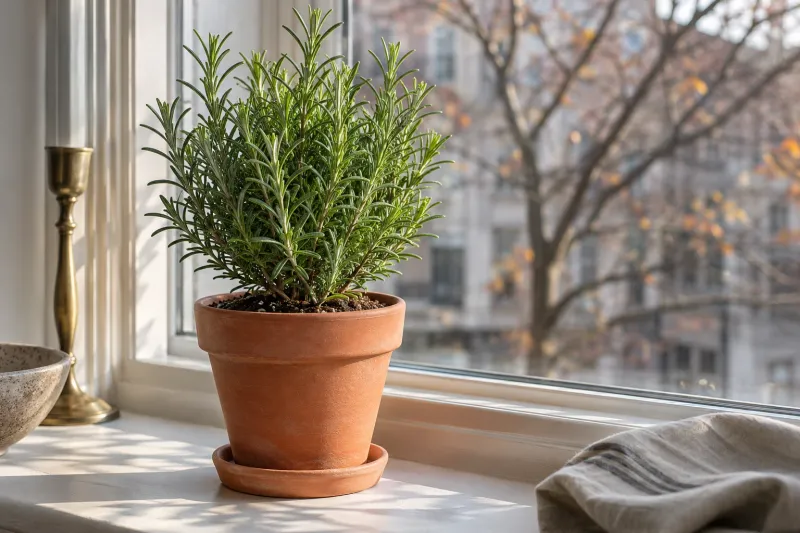
Rosemary can handle blazing outdoor sun, yet a single winter indoors can leave it with brittle, brown twigs. Many of us blame ourselves right away.
The truth is more tangled, because several things can cause the same crispy look. This guide helps you sort through the clues in your own Arizona home before you change a thing.
Crispy Twigs Do Not Identify One Cause
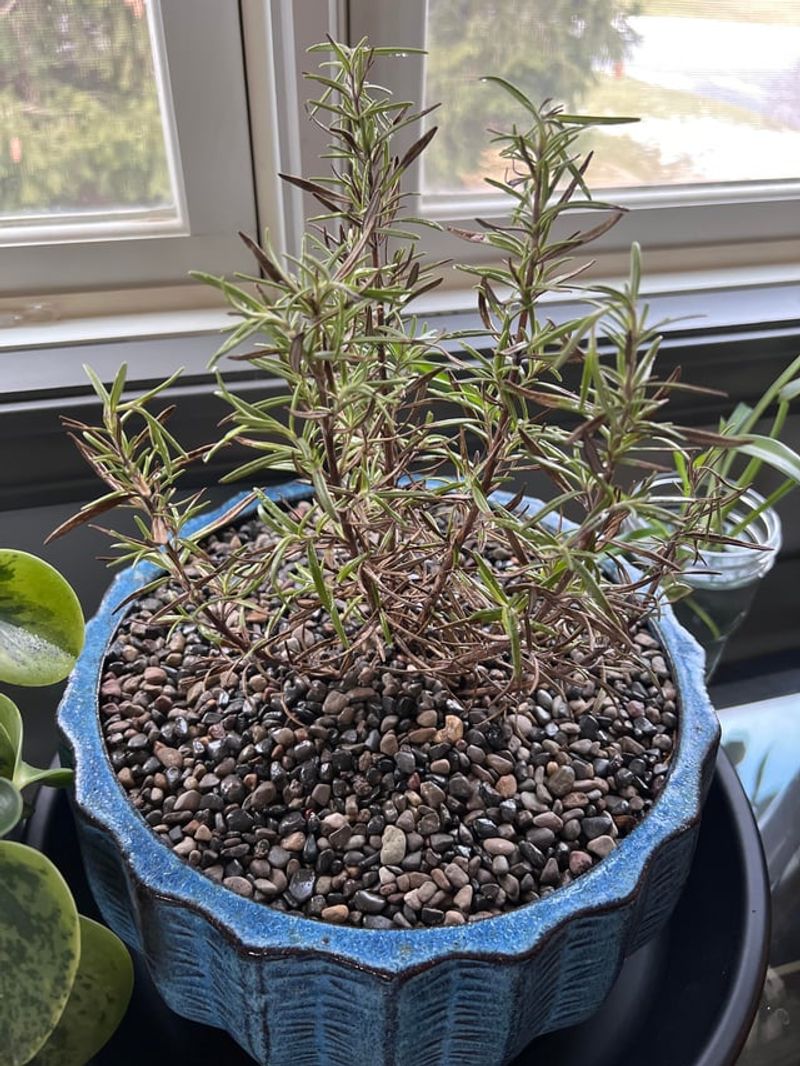
Brown tips and crunchy branches look alarming, but they are a clue, not an answer. A UC IPM houseplant guide lists dry or wet soil, heat, low humidity, drafts, salts, and other factors among the possible reasons for brown tips.
Root rot can also brown whole branches.
That means several different problems can leave your rosemary looking the same. Heated or moving air, weak light, watering or drainage trouble, pests, and root damage can all overlap.
Even Illinois Extension notes brown tips and branch dieback in indoor rosemary without pinning it on one thing.
So before you reach for the watering can or a new fertilizer, pause and gather evidence. Look at where the pot sits, how bright the spot is, how wet the mix feels, and what the leaves and stems look like up close.
A few minutes of checking can save you from fixing the wrong problem.
Heated Air and Direct Drafts Can Add Stress
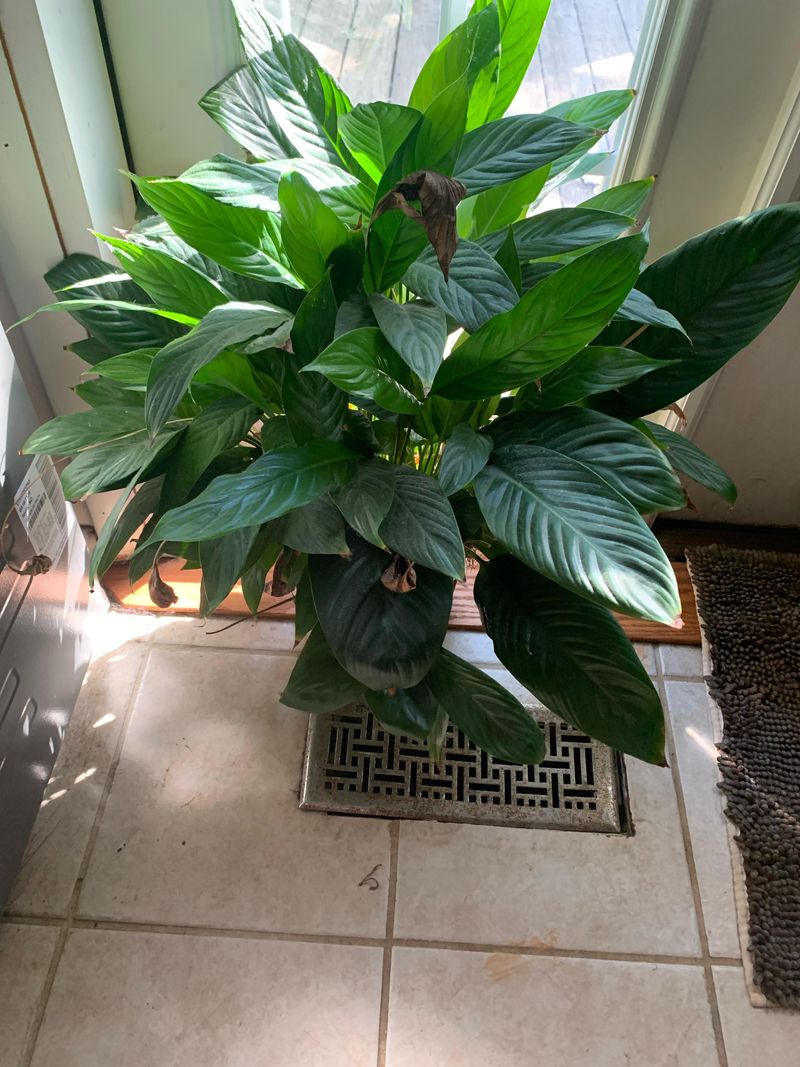
Winter heating can pull moisture out of the air and out of your plants. Illinois Extension points to brown tips and branch dieback in indoor rosemary, and a blast of air from a register can add to that stress.
Warm, moving air tends to dry leaves faster than they can recover.
Still, treat this as one possible contributor rather than the final verdict. A rosemary sitting right beside a vent may be struggling from dry air, but it could also be short on light or sitting in soggy soil at the same time.
A good clue is pattern. If the damage is worst on the side facing a register, or if the plant sits where air from a heater or cooling vent hits it, airflow is a reasonable suspect.
If the whole plant looks off no matter which side you check, keep looking at other causes too.
Choose a Bright Spot Away from Registers
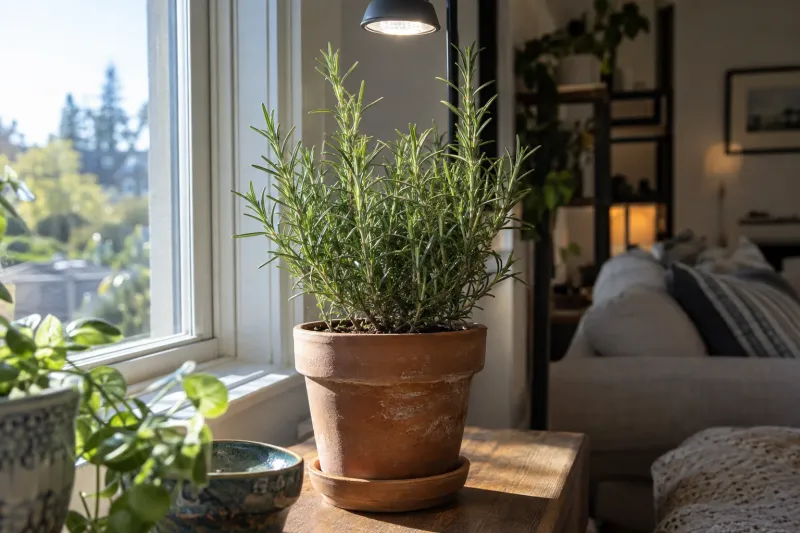
Start with placement, since it costs nothing. Move your rosemary away from heating and air-conditioning registers, fireplaces, and drafty doors or windows.
Then pick the brightest spot you can realistically use.
Illinois Extension favors a cooler, bright location for indoor rosemary. That does not mean you need to hit an exact room temperature.
Every home runs differently, so focus on avoiding direct heat and moving air rather than chasing a number.
Walk around your house at different times of day and notice where the light lasts longest. A window that stays bright and sits out of the path of vents is a strong candidate.
If the best window is also drafty, try shifting the pot a foot or two and see how it handles the change.
Check Light Before Blaming the Air
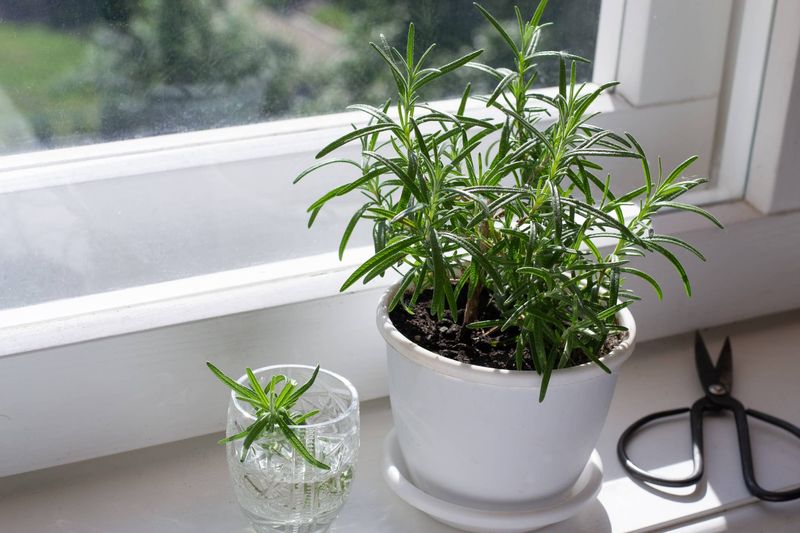
It is tempting to blame dry air for everything, yet light belongs on your checklist. Rosemary grown in a dim corner can weaken over time, even if the air is fine.
Low light often shows up as thin, stretched, leggy growth.
Weak light by itself does not explain crispy foliage, so treat it as one piece of the puzzle. A plant that is already short on light may handle heat, dry soil, or drafts less well.
Fixing the light can make other problems easier to manage.
Choose the brightest practical window you have and keep leaves from pressing against cold or hot glass. Illinois Extension recommends bright conditions for indoor rosemary.
If your home simply lacks a bright window, a grow light is another option some gardeners use.
Water by the Mix, Not the Calendar

Skip the fixed schedule and test the soil instead. Push a finger into the mix and see how it feels.
Rosemary should dry slightly between waterings, but long stretches of dryness can also brown the tips.
Brown foliage does not automatically mean more water. Soggy soil and root rot can cause the same look, which is why the UC IPM guide lists both wet and dry soil as possible causes.
Check the mix and drainage before you add anything.
Use a pot with drainage holes and a freely draining mix. Empty any water that collects in the saucer so the roots are not sitting in it.
Illinois Extension also stresses good drainage for rosemary.
Treat Humidity as One Possible Factor
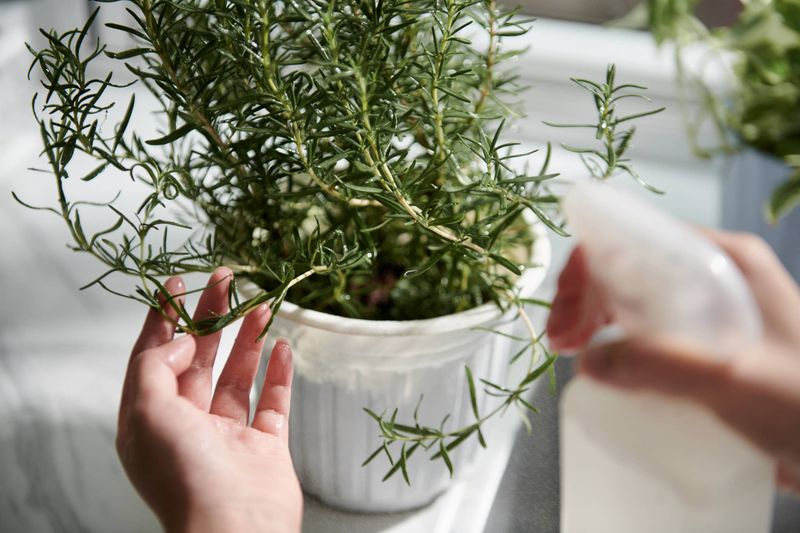
Dry indoor air may play a part in rosemary stress, especially when heating or cooling runs often. Illinois Extension recommends higher humidity for indoor rosemary.
Still, low humidity is rarely the whole story.
Other extension guidance puts more weight on drainage, light, and letting the mix dry slightly between waterings. That mix of advice is a reminder not to treat humidity as a cure.
No single fix is guaranteed to bring back a struggling plant.
Most important, a dry room is never a reason to keep the potting mix wet. Wet soil can bring root trouble of its own.
If you want to try raising humidity, keep it a side step and keep watering tied to the soil.
Inspect the Roots and Leaves Before Changing Care
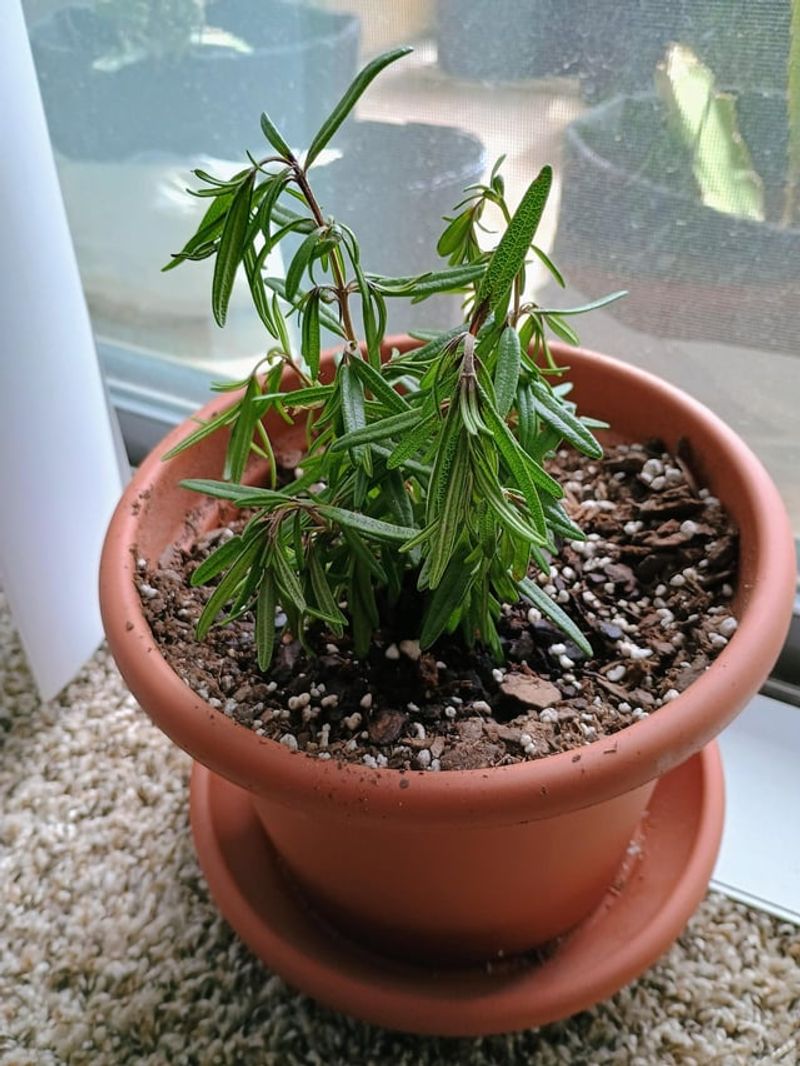
Work through a simple order. First, notice how quickly the mix dries out after watering.
Next, confirm that water drains freely from the holes, then reassess how bright the spot really is.
Then slide the plant out of the pot and look at the roots. Healthy roots are usually firm and light, while mushy or dark roots point toward too much moisture.
The UC IPM guide notes that root problems can brown leaves and branches.
Finally, look closely at the leaves for pests. Spider mites can cause tiny speckles that turn into bronzing and drying, which looks different from plain tip browning.
A hand lens helps, and what you find here tells you which change to make.
Make One Measured Change for Your Home
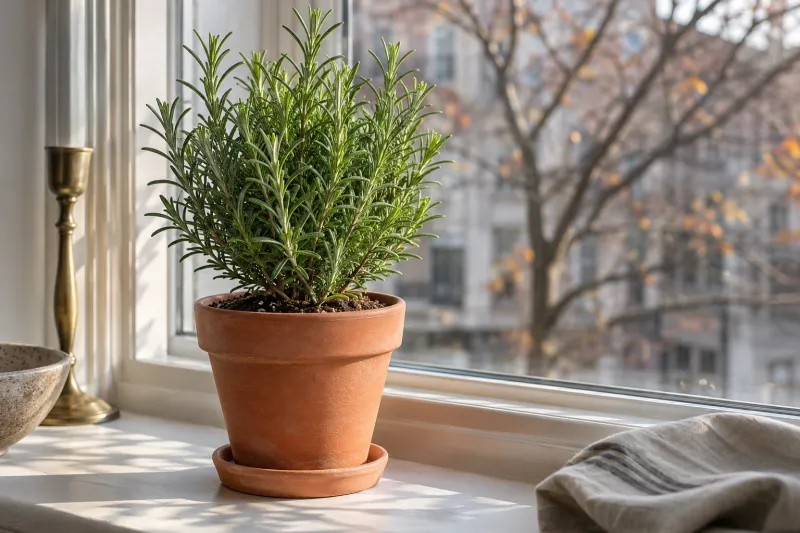
Pick the most likely stressor in your own room and change just that. Maybe it is a pot near a vent, a dim corner, or a mix that stays wet.
Then wait and watch before adjusting anything else.
Nothing here points to a special Arizona-wide risk, since homes differ from one to the next. Rosemary’s drought tolerance outdoors also does not set an indoor watering schedule.
Your pot and your room are what count.
Crispy twigs are the plant’s way of asking a question, and patient answers usually beat quick guesses.