10 Arizona Trees That Grow Fast Without Becoming a Problem
One thornless desert tree bred at a Tucson museum can grow about eight feet in a single year. That kind of speed sounds like a dream, until you remember the headaches fast trees often bring along.
Plenty of quick growers snap in monsoon winds or send greedy roots creeping under patios across Arizona. I have to admit I once planted the wrong one and spent years raking up after its endless mess.
The trees I picked here grow quickly yet stay well behaved through brutal heat and tight water budgets. Several of them also feed bees and hummingbirds, which turns a bare gravel yard into busy, buzzing habitat.
October happens to be prime planting season, since warm soil and cooler air help young roots settle in nicely. So which speedy growers truly deserve a sunny spot in your Arizona yard before next summer arrives?
1. Museum Palo Verde
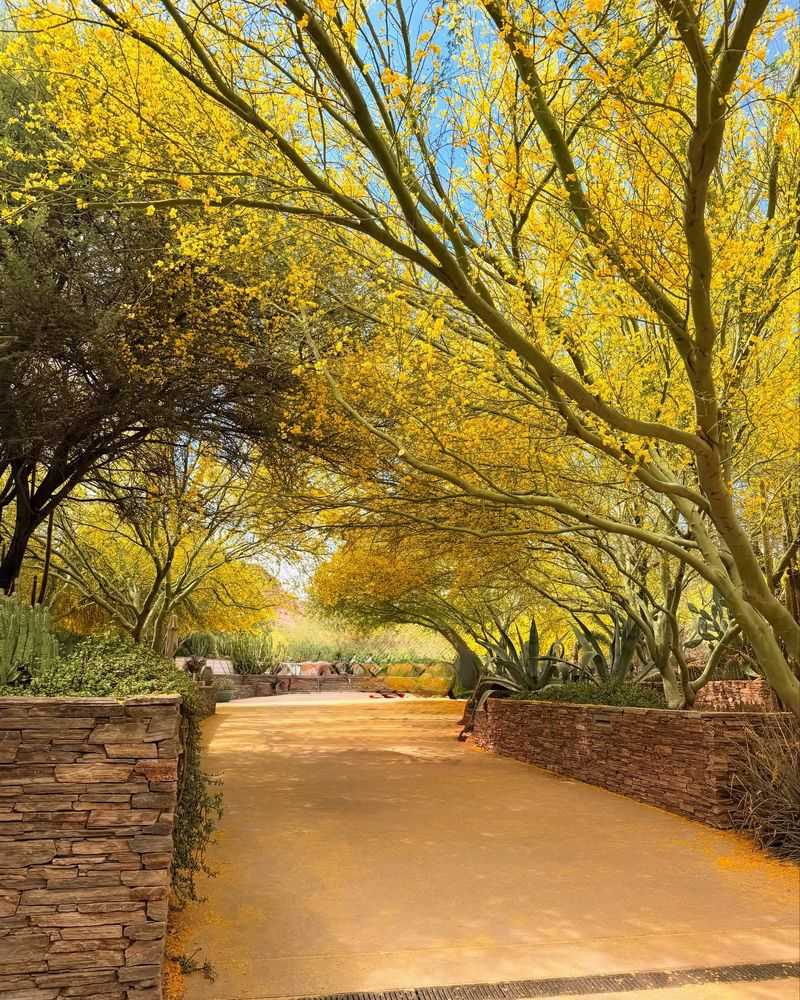
Staff at the Arizona-Sonora Desert Museum gave us a hybrid that can stretch roughly eight feet in one early year. I love how its smooth green bark glows in the sun, even when the tiny leaves drop away.
Breeders blended Mexican, blue, and foothill palo verdes, and the result happens to be thornless, which your bare ankles will appreciate. Spring brings a huge yellow flower show that often lasts two months, and bees pile onto the blooms happily.
Mature trees usually reach about 25 to 30 feet tall and wide, creating filtered shade over a patio or seating area. The green bark photosynthesizes too, so the tree keeps working quietly while summer heat forces its leaves to drop.
Plant it in full sun and well drained soil, since soggy ground slows it down and weakens the roots over time. October planting gives roots several mild months to settle, and deep watering every couple of weeks helps them reach downward.
Too much water speeds growth but also produces weaker wood, so I prefer a steady, moderate watering schedule for mine. Watch for palo verde root borers and mistletoe, and prune lightly for shape rather than chopping large limbs off.
2. Blue Palo Verde
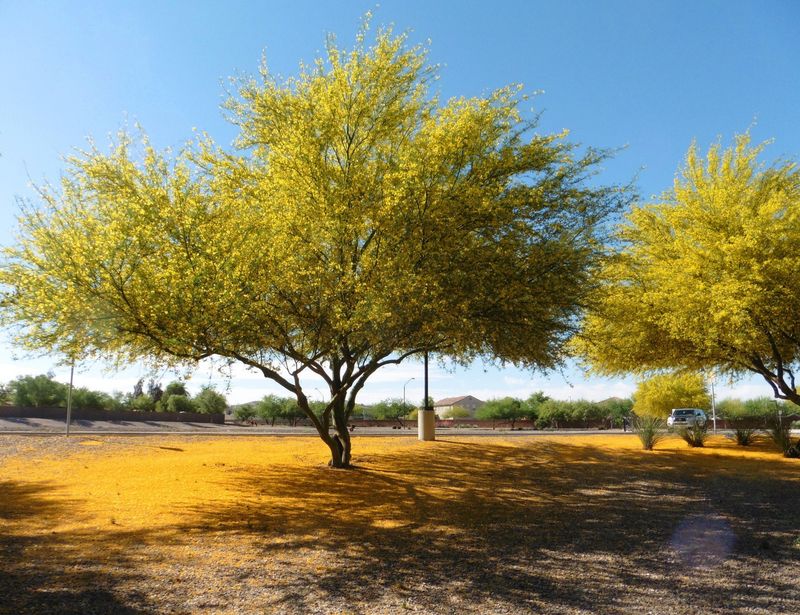
Every spring, a blue palo verde can look like someone dumped buckets of yellow paint over the whole canopy at once. Few sights in the Sonoran Desert make me pull the car over faster than a hillside of these blooming trees.
As the official state tree, Parkinsonia florida earns its title by growing two or three feet yearly with decent care. Its powdery blue-green bark gives the trunk a cool, soft color that looks lovely against warm stucco walls and rocks.
Expect a mature size around 25 to 30 feet, with a broad canopy that casts light, dappled shade below. Small leaflets fall during drought, which is a smart survival trick rather than a sign that something has gone wrong.
Full sun and reflected heat suit it nicely, so a hot western yard or a sunny driveway corner works well. Deep, occasional watering during its first few years encourages a fuller canopy, though established trees handle long dry spells beautifully.
Newer branches carry small thorns, so plant it a few feet back from walkways where people brush past regularly. Spring flower litter does happen, but bees and hummingbirds visit those blossoms, and birds and small mammals snack on the seed pods.
3. Desert Willow
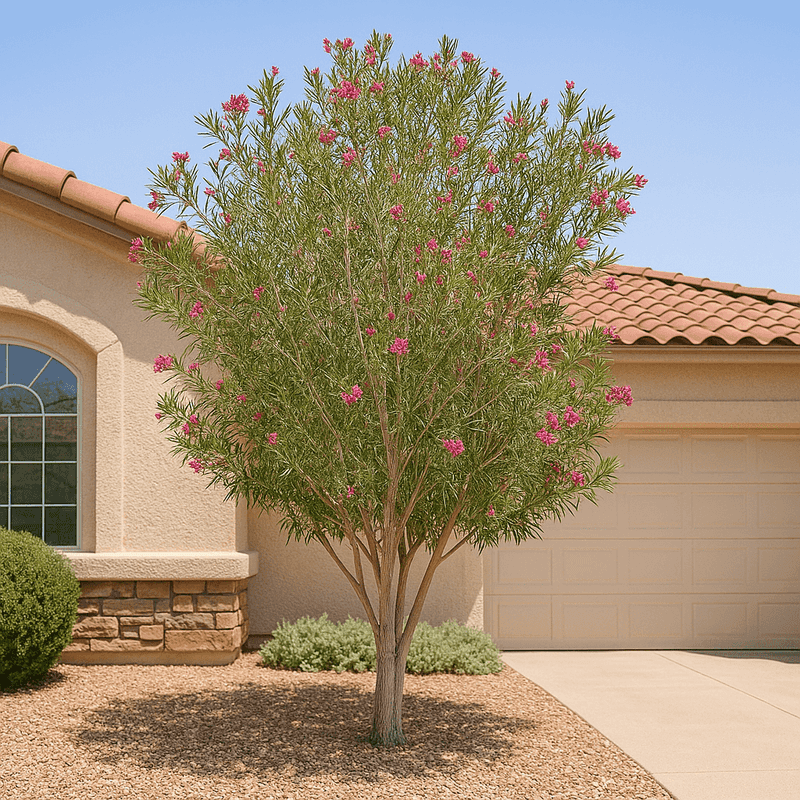
Hummingbirds treat a blooming desert willow like a busy roadside diner, zipping between its orchid-like trumpets from late spring into fall. Personally, I think those ruffled pink and lavender flowers look far too delicate for a tree this tough.
Despite the name and narrow leaves, Chilopsis linearis has no relation to true willows and actually belongs to the catalpa family. Young trees can add about three feet a year, which makes them a speedy choice for filling an empty corner.
Most reach 15 to 30 feet tall with an airy, open shape that lets plenty of light reach plants below. That graceful habit pairs nicely with salvias and penstemons, giving pollinators a steady buffet across several months of the warm season.
Give it full sun and lean, well drained soil, because rich, soggy ground leads to floppy growth and fewer flowers. Once established, a deep soak every ten to fourteen days during summer keeps blooms coming without wasting much water.
Long, skinny seed pods can hang on into spring, and some folks find them a little untidy looking. Seedless cultivars like ‘Bubba’ or ‘Timeless Beauty’ reduce that cleanup, so ask your nursery about them this October.
4. Velvet Ash
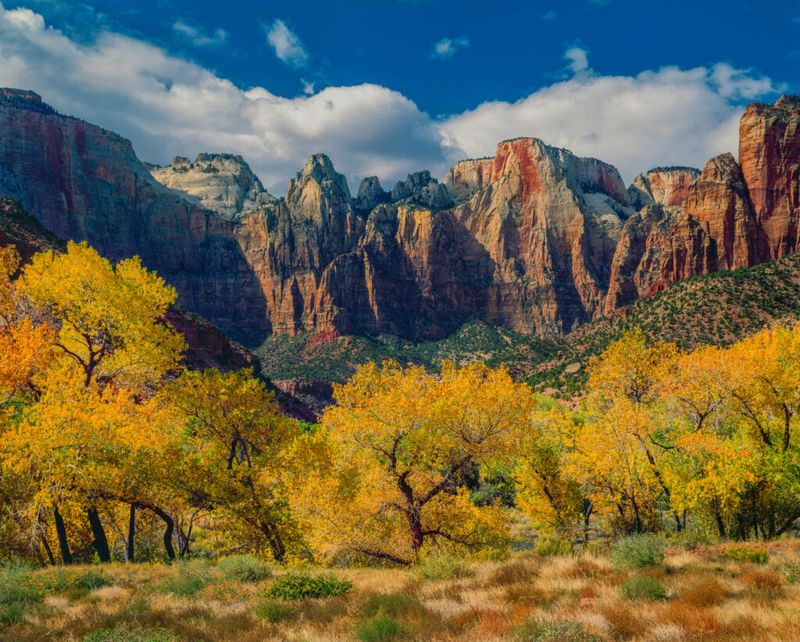
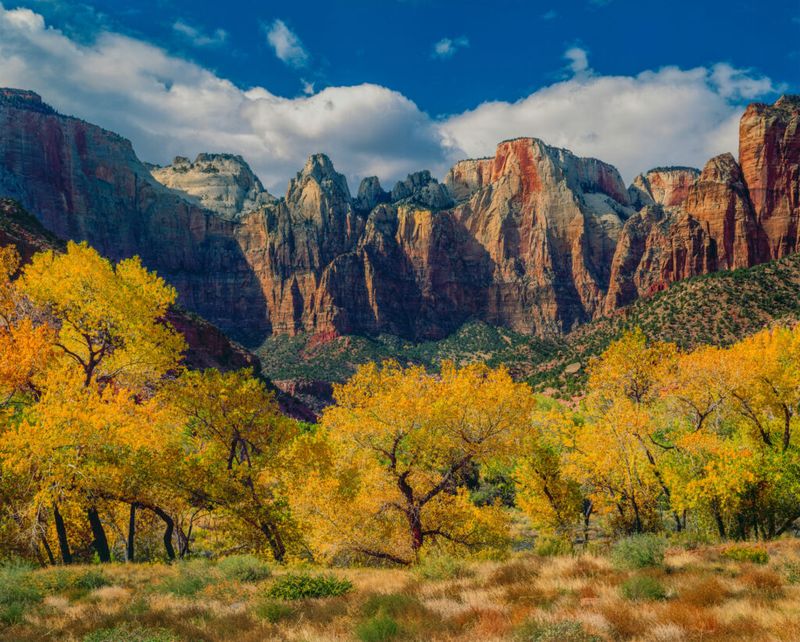
October is when velvet ash shows off, turning its dense rounded canopy into a glowing umbrella of buttery yellow leaves. I can’t imagine a better native tree for anyone craving a real autumn moment in the low desert.
Fraxinus velutina grows naturally along canyon streams, so it counts as a riparian native rather than a dry desert tree. With regular deep watering, it often adds about two feet each year and eventually reaches 30 to 45 feet tall.
That size brings serious shade, which can noticeably cool a west-facing wall during those long, scorching summer afternoons. Its leaves also feed caterpillars of several moths and butterflies, while birds happily pick through the winged seeds later on.
Young trunks can sunscald under harsh southern or western sun, so wrap them or plant on an eastern side. Iron chlorosis may yellow the leaves in soggy alkaline soil, so water deeply but less often to keep roots happy.
Allergy sufferers should know ash pollen ranks fairly high, so consider placement away from bedroom windows and patios. Female trees drop winged seeds, which leads many gardeners toward a seedless male selection, a choice covered later in this list.
5. Chinese Pistache
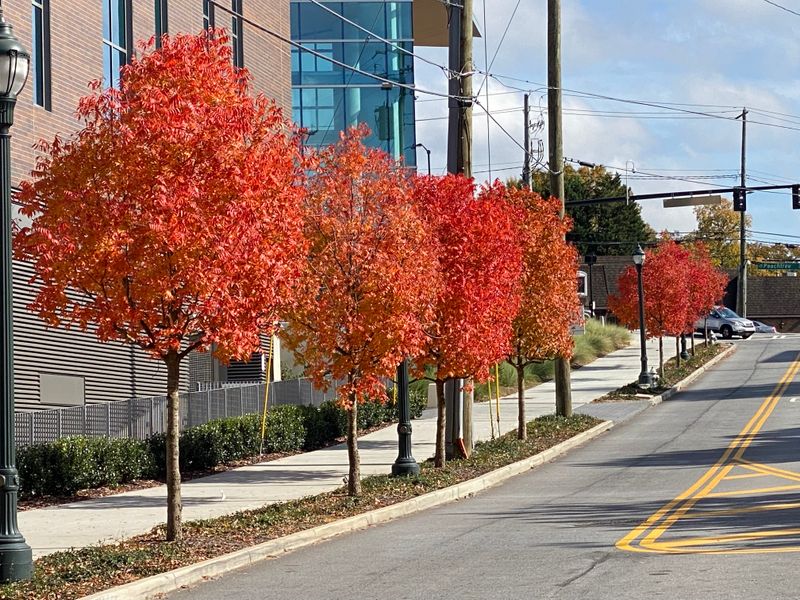
Few trees turn the desert into a New England postcard quite like Chinese pistache does each fall. Its leaves shift to fiery red and orange, and you might notice neighbors slowing their cars just to admire the color.
Native to Asia, Pistacia chinensis handles heat, wind, and poor compacted soil with surprisingly little complaint once roots settle. Growth runs moderate to rapid in full sun, and mature trees usually reach 30 to 40 feet with a rounded crown.
What I like most is its deep, well mannered root system that rarely lifts sidewalks or bothers nearby foundations. That trait makes it a smart pick for smaller lots where space between the house and street feels pretty tight.
Young trees can look a little gawky, so early structural pruning helps them build a balanced, sturdy framework. Water deeply every few weeks during the first summers, then ease back as the tree proves its toughness in your yard.
Choose a male tree or the seedless hybrid ‘Red Push’ to avoid berries and unwanted volunteer seedlings popping up around. Female berries do feed birds, but they can also create sticky messes and occasional sprouts in nearby beds.
6. Natchez Crape Myrtle
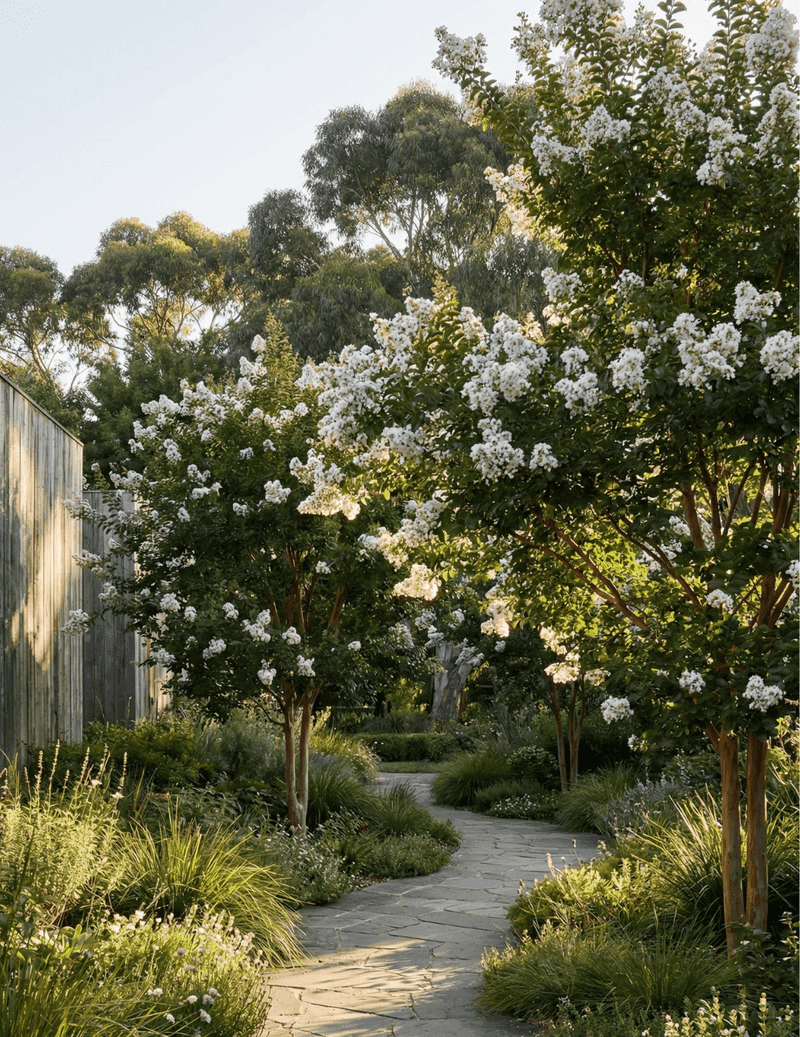
Peeling cinnamon bark gives Natchez crape myrtle a look that stays interesting even after its leaves fall each winter. Personally, I love running my hand along those smooth, mottled trunks while waiting for summer’s next flower show.
Bred by the U.S. National Arboretum, this hybrid of Lagerstroemia indica and fauriei grows fast, often three to five feet yearly.
Its pure white flower clusters can stretch up to 18 inches long, blooming from midsummer into early fall.
Mature trees reach about 20 to 30 feet, a manageable height for courtyards, side yards, and spots near patios. Right now in October, the foliage begins shifting toward orange and red, adding a bonus season of color.
It handles heat well once established, though it prefers a bit more water than true desert natives do. Mulch around the base and give deep soaks, since well drained soil with steady moisture keeps blooms looking their best.
Skip the harsh topping cuts people call crape murder, because they leave ugly knobs and weak new sprouts behind. Its strong mildew resistance helps, but keep an eye out for aphids and scale, especially on stressed or crowded trees.
7. Thornless Mesquite
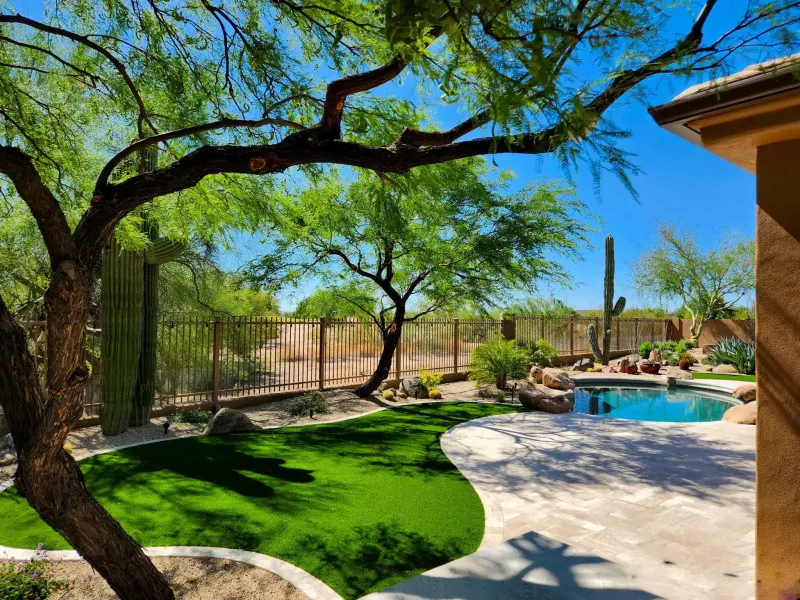
Roadrunners love patrolling the shady ground beneath a mesquite, hunting lizards and the occasional scorpion scuttling through fallen leaves. I believe few trees invite that kind of helpful wildlife activity quite as naturally as this one does.
Old mesquites earned a prickly reputation, but thornless selections like the honey mesquite clone ‘AZT’ keep the charm without stabbing anybody. That selection is hardy to about zero degrees and can grow into a broad canopy reaching 25 to 35 feet.
Fine, ferny foliage casts soft dappled shade that lets cactus and wildflowers grow happily underneath through the warm months. Spring brings fragrant creamy catkins buzzing with bees, followed by pods that wildlife eagerly gather later in summer.
Overwatering and extra fertilizer create a heavy canopy on weak roots, which leads to blown-over trees during monsoon storms. Deep, infrequent watering trains roots to go down, and regular canopy thinning lets strong winds pass through easily.
For the best match with local ecosystems, ask nurseries for native velvet or honey mesquite rather than imported Chilean types. Expect some pod litter, though many desert gardeners consider those pods a perfectly fair trade for such generous shade.
8. Bonita Ash

Picky gardeners tired of raking winged seeds tend to smile when they hear Bonita ash is a seedless male. What surprises me most is how a simple selection solves the biggest complaint people have about native ash trees.
Fraxinus velutina ‘Bonita’ keeps the speedy growth of its parent but adds denser, darker foliage and noticeably stronger wood. That sturdier wood helps it shrug off gusty summer storms better than many other quick shade trees sold locally.
Expect a mature tree around 25 to 35 feet tall, spreading wide enough to shade a driveway or west wall. Fall leaves usually turn golden yellow, sometimes hinting at orange, so you get a cheerful color show each autumn.
Moderate water during establishment matters, and fall planting gives roots time to grow before the next big heat wave. Once mature, it tolerates rocky or alkaline soil, though it still appreciates occasional deep watering during scorching dry months.
Like its parent, young Bonita trunks can sunscald, so planting on the east side of a home helps considerably. Male trees do release pollen, so allergy-prone households should weigh that before placing one right beside the back patio.
9. Mexican Bird Of Paradise
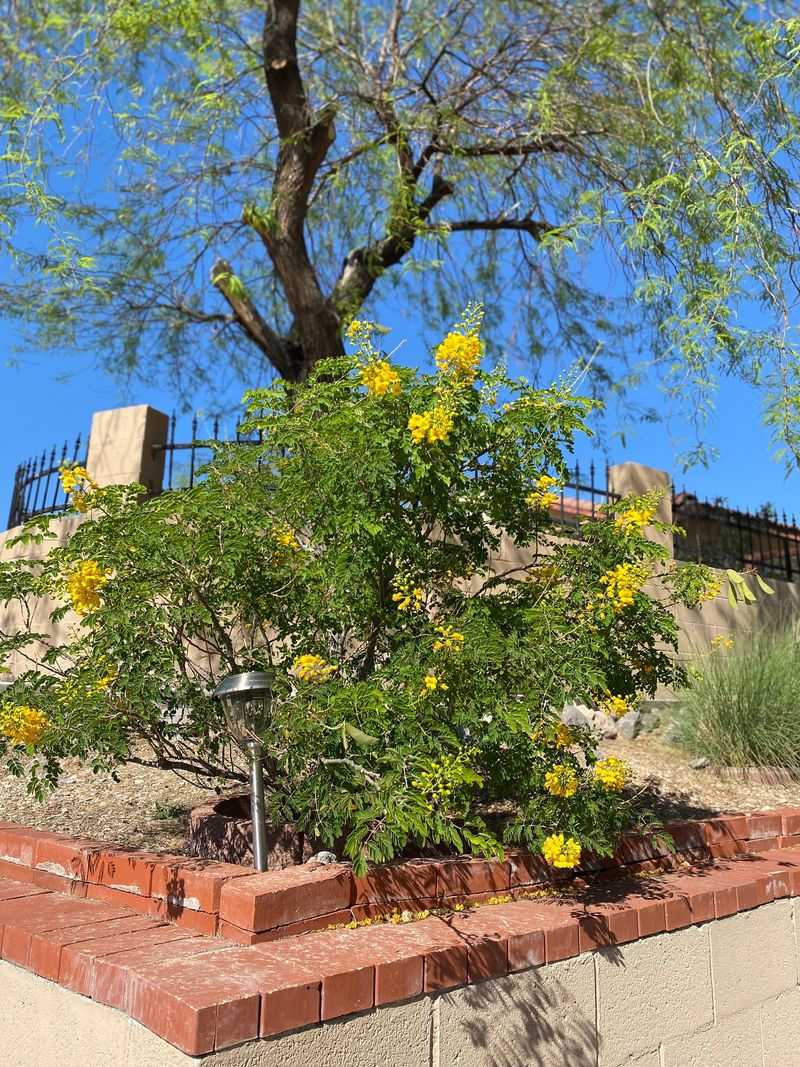
Bright yellow flower spikes can appear on this little tree from spring clear into fall, and sometimes even longer. You’re in for a treat when hummingbirds and butterflies discover those sunny blooms dangling just outside your kitchen window.
Caesalpinia mexicana is native to northern Mexico and Texas, yet it handles Sonoran Desert heat like a seasoned local. Unlike its spiky red cousin, this species is thornless and offers lush, ferny dark green leaves that look tropical.
With regular summer water, it can grow two to four feet each year and reach roughly 10 to 15 feet. That compact size makes it perfect for small courtyards, narrow side yards, or anywhere a big shade tree feels crowded.
Plant it in full sun with fast-draining soil, and give it a deep soak every week or two in summer. Light pruning shapes it into a tidy single-trunk tree, though some gardeners prefer leaving it bushy as a privacy screen.
Its woody pods can pop open with a surprising snap when mature, flinging seeds a short distance across the gravel. The wood can be brittle, so I like trimming heavy branches back gently during the cooler months ahead.
10. Sweet Acacia
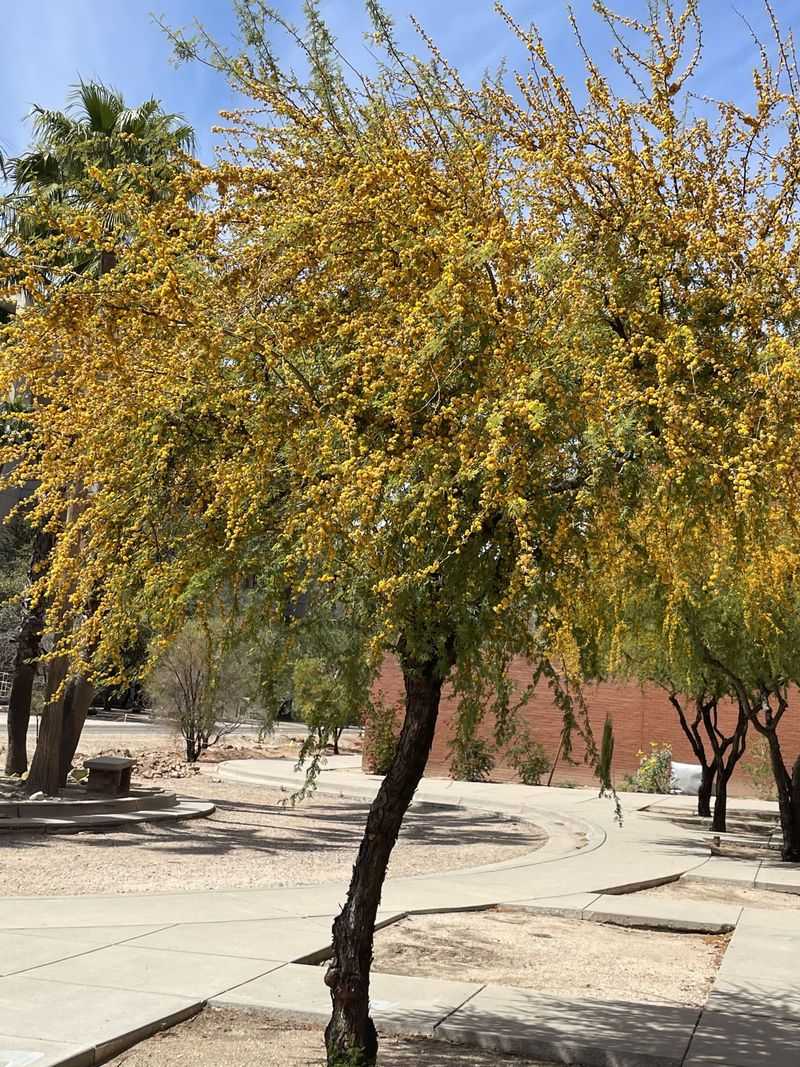
Late winter air around a sweet acacia smells almost like perfume, thanks to hundreds of fuzzy golden puffball flowers. I have to admit I sniff every one I pass, because that warm, honeyed scent feels like an early spring gift.
Vachellia farnesiana grows wild in southern Arizona, so it fits right into local desert gardens without any fuss. It grows quickly with modest water and usually tops out around 15 to 25 feet, keeping things nicely manageable.
Feathery leaves create light filtered shade, and native bees eagerly visit those blooms when few other plants are flowering. Birds also appreciate the dense branching for shelter, giving your yard more of that lively habitat feel throughout the year.
Sharp spines line the branches, so plant it away from play areas, pool decks, and busy walkways for safety. Many gardeners actually use those spines as a living barrier along property lines, which works better than you might expect.
Full sun and well drained soil keep it happy, and October planting gives roots a gentle start before summer. Deep watering every few weeks during establishment helps, then the tree settles into an easygoing, low water routine.