10 Fall Porch Decor Ideas Using Plants That Survive An Ohio Frost
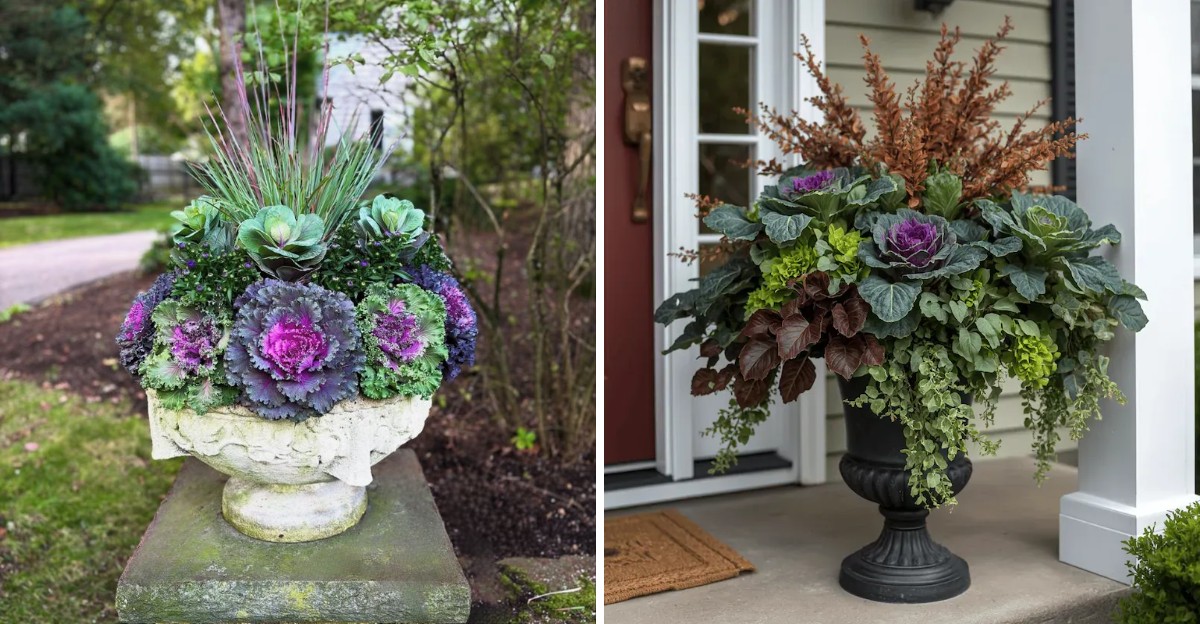
Frost shows up on your porch some October morning, and the pretty pots that looked great on Friday are droopy puddles by Monday.
Ohio weather doesn’t care about your decorating budget. Mums sulk, coleus folds, and every cute arrangement you put together ends up on the compost pile before Thanksgiving.
Plenty of folks shrug and buy new ones each year, as if that’s the only way.
It isn’t. Ten plants shrug off the cold like it’s nothing, and a few look even better after a frosty night.
They mix well with pumpkins, cornstalks, and twinkle lights, and they won’t cost you a fortune.
Some of the picks might surprise you. A couple aren’t even sold in the fall display section.
Sketch out your porch before you head to the garden center. A plan keeps your cart honest.
1. Center An Urn With Ornamental Kale And A Ring Of Pansies
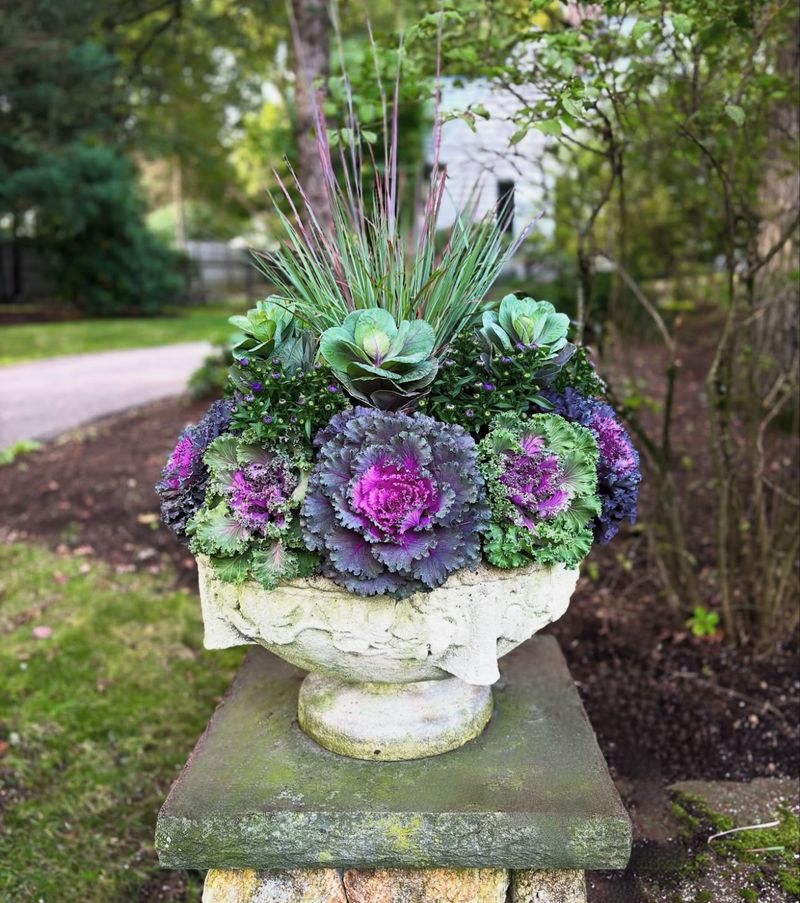
Picture a ruffled purple rosette sitting in a stately urn like a queen on her throne. Ornamental kale brings that kind of drama to a porch, and pansies make the perfect court around it.
The kale actually looks better after a frost or two. Cold nights push its center colors to deeper pinks, purples, and creamy whites.
Pansies are tough too, handling temperatures down to about 26 degrees and loving days between 40 and 60 degrees.
Start with one large kale plant right in the middle of the urn. Set it a little higher than the edge so it reads as the star.
Then tuck four to six pansies around the outer rim, letting them spill slightly over the lip.
Color matching is half the fun here. A purple kale looks lovely with yellow or orange pansies for contrast.
A white kale pairs sweetly with soft blue or lavender blooms for a calm, frosty look.
Water the urn when the top inch of soil feels dry. Fall sun is gentler, so you will water less than in July.
Pinch off faded pansy flowers every few days to keep new buds coming.
If a hard freeze wilts the pansy blooms, do not panic. The plants usually bounce back with fresh flowers once the sun warms things up again.
2. Let Ornamental Cabbage Steal The Show In A Big Pot
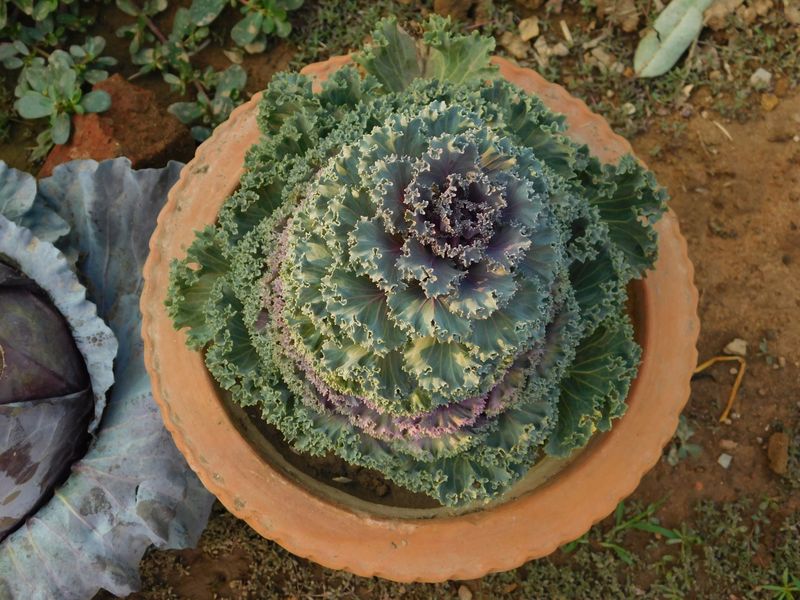
Some plants whisper. Ornamental cabbage shows up wearing a sequined jacket and asks for the microphone.
Also called flowering kale, ornamental cabbage has round, flat heads that look like giant roses. A light frost makes its colors pop even more, turning centers bright magenta, rosy pink, or snowy white.
It can even handle a dusting of snow, though a deep, hard freeze will eventually wear it down.
Go big with your pot. A wide container, at least 16 inches across, lets you group three cabbages in a tight triangle.
That cluster looks bold from the street and makes your entry feel planned and polished.
Here is a fun fact. These cabbages are edible, but they taste bitter, so they are better for looking at than eating.
Your Ohio Garden Changes Every Week. Your Plan Should Too.
Gardening in Ohio changes quickly throughout the season. Every Friday you’ll receive a simple weekly plan showing exactly what to plant, prune, fertilize, harvest, and protect so you never miss the right timing.
Think of them as the porch version of a fancy centerpiece.
When planting, choose plants that already show some color at the garden center. Growth slows way down in cool weather, so what you buy is mostly what you get.
Set them at the same depth they sat in their nursery pots.
For extra charm, add a few small pumpkins around the base of the pot. A plaid ribbon tied around the rim brings a cozy touch.
Your neighbors will slow down on their evening walks to take a peek.
3. Fill Hayracks And Window Boxes With Pansies And Violas
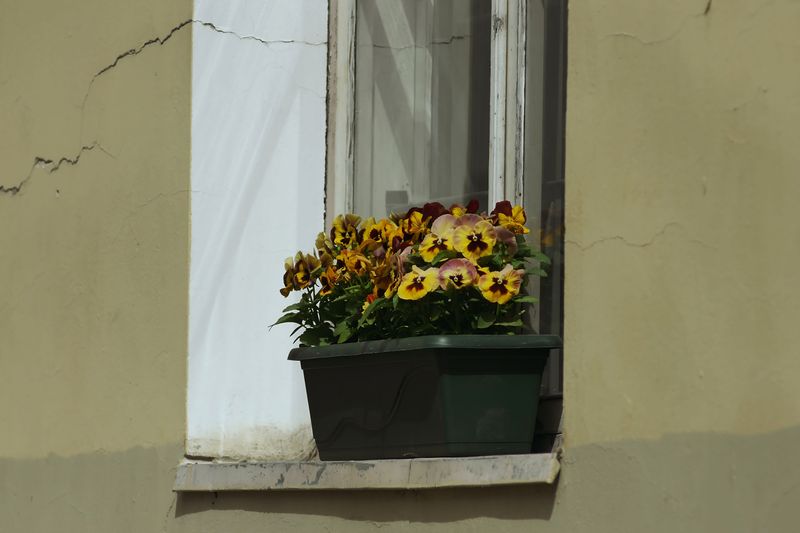
My grandmother called pansies little faces, and once you see it, you cannot unsee it. Those bright blooms seem to smile up at anyone climbing the steps.
Pansies and violas are some of the hardiest flowers you can buy in fall. They tolerate temperatures down to about 25 degrees.
If a long cold stretch hangs around, a light sheet tossed over them at night helps a lot.
Hayracks and window boxes are perfect homes for these flowers. Their low, mounded shape fills the space without blocking your windows.
Violas have smaller flowers but bloom in huge numbers, so they add a sprinkle of color like confetti.
Line hayracks with coconut coir to hold soil and moisture. Fill with fresh potting mix, then plant pansies about four inches apart.
Tuck violas in the gaps and along the front edge so they can trail.
Window boxes dry out fast in breezy fall weather. Check them every couple of days with your finger.
A slow drink at the base works better than a quick splash on the leaves.
Try a color theme for a pulled-together look. Orange and deep purple shout autumn.
Blue and white feel crisp and fresh. Many pansies even survive the winter in Ohio and bloom again in early spring, giving you a bonus show.
4. Pair Snapdragons With Silvery Dusty Miller
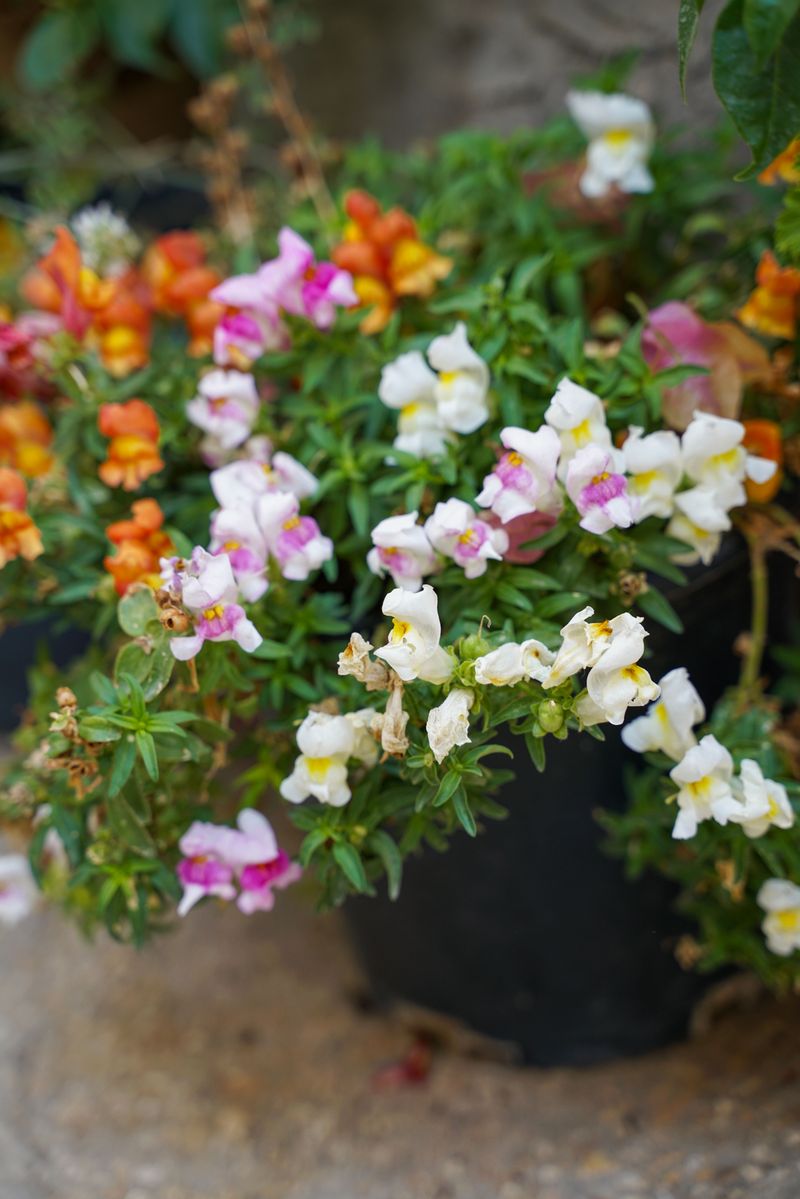
Squeeze a snapdragon bloom gently on the sides and it opens like a tiny dragon mouth. Kids love it, and honestly, so do most grown-ups.
Snapdragons bring tall spikes of color in shades like bronze, burgundy, gold, and soft peach. They can shake off a single chilly morning, but repeated freezes will wear them out.
So enjoy them early in the season while temperatures stay mild.
Dusty miller is the steady friend in this pairing. Its fuzzy, silver leaves handle light frost well and often keep going into late October or early November.
Hard freezes can damage it, but it usually outlasts many other annuals.
Plant snapdragons in the middle or back of a container for height. Circle them with dusty miller so the silver glows against the warm flower colors.
The contrast looks elegant, almost like moonlight next to a campfire.
When the snapdragons finally fade, simply pull them out. Pop in a small ornamental kale or a few pansies instead.
The dusty miller keeps the pot looking full while you swap things around.
Give this planter a sunny spot for the best blooms. Remove spent flower spikes to encourage new ones.
Dusty miller needs very little fuss, just water when dry and maybe a quick trim if it gets leggy.
5. Add Height With ‘Bright Lights’ Swiss Chard
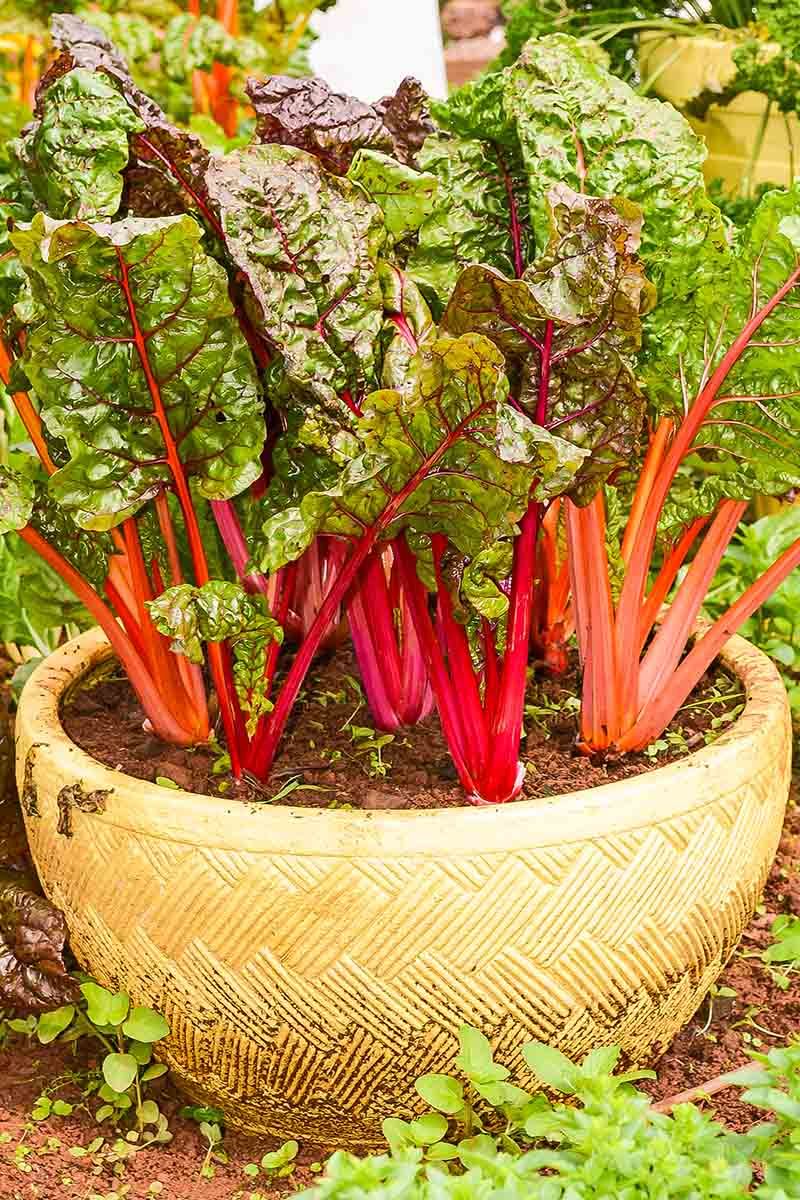
Who says vegetables cannot be glamorous? ‘Bright Lights’ Swiss chard has stems that glow like stained glass in the late afternoon sun.
This colorful heirloom comes in shades of gold, crimson, pink, orange, and white. It handles a wide range of temperatures, growing happily from about 32 to 85 degrees.
Mature plants can shrug off moderate frost, which makes them a smart pick for Ohio porches in October.
Gardeners love to talk about thrillers, fillers, and spillers in containers. Swiss chard makes a wonderful thriller, the tall star that grabs attention.
Its big, crinkly leaves add a lush look that flowers alone cannot match.
Place one or two chard plants in the center of a tall pot. Surround them with pansies or creeping thyme as fillers.
Let some trailing ivy spill over the edge to finish the look.
Keep in mind that ‘Bright Lights’ may be a bit less frost-hardy than some other chard types. On nights that dip well below freezing, toss a light cloth over the pot.
Pull it off in the morning so the plant gets sun.
Bonus perk: you can snip a few outer leaves for dinner. Sauté them with garlic and olive oil.
Your porch planter just became part of your kitchen garden.
6. Mix In Edible Kale For Texture You Can Harvest
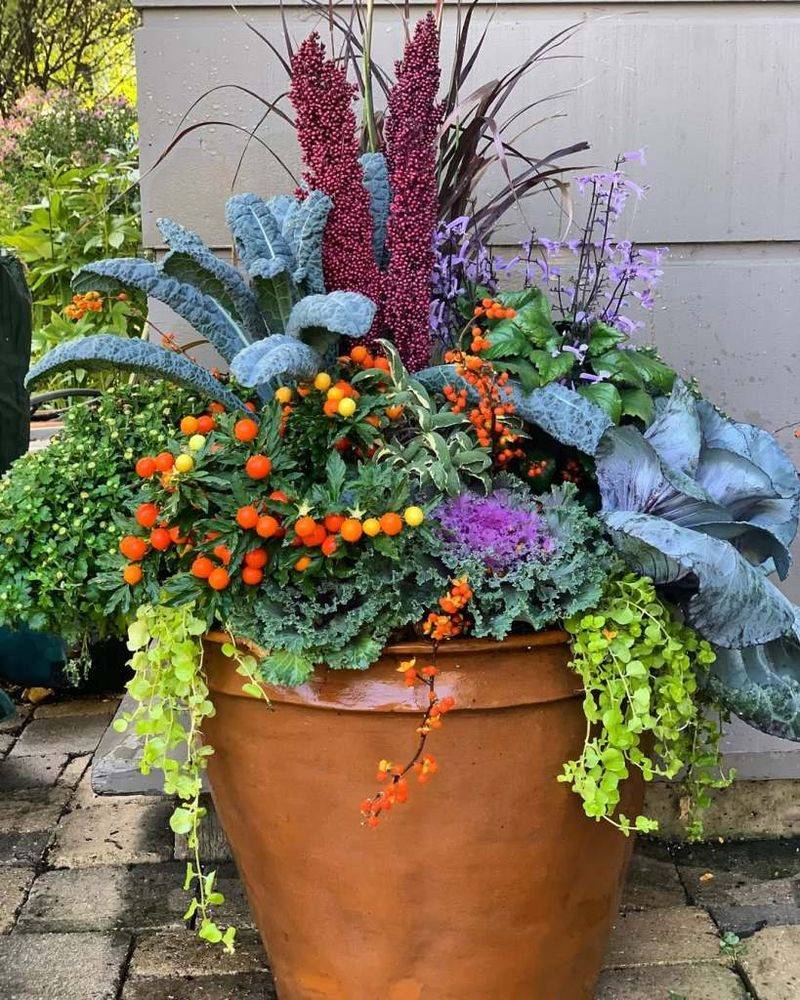
Ever tasted kale that was picked after a frosty night? It is noticeably sweeter, because cold weather helps the plant turn some of its starches into sugars.
Edible kale is one of the toughest plants you can grow. It handles temperatures well into the 20s, and with a layer of mulch it can survive down to around 10 degrees.
Ohio State Extension even lists kale as a reliable crop for Ohio gardens.
On a porch, kale brings amazing texture. Curly types like ‘Winterbor’ look frilly and full, while Lacinato kale has long, bumpy, blue-green leaves. ‘Winterbor’ is especially known for standing up to cold.
Wooden crates or rustic baskets lined with plastic make charming kale containers. Group two or three varieties together for a mix of shapes and shades.
Add a few orange pansies for a pop of warmth against all that green.
Harvest by picking the oldest outer leaves first. Leave the center growing so the plant keeps producing.
You can keep picking well into winter, even when there is snow on the porch railing.
Water kale deeply once or twice a week, depending on rain. In late fall, tuck shredded leaves or straw on top of the soil.
That cozy blanket helps protect the roots during the coldest nights.
7. Tuck Dark Heuchera Beside Pansies And Asters
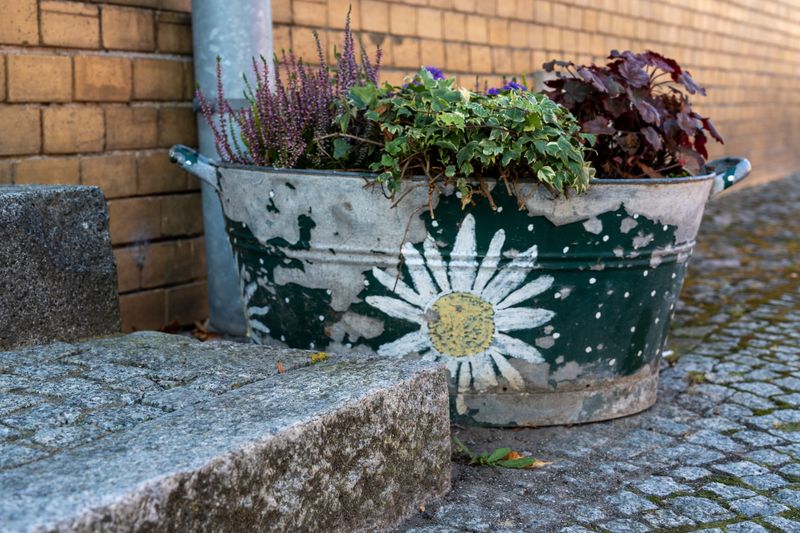
Moody, mysterious, and a little bit gothic, dark heuchera looks like it belongs at a Halloween party. Its deep purple, almost black leaves make every bright color nearby look brighter.
Heuchera, also called coral bells, is a perennial that is hardy in USDA zones 4 through 9. That covers all of Ohio, so it handles cold winters with ease.
Its leaves come in many colors, from silver to rich burgundy to nearly black.
Pansies and asters make great partners. Asters are tough fall bloomers that can stand up to frost, and their purple or pink daisy-like flowers buzz with late bees.
Pansies add cheerful faces right along the edge.
Set the heuchera near the front or side of your pot where its leaves can be seen up close. Place the aster in the back for height.
Then fill gaps with pansies in orange or gold for strong contrast.
When the season ends, do not toss the heuchera. Plant it in a garden bed, or keep it in the container.
If it stays potted, add a layer of mulch after the first frost to protect the roots.
Next spring, it will wake up with fresh leaves. That makes it a plant that keeps paying you back year after year.
8. Use Ornamental Grasses For Height And Movement
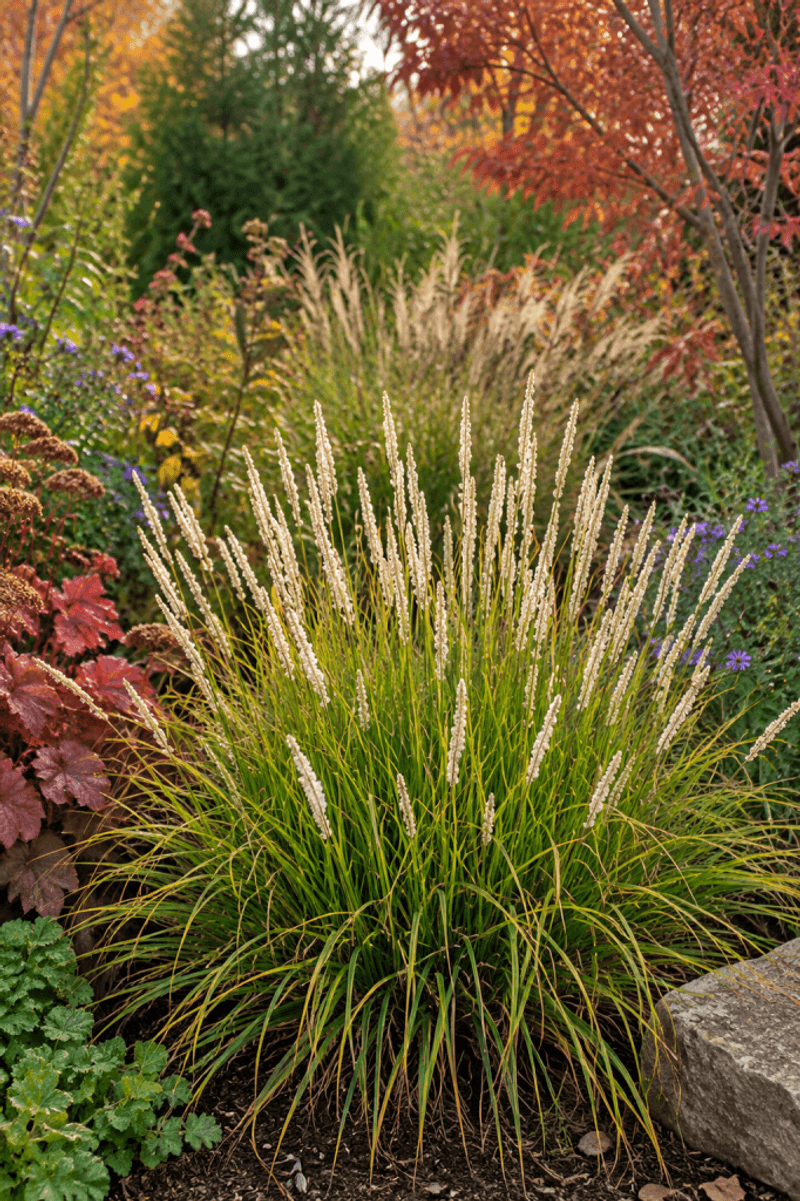
Close your eyes on a breezy fall day and listen. Ornamental grasses rustle softly, almost like a whisper, and add sound to your porch as well as beauty.
These plants bring height, swaying motion, and lovely texture to fall displays. Many types are perennials that look interesting all winter long in Ohio.
Their dried plumes catch frost and snow in a way that feels magical on a cold morning.
Cool-season grasses grow best between 60 and 75 degrees and get a second growth spurt in fall. Some annual grasses, like purple fountain grass, can handle a light frost too.
Most grasses ask for very little care and rarely have pest problems.
Try placing tall grasses in a matching pair of planters on each side of your door. That simple trick frames the entry like a picture.
Add ornamental kale or pansies at the base to soften the look.
Choose a grass that fits your space. Narrow porches do well with upright types like feather reed grass.
Roomier spots can handle fuller, fountain-shaped grasses that arch outward.
Leave the plumes standing through winter instead of cutting them back. Birds sometimes snack on the seeds.
Trim them down in early spring before new green shoots appear.
9. Place Fragrant Sweet Alyssum Or Dianthus Near The Door
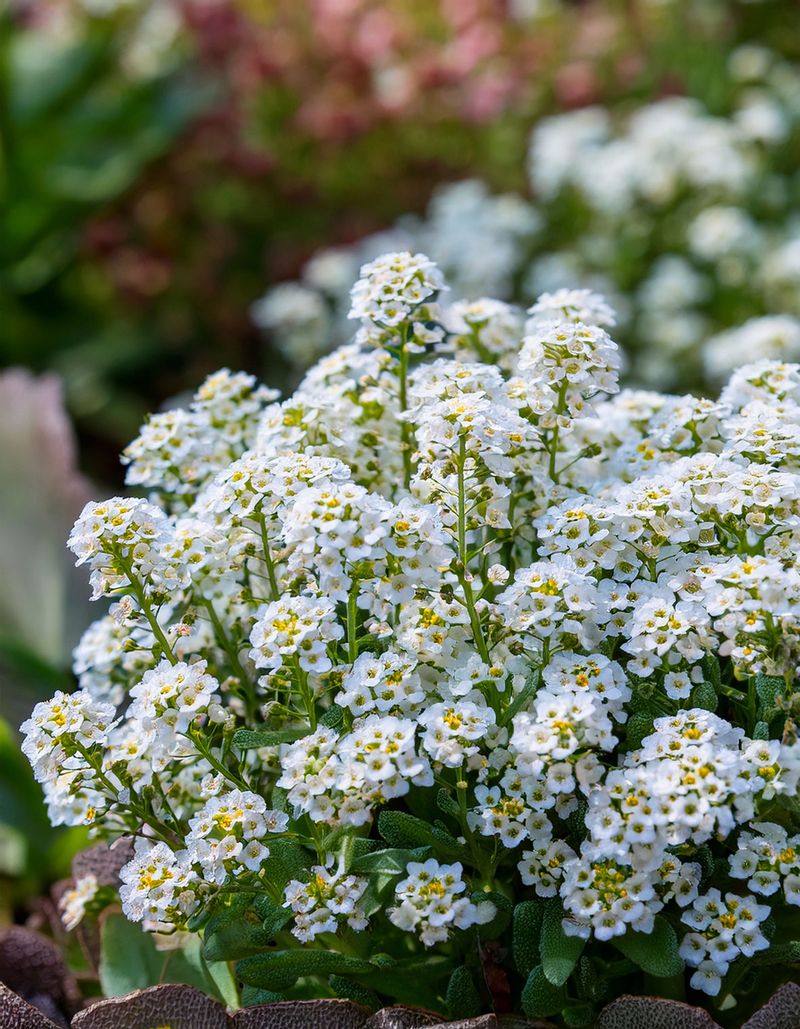
Imagine opening your front door and catching a whiff of honey and spice. Sweet alyssum and dianthus turn an ordinary walk inside into a tiny treat for your nose.
Sweet alyssum has clusters of tiny white, pink, or purple flowers with a soft honey scent. It can handle one cold morning, but repeated freezes tend to wear it out.
Plant it early in fall so you get plenty of weeks to enjoy it.
Dianthus, sometimes called pinks, smells a little like cloves. Annual types can take a light frost, though hard freezes may damage some kinds.
Other varieties are hardy in zones 3 through 9, so they can return each year.
Since scent is the goal, put these plants close to where you stand. A small pot by the doorknob or a window box near the mailbox works great.
You will notice the fragrance every time you grab a package.
Sweet alyssum spills nicely over pot edges, softening hard lines. Dianthus forms neat, grassy mounds with bright flowers on top.
Together, they create a pretty mix of shapes.
Trim off faded dianthus flowers to keep blooms coming. Give alyssum a light haircut if it looks scraggly.
Both enjoy sun and soil that drains well.
10. Pack Pots Full For An Instantly Finished Look
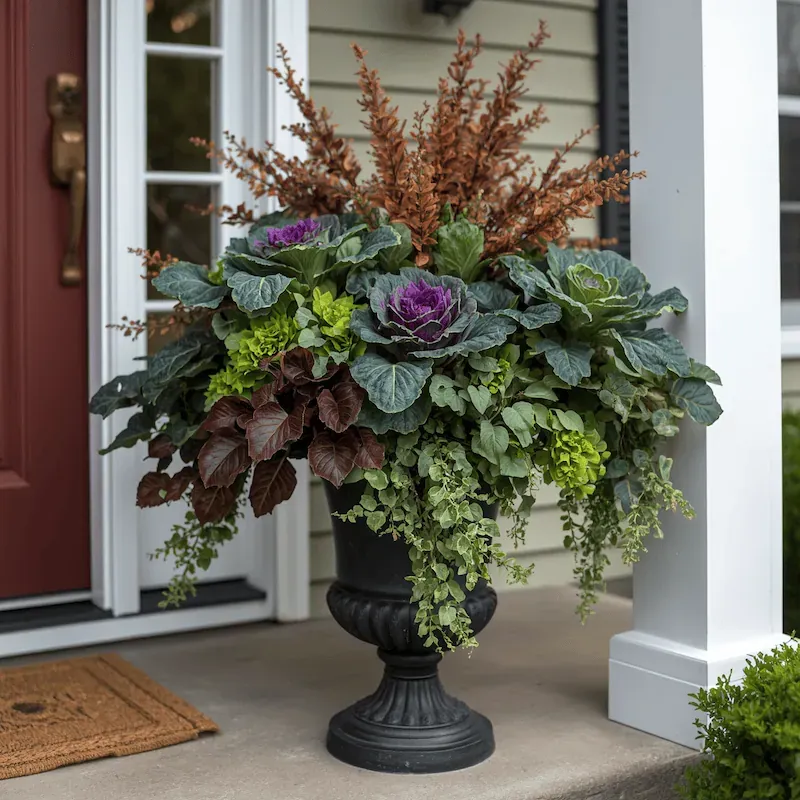
Summer planters get months to fill in, but fall pots are on a tight schedule. Think of it like packing a suitcase for a short trip, where you bring what you need right away.
Plant growth slows way down once temperatures cool. That means small plants will stay pretty small through October and November.
To get a lush, full look, plant enough to fill the container from day one.
Do not be shy about crowding. Set plants close together, with their root balls almost touching.
You can even gently loosen roots and squeeze them in a bit tighter than usual.
Mix sizes, textures, and colors for a layered style. Use something tall, like grass or Swiss chard, in the back.
Add rounded plants like kale or heuchera in the middle, and trailing pansies or ivy along the edges.
Here is a handy money tip. Fill the bottom third of very large pots with upside-down plastic nursery pots or empty bottles.
You will use less soil, and the pot will be lighter to move.
Finish with simple extras like mini pumpkins, pinecones, or birch branches. They fill any tiny gaps and add seasonal charm.
Step back, admire your work, and enjoy a porch that looks ready for company.