10 Native Oregon Plants Every New Homeowner Should Grab Before Winter Sales End
You just got the keys, the yard is a blank muddy canvas, and the garden center clearance racks keep calling your name. Good news: your plant habit can help local birds, bees, and hummingbirds right now.
Native plants are built for our wet Oregon winters and dry summers, so winter is a great time to get them in the ground while prices are low. Here are ten natives worth rescuing before the sale signs come down.
1. Oregon Grape
Oregon’s state flower has a reputation for being nearly impossible to kill, and honestly, it earns every bit of it. If you are a brand-new homeowner who is a little nervous about your plant-keeping record, start right here.
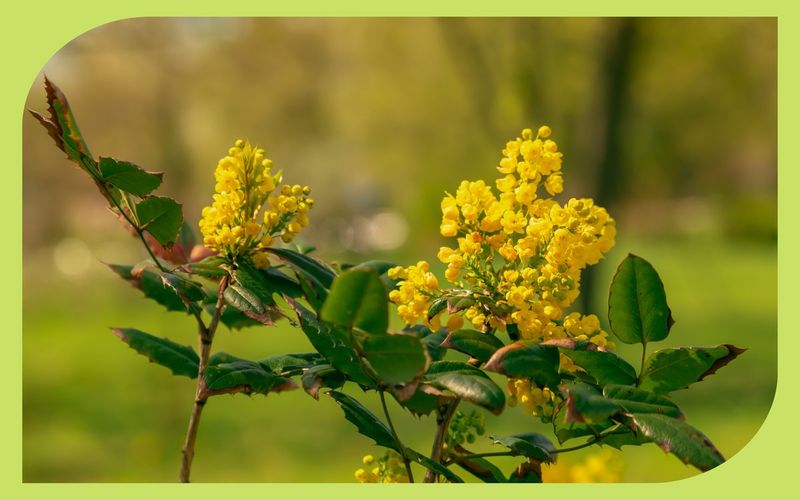
Mahonia aquifolium keeps its glossy, holly-like leaves all year. When the cold rolls in, many of those leaves blush maroon and bronze, which gives your yard some color during the gray months.
Then, often as early as February, bright yellow flower clusters pop open.
Those early blooms matter more than you might think. Native bumblebee queens wake up hungry in late winter, and Oregon grape can offer them a meal when little else is flowering.
Later, dusty blue berries form, and birds may visit to snack on them.
It handles dry shade under big firs, clay soil, and neglect with surprising grace. Give it a spot in part shade, water it through its first summer, and then mostly leave it alone.
Tall types can reach six feet, while low Oregon grape (Mahonia nervosa) stays short and works as a groundcover.
Quick fun fact: people have used the berries for jelly for generations, though they are very tart raw. Consider it a plant with a snack option built in.
2. Evergreen Huckleberry
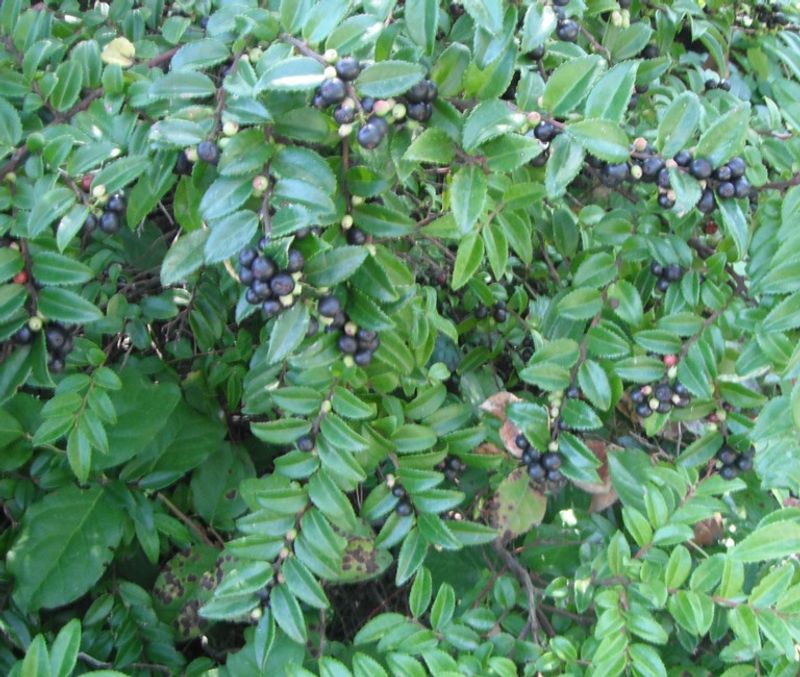
Picture yourself in late August, standing by the back fence, eating huckleberries straight off the branch. That little daydream alone might be worth the price of a clearance pot.
Vaccinium ovatum is one of the classiest shrubs you can grow west of the Cascades. Its small, shiny leaves stay green all winter, and new growth often comes in with a coppery red tint.
In spring, tiny pink bell-shaped flowers dangle from the stems and can draw in native bees.
By late summer, dark purple berries ripen and keep coming into fall. They are sweet, a bit wild-tasting, and you will likely be sharing them with robins, thrushes, and other birds.
Whether that feels like a loss or a win depends on how much you love your feathered neighbors.
Here is the part new homeowners appreciate. Evergreen huckleberry grows slowly and stays tidy, so it makes a lovely natural hedge or privacy screen that rarely needs heavy pruning.
It likes dappled shade and slightly acidic soil, which describes a lot of Portland, Salem, and Eugene yards already.
Plant it now while the soil is damp and cool. The winter rain does most of the watering for you, and the roots get months to settle in before summer drought arrives.
Your Oregon Garden Changes Every Week. Your Plan Should Too.
Gardening in Oregon changes quickly throughout the season. Every Friday you’ll receive a simple weekly plan showing exactly what to plant, prune, fertilize, harvest, and protect so you never miss the right timing.
3. Red-flowering Currant
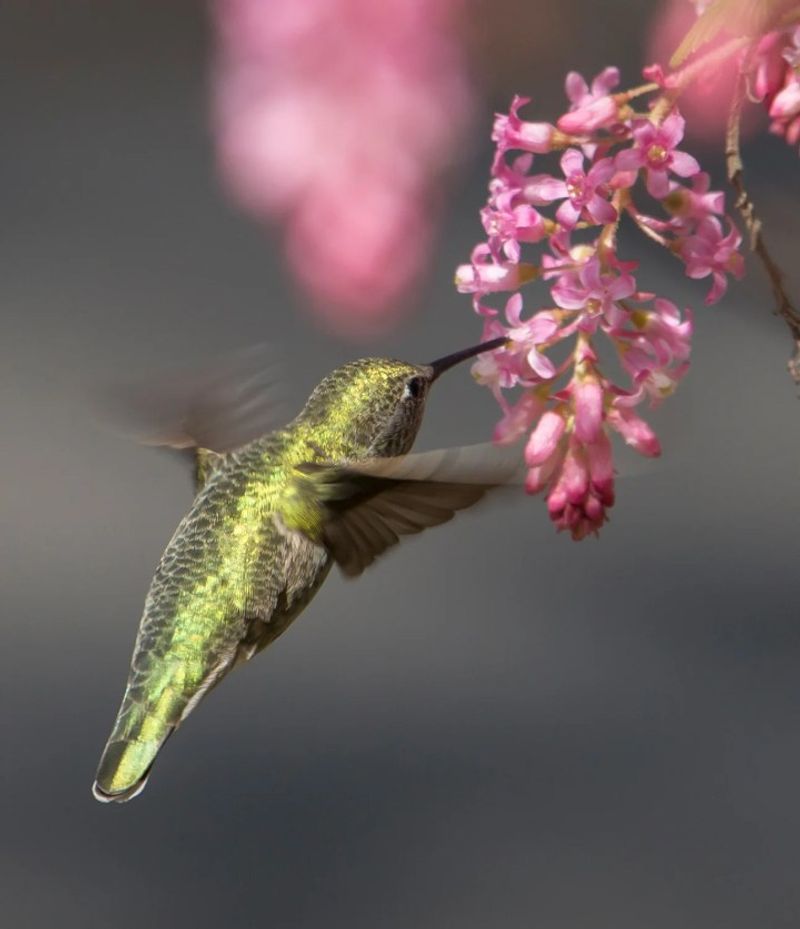
Ask any Oregon hummingbird fan which shrub to plant first, and there is a good chance they will say this one. Ribes sanguineum is basically a welcome sign for early spring hummingbirds.
Around March, bare branches suddenly drip with clusters of pink to deep red tubular flowers. The timing lines up nicely with returning rufous hummingbirds, and our year-round Anna’s hummingbirds are often quick to find it too.
Bumblebees and early butterflies may stop by as well.
The leaves smell a little spicy when you brush them, and small bluish berries follow the flowers in summer. Birds tend to eat those before you even notice they are ripe.
This currant is deciduous, so it goes bare in winter. That is actually why it is so easy to find on sale right now, since a pot of twigs does not look very exciting on a nursery bench.
Do not let that fool you.
Plant it in sun or part shade with decent drainage. Once it is established, it can handle our dry summers with only occasional deep watering.
It grows fast, often reaching six to eight feet, so give it a little elbow room near a window where you can watch the hummingbird show from your couch.
4. Snowberry
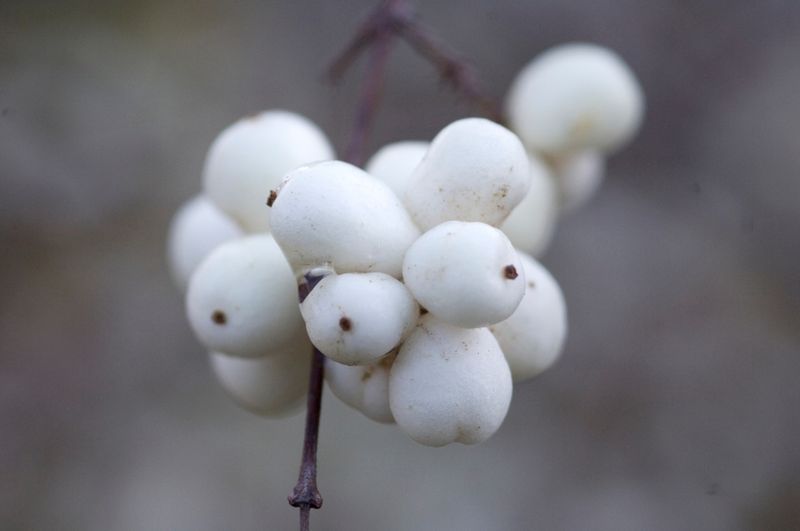
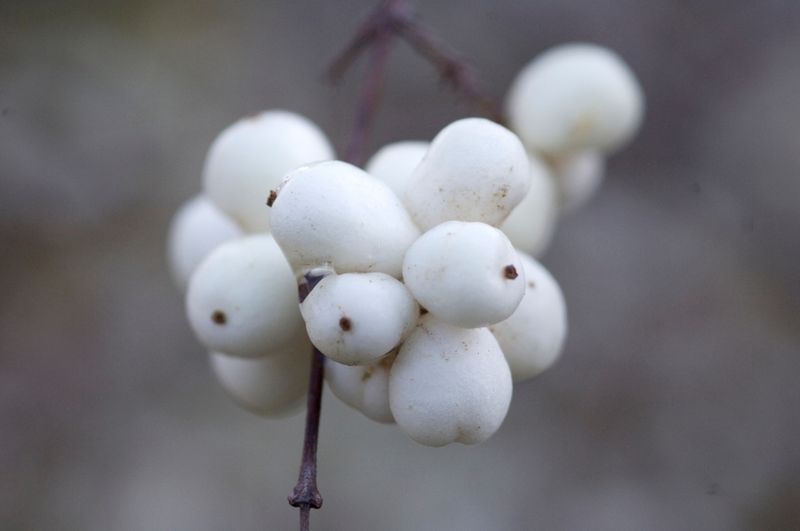
Winter gardens in the Willamette Valley can look a bit brown and soggy. Snowberry fixes that with clusters of round, bright white berries that hang on long after the leaves drop.
Symphoricarpos albus looks like someone decorated your shrubs with little pearls. Kids love them, and so do photographers on foggy mornings.
The berries are not for people to eat, though, so treat them as eye candy only.
For wildlife, the story is different. Birds like varied thrushes, towhees, and grosbeaks may pick at the berries through the cold months, and the dense, twiggy growth gives small birds a safe place to hide.
In early summer, tiny pink flowers can attract bees and even the occasional hummingbird.
Here is why snowberry deserves its own slot on this list: it is a tough problem-solver. It spreads by roots, which makes it handy for holding a slope, filling a scruffy corner, or covering a spot where nothing else wants to grow.
It tolerates sun, shade, clay, and drought once settled.
That spreading habit is worth planning around. Put it somewhere it can roam a bit, like a back border or a wildlife hedge, and it will reward you with low-effort texture all year.
5. Sword Fern
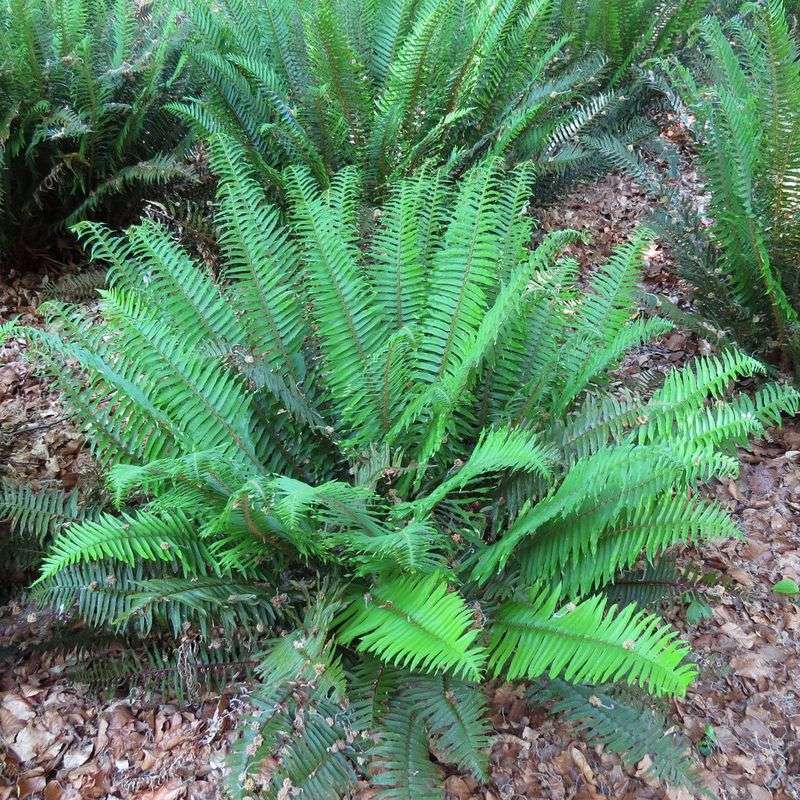
Walk any trail in Forest Park and you will see them everywhere, spilling over logs and hillsides like they own the place. Bringing that same feeling home is surprisingly easy.
Western sword fern, Polystichum munitum, is the classic Pacific Northwest fern. Its long, dark green fronds stay lush through winter, even on frosty mornings when everything else looks tired.
One mature clump can spread three or four feet wide.
New homeowners often inherit a dark, damp side yard or a spot under big conifers where grass just gives up. That is sword fern heaven.
It thrives in shade, handles our heavy winter rain, and once rooted, it can get by on surprisingly little summer water.
Care is simple. In early spring, you can snip off the old, ragged fronds right before the new fiddleheads uncurl, though leaving them is fine too.
Watching those fuzzy coils unroll in April is one of the quiet joys of Oregon gardening.
Ferns also make excellent cover for ground-dwelling critters like beetles and salamanders. So if you want your shady corner to feel like a tiny forest instead of a bare patch of mud, grab a few sword ferns while the sale lasts.
Buying three is basically the minimum, right?
6. Vine Maple
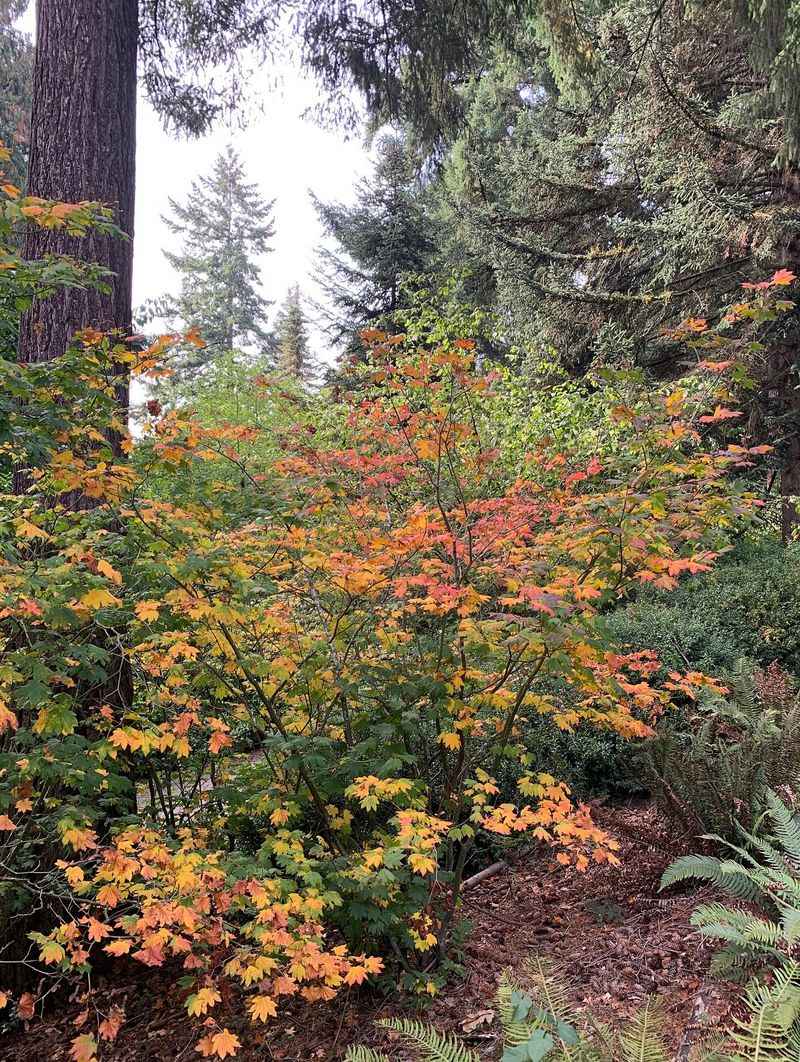
Every yard needs one plant that makes you stop and stare. For a lot of Oregon gardeners, vine maple is that plant.
Acer circinatum is a small, graceful tree, usually growing as a cluster of slender trunks. In fall, its round, star-shaped leaves light up in orange, red, and gold.
After they drop, the thin twigs often show a reddish glow that looks lovely against dark evergreens.
What sets it apart from the shrubs on this list is structure. Vine maple gives your garden height without swallowing a small lot, since it typically tops out around 15 to 25 feet.
It is a smart pick near a patio, beside a front walk, or as a native stand-in for a Japanese maple.
In the wild, it grows under taller conifers, so it happily handles part shade. In full sun, it can still do well with some summer water while it gets going.
Birds may nibble the winged seeds, and the branches offer perches for chickadees and juncos.
Bare-root and dormant potted trees are often cheaper in winter, which makes this the perfect season to pick one up. Plant it now and the roots can settle during the rainy months ahead.
7. Salal
Florists across the country use salal leaves in bouquets, and many of those leaves come straight from Pacific Northwest forests. You can grow the real thing in your own yard for a fraction of the cost.
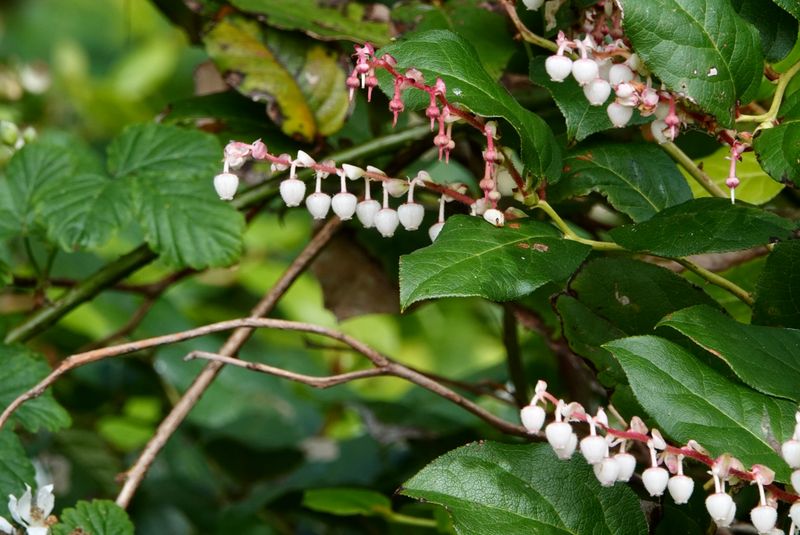
Gaultheria shallon has thick, leathery, glossy leaves that stay green all year. It forms a dense mat or thicket, usually two to five feet tall depending on how much light it gets.
That makes it a steady backbone plant, the kind that quietly holds your whole garden together.
In late spring, it hangs out little pink and white bell flowers that bees seem to enjoy. Dark purple berries follow in late summer.
They are edible and have fed people on the coast for a very long time, and birds and other wildlife like them too.
Salal is patient. It can start slowly for a year or two, then really take off once its roots settle.
It prefers acidic soil and part shade, and it handles coastal wind and salty air better than most shrubs.
If your new property has an ugly fence, a bare slope, or a neighbor you would rather not see, salal can grow into a living green screen. Give it time and a bit of summer water early on, and it will likely outlast you.
8. Pacific Ninebark
Got a soggy low spot where water puddles every winter? Most plants would sulk there, but Pacific ninebark tends to shrug and keep growing.
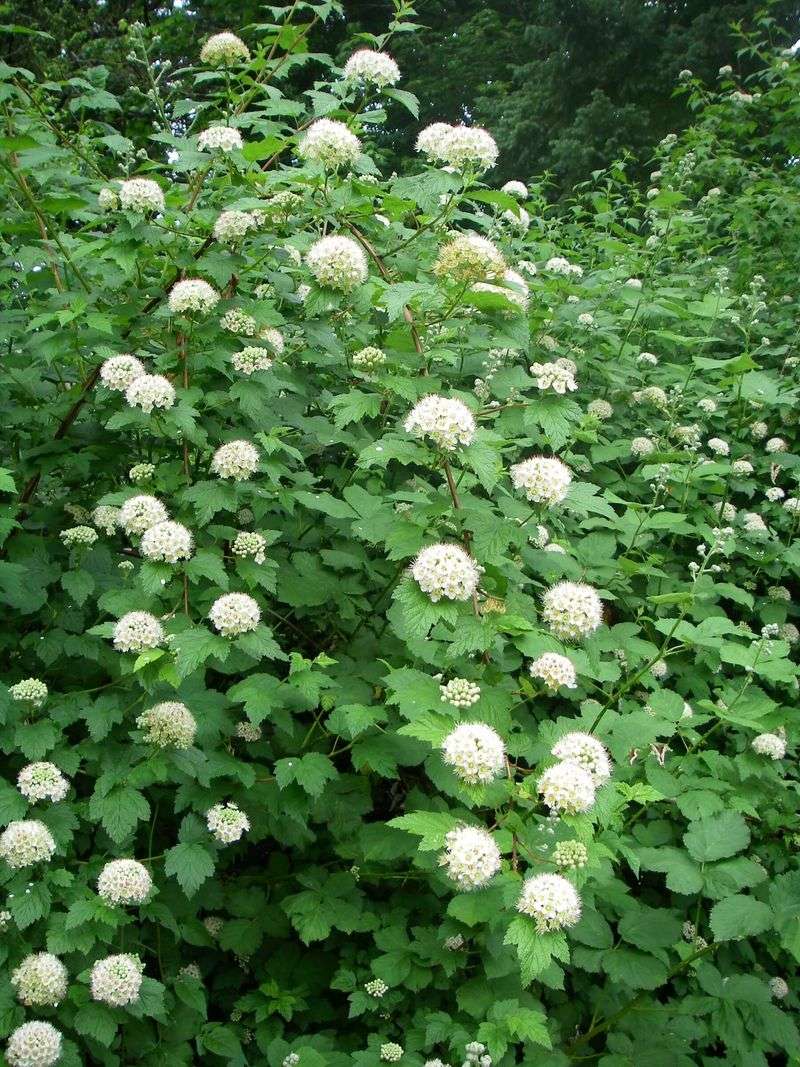
Physocarpus capitatus naturally grows along streams and wetland edges, which makes it one of the best natives for rain gardens and wet Willamette Valley clay. It can also handle drier spots once established, so it is flexible if your yard has a bit of both.
In late spring, it covers itself in rounded clusters of tiny white flowers. Bees, flies, and butterflies often show up in good numbers.
After the blooms fade, reddish seed heads form, and some birds may pick through them later in the season.
The name comes from its bark, which peels away in thin, papery layers. Old stories joked that it had nine layers, though nobody is actually counting.
In winter, that shaggy texture adds interest when the leaves are gone.
Ninebark grows big and fast, often eight feet or more, with thick, twiggy branches. That dense growth can give nesting birds safe cover during spring.
If you want a wildlife hedge along a back property line, this shrub is a hardworking choice, and a little pruning after bloom keeps it in shape.
9. Western Columbine
Not everything on your list has to be a shrub. Sometimes you just want a flower that makes you grin every time you walk past, and western columbine delivers.
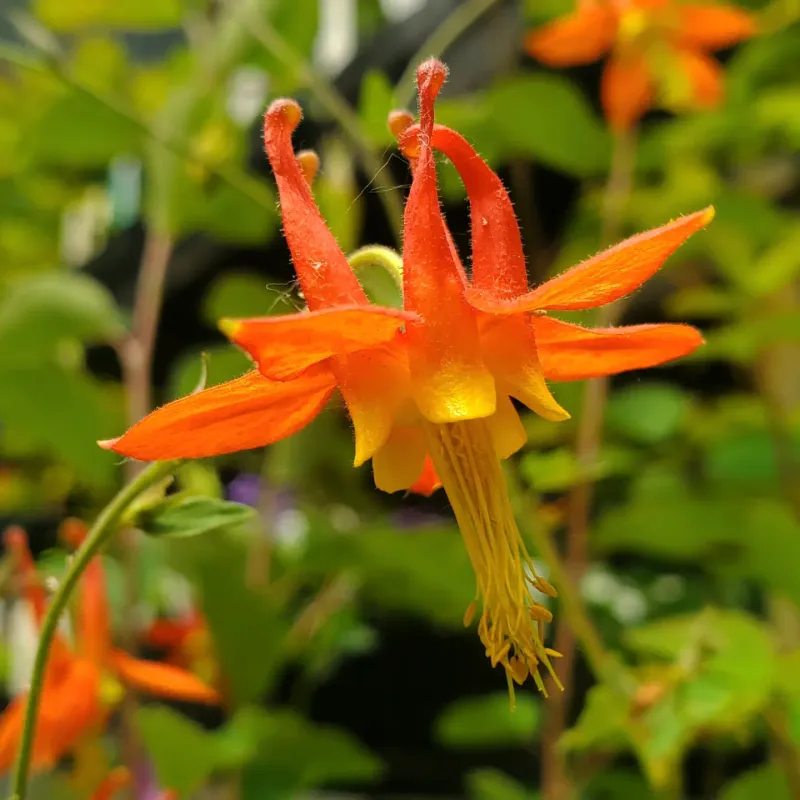
Aquilegia formosa has nodding red and yellow blossoms with long spurs that point upward like tiny lanterns. Those spurs hold nectar that hummingbirds can reach easily with their long bills.
Long-tongued bees may visit too, turning your flower bed into a busy little stage.
Plants usually grow one to three feet tall with soft, lacy blue-green leaves. They look right at home at the edge of a woodland bed, tucked among sword ferns, or along a shady path.
Bloom time usually runs from late spring into early summer.
Columbines are often short-lived, lasting just a few years. The trade-off is that they reseed readily, so you may find little volunteer seedlings popping up in new spots.
Many gardeners consider that a happy surprise, not a problem.
Fall and winter planting gives the roots time to settle before spring. Grab a few small pots from the sale table, plant them in part shade with decent drainage, and let nature handle the rest.
They are cheap, cheerful, and generous with the hummingbirds.
10. Showy Milkweed
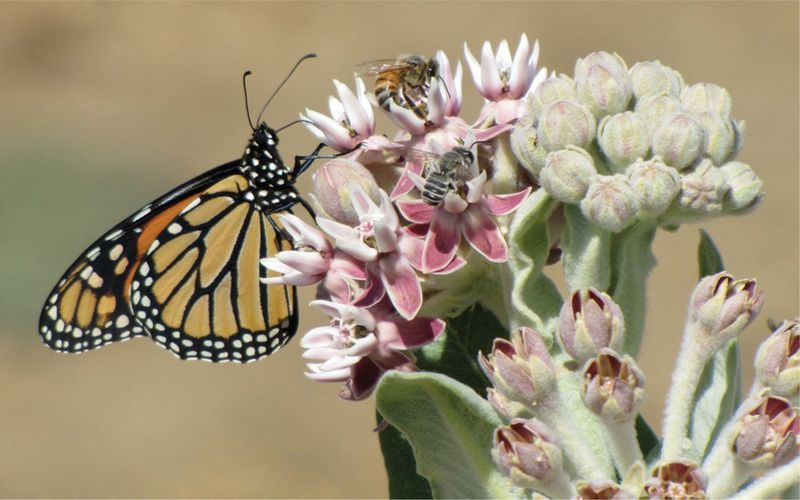
Monarch butterflies have had a rough time, and plenty of gardeners feel that little tug of wanting to help. Showy milkweed is one of the most direct ways to act on that feeling.
Asclepias speciosa is the host plant for monarch caterpillars, meaning they can only grow up eating milkweed leaves. Monarchs are more common east of the Cascades, but some do pass through western Oregon in summer.
Planting milkweed can give them a better chance of finding a place to lay eggs.
Even if monarchs never show up, you still win. The large, star-shaped pink flower clusters are fragrant and tend to draw a crowd of bees, butterflies, and other pollinators.
The soft, gray-green leaves look great in a sunny, dry bed.
A few practical notes help here. Showy milkweed spreads by underground roots, so give it space or a contained bed.
It wants full sun and good drainage, so a wet clay corner is not the right spot. The sap can irritate skin and eyes, so wear gloves when handling it and keep it away from pets that chew plants.
If you are growing from seed, fall and winter sowing helps, because the seeds need a cold spell before they sprout in spring. Pick up a pot or a packet now, and you will be ready for the butterfly season ahead.