Which Companion Plants Pair Best With Pansies In A California Winter Bed
Some winter beds look cheerful yet somehow incomplete. Bright faces line the front, while everything behind them feels a little flat.
The missing ingredient usually comes down to good company.
Certain cool-season plants share the same simple needs and bring something extra to the arrangement, from height and scent to texture and a splash of unexpected color.
California’s mild winters make the pairing easy, and the timing right now could hardly be better.
A few simple habits keep everything blooming once the season gets going, even through stretches of wet weather.
The right partners can turn a single row of flowers into a layered, fragrant display that carries the garden from autumn all the way into spring.
1. Snapdragons Add Height Behind Pansies
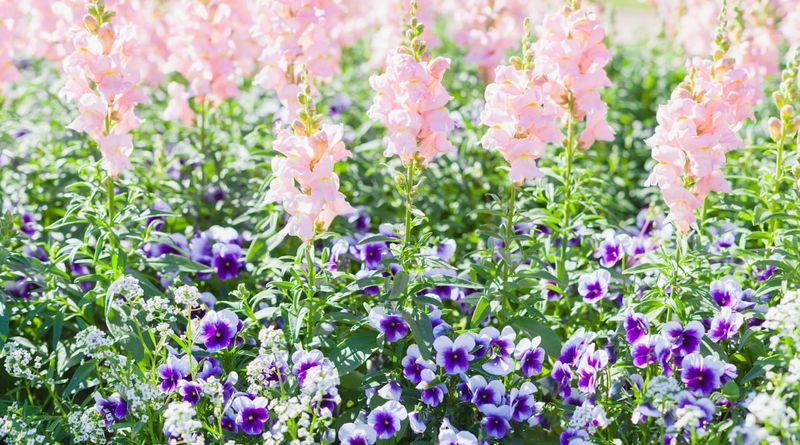
A bed where every bloom sits at ankle level tends to let the eye skim right across it. Tall spikes rising behind low pansies solve that problem, and snapdragons handle the job beautifully.
Most snapdragons grow between 1 and 3 feet tall, depending on variety. Medium or tall types suit the back row, with pansies in front, creating a staircase of color that keeps every flower in plain view.
Snapdragons love the same cool weather pansies enjoy. Across much of California, an early fall planting brings blooms from fall into spring.
Full sun to light shade and soil that drains well after rain suit them best.
Color pairing adds to the fun. Pale pink spikes look soft behind deep purple pansies, while bold red or bronze spikes pop behind bright yellow faces.
Repeating one shared color in both plants makes the bed feel planned rather than random.
A playful trick adds charm. A gentle squeeze on the sides of a flower makes the bloom open and close like a tiny dragon’s mouth, charming garden guests time after time.
Tall stems can flop in wind or heavy rain, so a sheltered spot helps when possible. Pinching the tips of young plants encourages bushier growth.
Faded spikes cut back to a side shoot send up fresh blooms within a few weeks.
October planting gives these spikes time to establish before the first winter storms arrive.
2. Dusty Miller Brings Silver Contrast
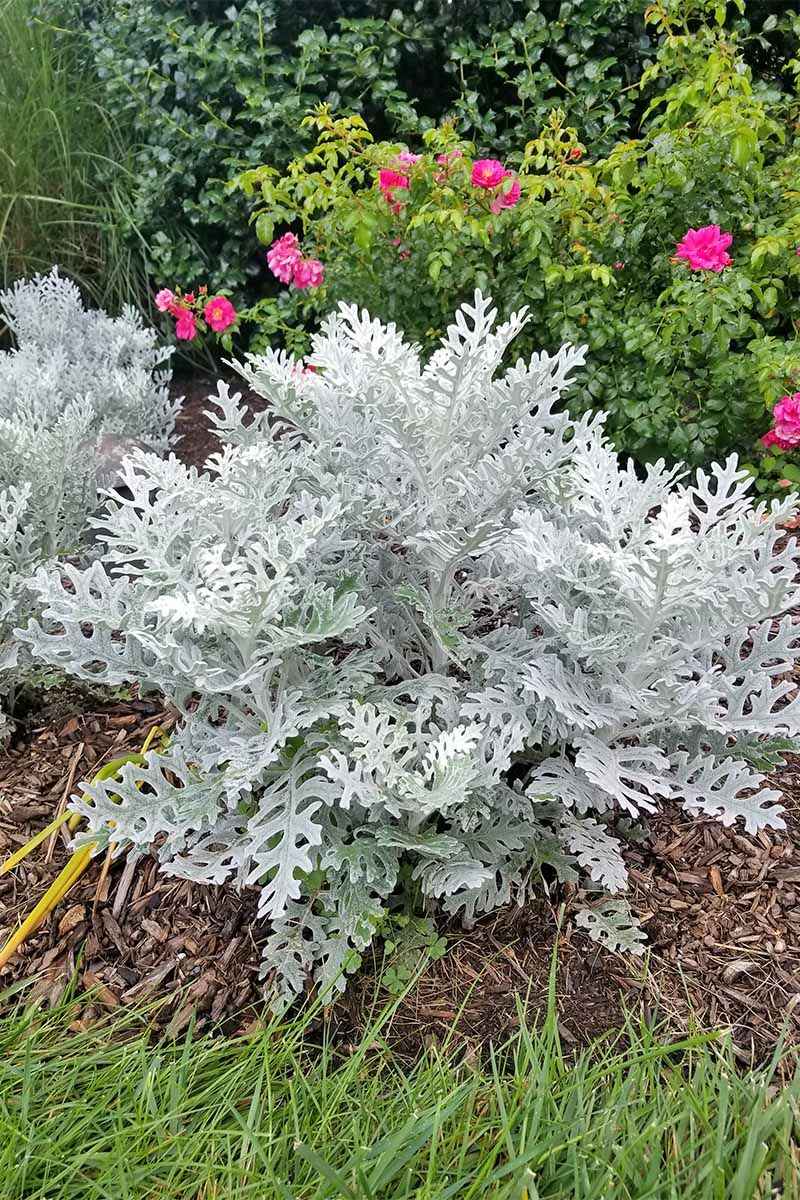
A pansy bed with only green leaves can make even bright flowers look muddy. A few silver plants slipped between them make every color seem to glow, and dusty miller delivers that effect.
Its fuzzy, lacy leaves look as though they were dipped in frost. The silver tone acts like a picture frame for nearby blooms.
Deep purple, burgundy, and near-black pansies look especially dramatic beside it.
Dusty miller usually grows about 8 to 15 inches tall, making it a handy middle layer between low pansies and taller plants in back. Plants spaced about a foot apart, or grouped in threes, create a bolder silver patch.
Cloudy winter days bring out its best. Silver foliage reflects soft light and brightens gray afternoons, keeping the bed lively even when pansies pause between blooms.
Drainage matters more than anything for this plant. Dusty miller dislikes wet feet, so low spots where rainwater puddles are best avoided.
Your California Garden Changes Every Week. Your Plan Should Too.
Gardening in California changes quickly throughout the season. Every Friday you’ll receive a simple weekly plan showing exactly what to plant, prune, fertilize, harvest, and protect so you never miss the right timing.
Raised beds or slightly mounded soil work well. Full sun keeps leaves at their most silvery, while too much shade turns them greener.
Small yellow flowers sometimes appear on older plants, and many gardeners snip them off to keep the focus on the foliage. A trim of leggy stems in late winter keeps plants neat and compact.
This quiet helper makes the whole bed look sharper. Fall planting gives it a strong start.
3. Ornamental Kale Anchors The Bed
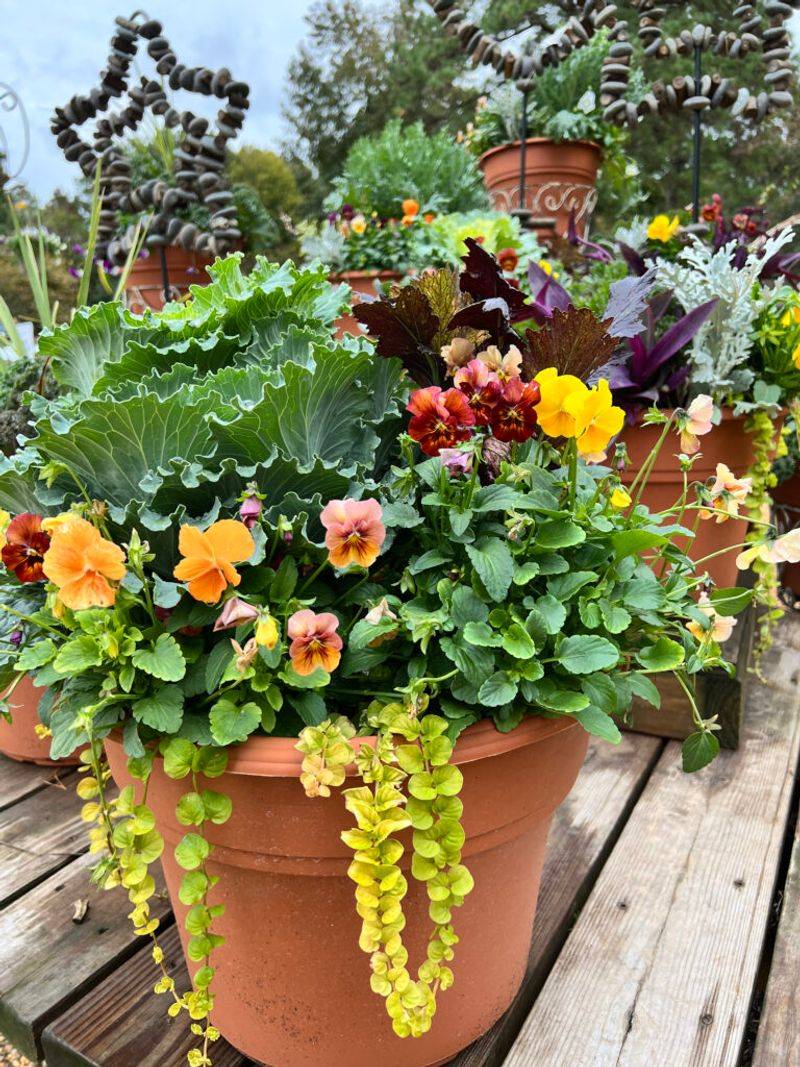
Scattered small flowers can make a bed feel busy, like confetti tossed across the soil. A few bold kale rosettes calm things down, giving the eye a solid place to rest.
Ornamental kale forms large, ruffled heads in shades of purple, pink, cream, and green, each stretching close to a foot across.
A simple pattern, such as one rosette every few feet down the middle of the bed, with pansies filling the gaps, creates structure.
Cool weather brings out kale’s richest colors. The centers deepen and brighten as nights grow chilly, lining up neatly with pansy season in coastal and valley gardens across California.
Kale colors that echo the pansies tie the bed together. Pink-centered kale looks lovely with rose or lavender blooms, purple-leaved types make yellow pansies jump out by contrast, and white kale works with almost anything.
Fall planting in full sun with rich, well-drained soil suits kale best. Regular water keeps leaves plump and crisp.
As a cabbage cousin, kale sometimes hides aphids deep in its folds, and a strong spray of water usually knocks them off.
Slugs and snails also find kale tasty in wet weather. A look under the outer leaves on damp mornings catches them early.
As spring warms, kale sends up tall flower stalks and quickly loses its tidy shape, signaling time to pull the plants.
October planting gives rosettes time to size up before cold nights bring out their best color.
4. Sweet Alyssum Spills Over The Edges
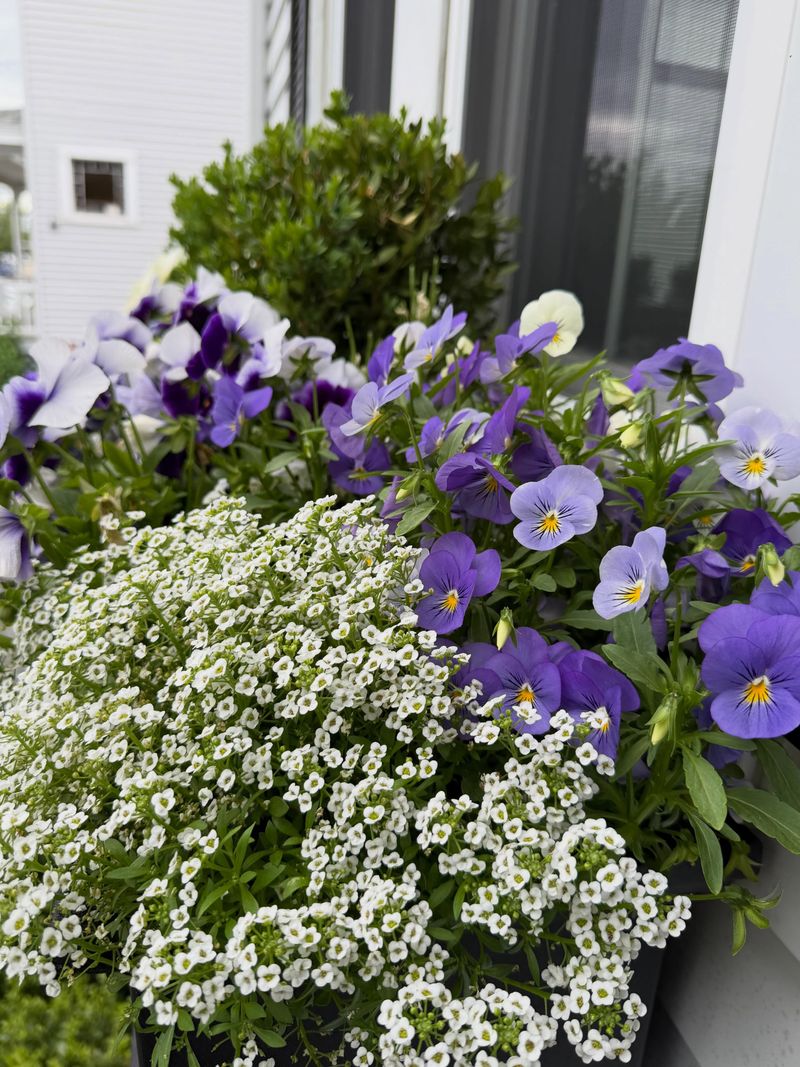
A light honey scent drifts from thousands of tiny flowers when the afternoon sun warms a patch of sweet alyssum. That fragrance alone explains why gardeners tuck it along bed edges.
Sweet alyssum stays low, usually just 3 to 6 inches tall. It spreads into soft mounds that spill over borders, paths, and container rims.
Planted in front of pansies, it creates a frothy hem that hides bare soil and softens hard edges.
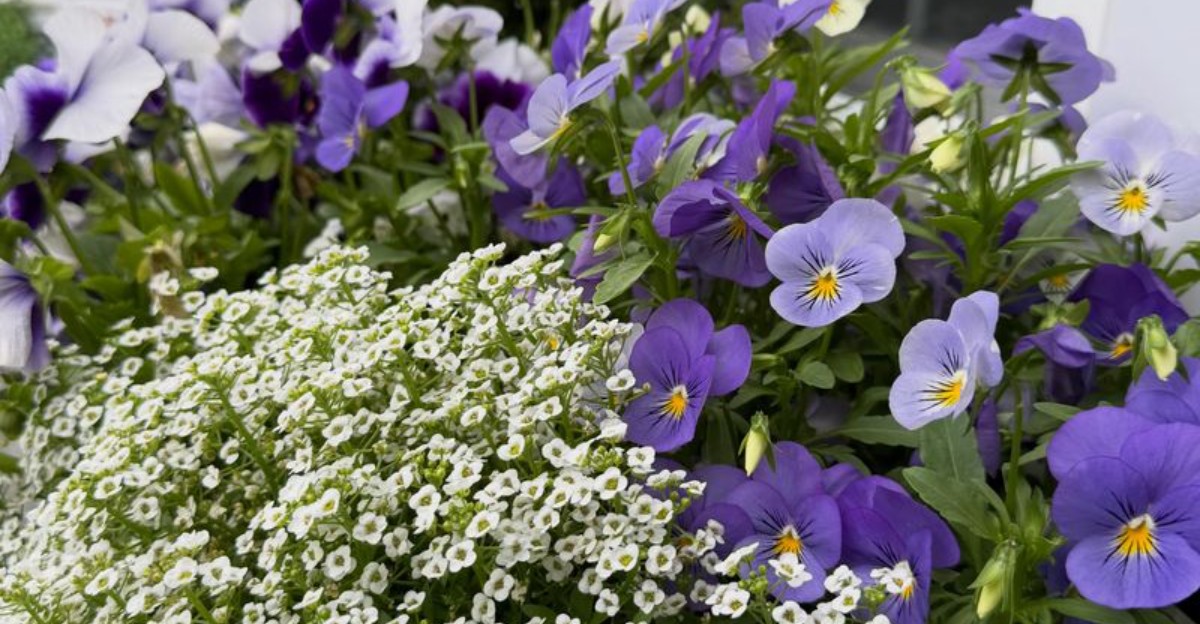
White alyssum remains the classic choice and suits any pansy color. Purple and lavender types blend beautifully with blue or violet pansies, while pink alyssum adds a sweet touch beside apricot or rose shades.
Alyssum also invites helpful insects. Its small blooms attract hover flies and tiny parasitic wasps that feed on or attack aphids, giving pansies extra protection without any spray.
Full sun to part shade and well-draining soil suit alyssum best. Regular water keeps it happy, with the top inch allowed to dry slightly between drinks.
Soggy roots make it sulk during long rainy spells.
Over time, the mounds can look tired and stringy. A quick trim with scissors, removing about a third, wakes plants up fast, and a fresh wave of blooms usually returns within a couple of weeks.
Many gardeners let alyssum reseed, so new seedlings appear on their own each fall. October sowing or transplanting gets this fragrant edging off to a strong start.
5. Cyclamen Shares The Cool Shade
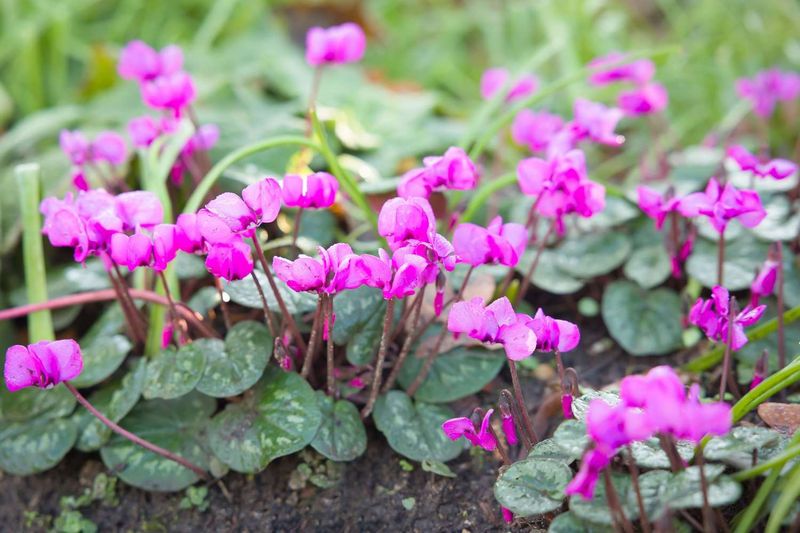
Nearly every yard has one stubborn corner where winter sun barely reaches. Many flowers stretch and struggle there, yet cyclamen settles in happily beside pansies and lights up the shadows.
Florist cyclamen grows about 6 to 12 inches tall. Its flowers resemble little butterflies or swept-back flames rising above heart-shaped leaves, many marbled with silver, so the plant looks good even between bloom cycles.
Pansies handle part shade well, which makes them easy partners here. White cyclamen beside blue pansies creates a cool, calm look, while hot pink or red cyclamen paired with yellow pansies feels more playful.
Bright shade suits cyclamen best, such as the north side of a house or beneath a high tree canopy, along with loose, well-drained soil.
Water belongs around the plant rather than into its center, since a soggy crown can rot quickly.
Spent blooms come off most cleanly with a gentle twist and pull at the base of the stem. Cutting leaves a stub that can decay, and yellow leaves deserve the same treatment.
Slugs and snails enjoy shady, damp spots as much as cyclamen does. Chewed petals and shiny trails after rain signal their presence, and evening or early morning checks catch them.
Cyclamen tubers are toxic to pets, so beds within reach of curious dogs deserve care.
When spring heat arrives, cyclamen slows down and fades back, and many gardeners simply replant fresh ones each fall.
6. Dianthus Adds Spicy Fragrance
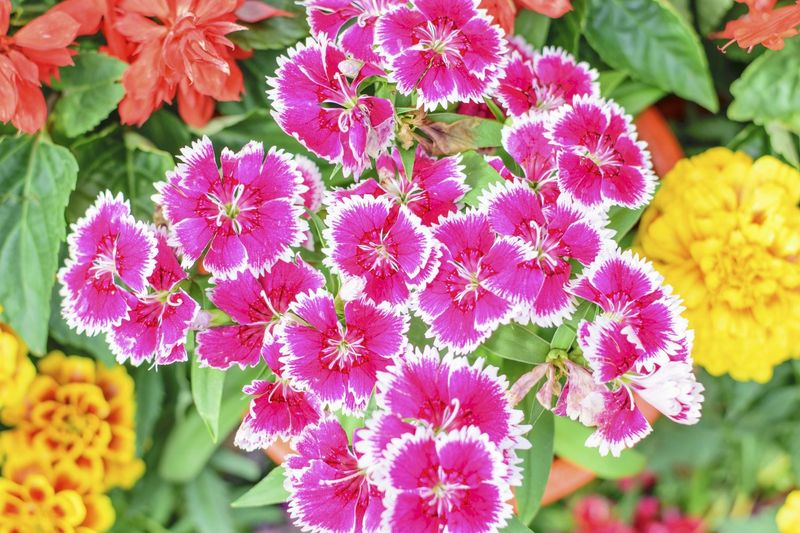
A mild winter day near a clump of dianthus brings a scent much like clove spice drifting upward. Few cool-season flowers smell this interesting, which makes them a lovely choice near a path or doorway.
Dianthus, sometimes called pinks, carries petals with zigzag edges that look snipped by tiny pinking shears. That cutting-tool look is one story behind the name.
Colors range from white and soft pink to deep red, and many blooms show contrasting eyes.
Most bedding types grow about 6 to 12 inches tall, fitting nicely just behind pansies or mixed right among them. The grassy, blue-green leaves add fresh texture next to rounder pansy foliage.
Red dianthus paired with cream pansies creates a candy-cane feel. Pink varieties blend softly with lavender or rose pansies, while bicolor types look playful beside pansies with dark blotches.
Full sun brings the most flowers and the strongest scent. Well-draining soil matters, since soggy roots cause trouble quickly, and heavy mulch piled against the stems is best avoided.
Trimming pays off fast. Faded flowers snipped down to the next set of leaves or buds encourage plants to rebloom in waves from fall into spring.
Extra fertilizer is best held back, because too much leads to floppy stems with fewer blooms.
A light feeding at fall planting time usually provides plenty, and October offers an ideal window to set out new plants while soil still holds summer warmth.
7. Daffodils Pop Up Through The Pansies
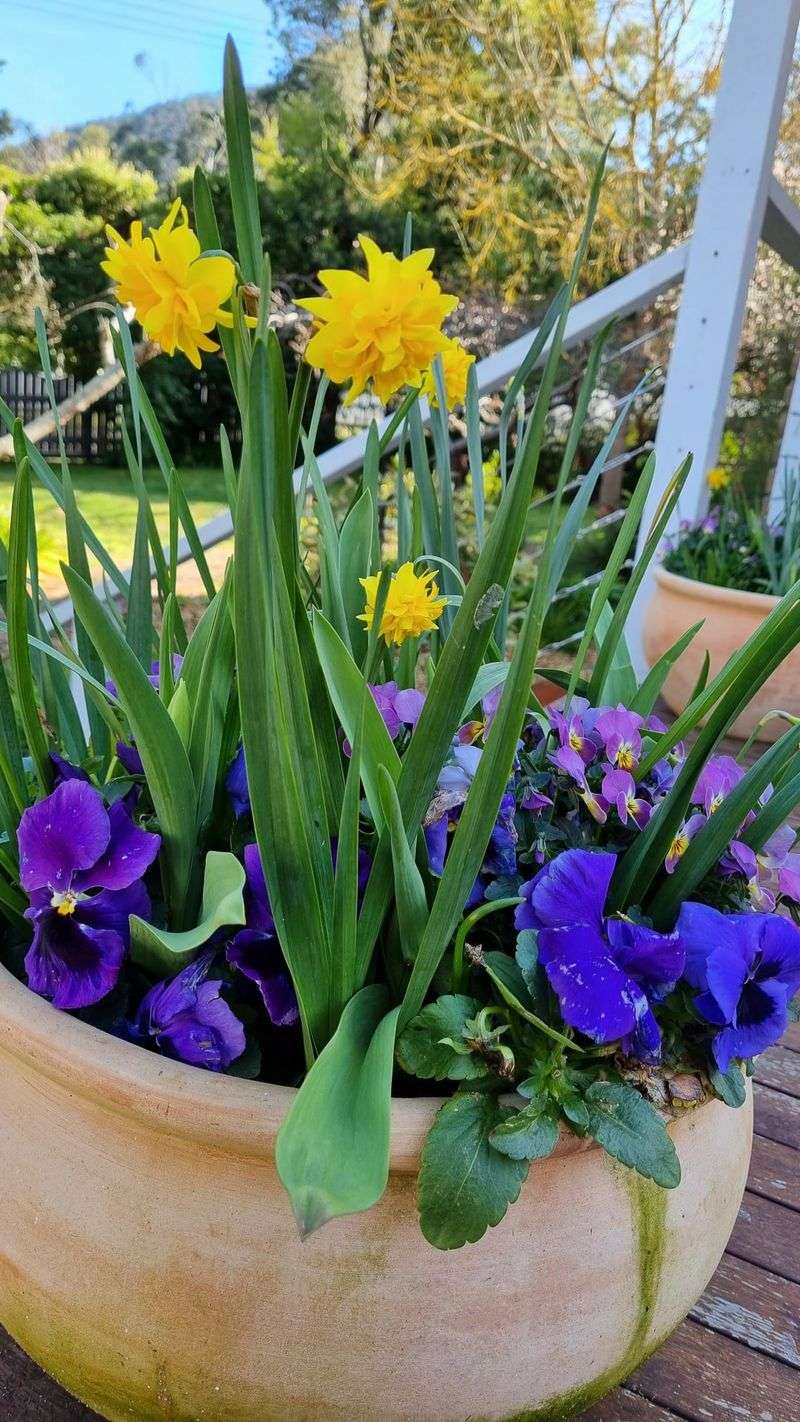
Green spears poking up through a carpet of pansies one late winter morning signal a welcome surprise. A week later, yellow trumpets open above the purple faces, a layered effect created by tucking daffodil bulbs beneath pansies.
Both go in during fall. Bulbs set about 6 inches deep with pointed tips facing up come first, then get covered with soil before pansy plants settle right on top.
The pansies bloom all winter while the bulbs quietly grow roots below.
Daffodils perform well across much of California, needing sun and soil that drains after rain. Bulbs left in soggy ground tend to rot, so low, wet spots are best avoided.
Varieties that bloom at different times extend the show. Early types open in late winter, while others follow weeks later, and smaller daffodils look tidy among pansies, with shorter stems that stand up better to wind.
Safety deserves attention. Daffodil bulbs, leaves, and flowers are toxic if eaten, so beds within reach of curious pets and small children call for caution.
Poison Control and the ASPCA Animal Poison Control Center can help after any ingestion.
Gloves during planting protect sensitive skin from the sap, and bulbs are best stored well away from kitchen onions.
After flowers fade, spent blooms come off while leaves stay put to feed the bulb for next year. Gophers usually avoid daffodils, a nice bonus for California gardens.
8. Calendula Brings Warm Orange Color
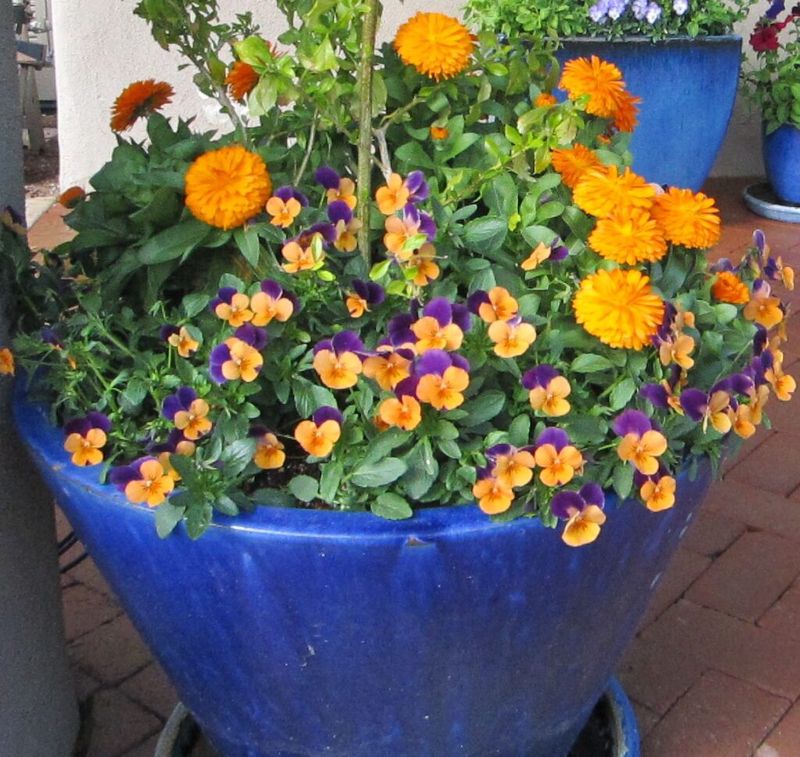
Cool purples and blues can make a winter bed feel a bit chilly. A handful of glowing orange flowers warms things up like a sunbeam on a gray day, and gardeners have grown this cheerful one for centuries under the nickname pot marigold.
Calendula grows about 1 to 2 feet tall, with daisy-like blooms in orange, gold, apricot, and cream. A spot in the middle or back of the bed suits it.
Blue and violet pansies look especially rich beside it, since orange and blue sit opposite each other on the color wheel.
In mild California winters, calendula blooms steadily from fall into spring. Seeds or young plants set out this month get the season off to a quick start.
Full sun produces the most flowers, though light shade helps in hotter inland spots.
Calendula isn’t picky about soil as long as it drains well. Regular water, with the surface allowed to dry slightly between drinks, keeps plants healthy.
Rich soil and heavy feeding, on the other hand, produce leafy plants with fewer blooms.
Trimming keeps the color coming. Faded flowers snipped before they form curved seeds encourage more buds, and a few left at season’s end can sprout as volunteers next fall.
Wet, foggy spells call for a watchful eye. Powdery mildew can leave a white coating, so room for air movement helps, and a quick hose spray handles any aphids clustered on stems.
With pansies in front and calendula glowing behind, a winter bed truly sparkles.