12 Arizona Native Shrubs That Fill In a Bare Yard Without Any Extra Water
A bare yard in Arizona can feel like a patch of hot gravel that nobody wants to stand on. The good news is that the desert already grows tough shrubs that fill empty space, feed birds and bees, and live on rainfall once their roots settle in.
Picking the right ones can lower your water bill and turn a dull lot into a busy little habitat. Here are twelve hardy shrubs that do the hard work for you.
1. Desert Willow
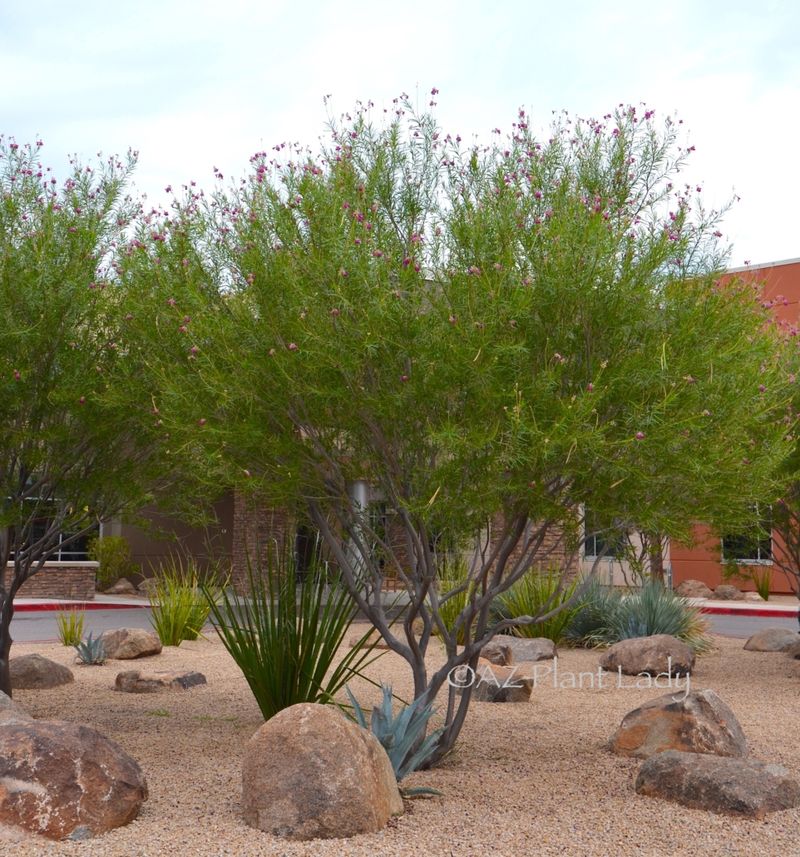
Hummingbirds seem to know the exact week a desert willow starts blooming. One morning the branches are quiet, and the next they are buzzing with tiny visitors sipping from pink and lavender trumpets.
Few shrubs bring that much life to an empty corner so fast.
Desert willow is not a true willow at all. It belongs to the same family as catalpa trees, and it earned the name from its long, skinny leaves.
Native to Arizona washes, it handles 110-degree afternoons and goes leafless in winter, when it needs no water at all.
Once established, it tends to live on monsoon rains and the occasional winter storm. Its deep roots grip loose soil, which can help slow erosion on sloped lots.
Left unpruned, it grows into a multi-trunk shrub about 15 to 25 feet tall, so it can double as a light shade maker on the west side of a house.
Bees and butterflies share the flowers, and birds use the branches for cover. Plant in fall, water deeply for the first summer or two, then step back.
Pests rarely bother it, so the main job left for you is enjoying the show from a shady patio chair.
2. Desert Hackberry
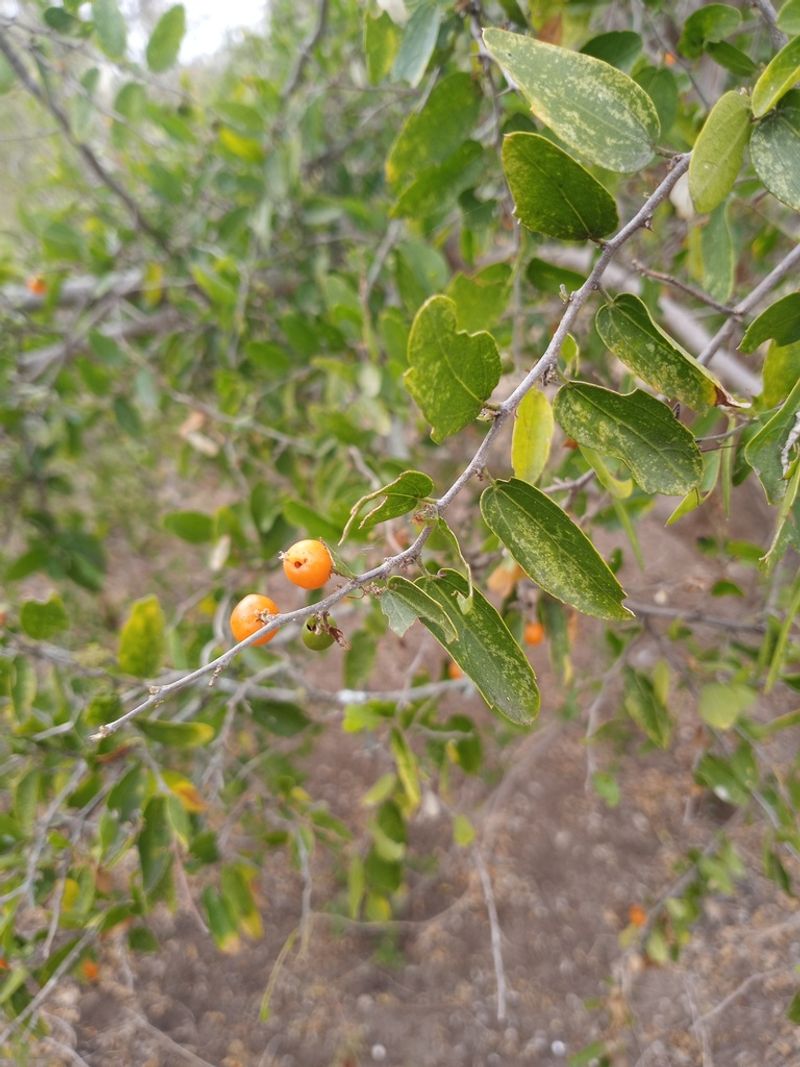
Quail families have a favorite hiding spot, and it is usually tucked under a desert hackberry. The tangled, thorny branches make a fortress that hawks and roaming cats find hard to reach.
If you want to hear that soft quail chatter every morning, start here.
Native to the Sonoran Desert, this shrub shrugs off poor soil, reflected heat from walls, and long dry spells. After the first year or two of help, it can get by on rainfall alone.
It slowly grows into a rounded mound about 6 to 10 feet tall and wide, filling a lot of bare ground with one plant.
The small orange berries ripen in fall and feed birds like cardinals, thrashers, and mockingbirds. Bees visit the tiny greenish flowers, and the American snout butterfly uses the leaves to raise its young.
That means one shrub supports several layers of backyard wildlife.
Those sharp thorns also have a practical side. Planted along a property line or under a window, hackberry forms a living security hedge that people tend to avoid.
Give it space away from walkways, skip the fertilizer, and let it grow into its natural shape. Heavy pruning only weakens its best feature.
3. Brittlebush
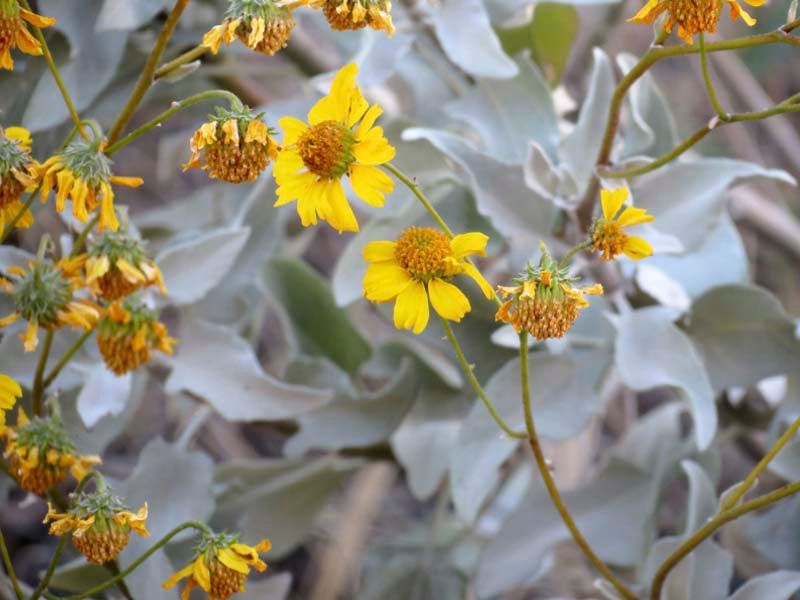
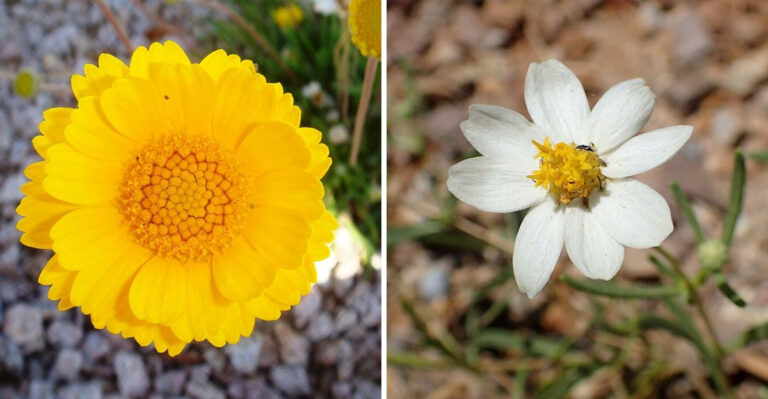
Drive around Phoenix in March and the hillsides look like someone spilled yellow paint. That color comes from brittlebush, a fast, cheerful filler that can cover a bare slope in a single season.
Your Arizona Garden Changes Every Week. Your Plan Should Too.
Gardening in Arizona changes quickly throughout the season. Every Friday you’ll receive a simple weekly plan showing exactly what to plant, prune, fertilize, harvest, and protect so you never miss the right timing.
Its secret is in the leaves. Soft, silvery hairs reflect harsh sunlight and keep the plant cooler, so it loses less moisture.
During a brutal drought it simply drops some leaves and waits for rain, then bounces back looking fresh. Overwatering is actually the bigger risk, so resist the urge to baby it.
Each plant forms a tidy mound about 3 feet across. Plant a handful together in fall and you will have a sea of daisy-like flowers by late winter.
Native bees, honeybees, and butterflies crowd around the blooms, and finches pick at the seeds afterward.
Fun fact: early travelers in the desert reportedly burned the sticky sap as incense, and some used it like glue. Today it is better known for being tough and easy.
Its open, airy form is also less inviting to scorpions than thick, damp ground covers, since it leaves little cool clutter at the base. Trim the old flower stalks in late spring if you like a cleaner look.
4. Creosote Bush
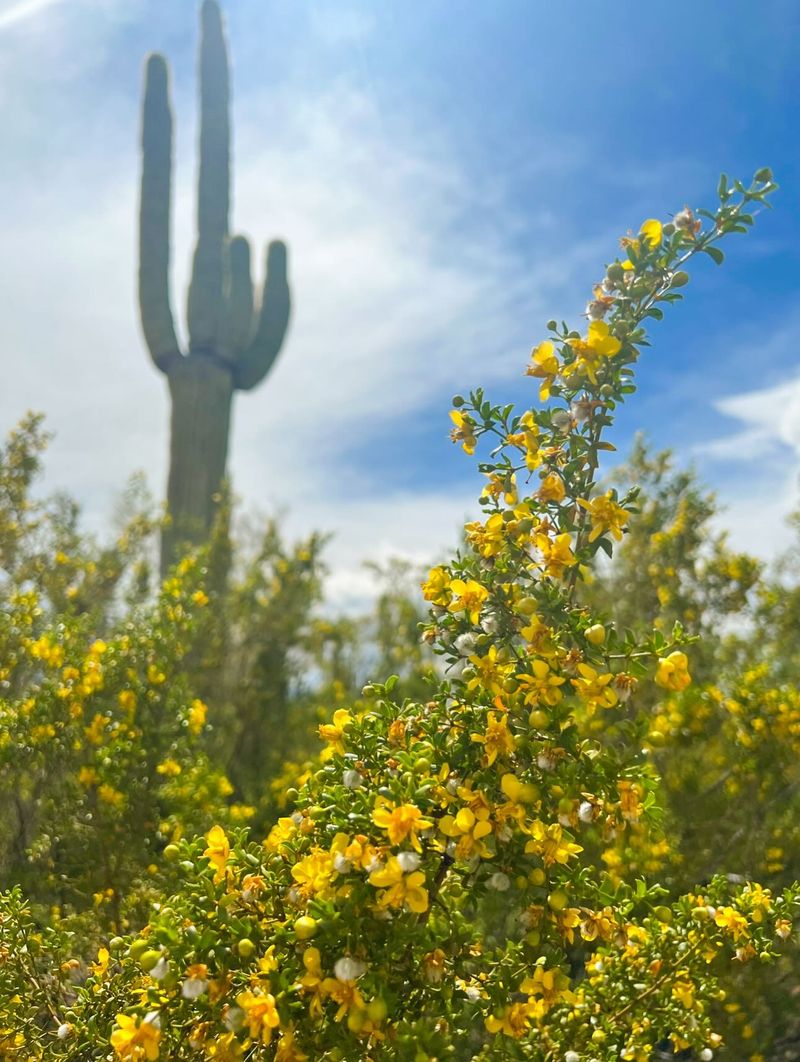
Smell the air after a summer storm in Arizona and you are smelling creosote. That clean, earthy scent is what many locals call the smell of rain, and planting this shrub brings it right to your back door.
Creosote bush may be the toughest plant on this list. Once established, it can reportedly survive two years with no water, thanks to small, waxy leaves that hold moisture tight.
Some creosote rings in the Mojave are thought to be thousands of years old, slowly cloning themselves outward from one original plant.
For a bare yard, it offers year-round green in a loose, airy shape about 4 to 8 feet tall. More than 20 kinds of native bees visit its little yellow flowers, and lizards and small animals rest in its shade.
The open branches let light through, so you can still see the ground beneath, which helps keep pests from finding hiding spots.
The biggest mistake is kindness. Extra water and fertilizer can make it leggy or sickly.
Plant it in fall, water lightly the first year, and then leave it alone. It is a shrub that rewards neglect better than almost anything else in the desert.
5. Jojoba
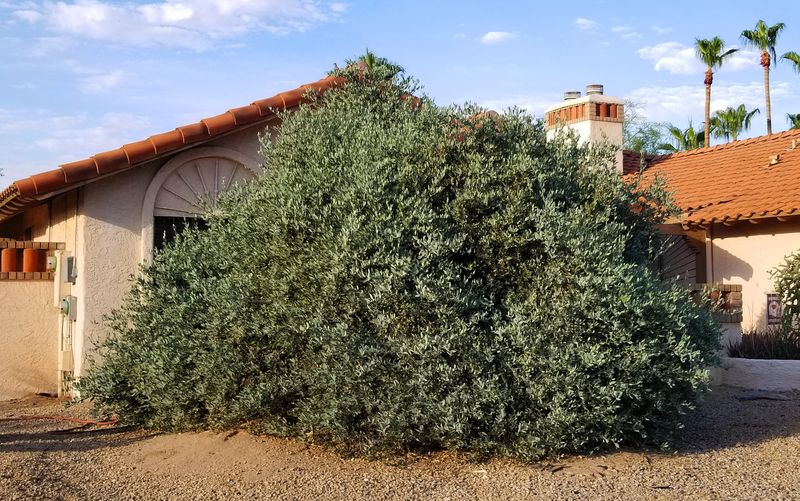
You might have jojoba oil in your bathroom right now without knowing the plant behind it grows wild in southern Arizona. The seeds hold a liquid wax that shows up in lotions and shampoos, but in the yard this shrub has a much simpler job: being a dense, evergreen wall of green.
Jojoba keeps its thick, gray-green leaves all year. The leaves point upward, which means less of their surface faces the brutal midday sun.
That smart little trick helps it handle wild temperature swings, from chilly winter nights to scorching July afternoons.
It loves coarse, well-drained soil and needs little or no extra water once its roots are settled. Left alone, it forms a rounded shrub around 3 to 6 feet tall.
Planted in a row, it makes a solid, low-maintenance hedge that blocks views and dust without the thirst of a typical privacy plant.
Wildlife appreciates it too. In wild areas, mule deer and desert bighorn sheep browse the leaves, while birds and small animals tuck into the cover.
You can shear jojoba into a neat shape or let it go natural. Either way, it stays green long after many other shrubs look tired by August.
6. Fairy Duster
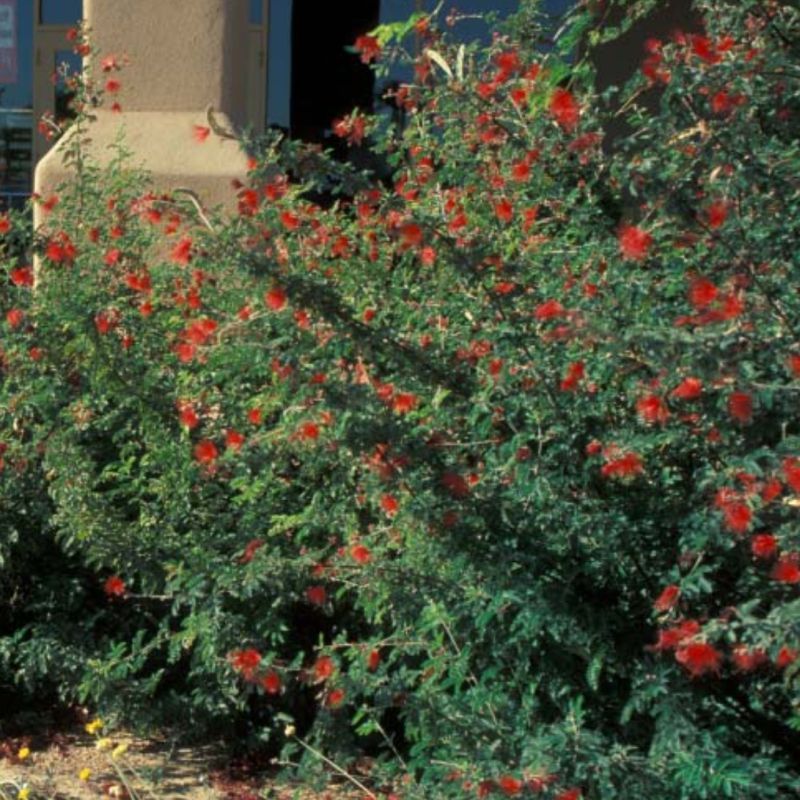
Picture a pom-pom made of pink silk threads, and you have the bloom of a fairy duster. Kids love touching the fluffy flowers, and hummingbirds love them even more.
Two types work great in Arizona. Pink fairy duster is a low native shrub, about 2 to 3 feet tall, perfect for filling gaps along paths.
Baja fairy duster grows larger, around 4 to 5 feet, with bright red puffs that show up through much of the year in warm spots.
Both handle full sun and reflected heat from walls and driveways like champs. Their roots store moisture efficiently, so after the first year they get by on very little water.
Pruning is optional. A light trim after a big bloom keeps them tidy, but they look nice even when left alone.
Bees and butterflies join the hummingbirds at the flowers, and birds pick at the seed pods later on. Since fairy dusters have no thorns, they are friendly choices near patios, play areas, and pools.
The Baja type drops very little litter, so you will not spend weekends skimming leaves from the water. For a small yard that needs a soft touch, this one feels almost magical.
7. Hop Bush
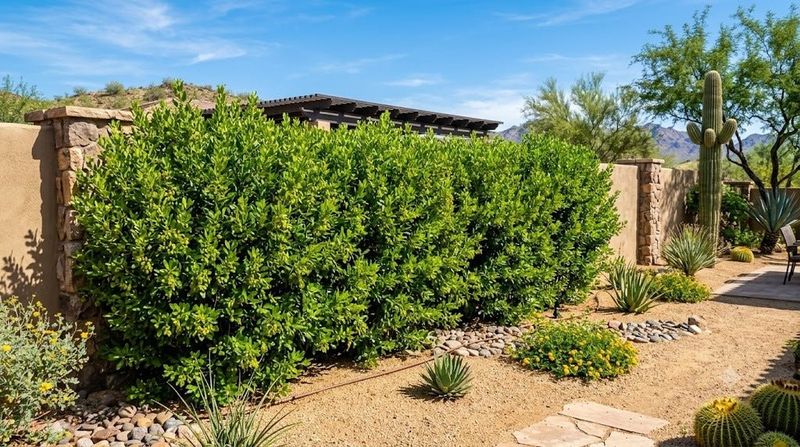
Need to hide a neighbor’s two-story window or a busy alley? Hop bush is the quick, upright screen many Arizona gardeners grab when they want privacy without planting a thirsty oleander.
This evergreen grows fast and tall, often reaching 10 to 12 feet with a narrow, dense shape. Its leaves have a slightly sticky shine that helps hold moisture.
In the warm months it forms papery seed capsules that turn pink, tan, or reddish, which gives the plant a bonus splash of color.
Hop bush tolerates heat bouncing off walls and does well in dry soil. Once established, it usually needs only an occasional deep soak during long dry spells, and many plants coast through on rain in normal years.
A light trim once a year keeps it full at the bottom.
The name comes from its seed pods, which reportedly were once used in place of hops for brewing in some places. These days its value is more practical.
Birds nest in the thick branches, native pollinators visit the small flowers, and the dense foliage softens wind and dust. With no thorns and no toxic sap like oleander, it is a calmer choice for homes with pets and kids.
8. Wolfberry
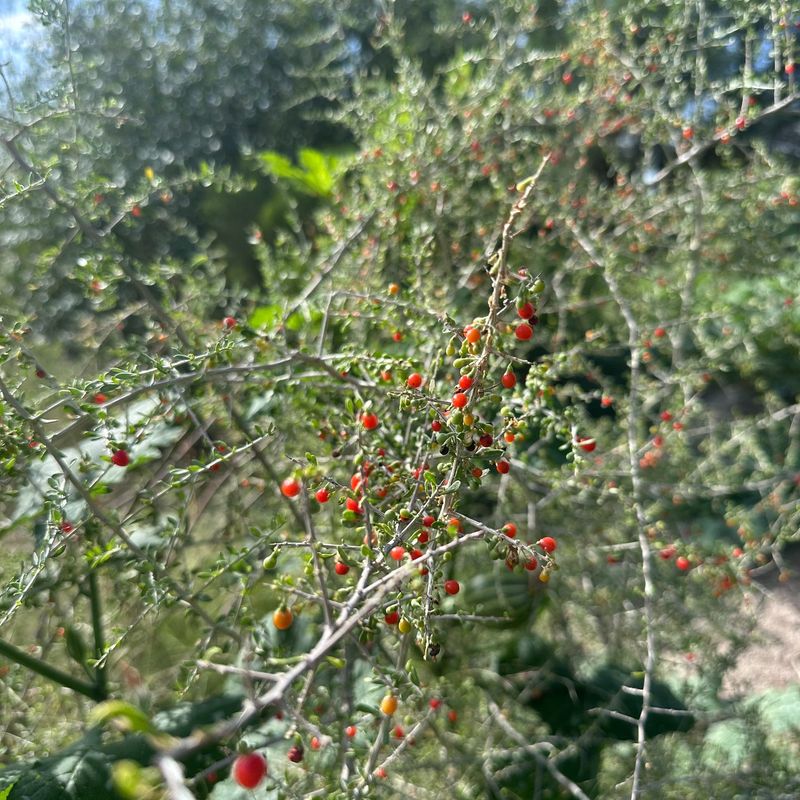
Here is a shrub that feeds you and the birds. Wolfberry, a cousin of the goji berry, grows wild across Arizona and produces small, bright red fruits that are edible and packed with antioxidants.
Fremont wolfberry is one of the best-known local types. It leafs out in cool months, then often drops its leaves in the hottest part of summer to save moisture.
That bare look is normal, not a sign of trouble. If you want greener summer branches, a rare drink helps, but the plant does not need it to survive.
Wolfberry does best with some afternoon shade, which makes it handy for the east side of a wall or beneath taller trees. It grows into a spiny, rounded shrub about 3 to 6 feet tall.
Those spines make it a solid boundary plant that discourages shortcuts through your yard.
Birds are the real fans. Thrashers, quail, and finches snack on the berries, and the thick branches give them a safe place to rest.
Tiny purple flowers in spring also bring in bees. If you want to taste a true desert fruit grown in your own yard, pick a few ripe berries before the birds clean them all out.
9. Texas Sage
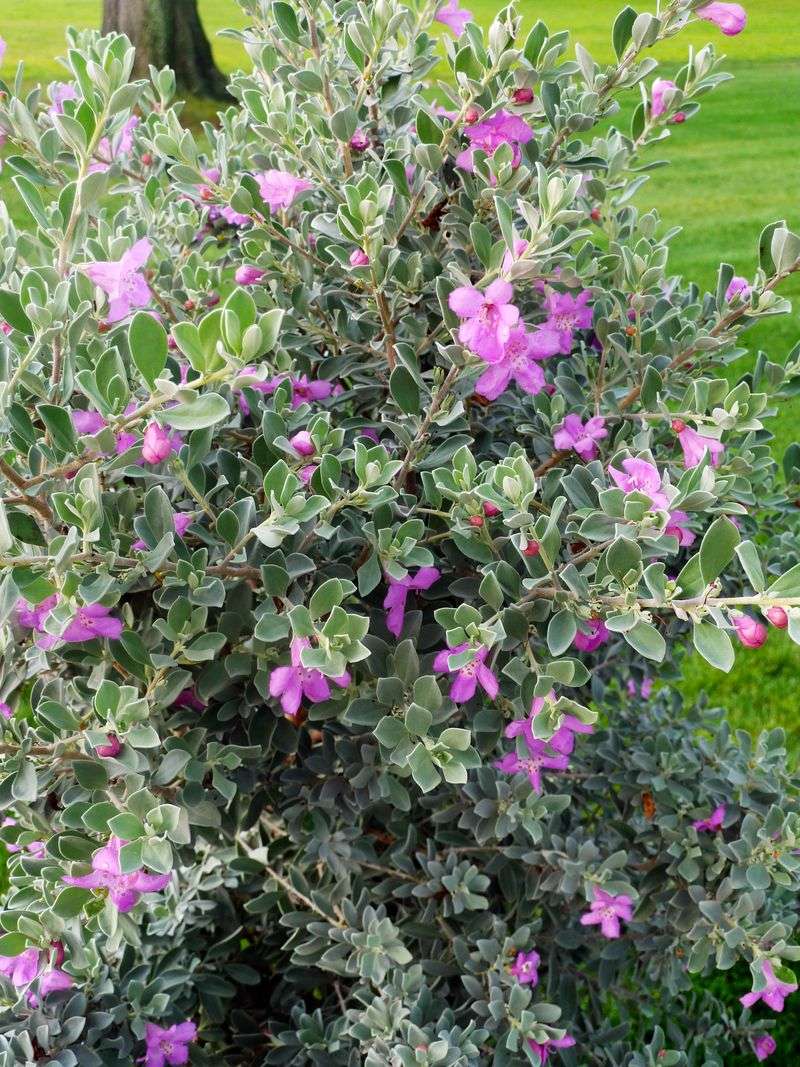
Some folks call it the barometer bush, and for good reason. A few days after a summer storm rolls through, Texas sage suddenly explodes in purple, pink, or white blossoms as if someone flipped a switch.
Technically, Texas sage hails from Texas and northern Mexico, not Arizona. Still, it is so well adapted to the low desert that it has become a staple in Phoenix and Tucson yards.
Silvery or green leaves stay on all year, and the plant takes summer heat and the occasional cold snap without complaint.
Water is the trap here. Too much makes it floppy and short-lived, while too little rarely bothers it once established.
Plant in full sun, give it space to reach about 4 to 6 feet, and avoid shearing it into boxes. Natural shapes bloom far more heavily.
Bees swarm the flowers after monsoon rains, and small birds hide in the dense branches. Lined up along a street or fence, several plants make a soft screen that blocks wind and glare.
Varieties like Rio Bravo or Heavenly Cloud let you pick the size and flower color you want, so it fits tiny side yards and wide open lots alike.
10. Yellow Bells
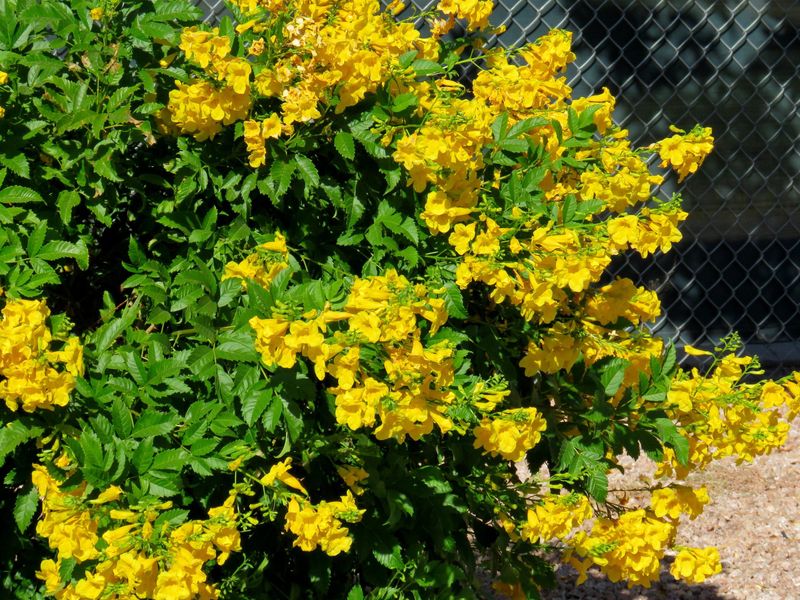
Got a boring block wall? Yellow bells might be the quickest way to cover it in color.
From late spring into fall, this shrub drips with golden trumpet flowers that seem to glow under the Arizona sun.
One variety, Arizona yellow bells, grows wild in the mountains of southeast Arizona, while others come from farther south. All of them love warm seasons and full sun.
They may freeze back during a cold winter, but they usually sprout fresh growth from the base once temperatures climb.
Once settled, yellow bells handle dry spells well, especially the native types, which lean toward the toughest end of the range. Hybrids like Orange Jubilee and Sparky offer orange or red-tinged blooms if you want a bolder look.
Expect plants around 6 to 10 feet tall, which makes them great for hiding fences, utility boxes, and plain stucco.
Hummingbirds treat the flowers like a drive-through, and butterflies often join them. Because yellow bells have no thorns, they are easy to place near walkways.
Trim them back in late winter after frost danger passes, and they reward you with fuller growth and even more blooms by early summer. Few shrubs deliver this much sunshine for so little fuss.
11. Catclaw Acacia
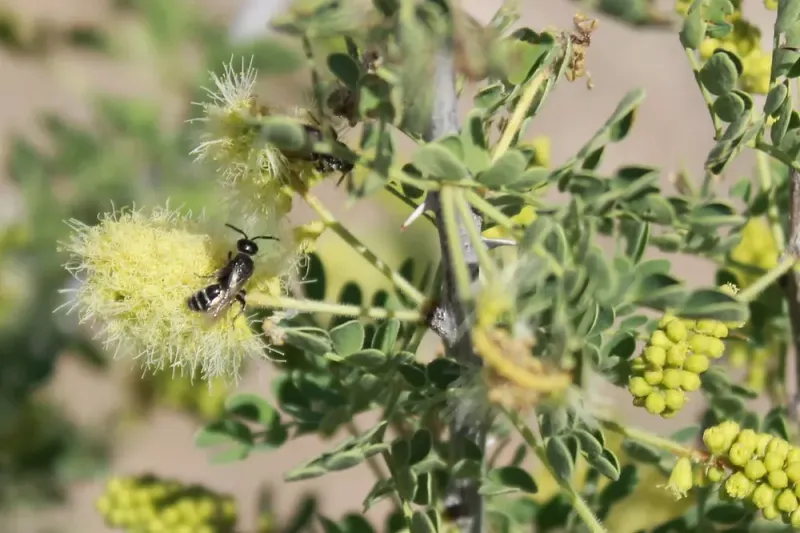
Anyone who has hiked an Arizona trail has probably met catclaw acacia the hard way. Those small, curved thorns grab sleeves like a cat’s claws, earning nicknames like wait-a-minute bush.
In the right spot, though, that grabby nature becomes a real asset.
Native to Sonoran and Chihuahuan desert washes, catclaw acacia thrives in heat and drought. It is listed as a low-water-use plant, and after a few seasons it generally survives on rain.
It can stay shrubby at 6 to 10 feet or slowly grow into a small tree with a wide, airy canopy.
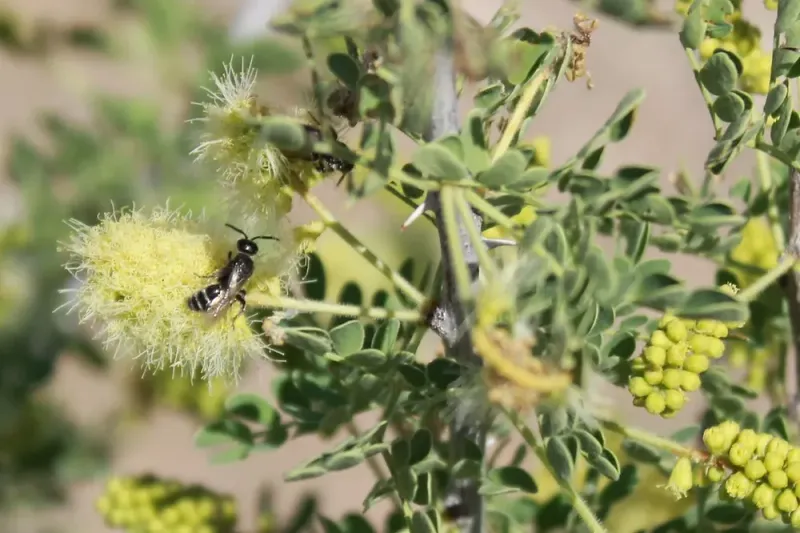
In spring and summer, fuzzy creamy-yellow flower spikes cover the branches and smell sweet. Bees go wild for them, and the seed pods later feed birds and small animals.
The thorny branches also give quail, rabbits, and lizards a protected place to rest away from hawks.
Plant catclaw along back fences, wash edges, or far corners where nobody walks. It helps fill large open areas fast while keeping unwanted foot traffic out.
Wear sturdy gloves when pruning, and remove only crossing or broken limbs. Let the rest grow wild, and wildlife will happily move in.
12. Bear Grass
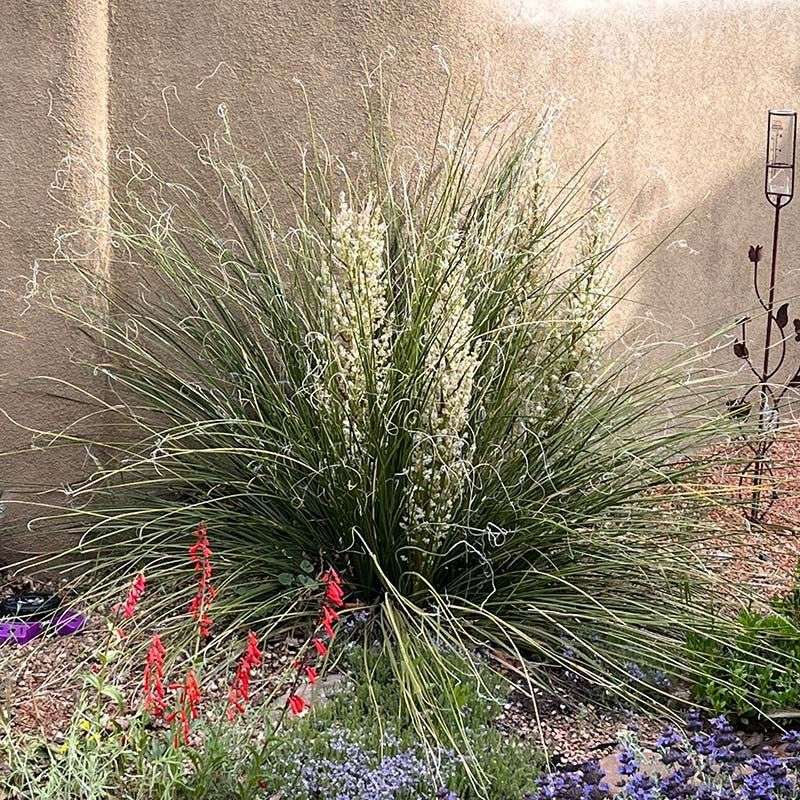
Grass that is not really grass? Bear grass looks like a giant fountain of skinny leaves, but it is actually related to agave and yucca.
That family tie explains why it handles Arizona heat so easily.
Each clump grows about 3 to 4 feet tall and wide, with long, arching leaves that sway in the wind. In late spring, tall stalks rise from the center, topped with creamy white flower plumes.
Bees and other insects visit them, and birds later pick at the seeds.
Toughness is its middle name. Bear grass thrives in drought and Phoenix-level heat, and its thick underground rootstalk lets it bounce back quickly even after wildfire.
Once established, it needs little to no supplemental water. It grows happily in rocky or gravelly soil that many plants would hate.
Here is a neat history bit: native peoples of the Southwest have long used the strong leaves to weave baskets and mats. In your yard, the fine texture contrasts nicely with chunky shrubs like jojoba or creosote.
Use a few clumps among boulders to soften a hard landscape. Small animals hide in the leafy base, adding one more habitat layer to a yard that finally feels alive.