12 Things To Do When Your Arizona Citrus Leaves Curl In The Heat (And 3 Mistakes)
You walk outside on a 112 degree afternoon and notice your lemon tree’s leaves folded up like little tacos. That curl is your tree’s way of saying it is struggling to hold on to water in the desert sun.
The good news is that most citrus bounce back fast when you know what to do. Here are 12 smart moves to help your tree recover, plus 3 common mistakes that can make things worse.
1. Deep Water Right Away
Picture a sponge left on a hot sidewalk. That is roughly what happens to the soil under your citrus in a Phoenix July, and those inward-curling, dull green leaves are the first alarm bell.
Skip waiting for your regular watering day. Give the tree a slow, deep soak right now, aiming for moisture that reaches 2 to 3 feet down into the soil.
A quick sprinkle only wets the surface, and it disappears before roots can use it.
Here is a detail many people miss. The feeder roots that drink most of the water spread out past the canopy, not right at the trunk.
Run your hose or drip emitters about a foot beyond the outer edge of the branches so the water lands where the roots actually live.
Not sure if you soaked deep enough? Push a long screwdriver or soil probe into the ground a few hours later.
If it slides easily to around 2 feet, you did it right.
Many trees perk up within a day or two after a good drink. If the leaves flatten back out by the next morning, you can feel confident thirst was the main culprit, and you can move on to keeping that moisture in place.
2. Water More Often During Heatwaves
Your spring schedule was built for 85 degree days, not a stretch of 115 degree afternoons. When the forecast turns brutal, your tree burns through water much faster, and the old routine simply cannot keep up.
Established citrus in the low desert usually needs a deep soak about once a week in summer. During a long heatwave, though, many trees benefit from a shorter gap, maybe every five or six days.
Young trees with smaller root systems may need water every few days.
Think of it like your own water bottle on a hike. On a mild morning, a few sips will do.
Climb Camelback at noon in June, and you will be refilling constantly.
Adjust your irrigation controller when excessive heat warnings start showing up, and remember to dial it back once temperatures ease. Monsoon storms may add some help, but a quick dust storm with a sprinkle of rain rarely counts as a real watering.
Keep the depth the same and change only the frequency. That combination keeps roots growing deep while still meeting the higher demand of extreme heat.
Your tree will reward you with flatter, glossier leaves and fruit that holds on instead of dropping early.
3. Water In The Early Morning
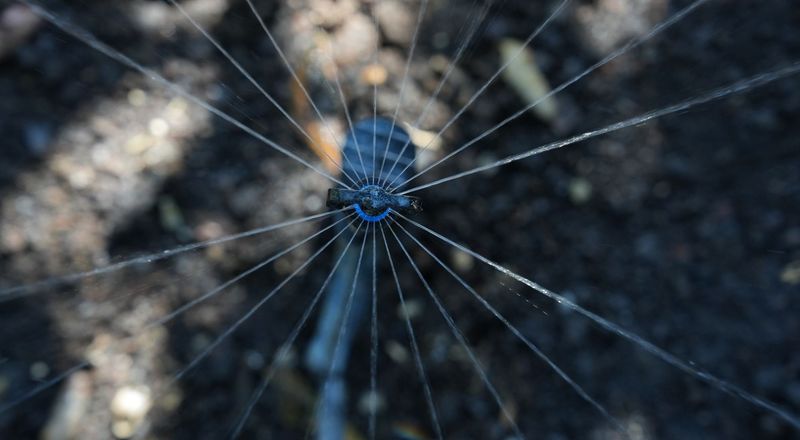
Ever notice how the desert feels almost pleasant at 5 a.m.? That short, cool window is the best friend your citrus has in summer.
Your Arizona Garden Changes Every Week. Your Plan Should Too.
Gardening in Arizona changes quickly throughout the season. Every Friday you’ll receive a simple weekly plan showing exactly what to plant, prune, fertilize, harvest, and protect so you never miss the right timing.
Watering before sunrise gives the tree several hours to pull moisture up into its leaves before the heat cranks up. By the time afternoon arrives, the tree has a full tank to work with instead of starting the day thirsty.
Less water is also lost to evaporation, so more of every gallon actually reaches the roots.
Evening watering is not the worst choice, but soil can stay damp for long stretches overnight, which may invite fungal trouble around the trunk. Midday watering, meanwhile, loses a surprising amount to the air before it soaks in.
Setting your irrigation timer to start around 4 or 5 a.m. makes this easy. If you hand water, it pairs nicely with that first cup of coffee on the patio before the sun gets mean.
Fun fact: citrus leaves partly close their tiny pores during the hottest hours to save moisture. Giving them water early lets them do their best work during the cooler part of the day, which helps the whole tree handle stress with less struggle.
4. Spread A Thick Layer Of Mulch
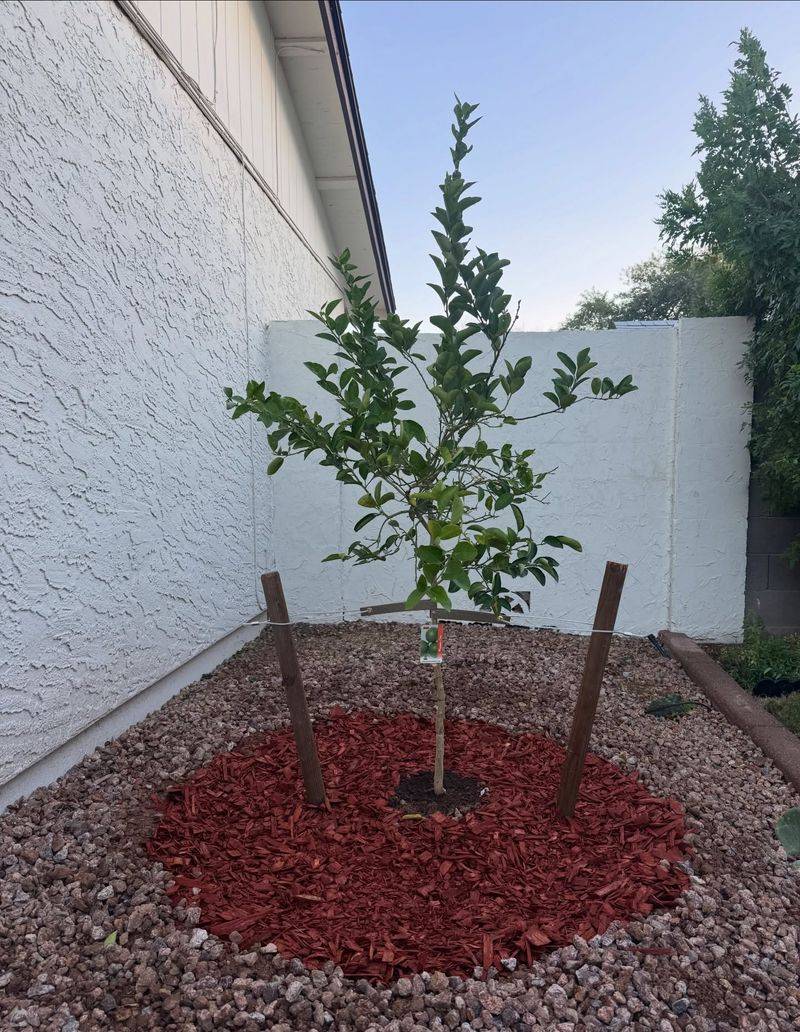
Bare soil in Arizona can get hot enough in July to cook roots near the surface. A blanket of mulch changes that story in a big way.
Spread 4 to 6 inches of organic mulch, such as shredded bark or wood chips, around the tree out to the drip line. Leave a few inches of open space around the trunk so moisture does not sit against the bark and cause rot.
Mulch acts like an umbrella for the soil. It keeps the ground cooler, slows evaporation, and helps each watering last longer.
Over time, it also breaks down and improves our stubborn alkaline, caliche-heavy soil.
There is a bonus for wildlife lovers too. A mulched area tends to hold more moisture and attracts earthworms and helpful soil life, and that in turn can bring in birds like curve-billed thrashers looking for a snack.
Many local tree services give away chips for free, so ask around. Avoid piling rock right up against citrus, since decorative gravel soaks up heat and radiates it back onto the tree.
Swapping rock for mulch under your citrus may be one of the cheapest upgrades you ever make.
5. Add Temporary Shade
The afternoon sun in the Valley hits the west and south sides of a tree like a blowtorch. A little shade during the worst weeks can make a huge difference.
Use 30 to 50 percent shade cloth, burlap, or even an old bed sheet. Drape it over a simple frame made from PVC pipe, stakes, or a patio umbrella so it sits above or beside the tree.
The key rule is to keep the fabric from touching the leaves, because material lying on foliage can heat up and scorch it.
Young trees planted in the past year or two benefit the most. Their canopies are thin, and they have not built the leafy cover that protects older trees.
If you want a longer-term fix, think about planting a native shade partner nearby. A palo verde or desert willow on the west side can filter harsh afternoon light, and both bring pollinators like native bees and hummingbirds into the yard.
Take the shade down once the heat breaks in fall, usually by October. Your tree needs that full winter sun to ripen fruit and stay healthy through the cooler months.
6. Protect The Trunk From Sunburn
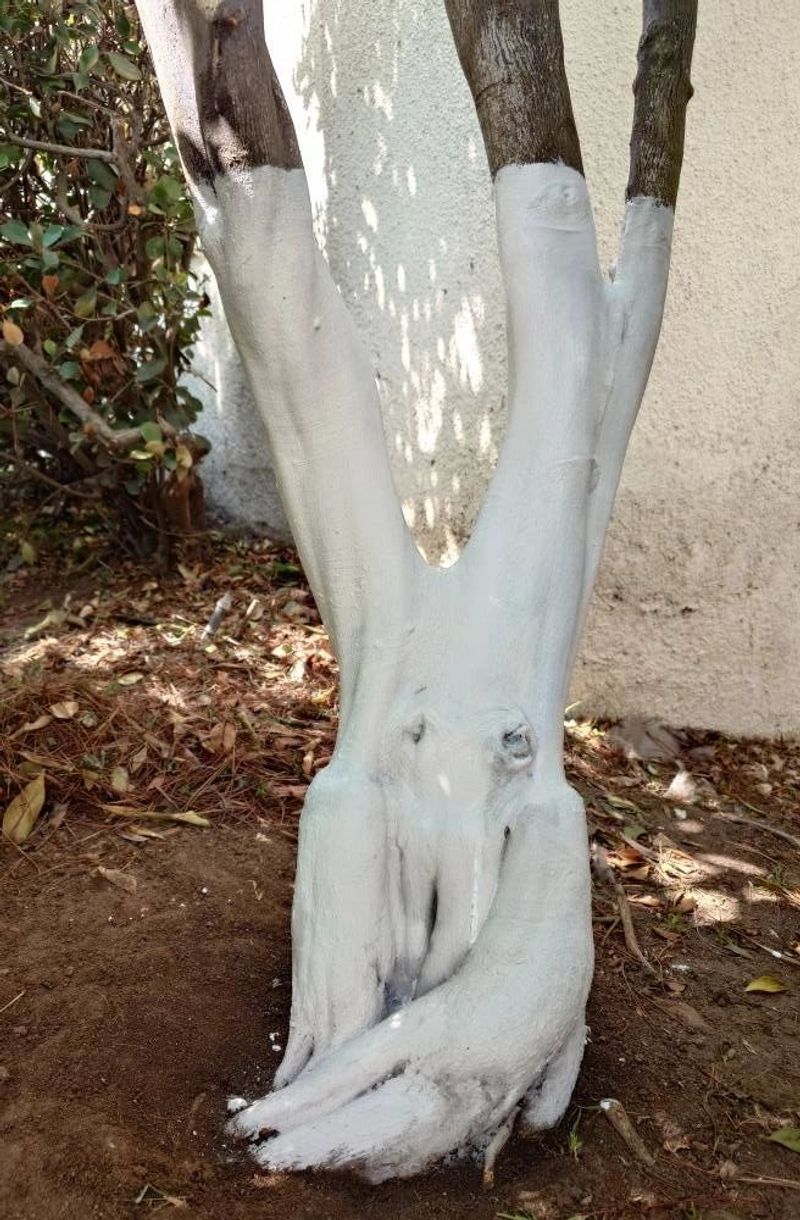
Citrus bark is thinner than most people realize. Once it gets sunburned, the damage can crack open and let in borers and disease, and that harm sticks around for years.
Young trees and any citrus with an exposed trunk are most at risk. The simple fix is paint.
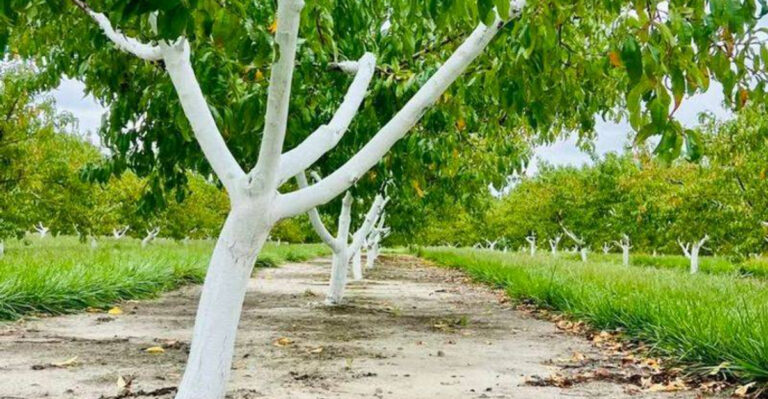
Cover the trunk and main limbs with white latex paint, often thinned with a bit of water, or use a commercial tree trunk paint made for the job. The bright white reflects the sun much like a white car stays cooler than a black one.
Tree wraps are another option, especially for brand-new plantings. Just check under them now and then to make sure insects are not hiding there.
You might notice old Arizona groves with rows of white-trunked trees. That look is not decoration.
Growers have relied on this trick for generations because it works so well in desert sun.
Paint once and refresh it every year or two as it fades. Avoid oil-based paints, which can harm the bark.
For a few dollars and twenty minutes, you give your tree solid protection against one of summer’s sneakiest problems.
7. Flush Salts From The Soil
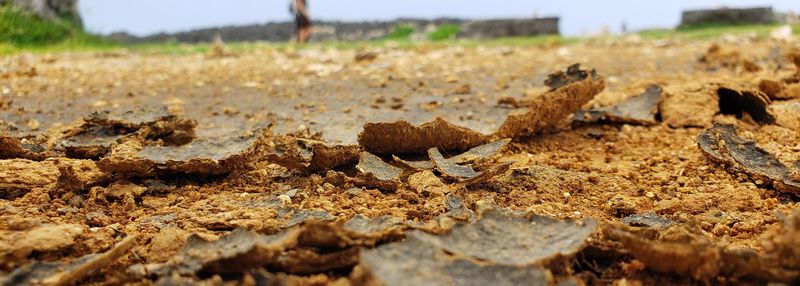
Brown, crispy leaf tips on top of curling leaves often point to a hidden culprit: salt. Arizona water and soil both carry plenty of it, and in summer it builds up fast.
Every time water evaporates from the soil surface, it leaves minerals behind. Over weeks of short or shallow watering, those salts pile up around the roots.
The tree then has a harder time drinking, even when the ground feels damp.
The cure is a long, slow, extra-deep soak every so often. Let the water run long enough to push salts below the root zone, well past 3 feet if you can.
Doing this about once a month in summer can help a lot.
A white crust on the soil surface or around drip emitters is a clear clue. So is leaf burn that starts at the tips and edges.
Monsoon rains can also help, since rainwater is naturally low in salts. When a big storm rolls through, it gives your citrus a free rinse.
Pair those storms with your own deep flushes, and the roots get a much cleaner place to work.
8. Check For Sap-Sucking Pests
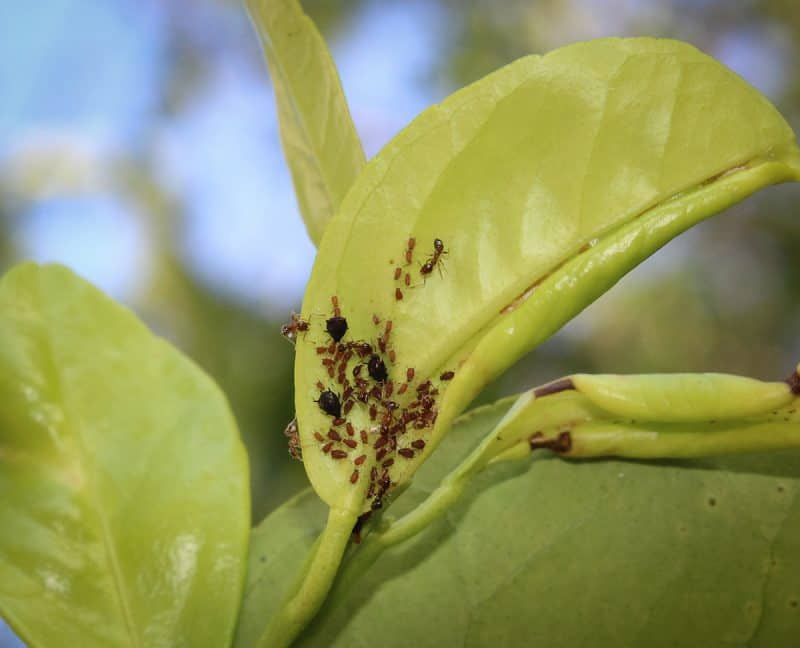
Not every curled leaf is about heat. Sometimes tiny freeloaders are sipping the sap right out of your tree.
Flip over a few leaves, especially soft new growth at the branch tips. Look for clusters of aphids, specks that might be mites, or fine webbing.
A sticky, shiny coating on leaves, often called honeydew, is another hint. Ants marching up the trunk can also signal that aphids are nearby, since ants protect them for that sweet sticky treat.
Citrus leafminer is another common visitor. It leaves silvery, winding trails inside new leaves and often causes them to twist and curl.
A cheap hand lens makes this inspection fun, almost like a backyard safari. Kids usually love helping with it.
Here is some good news for habitat-minded gardeners. A yard full of native flowers like penstemon, desert marigold, and brittlebush tends to attract ladybugs, lacewings, and tiny wasps that feed on aphids.
Planting those natives nearby may help keep pest numbers lower on their own, so your citrus gets backup from the neighborhood wildlife without you lifting a finger.
9. Treat Pests The Gentle Way
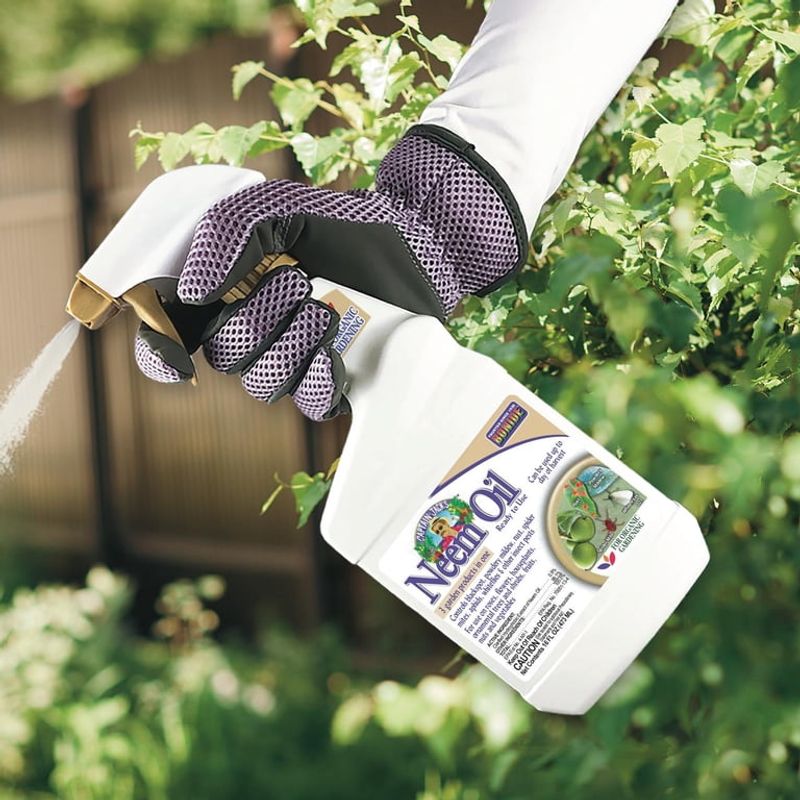
Grabbing the strongest spray on the shelf is tempting, but harsh products often wipe out the good bugs along with the bad ones. A softer approach usually works better and protects your backyard helpers.
Start with plain water. A strong blast from the hose knocks aphids and mites off leaves, and most never make it back.
Repeat every few days for a week or two.
For stubborn problems, try insecticidal soap or neem oil. Spray in the early morning or evening, and make sure to coat the undersides of leaves where pests hide.
Never spray in the heat of the day, since oils and soaps on hot leaves can cause burn.
Leaving a few aphids is actually fine. They feed the ladybugs, lacewings, and verdins that patrol your yard.
Hummingbirds even snack on small insects to feed their chicks.
Citrus leafminer damage usually looks worse than it is. Mature trees handle it well, so most gardeners simply let it run its course.
Patience here keeps your yard balanced and buzzing with life instead of stripped of every helpful creature.
10. Feed Your Tree On Schedule
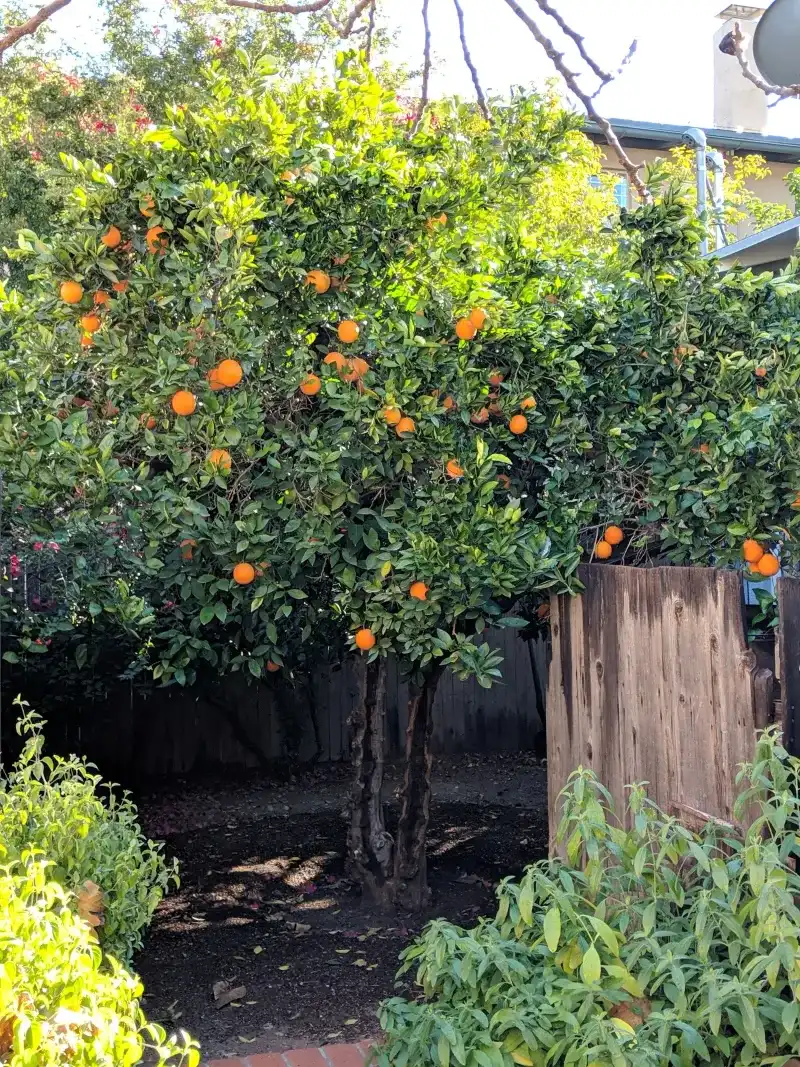
Pale, yellowish leaves that curl may be crying out for food rather than water. A hungry tree simply has less strength to deal with summer stress.
In the low desert, a simple rule works well: feed citrus three times a year, in February, May, and September. Some people remember it as Valentine’s Day, Memorial Day, and Labor Day.
Use a citrus fertilizer with a good amount of nitrogen, and always water deeply before and after applying it.
Spread the fertilizer out near the drip line, not piled against the trunk. That is where the feeder roots can grab it.
Our alkaline soil can also lock up iron and other micronutrients. If new leaves look yellow with green veins, a chelated iron product made for alkaline soil may help.
Skip feeding in the middle of a heatwave. Pushing fresh, tender growth in July only creates more leaves for the sun to scorch.
Stick to the calendar, and your tree will build a sturdy canopy that shades itself, holds more fruit, and handles the next round of triple digits much more easily.
11. Test Your Soil Drainage
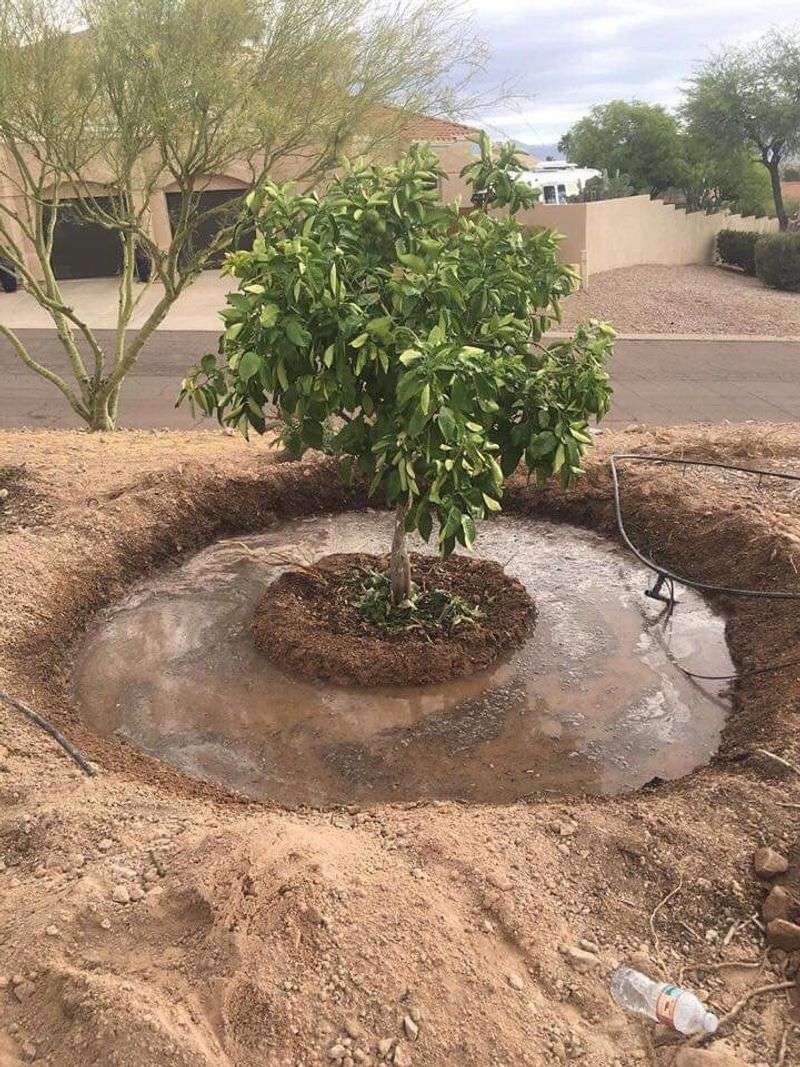
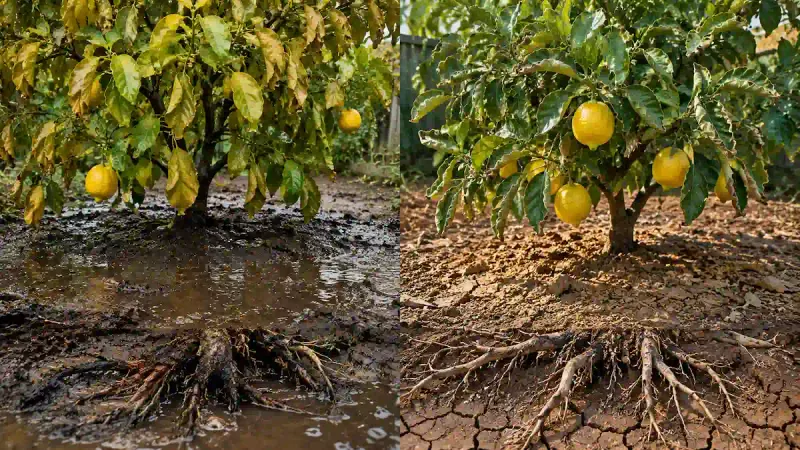
Strange but true: soggy roots can cause leaf curl that looks almost the same as thirst. If the leaves are curling, yellowing, and feel soft while the ground stays wet, drainage may be the problem.
Caliche, that cement-like layer common under Valley yards, can trap water like a bathtub. Roots sitting in water cannot breathe, and they begin to struggle.
Try a quick test. Dig a hole about a foot deep near the tree, fill it with water, and let it drain.
Fill it again and time how long it takes. If water is still sitting there after several hours, drainage needs work.
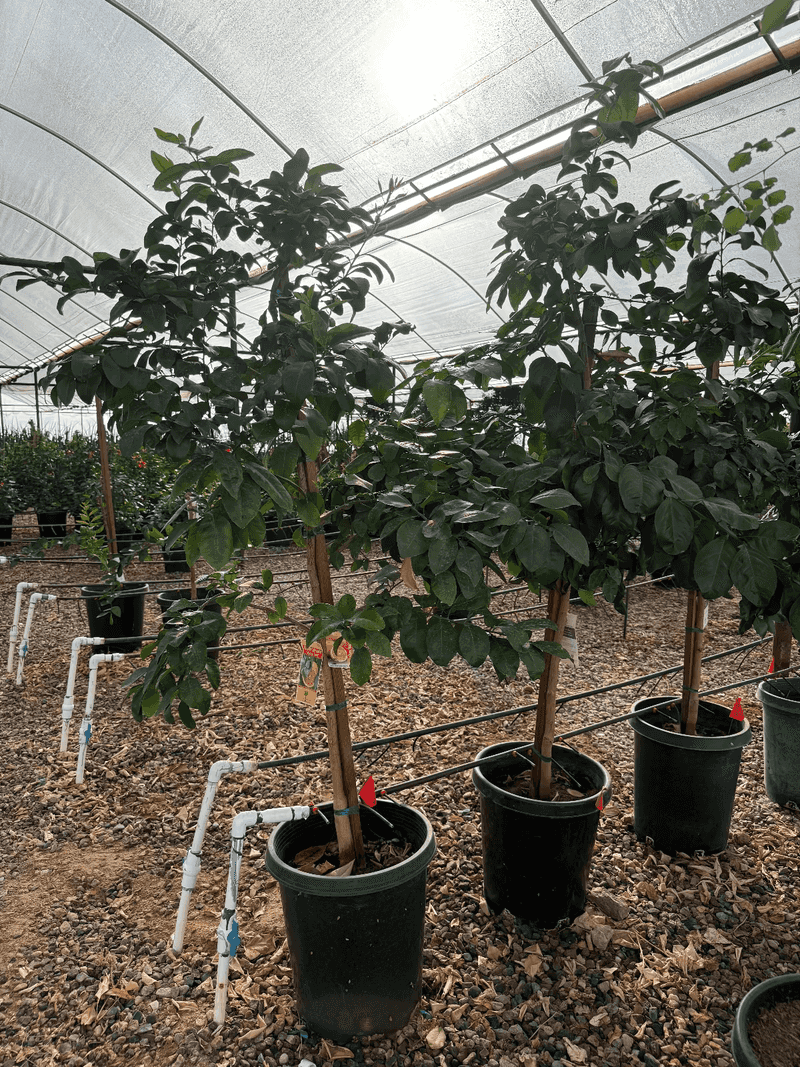
For in-ground trees, breaking through caliche or planting on a slight mound can help. Container citrus needs open drainage holes, and the pot should never sit in a saucer full of water.
If the potting mix has turned dense and mushy, repot in fresh, fast-draining soil during a cooler month.
Fixing drainage often solves problems that no amount of fertilizer or shade ever could. Healthy roots are the foundation for everything happening above ground.
12. Let The Soil Dry Slightly Between Waterings
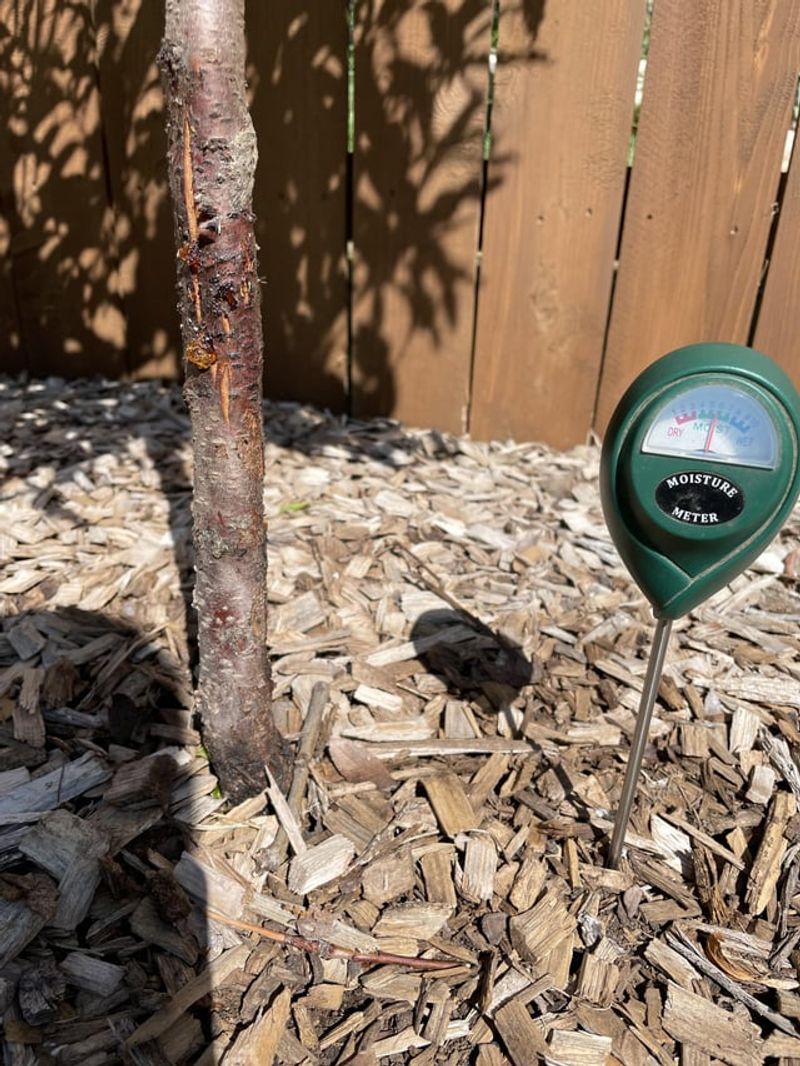
Citrus loves a deep drink but hates wet feet. Finding that middle ground is where many desert gardeners really level up.
Between deep soaks, let the top few inches of soil dry out. Stick your finger or a moisture meter into the ground under the mulch.
If the top layer feels damp, wait a day or two. If it feels dry while deeper soil still holds some moisture, it is time to water again.
That brief drying period pulls oxygen into the soil, which roots need just as much as water. It also encourages roots to chase moisture downward, building a deeper and tougher root system for the next heatwave.
Think of it like breathing in and breathing out. Water fills the soil, and drying lets it exhale.
This rhythm saves water, too, which matters a lot in a state always watching its supply. Fewer wasted gallons mean a lower bill and a more resilient tree.
Once you get a feel for your soil, you will rarely need to guess, and your citrus will settle into a steady, happy routine.
13. Mistake: Underwatering Week After Week
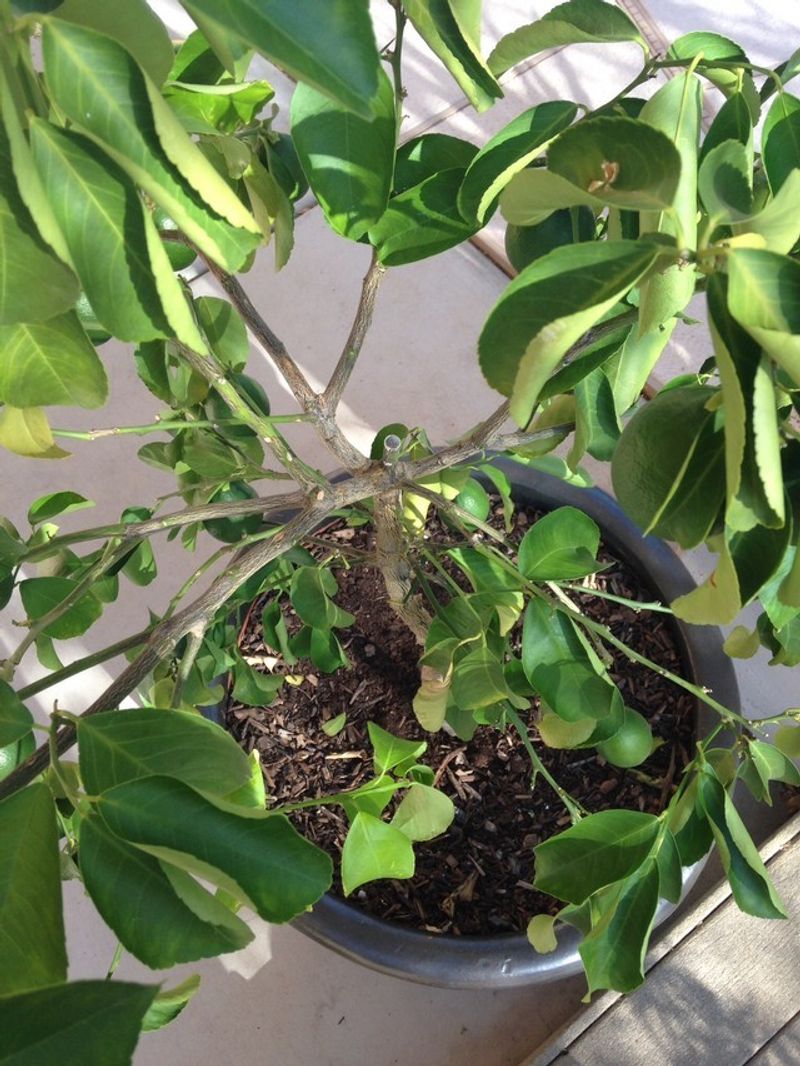
Of all the slip-ups, this one shows up most often. Many people set their drip system years ago and never adjusted it as the tree grew bigger.
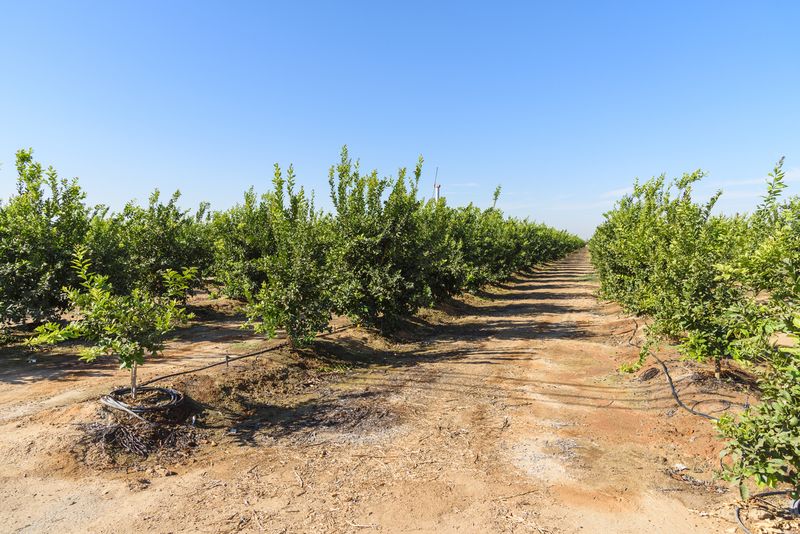
A citrus tree that doubles in size needs far more water than it did as a sapling. Old drip emitters huddled close to the trunk cannot reach roots that now spread well beyond the canopy.
The result is a tree that stays slightly thirsty all summer long.
Constant thirst shows up as leaves curled inward like rolled paper, a dull color, small fruit, and fruit drop in summer. Over time, branches may thin out and the canopy gets sparse, letting even more sun reach the bark.
The fix is pretty simple. Move emitters out toward the drip line as the tree grows, add more of them, and run the system longer.
A ring of emitters works better than a couple at the base.
Check your setup each spring before the heat arrives. A quick ten-minute walk around the tree with the system running can reveal clogged or misplaced emitters that have been quietly starving your citrus for months.
14. Mistake: Drowning The Roots
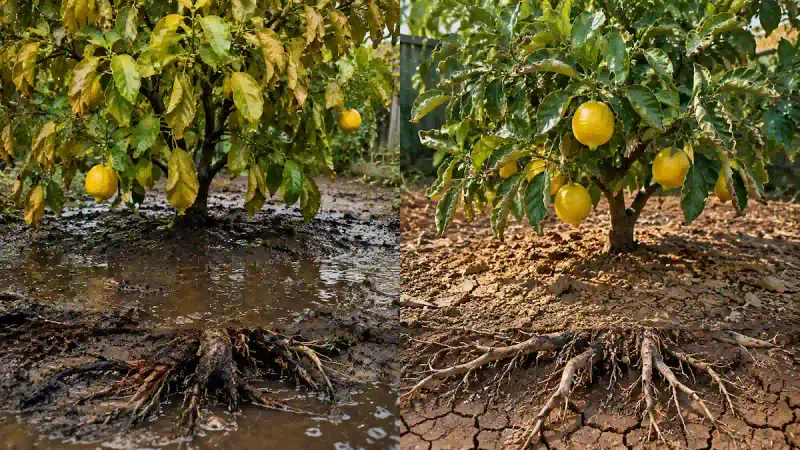
Panic is a powerful thing. You see curled leaves, grab the hose, and water every single day, sure that more is better.
Unfortunately, too much water can hurt just as badly as too little. Roots in soggy soil run short on oxygen and can begin to rot.
The tree then cannot take up water at all, so the leaves curl, yellow, and droop, which tempts you to water even more. It becomes a frustrating loop.
Signs of overwatering include leaves that turn yellow and curl downward, soft or limp foliage, leaf drop, and soil that never seems to dry. A sour or musty smell from the ground is another clue.
Before reaching for the hose, check the soil a few inches down. If it is already moist, hold off.
Short daily watering is a double problem, because it keeps the surface wet while deeper roots stay starved and salts build up. Deep, less frequent soaks are almost always the better path.
Trust the probe, not the panic, and your tree will thank you with steady, healthy growth.
15. Mistake: Pruning In Summer
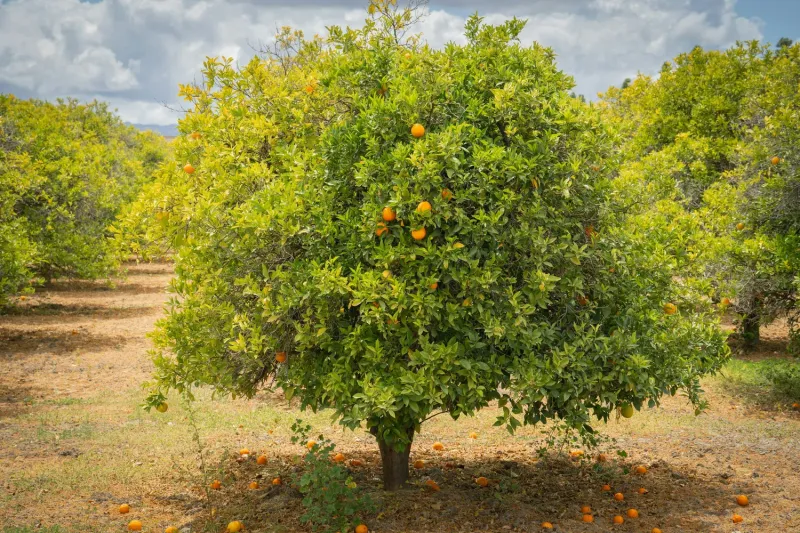
A tidy, lifted canopy might look nice in a magazine, but in Arizona it can spell trouble. Summer pruning is one of the fastest ways to invite sunburn.
Every branch you cut opens a window for the sun. Bark and inner limbs that were shaded for years suddenly face full desert light, and they can scorch badly within days.
Fruit that loses its leafy cover may burn too.
Citrus naturally grows with branches that sweep low, sometimes all the way to the ground. Those low limbs work like a built-in umbrella for the trunk.
Let them stay. As a bonus, fruit is easier to pick, and the shady pocket under a full canopy offers cover for lizards and ground-feeding birds like Gambel’s quail.
If you truly need to trim, wait for late winter or early spring after the frost danger passes, or do light shaping in fall. Keep cuts small and remove mainly broken or crossing branches.
Hold off on the shears from June through September. Your citrus will stay cooler, healthier, and more productive, and you get a break from yard work during the hottest stretch of the year.