Does Catnip Actually Repel Arizona Mosquitoes? What the Science Really Shows
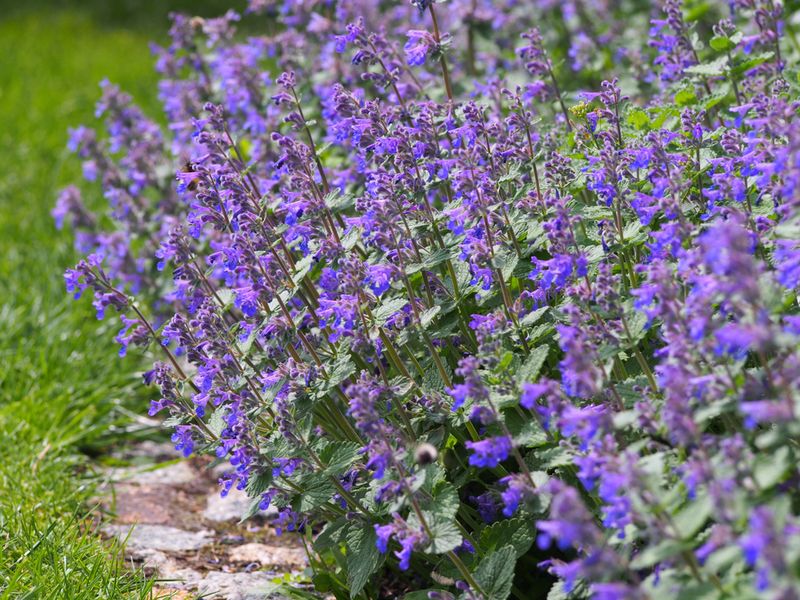
A claim spreading across gardening sites says that planting one catnip plant in your Arizona yard will send mosquitoes running like there is a five-alarm fire. That makes for a great headline, but it does not match what researchers have actually found.
The real story is more useful than the myth, and knowing the difference can help Phoenix and Tucson homeowners make smarter choices for their yards and their skin.
Does planting catnip actually repel Arizona mosquitoes?
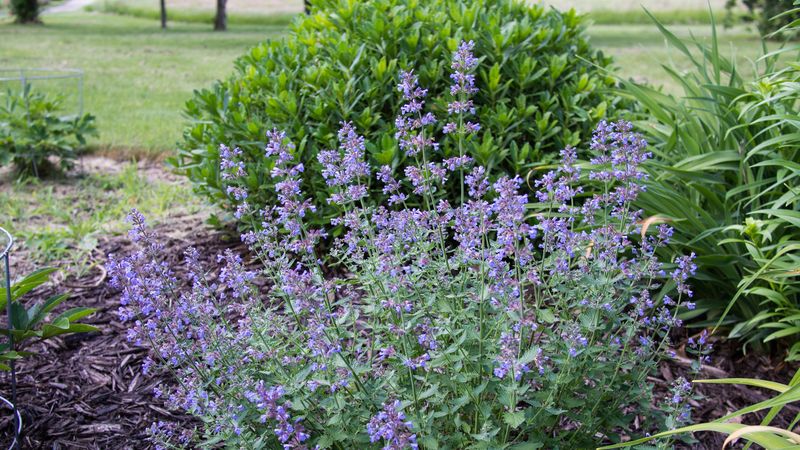
Catnip makes a fine herb garden addition in Arizona, but buying it as a mosquito barrier is a purchase built on a shaky foundation. Extension plant scientists are clear on this point: simply placing an undisturbed catnip plant near a patio has not been shown to produce meaningful mosquito control at any scale a homeowner would notice.
Clemson Extension guidance on repellent plants explains that aromatic plants release volatile oils at low, inconsistent rates when left alone, and those trace emissions are very different from the concentrated extracts tested in laboratories.
The practical gap matters. Crushing or bruising catnip leaves releases more of the active compound, nepetalactone, into the air around you.
An intact plant sitting in a pot or a bed is doing far less. Researchers and extension specialists consistently separate what a formulated catnip product can do from what a landscape planting can do, and those two things are not equivalent.
Catnip, known botanically as Nepeta cataria, is still worth growing in Arizona yards for its flowers, its value to bees, and its use as a culinary or craft herb. Just do not count on it to clear your patio of mosquitoes.
Treating it as a garden plant with interesting chemistry is honest; treating it as a guaranteed pest barrier is not.
Nepetalactone activates an insect irritant pathway

Nepetalactone, the main active compound in catnip essential oil, does something genuinely interesting inside a mosquito’s nervous system. When scientists tested mosquitoes that lacked the relevant TRPA1 response, those insects were no longer repelled by catnip or nepetalactone, which points directly to this irritant pathway as the driver of avoidance behavior.
Calling TRPA1 a “pain switch” is a simplified way to picture what happens, but it is worth being precise. The receptor is linked to an aversive, irritant-type response, not to anything researchers can identify as conscious pain in an insect.
Mosquitoes exposed to nepetalactone behave as though they want to leave, but that behavioral result comes from receptor activation, not from a demonstrated experience of suffering.
This mechanism is real and scientifically supported. What it does not do is justify the claim that one Arizona catnip plant triggers a yard-wide mosquito emergency.
The receptor research was conducted under controlled conditions using concentrated compounds, and the distance between that work and a pot of catnip on your porch is considerable. The biology is interesting; the leap to backyard mosquito control is where the evidence runs out.
The 95% result came from concentrated oil under laboratory conditions
The statistic that catnip keeps more than 95% of mosquitoes from landing sounds dramatic until you look at where it came from. A 2019 laboratory study published in Scientific Reports tested catnip essential oils and isolated nepetalactones against Aedes aegypti mosquitoes under controlled conditions at defined concentrations.
Your Arizona Garden Changes Every Week. Your Plan Should Too.
Gardening in Arizona changes quickly throughout the season. Every Friday you’ll receive a simple weekly plan showing exactly what to plant, prune, fertilize, harvest, and protect so you never miss the right timing.
Those are not the conditions in a Phoenix backyard. The protection window and the concentration both matter.
Separate USDA-linked research found that catnip oil shows both spatial repellency, meaning mosquitoes avoid the area, and contact repellency, meaning they avoid landing on treated surfaces. However, the same research found that DEET outperformed catnip oil as a contact repellent across the tested mosquito species.
Performance also varies depending on which catnip chemotype was used, since different plants contain different ratios of nepetalactone isomers, and results from one formulation cannot be assumed to apply to another.
Weather, delivery method, elapsed time, and mosquito species all shift the outcome further. The 95%-plus figure is real within its experimental box.
Outside that box, including in an Arizona yard with heat, wind, and multiple mosquito species, the number loses its footing quickly.
A catnip lotion is not the same as a catnip plant
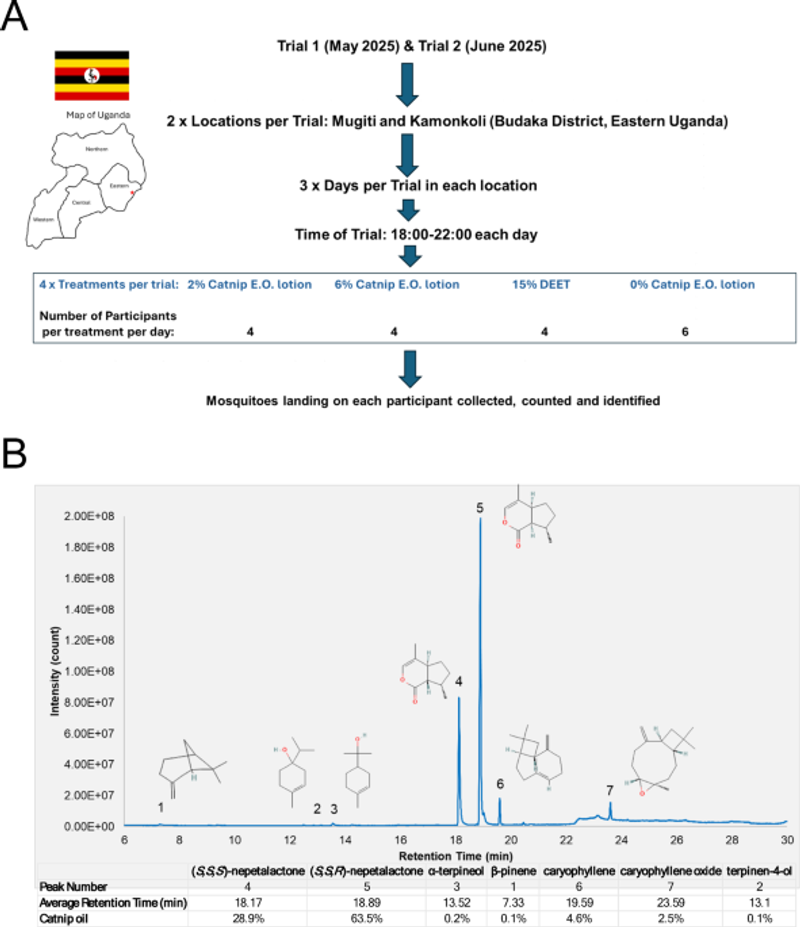
One of the more compelling pieces of catnip research came from a field trial in eastern Uganda, where scientists tested a lotion made with 6% catnip oil against 15% DEET during four-hour evening sessions using the human landing catch method. The catnip lotion performed comparably to DEET in that setting.
That result is worth knowing, but it requires careful reading before anyone applies it to an Arizona patio.
The lotion used in that study was a formulated topical product made with locally produced oil containing more than 92% nepetalactone. That is a highly refined, precisely concentrated ingredient worked into a skin-applied carrier, not the diffuse volatiles coming off a garden plant.
The trial also took place in an African field environment with different mosquito species, different climate conditions, and different exposure circumstances than a summer evening in Tucson or Phoenix.
Arizona has its own mosquito mix, including several Culex species alongside Aedes aegypti in some counties, and results from one species in one region do not transfer automatically. The Uganda study supports the idea that a well-formulated catnip product can be a serious repellent option.
It does not support the idea that growing catnip near your drip system will give you equivalent protection. The gap between a tested lotion and a landscape plant is wide enough that treating them as the same thing would be a practical mistake.
Grow catnip for its garden value, not guaranteed mosquito control
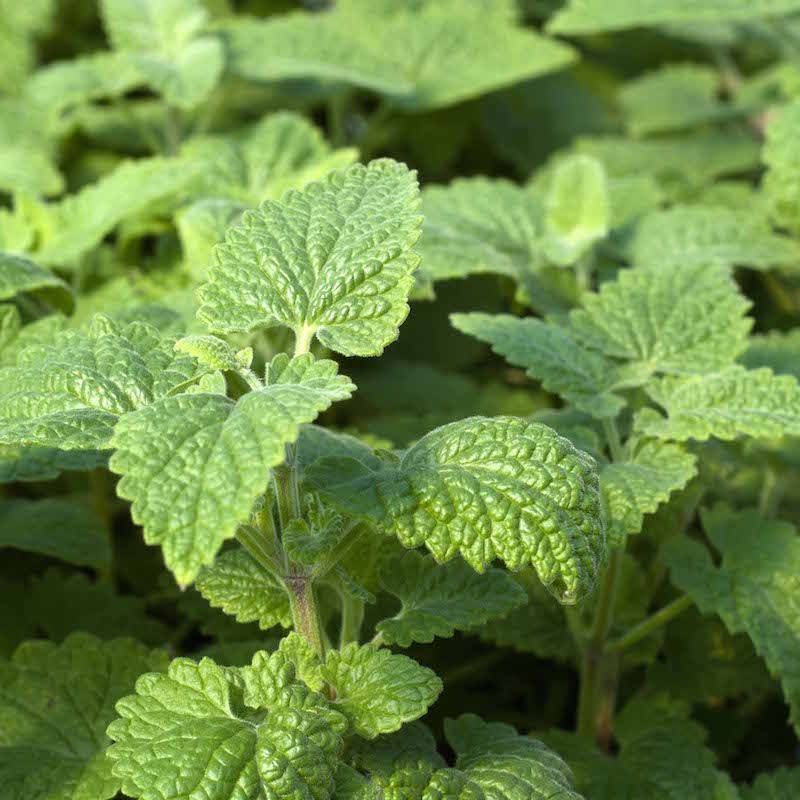
Catnip is worth growing in Arizona yards, just for honest reasons. Nepeta cataria, the true catnip, is a different plant from the catmint hybrids often sold at nurseries.
Catmint, usually Nepeta x faassenii or a related ornamental, generally does not provoke the same response in cats and likely has a different chemical profile, so the two should not be treated as interchangeable when it comes to either cat behavior or mosquito chemistry.
True catnip can reach about three feet tall, spreads under favorable conditions, and will attract cats, which may roll on it, chew it, or flatten it entirely. On the beneficial side, its flowers draw bees and other beneficial insects, which makes it a reasonable companion plant for vegetable beds or pollinator gardens.
Those are real, observable payoffs that do not require overstating the mosquito angle.
Growing it well in the low desert takes some attention. Catnip needs good drainage, since Arizona’s alkaline soils can hold water around roots in ways the plant does not tolerate.
For in-ground plantings in Phoenix or Tucson, deep and less frequent watering encourages roots to go down rather than staying shallow. Drip emitter placement matters for creeping herbs like this one.
Containers are an option, but pots under 14 inches dry out quickly in direct summer sun and can overheat roots during triple-digit afternoons, so choose a larger container and give it afternoon shade during the hottest months.
Make standing-water control a primary mosquito step
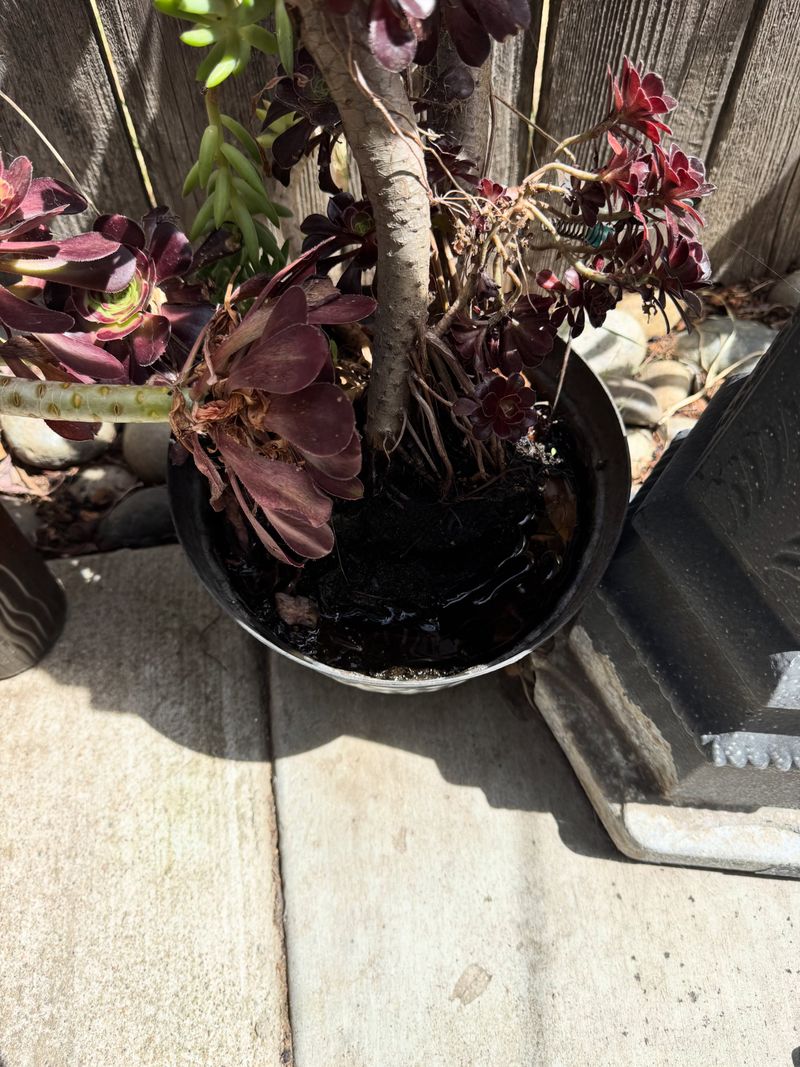
No aromatic plant, catnip or otherwise, addresses the core reason mosquitoes show up in Arizona yards: standing water. Removing or managing water sources is a primary, recommended way to reduce local mosquito breeding and should not be replaced by planting catnip or any other herb.
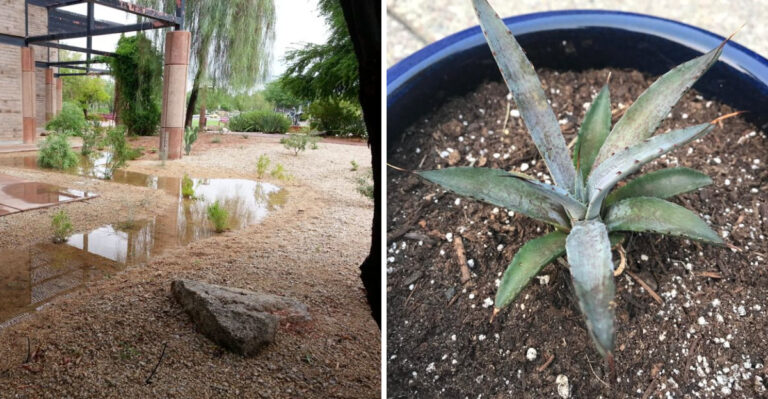
In an Arizona yard, that list gets long fast. Plant saucers under pots, old tires, buckets, clogged roof drains, irrigation leaks, low spots where monsoon rain pools, drainage structures, and neglected pool areas all qualify.
The monsoon season from late June through September adds standing water faster than many homeowners expect, and Sonoran Desert summer temperatures accelerate mosquito development dramatically. University of Arizona research notes that some Culex mosquitoes can develop from egg to adult in roughly seven days under peak summer heat, which means a forgotten saucer can go from empty to actively producing mosquitoes in about a week.
That timeline makes weekly checks non-negotiable during warm months. Clogged gutters, drip system puddles, and even the water dish left out for neighborhood wildlife are worth inspecting.
Fixing a leaking valve or flipping a bucket costs nothing and removes a breeding site that no plant can neutralize once it is established.
Use labeled protection when you need bite reduction
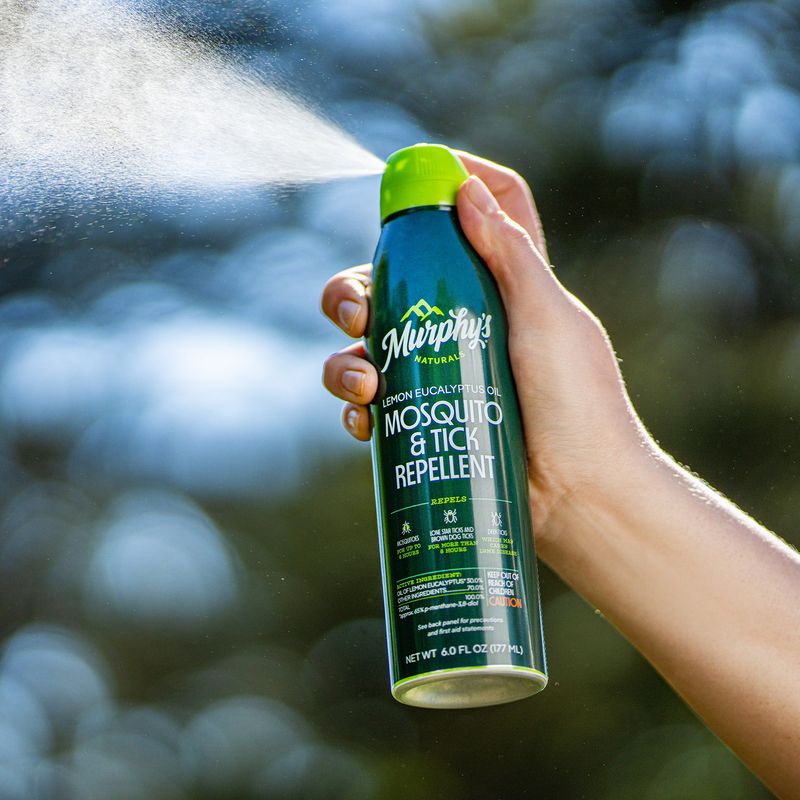
When mosquito pressure is high enough that you need real bite reduction, a few practical tools work reliably. EPA-registered skin-applied repellents, used according to their label directions, are the place to start.
The EPA’s list of registered skin-applied repellent ingredients includes catnip oil among the active ingredients in several registered products, which confirms that formulated catnip-based repellents are a legitimate option when they carry an EPA registration number and are used as directed.
That is a very different thing from rubbing garden leaves on your arms or mixing up a homemade catnip extract to apply to skin. Undiluted essential oils, including catnip oil, can irritate skin, and plant-derived does not automatically mean safe for topical use.
Extension guidance consistently warns that volatile plant oils require proper formulation and that improvised topical treatments carry real irritation risk. If you want a catnip-based repellent, buy a registered product.
Beyond repellents, long sleeves and pants during peak mosquito hours, well-fitted window and door screens, and continued attention to standing water round out a practical protection plan. These measures address bite risk and reduce exposure to mosquito-borne illnesses without requiring any single product to carry more than its share of the work.
Catnip earns a fair spot in an Arizona yard as an herb, a bee-friendly flowering plant, and an interesting garden subject. One plant growing quietly in a bed will not clear your patio, but it might bring in a few pollinators, entertain the neighborhood cats, and remind you that good gardening and good science rarely need exaggeration to be worth your time.