Secret Sugar Tricks That Give Your Arizona Plants Stronger Roots And More Blooms
Gardening tips spread fast online, and one of the most popular claims right now is that sprinkling sugar or molasses around your plants will build stronger roots and push out more flowers. It sounds like a simple, cheap fix for any Arizona yard struggling through triple-digit heat.
Before you reach for the sugar bowl, though, it is worth checking whether the idea actually holds up for low-desert plants in Phoenix or Tucson. The short answer is that it does not, and there are far more reliable ways to help your desert plants thrive.
The Arizona Sugar Trick Does Not Pass the Fertilizer Test
Plenty of gardening advice circulates on social media, but not all of it survives contact with basic plant biology. In Arizona’s low-desert landscapes, table sugar and molasses are sometimes promoted as root boosters and bloom enhancers.
That claim does not hold up when you look at what plants actually need to grow.
Sugar is a carbon compound. It is not a complete fertilizer, and it does not supply the nitrogen, phosphorus, potassium, iron, or other mineral nutrients that Arizona plants require in plant-available forms.
University of Missouri Extension’s gardening myths review confirms that roots generally do not absorb complex organic sugar molecules as a substitute for mineral nutrition. Sprinkling sugar around a palo verde or an agave does not feed the plant the way a balanced nutrient program can.
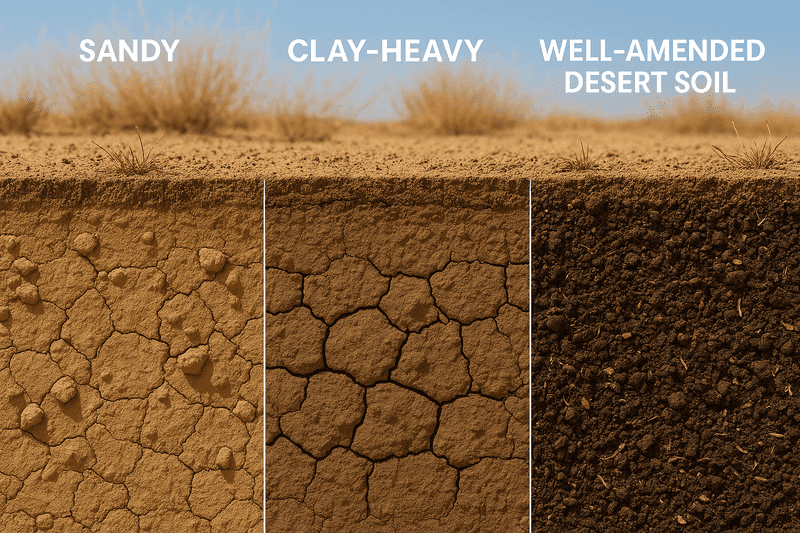
Arizona soils add another layer of difficulty. High pH, accumulated salts, and caliche layers can already make nutrients less available to plants even when those nutrients are physically present in the soil.
Adding a kitchen ingredient that lacks the essential nutrient profile only sidesteps the real problem. What Arizona gardeners actually need is plant-specific diagnosis, starting with an honest look at soil conditions, drainage, and the plant’s own requirements, rather than a generic kitchen remedy that was never designed for desert landscapes.
What Sugar Research Does—and Does Not—Prove
There is genuine science behind the idea that sucrose matters to plants. Inside a plant, sucrose acts as a signaling molecule that can influence gene expression, root development, and flowering pathways.
Research published in peer-reviewed journals, including a study in Plant Science on sucrose signaling and root architecture, documents how internal sugar levels shape growth responses in specific species under carefully controlled conditions.
The problem is context. Those experiments typically involve tissue culture, seedlings, model plants, or crop species under laboratory or greenhouse conditions.
The sucrose being studied is the plant’s own internal supply, not tablespoons of grocery-store sugar dissolved in water and poured into Arizona soil. Removing that experimental context and turning it into a home gardening recipe produces advice that the original research does not support.
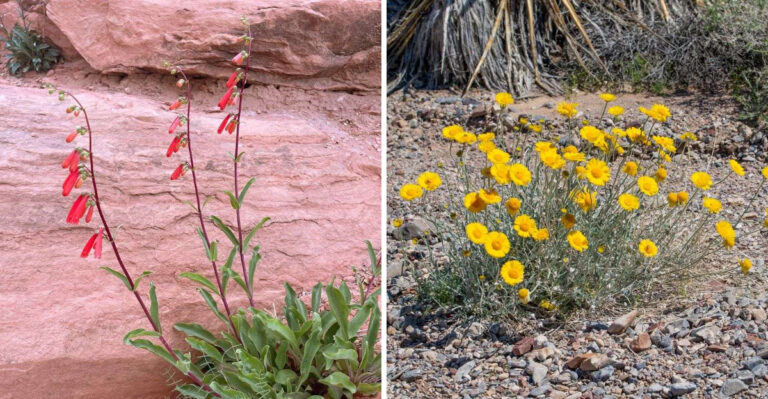
Arizona landscape plants, including agaves, penstemons, desert willows, palo verdes, and mesquites, have distinct water, drainage, dormancy, and nutrient requirements shaped by millions of years in the Sonoran Desert. A finding from a controlled study on Arabidopsis seedlings or a greenhouse tomato crop does not transfer cleanly to a xeriscape planting in Tucson or Phoenix.
Your Arizona Garden Changes Every Week. Your Plan Should Too.
Gardening in Arizona changes quickly throughout the season. Every Friday you’ll receive a simple weekly plan showing exactly what to plant, prune, fertilize, harvest, and protect so you never miss the right timing.
The biological observation is real. The leap from that observation to a household sugar-water treatment for Arizona ornamentals is not supported by the evidence, and treating it as such can lead gardeners away from care practices that actually work in the low desert.
Why Sugar and Molasses Offer Arizona Gardens No Reliable Shortcut
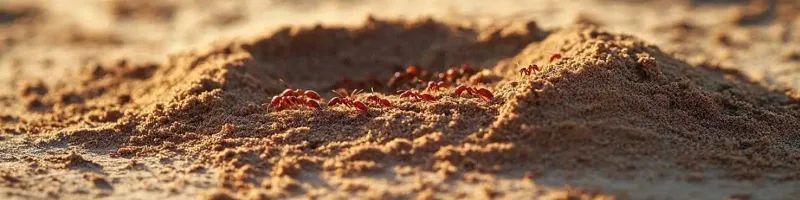
Even setting aside the fertilizer question, applying sugar or molasses to Arizona soil introduces practical problems that gardeners should weigh carefully. Sugar feeds a broad range of soil microorganisms, not just the beneficial ones.
Microbial responses depend on moisture, temperature, the existing soil biology, and the plant species present. In the low desert, where soil conditions shift dramatically between monsoon season and dry stretches, predicting which organisms will respond to a sugar addition and how is not straightforward.
Ant attraction is a more immediate concern. Sugar-based liquids are used precisely because they draw ants, and Arizona yards already deal with aggressive ant species.
Applying sugar water near plants can worsen ant activity, and active ant populations sometimes signal a separate problem: honeydew-producing pests such as aphids, scale insects, or whiteflies. If ants are already visiting your plants, the underlying pest issue deserves attention before you add anything that might amplify it.
For ant management, a properly labeled, formulated ant bait used and placed according to its label is a more targeted approach than sugar alone.
Molasses is not the same product as refined table sugar, and the two should not be treated as interchangeable. Molasses contains sugars along with variable minerals and organic compounds, and any observed response in a trial may come from the full mixture or the background fertility of the soil rather than sugar itself.
A controlled cabbage transplant study found no benefit from molasses-containing transplant solutions in high-fertility soil, and the highest molasses rate produced detrimental effects. Nebraska Extension also describes the research on sugar applications in field crops as limited, with no statistical yield advantage found in some corn and soybean trials.
Neither result supports a reliable shortcut for Arizona ornamental landscapes.
Build Arizona Roots With Planting Timing and Irrigation
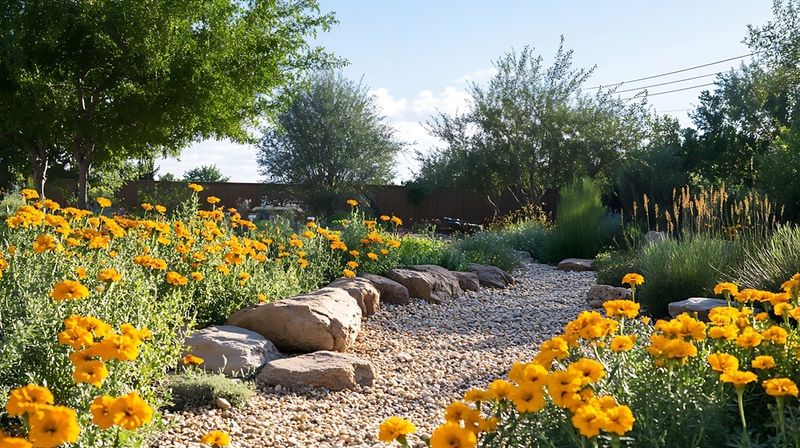
Root establishment in Arizona’s low desert is driven by irrigation management more than any soil additive.
University of Arizona Extension guidance on root stimulators identifies irrigation as the most important factor in getting newly planted landscape plants established, and generally does not recommend fertilizer at planting for woody or native plants.Getting the watering schedule right matters far more than anything poured from a kitchen cabinet.
Newly planted desert-adapted plants need deep, infrequent watering rather than frequent shallow applications. Deep watering encourages roots to follow moisture downward, building a root system that can access water during dry stretches.
The schedule should be adjusted progressively as the plant establishes, with intervals lengthening over time. Season, soil type, drainage, weather, and plant species all affect how often and how long to water.
There is no single calendar that fits every Arizona yard.
Planting timing is the other major lever. Late fall, roughly October through November in the Phoenix and Tucson areas, is generally favorable for many low-desert landscape plants because soil temperatures stay warm enough for root growth while air temperatures ease off.
Roots can establish before the following summer’s heat arrives. Late spring planting can also work, but establishment may be slower and irrigation demands higher.
Frost-sensitive species and some cacti have their own timing requirements, so species-specific guidance matters. Matching the planting window to the plant and the Arizona climate zone gives roots the best possible start without any kitchen remedies involved.
Choose the Arizona Plant and Site Before Chasing More Blooms
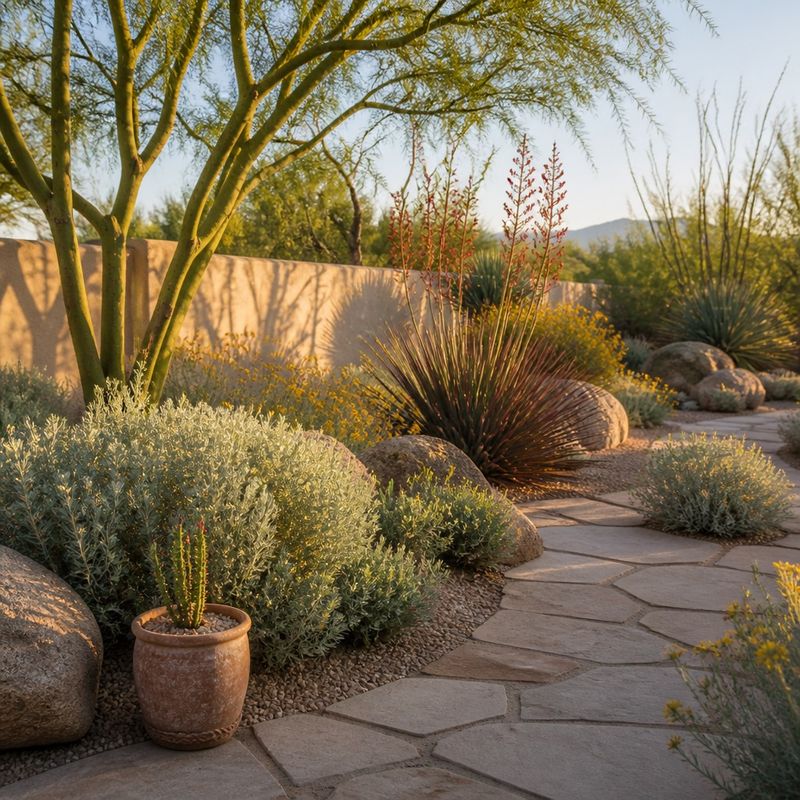
Reliable flowering in Arizona starts with a plant that belongs in the site, not with a feeding trick. A penstemon planted in poorly drained clay, or a desert willow squeezed into too much shade, will not bloom well no matter what you add to the soil.
Matching the plant to its actual light exposure, drainage conditions, water availability, and Arizona climate zone is the foundation that everything else builds on.
Bloom timing for desert-adapted plants often follows cues that have nothing to do with fertilizer or supplemental watering. Species maturity, seasonal temperature swings, day length, and rainfall patterns all influence when and whether a plant flowers.
Some Arizona natives bloom in response to mild stress or specific temperature thresholds rather than abundant resources. Adding extra water or fertilizer in hopes of more flowers can instead push a plant toward leafy growth, dilute the flowering response, or in the case of overwatering, damage the root system that supports blooming in the first place.
Arizona’s low desert supports a wide range of pollinator-friendly native and desert-adapted plants with predictable bloom seasons. Selecting species suited to the Phoenix or Tucson climate zone, and placing them where their drainage and light needs are met, produces more consistent results than any generic bloom booster.
Water-wise Arizona landscapes that prioritize native species also tend to support bees, butterflies, and hummingbirds naturally, delivering a functional yard payoff that no kitchen trick can replicate.
Diagnose Arizona Nutrient Problems Before You Fertilize
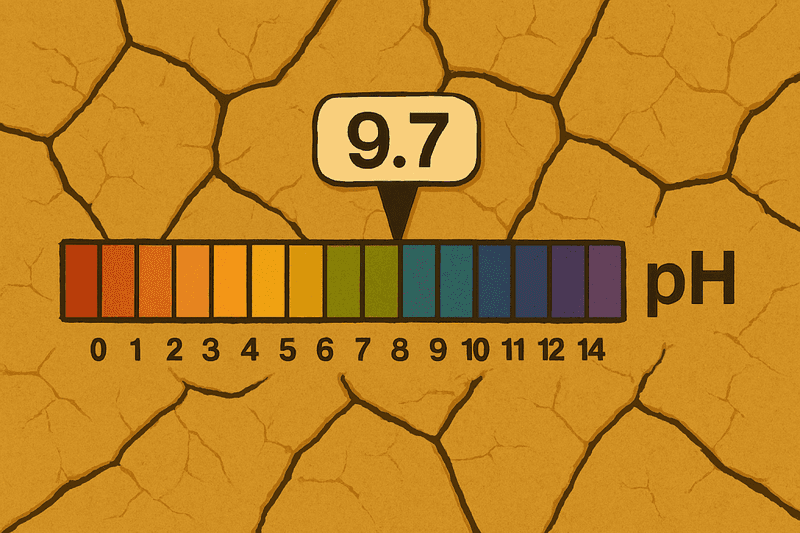
Fertilizer is not a default response to a plant that looks unhealthy or fails to flower in Arizona. Before adding any nutrient product, work through a short diagnostic checklist: Is the plant suited to this site and climate zone?
Is the irrigation schedule appropriate for the species and season? Does the plant have adequate light and drainage?
Are salts, pests, or root damage involved? Visible symptoms such as yellowing leaves, poor color, or stunted growth can point toward specific nutrient deficiencies, but they can also reflect irrigation problems, soil compaction, or pest activity that fertilizer will not fix.
Arizona’s alkaline soils create a particular complication. High soil pH can make nutrients less available even when they are physically present.
Phosphorus is a common example: in soils with elevated calcium and magnesium content, phosphorus can bind into forms that roots cannot access. Adding more phosphorus without a soil test is not automatically a solution and can contribute to nutrient imbalances.
Soil testing or plant-tissue analysis gives a more reliable picture of what is actually limiting growth.
When fertilizer is genuinely needed, the product label and plant-specific guidance should drive the decision, not the plant’s flowering status or the fact that it was recently transplanted. Hot Arizona summers add another constraint.
Applying fertilizer sprays during peak heat can burn foliage, and excessive applications can increase soil salts and reduce the plant’s ability to take up water. A restrained, symptom-driven approach protects Arizona plants better than routine feeding, and it keeps the focus on what the plant actually needs rather than what a trend suggests.
The Evidence-Based Arizona Root-and-Bloom Plan
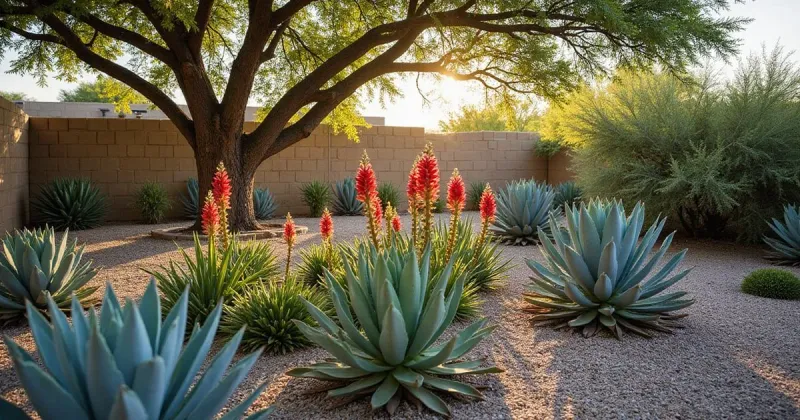
Skipping the sugar and molasses applications is the first practical step. Neither product is supported as a root booster or bloom fertilizer for low-desert Arizona landscape plants, and adding them introduces the risk of ant attraction and unpredictable microbial responses without a demonstrated upside.
The higher-return path runs through plant selection, site matching, and irrigation. Choose a desert-adapted species suited to your Arizona climate zone, light exposure, and drainage conditions.
Plant during a favorable Arizona season, typically late fall for most low-desert ornamentals. Establish roots with deep, progressively spaced irrigation adjusted for plant type, weather, and soil.
When a plant looks off, diagnose the actual problem before reaching for any soil additive or fertilizer.
No kitchen trick guarantees stronger roots or more flowers in an Arizona yard. Region-specific care, grounded in how desert plants actually grow and what Arizona soils actually need, is a more dependable route to establishment, water efficiency, and seasonal bloom.
A yard built on those principles tends to take care of itself far better than one chasing shortcuts.