7 Reasons Orchids Stop Reblooming in Arizona’s Dry Winter Air
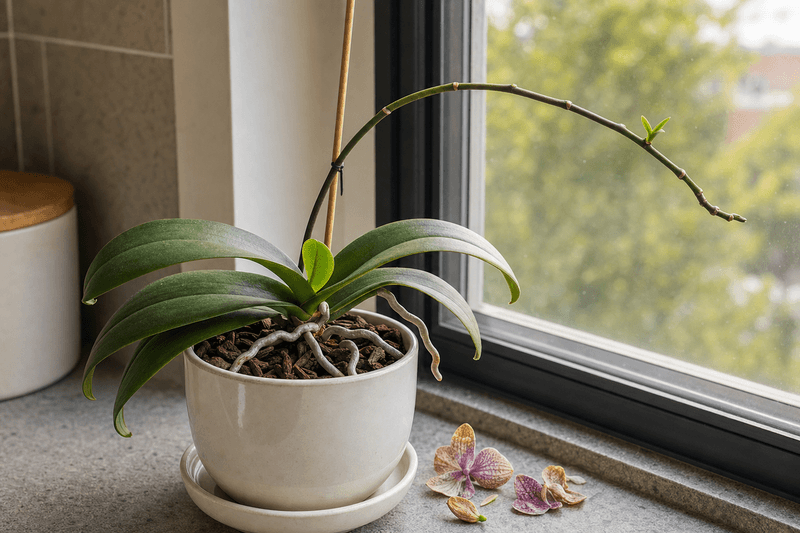
Dry winter air can make orchid buds shrivel and drop before they ever open. In Arizona homes, that heartbreak shows up on grocery-store moth orchids every year.
Dry air is only one suspect, though, and several other clues matter just as much. Let’s sort out what your orchid is really telling you.
Dry Air Can Drop Buds, but It Is Not the Whole Diagnosis
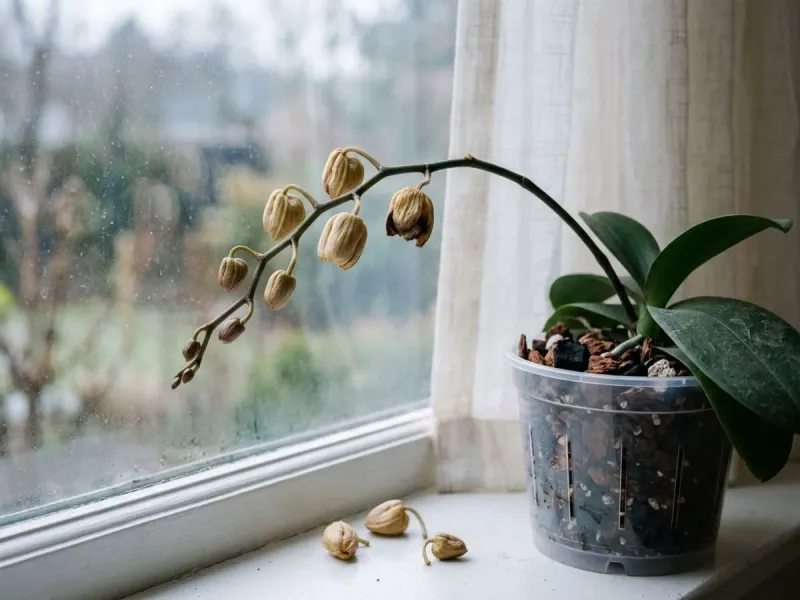
Dry indoor air can contribute to shriveled, dropped buds. American Orchid Society guidance says Phalaenopsis in very dry rooms may struggle to hold their buds, though humidity is hard to separate from other growing conditions.
Dropped buds and a plant that never makes a new spike are different problems. Buds falling means a spike formed and then stalled.
No spike at all points toward light, stored energy, plant health, or a missing seasonal cue.
Do not guess the humidity from the weather outside. Indoor humidity changes with the room, the heating and cooling system, and the season, and University of Arizona Extension suggests using a hygrometer to measure it.
Put one next to your orchid for a few days before you change anything.
A Dark Window Can Leave Phalaenopsis Short on Light
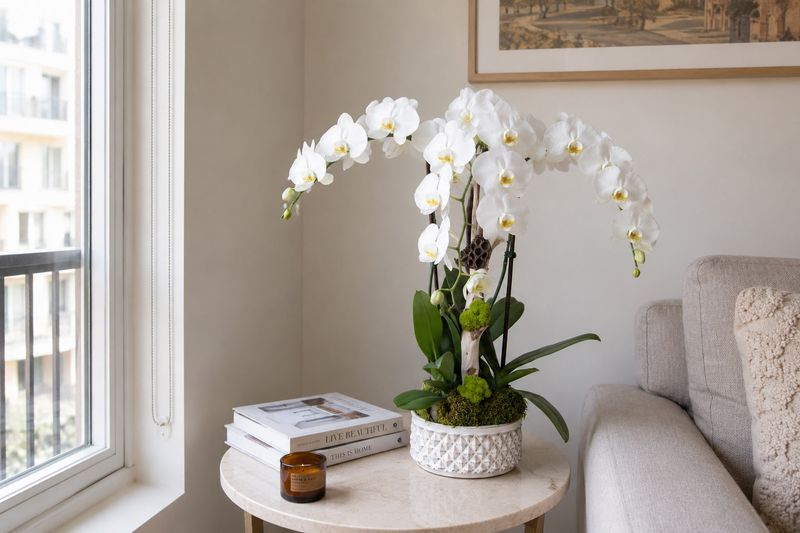
Weak light is a major reason indoor orchids skip flowering, according to the American Orchid Society. A plant can look green and healthy while quietly running short on the energy it needs to bloom.
The advice below is for Phalaenopsis only. It does best in a bright spot with little or no direct sun, and an east-facing window or a shaded south or west window can work.
Leaf color offers a hint. Very dark green leaves may mean the plant wants more light, but color is not a precise light meter.
The Phalaenopsis culture sheet covers placement in more detail. Check where your plant sits before you blame humidity alone.
Some Phalaenopsis Need a Seasonal Temperature Cue
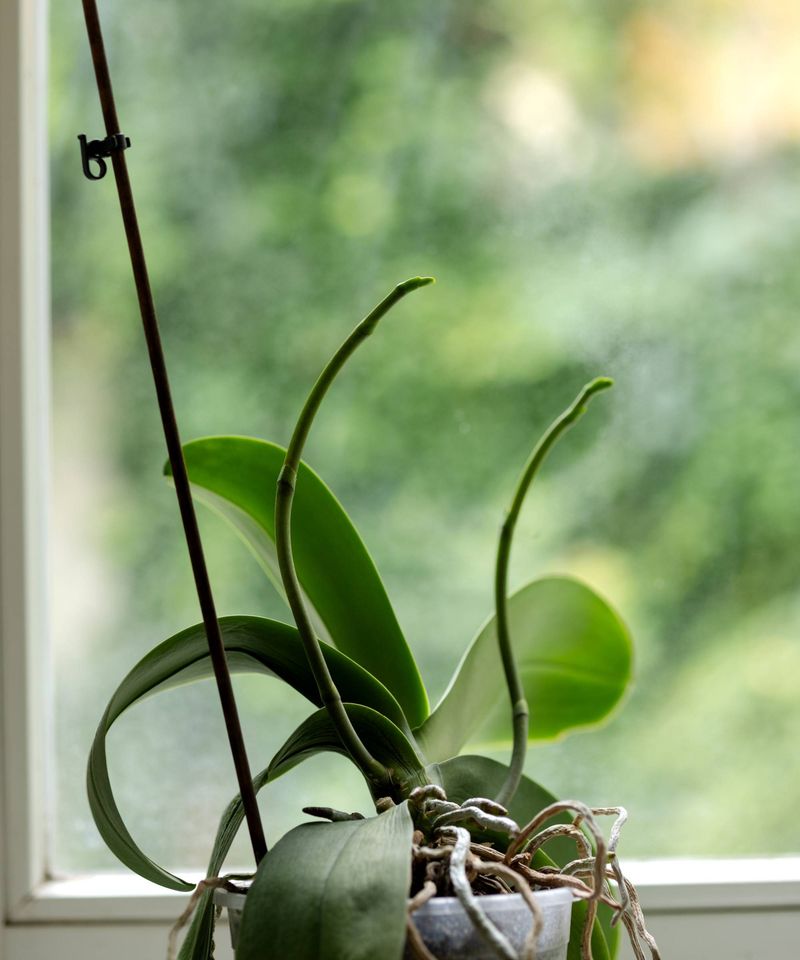
Many Phalaenopsis use a seasonal change to start a flower spike, and cooler autumn nights can act as that signal. The American Orchid Society also warns that temperatures above 82°F can prevent flowering in some plants.
Requirements vary from plant to plant, so treat any number as context. The culture sheet usually keeps nights above 60°F, yet it notes that about 55°F nights for several weeks may start spikes in some plants.
That does not mean every orchid needs 55°F nights. Avoid sudden chilling and cold drafts, and be careful near vents.
Notice where your orchid sits as the weather cools, and make small changes rather than dramatic ones. Extension guidance on houseplant care backs a cautious approach.
Water According to the Pot and Its Medium
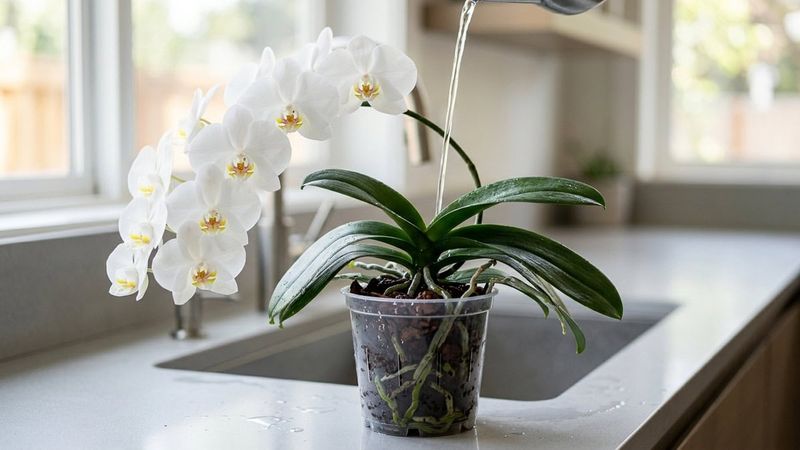
How often to water depends on the plant, the potting medium, and the room. A dry room can change how fast a pot dries, so no single winter calendar fits every home.
For Phalaenopsis, water thoroughly and let the medium become nearly dry before the next watering, as the culture sheet describes. Soggy medium can lead to root rot, so check the pot instead of the calendar.
Never leave the pot sitting in drainage water. Arizona’s extension service warns that saucer water can harm roots.
Skip ice cubes as a regular method too, since the AOS lists cold stress and salt buildup as concerns in its water requirements lesson. Tepid water is the safer choice.
Check Roots and Potting Medium for Signs of Stress
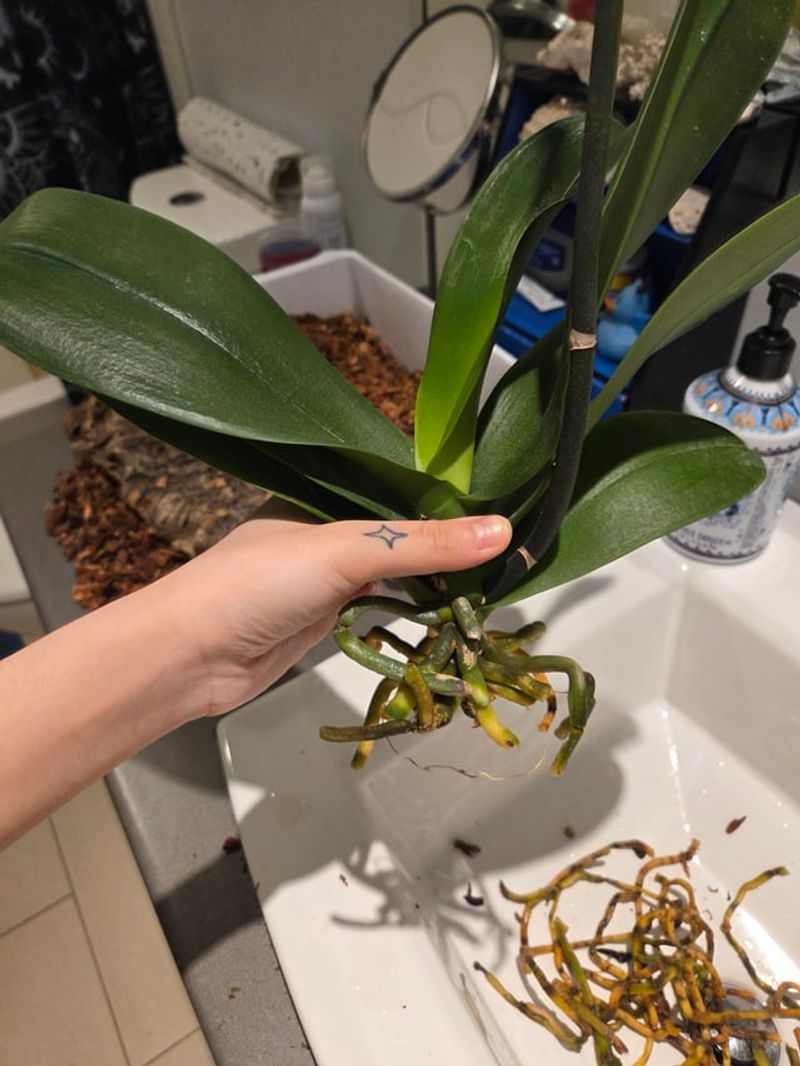
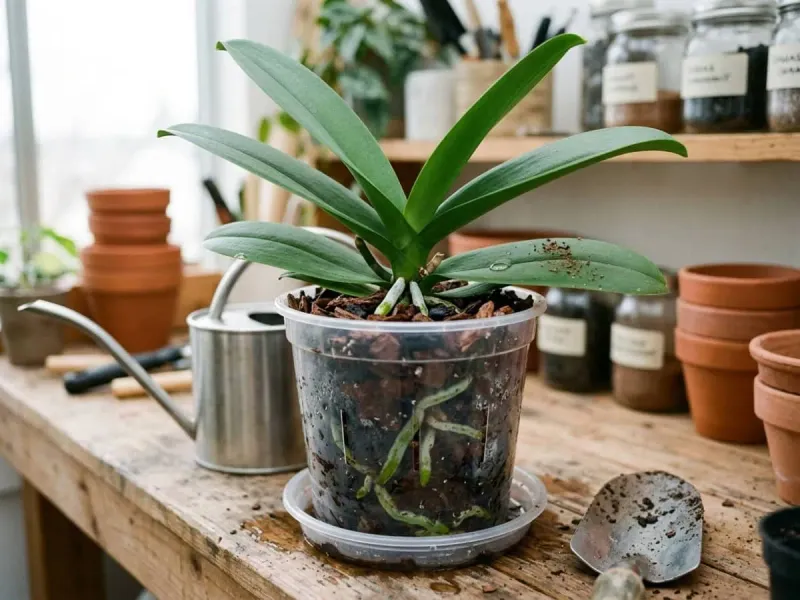
Roots do the quiet work of taking up water and nutrients, so a plant with struggling roots has a hard time building toward flowers. A clear pot makes a quick check easy.
Look at the potting medium. Bark that has broken down into mush, or a pot that stays wet for too long, can stress roots.
The culture sheet ties soggy medium to root rot.
No single sign proves the cause. Mushy or hollow roots may point to too much moisture, while shriveled ones can have several explanations.
Root and medium health also affects flowering, as an AOS article on Phalaenopsis blooming explains. Consider repotting when the medium has clearly worn out.
Healthy Growth Helps Build Toward Future Flowers
A flower spike costs the plant a lot of energy. The American Orchid Society points to plant health and stored energy from growth as core factors in reblooming.
Regular feeding while the plant is actively growing can support that growth. Fertilizer is not a bloom switch, though, and feeding a stressed plant will not force flowers.
Choice and frequency depend on your medium and conditions. The culture sheet advises adjusting to what you grow.
Bark dries faster and may need different feeding than moss, so watch new leaves and roots for your answer.
Care That Fits One Orchid May Not Fit Another
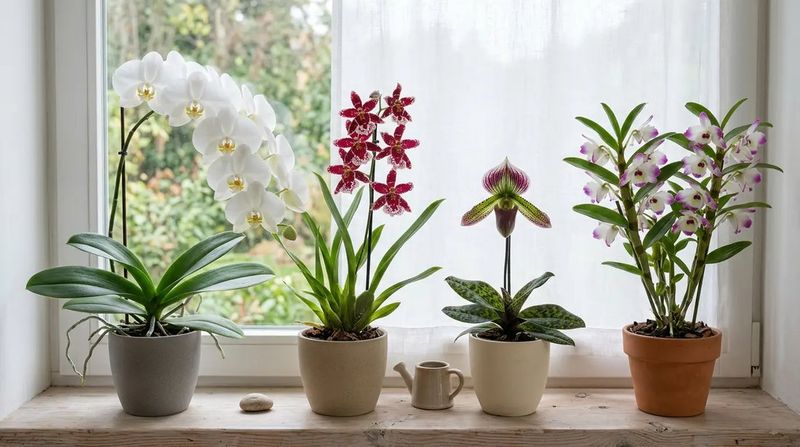
Flowering cues and care needs differ among orchid genera, and even among Phalaenopsis hybrids, according to an American Orchid Society article. Everything earlier here is aimed at Phalaenopsis.
Variety by itself does not stop a plant from blooming. The trouble starts when a grower misidentifies the orchid and then gives it the wrong light, temperature, or other care, which can hinder flowering.
Check the plant tag or compare leaves and growth habit with a trusted reference. If you are unsure, ask a local orchid society.
Once you know what you have, you can match the care to it.
Choose Your Next Adjustment by the Symptoms
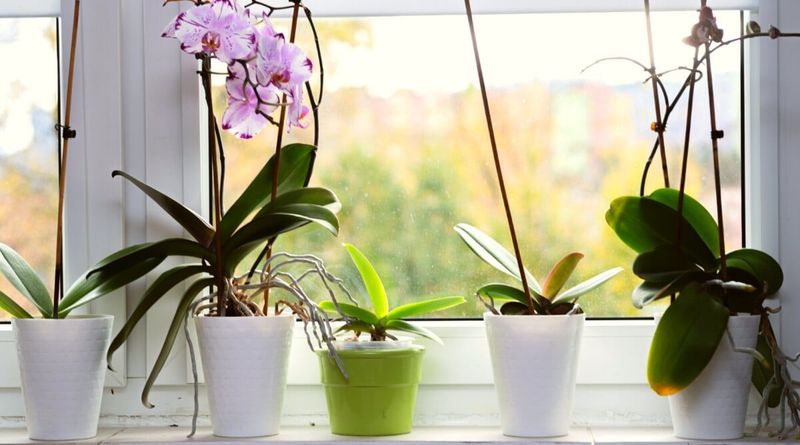
Start by naming your orchid. Then ask whether buds dropped or no spike ever appeared, and measure the room’s humidity and temperature, as University of Arizona Extension suggests.
Change the strongest clue first. Shriveled buds may call for gentle humidity changes, such as a humidifier or a pebble tray with the pot kept above the water and air moving.
Missing spikes call for a check of light, seasonal cues, and growth.
Old spikes behave differently by type, and AOS spike advice says another flush is not assured. Better care helps, but it never sets a bloom date.
Patience is part of the hobby.