8 Arizona Plants That Hold Their Own Under Thirsty Mesquite And Palo Verde Roots
Anyone who has tried to grow flowers under a mesquite or palo verde knows the struggle. Those trees send greedy roots out wide, grabbing every drop of water before your other plants get a sip.
The good news is that some tough desert plants actually like this spot, with its dappled shade and lean soil. Here are eight that can turn that bare patch under your tree into a busy little habitat for hummingbirds, butterflies, and bees.
1. Chuparosa
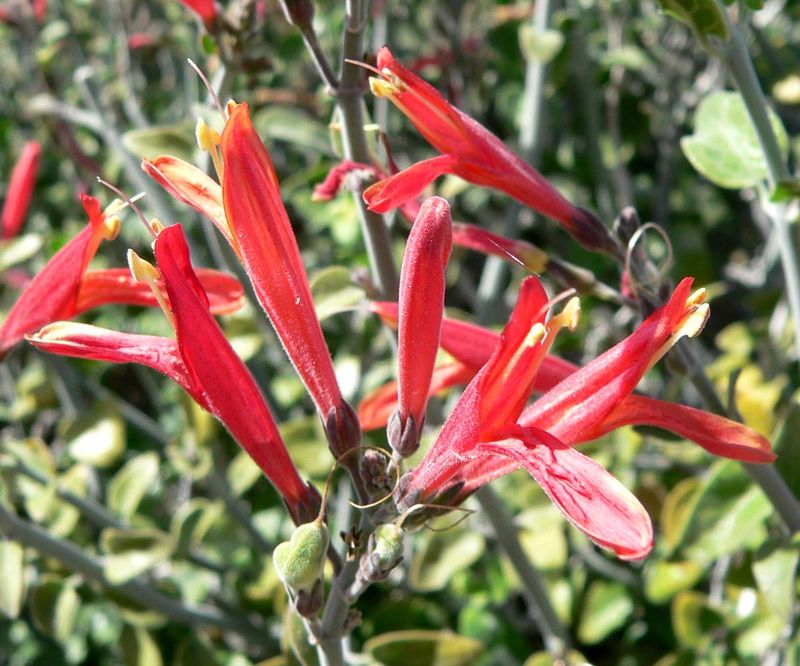
Watch a chuparosa for five minutes on a winter morning and you will likely see a hummingbird zip in for breakfast. The name even comes from a Spanish word for hummingbird, which tells you everything about its biggest fan club.
Native to the Sonoran Desert, chuparosa grows as a loose mound of green, nearly leafless stems. In warm weather it covers itself with red or orange tubular flowers, sometimes blooming for most of the year in Phoenix and Tucson.
Filtered shade under a mesquite or palo verde suits it nicely, since it naturally grows along washes where trees cast patchy light.
Root competition does not rattle it much. When water runs short, chuparosa simply drops its small leaves and keeps its green stems working, then bounces back after a monsoon storm.
That clever trick lets it share ground with thirsty tree roots without sulking.
Plant it in fall, from October through November, so roots settle in before summer heat arrives. Give deep water every week or two the first year, then taper off.
Once established, a soaking now and then during long dry spells is usually plenty. Skip heavy pruning and let it sprawl, because those arching stems offer cover for small birds too.
2. Desert Zinnia
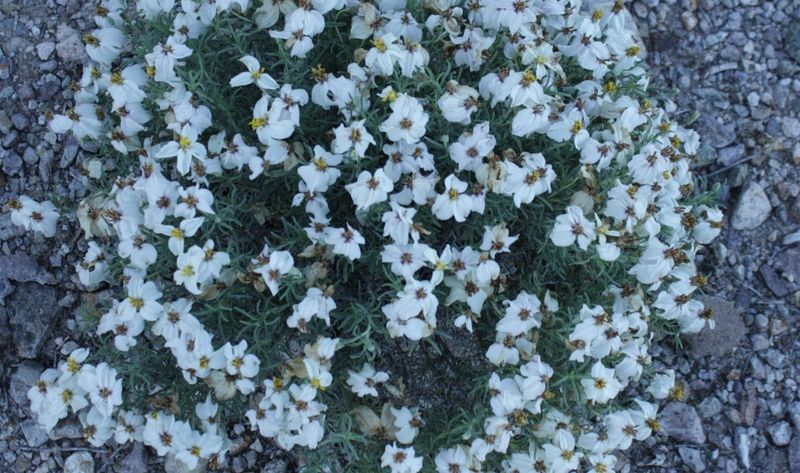
Small but stubborn, desert zinnia is the plant you tuck in when everything else has given up. It forms a tidy mound only about six to eight inches tall, dotted with little white to pale yellow daisies that have sunny golden centers.
Here is the secret to its toughness. Desert zinnia sends down a deep taproot, which means it can reach moisture that shallow-rooted flowers never touch.
Once established, it can handle months of 100-degree days with little or no extra water, which is pretty remarkable for something so dainty looking.
Under a palo verde, aim for the outer edge of the canopy rather than right against the trunk. It likes bright light and does best where it catches some direct sun with a bit of afternoon relief.
Blooms pop up off and on from spring through fall, and butterflies and small native bees seem to appreciate the steady snack bar.
Plant in fall or early spring in native, unamended soil with good drainage. Rich potting mix and frequent watering are its enemies, so resist the urge to pamper it.
Try grouping three or five together to create a soft, bright groundcover that brightens up rocky borders, pathways, and those awkward bare spots under the tree.
3. Brittlebush
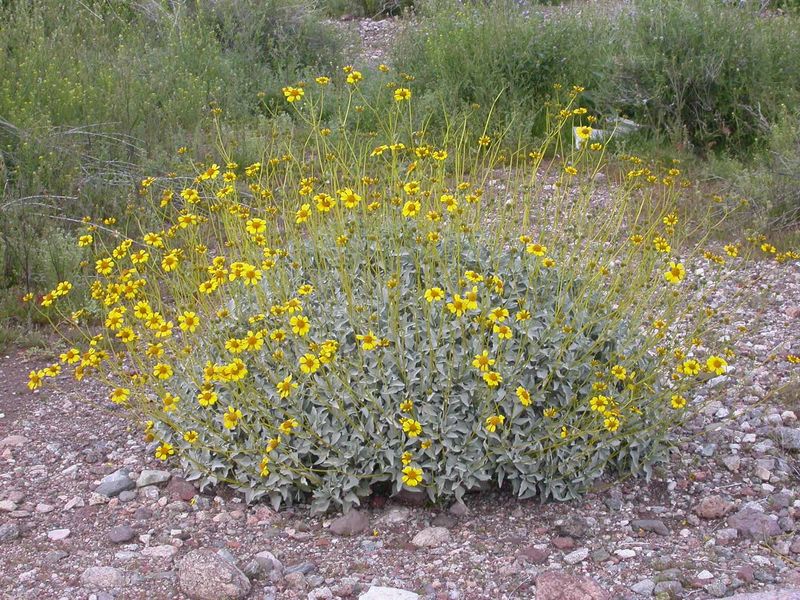
Every spring, entire hillsides around Phoenix glow yellow, and brittlebush is usually the reason. It is one of the most familiar wildflower shows in the Sonoran Desert, and you can bring that same burst of color right into your backyard.
Your Arizona Garden Changes Every Week. Your Plan Should Too.
Gardening in Arizona changes quickly throughout the season. Every Friday you’ll receive a simple weekly plan showing exactly what to plant, prune, fertilize, harvest, and protect so you never miss the right timing.
Look closely at the leaves and you will notice a soft, silvery fuzz. That coating reflects harsh sunlight and helps the plant hold onto moisture, a handy feature when it has to compete with mesquite or palo verde roots.
Bright yellow flowers usually appear from February to May, and sometimes again in late summer after monsoon rains.
Those blooms matter for more than looks. Native ground-nesting bees and other pollinators forage on them heavily, and the dense, rounded shape offers shelter for lizards and small birds.
Quail often dart beneath brittlebush for cover, giving your yard a lively, natural feel.
Fun fact: early settlers chewed the plant’s resin like gum, and it was once burned as incense in churches. Plant it in fall in sunny gaps near the tree’s outer edge.
Water sparingly, since too much can make it floppy and short-lived. A light trim after flowering keeps it compact and ready for next season.
4. Desert Globemallow
Soil full of caliche? Clay that cracks in summer?
Desert globemallow shrugs and keeps blooming anyway. Few plants handle alkaline Arizona ground with this much grace.
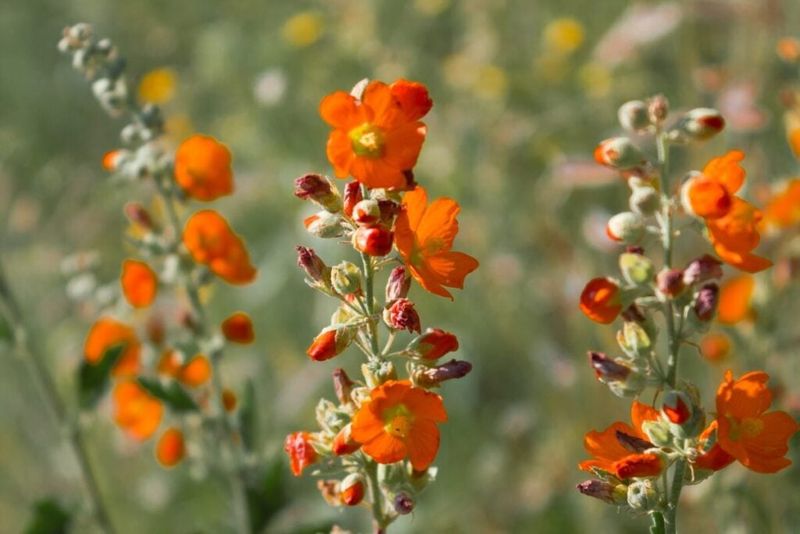
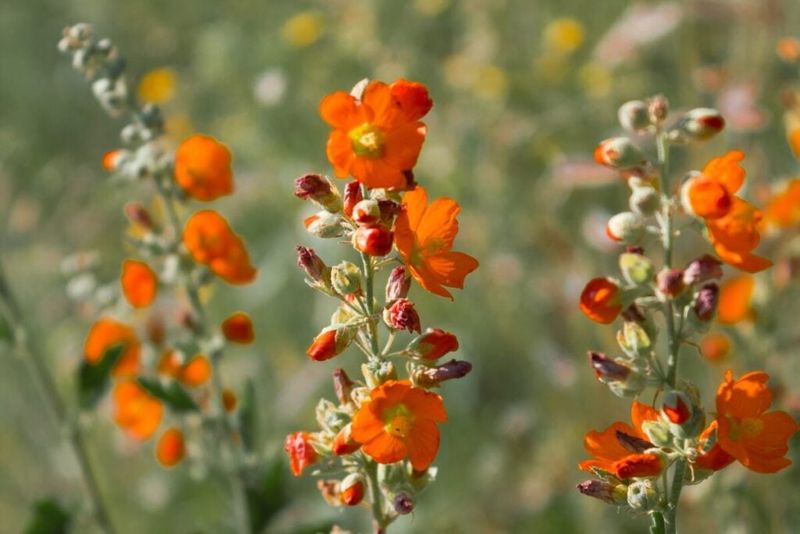
Its fuzzy, whitish-green leaves set off cup-shaped flowers in apricot orange, though you may also find pink, red, or lavender forms. Spring is the main show, but scattered blooms can appear well into the warm months, especially after a good rain.
Hummingbirds and butterflies stop by, and native bees, especially specialist globemallow bees, rely on it for pollen.
Globemallow loves full sun, yet in the low desert it handles partial sun under a velvet mesquite just fine. That bit of shade can actually help it look fresher through June and July.
Its deep roots and high drought tolerance let it hold steady when tree roots are slurping up most of the moisture.
Plant in fall for the best start. After the first year, water roughly once a month in summer, and even less in winter.
Cut it back by about a third after the spring flush to keep it from getting lanky. One heads-up for allergy sufferers: the tiny hairs on the leaves can irritate eyes, so wear gloves when trimming.
5. Baja Fairy Duster
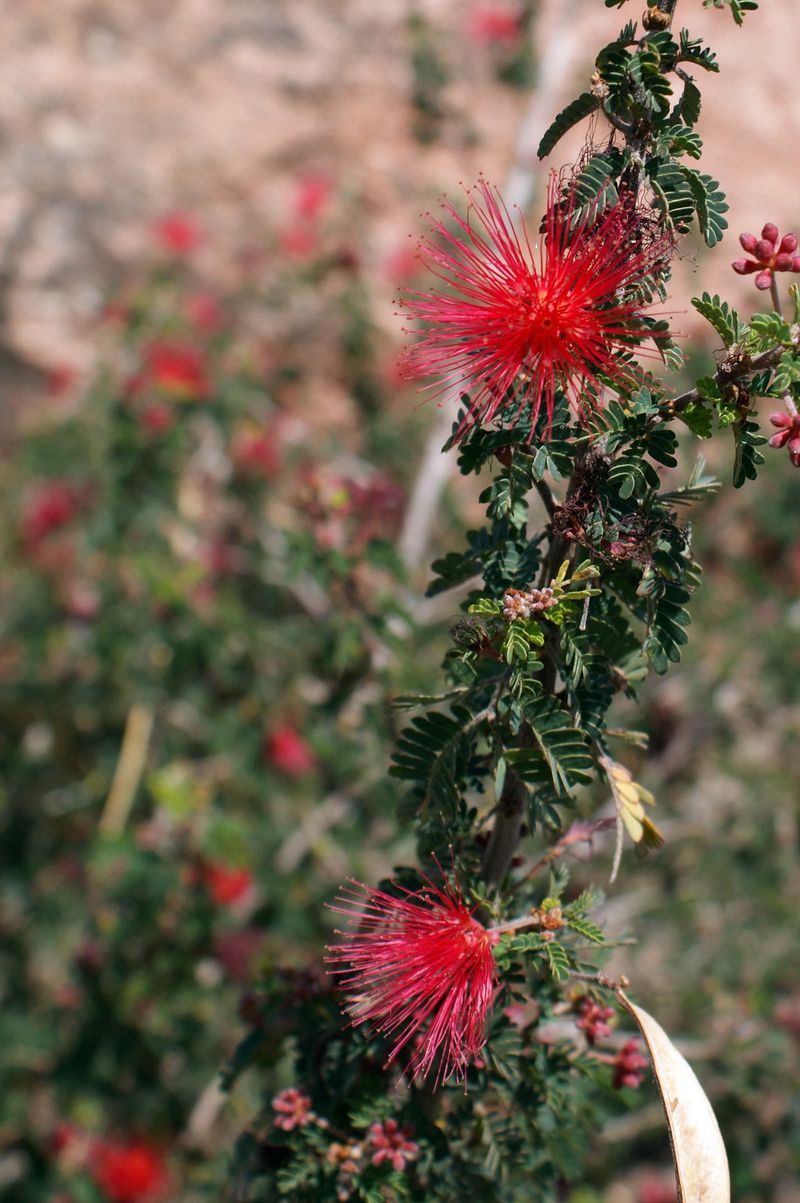
Picture tiny red fireworks frozen mid-burst. That is the best way to describe the fluffy flowers of Baja fairy duster, a shrub that hummingbirds treat like their personal fueling station.
Hailing from Baja California, this evergreen shrub reaches about four to five feet tall with fine, feathery leaves. Its bright red, brush-like blooms appear for much of the year, with big pushes in spring and fall.
Butterflies and bees visit too, so it adds steady pollinator traffic to your yard.
Heat barely fazes it. Summer in Mesa or Tucson is no problem once it is settled.
Under a mesquite or palo verde, place it near the drip line where it still gets several hours of direct sun. Deep shade means fewer flowers, so balance is key.
Getting it started takes a little care. Plant in fall and water deeply every few days at first, then stretch it out to every week or two by summer.
Once its roots dig in, it competes well with tree roots and needs little extra water. Protect young plants during rare hard freezes with frost cloth.
Shape lightly in late winter, but avoid shearing it into a ball, since natural form produces more blooms.
6. Mexican Honeysuckle
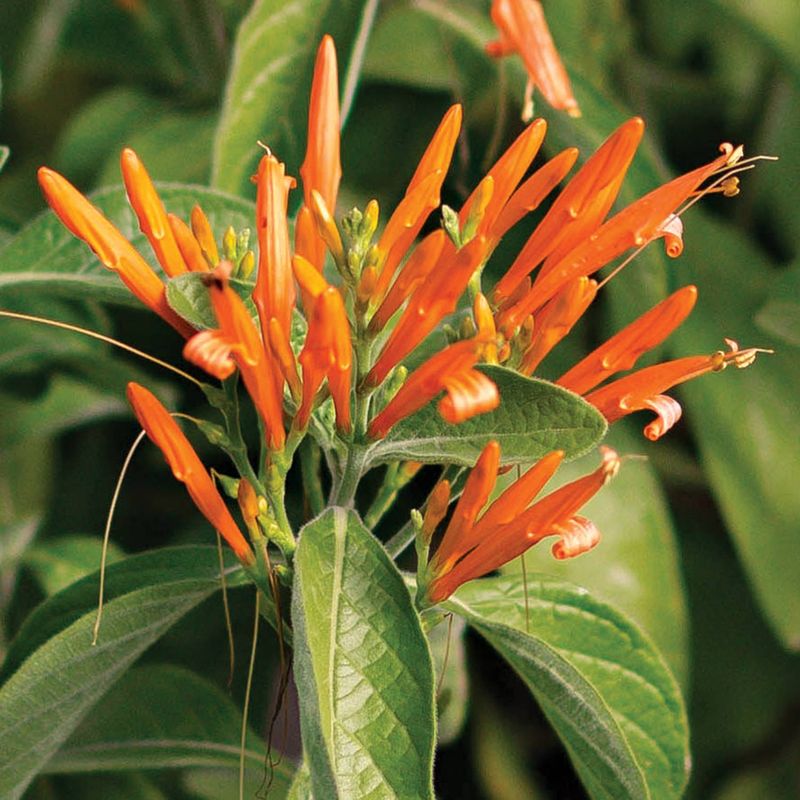
Think of Mexican honeysuckle as the shade lover of the bunch. Where full Arizona sun would scorch its soft green leaves, the filtered light under a palo verde gives it exactly the comfort it craves.
Despite the name, it is not a true honeysuckle at all. It is actually a cousin of chuparosa, and the family resemblance shows in its bright orange tubular flowers.
Hummingbirds adore them, and since blooms often peak in winter and spring, it helps feed birds during cooler months when other nectar sources run thin.
The velvety, rich green foliage also brings welcome contrast to a landscape full of gray and silver desert plants. Grown together, the two create a layered look that feels lush without guzzling water.
It usually stays around three feet tall and wide, filling gaps nicely.
Compared to the toughest natives, Mexican honeysuckle wants a bit more water, so plan for a deep drink every week or so in summer. Under a tree, that shared water can help both plants.
Mulch with a layer of leaf litter or bark to keep roots cool. A light freeze may nip it back, but it usually resprouts quickly in spring.
7. Jojoba
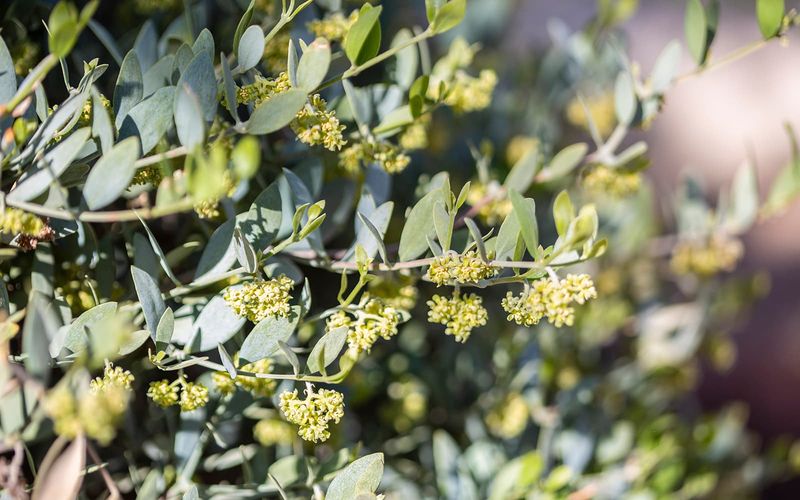
If you want a plant that could easily outlive you, meet jojoba. Some shrubs in the wild are thought to be over a century old, quietly thriving on whatever rain the desert offers.
Jojoba forms a dense, rounded mound of leathery, gray-green leaves that stay put all year. Notice how the leaves point upward?
That clever angle lets them dodge the harshest midday sun while catching gentler morning and evening light, a smart way to save water in extreme heat.
It grows naturally alongside mesquite in the wild, so planting it under one feels right at home. Jojoba handles sandy, rocky, or clay soils and asks for almost nothing once established.
Many homeowners water it only during long droughts after the first couple of years.
Wildlife benefits are real too. The thick, evergreen branches give quail, rabbits, and small birds a safe hiding spot, and the nut-like seeds feed ground squirrels and other critters.
You might recognize the name from shampoo bottles, since the seed oil is popular in skin and hair care. Plant jojoba in fall, give it space to reach four to six feet, and let it become a living privacy screen.
8. Woolly Butterfly Bush
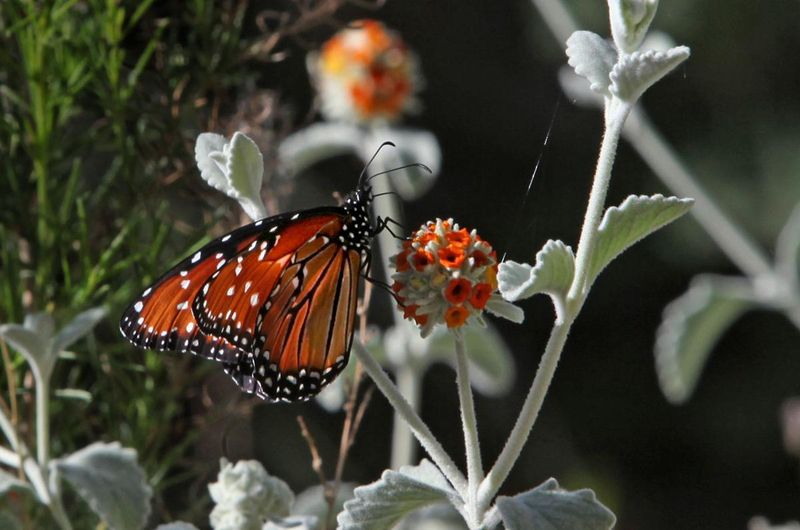
Butterflies seem to find woolly butterfly bush almost as soon as it flowers, drifting in from who knows where. One whiff of its sweet, round orange blooms and it is easy to see why.
Originally from the Chihuahuan Desert, this semi-evergreen shrub has a soft, felt-like coating on its silvery-green leaves. The fuzz helps it handle heat and reflects sunlight, giving it a frosted look that glows at dusk.
Little ball-shaped flower clusters appear on and off from spring into fall.
Part shade under a mesquite or palo verde works well, especially in the hottest parts of the Valley. Just avoid planting it in deep shade, because it gets leggy and stretches toward the light.
A spot with morning sun and afternoon shelter is the sweet spot.
Drainage matters more than anything else here. Plant it in native, unamended soil, ideally on a slight slope or mound so water never pools around the roots.
Fall planting gives it time to settle. After that, moderate watering every week or two in summer keeps it happy.
Trim lightly in late winter to encourage fresh, compact growth and a fuller spring show for your visiting pollinators.