8 Arizona Shrubs That Fill a Bare Corner Fast Without Swallowing Your Walkway
One desert shrub folds its feathery leaves every night, almost like it is tucking itself into bed. Another earned the nickname barometer bush because it often bursts into bloom right after humid monsoon weather rolls through.
Those quirky habits belong to plants that also solve a common Arizona headache, which is the bare, baking corner. Many of them grow quickly yet stay politely sized, so your path stays open for feet instead of branches.
I have to admit, I once planted a sprawling monster that ate half my sidewalk within two summers. You might notice that mistake happens a lot here, because nursery tags rarely mention how wide things get.
October is a sweet spot for planting in Arizona, since cooling soil helps young roots settle before next summer arrives. So which tidy, fast growers deserve that empty corner, and which ones bring hummingbirds and bees along too?
1. Chuparosa
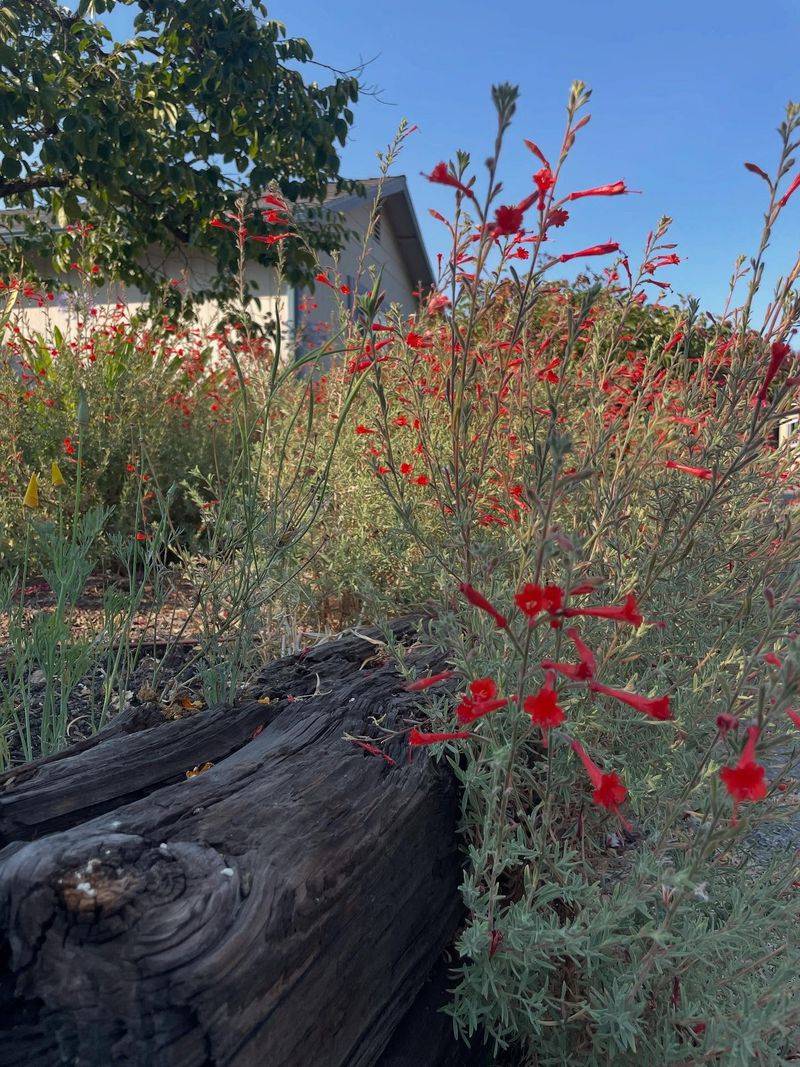
Hummingbirds treat chuparosa like a roadside diner, zipping in for nectar from its bright red tubular flowers. The name even comes from Spanish, loosely meaning a hummingbird or one who sucks the rose.
I love how the blue-green stems stay attractive when the small leaves drop during drought or cold snaps. You still get a lively mound of color, even when the shrub decides to rest for a while.
Most plants settle at three to five feet tall and wide, which suits a corner without crowding your path. Extra water can push it toward six feet, so a lighter hand keeps it tidier and blooming better.
Plant it in full sun with sandy or rocky soil that drains quickly after a deep soak. Once established, watering deeply once or twice a month in summer usually keeps chuparosa looking happy and full.
Skip pruning this October, since fall cuts can push tender growth that struggles when chilly nights arrive. Wait until after the late winter and spring bloom, then trim lightly to shape the plant.
Personally, I think a fall planting here pays off nicely, because the big flower show follows a few months later. Your corner fills with red tubes right when hungry migrating hummingbirds start passing through again.
2. Pink Fairy Duster
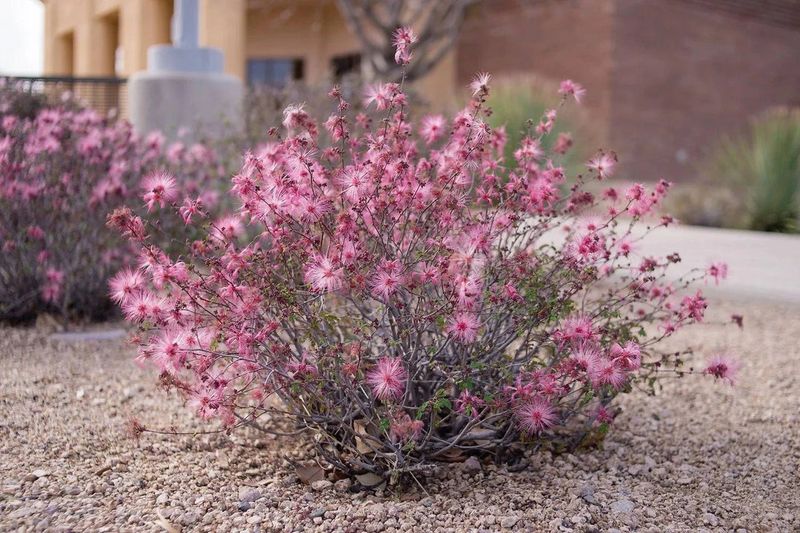
Fluffy pink puffs that look like tiny cheerleader pompoms make this shrub a real conversation starter on walks. Each puff is mostly stamens, spreading about two inches wide like a burst of soft fireworks.
What surprises me most is how the fine, fern-like leaves often fold up at night, then open again by morning. Kids find that habit fascinating, and honestly, so do plenty of grown-up gardeners like me.
Fairy duster stays low and loose, often reaching one to three feet tall and roughly two to three feet wide. That modest spread makes it ideal near a walkway edge, where bigger shrubs would quickly grab your ankles.
Give it full sun or light shade with rocky, well-drained soil, and skip nitrogen fertilizer completely. Its roots fix their own nitrogen, so extra feeding mostly encourages floppy growth instead of more of those charming flowers.
Wildlife loves this little shrub, since hummingbirds, butterflies, and bees visit the blooms from late winter through spring. Quail also snack on the seeds, which adds a fun reason to watch your corner from the window.
Once roots settle, a deep watering about once a month usually keeps it going strong through hot weather. Occasional summer irrigation can encourage fuller leaves plus a few bonus blooms after the main spring show.
3. Texas Sage
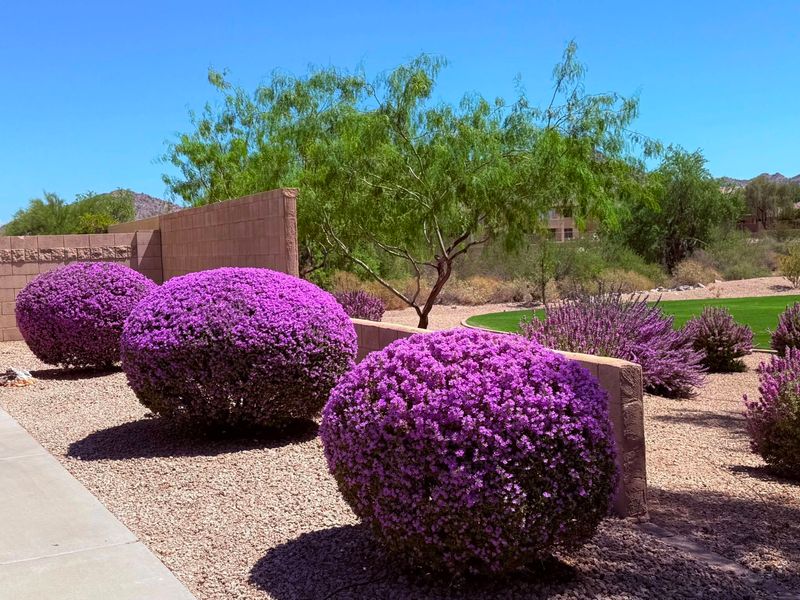
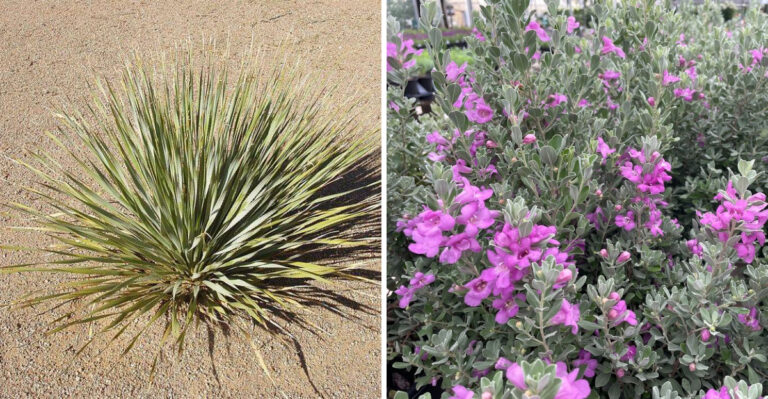
Some gardeners swear this shrub predicts rain, since purple blooms often appear soon after humid monsoon weather passes through. That habit explains its playful nickname, barometer bush, which I find delightful every single late summer.
Silvery, fuzzy leaves give it a soft, cool look that shines against hot stucco walls and dark gravel. Deer and javelinas usually leave the foliage alone, which is a welcome bonus in many desert neighborhoods.
Size is the key detail here, because standard plants can reach six to eight feet tall and wide. For a corner beside a path, choose a compact cultivar that matures around three to five feet instead.
Full sun keeps it dense, while too much shade makes stems stretch and bloom poorly over the years. Plant it in lean, well-drained soil, and skip rich compost that encourages leggy growth with fewer flowers.
Watering once a month after establishment is often plenty, as long as the soil dries well between drinks. Soggy ground invites root rot quickly, so a raised or rocky spot works better than a low basin.
Please resist shearing it into tight balls, since that habit removes buds and weakens the natural shape. A light trim in late February keeps it neat while protecting the coming season of blooms.
4. Apache Plume
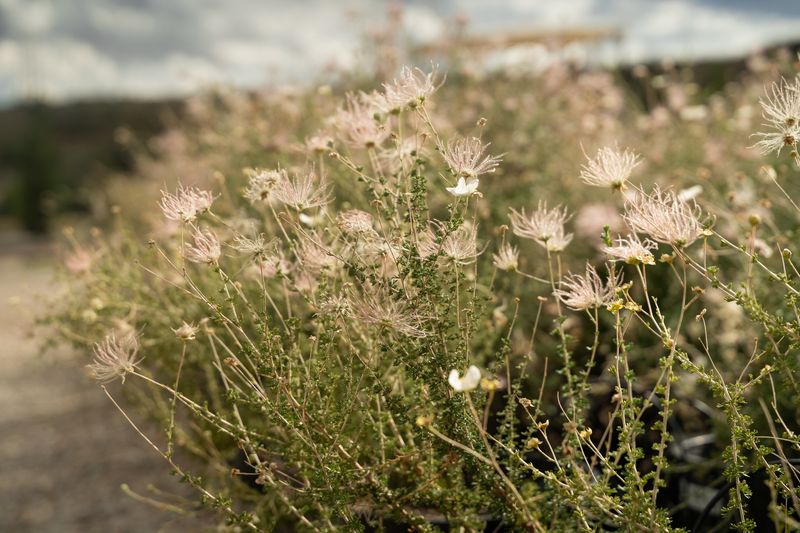
Long after the flowers fade, wispy pink seed plumes catch the low sun and glow like tiny feather dusters. Many people say those fluffy clusters resemble a headdress, which inspired the common name Apache plume.
Its white flowers look like small wild roses, with five petals and sunny yellow centers about two inches across. Bees and butterflies visit regularly, while birds pick at seeds and small critters shelter under the branches.
I like how the shredded, pale bark adds texture during cooler months when the leaves thin out a bit. That airy, billowy habit softens hard corners nicely, especially beside block walls or plain stucco garden edges.
Left alone, it can stretch to eight feet tall and ten feet wide, so plan your spacing carefully. Selective pruning easily keeps it around three to six feet, which suits most walkway corners without much trouble.
Full sun and dry, rocky soil suit it best, and established plants often need little extra water. Overwatering or fertilizing can make it spread aggressively, so a lean approach keeps this shrub well behaved.
Deer and rabbits usually pass it by, which helps in foothill neighborhoods with hungry visitors at dusk. In late winter, cut a few of the oldest stems to the ground for fresh, tidy growth.
5. Autumn Sage
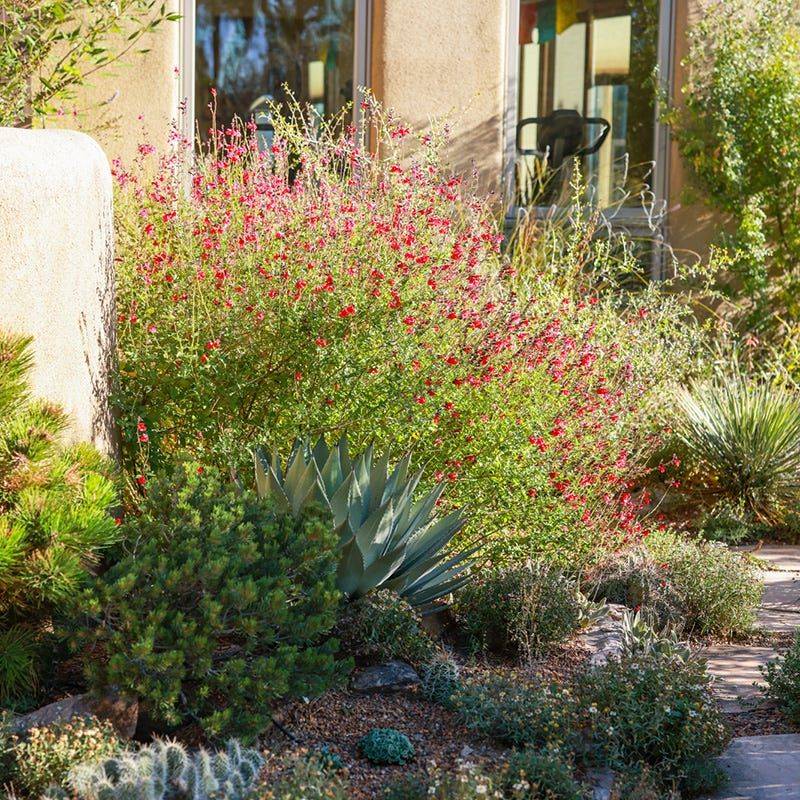
October is prime time for this cheerful little sage, which often throws a fresh flush of blooms right now. Its fall show helps explain the name, though spring flowering can be equally generous in many gardens.
Colors range widely, from red and magenta to coral, pale yellow, white, and deep burgundy shades. Personally, I enjoy mixing two or three colors in one corner for a playful, patchwork look near the door.
Plants usually stay around two to three feet tall and wide, so walkways remain clear with little effort. That compact size makes autumn sage a smart pick for narrow strips where bigger shrubs would cause headaches.
Technically, this species comes from Texas and Mexico, yet it thrives in desert gardens across Arizona with ease. In low desert yards, a little afternoon shade helps it look fresh during the harshest summer stretches.
Hummingbirds, butterflies, and native bees visit the flowers, while finches nibble the tiny black seeds later on. Javelinas and deer mostly ignore the aromatic leaves, which is welcome news for many suburban desert gardeners.
Good drainage matters most, since soggy soil quickly causes trouble for the roots over time. After each bloom cycle, tip trimming encourages new flowers, and older woody plants respond well to late winter cutbacks.
6. Brittlebush
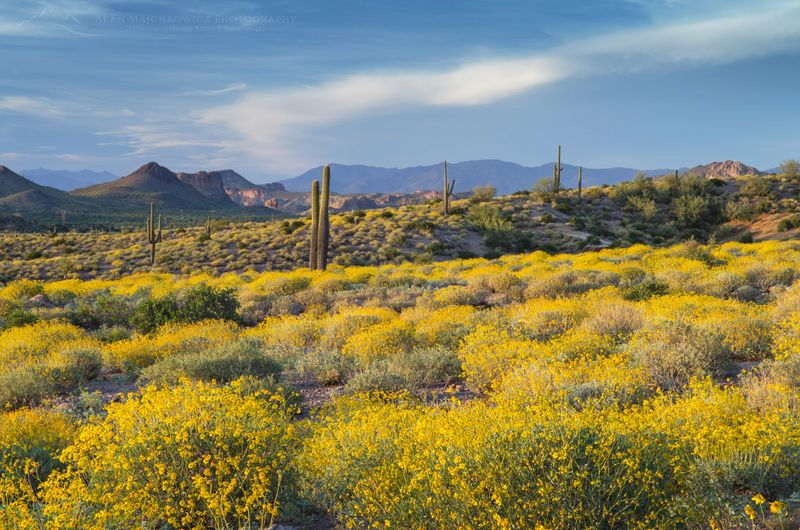
Snap a branch and you may notice a fragrant resin that once earned brittlebush the nickname incense bush. Historically, that sap was reportedly burned as incense and used as a glue or varnish by locals.
Silvery blue-green leaves look almost velvety white in hot, dry weather, thanks to fine hairs on their surface. That pale coating reflects sunlight, helping the shrub handle brutal heat that would scorch many leafy garden plants.
Brittlebush grows fast, usually reaching three to five feet tall and wide in full sun locations. It fills an empty corner quickly, yet the rounded, open shape rarely sprawls across a nearby sidewalk.
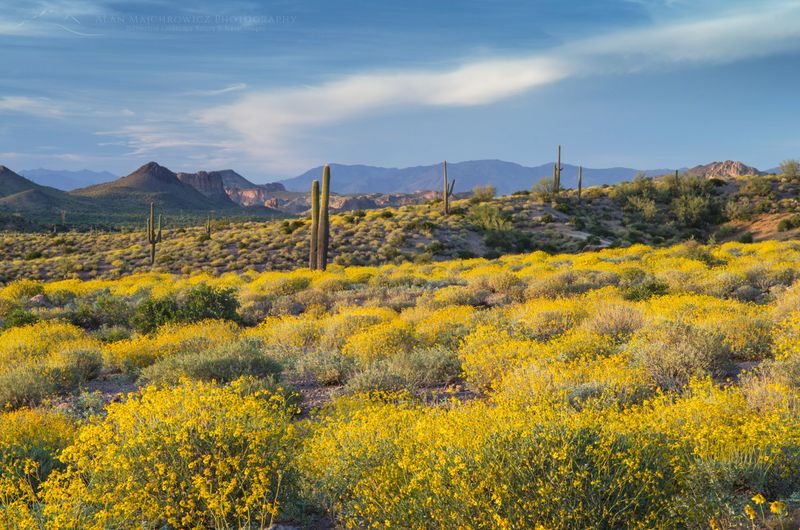
What makes it special for fall planting is timing, because heavy blooming often begins in mid-fall through spring. Bright yellow daisies float above the foliage on tall stems, feeding bees and butterflies when few flowers remain.
Give it lean, rocky soil and a deep drink about once a month after roots settle in. More water mostly leads to floppy, oversized growth, so this native prefers a little tough love from gardeners.
After flowering ends, trim the tall flower stalks back to leaf level for a cleaner look again. In mid-spring, a harder cutback near the ground prevents a shaggy appearance through the hottest summer months.
7. Black Dalea
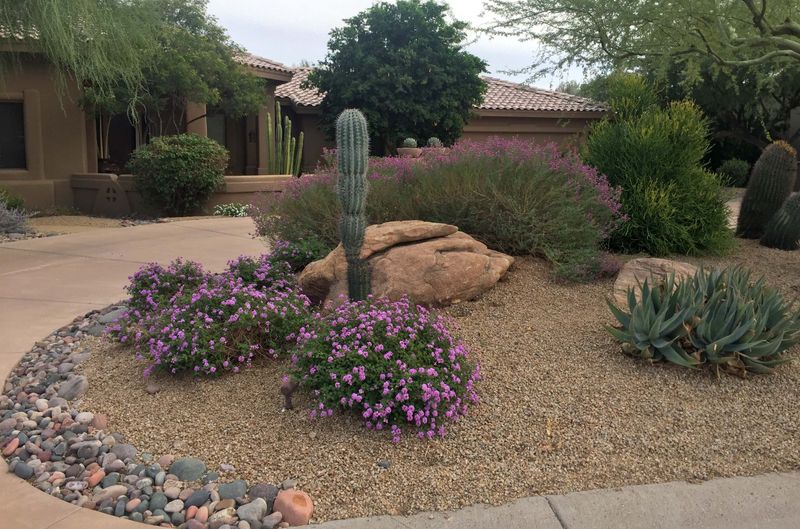
Right when summer flowers fade, black dalea steps up with rich rose-purple blooms that light up autumn landscapes. Tiny pea-like flowers cluster on branch tips, creating a fuzzy violet haze across the lacy foliage.
I can’t imagine a better choice for October color, since bloom season often runs from late summer into fall. Bees, butterflies, and hummingbirds keep visiting, giving your corner plenty of buzzing activity during cooler, pleasant afternoons.
Plants typically reach three to four feet tall and roughly four to six feet wide with time. That spread fills a corner nicely, while occasional pruning keeps branches from leaning into your path too much.
Full sun and reflected heat bring the densest growth, though light afternoon shade is usually acceptable too. Leave the native soil unamended, since this shrub handles rocky, alkaline ground with impressive ease and confidence.
Like fairy duster, its roots fix nitrogen, so skip fertilizer and water deeply about once a month. Too much water tends to stretch the stems and reduce flowering, which defeats the point of planting it.
Rabbits may nibble young plants, so a simple wire cage helps during the first year or two. In late winter, a hard cutback keeps the mound dense and encourages heavier blooms the following fall.
8. Paperflower
Faded blooms on paperflower dry into crinkly, tan petals that stay attached for weeks without looking messy. That papery trick makes the plant seem to flower far longer than most other shrubs in the yard.
Fresh blooms are bright golden yellow, about an inch across, and often bunched together at the stem tips. You’re in for a cheerful surprise when the whole mound turns into a glowing yellow ball in the sunlight.
At roughly two feet tall and two to three feet wide, it is the smallest option on this list. I believe that tidy size makes it perfect for path edges, where taller shrubs might block views or brush legs.
Plant it in full sun with sandy, rocky, or gravelly soil that drains very quickly after watering. Once established, it needs very little extra water, and too much often leads to leggy stems and fewer flowers.
Bees and butterflies visit the nectar-rich blooms, while seed-eating birds and small mammals enjoy the seeds later. That steady wildlife traffic turns a forgotten corner into a busy little habitat patch near your front door.
In late winter or early spring, prune off the old flower heads to encourage fresh growth. That quick cleanup keeps the mound compact and ready for another long season of golden color next year.