Why North Carolina Fall Carrots Crack When Rain Follows A Dry Spell

Carrots developing visible cracks after a period of dry weather followed by heavy rain is a common frustration in North Carolina fall gardens.
When soil moisture swings dramatically from dry to saturated, the carrot root absorbs water faster than its outer skin can stretch to accommodate the sudden growth.
This mismatch causes the root to split, often right along its length, even though the carrot underneath remains perfectly edible.
Because this issue comes down to inconsistent moisture rather than disease or pests, maintaining steady watering throughout the growing season is the most effective way to prevent it.
Understanding this cause helps gardeners avoid the disappointment of pulling up a beautiful-looking carrot only to find it cracked from root to top.
1. Sudden Water Uptake Splits The Root
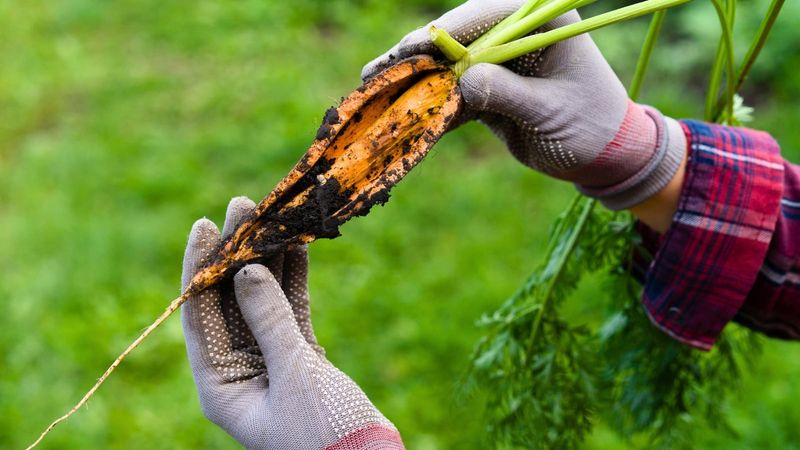
A carrot is basically a thirsty storage tank. When dry soil suddenly turns soggy after a big storm, the root gulps water as fast as it can. That rush of moisture is where the trouble starts.
Inside the carrot, the soft core soaks up water and swells quickly. The outer layer, however, cannot stretch at the same speed. Something has to give, so the skin tears open and the root splits lengthwise along its side, much like a balloon stretched past its limit.
Spotting the damage is easy once you know what to look for. Most cracks run straight down the length of the carrot. Some are shallow lines you can barely feel, while others open deep enough to show the pale center.
They usually show up within a few days after heavy rain, so a quick check of a few roots after a storm tells you a lot about what is happening under the soil.
North Carolina gardeners see this problem more than most. Fall here often brings long stretches of sunny, dry days that end with a sudden downpour from a cold front or the leftovers of a tropical system.
One night of rain can dump two or three inches on a bed that has been parched for weeks. Keeping an eye on the forecast helps you stay a step ahead.
If a big rain is coming after a dry spell, give the bed a light drink a day or two before so the roots are not starving when the storm arrives. That small move softens the shock and keeps more carrots whole.
2. Mature Carrots Crack Most Easily
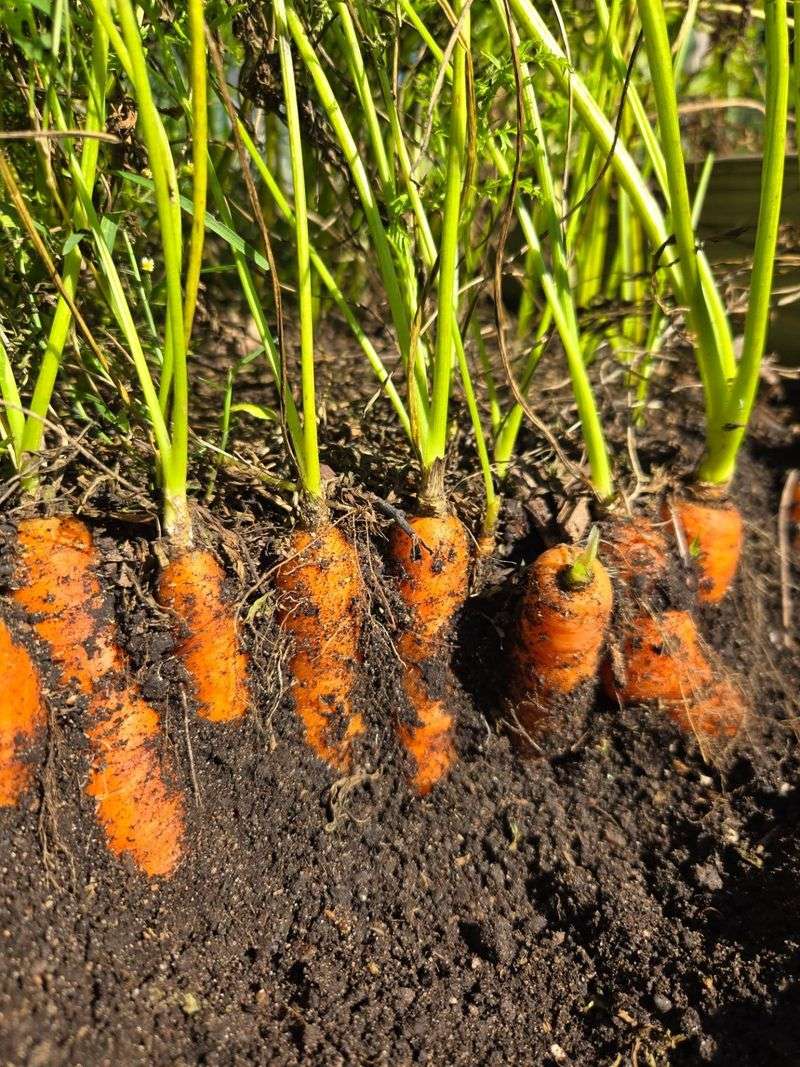
Timing matters more than many gardeners realize. Young carrots still have room to grow, so they can often absorb a sudden drink without much fuss. Fully grown carrots are a different story.
By the time a carrot reaches full size, its outer tissue has firmed up and there is little space left to expand.
When a surge of water hits, it pushes straight against that tight skin, and the root simply bursts open. Carrots left in the ground for weeks past their prime are the most likely to split.
Your seed packet is the best tool here. Look for the days to maturity, which usually falls somewhere between 55 and 80 days depending on the variety.
Your North Carolina Garden Changes Every Week. Your Plan Should Too.
Gardening in North Carolina changes quickly throughout the season. Every Friday you’ll receive a simple weekly plan showing exactly what to plant, prune, fertilize, harvest, and protect so you never miss the right timing.
Mark that date on a calendar, and as it gets close, pull a few test carrots to check their size and color.
Ready carrots show a deep, even color and a shoulder about as wide as the packet says it should be.
Once most of your test roots look like that, go ahead and harvest the bulk of the crop. Leaving them in the soil might seem like free storage, but it invites trouble with every rainstorm.
In North Carolina, fall carrots sown in August or early September often reach maturity right in the middle of the season’s wettest events.
Cold fronts and late tropical storms tend to roll through just as roots hit full size. Harvesting on time is one of the simplest ways to beat the weather and enjoy crisp, unbroken carrots at the dinner table.
3. Dry Spells Toughen The Outer Layer

Drought does its damage quietly. Long before any rain shows up, a dry spell is already setting the stage for cracked carrots. You just cannot see it happening underground.
When the soil dries out, carrots slow down their growth to save water. During that pause, the outer tissue firms up and becomes less flexible.
Then the rain returns, and the root jumps back into growth mode from the inside out, expanding faster than that stiff outer layer can handle.
The fix starts with your finger. Every few days during dry weather, push a finger or a small trowel two to three inches into the soil next to your carrot rows. If it feels dry at that depth, your carrots are thirsty, even if the surface still looks okay.
Water deeply before the soil dries out completely instead of waiting for the next rain to rescue the bed.
A slow, thorough soaking reaches the full length of the root and keeps growth moving at a steady pace. Light sprinkles only wet the top inch and do very little for a carrot that reaches several inches down.
Here is something that surprises many newcomers to the state. October is often one of the driest months of the year in North Carolina, even though many people picture fall as a rainy season.
Clear skies and cool breezes feel lovely, but they pull moisture from garden beds fast. Paying attention during those pleasant, dry weeks keeps your carrots flexible and ready for whatever the next front brings.
4. Even Watering Prevents Most Cracks
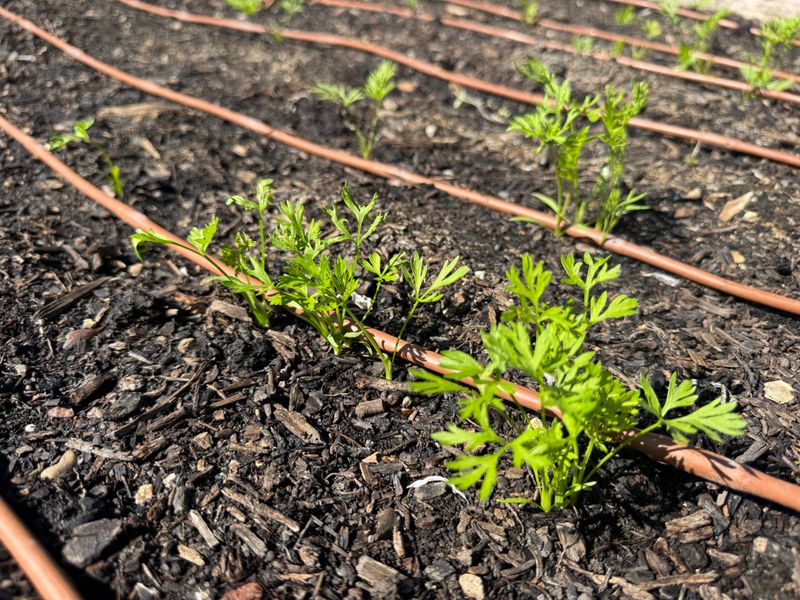
Steady wins the race in the carrot patch. Roots that grow at an even pace develop smoothly from core to skin, so both layers stay in step with each other. When rain finally falls, there is no sudden growth spurt to tear them apart.
Aim for about one inch of water per week, counting both rain and what you add yourself. A simple rain gauge stuck in the bed makes tracking easy. During dry weather, water deeply once or twice a week rather than giving a little splash every day.
Soaker hoses and drip lines are a carrot grower’s best friends. They deliver water slowly and evenly right at soil level, so every part of the row gets the same amount. Overhead sprinklers, on the other hand, tend to leave some spots soggy and others dry.
Now for a trick many gardeners miss. If your bed has gone a long time without water, resist the urge to flood it all at once. Give smaller amounts over two or three days instead, which lets the roots adjust gradually rather than swelling in a single rush.
North Carolina’s fall weather makes this habit especially valuable. One week might bring warm, dry winds, and the next might bring a soaking nor’easter or tropical rain.
Keeping moisture even during the dry stretches means your carrots are already in good shape when the wet weather arrives.
A few minutes of attention each week pays off with smooth, tasty roots that look as good as they taste.
5. Mulch Keeps Soil Moisture Steady
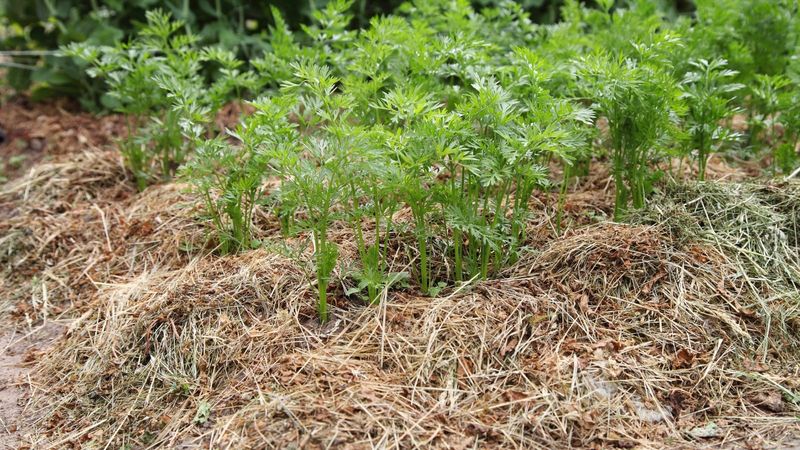
Think of mulch as a cozy blanket for your soil. It keeps the ground from drying out too fast on sunny days and cushions it from the full blast of a heavy storm. That balance is exactly what carrots need.
Under a layer of mulch, moisture escapes much more slowly during dry weather. When rain pours down, the mulch soaks up some of the impact and lets water sink in gradually.
As a result, soil moisture rises and falls gently instead of swinging wildly from one extreme to the other.
Timing makes a difference. Wait until your seedlings are a few inches tall and you have thinned them to their final spacing.
Then spread one to two inches of clean straw, shredded leaves, or fine grass clippings between the rows, keeping it loose around the tiny tops.
As the season rolls on, top it off. Mulch breaks down over time, and adding a fresh layer in late fall also helps protect roots as temperatures drop. Many gardeners find that a thicker layer lets them keep carrots in the ground a bit longer into winter.
Luckily, North Carolina fall gardens come with free mulch falling from the sky. Run a mower over a pile of oak or maple leaves and you have a perfect, fluffy covering in minutes.
Since both dry spells and sudden storms can change soil conditions here in a single week, that simple layer works hard to keep your carrot bed calm and your harvest crack free.
6. Too Much Nitrogen Leads To Uneven Growth
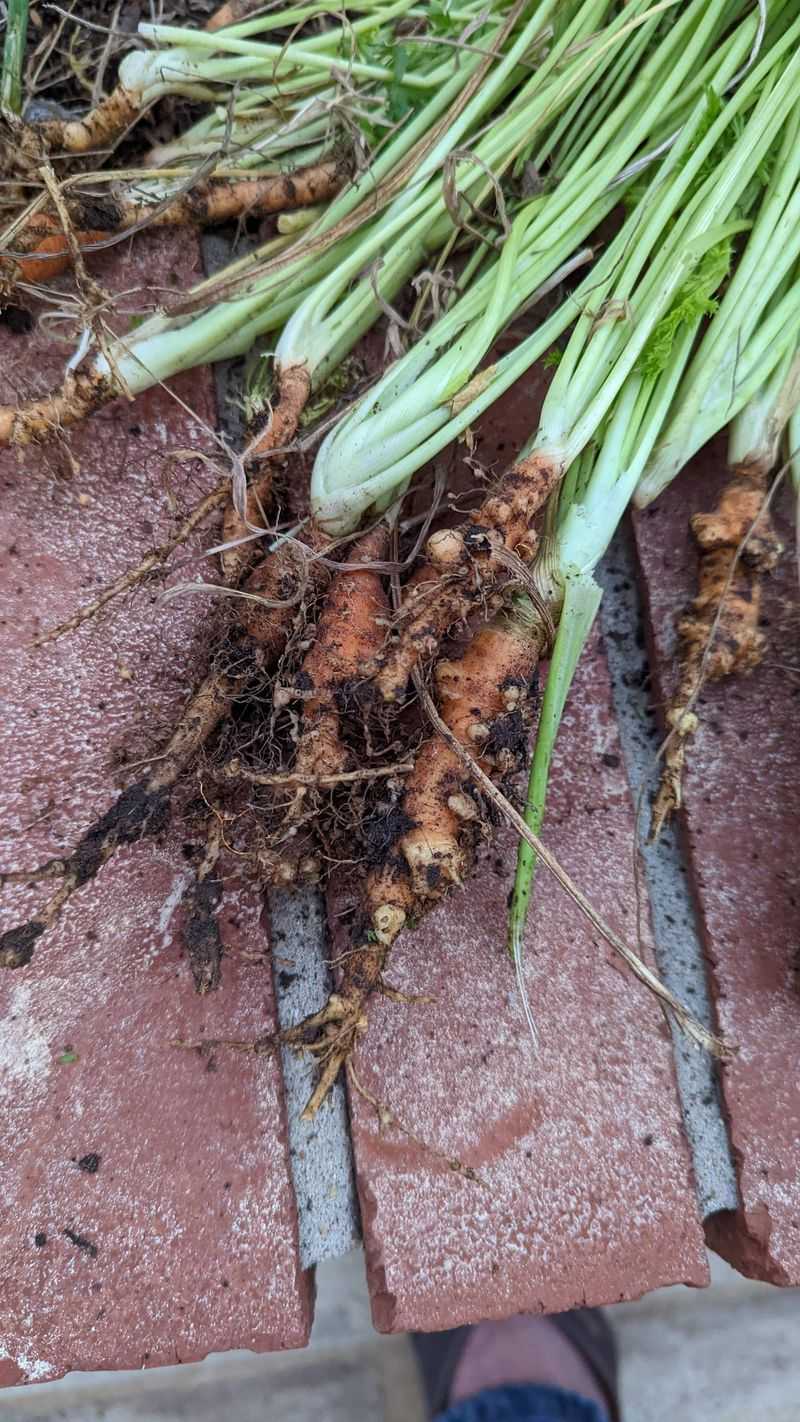
Big, bushy carrot tops might look impressive, but they can hide a problem below. Heavy doses of nitrogen push plants toward fast, soft growth. That speedy growth is often the first step toward a split root.
Nitrogen feeds leaves more than roots. Too much of it creates lush greenery and tender, quickly expanding carrots that have weak, easily stretched tissue.
When moisture levels suddenly change, those soft roots are much more likely to crack than ones that grew at a moderate pace.
A soil test is the smartest first move. In North Carolina, the state Department of Agriculture offers soil testing, and it is free for much of the year, with a small fee during the busy winter season.
The report tells you exactly what your bed needs, so you do not have to guess. Skip heavy nitrogen fertilizers and fresh manure in carrot beds.
Fresh manure can also cause forked, hairy roots, which is another headache nobody wants. Instead, work well-aged compost into the soil a few weeks before sowing to provide slow, steady nutrition.
Many gardeners in the state tuck fall carrots into beds that just finished hosting tomatoes, squash, or corn.
Those summer crops often got plenty of fertilizer, and some of it may still be sitting in the soil. Checking before you add anything more keeps your carrots growing at a calm, even rhythm.
Less feeding sometimes means better carrots, which is good news for your wallet too.
7. Choose Varieties Less Prone To Cracking
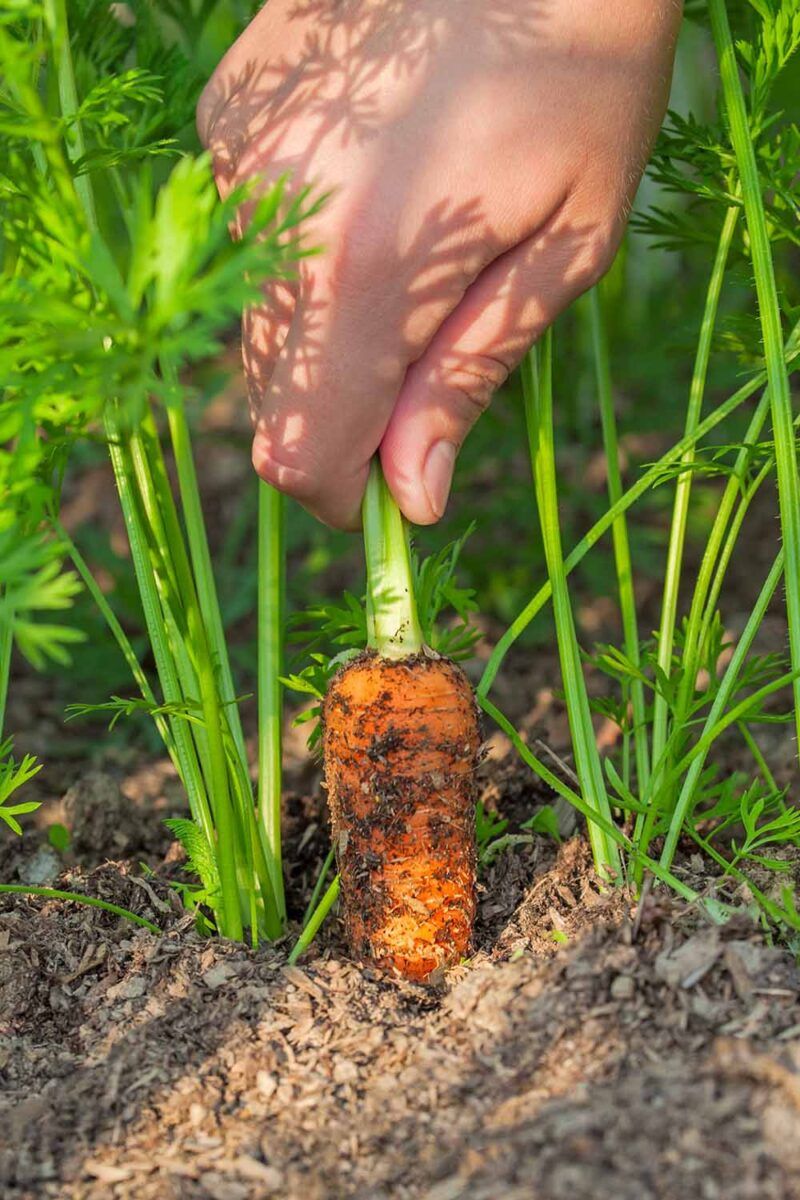
Not every carrot is built the same way. Plant breeders have spent years developing varieties that stay firm and whole even when the weather misbehaves. Picking the right seed gives you a head start before you ever dig a row.
Some varieties are bred to hold well in the ground, meaning they can sit in the soil after maturity without splitting as quickly.
That extra wiggle room is a big help when you cannot harvest right away. Instead of racing the forecast, you get a little breathing space.
Read seed packets and catalog descriptions closely. Look for phrases like crack resistant, split resistant, or holds well in the field. Many seed companies list these traits clearly because gardeners in rainy regions ask for them.
Shape matters too. Nantes types are cylinder shaped, sweet, and dependable, while Chantenay types are short and stocky with broad shoulders.
Both styles handle heavier soils better than long, skinny varieties, and they tend to mature reliably in the cooler days of fall.
That clay-heavy ground found across much of the North Carolina Piedmont makes shorter carrots an especially good match.
Long varieties can struggle to push down through dense soil, and stressed roots crack more easily. Besides, life gets busy, and a big fall rain does not always wait for a free weekend.
Planting varieties that forgive a late harvest lets you enjoy the garden without constantly watching the sky.
8. Use Cracked Carrots First
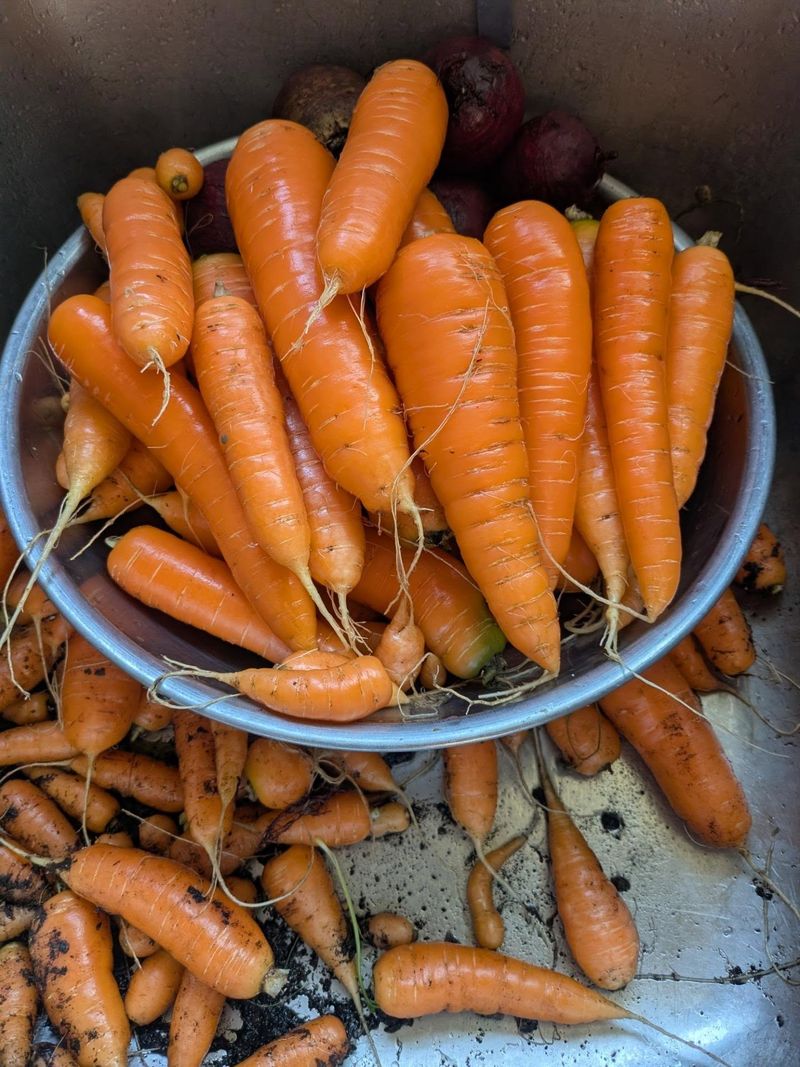
Good news for anyone staring at a basket of split carrots. Cracked roots are still safe to eat and taste just as sweet as smooth ones. They just need a little different handling.
The open splits act like tiny doorways. Moisture and rot-causing organisms can slip inside, so cracked carrots break down much faster than whole ones. Planning to use them first keeps them from going to waste.
Harvest cracked carrots as soon as you notice them. Rinse off the soil and trim away any damaged, soft, or discolored areas with a sharp knife. What remains is perfect for soups, stir fries, roasting pans, or a quick batch of carrot muffins.
Try to use fresh cracked carrots within a week or two. If you have more than you can eat, blanch slices or chunks in boiling water for about two to three minutes, then plunge them into ice water, drain well, and freeze them in bags.
They will be ready for winter stews whenever you need them. Save your smooth, uncracked carrots for long term storage. Cut off the green tops, keep the roots in a bag in the refrigerator, and they can stay crisp for weeks or even months.
Leaving cracked carrots in the ground is a gamble in North Carolina. Damp, mild fall soil speeds up decay, and a split root can turn mushy in just a few days. Pulling them promptly means every carrot you worked so hard to grow ends up on your plate.