8 Invasive Plants Ohio Homeowners Should Remove This Winter
Some of the prettiest shrubs sold at garden centers for decades are now illegal to sell in Ohio. Since January 2018, a growing list of former favorites can no longer be legally sold or distributed in Ohio.
Several of these escapees keep their leaves green weeks after native plants have gone bare for the year. Birds snack on their bright berries and quietly carry the seeds into nearby woods and fields.
There was a time I admired a few of these plants, before I learned what they do to forests. You might notice some of them growing along your fence line right now without realizing their sneaky habits.
Cold Ohio months strip away the leafy clutter that usually hides these troublemakers from curious eyes. A few familiar faces in your own yard might deserve a date with the loppers before spring rolls around.
1. Amur Honeysuckle
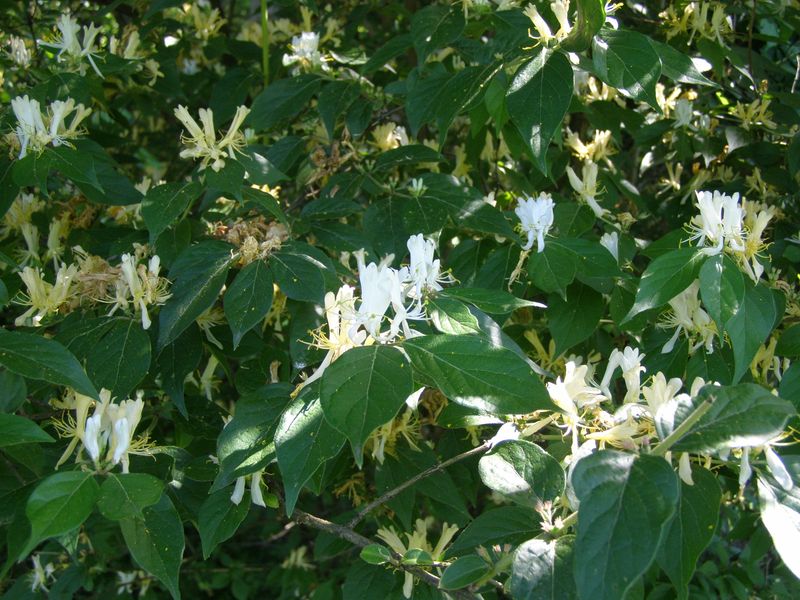
Walk any Ohio woodland edge in December and you will spot arching shrubs still dotted with shiny red berries. Amur honeysuckle, or Lonicera maackii, often holds those berries well into winter while native shrubs stand bare.
Birds eat the fruit and spread the seeds far from the parent plant, which helps thickets form quickly. Studies suggest the berries carry plenty of sugar but fewer of the fats that migrating birds really need.
Mature shrubs can reach about fifteen to twenty feet tall, creating dense shade where wildflowers struggle to grow. The leaves also open early in spring and hang on late in fall, giving this shrub a long head start.
Winter identification is pretty easy once you know the trick of snapping a twig in half. Older stems have a hollow center that looks brown inside, and the bark often peels in shaggy vertical strips.
Small seedlings pull out easily when the soil is moist after a winter thaw, so grab them early. Larger shrubs respond well to cutting near the ground, followed quickly by an herbicide applied to the fresh stump.
Personally, I love the satisfying crunch of a weed wrench lifting a stubborn shrub straight from the ground. Follow every product label carefully, and check back in spring for any new sprouts popping up around old stumps.
2. Callery Pear
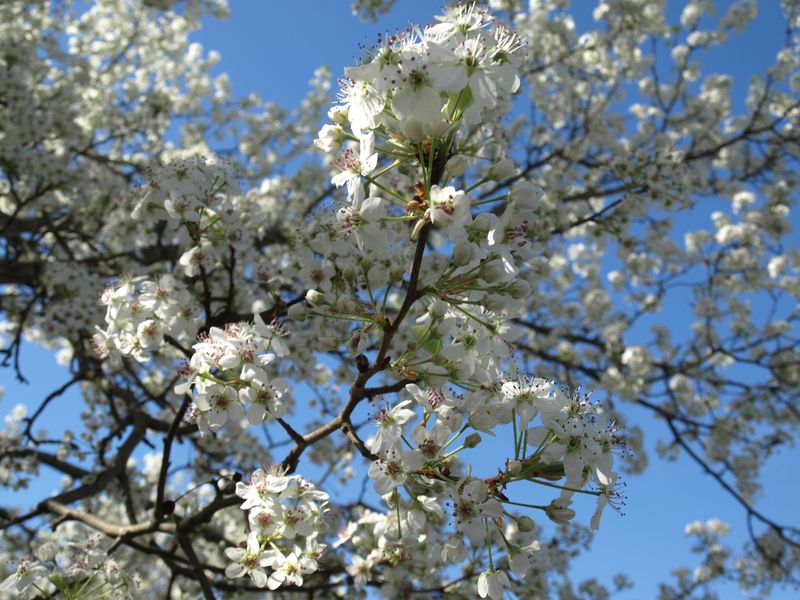
Few trees fooled homeowners quite like the Bradford pear, with its tidy shape and snowy white spring blossoms. Callery pear, Pyrus calleryana, is now on the state invasive list, and sales ended in January 2023.
Many people notice the flowers first, and honestly the smell often reminds folks of something spoiled in the fridge. Cultivars cross with each other, producing wild seedlings that frequently grow sharp thorns and crowd open fields.
Winter makes these trees easy to recognize by their fuzzy, fat buds sitting at the tips of brown twigs. You may also find small, hard fruits clinging to branches, which birds eat after freezing softens them up.
Weak branch angles mean older trees often split during ice storms, dropping heavy limbs on cars and roofs. Removing one before it fails can save you a costly repair bill along with some serious backyard heartbreak.
Cutting the trunk alone usually triggers vigorous sprouts, so treat the stump right away with a labeled herbicide. Smaller saplings can be dug out with a sturdy shovel when the ground is soft and not frozen solid.
I believe redbud or serviceberry makes a wonderful replacement, offering early spring color that pollinators truly appreciate. Some Ohio programs have even offered free native trees in exchange for removing a Callery pear from your yard.
3. Wintercreeper
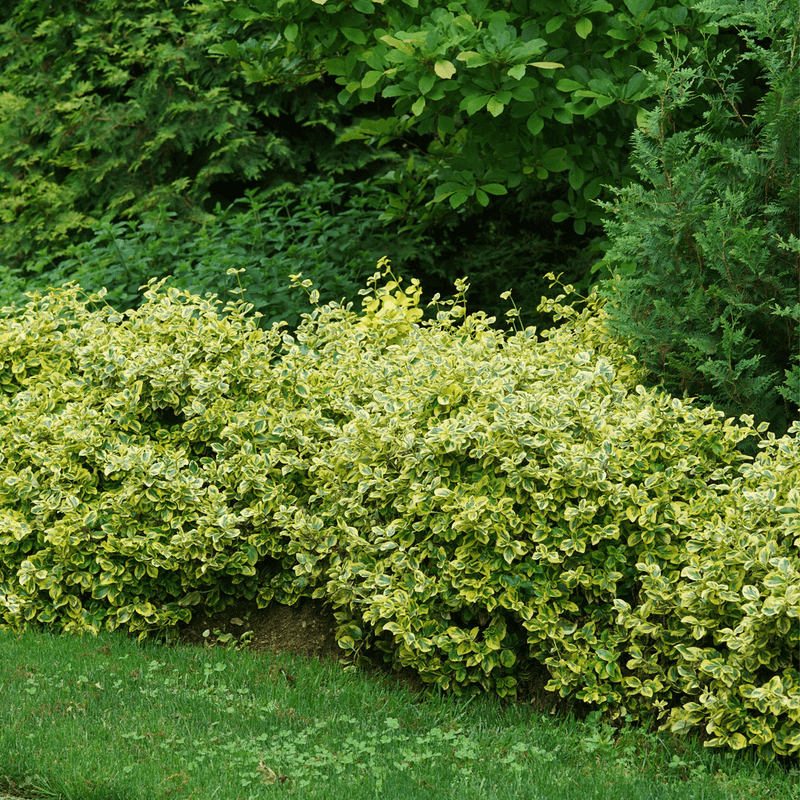
Green leaves glowing against snow might look cheerful, yet they reveal exactly where wintercreeper has been sneaking around. Euonymus fortunei was sold for years as a tough groundcover that stays green through the coldest months.
Its glossy oval leaves often show pale veins, and the stems root wherever they touch moist ground. That habit lets a single planting spread into thick mats that smother wildflowers and tiny tree seedlings beneath.
Climbing is another sneaky skill, since the vine grips tree bark with small rootlets and heads upward. Up high it can flower and produce fruit, giving birds plenty of seeds to scatter into nearby woods.
You need to start with the trees, cutting each climbing vine near the base at about waist height. The upper section loses its water supply and withers, while you pull the lower stems away from the trunk.
Ground patches come up best by hand after rain, rolling the mat back like an old carpet. Try to gather every rooted piece, because leftover fragments can sprout again surprisingly fast in spring and summer.
What surprises me most is how relaxing this chore feels on a mild, sunny winter afternoon outdoors. Bag the vines for trash pickup rather than composting them, since stems can root in a backyard compost pile.
4. Tree Of Heaven
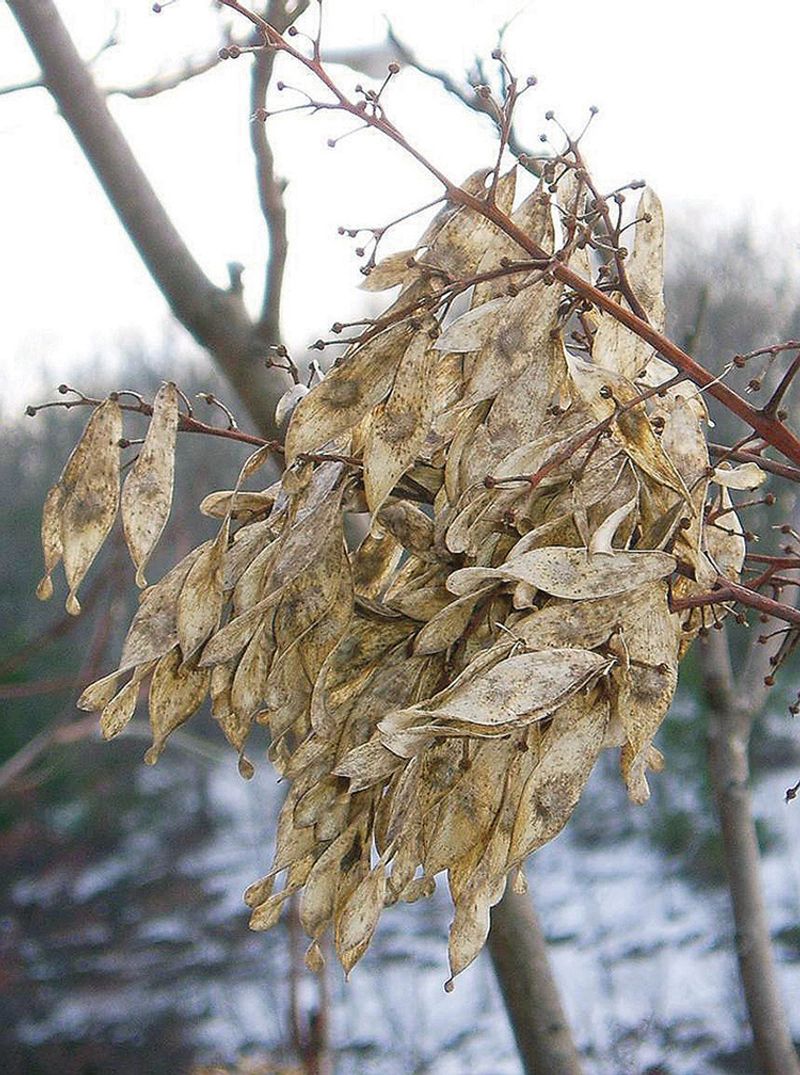
Crush a twig from this tree and you will catch a smell often compared to rancid peanut butter. Tree of heaven, Ailanthus altissima, came from China and now pops up along Ohio roads, alleys, and railroad edges.
Winter twigs are thick and tan, with large leaf scars shaped a bit like hearts or shields. Female trees also hold clusters of papery winged seeds that rattle in the wind during cold months.
Spotted lanternfly strongly prefers this tree as a host, and several Ohio counties already have confirmed populations. Checking your trees for the gray, mudlike egg masses in winter can help slow the spread of this pest.
Simply chopping the trunk down usually backfires, because the roots respond by sending up dozens of new suckers. Experts often recommend treating the tree with herbicide first, then cutting it down after the treatment works its way down.
The hack and squirt method uses small downward cuts in the bark, filled with a labeled herbicide product. Many extension guides suggest summer through early fall for best results, so winter is great for planning and scouting.
Honestly, the native staghorn sumac looks similar, so double check those smelly twigs before you start cutting. Hiring a licensed professional makes sense for large trees, especially those growing near houses, sheds, or power lines.
5. Multiflora Rose
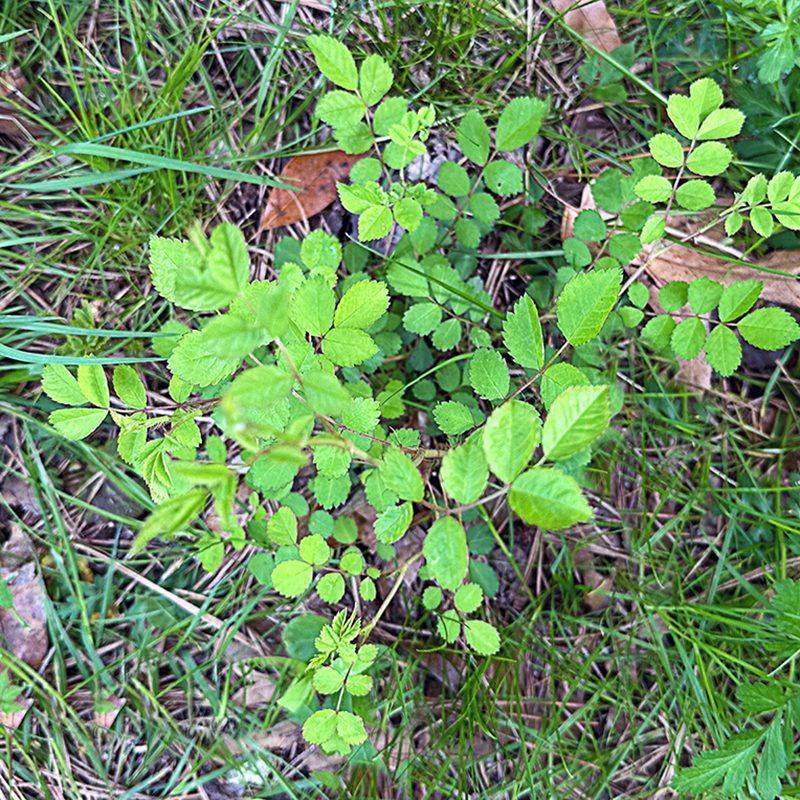
Farmers were once encouraged to plant this rose as a living fence, which sounds charming until it escapes. Multiflora rose, Rosa multiflora, now tangles fence rows and woodland edges across much of the Midwest.
Small red hips cluster on arching canes through winter, making the plant easy to find in bare landscapes. Look for curved thorns and fringed little stipules where each leaf once met the stem during summer.
A single large plant can produce many thousands of seeds, and they may stay viable in soil for years. Birds carry the hips off to new spots, while drooping canes also root wherever their tips touch soil.
I have to admit, those hooked thorns grab sleeves like a toddler who wants your attention right now. Wear thick leather gloves and heavy canvas clothing before you even think about reaching into a thicket.
Young plants can be dug out with a mattock, making sure to lift the central crown with its roots. Bigger thickets usually need repeated mowing or cutting, plus follow up treatment on sprouts during the next growing season.
Native roses like Carolina rose or swamp rose offer pretty blooms without taking over the whole property line. Your local soil and water conservation district can often suggest helpful native shrubs for replanting those cleared spots.
6. Burning Bush
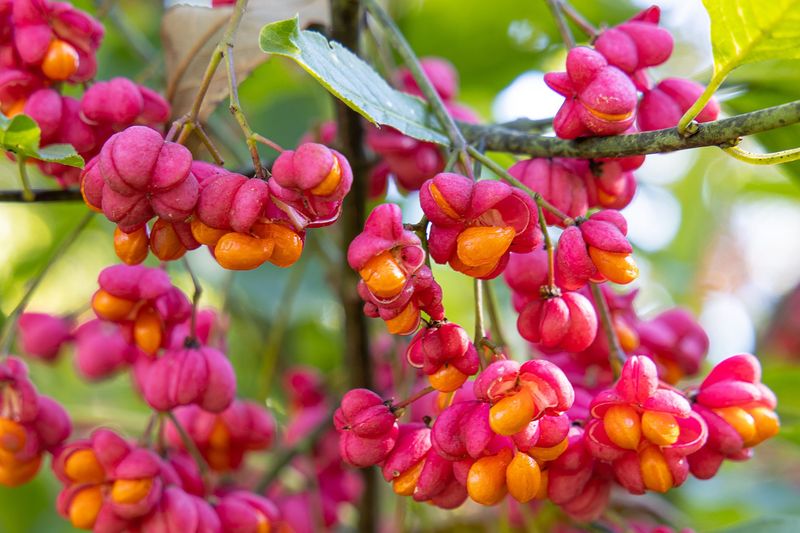
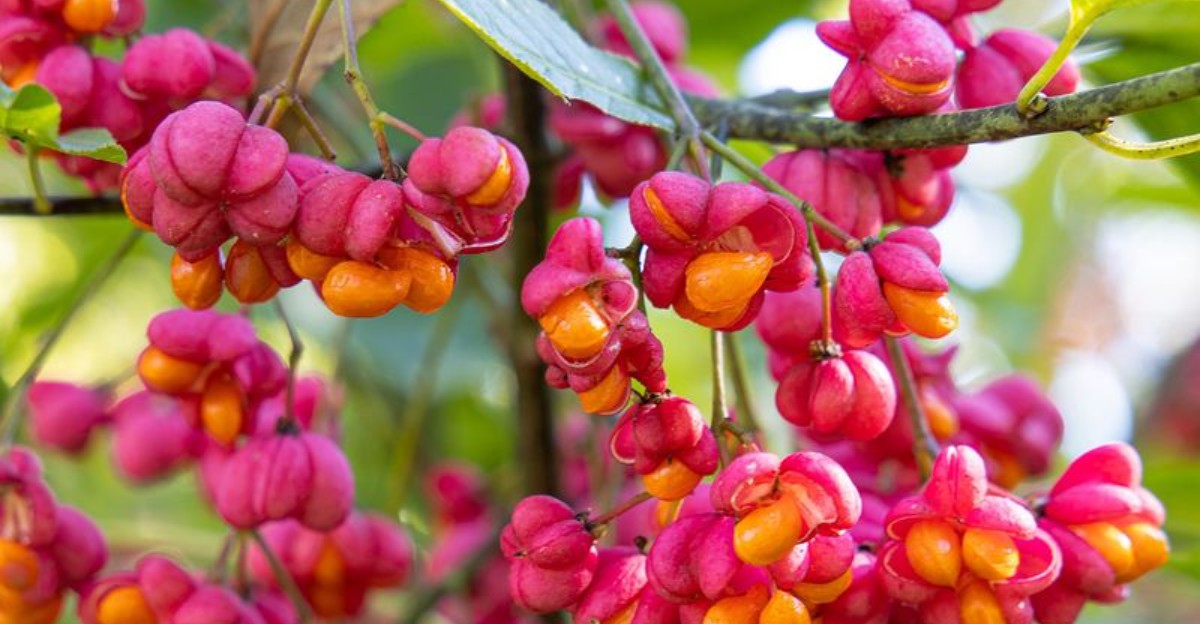
Blazing red leaves in October made burning bush a favorite foundation shrub in neighborhoods for many years. Euonymus alatus is rated invasive by the Ohio Invasive Plants Council, though it is still sold in many garden centers.
Bare winter branches reveal the best clue, which is the flat corky wings running along the green stems. Some people call it winged euonymus for that reason, and the texture feels oddly like cork from a bulletin board.
Birds eat the small orange and red fruits in fall and drop seeds into shady woods nearby. Seedlings handle deep shade well, forming dense patches in forest understories where native wildflowers once thrived.
Personally, I think pulling out a mature burning bush feels a bit like saying goodbye to an old friend. Still, swapping it for native shrubs brings even more life, from butterflies in summer to hungry songbirds in fall.
Smaller shrubs can usually be dug out with a spade, while bigger ones might need a root saw. If you cut a larger plant, treat the fresh stump with a labeled herbicide to stop stubborn resprouting.
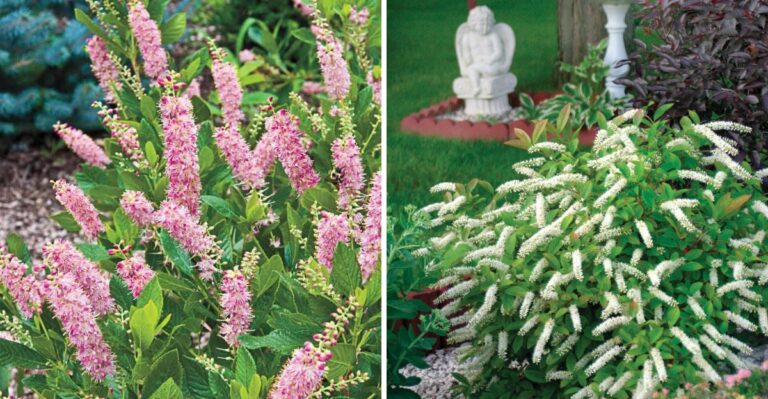
Black chokeberry, fragrant sumac, and Virginia sweetspire can provide fiery fall color without escaping into the woods. Plan your replacement now so planting can begin once the soil thaws and warms in early spring.
7. Garlic Mustard
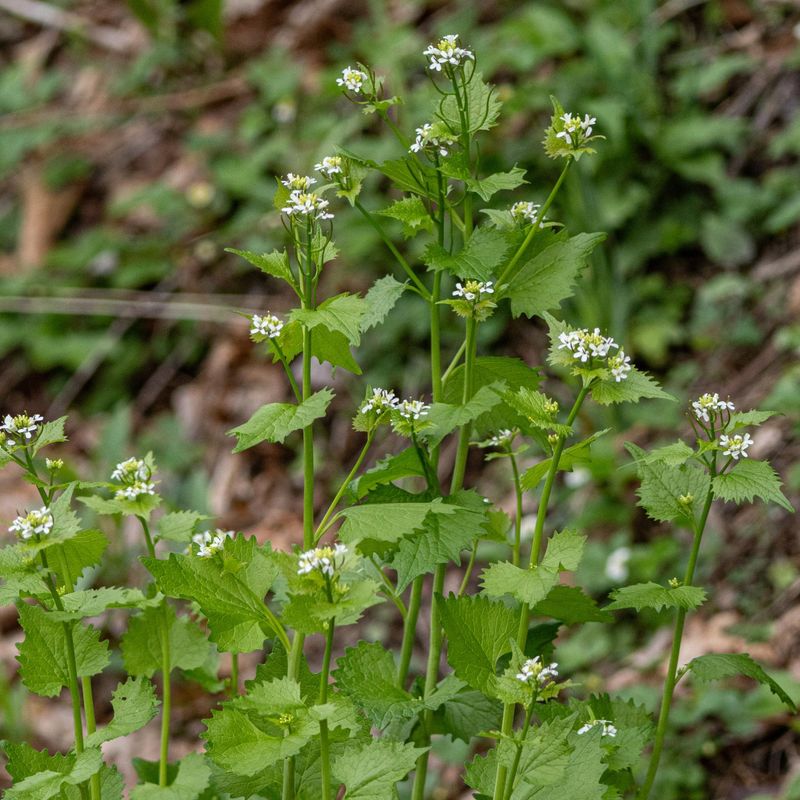
Bright green leaves on a brown forest floor in January might look like a pleasant surprise at first. Garlic mustard, Alliaria petiolata, stays green as a low rosette while most native wildflowers rest underground.
Crush one of the scalloped, kidney shaped leaves and you will smell garlic right away on your fingers. Settlers brought it from Europe as a cooking herb, and it has spread through woodlands across the state.
Each plant lives two years, flowering with tiny white blooms during its second spring before setting seed. Seeds may remain in the soil for several years, so patience matters a lot when you tackle a patch.
Research also shows its roots release compounds that can disrupt helpful soil fungi that many trees depend upon. That hidden effect makes it especially tough on woodland seedlings that rely on those underground partnerships.
Pull rosettes on mild days when the soil is damp, gripping low to remove the whole white taproot. Look for the slight S curve near the top of the root, which helps you know you got it.
I like how this weed is actually edible, so young leaves can go into pesto instead of the trash. Bag any flowering plants you pull in spring, since seeds can still ripen on stems lying on the ground.
8. Japanese Barberry
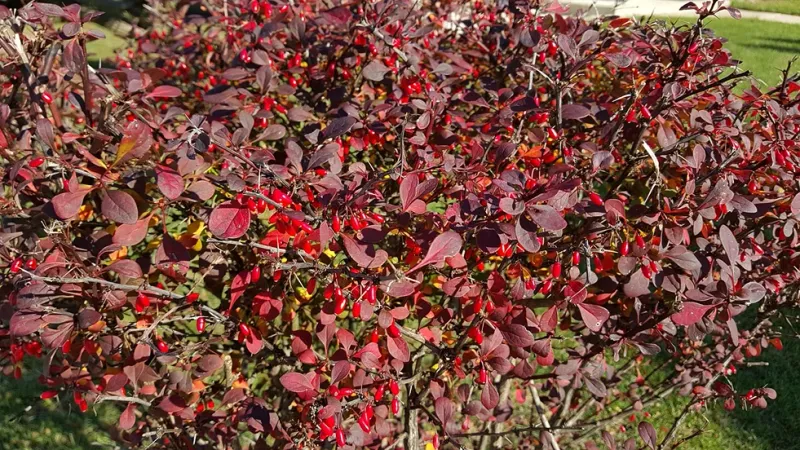
Scratch the bark of this spiny shrub and you will find bright yellow wood hiding underneath the surface. Japanese barberry, Berberis thunbergii, was planted widely in landscapes, and the Ohio Invasive Plants Council rates it invasive, though it is still legal to sell here.
Small, oval red berries dangle along the stems through winter, making the shrub easy to spot in bare woods. Each node carries a sharp spine, so the plant protects itself well from deer that skip it for tastier treats.
Research in Connecticut found that dense barberry thickets held more ticks carrying the bacteria behind Lyme disease. The humid shelter under the branches helps ticks survive, which gives homeowners another reason to remove these shrubs.
You need sturdy leather gloves and long sleeves for this job, since the spines poke through thin fabric easily. Safety glasses also help, because springy branches can snap back toward your face when you pull them.
Shallow roots make small and medium shrubs fairly easy to lift with a mattock or a weed wrench. Larger shrubs can be cut low and treated, then any spring resprouts can be handled during the growing season.
Winterberry holly makes a cheerful native substitute, offering glossy red berries that brighten snowy days for birds. Plant both male and female winterberry shrubs together so the female plants produce plenty of fruit each fall.