8 Protected Animals California Law Says Homeowners Cannot Remove From Their Yard
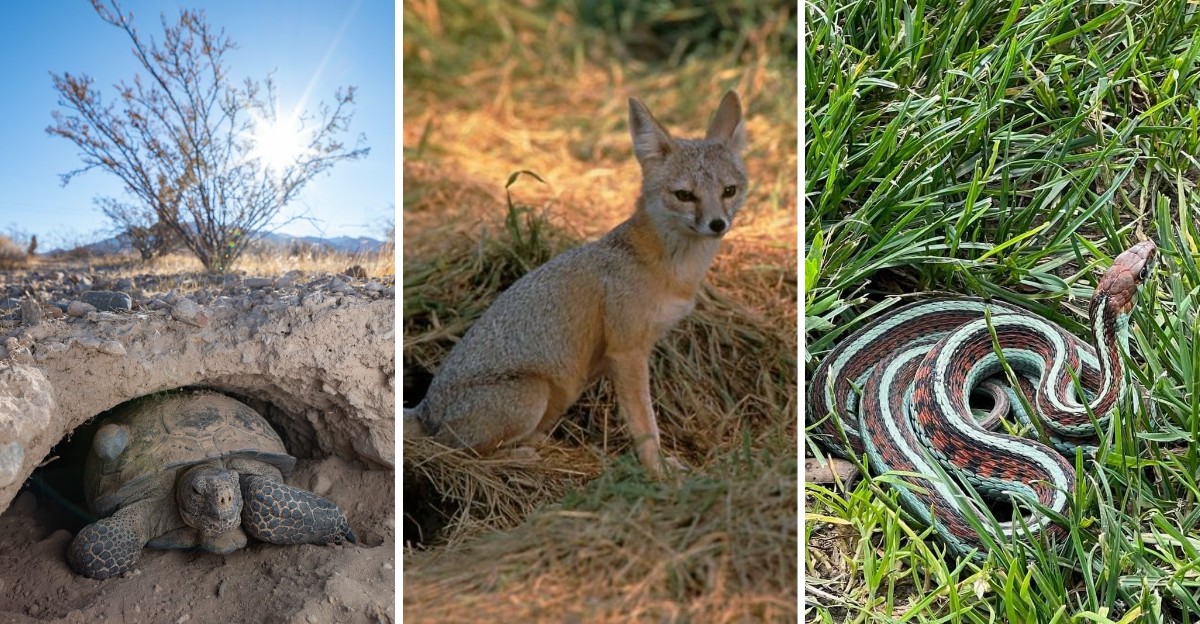
Some of the most legally protected animals in California live closer to backyard fences than to wilderness trails. A few of them dig burrows, while others tuck themselves into attic vents and garage rafters.
State law makes it illegal to harass or capture many of these creatures without special permits from wildlife officials. Breaking those rules can lead to steep fines, and nobody wants that letter arriving with the morning mail.
I have to admit, I once nearly blasted a mysterious hole with the hose before checking who lived inside. You might notice small clues like fresh tracks or scattered pellets near the edges of your sunny garden beds.
Personally, I think learning who shares your yard makes gardening in California feel richer and a lot more surprising. So which unexpected neighbors are hiding in plain sight, and what should you do when one appears?
1. Western Burrowing Owls Living In Ground Squirrel Holes
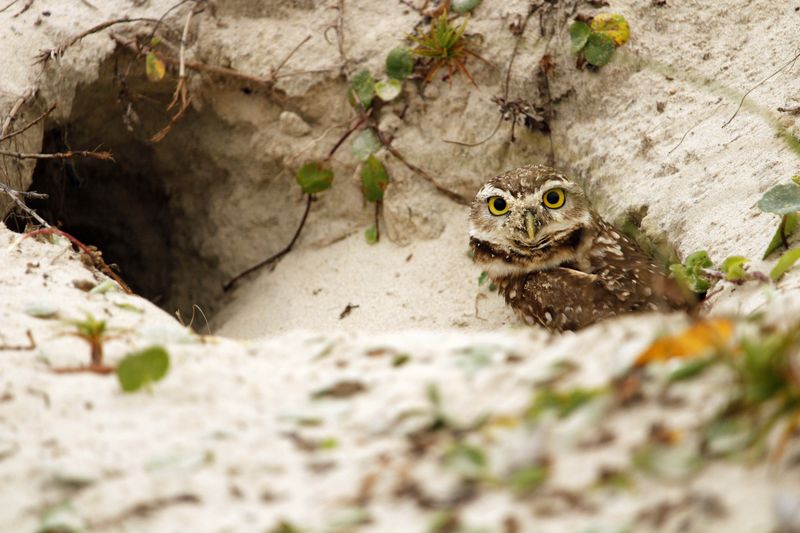
A little owl standing on the lawn at noon looks like a cartoon, yet burrowing owls do exactly that. They hunt by day and night, bobbing their heads whenever something catches their bright yellow eyes.
These owls stand about seven to ten inches tall, with sandy brown feathers and bold white eyebrows. Instead of digging their own homes, they usually move into old burrows left behind by ground squirrels.
In late 2024, state officials made the western burrowing owl a candidate for listing under the Endangered Species Act. Candidate status gives the bird the same protection as an endangered species while scientists review its numbers.
Federal law and state codes also protect owls, their eggs, and active nests from harm or disturbance. That means filling or collapsing an occupied burrow can bring real legal trouble for any curious homeowner.
If I lived near open grassland, I would leave a few squirrel holes alone just for them. You might be rewarded with fluffy chicks peeking out from the entrance during late spring and early summer.
Avoid spraying rodent poisons nearby, since owls often eat mice and insects that may carry those toxins. Keeping a patch of short grass open also helps them spot hawks and other predators from far away.
If an owl moves in where you plan to build, contact the state wildlife office before lifting a shovel. Biologists can explain your options, and you get to brag about hosting one of the coolest backyard birds.
2. Native Bats Roosting Under Eaves And Attics
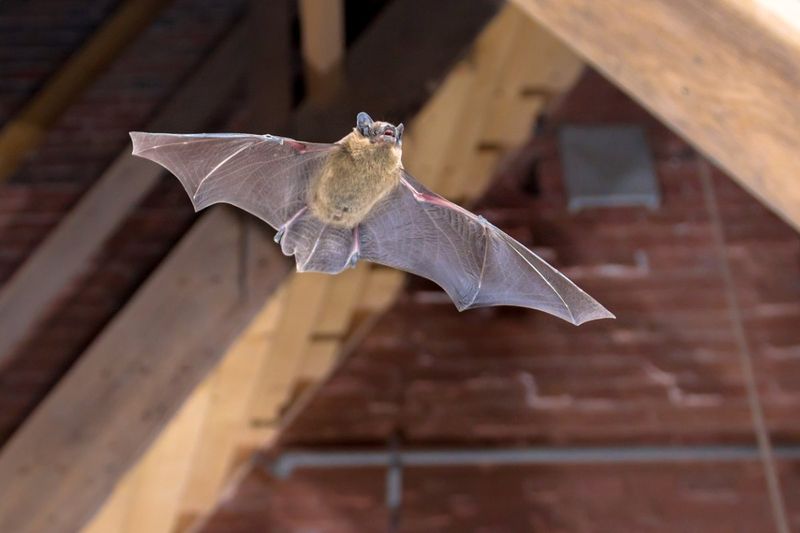
A single bat can snap up hundreds of small flying insects in about an hour of evening hunting. I love watching them zigzag over the garden at dusk, like tiny acrobats chasing invisible snacks.
More than twenty native bat species live across the state, from desert canyons to busy city neighborhoods. Several species happily roost in attic spaces or behind loose shutters close to your favorite tomato beds.
State wildlife rules treat bats as protected nongame mammals, so harming or poisoning them is not allowed. Some species, like the pallid bat and western mastiff bat, are also listed as species of special concern.
You can still move bats out of a house, but the method matters a lot under the law. Experts use one-way exclusion devices that let bats leave at night but block them from coming back inside.
Timing matters even more, because mothers raise flightless pups in summer roosts from roughly April through August. Sealing holes during that window can trap babies inside, which is both cruel and illegal in many cases.
Early fall usually works best for exclusion, though local wildlife professionals can confirm the right timing for you. Hire someone experienced with bats, and avoid touching one with bare hands because of rabies risk.
Mounting a bat house on a sunny pole gives these helpful hunters a cozy alternative to your attic. Your garden will likely see fewer moths and beetles, and evenings outside feel a little more magical.
3. Desert Tortoise Wandering Into Desert Yards
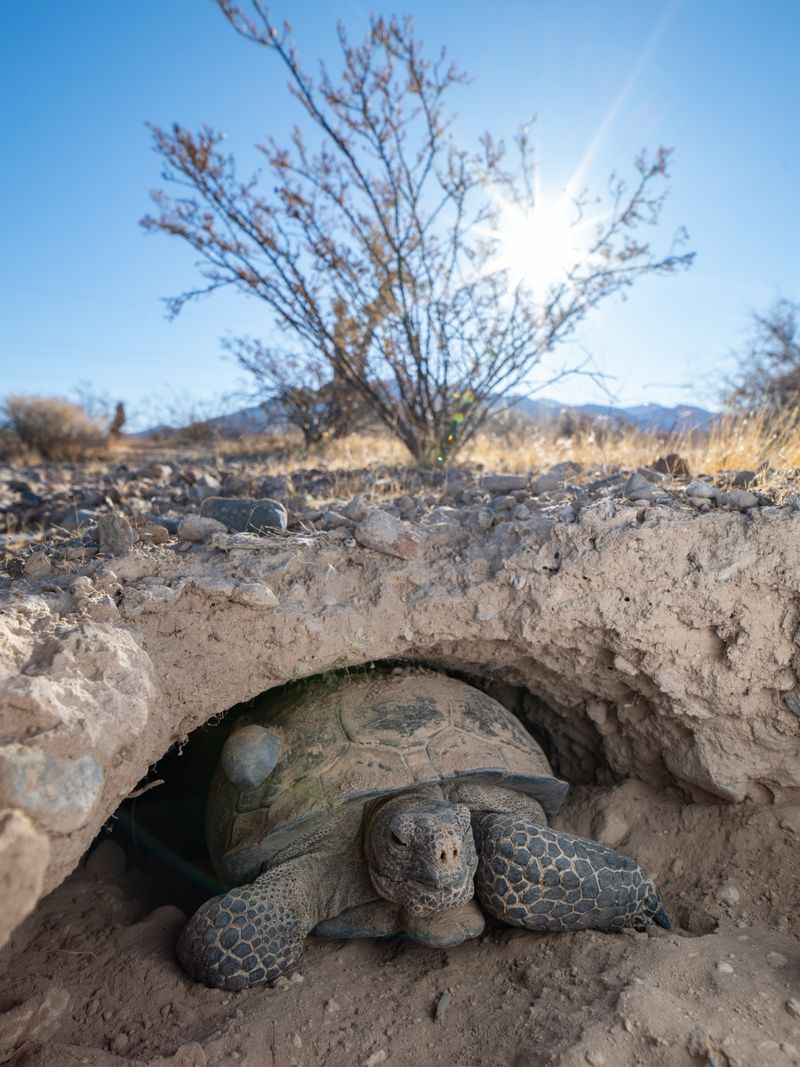
Desert tortoises can spend up to ninety-five percent of their lives underground, hiding from scorching heat and winter chill. So spotting one strolling past your cactus garden feels like winning a very slow, very dusty lottery.
These reptiles grow about nine to fifteen inches long, with high-domed shells and thick front legs built for digging. They live in the Mojave and Colorado deserts, often near creosote bushes and open sandy flats.
The species is federally threatened, and state officials moved it to endangered status after steep population declines. That means picking up or harassing a wild tortoise is against the law without proper permits.
Startled tortoises may empty their bladders, losing precious water stored to help them survive long dry spells. Handling one, even with kind intentions, can seriously hurt its chances of making it through a hot summer.
If a tortoise is crossing a busy road, you may move it a short distance in the same direction. Otherwise, give it space and call wildlife officials if it seems injured or trapped somewhere unsafe.
I like planting native desert shrubs and wildflowers, since tortoises nibble on grasses and blooms after spring rains. Skip garden pesticides too, because tortoises often eat low plants that may carry residues from treated yards.
Fencing gaps and open pools can trap wandering tortoises, so check those spots during warm months. A little planning helps these ancient-looking neighbors keep shuffling through the desert for generations to come.
4. San Joaquin Kit Fox Trotting Through Valley Neighborhoods
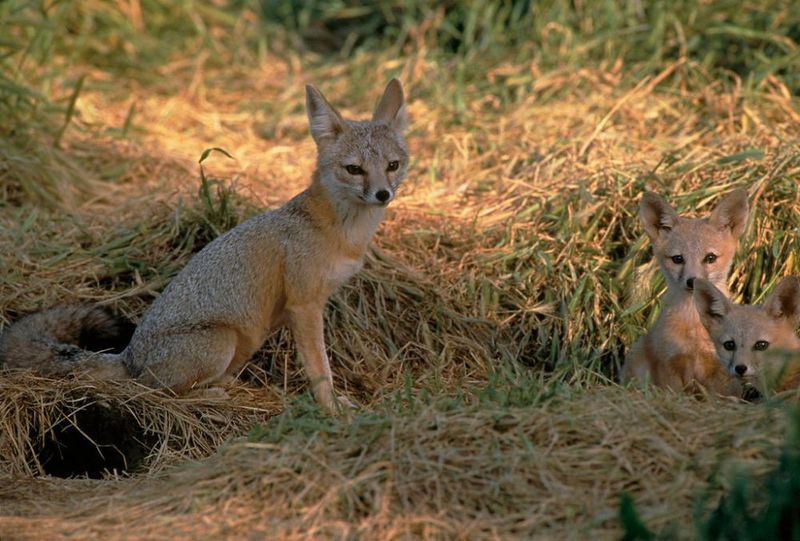
Weighing about five pounds, the San Joaquin kit fox is smaller than many house cats yet has enormous ears. Those big ears help it hear prey underground and release heat during blazing Central Valley afternoons.
Kit foxes have long slender legs and a bushy tail with a dark tip that bounces when they trot. They mostly hunt at night, chasing kangaroo rats and large insects across open ground near their dens.
This fox is federally endangered and state threatened, so harming one or disturbing its den is illegal. Surprisingly, a well-studied population lives right inside Bakersfield, denning on school grounds and in quiet storm drain basins.
I can’t imagine looking out at dusk and seeing a tiny fox nosing around the edge of my lawn. City foxes often dig dens under sheds or in grassy lots, raising pups there each spring.
If a den appears on your property, keep pets away and avoid blocking or filling the entrance. Wildlife biologists can help if the den sits somewhere tricky, like beside a driveway or foundation.
Secure trash cans and pick up pet food, since easy snacks can draw foxes into risky spots. Mange has hit the Bakersfield population hard, so report any fox with patchy fur to local wildlife officials.
Skipping rodent poison helps too, because foxes often eat rodents that may carry those harmful chemicals inside them. Sharing your yard with one of these little night hunters is a rare privilege worth protecting.
5. Blunt-Nosed Leopard Lizard Sunning On Open Ground
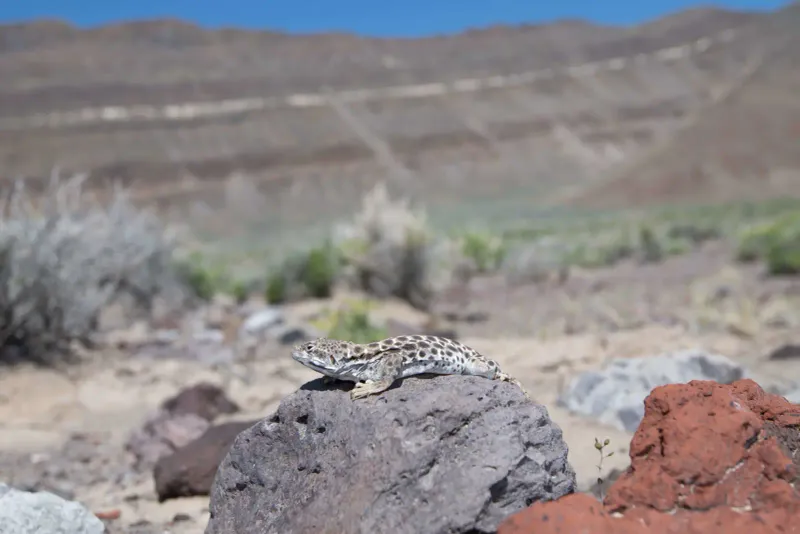
Blunt-nosed leopard lizards wear bold dark spots, and breeding females add bright orange-red patches along their sides. I love how they seem to dress up for spring, like tiny reptiles heading out to a fancy party.
Their bodies measure roughly three to five inches from snout to vent, with a long tail adding much more. Pale crossbars run over a gray or brown background, helping them blend into dry, sandy ground.
This lizard was one of the first animals listed as endangered federally, back in 1967 under early protections. It is also state endangered and fully protected, which means permits for taking it are extremely rare.
They live in arid grasslands and scrub of the San Joaquin Valley and nearby foothills, mostly on open ground. Few homeowners will see one, but rural properties bordering natural land within their range sometimes host them.
Leopard lizards hunt grasshoppers and crickets, and they sometimes swallow smaller lizards that wander too close. During hot afternoons and cold months, they hide inside burrows dug by kangaroo rats and ground squirrels.
If your land borders their habitat, avoid disking or grading open ground without first talking with biologists. Collapsing burrows can harm hidden lizards, even when nothing seems to be moving across the surface.
Personally, I think leaving rough, weedy edges alone is a small price for helping such a rare reptile. Keep cats indoors too, since roaming pets can easily catch slow lizards basking in the morning sun.
6. San Francisco Garter Snake Gliding Near Ponds
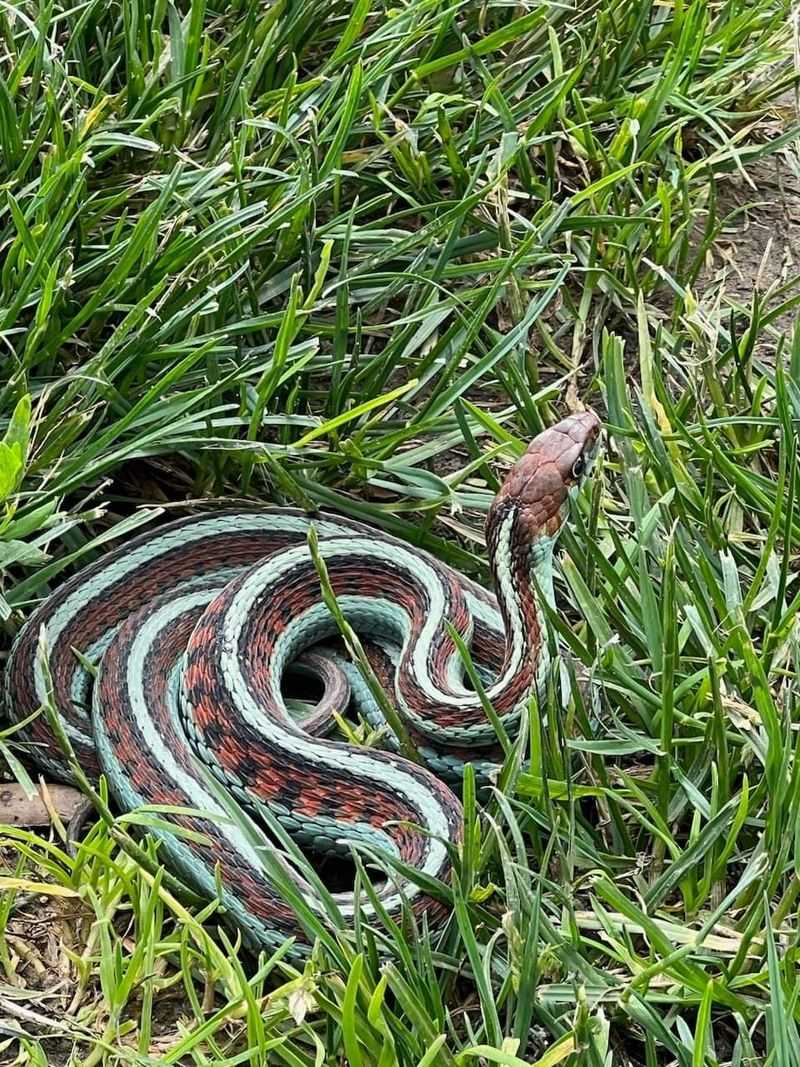
Many herpetologists call the San Francisco garter snake one of the most beautiful snakes in North America. Its red side stripes and turquoise belly look almost painted on by an enthusiastic art student.
This harmless snake is found only in San Mateo County and nearby coastal areas south of San Francisco. It hunts mostly California red-legged frogs, which are threatened themselves, along with tree frogs and small fish.
It was listed as federally endangered in 1967 and is also state endangered and fully protected. Wildlife agencies cannot issue regular take permits for fully protected animals, so leaving it alone is essential.
Most of these snakes live around ponds and marshes surrounded by grassy uplands with plenty of rodent burrows. During dry summer stretches, they may rest underground in those burrows until cooler, wetter weather returns.
If your property sits near suitable wetland habitat, you might glimpse one sliding into thick pond-edge plants. Admire it from a distance, and resist any urge to catch it for a closer photo opportunity.
Garden ponds treated with pesticides can harm the frogs these snakes rely on, so skip chemical treatments. Native rushes and sedges along pond edges offer shelter for frogs and snakes alike throughout the year.
I have to admit, finding one would make my whole year, maybe my whole decade of gardening. Report any sightings to state wildlife officials, since every confirmed location helps biologists protect the remaining populations.
7. Least Bell’s Vireo Singing In Streamside Willows
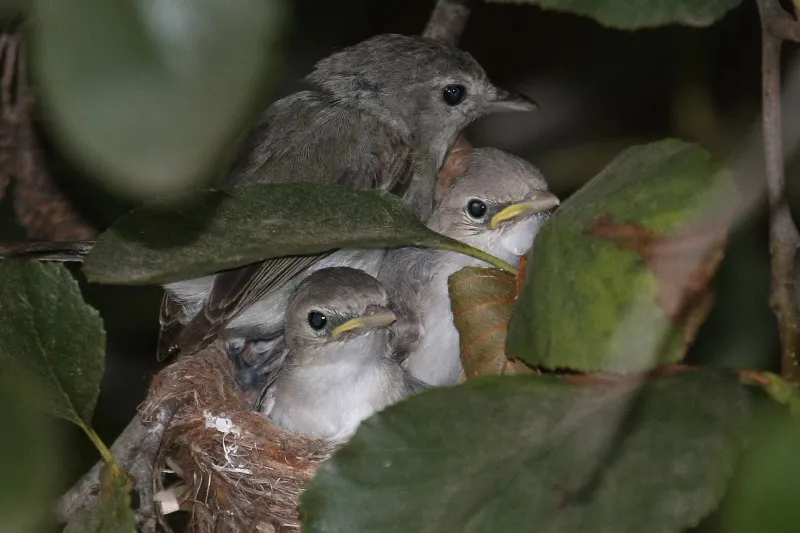
Male Least Bell’s vireos sing over and over through spring, belting out scratchy bubbly phrases from hidden willow branches. You will likely hear one long before you spot this plain little olive-gray bird among the leaves.
These songbirds measure only about four and a half inches long, with faint wing bars and pale eye rings. They migrate north from Mexico each spring and nest in dense willow thickets along rivers and creeks.
By the mid-1980s, their numbers had crashed to only a few hundred pairs across the southern part of the state. Habitat loss and nest parasitism by brown-headed cowbirds pushed them toward the brink before protections arrived.
Today they are federally endangered and state endangered, and their nests are protected from disturbance or removal. Populations have rebounded strongly in places like San Diego County thanks to habitat restoration and cowbird trapping programs.
If your yard touches a creek, avoid trimming dense willows and mule fat during the spring and summer nesting season. Cutting thick brush then can expose hidden nests, and clearing streamside plants often requires special permits anyway.
I believe streamside gardens are some of the most rewarding spaces to plant with native shrubs and trees. Arroyo willow and mule fat create the low, layered cover these picky little birds look for when nesting.
Pull invasive giant reed if it shows up, since it crowds out native willows along many southern waterways. Then enjoy the soundtrack, because few spring mornings beat a vireo chattering away just past your back fence.
8. California Condor Soaring Over Rural Properties
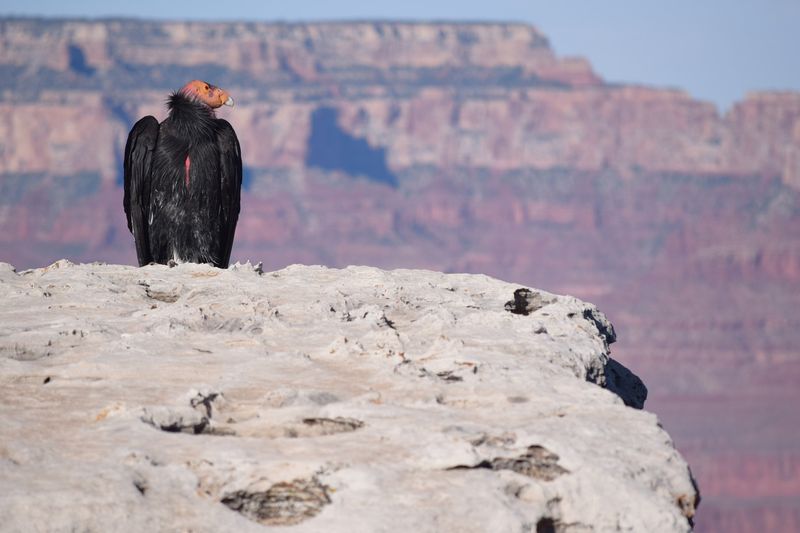
With wings stretching up to nine and a half feet, a soaring condor can make a passing hawk look tiny. These giant scavengers have mostly black feathers and bald heads that flush pinkish orange in adults.
In 1987, only twenty-seven condors remained, and biologists brought every last wild bird into captivity for breeding. Thanks to that bold rescue, more than three hundred condors now fly free across several western states.
Condors hold federal endangered status and state fully protected status, which is about as protected as a bird gets. Harassing one, even by chasing it off a roof, can lead to serious penalties under the law.
Most condors stay in remote mountains, but young birds sometimes land on decks and roofs in rural neighborhoods. A few years ago, a group famously camped on a Tehachapi family’s house, leaving quite a mess behind.
If condors visit, bring pets inside and give the birds space while they rest and look around. They pose no threat to people, and they usually move along once they realize no food is around.
Lead poisoning from spent ammunition in carcasses remains the biggest threat to these birds, according to wildlife scientists. Supporting lead-free ammunition and keeping trash secured outdoors both help keep condors healthier and safer in the wild.
Honestly, I would grab binoculars and a camera, then quietly enjoy one of the rarest sights in America. Just report any banded bird’s tag number to wildlife officials, since each sighting helps track recovery.