8 Pruning Mistakes That Could Damage Your California Trees Even More After A Storm
Storm cleanup brings a powerful urge to set things right. Broken limbs dangle, debris covers the lawn, and the saw seems like the fastest path back to normal.
That instinct is understandable, yet hurried cuts can cause more lasting harm than the wind itself.
Some mistakes invite decay that works quietly for years. Others trigger weak regrowth that sets up the next failure, and a few put people in danger.
The difference between a cut that helps and one that hurts often comes down to inches, timing, and a little patience.
Larger jobs belong with trained professionals, though plenty of smaller fixes stay within reach for a careful gardener.
A little understanding before the first cut can protect a tree for decades.
1. Topping Trees To Fix Damage
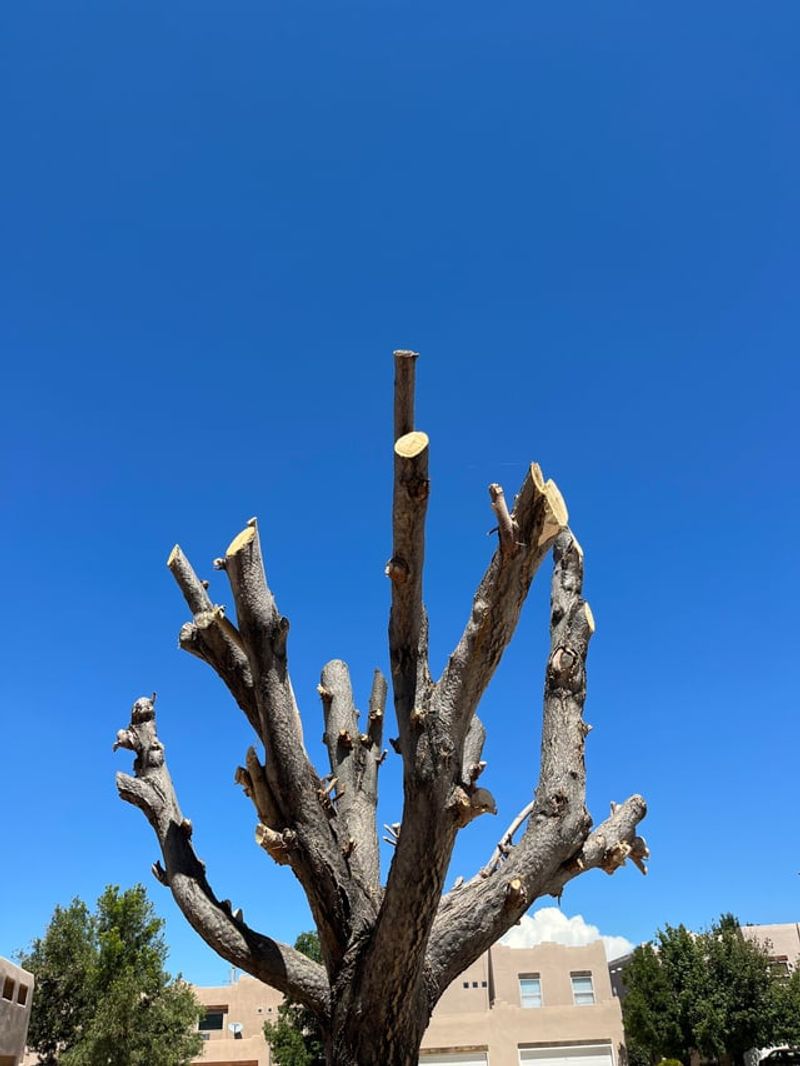
A sycamore chopped flat across the top, like a giant buzz cut, often sprouts dozens of skinny shoots from every stub within a year. Those shoots grow fast, yet they hold on weakly.
Topping means cutting large branches back to stubs with no regard for where a branch naturally ends. Some homeowners try it after a storm, hoping a shorter tree will prove safer, though UC ANR and the International Society of Arboriculture both warn against it.
New shoots grow from buds just beneath the bark, so they attach loosely and snap easily in the next windstorm.
Topping also removes a huge share of leaves at once. Leaves make the food a tree needs to grow roots and resist pests, and large stub wounds seal slowly, giving decay fungi an easy path inside.
A topped tree often grows more hazardous over time rather than less.
A better approach removes only the broken or cracked parts. Cutting back to a healthy side branch or to the trunk preserves the tree’s natural shape.
Arborists call a cut to a smaller branch a reduction cut, and the remaining branch should be large enough, at least one third the diameter of the removed limb, to take over as the new leader.
A tree that has outgrown its spot still won’t benefit from topping. A certified arborist can thin or reduce the crown gradually over several seasons, and sometimes the honest fix involves replacing the tree with a better-fitting species.
2. Leaving Torn Branch Stubs
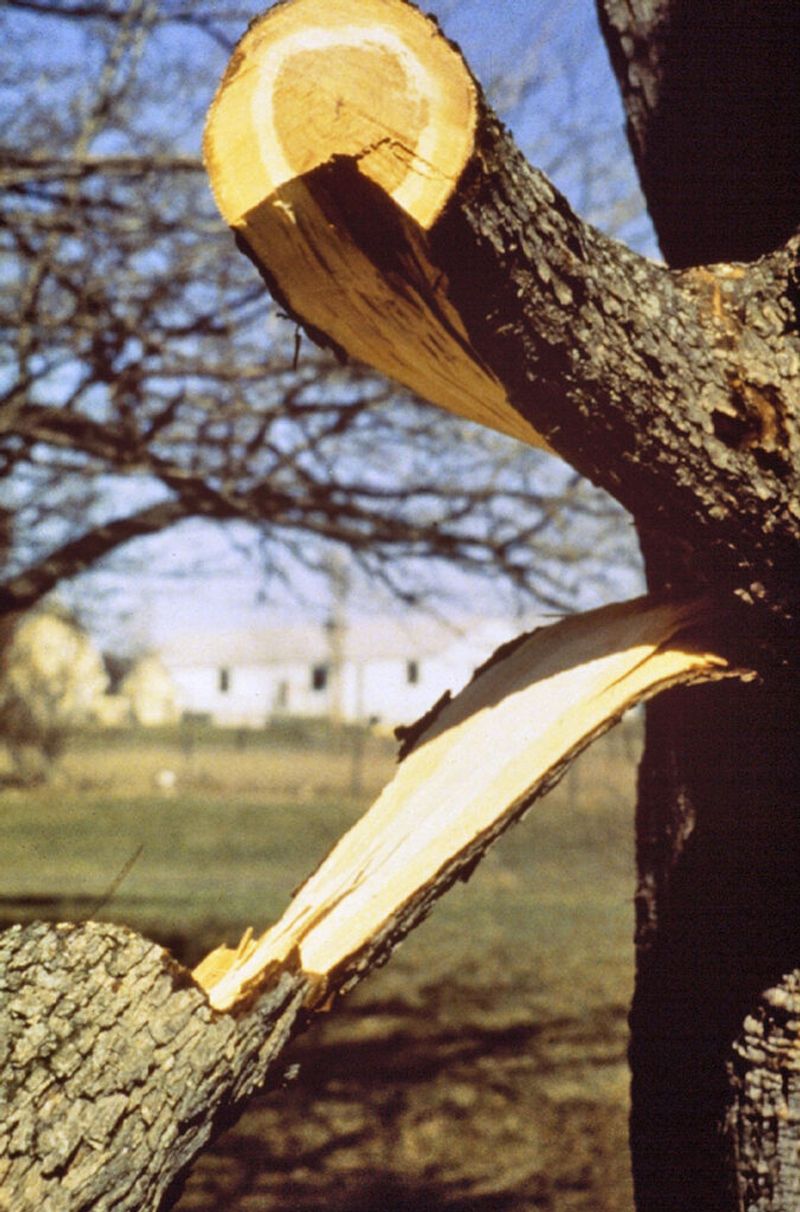
A ragged stub sticking out of a trunk looks harmless enough, since the broken part is gone. Unfortunately, that splintered nub works like a welcome mat for decay.
Trees don’t heal the way skin does. Instead, they seal off damaged wood by growing a ring of new tissue, called woundwood, around the cut, starting at the branch collar, the slightly swollen area where a branch meets the trunk or a larger limb.
A long stub sits too far from the collar for the tree to close over it, so it slowly decays, and fungi can travel down into the trunk.
Torn bark creates another problem. Storm breaks often strip bark down the trunk, leaving a larger wound than necessary, and loose flaps give insects and moisture plenty of hiding spots.
Your California Garden Changes Every Week. Your Plan Should Too.
Gardening in California changes quickly throughout the season. Every Friday you’ll receive a simple weekly plan showing exactly what to plant, prune, fertilize, harvest, and protect so you never miss the right timing.
Carefully trimming ragged bark edges back to firm, attached bark, without enlarging the wound, helps the tree respond.
The fix stays simple. A clean cut just outside the collar and the branch bark ridge, the raised line of bark in the crotch above the branch, angled slightly away from the trunk, gives the best result.
Sharp pruners or a sharp saw leave a smooth surface.
Heavier limbs call for the three-cut method. A partial undercut about a foot out comes first, then a top cut slightly farther out lets the limb drop cleanly.
The final cut removes the leftover stub at the collar, leaving a neat surface the tree can seal.
3. Making Flush Cuts Into The Trunk
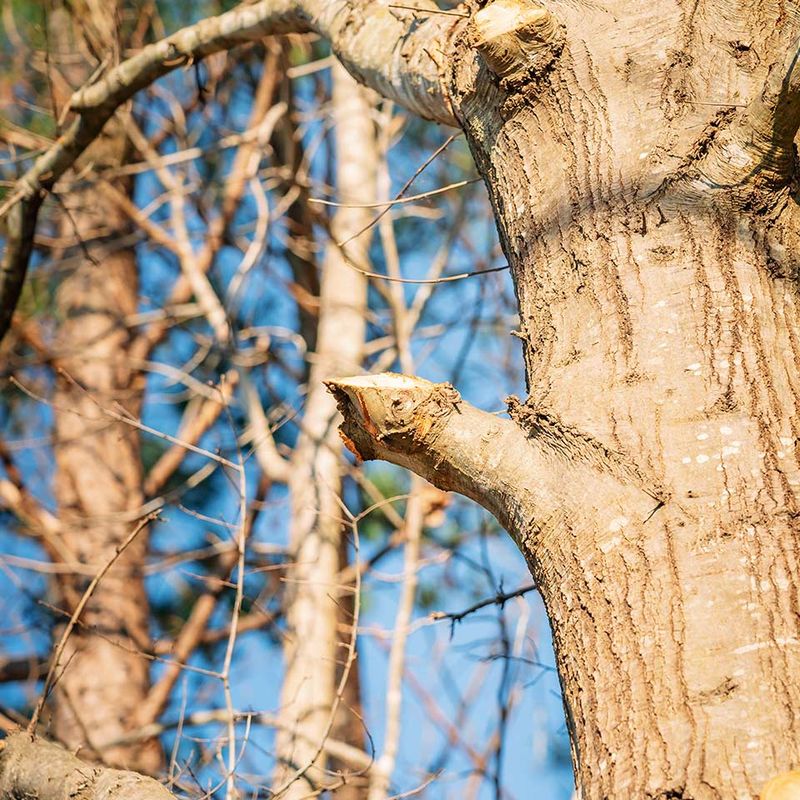
Cleaner looks better, so slicing right against the trunk can seem like the tidy choice. That move ranks among the most harmful cuts a tree can receive.
A flush cut removes the branch collar completely. The collar holds specialized tissue that helps the tree build a chemical barrier against decay, and once it’s shaved off, that natural defense disappears.
The wound also grows far larger than necessary, exposing trunk wood directly.
Older advice once claimed flush cuts healed faster. Research by tree scientist Alex Shigo, whose work shaped modern ISA standards, showed the opposite.
Flush cuts often lead to decay columns that run deep into the trunk and weaken the tree for years.
Placement matters more than tidiness. The branch bark ridge sits on top and the swollen collar underneath, and the cut belongs just outside both rather than into either.
On some trees the collar is easy to see, while on others it’s subtle, so a moment spent studying the bark before cutting pays off.
The saw angle runs roughly from the outer edge of the ridge down to just beyond the collar. The goal lands between a long stub and a cut into the trunk, a narrow sweet spot rather than a shave.
A good cut leaves a neat ring of collar tissue behind, ready to begin sealing. Over the following seasons, a doughnut-shaped roll of woundwood often appears, a sign the tree is responding well.
4. Removing Too Much Canopy At Once
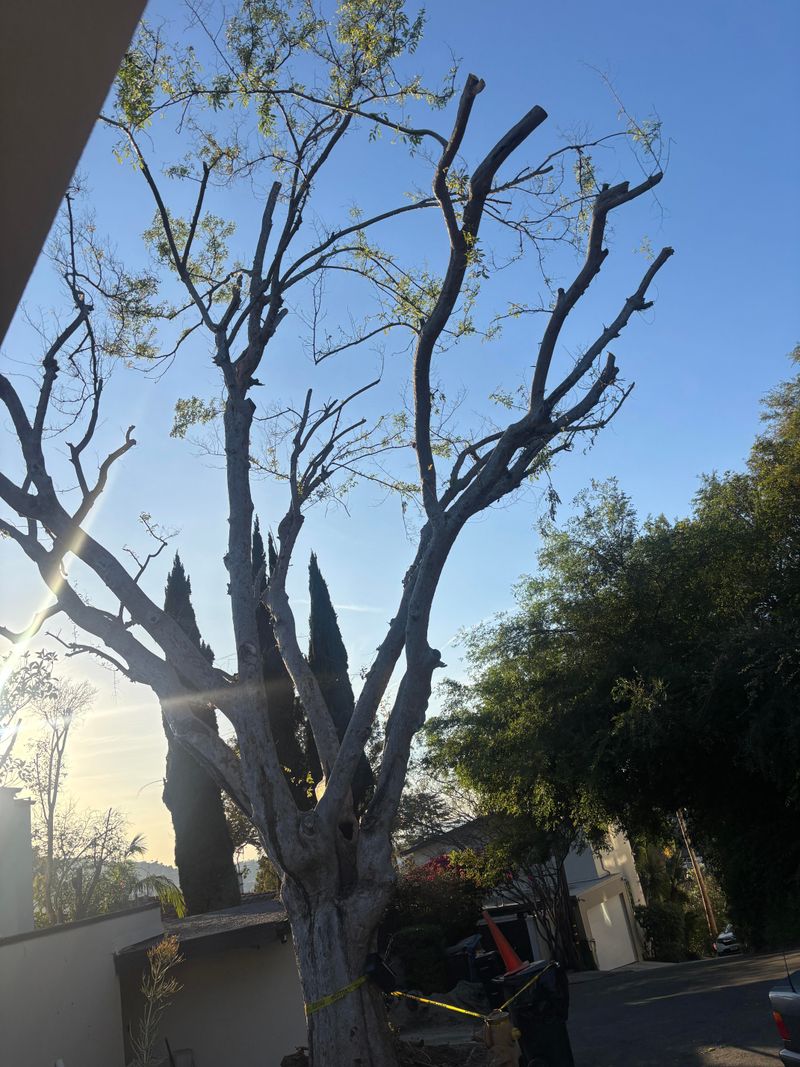
Once the saw gets going, the temptation to keep cutting grows. One broken branch becomes ten, and suddenly half the tree lies on the lawn.
Heavy pruning in a single session badly stresses a tree. Leaves serve as the tree’s kitchen, turning sunlight into stored energy, and excessive removal leaves the tree struggling to feed its roots, defend against pests, and seal its wounds.
A storm has already added stress, so piling on further loss can push the tree into steep decline.
Sudden exposure brings other trouble too. Bark shaded for years can sunburn under California’s strong summer sun, and the tree may respond by pushing out plenty of weak water sprouts, creating more work later.
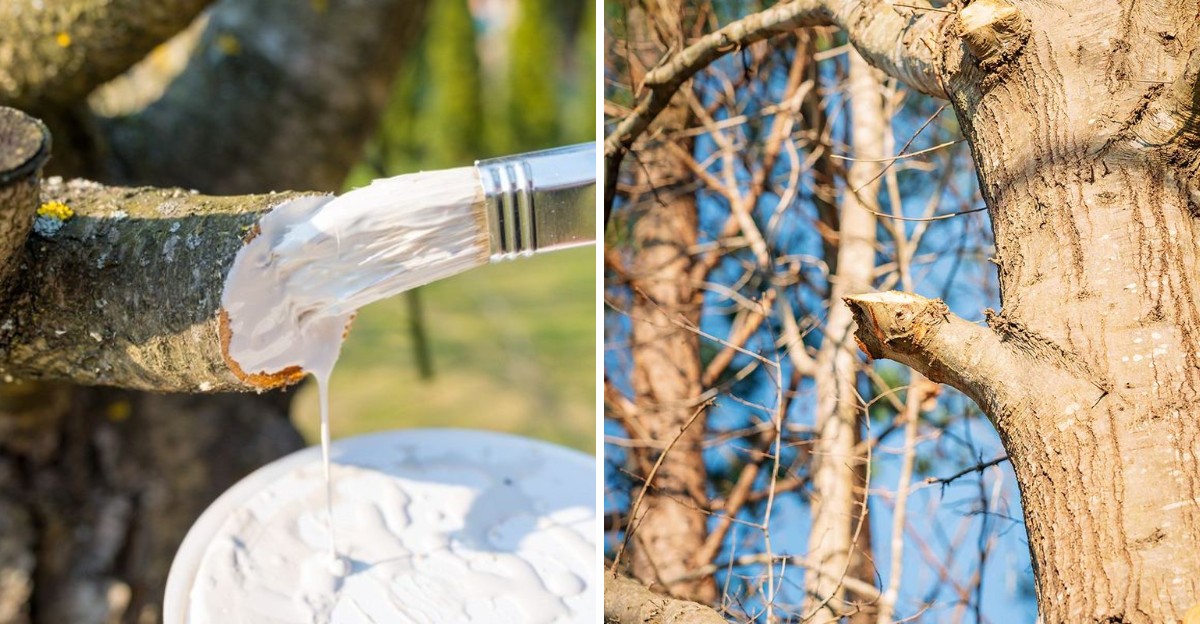
A whitewash of diluted white latex paint can protect newly exposed bark on young trees.
ISA guidance calls for removing only what’s needed, generally no more than about 25 percent of the living canopy in a single year for mature trees.
Many arborists recommend even less for older or stressed trees. After a storm, the focus belongs on broken, cracked, or hanging limbs that pose a real risk.
Shaping and thinning can wait. Letting the tree recover through a growing season, then reassessing, gives a clearer picture of what it truly needs.
Corrective work can spread across two or three years. Patience pays off here, since a tree with plenty of leaves bounces back far faster than one stripped bare, especially heading into California’s dry months.
5. Pruning Wet Plants With Dirty Tools
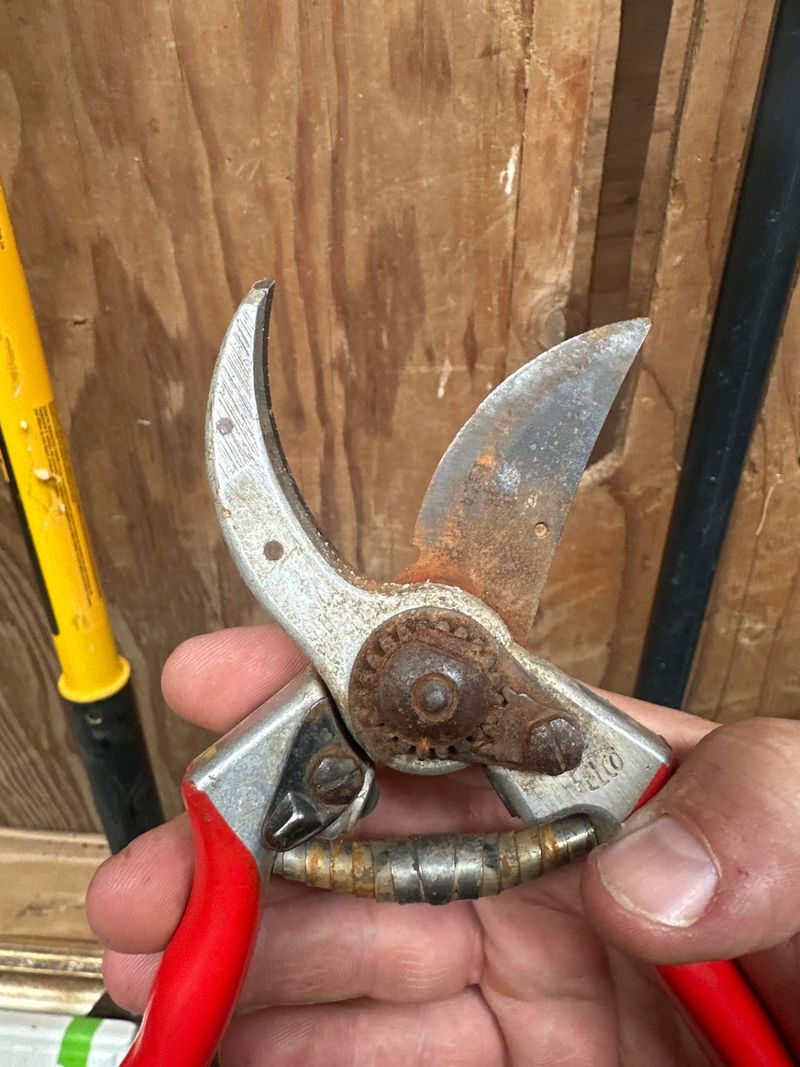
Rain dripping off every leaf, pruners still crusty from last fall, and a few quick snips can add up to a perfect delivery service for plant disease.
Many bacteria and fungi spread easily in wet conditions. Water splashes spores from one plant to another, and moist cuts give them a comfortable place to settle.
Fire blight, which strikes pears, apples, and their relatives, offers a classic example, since dirty blades can carry it from an infected branch straight into a healthy one.
Timing helps a great deal. Dry weather makes the better choice whenever possible, especially for fruit trees and roses.
A truly dangerous broken branch can come off promptly, while routine pruning waits for drier days.
Cleaning tools takes only a minute. Sap and dirt come off first, then blades get dipped or wiped with household disinfectant.
UC ANR notes that diluted bleach also works, though it can corrode metal, so a rinse and a light coat of oil afterward protect the tools.
Diseased wood calls for disinfecting between every cut, and a small spray bottle of disinfectant in a pocket makes that habit easy.
Sharp blades matter as much as clean ones. A dull tool crushes and tears tissue, leaving ragged wounds that seal slowly, so sharpening pruners and saws before storm season keeps them ready.
Mid-October, before the first big storms arrive, makes an ideal time for that tune-up.
6. Painting Wound Dressing On Cuts
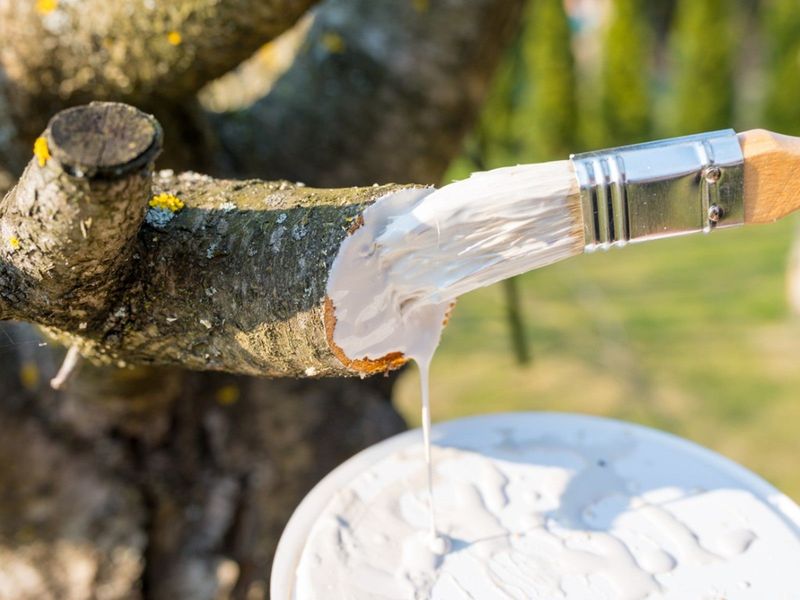
Cans of black pruning sealant still line many garden center shelves, and generations of gardeners dabbed the stuff on every cut. Modern tree science, though, suggests leaving the brush in the garage.
UC ANR and ISA don’t recommend wound dressings or pruning paints for most cuts. Studies show these products fail to stop decay, and in some cases they make things worse by trapping moisture beneath the coating.
That damp, dark pocket can actually help fungi grow.
Trees have their own defense system. After a proper cut, the tree walls off the wound with chemical barriers and slowly grows woundwood over the surface, and sealants can interfere with that natural process rather than helping it.
The better approach relies on a clean cut in the right spot, just outside the branch collar, made with sharp, clean tools. After that, the wound simply stays open to the air, and the job is done.
Rare exceptions exist. In some regions, arborists treat fresh oak cuts during certain seasons to discourage beetles that spread oak wilt, a disease found mainly in other states.
California gardeners rarely face that situation. For an unusual or valuable tree, a certified arborist offers better guidance than a paint can.
Skipping the sealant also saves money and a messy cleanup, a rare case where doing less turns out to be doing it right. Fresh cuts may look raw for a season, yet that appearance is perfectly normal.
7. Attempting Big Limbs Near Power Lines
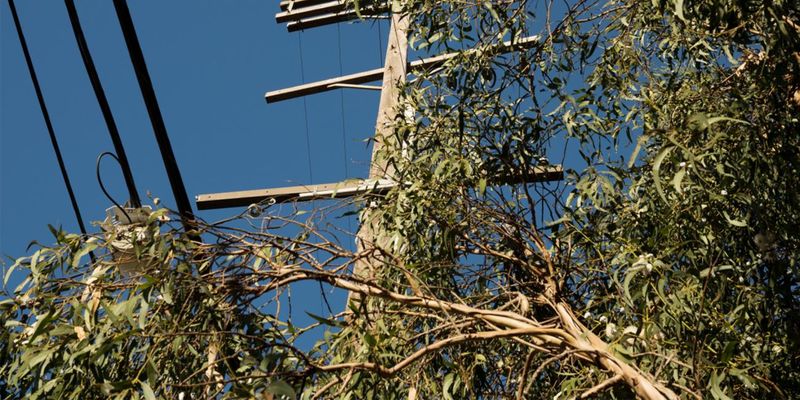
A heavy eucalyptus limb leaning against the wires above a driveway can look like a quick job for a pole saw. That attempt is best left untried entirely.
Electricity can jump, or arc, from a power line to a nearby tool, branch, or ladder without direct contact. Wet wood conducts electricity, especially after rain, and a limb touching a line may be energized, along with the ground around it.
People suffer serious injuries in exactly this situation every storm season.
Everyone, pets included, belongs well away. Many utilities advise staying at least 10 feet from any line and much farther from downed wires, and every line deserves treatment as live, even when power is out on the street.
Downed lines call for 911 as well as the utility.
A prompt call to the utility company reports the problem. In California, utilities such as PG&E, Southern California Edison, and SDG&E handle trees touching their lines and often clear them at no charge.
Only line-clearance trained arborists should work near energized lines.
Big limbs away from lines still demand caution. Chainsaws, ladders, and falling wood make a risky mix, and heavy limbs can swing, roll, or kick back without warning.
A certified arborist found through the ISA website, with proof of insurance, brings ropes, rigging, and training to lower a limb safely. Two feet planted firmly on the ground are worth far more than a quick fix.
8. Pruning Before Checking For Hanging Limbs
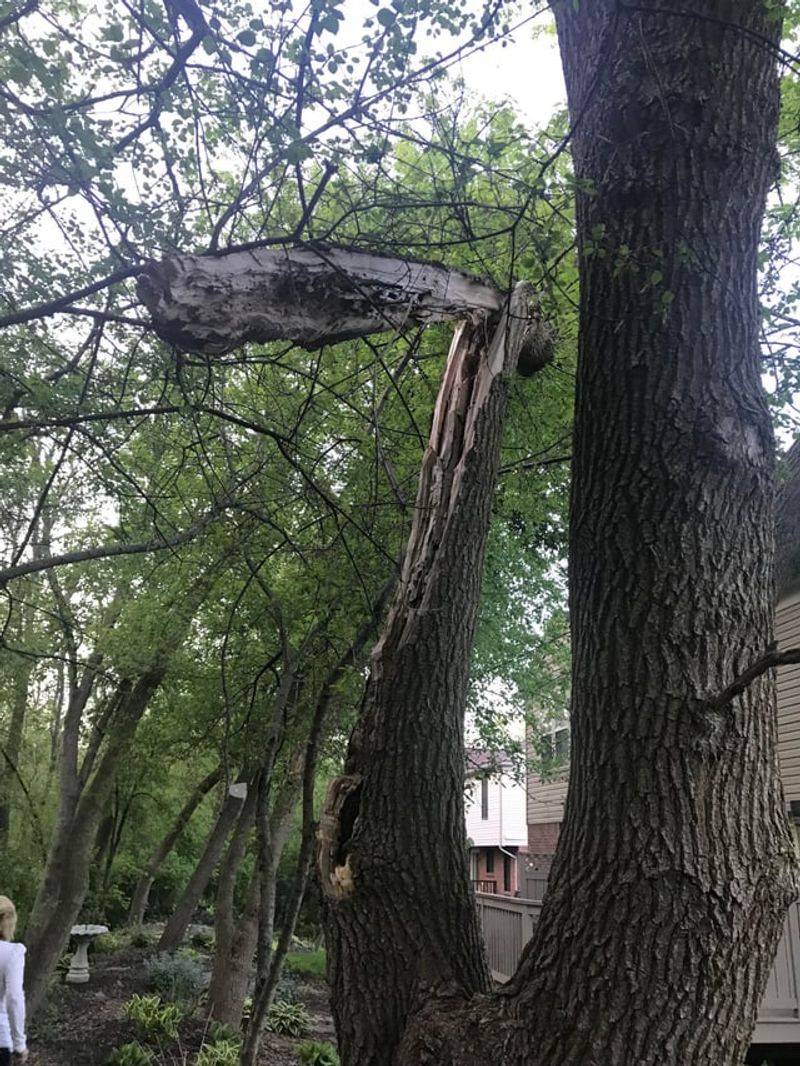
Tree workers have a nickname for broken branches stuck up in a canopy: widowmakers. The grim name exists for a reason, since a loose limb can drop without warning, especially once a saw starts shaking the tree.
Every cut deserves a look upward first. A slow walk all the way around the tree reveals limbs caught in other branches, cracks in large forks, splits running down the trunk, and bark peeling away to show fresh wood in odd spots.
The ground tells a story too. Heaving soil near the base or roots lifting from the ground can mean the whole tree is unstable, and a tree newly leaning after a storm raises a big red flag.
Fungus or mushrooms near the trunk can signal hidden decay as well.
Any of those warning signs calls for keeping people and pets out of the area under the tree, roped off if possible, followed by a call to a certified arborist.
Many offer a tree risk assessment, which helps determine whether to prune, brace, or remove.
When the area is clear and the job small, safety gear comes first: a hard hat, safety glasses, gloves, and sturdy boots.
Hand tools from the ground make the safest choice whenever possible, and chainsaw use on a ladder is best avoided entirely.
A few minutes of observation can prevent a trip to the emergency room, since in storm cleanup, the smartest cut follows a careful look above.