9 Arizona Natives to Plant Instead of Lantana and Other Thirsty Landscape Standbys
That cheerful mounding shrub in half the Phoenix medians hides toxic berries that can sicken curious dogs and grazing livestock. It also guzzles water during Arizona summers, often needing deep weekly soakings just to keep its leaves looking decent.
Worse, those thick tangles stay shady and damp underneath, which is exactly the hideout bark scorpions love most. I have to admit that discovery made me look at my own front beds with fresh suspicion.
Plants that evolved here play by different rules, sipping rain and shrugging off heat that flattens imported favorites. You might notice hummingbirds and roadrunners showing up once the yard starts feeling like actual Sonoran desert again.
October is prime planting season across much of Arizona, since cooler soil lets new roots settle before summer returns. So which tough, thirsty-proof locals deserve a sunny spot in your yard before the next scorching summer arrives?
1. Desert Marigold
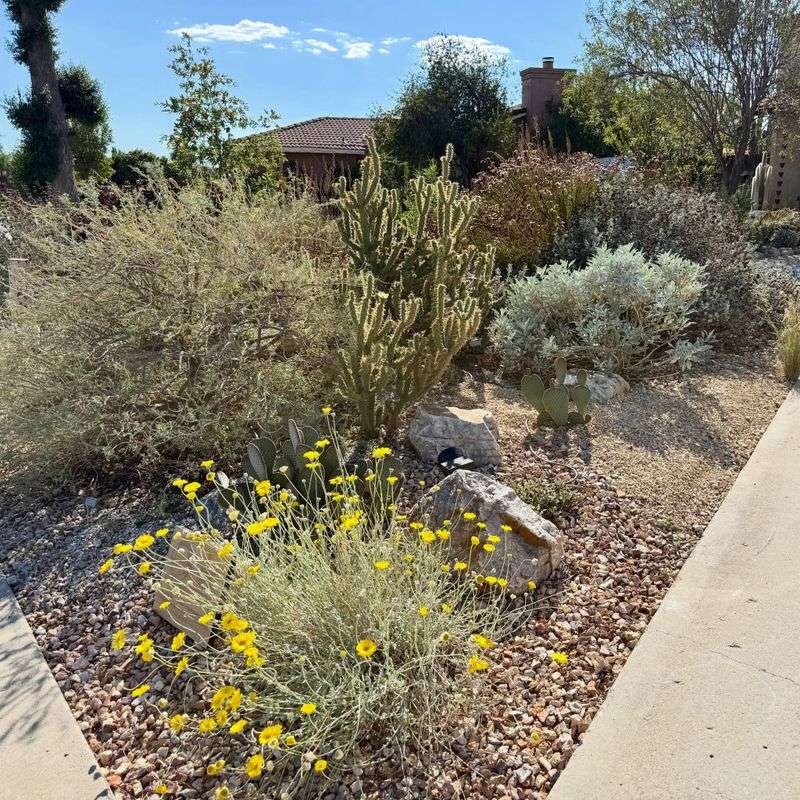
Few flowers keep blooming through a blistering desert June, yet desert marigold shrugs and keeps pumping out lemon-yellow daisies. Its silvery leaves wear a coat of fine white hairs that bounce sunlight away like a tiny parasol.
Expect a tidy mound about one to two feet tall and wide, with blooms appearing from spring well into fall. Personally, I love how it reseeds on its own, so new plants pop up in gravel without any effort.
Poor, sandy soil suits it perfectly, and rich compost or frequent watering can actually shorten its already brief lifespan. Treat it as a short-lived perennial that hands the job over to its seedlings every couple of years.
Native bees and other helpful insects visit the flowers often, adding pollinator traffic that benefits the vegetables growing nearby. Because the plant stays open and airy, it offers scorpions far less of the cool shade they seek.
October is a fine moment to scatter seed or tuck in nursery plants while temperatures finally ease off a bit. Give new transplants a weekly drink through winter, then taper back once spring growth looks steady and strong.
2. Fairy Duster
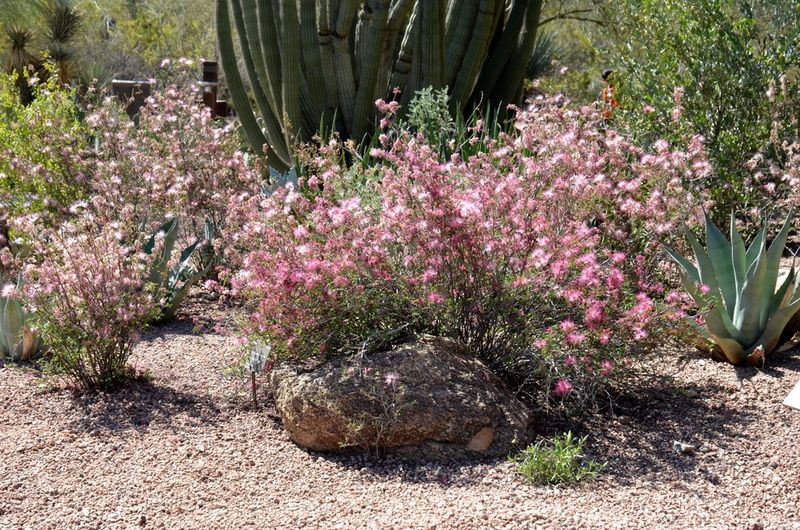
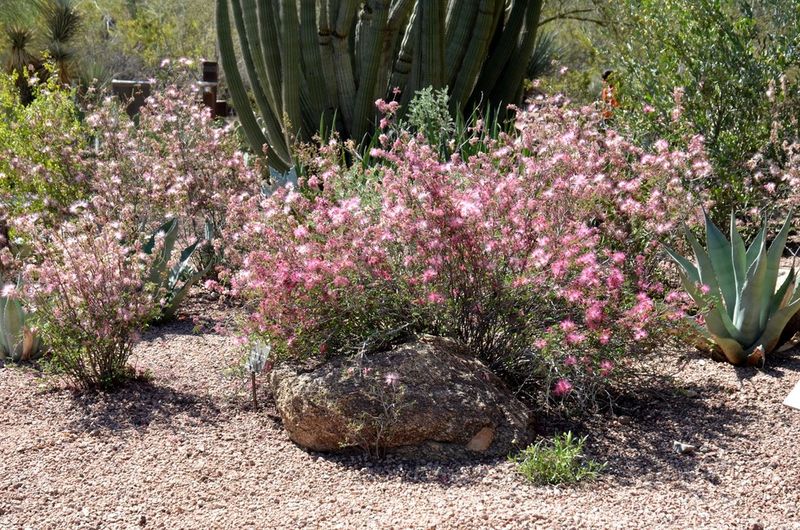
Those fluffy pink puffballs look like something a cartoon fairy dropped, and each one is really a burst of stamens. Fairy duster stays low, usually under two feet tall, while spreading a few feet across sunny gravel beds.
What surprises me most is how its feathery leaflets fold up at night, a clever move that helps conserve moisture. Blooms usually show up from late winter through spring, and a few stragglers can appear after summer rains.
Hummingbirds treat the flowers like a refueling station, and butterflies join the party once the weather turns warm. Quail and other small wildlife often pick through the seeds, so the shrub keeps working long after flowering ends.
You need to resist the urge to pamper it, because soggy roots cause far more trouble than any heat wave. Rocky, well-drained soil and full sun produce the heaviest flowering, while deep shade leaves it sparse and leggy.
Fall planting gives the roots months of mild weather to stretch out before the next blazing summer arrives. Water every week or two during establishment, then let seasonal rainfall handle most of the work in later years.
3. Brittlebush

Crush a brittlebush leaf and you get a faint resinous scent, a clue to the sticky sap early peoples used. Its silvery foliage glows against red rock, and the round shrub usually grows two to five feet tall.
Bright yellow daisies rise above the leaves on long stems, mostly from late winter into spring across low deserts. I like how the plant drops leaves during brutal drought, then quickly regrows them once moisture finally returns.
Full sun and fast-draining soil keep it happiest, and heavy watering often leads to floppy, short-lived plants. An occasional deep soak during long dry spells helps it look fuller without turning it into a water hog.
Bees and butterflies crowd the flowers, while finches and small rodents pick through the seed heads later on. Its loose, open shape gives scorpions little cover, which makes it a smart pick near patios and walkways.
Brittlebush can be touchy in hard frost, so plant it in warm spots if you garden at higher elevations. October planting in the low desert gives it a cool head start before its big late-winter flower show.
4. Desert Willow
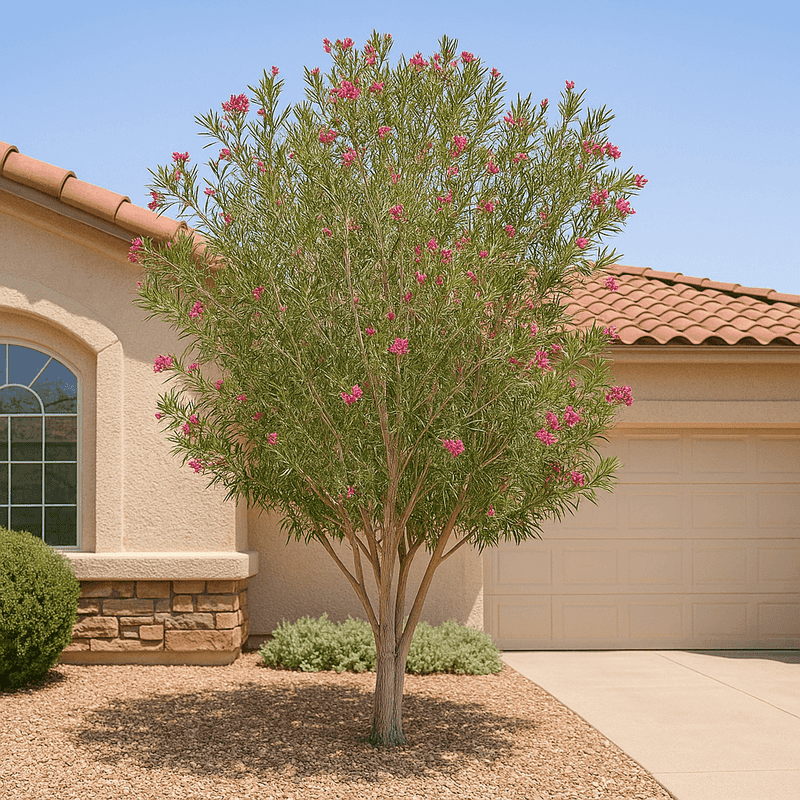
Despite the graceful name, desert willow is no willow at all, and it actually belongs in the catalpa family. Its long, slender leaves sway in breezes and give the tree a soft, weeping look that feels surprisingly lush.
Ruffled trumpet flowers in pink, lavender, or white appear from late spring into summer, carrying a sweet fragrance. Hummingbirds zip between blossoms all day, and I can’t imagine a better tree for watching them up close.
Expect a multi-trunk small tree, commonly fifteen to twenty-five feet tall, that fits nicely beside a patio. Winter brings bare branches and dangling seed pods, letting precious sunshine reach your windows during the cooler months.
Too much water speeds growth and leaves weak, rangy limbs, so let the soil dry between deep soakings. Well-drained soil and full sun keep it compact, and established trees handle long dry stretches with real ease.
Fall is a great planting window, though deciduous trees may drop leaves early as nights get noticeably cooler. Named selections offer deeper colors or fewer seed pods, so browse local nurseries for a variety you love.
5. Parry’s Agave
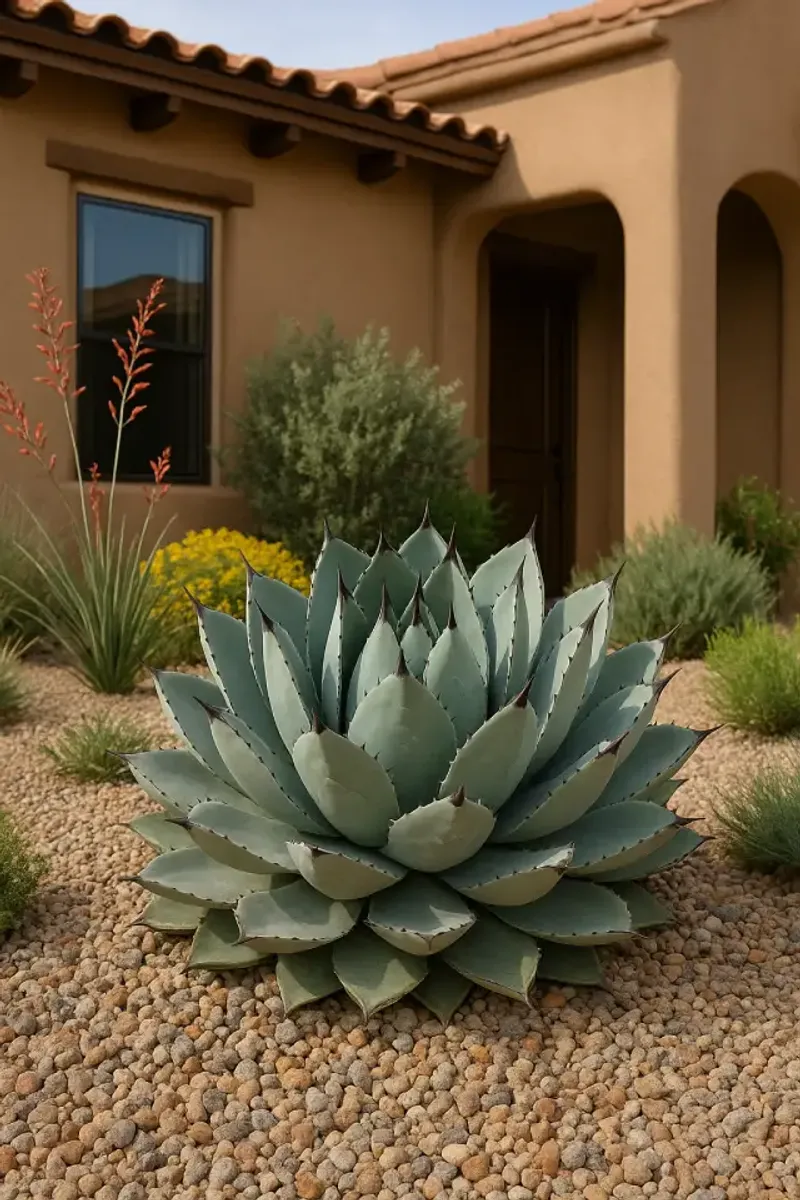
Each rosette of Parry’s agave looks like a blue-gray artichoke carved from stone, and it holds that shape year-round. Its thick leaves store water inside, letting the plant coast through weeks of summer heat without your help.
Most rosettes stay around two feet tall and a bit wider, making them perfect for small yards and containers. Parry’s agave handles real cold, too, which is why you see it thriving in Prescott as well as Tucson.
Its moment of glory comes after many years, when a towering stalk shoots up topped with bright yellow flowers. Bats and hummingbirds visit those blooms, and then the mother rosette slowly fades while leaving healthy pups behind.
You need to give it room away from walkways, since each stiff leaf ends in a sharp terminal spine. Skip overwatering near the base, because constant dampness can invite rot and attract scorpions looking for moisture.
October planting works beautifully because the soil stays warm while air temperatures finally become gentler for roots. Gravelly, well-drained ground and a monthly winter drink are about all this sculptural native asks of you.
6. Chuparosa
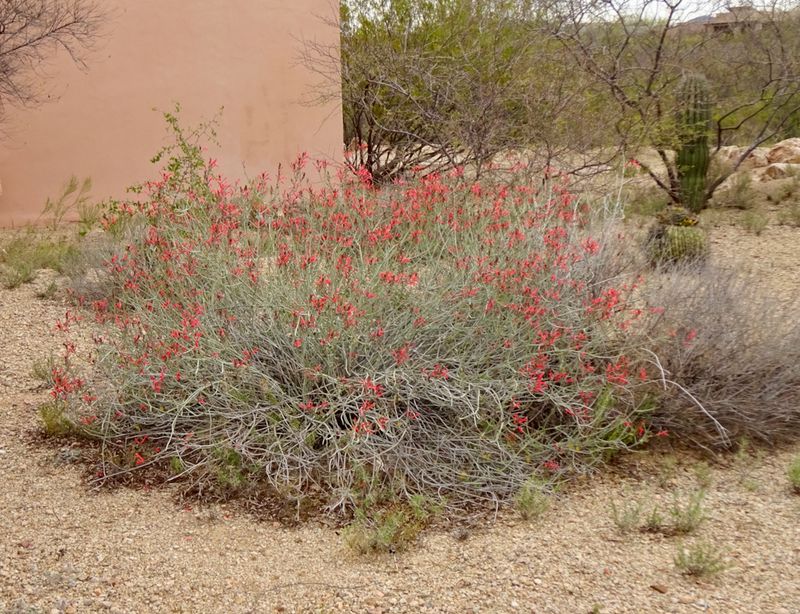
The Spanish name chuparosa refers to hummingbirds, and the tiny birds live up to it by mobbing this shrub. Its tubular red flowers often open in late winter and spring, just when migrating hummers need extra fuel.
Botanically known as Justicia californica, it forms a rounded mound of gray-green stems, usually three to five feet tall. Personally, I enjoy how the stems stay green and keep photosynthesizing after the small leaves drop during drought.
It earns a spot here because it delivers nonstop hummingbird action without the toxic berries some ornamental shrubs carry. Verdins sometimes sip nectar from the flowers too, giving you plenty of feathered entertainment outside the kitchen window.
Full sun and reflected heat suit it nicely, though a light frost can nip the tips in colder spots. Trim damaged stems in spring, and the shrub usually bounces back quickly with fresh growth and more flowers.
Plant it this month so the roots settle in well before its main bloom season starts in late winter. Water every week or two at first, then cut back to an occasional deep soak once it looks established.
7. Engelmann’s Prickly Pear
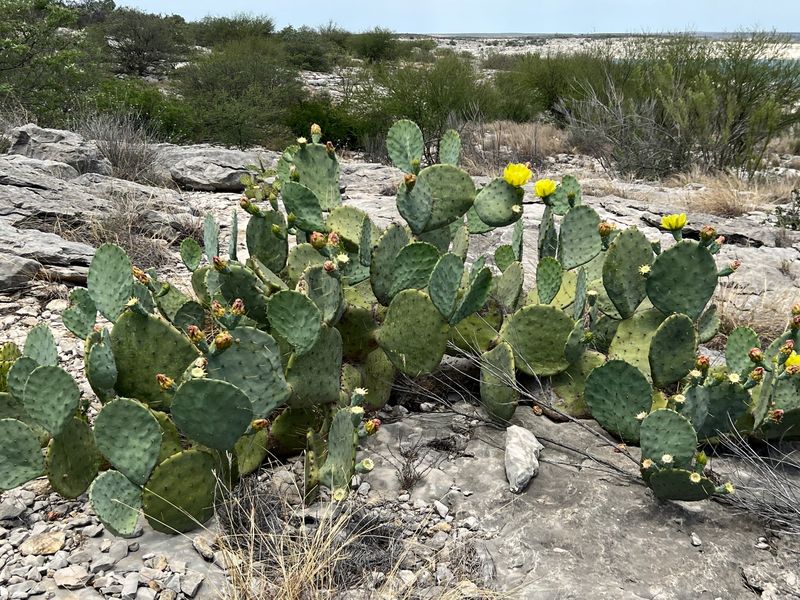
Every flat pad on an Engelmann’s prickly pear is actually a swollen stem, packed with water for lean times. Spring brings big yellow cups that open across the pads, and native bees tumble inside to roll in pollen.
By late summer, purple-red fruits called tunas ripen and feed javelinas along with a parade of hungry birds. Coyotes and desert tortoises nibble them too, so one plant can support a surprising amount of neighborhood wildlife.
You need gloves and tongs when handling pads, because tiny barbed glochids lodge in skin and resist easy removal. I believe that annoyance is worth it, given how little water and attention the plant needs once rooted.
Rocky or sandy soil with sharp drainage keeps roots healthy, while soggy clay invites rot and floppy, weak pads. Plant it away from paths and play areas, giving it a sunny corner where it can sprawl out safely.
October is ideal for rooting pads, so let a cut pad dry for about a week before setting it upright. Bury the base a couple inches deep and offer only a light occasional drink until new spring growth appears.
8. Blue Palo Verde
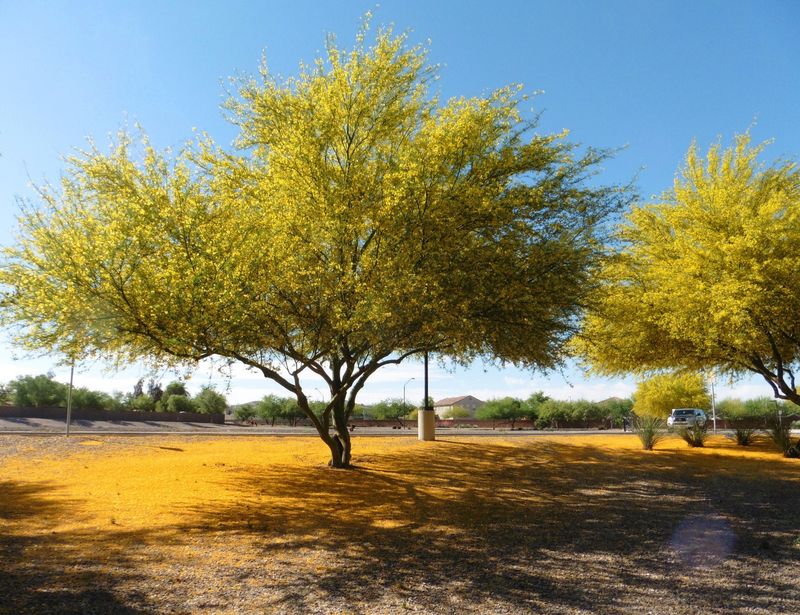
Blue palo verde has green bark that photosynthesizes, so the trunk keeps making food even after the leaves drop. Palo verde is also the official state tree of Arizona, and this species makes a stunning ambassador for it.
Each spring the canopy erupts in yellow blossoms so thick that the ground below turns gold for a week or two. Native bees swarm the flowers, and birds like verdins often tuck their nests into the protective thorny branches.
Mature trees typically reach about twenty to thirty feet tall and wide, casting light, filtered shade over patios. I love how that dappled shade cools a seating area while still letting understory natives soak up plenty of sunlight.
Young trees need regular deep watering for a few years, but established ones get by on very little extra water. Shallow, frequent watering encourages weak roots and wind damage, so soak deeply and less often for best results.
Fall is the best time to plant, because roots grow strongly in warm soil while the air above cools. Choose a spot away from pools, since the spring flower drop and thorny twigs can create extra cleanup chores.
9. Ocotillo
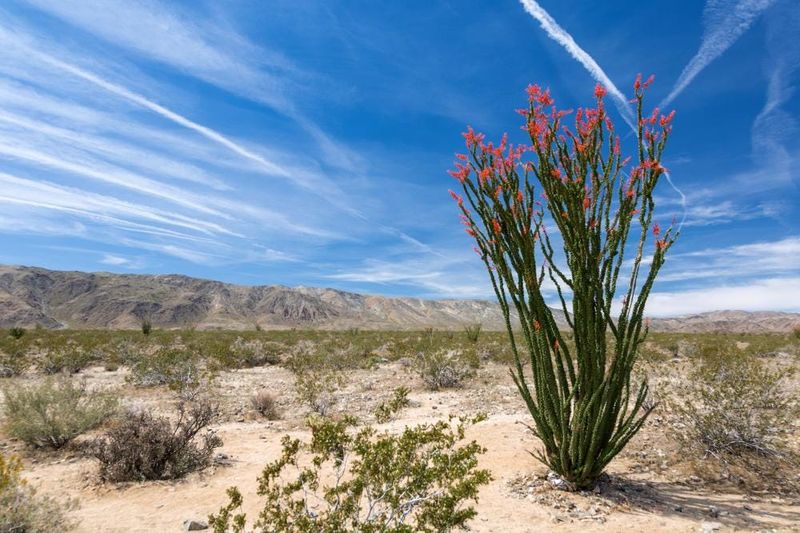
Ocotillo can sprout a full set of leaves within days after a good rain, then shed them when soil dries. That trick repeats several times a year, so the tall wands flip between bare gray and bright leafy green.
Spring brings flaming red flower clusters at the tips of each cane, and hummingbirds arrive almost immediately afterward. Migrating hummers and orioles rely on that nectar, which makes ocotillo a must for anyone who loves birdwatching.
Expect canes that commonly reach ten to twenty feet, creating a living sculpture with a surprisingly small footprint. Some homeowners plant cut canes in rows as a living fence, and many of those canes root and leaf out.
Transplanted ocotillos can take months to settle, so occasional misting of the canes helps during the first summer. Avoid soggy soil around the base, because rot is a far bigger risk than heat for this drought champion.
Buy only nursery-grown or properly tagged plants, since Arizona law protects ocotillo and requires permits for wild harvesting. October planting is ideal, giving roots a mild season to establish before scorching temperatures return next year.