9 Desert Plants That Make Arizona Rock Yards Look Finished Instead of Bare
A yard full of gravel can look like a parking lot waiting for cars. The right desert plants turn that same rock into a landscape that feels planned, cool, and alive.
Even better, the best picks sip very little water, shrug off 110-degree afternoons, and bring in hummingbirds, bees, and birds. Here are nine tough Arizona plants that fill the empty spaces and give your yard a real job to do.
1. Agave
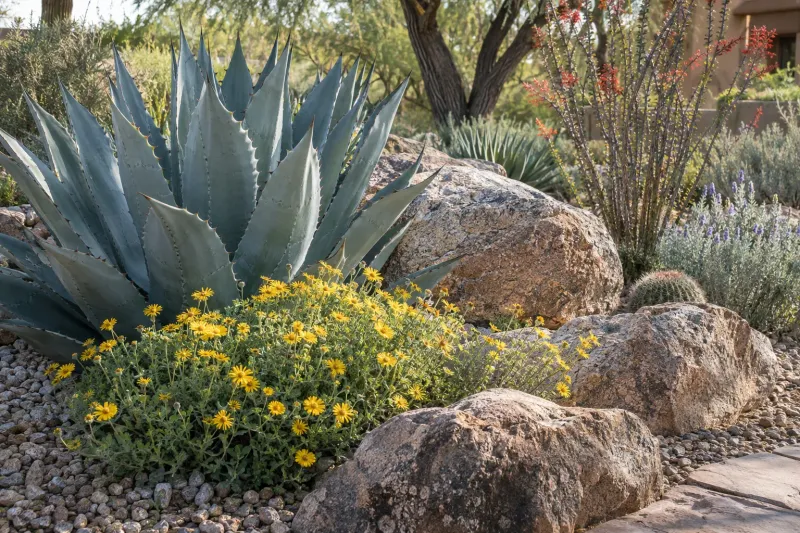
Picture a sculpture that never needs dusting. That is what a well-placed agave does for a gravel yard, giving bare ground a bold anchor point that pulls the whole design together.
Agaves store water in their thick leaves, so once roots settle in, they can go weeks without a drink in Phoenix or Tucson. Deep, occasional watering keeps them looking plump and healthy.
They handle full sun, caliche-heavy soil, and the reflected heat bouncing off rock and block walls without complaint.
Size matters when you shop. Smaller species like Agave parryi work along walkways, while big Agave americana makes a statement in open corners.
Keep sharp-tipped kinds away from paths where kids and pets run.
Plant in fall or late winter, and set the crown slightly high so water drains away from the center. Gritty, fast-draining soil is a must, since soggy roots are the fastest way to lose one.
One thing to watch is the agave snout weevil, which can trouble some species. Choosing varied types and avoiding overwatering may help reduce that risk.
Pair agaves with boulders and a few low bloomers, and your rock yard instantly looks designed rather than abandoned.
2. Red Yucca
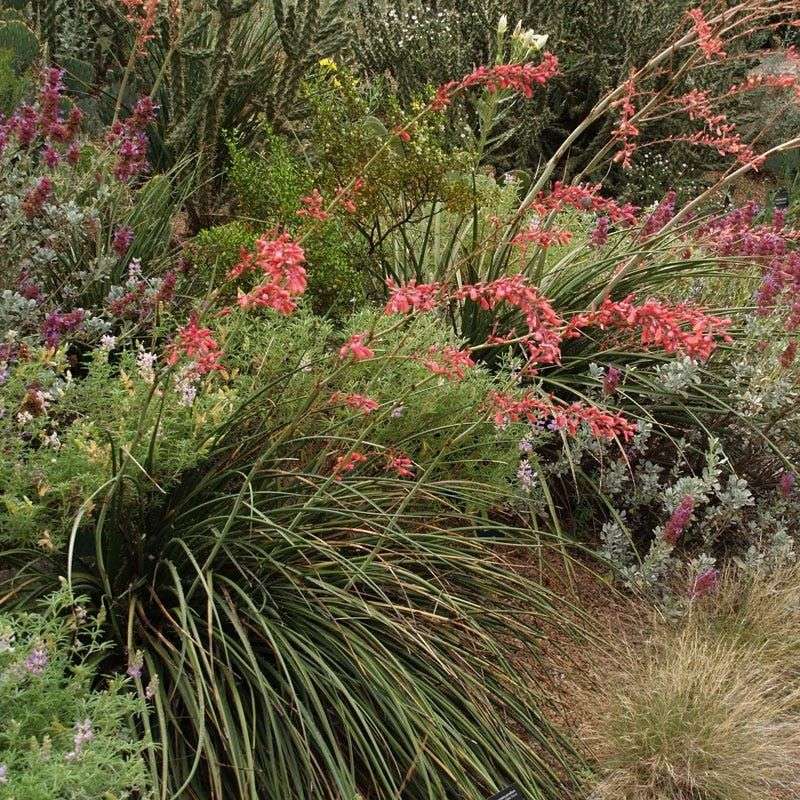
Hummingbirds seem to have a map with every red yucca in town marked on it. Tall arching stalks of coral-pink tubular flowers rise from spring into fall, and the tiny birds zip in for nectar again and again.
Despite the name, Hesperaloe parviflora is not a true yucca. It forms a grassy clump of narrow leaves that softens the hard edges of rock beds without needing a mower or a sprinkler schedule.
Here is why landscapers love it. Red yucca handles reflected heat from driveways, pool decks, and west-facing walls better than most plants.
It grows in alkaline soil, asks for water roughly once a month in dry spells after the first year, and has no sharp spines to snag anyone.
Care is close to nothing. Snip off spent flower stalks once they turn brown, and that is about it for the year.
Plant it in groups of three or five along a path or near a window where you can watch the hummingbird traffic. Fall planting gives roots a cool season to establish.
Within a couple of years, those clumps fill out and make gravel stretches feel lush and lived in.
3. Desert Museum Palo Verde
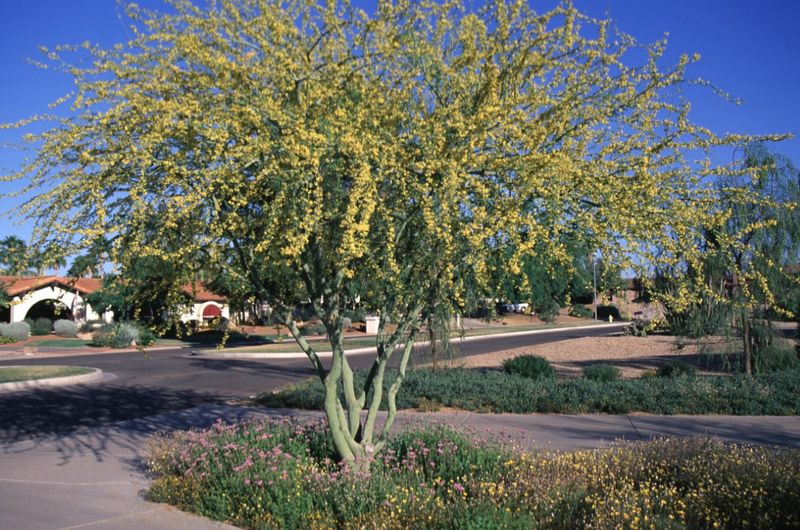
Arizona picked the palo verde as its state tree for good reason. Its bright green bark can make food through photosynthesis even after leaves drop in drought, so the tree keeps going when others stall.
Your Arizona Garden Changes Every Week. Your Plan Should Too.
Gardening in Arizona changes quickly throughout the season. Every Friday you’ll receive a simple weekly plan showing exactly what to plant, prune, fertilize, harvest, and protect so you never miss the right timing.
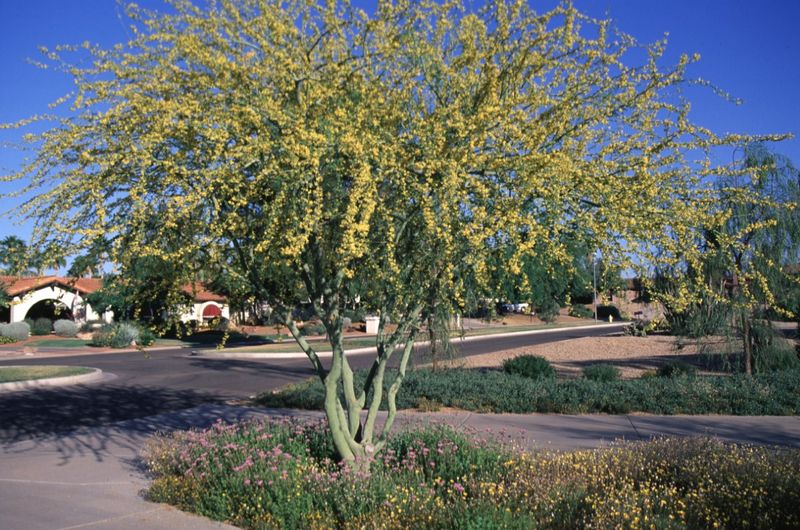
The Desert Museum hybrid is a favorite for home yards. It grows fast, has fewer thorns than wild types, and bursts into a cloud of yellow flowers each spring.
Those blooms pull in native bees and butterflies, and the fallen petals turn gravel into a golden carpet for a few weeks.
A bare rock yard often feels hot because nothing stands between you and the sun. Filtered shade from a palo verde can lower the temperature of a patio or seating area, making summer evenings more pleasant.
Give young trees regular deep watering during the first couple of years. After that, many manage on very little extra irrigation, handling caliche and poor soil with ease.
Prune lightly to shape the canopy, and plant in fall so roots grow before the heat returns. Keep an eye out for borer damage on stressed trees.
One palo verde can shift a rocky yard from empty to welcoming in just a few seasons.
4. Desert Willow
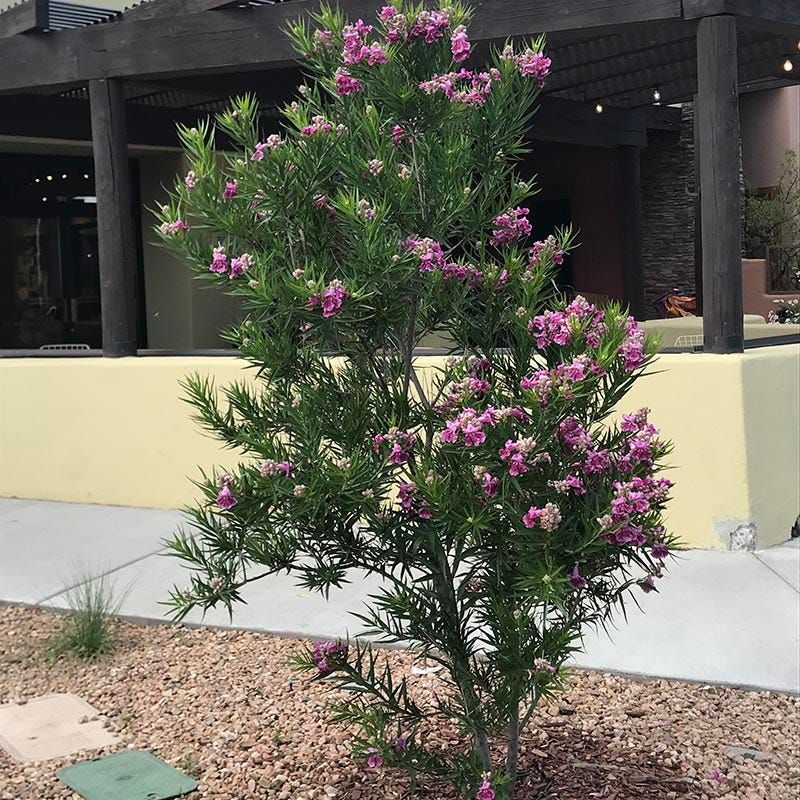
Ever wished your patio had an orchid tree that could survive July? Desert willow comes close, with trumpet-shaped flowers in pink, lavender, or burgundy that look far too delicate for the desert.
Those blooms show up from late spring into fall, right when most plants are hunkered down. Hummingbirds, bees, and butterflies treat the tree like a busy diner.
The light, airy canopy casts dappled shade over seating areas and protects smaller plants from the harshest afternoon rays.
Chilopsis linearis is native to Southwest washes, so heat and dry air are home turf. Once established, occasional deep soaks are enough, and a little extra summer water usually means more flowers.
Another perk is that it drops its leaves in winter. That lets low winter sun warm your patio and windows when you actually want the heat, then fills back in for summer shade.
Plant in fall or early spring in well-drained soil and full sun. Water steadily the first year, then back off.
Late winter pruning can shape it into a single-trunk tree or keep it bushy. For a rock yard that needs height and color without a thirsty lawn tree, this one is hard to beat.
5. Globe Mallow
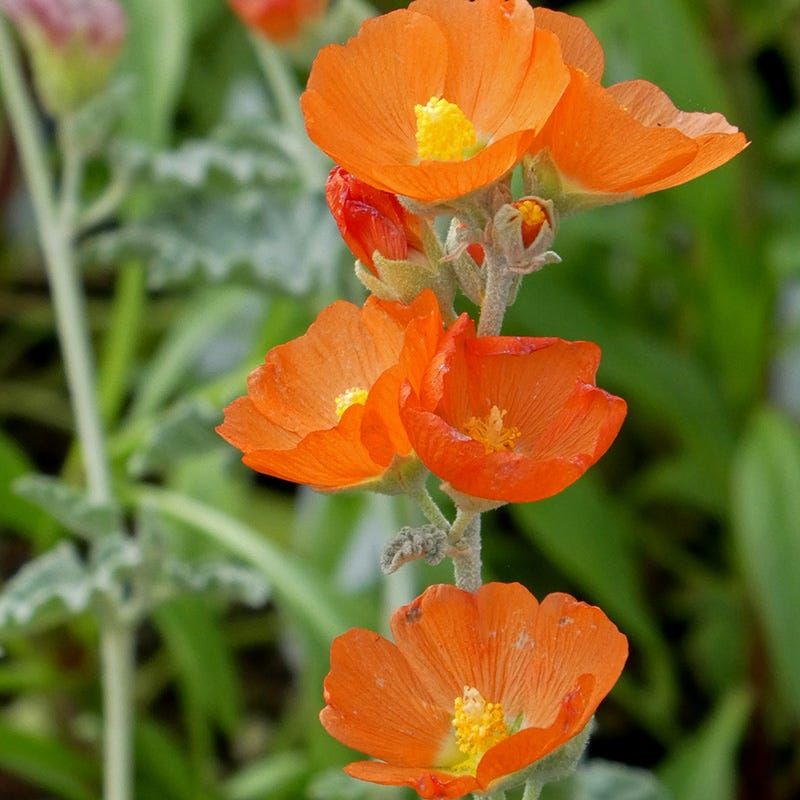
Bright orange cups of color popping up between boulders after winter rain are a classic Sonoran Desert sight. Globe mallow brings that wild, natural look straight into a home landscape.
Sphaeralcea ambigua is a native perennial that forms a soft gray-green mound covered in small blooms. Orange is the most common shade, but you can also find pink, red, white, and lavender types.
Flowering is heaviest in spring and often returns in smaller waves through the year.
Bees adore it, especially native ground-nesting kinds. The plant also hosts caterpillars of several butterfly species, so it supports more than just one stage of local wildlife.
A few nibbled leaves usually mean your yard is doing its job as habitat.
Globe mallow prefers poor, rocky soil, which makes it ideal for gravel areas where richer plants struggle. Many established plants get by on rainfall, needing a drink only during long dry stretches.
Cut it back in fall if it turns leggy, and it bounces back tidy and full. Plant in early fall or early spring.
Tuck a few near rocks or along a dry streambed design, and they reseed gently to fill gaps over time.
6. Brittlebush
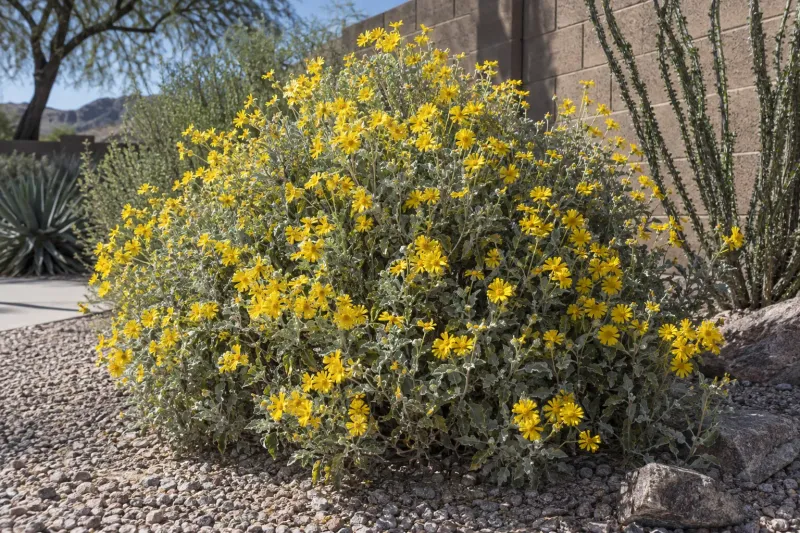
Drive past desert hillsides around Phoenix in late winter and you will see them glowing yellow. That color comes from brittlebush, a tough native shrub that knows exactly how to handle Arizona.
Its secret is in the leaves. As summer heat builds, the foliage turns more silvery white, reflecting sunlight so the plant stays cooler.
Brittlebush can handle temperatures around 120 degrees, which is more than most of us can say.
From roughly November through May, the rounded shrubs are covered in daisy-like flowers on tall stems. Bees and butterflies gather nectar, and small birds such as finches later pick at the seed heads.
That gives your yard activity across several months instead of a single short show.
Watering is simple. After the first year, a deep soak about once a month in summer is usually plenty.
Overwatering and poor drainage are bigger threats than drought.
Once blooming ends in late spring, many gardeners trim plants back hard to keep them from looking shaggy through summer. They regrow quickly.
Plant in fall in sandy or rocky soil, and use several together on slopes or open gravel areas for a big burst of seasonal color.
7. Blackfoot Daisy
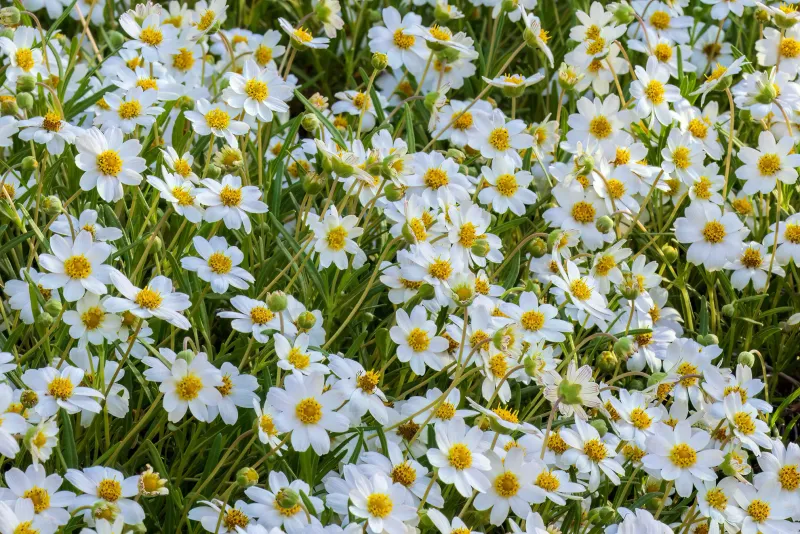
Small but mighty is the best way to describe blackfoot daisy. It stays under a foot tall, yet it blooms for months in spots that would fry tender flowers.
White petals with sunny yellow centers cover the low mound, and the flowers carry a light honey scent you may notice on warm mornings. Butterflies and moths visit for nectar, and birds later forage for the seeds.
It also makes a great late-season food source when fewer flowers are open.
The best places for it are the toughest ones. Think edges of driveways, cracks between flagstones, and beds next to hot block walls.
Melampodium leucanthum actually prefers lean, unamended soil, so skip the compost and fertilizer.
The biggest mistake people make is loving it with too much water. Let the soil dry fully between waterings, and it will reward you.
Soggy roots cause more trouble than any heat wave.
Plant between October and March in the low desert. A light shearing after a big bloom flush or a trim in late winter keeps it compact.
Use a row of them to soften rock borders, and the yard instantly looks finished at ground level.
8. Velvet Mesquite
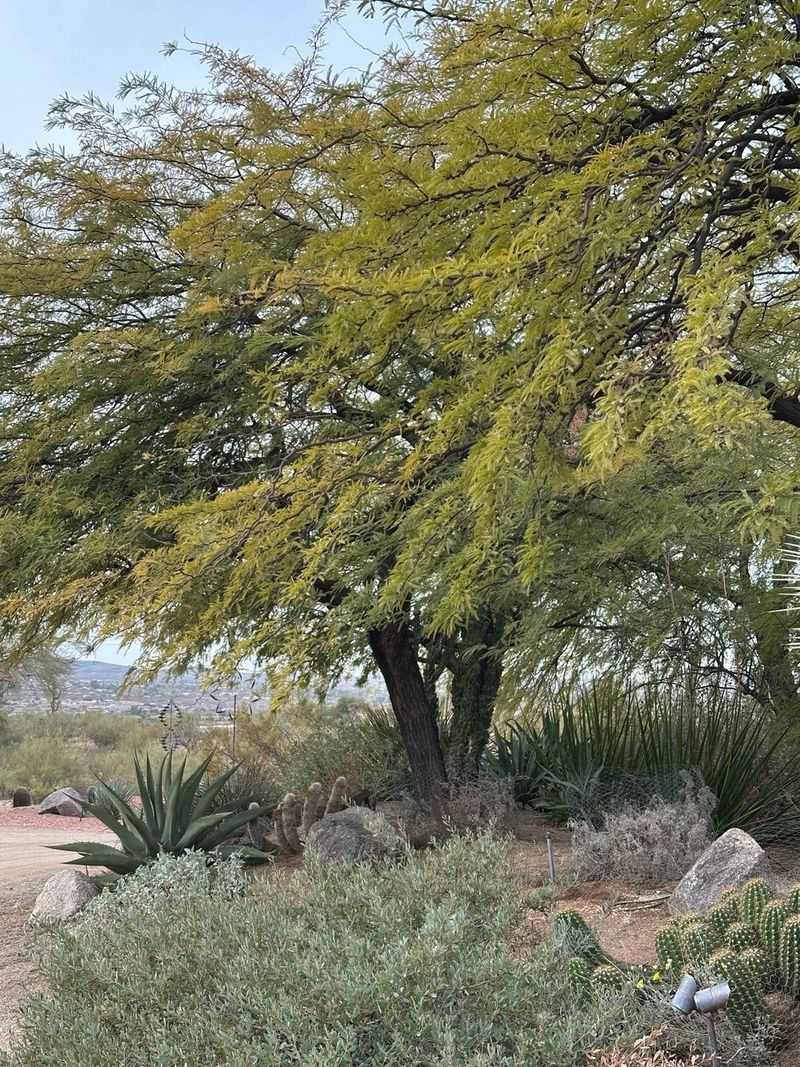
Long before air conditioning, desert travelers looked for mesquite trees when they needed shade. Velvet mesquite still plays that role, spreading a wide, feathery canopy over hot rocky ground.
Prosopis velutina is native to the Sonoran Desert, and its deep roots help it reach moisture other plants cannot. Once mature, many trees survive mostly on rainfall, though a monthly deep summer soak at the canopy edge keeps them looking full.
Wildlife value is huge. Spring catkins attract native bees, butterflies, and other pollinators, while birds like verdins and doves nest in the branches.
Shade under a mesquite also acts as a nursery for young cactus and smaller plants, letting you build a layered look beneath it.
That shade does real work in summer. A courtyard or west side of the house can feel noticeably cooler with a mesquite overhead, which may even ease the load on your cooling system.
Water young trees often while they establish, aiming water away from the trunk. Prune in late summer rather than spring, since spring cuts can trigger wild growth.
Plant during monsoon or fall, and give it room, because this tree grows into a true centerpiece.
9. Saguaro
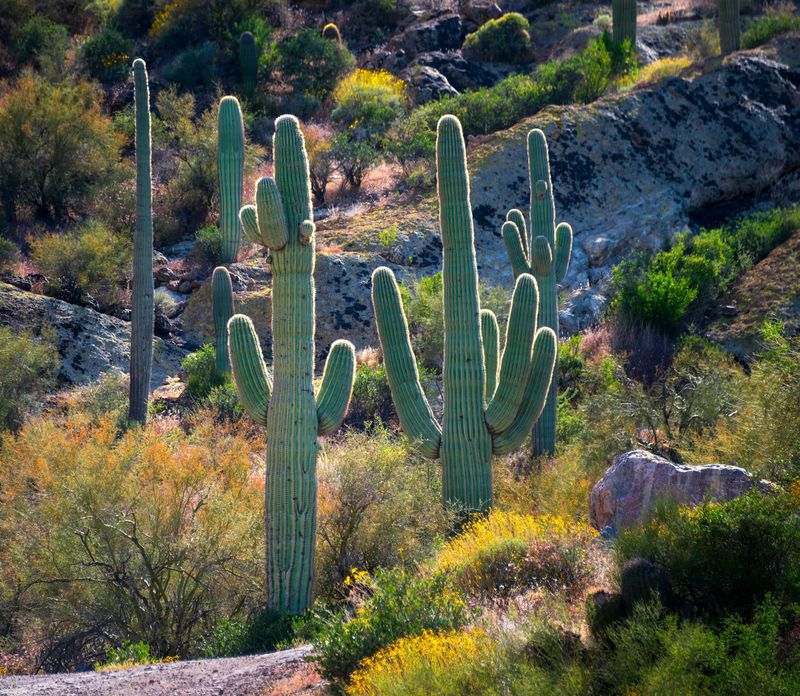
Nothing says Arizona quite like a saguaro. A single one rising from a gravel yard tells everyone driving by that this landscape belongs in the Sonoran Desert.
Fun fact: a saguaro may take decades to grow its first arm. In the wild, young ones often sprout under mesquite or palo verde trees, which shield them from harsh sun and frost.
You can copy that idea at home by planting a small saguaro near one of the trees on this list.
The payoff goes beyond looks. Gila woodpeckers and flickers carve nest holes in mature saguaros, and those cavities later become homes for other birds.
Spring flowers feed bats, bees, and doves, while ripe fruit draws even more visitors.
Care is mostly about restraint. Saguaros need extremely fast-draining soil and deep but rare watering, letting the ground dry completely in between.
Too much water is far riskier than too little.
Young plants are more sensitive to cold, so frost cloth on chilly winter nights is a smart move. Buy only from licensed nurseries that provide proper tags, as Arizona protects this cactus by law.
With patience, a saguaro becomes a living landmark your yard grows around.