Why Arborvitae Split Open In Ohio Yards (And How To Prevent It)
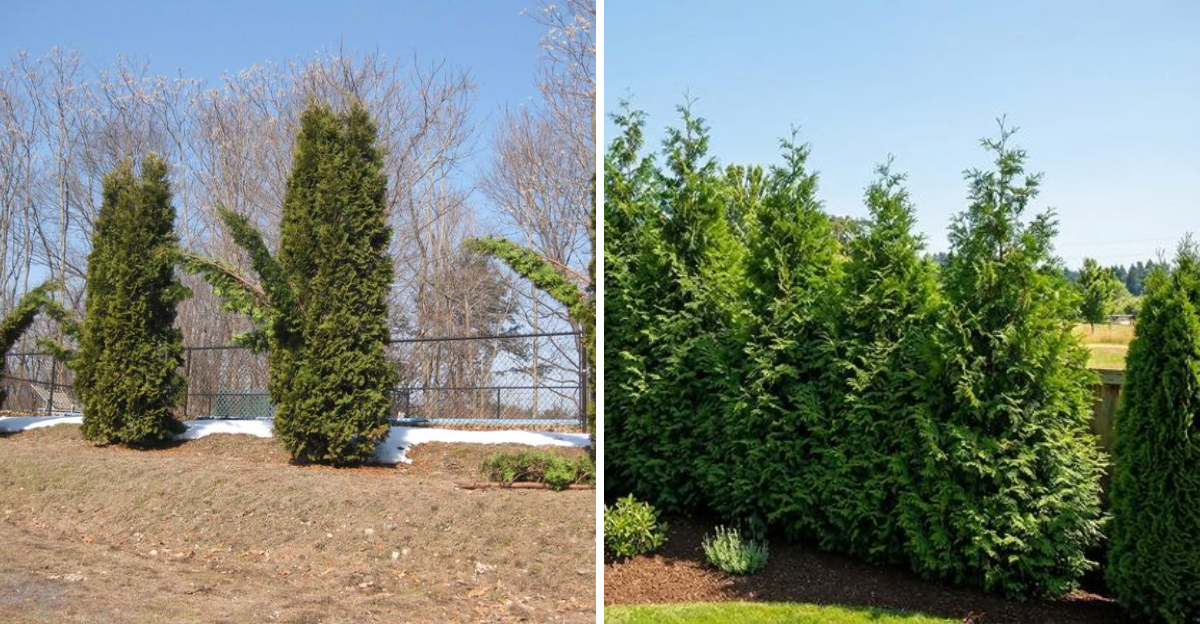
You plant arborvitae for privacy, year-round color, and that clean, full look along the edge of the yard. Then winter hits, and out of nowhere, one of them is split open like a zipper.
Frustrating? Absolutely. Random? Not usually.
One day they look thick, upright, and perfectly healthy. The next, they are leaning, sagging, or peeled apart in the middle like something snapped overnight.
If you have ever walked outside after a storm and thought, What on earth happened here? you are not alone.
In Ohio, arborvitae can take a real beating when winter gets serious. And while it is easy to blame one bad storm and leave it at that, there is usually more going on.
These trees tend to split when a few different factors pile up at the same time, and some of them start long before the snow and ice arrive.
Figure out what is putting that kind of pressure on them, and it becomes much easier to head off the damage before your arborvitae end up spread open again.
1. Heavy Snow Is The Biggest Culprit
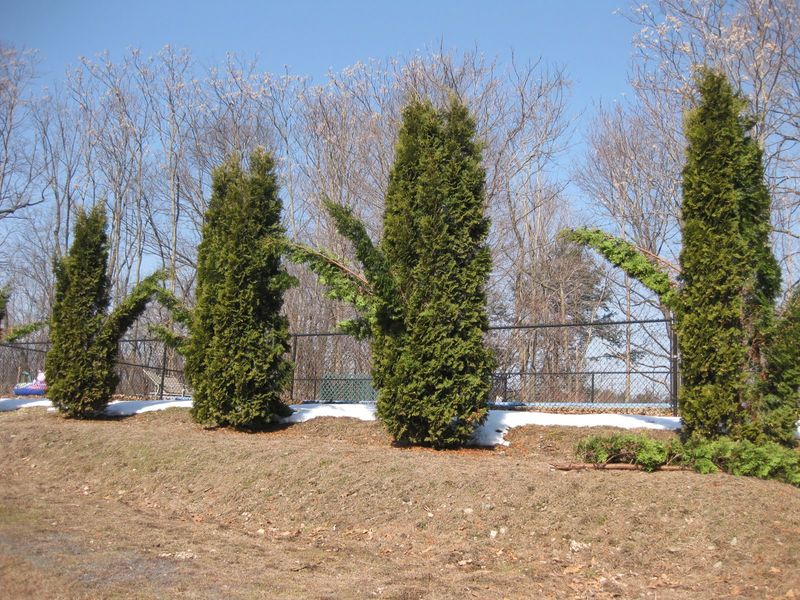
Picture waking up after a major Ohio snowstorm to find your once-upright arborvitae looking like a bent umbrella. That is the reality for many homeowners every winter, and heavy snow is almost always to blame.
Arborvitae have a naturally upright, columnar shape with many branches growing closely together and pointing upward. That structure looks beautiful in summer but acts almost like a funnel for collecting snow in winter.
As snow piles up on the branches, the weight increases fast. A single cubic foot of wet snow can weigh over 20 pounds, and arborvitae branches are not designed to hold that kind of load for long.
The branches start to bow outward under the pressure, pulling apart from the central trunk and causing the tree to split down the middle.
The good news is that you can reduce this risk with a simple habit. After a heavy snowfall, use a broom or your hands to gently brush snow off the branches, always working from the bottom of the tree upward.
Never shake the branches forcefully in freezing temperatures because brittle wood can snap. Removing snow early, before it has a chance to compact and get heavier, is your best defense against splitting caused by snow load.
2. Ice Can Weigh Branches Down Fast
Snow is one thing, but ice is a completely different challenge. An ice storm can coat every branch of an arborvitae in a thick, glassy shell within just a few hours.
Unlike snow, you cannot simply brush ice off. It bonds directly to the bark and needles, and removing it forcefully can cause more damage than leaving it alone.
Ice is dramatically heavier than snow by volume. A single inch of ice on a branch can add several times more weight than several inches of fluffy snow.
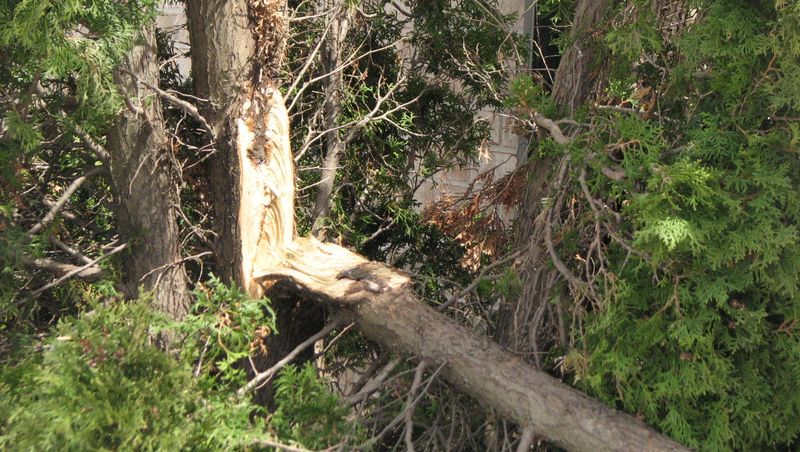
Arborvitae branches that might survive a snowstorm can crack under an ice coating because the weight is concentrated and relentless. The stress comes on fast, leaving little time for the tree to adjust.
Your Ohio Garden Changes Every Week. Your Plan Should Too.
Gardening in Ohio changes quickly throughout the season. Every Friday you’ll receive a simple weekly plan showing exactly what to plant, prune, fertilize, harvest, and protect so you never miss the right timing.
The most practical prevention strategy is to tie your arborvitae before ice storms arrive. Using soft cloth strips or specialized tree-tying tape, gently bundle the main branches together in a spiral wrap from the bottom to the top of the tree.
This holds the branches in place so they cannot splay outward under the weight. Once temperatures warm up and the ice melts naturally, you can remove the ties.
Never try to chip ice off branches because that almost always causes breakage. Patience is the safest approach once an ice storm has already hit your yard.
3. Winter Wind Makes The Problem Worse
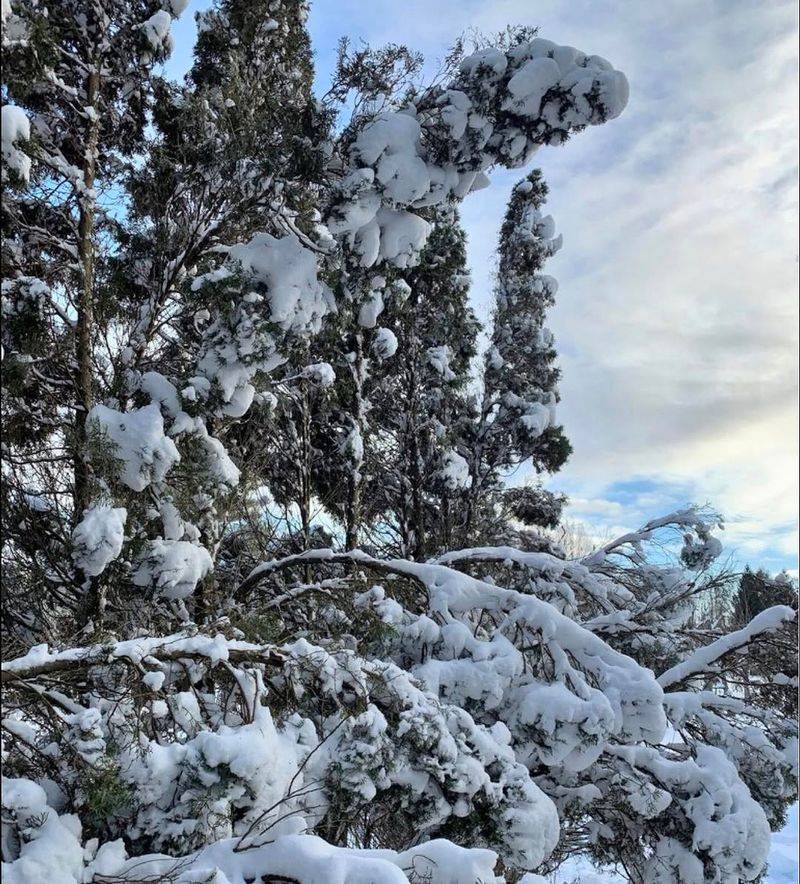
Wind rarely gets the credit it deserves when it comes to arborvitae damage. Most homeowners focus on snow and ice, but wind is a powerful force that adds serious stress to branches that are already struggling under winter weight.
Ohio is no stranger to strong winter winds, and those gusts can push a snow-loaded arborvitae past its breaking point in a matter of seconds.
When branches are already bowed outward from snow or ice accumulation, a strong gust hits them at a disadvantage. The wind pushes the branches further in the direction they are already leaning, increasing the strain on the attachment points at the trunk.
That combination of weight plus wind force is what causes many of the dramatic splits homeowners find after winter storms.
To reduce wind damage, consider where your arborvitae are planted relative to prevailing winter winds. Trees on the north or northwest side of a property tend to face the harshest gusts in Ohio winters.
Planting a windbreak of denser, sturdier trees or fencing on the windward side can reduce how much force reaches your arborvitae. Tying the trees before a storm is also helpful because bundled branches resist wind pressure far better than loose, open ones.
A little preparation before a storm moves in can make a real difference in how your trees look when it passes.
4. Weak Structure Starts Early
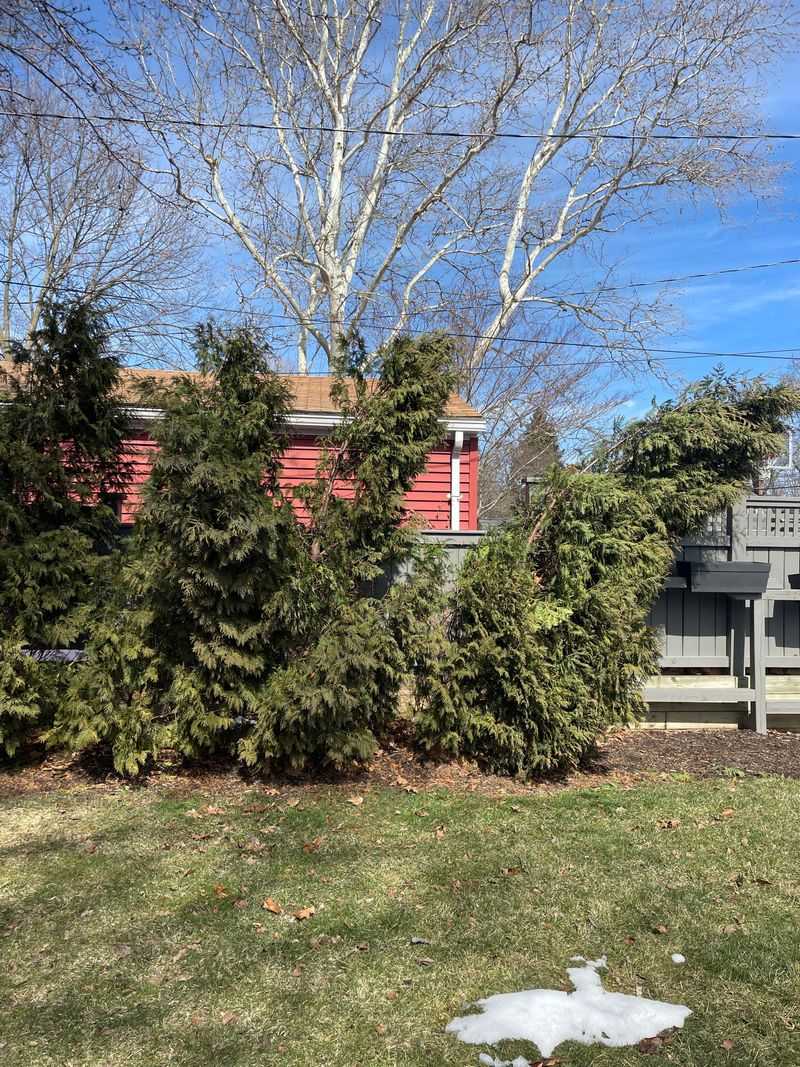
A lot of arborvitae splitting problems actually start years before the first winter storm ever arrives. When a young arborvitae develops multiple leaders, meaning two or more main stems growing upward from the same base, it creates a built-in weak point.
Those stems push against each other as the tree grows, and the connection between them is never as strong as a single, well-developed central trunk.
Poor branching habits early in a tree’s life can also lead to branches that grow outward at wide angles instead of upward along the trunk.
Those wide-angle branches have less structural support and are far more likely to split away from the trunk when weight is applied.
Unfortunately, many arborvitae are sold and planted without any guidance on early structure training.
Checking your arborvitae each spring for signs of multiple leaders is a smart habit. If you notice two or more main stems competing at the top, you can gently tie them together while the tree is young and the stems are still flexible.
This encourages the tree to grow with a unified structure. For older trees with established multiple leaders, tying before winter is especially important.
A certified arborist can also help assess whether any structural pruning is appropriate for trees that have already developed problematic growth habits over several years.
5. Planting Too Close Leads To Stress
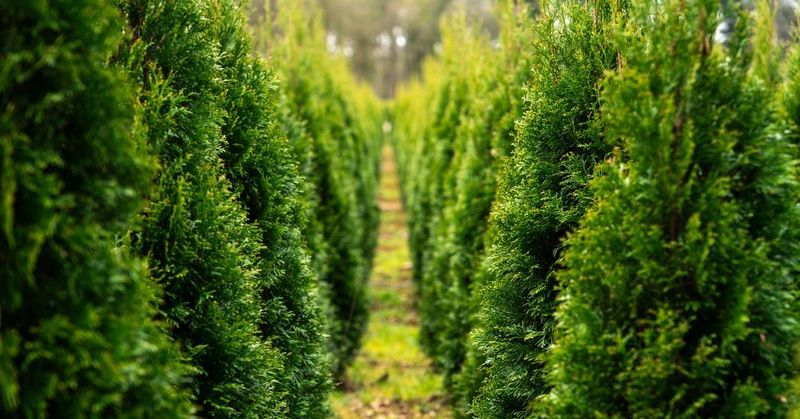
Many Ohio homeowners plant arborvitae in tight rows to create a fast privacy screen, and it makes sense visually. But when arborvitae are planted too close together, they start competing for sunlight, water, and space almost immediately.
Over time, that competition produces trees with weaker, thinner branches and less overall structural integrity.
Overcrowded arborvitae also tend to grow taller and leggier as they reach for light, which shifts their center of gravity upward. A top-heavy tree with a thin base is far more likely to split or lean under winter stress.
Poor airflow between tightly packed trees can also lead to moisture-related issues that weaken the bark and branch tissue over time.
Proper spacing is one of the simplest things you can do to protect your arborvitae long-term. Most varieties benefit from being planted at least three to five feet apart, depending on the mature width of the specific cultivar.
If your existing arborvitae are already overcrowded, selectively removing every other tree can dramatically improve the health and strength of the remaining ones.
It may feel counterproductive if you planted them for privacy, but stronger, healthier trees will ultimately fill in more effectively than a crowded row of stressed, splitting ones.
Giving each tree room to breathe is an investment in their long-term performance.
6. Wet Snow Hits Harder Than You Think
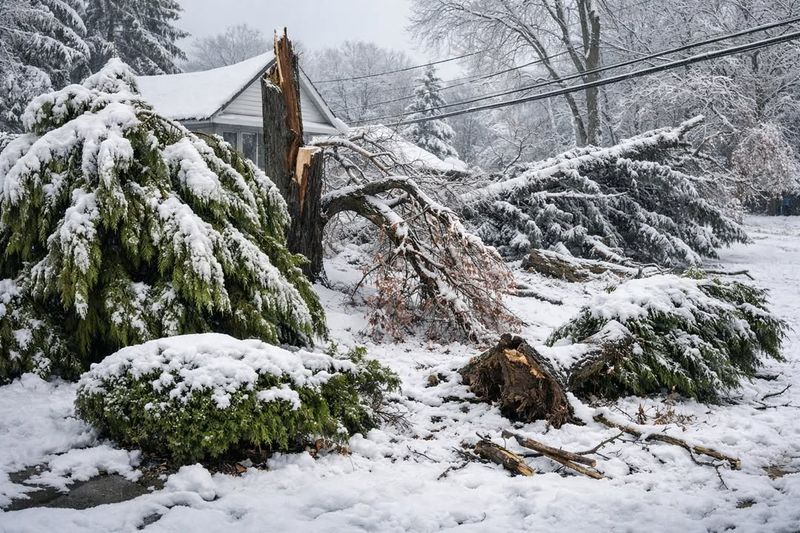
Not all snow is created equal, and Ohio homeowners know this better than most. Light, fluffy snow that falls on a cold, dry day slides off branches pretty easily.
Wet, heavy snow is an entirely different story. Wet snow falls when temperatures hover right around freezing, and it sticks to everything it touches, including every needle and branch on your arborvitae.
Wet snow is significantly heavier than dry snow, sometimes by a factor of three or four times the weight per inch. That means even a few inches of wet snow can load an arborvitae with far more weight than a foot of powdery, cold-weather snow.
Ohio’s late-winter and early-spring snowstorms are notorious for producing exactly this kind of wet, clinging snow, often catching homeowners off guard after a mild stretch of weather.
Paying attention to weather forecasts can help you prepare before wet snow arrives. If temperatures are predicted to be near or just below freezing during a snowstorm, that is a strong sign the snow will be wet and heavy.
Tying your arborvitae before that kind of storm is worth the effort. After the snow falls, gently shaking or brushing branches from below can help remove the sticky accumulation before it has time to compact further.
Early action during and right after a wet snowstorm gives your trees the best chance of coming through undamaged.
7. Simple Tying Can Prevent Damage
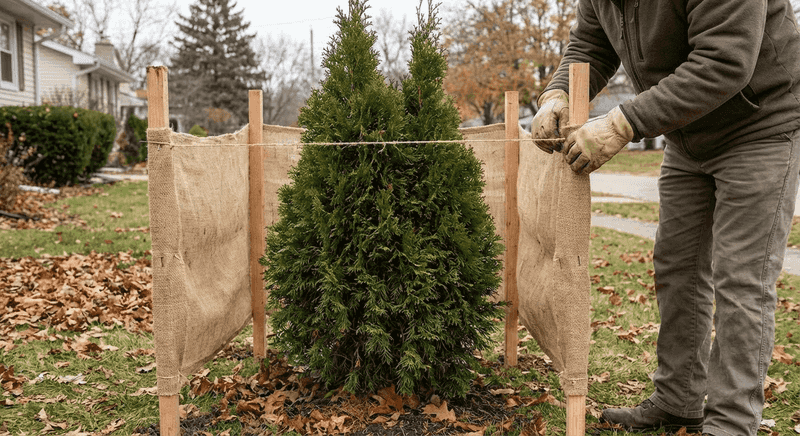
Grab some soft twine or cloth strips and a free afternoon in late October or November, and you have everything you need for one of the most effective arborvitae protection methods available.
Tying arborvitae before winter is a widely recommended practice among horticulturists and landscapers, and it works by holding the branches together so they cannot splay apart under snow or ice weight.
The technique is straightforward. Starting at the base of the tree, loosely wrap a soft material in a gentle upward spiral around the branches, bundling them toward the center of the tree as you go.
Use soft cloth strips, foam-padded tree tape, or natural twine to avoid cutting into the bark. The goal is to support the natural shape without compressing the branches so tightly that you restrict growth or airflow.
Avoid using wire, fishing line, or any rigid material that does not have some give. These can cut into bark as the tree moves in wind or expands slightly during temperature changes.
Remove the ties in early spring once the risk of heavy snow and ice has passed for the season. Leaving ties on year-round can cause girdling, which restricts the flow of water and nutrients through the branches.
Done correctly and seasonally, tying is a low-cost, low-effort habit that can prevent years of winter damage to your arborvitae.
8. The Right Placement Makes A Difference
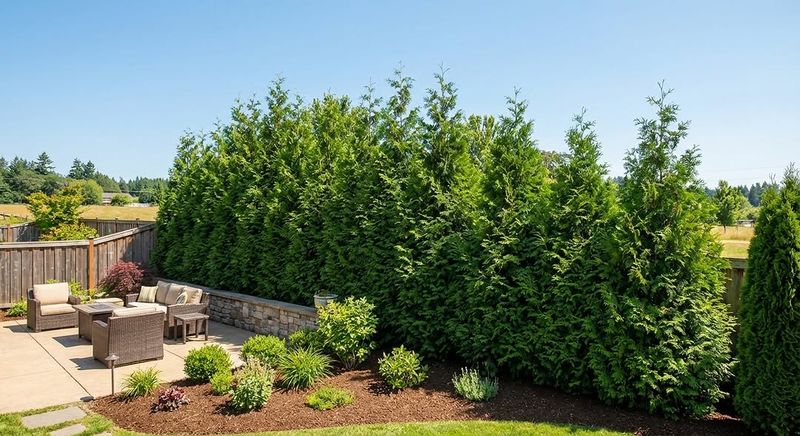
Before a single arborvitae goes into the ground, where you plant it matters enormously for how well it will hold up over the years.
Placement decisions made at planting time can either set your trees up for long-term success or leave them fighting against conditions that slowly wear them down every winter season.
Arborvitae planted in exposed, open areas where wind sweeps across without any buffer are at a much higher risk of winter damage than those planted near a fence, building, or established windbreak.
Choosing a spot on the south or east side of a structure can dramatically reduce wind exposure while still giving the trees adequate sunlight.
Avoiding low-lying areas where cold air settles and moisture lingers can also reduce stress on the root system and lower branches.
Sunlight exposure matters too. Arborvitae planted in spots with good morning sun tend to dry out faster after wet snow events, which reduces the time heavy moisture sits on branches.
Full shade locations can keep snow and ice frozen on branches longer, extending the period of stress. Thinking through these factors before planting, or even when considering moving or replacing trees, can lead to much healthier, more resilient arborvitae in your Ohio yard.
A thoughtful placement decision made once can prevent years of winter headaches and costly repairs down the road.