The Fruits And Veggies Florida Gardeners Can Actually Grow In Hanging Baskets
Hanging baskets in Florida have a reputation for being a flower situation. A little color on the porch, something to fill the space, nothing you are actually going to eat.
Most gardeners never think twice about putting food in them. That assumption leaves a lot of growing space on the table.
Florida’s heat and consistent sunlight are genuinely well suited to certain fruits and vegetables, and a hanging basket gives them something a garden bed cannot always offer.
Better airflow, faster drainage, and easy access without bending down or fighting for space on the ground.
Not every fruit or vegetable belongs up there. But the ones that do tend to surprise people with how much they actually produce in a basket that most gardeners would have filled with petunias.
1. Let Strawberries Spill Over The Edge
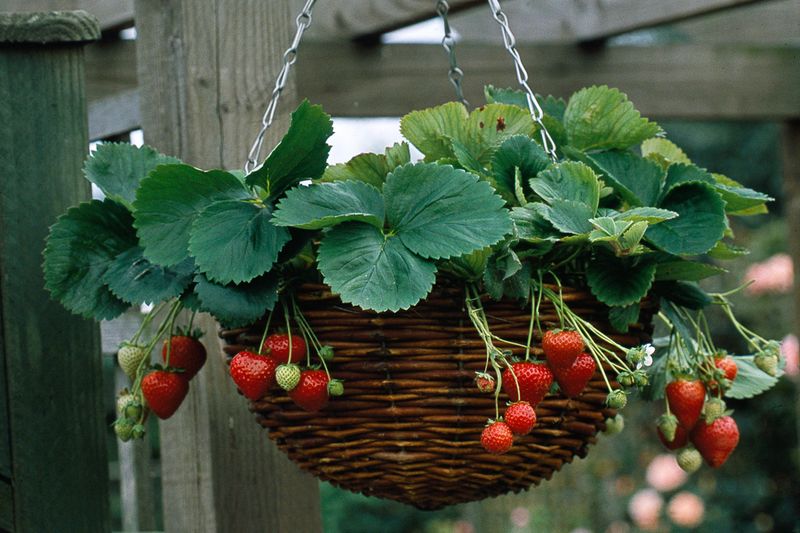
Few things are more satisfying than walking out to your front porch and plucking a ripe strawberry right from a hanging basket.
Strawberries are one of the most genuinely rewarding fruit crops you can grow in a Florida container garden, and their naturally trailing growth habit makes them a perfect fit for hanging baskets.
As the runners and stems grow, they cascade beautifully over the edges, giving the basket both a productive and decorative look.
Florida strawberries are planted in fall, with flowering and fruiting generally running from late fall into spring, often through April or May depending on weather and region.
The state’s famous strawberry-growing region around Plant City follows this same seasonal window.
Trying to grow strawberries through a Florida summer is not a realistic plan because the heat and humidity will stress the plants heavily and reduce fruit production significantly.
For hanging baskets, choose a variety like Sweet Charlie or Camarosa, both of which have performed well in Florida conditions according to UF/IFAS Extension research. A basket at least 12 inches wide and 8 inches deep gives roots enough room to settle in.
Use a well-draining potting mix and avoid heavy garden soil, which compacts quickly in containers.
Strawberries need at least six hours of direct sun daily and consistent moisture. Hanging baskets dry out faster than ground containers, especially on warm Florida afternoons, so checking soil moisture every day is a smart habit.
A balanced slow-release fertilizer applied at planting, plus a liquid feed every two weeks during the growing season, helps support steady fruit production.
Pinch off early runners to keep the plant focused on producing fruit rather than spreading.
Harvest berries as soon as they are fully red for the best flavor, and check the basket daily once plants start producing.
2. Pull Radishes Fast From A Shallow Basket
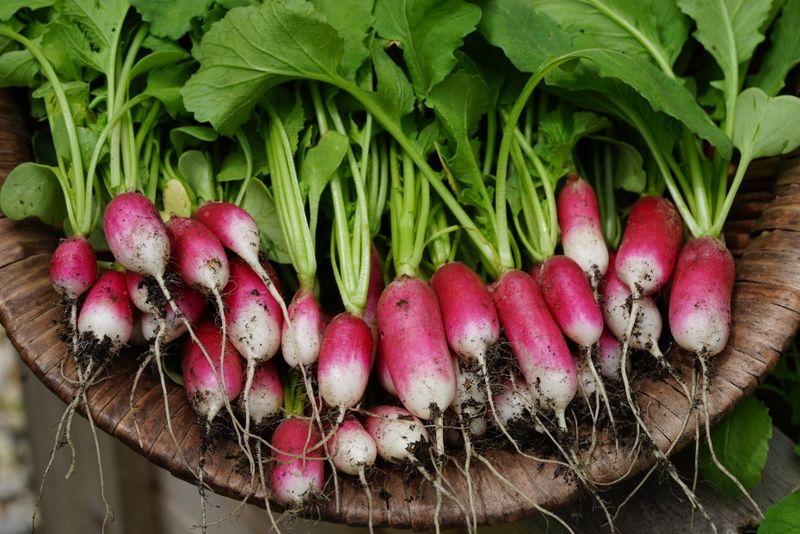
Radishes might not be the first crop that comes to mind for a hanging basket, but they are one of the most practical cool-season choices a Florida gardener can make.
Small, fast-growing, and surprisingly unfussy about container depth, radishes can go from seed to harvest in as little as 25 to 30 days.
That quick turnaround makes them a great option when you want something productive without a long wait.
Your Florida Garden Changes Every Week. Your Plan Should Too.
Gardening in Florida changes quickly throughout the season. Every Friday you’ll receive a simple weekly plan showing exactly what to plant, prune, fertilize, harvest, and protect so you never miss the right timing.
A basket that is at least 6 to 8 inches deep works well for most radish varieties. Avoid deep-rooted types like daikon and stick with compact round varieties such as Cherry Belle or Easter Egg, which stay small and fit comfortably in a hanging container.
Loose, well-draining potting mix is essential because compacted soil causes the roots to crack or grow misshapen rather than round and smooth.
Florida’s best window for radishes runs from October through February. Planting outside of that cooler window often results in plants that bolt quickly, sending up flower stalks instead of forming roots.
Once bolting starts, the roots become woody and unpleasant to eat, so timing your planting correctly matters more than almost anything else.
Space seeds about 2 inches apart in all directions to give each root enough room to develop properly. Water consistently and evenly because uneven moisture leads to cracked roots.
Hanging baskets tend to dry out quickly in Florida’s sun and breeze, so checking moisture daily is a good habit.
Harvest radishes while the roots are still young and tender, usually when they reach about an inch in diameter. Leaving them in the basket too long causes them to become pithy and overly sharp.
After harvesting one round, reseed the basket immediately.
3. Snip Leaf Lettuce Before The Florida Heat Hits
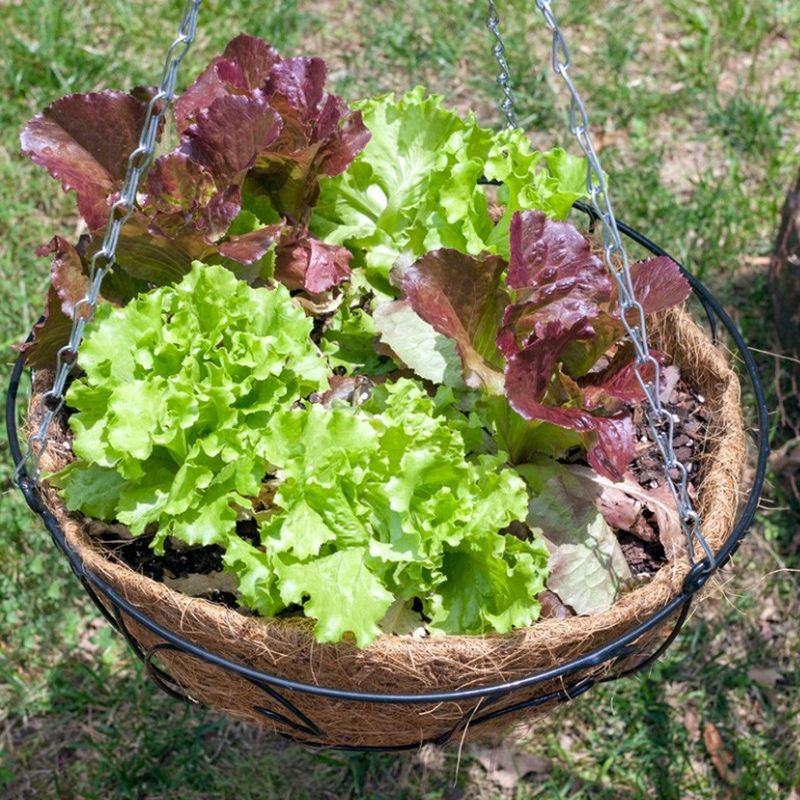
Loose-leaf lettuce is one of those crops that rewards smart timing more than any other factor.
In Florida, the window for growing good lettuce runs from about October through early March, and experienced gardeners know to get seeds or transplants in early and harvest steadily before temperatures start climbing.
Once the heat arrives, lettuce bolts fast, turning bitter and sending up tall seed stalks almost overnight.
The reason leaf lettuce works so well in hanging baskets is its shallow root system. Most loose-leaf varieties only need about 6 inches of soil depth, which makes them a natural fit for the limited space inside a basket.
Head lettuce varieties need more room and more weight, so stick with loose-leaf types like Black Seeded Simpson, Red Sails, or Salad Bowl for the best results in a container setup.
Harvesting is simple and satisfying. Snip outer leaves as needed and let the center of the plant keep growing for repeat harvests over several weeks.
A single basket planted with a mix of red and green leaf varieties looks attractive and gives you a steady supply of fresh salad greens without using any ground space at all.
Morning sun with afternoon shade works well for lettuce, especially as temperatures start warming in late February and March. A spot on an east-facing porch or under a tree canopy that filters afternoon light can extend your harvest window by a few extra weeks.
Keep the potting mix consistently moist because lettuce wilts quickly when the basket dries out.
Feed with a balanced liquid fertilizer every two weeks to keep leaves tender and flavorful.
Avoid high-nitrogen feeds right before harvest because they can make leaves taste slightly off.
Freshly harvested leaf lettuce from your own basket is noticeably crisper and more flavorful than anything from a grocery store bag.
4. Grow Microgreens When Space Gets Ridiculously Tight
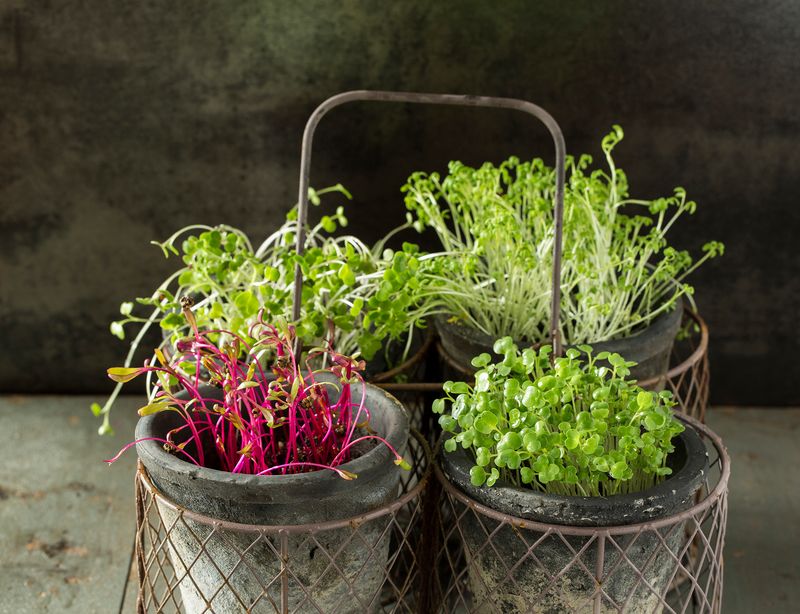
Anyone who has ever stared at a tiny balcony or a cramped porch and wished they could grow something edible will appreciate what microgreens can do.
These are seedlings harvested at the cotyledon stage, usually within 7 to 14 days of germination, and they pack a surprising amount of flavor and nutrition into a very small space.
A single shallow basket can produce multiple harvests in a matter of weeks, making microgreens one of the most space-efficient edibles you can grow in Florida.
Shallow baskets work perfectly because microgreens only need about 2 to 3 inches of growing medium. Fill the basket with a clean, sterile seed-starting mix rather than regular potting soil, which can be too coarse for the fine roots of young seedlings.
Spread seeds densely across the surface, press them gently into the mix, and water lightly with a spray bottle to avoid disturbing the seeds.
Good choices for Florida include sunflower, radish, pea shoots, basil, and broccoli microgreens. Each variety has its own flavor profile, from mild and nutty to spicy and peppery.
Mixing varieties in one basket gives you a range of flavors in a single harvest, which is great for adding to sandwiches, salads, eggs, or grain bowls.
Bright indirect light or a spot that gets morning sun works well for most microgreen varieties. Direct Florida afternoon sun can dry out the shallow growing medium very quickly and stress the tender seedlings.
Water lightly once or twice daily using a gentle mist to keep the surface evenly moist without waterlogging the roots.
Once the first true leaves begin to appear, harvest by snipping the shoots just above the soil line. After harvesting, remove the spent roots, refresh the growing medium, and reseed the basket for another round.
Keeping two or three baskets going on a rotating schedule gives you a nearly continuous supply of fresh microgreens all through Florida’s cooler months and beyond.
5. Tuck Bunching Onions Around The Edges
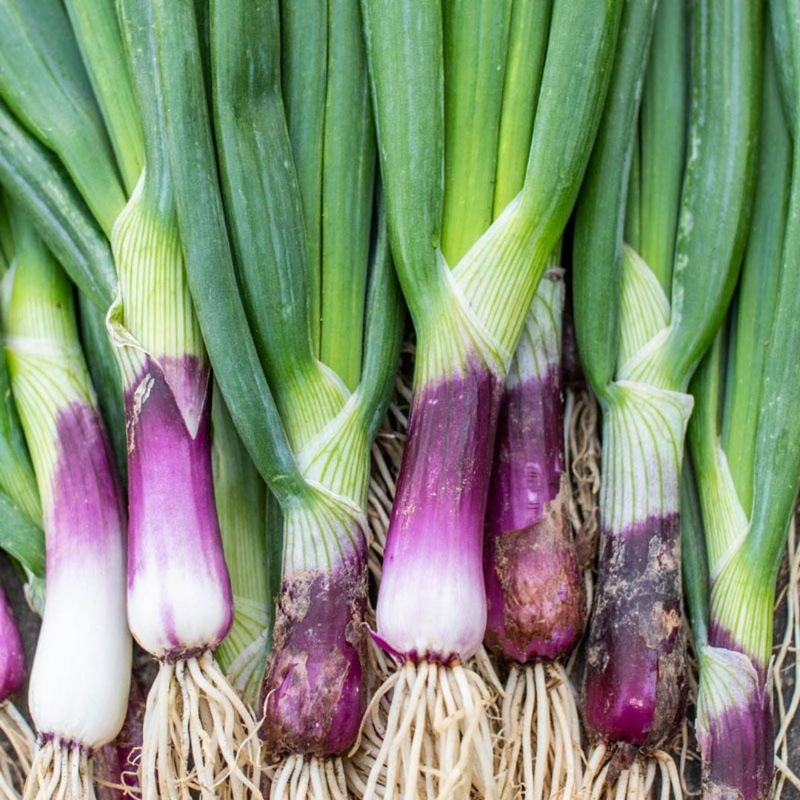
Bunching onions, also called green onions or scallions, are not going to win any beauty contests in a hanging basket, but they earn their space through pure practicality.
Compact, upright, and easy to manage, they tuck neatly around the outer edge of a basket, filling in gaps between showier crops and adding a genuinely useful edible element to your container garden.
Snip a few stalks whenever a recipe calls for them and the plant keeps right on growing.
The root system of bunching onions is shallow and fibrous, which makes them well-suited to the limited soil depth of a hanging basket. They do not need a dedicated basket of their own.
Plant them 2 to 3 inches apart around the perimeter of a basket that already contains lettuce, radishes, or herbs, and they will coexist without competing aggressively for resources.
Florida’s cooler months from October through March are the ideal time to grow bunching onions outdoors. They can handle light frost, which is a useful quality for North and Central Florida gardeners who occasionally see cooler nights in January and February.
In South Florida, bunching onions can often be grown for a longer portion of the year due to the milder winters.
Full sun to partial sun works fine for bunching onions. Keep the potting mix evenly moist but not waterlogged, and make sure the basket drains freely after each watering.
A light feeding with a balanced fertilizer every few weeks encourages steady, healthy green growth.
Harvest by snipping the green tops down to about an inch above the soil line and the plant will regrow for multiple cuts. Variety choices like Look for bunching onion or scallion types such as ‘Tokyo Long White’ or other varieties recommended by local Extension guidance.
Simple, dependable, and genuinely useful, bunching onions quietly earn their spot in any edible hanging basket.
6. Grow Compact Peppers With Bite And Color
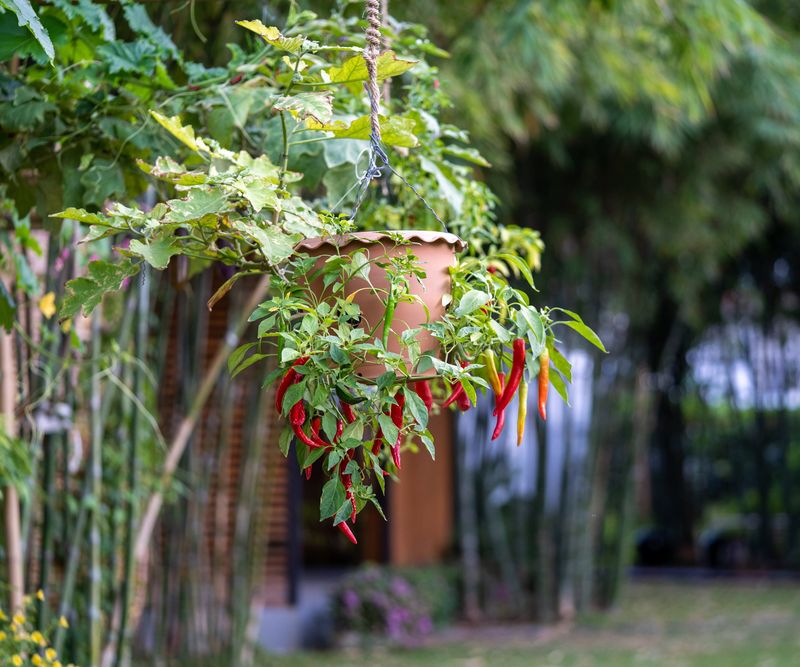
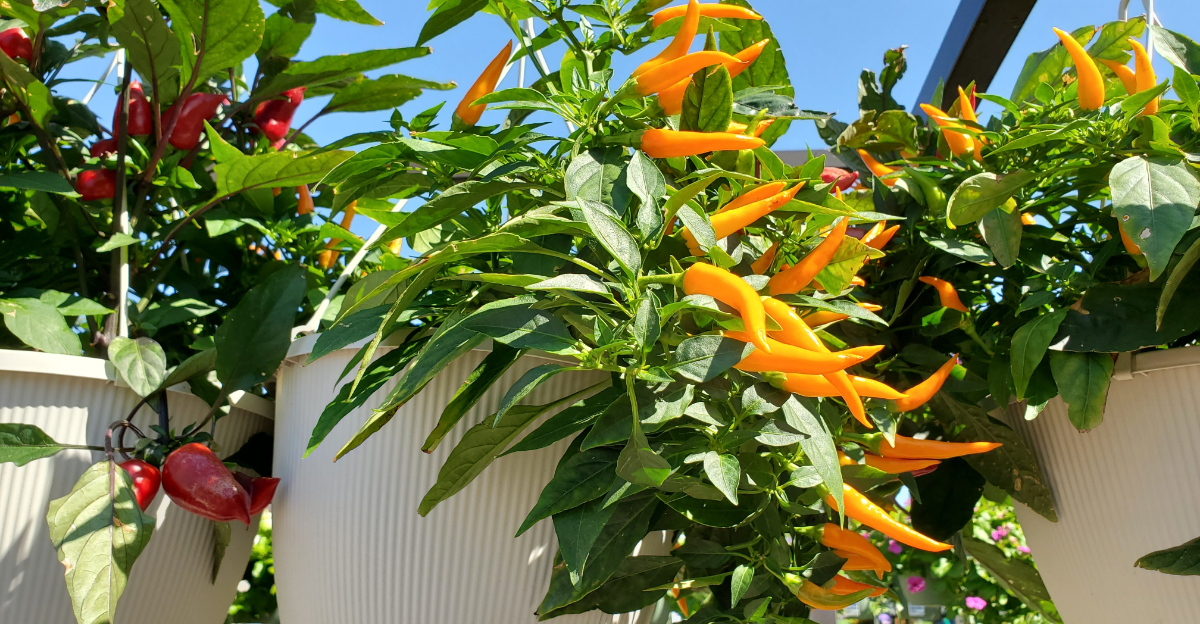
A basket of compact peppers covered in tiny red, orange, and yellow fruits is one of the most eye-catching things you can hang on a Florida porch.
Unlike full-size bell peppers, which develop large root systems and heavy fruit loads that standard baskets cannot support, compact hot peppers and ornamental edible pepper varieties are genuinely suited to container growing.
The visual payoff is real, and so is the harvest.
Look for varieties specifically labeled as dwarf, compact, or ornamental edible. Good options include compact ornamental or hot pepper types such as Thai Hot, Explosive Ember, NuMex Twilight, or other dwarf varieties labeled for containers.
These plants stay small enough to manage in a sturdy 12-inch basket while still producing a generous number of fruits throughout the warm season. Florida’s long, warm growing season is actually an advantage for peppers, which love heat and sun.
One important caution worth mentioning: many ornamental pepper varieties are extremely hot, sometimes significantly hotter than a standard jalapeno. Before eating any ornamental pepper variety, confirm the variety name and research the heat level.
Some ornamental types are primarily decorative and are not pleasant to eat even in small amounts. Always identify what you planted before tasting.
Peppers need at least six to eight hours of direct sun daily and consistent watering. Hanging baskets dry out quickly in Florida’s sun, so checking moisture levels daily during warm weather is essential.
Use a well-draining potting mix and make sure the basket has good drainage holes to prevent root problems from standing water.
Feed with a balanced fertilizer at planting and switch to a lower-nitrogen, higher-phosphorus formula once flower buds appear to encourage fruit set over leafy growth.
A sturdy wire or heavy-duty plastic basket is a smarter choice than a lightweight coco liner basket for peppers, since the plants and fruit load add real weight over time.