How To Grow Lush Rosemary Plant In A Pot In Florida With This One Trick
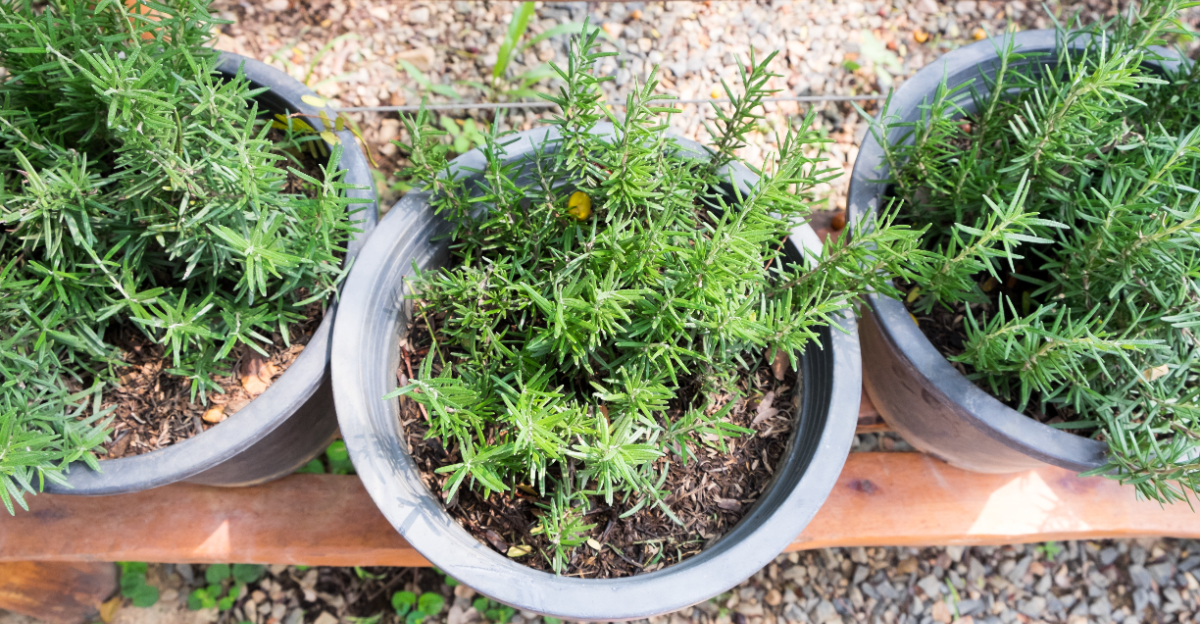
Rosemary has a reputation in Florida that it doesn’t fully deserve. Ask around and most gardeners will tell you it’s finicky, that the humidity gets it, that it just doesn’t do well in containers down here.
And honestly? They’re not wrong about the challenges.
Florida’s combination of intense heat, heavy rainfall, and thick humid air is basically the opposite of what rosemary’s Mediterranean roots are used to.
But here’s the twist: thousands of Florida gardeners are growing absolutely lush, fragrant, thriving rosemary in pots right now, and the difference comes down to one specific trick that changes everything.
Not a special fertilizer, not a fancy soil blend, not a complicated watering schedule. One adjustment, easy to implement, that works with Florida’s climate instead of fighting it.
Get this right and your rosemary stops struggling and starts flourishing in a way that’ll make you question everything you thought you knew about growing it in the South.
1. Start With A Fast Draining Pot
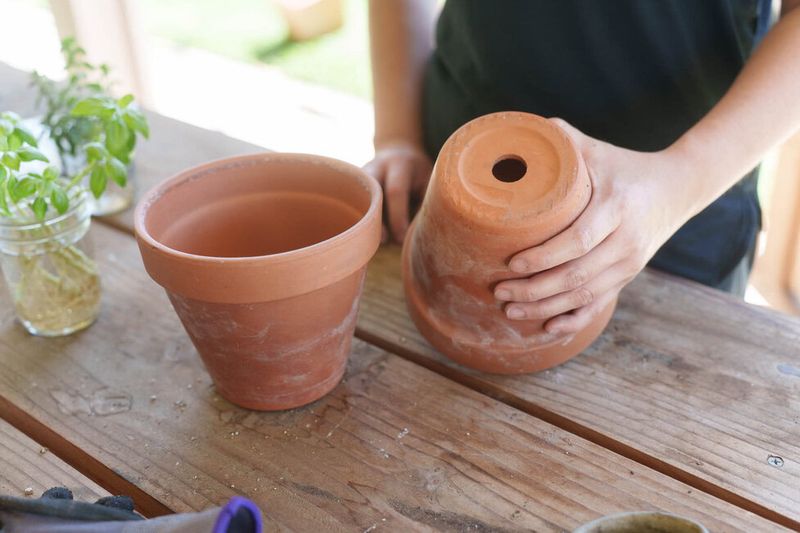
The container you choose sets the tone for everything that follows, so getting this decision right matters more than most gardeners expect. Rosemary roots need air as much as they need water, and a pot that traps moisture turns a healthy herb into a struggling one fast.
Terra-cotta and unglazed clay are popular choices in Florida because the porous walls allow some evaporation through the sides, which helps the root zone dry out between rain events.
Drainage holes are non-negotiable. A single small hole at the bottom of a large container is rarely enough, especially during rainy season when water can pour in repeatedly over several days.
Look for pots with multiple holes or wide openings that let water escape freely rather than pooling at the base.
Size matters too. A container that is too large holds more mix than the roots can use, and that extra damp volume stays wet for a long time.
A pot roughly 12 to 14 inches wide gives a rosemary plant enough room to spread without creating a soggy surplus around the edges.
Decorative cachepots look nice but often have no drainage at all, so keep them as display shells only and use a proper nursery container inside.
Starting with the right vessel means every other step works better from day one.
2. Use Gritty Soil Instead Of Heavy Mix
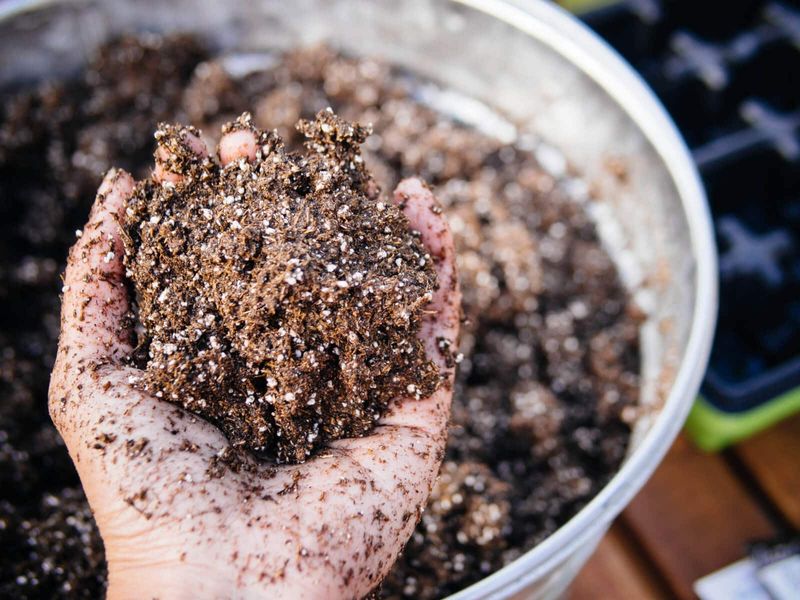
Here is the one trick that changes everything for rosemary in Florida: amend the potting mix so it drains fast and stays open rather than dense and wet.
Standard bagged potting mixes are formulated to hold moisture, which is great for vegetables and flowers but genuinely problematic for a Mediterranean herb that evolved in rocky, dry hillsides.
Florida’s summer rains can soak a container repeatedly in a single week, and heavy mix just cannot recover fast enough between storms.
The fix is straightforward. Start with a quality potting mix and blend in coarse perlite, horticultural pumice, coarse sand, or small pine bark fines at a ratio of roughly one part gritty amendment to two parts base mix.
Your Florida Garden Changes Every Week. Your Plan Should Too.
Gardening in Florida changes quickly throughout the season. Every Friday you’ll receive a simple weekly plan showing exactly what to plant, prune, fertilize, harvest, and protect so you never miss the right timing.
This opens up the structure, improves air pockets around the roots, and speeds up drainage without stripping the mix of all nutrients.
According to UF/IFAS herb production guides, rosemary performs best in well-drained, slightly lean media rather than rich, moisture-retentive blends.
Garden soil should never go into a container. It compacts under repeated watering, blocks drainage holes, and can introduce pathogens that spread quickly in a closed pot environment.
A gritty, amended mix is the foundation that makes every other part of rosemary care in Florida easier and more forgiving, especially during the long, wet summer months when conditions are toughest.
3. Lift The Roots Above Soggy Heat
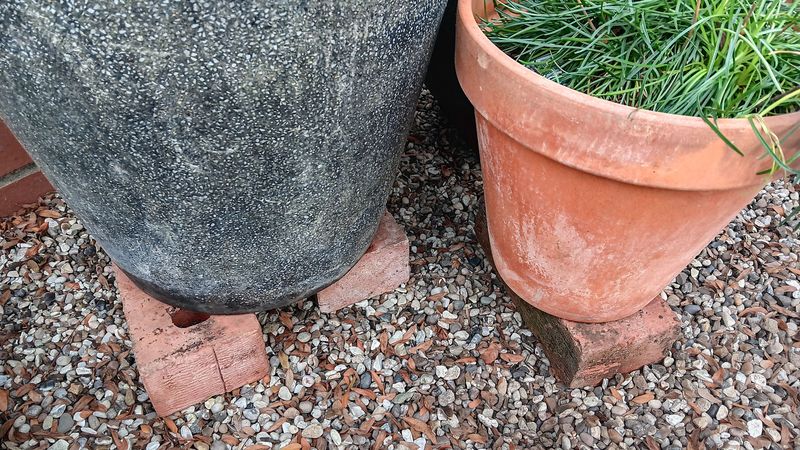
Raising a container off the ground is one of those small moves that pays off in a big way during Florida’s rainy season.
Even with excellent drainage holes, a pot sitting flat on a patio or deck surface can get blocked by debris, standing water, or surface tension that slows drainage to a crawl.
Pot feet, bricks, a wooden slat stand, or even a few flat stones underneath can make a real difference by keeping the base of the container open to air.
Florida summers combine high heat with repeated saturation, and that combination is especially hard on root systems that are already struggling.
When the root zone stays both hot and wet for extended periods, beneficial air pockets disappear and roots can start to break down.
Lifting the pot allows moisture to escape freely from below and lets air circulate around the base, which cools the root zone slightly and speeds up drying between rain events.
Placement matters too. Avoid setting rosemary containers in low spots on the patio where runoff collects after a storm.
Keep them away from mulched garden beds where the pot can sink slightly over time and trap moisture around the base.
Also clear fallen leaves and debris from around the pot regularly, since wet organic matter piled against the outside of a container creates a damp microclimate that works against good drainage from every side.
4. Give Rosemary Full Morning Sun
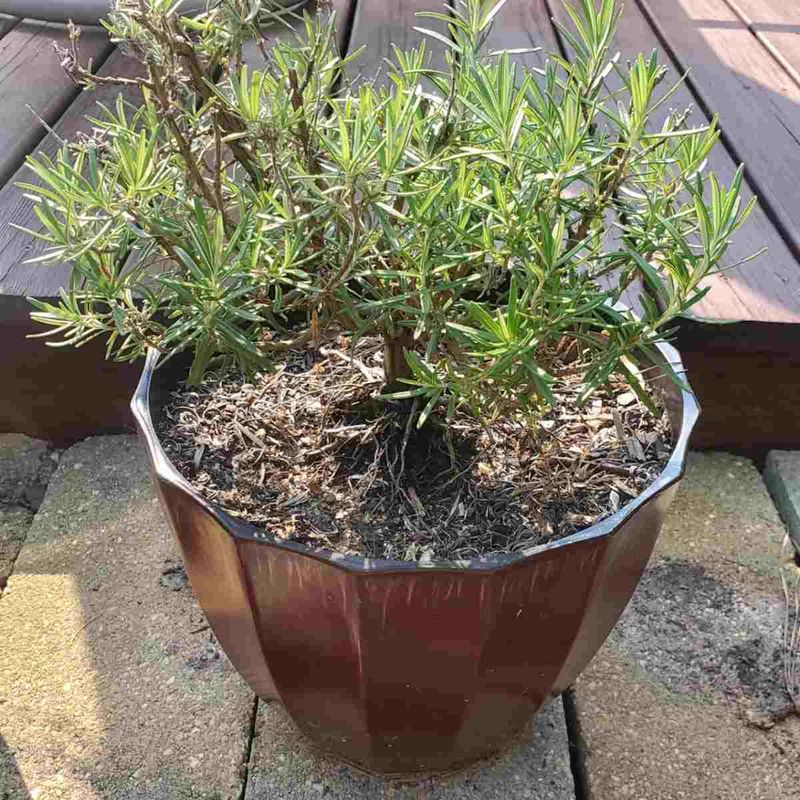
Sunlight is rosemary’s best friend, and container-grown plants in Florida need plenty of it to stay dense, fragrant, and productive.
Full sun, meaning at least six to eight hours of direct light daily, is the standard recommendation from UF/IFAS and most university extension herb guides.
Without strong light, stems get leggy, flavor weakens, and the plant becomes more vulnerable to humidity-related problems because foliage stays damp longer in shaded spots.
Morning sun is ideal for container rosemary in the hottest parts of the state. It delivers the intensity the plant needs without the punishing radiant heat that bounces off concrete patios during late afternoon in July and August.
A south or east-facing patio, balcony, or porch step usually provides the right balance.
Gardeners in North Florida can lean into full sun year-round more comfortably than those in South Florida, where afternoon shade during peak summer can reduce stress on both the roots and the foliage.
Rotating the pot every week or two encourages even growth on all sides rather than letting one side reach toward the light while the other stays thin and pale. This is especially useful on balconies or against walls where light comes from one direction.
Consistent, strong light also helps the mix dry out faster between waterings, which reinforces the drainage-first approach that keeps rosemary roots healthy through the season.
5. Water Deeply Then Back Off
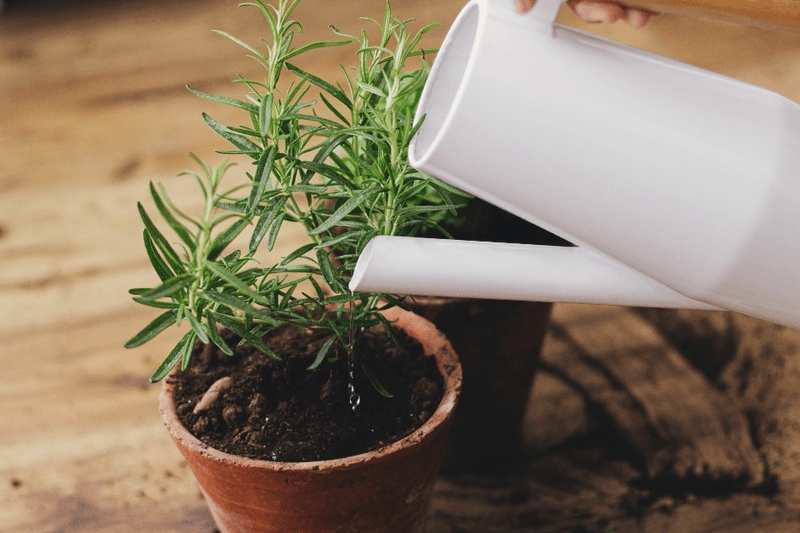
Rosemary has a reputation as a drought-tolerant herb, and that reputation is well earned, but it still needs consistent deep watering to stay healthy in a container. The key is rhythm rather than frequency.
Water thoroughly until moisture runs freely from the drainage holes, then step back and let the upper inch or two of mix dry out before watering again. This cycle encourages roots to reach downward and build a stronger, more resilient structure.
Shallow, frequent sips are counterproductive. They keep the surface damp while the deeper root zone dries unevenly, and they can encourage surface rooting that makes the plant more sensitive to heat and dry spells.
During Florida’s rainy season, nature often handles deep watering on its own, which means gardeners need to hold back and let the mix recover between storms rather than adding more moisture on a fixed schedule.
Checking the mix before reaching for the hose is the most reliable habit a container gardener can build. Push a finger about an inch into the mix near the edge of the pot.
If it still feels cool and damp, wait another day. If it feels dry and crumbly, water deeply.
UF/IFAS herb gardening guides consistently emphasize that overwatering is a far more common problem with rosemary than underwatering, especially in Florida’s humid climate where evaporation slows down significantly during summer months.
6. Skip The Saucer Under The Pot
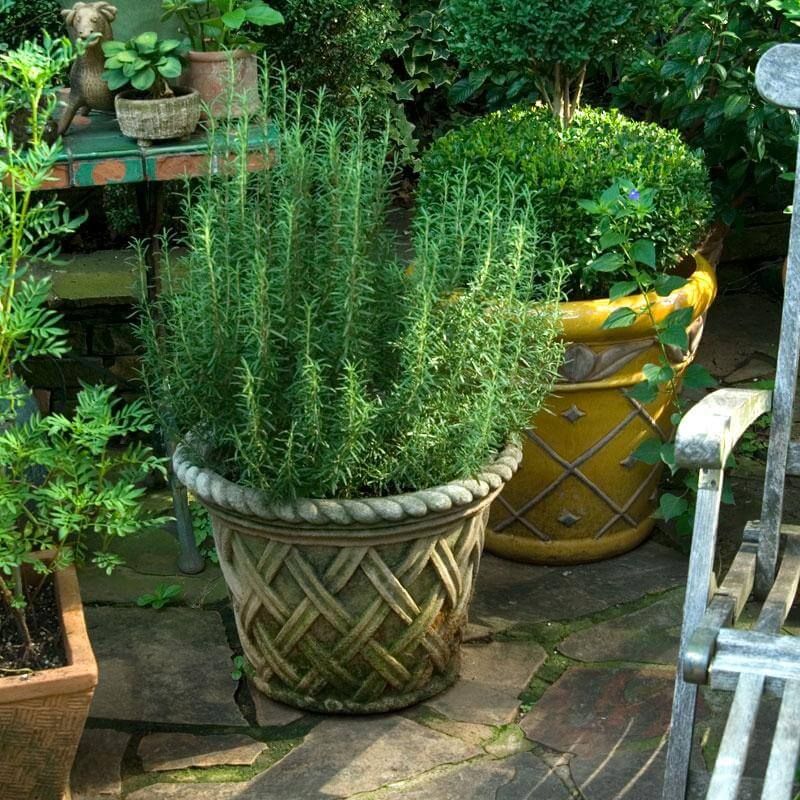
Saucers seem like a thoughtful accessory, catching drips and protecting patio surfaces, but underneath a rosemary container they can quietly undo all the work a good drainage setup is supposed to do.
After a Florida thunderstorm, a saucer fills up fast and keeps the base of the pot sitting in standing water for hours or even overnight.
The roots at the bottom of the container are the first ones affected, and by the time the damage shows up in the foliage, the root zone has already been stressed for a while.
Outdoors, saucers are rarely necessary. A pot with proper drainage holes and good elevation will shed water on its own without pooling on the patio.
If you prefer to use a saucer for aesthetic reasons or to protect a wooden surface, make it a habit to empty it within an hour after any significant rain or irrigation event. Leaving it full defeats the purpose of a fast-draining setup entirely.
Pot feet serve a similar protective function for surfaces without the water-trapping risk.
They lift the container enough to let air and drainage flow freely while still keeping the base from direct contact with the deck or concrete.
During irrigation overspray events or after patio cleaning with a hose, the same principle applies. Any collected water under the pot should be cleared away promptly so the root zone never sits in a wet pocket for extended periods.
7. Prune Lightly For Bushier Growth
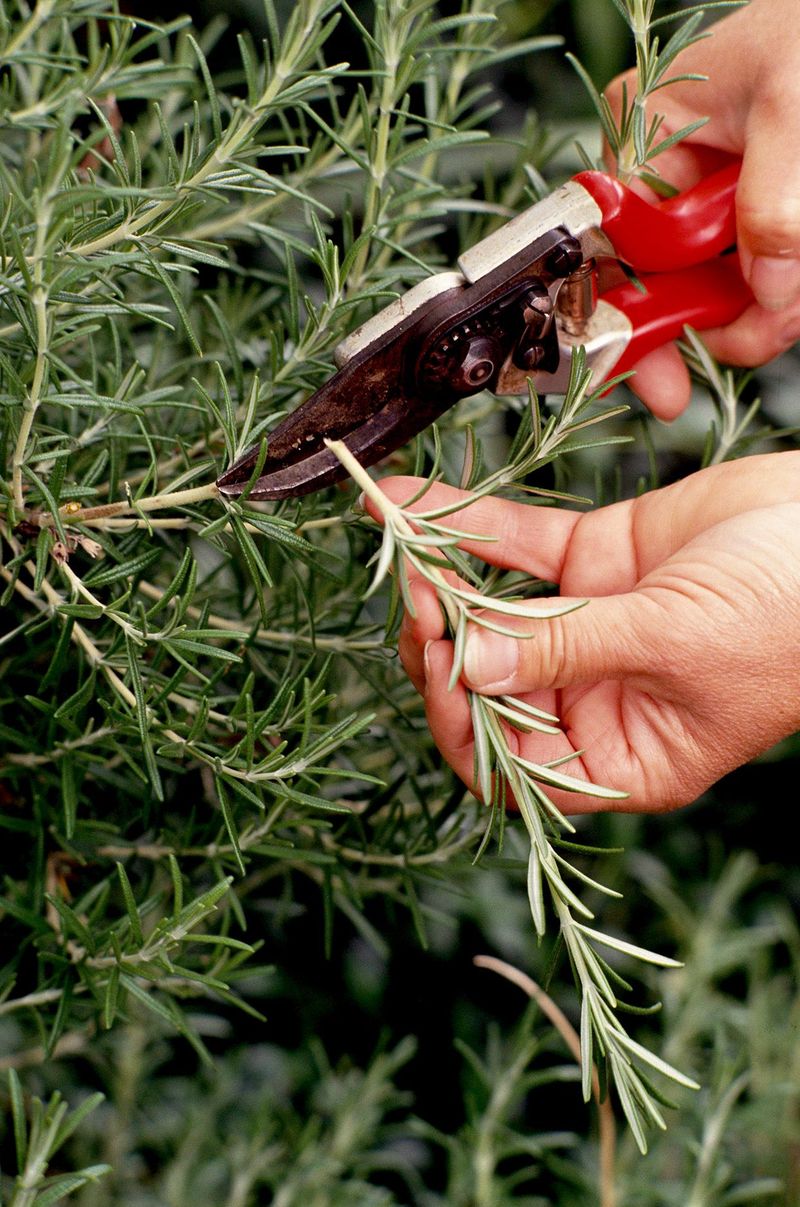
Rosemary left completely alone in a container tends to get tall, open, and woody at the base over time, which reduces both its appearance and its productivity.
Light pruning is the straightforward fix, and it does double duty by shaping the plant and encouraging new branching from the trimmed tips.
Each cut signals the stem to push out two or more new shoots, which builds a fuller, more compact form without stressing the plant.
The golden rule with rosemary is to stay in the green. Cutting back into old, brown, woody stems is risky because those sections often do not resprout reliably.
Keep trims light, removing no more than one-third of the growth at a time, and focus on the soft green tips rather than the thick lower framework.
Regular harvesting for cooking counts as pruning, so gardeners who use rosemary in the kitchen are often already maintaining the plant without realizing it.
In Florida’s humid conditions, keeping the interior of the plant open to airflow is especially valuable. Dense, overlapping foliage traps moisture and creates a microclimate where fungal problems can take hold.
Thinning out a few crossing stems in the center of the plant improves air circulation and helps the foliage dry faster after rain or irrigation.
Prune after a flush of new growth has hardened slightly rather than cutting into tender new tips that are still soft and vulnerable to stress.
8. Protect The Pot During Summer Storms
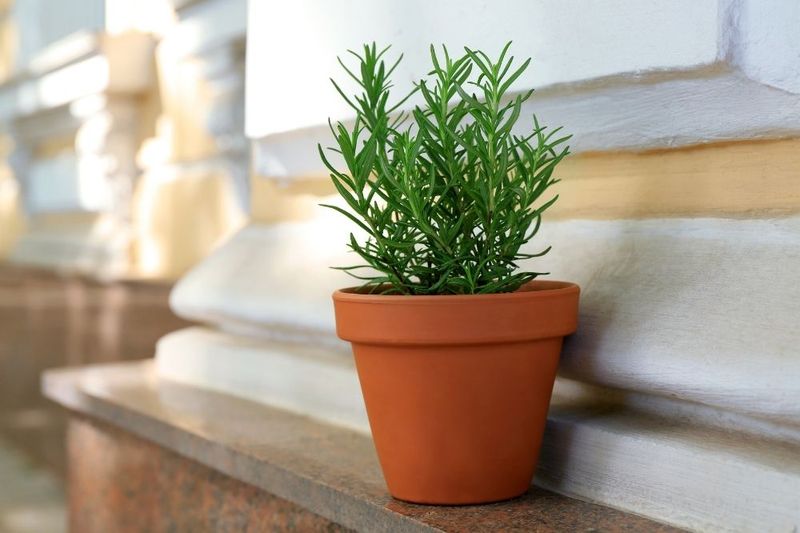
Florida’s rainy season runs roughly from June through September, and during that stretch a rosemary container can get drenched multiple times in a single week.
Even a well-amended, fast-draining mix has limits, and repeated saturation with no drying time in between pushes the root zone into territory where problems develop quickly.
Moving the pot temporarily under an overhang, a covered patio, or any bright sheltered spot during extended wet periods gives the mix a chance to recover.
The move does not have to be permanent. A day or two out of the rain during a multi-day storm system is often enough to prevent the root zone from staying saturated too long.
Once the weather clears and the sun returns, the pot can go back to its usual spot.
This simple habit, shifting the container when prolonged rain is in the forecast, is one of the easiest ways to protect a rosemary plant through the hardest months of the Florida growing calendar.
Watch the plant for early warning signs that the mix is staying too wet. Yellowing lower leaves, soft or limp new growth, a sour or musty smell from the mix, or sudden leaf drop are all signals worth taking seriously.
Catching the problem early, before root damage becomes severe, gives the plant a much better chance of bouncing back once conditions improve. Good observation is just as important as good setup when growing rosemary through a Florida summer.