Texas Climbing Favorites You Need This Summer
Vertical space is one of the most underused assets in Texas garden design, and it’s a real missed opportunity when you think about what’s possible.
Most gardeners focus entirely on what’s happening at ground level while fences, trellises, pergolas, and walls sit there doing nothing more interesting than defining a boundary.
In a state where outdoor living is practically a year-round activity, that’s a lot of untapped potential just waiting to be addressed. Climbing plants change the entire dynamic of an outdoor space.
They add height, create privacy, soften hard structures, and bring a lushness to a garden that horizontal plantings alone simply cannot achieve.
In Texas, where summer is long and the right climbers can cover serious ground in a single season, going vertical is one of the smartest moves you can make for your garden this year.
These climbing favorites are ready to transform your fences, walls, and structures into something genuinely worth looking at all summer long.
1. Coral Honeysuckle
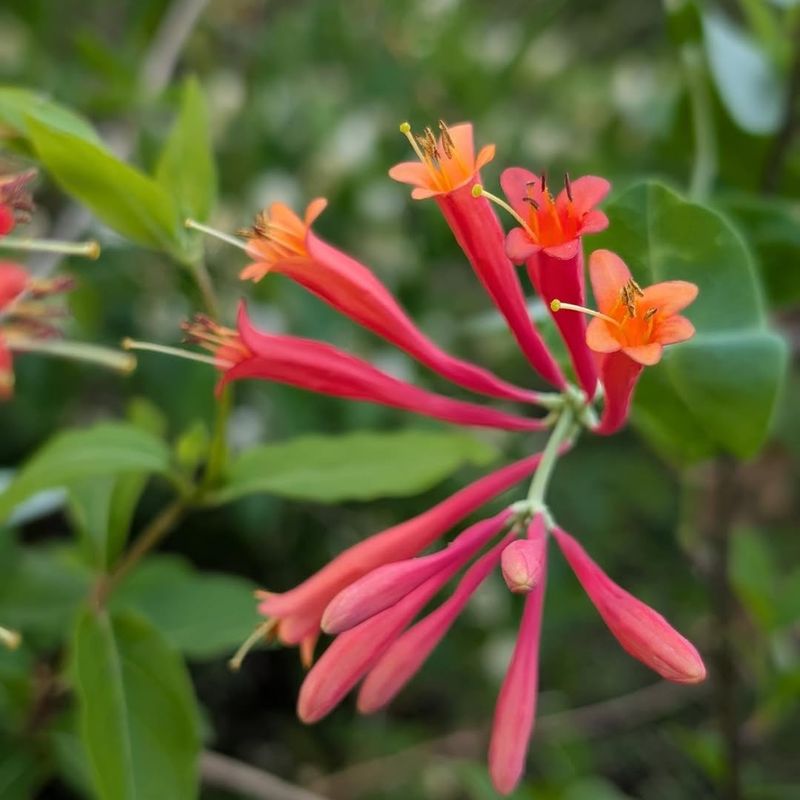
Few vines stop people in their tracks quite like Coral Honeysuckle. Those brilliant red, trumpet-shaped blooms are bold, cheerful, and almost impossible to miss.
Native to the southeastern United States, this vine has been thriving in Texas landscapes for a very long time.
One of the best things about Coral Honeysuckle is how tough it is. It handles Texas heat without breaking a sweat.
It does not need much water once it gets established, making it a smart choice for gardeners who want beauty without a big maintenance bill.
Hummingbirds absolutely love this vine. The long, narrow flowers are perfectly shaped for their beaks.
If you plant it near a window or patio, you might get a daily hummingbird show all summer long.
Coral Honeysuckle grows best in full sun to partial shade. It can climb a fence, trellis, or arbor with ease. Give it something to grab onto, and it will reward you with season after season of stunning color.
Unlike the invasive Japanese Honeysuckle, this native version plays nicely with the environment. It supports local pollinators without taking over your yard. That makes it a responsible and rewarding choice for any Texas garden.
If you are just starting out with climbing vines, Coral Honeysuckle is a fantastic first pick. It is forgiving, fast-growing, and absolutely gorgeous. Plant it this summer and watch your yard transform into something truly special.
2. Crossvine
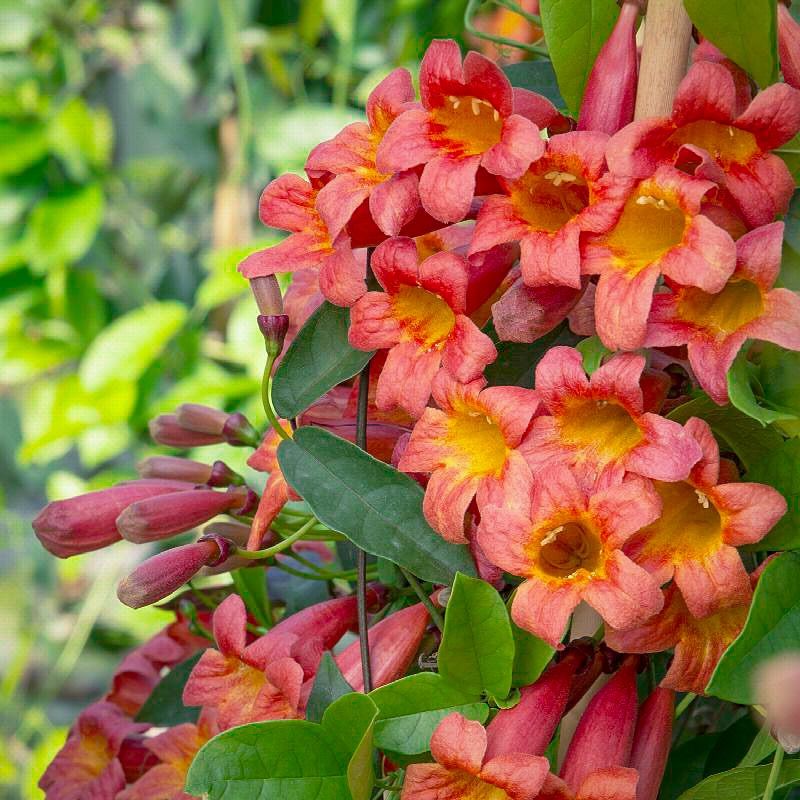
If you need a vine that means serious business, Crossvine is your answer. This plant is one of the toughest climbers you will find in Texas.
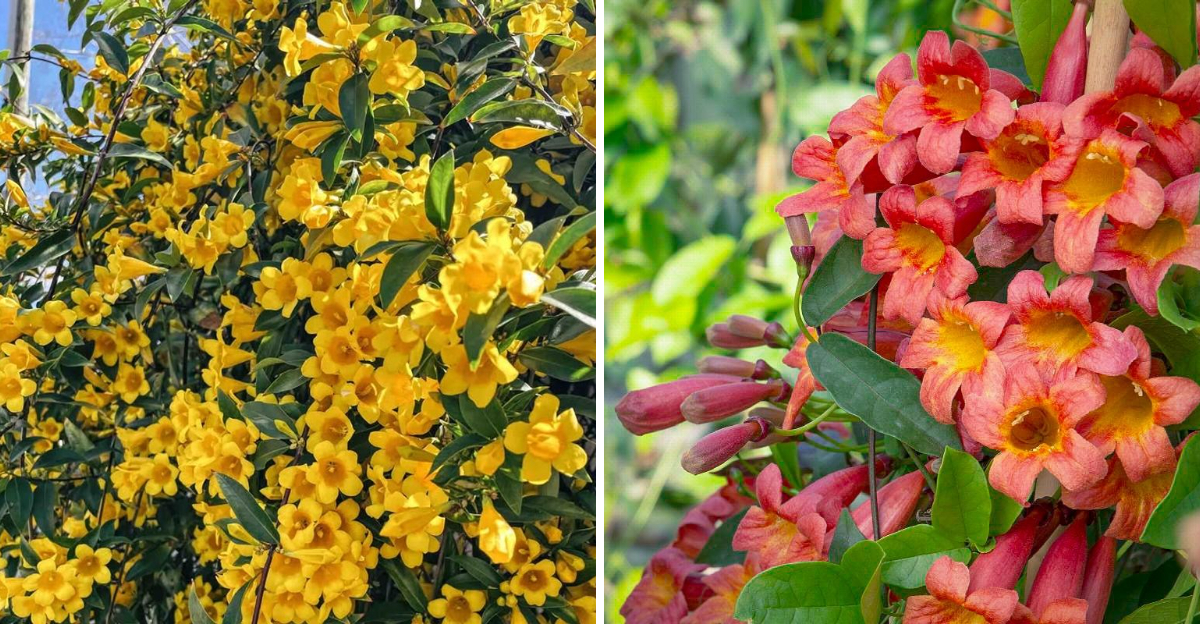
It grows fast, clings hard, and blooms with stunning trumpet-shaped flowers in shades of orange, red, and yellow.
Crossvine gets its quirky name from the cross-shaped pattern you see when you cut through its stem. That little detail makes it a fun conversation starter at any garden party. Beyond the fun fact, this vine is a true workhorse in the landscape.
It is semi-evergreen in Texas, meaning it holds onto its leaves through most of the year. During mild winters, you might barely notice it slowing down at all. Come spring and summer, it explodes with color and energy.
Your Texas Garden Changes Every Week. Your Plan Should Too.
Gardening in Texas changes quickly throughout the season. Every Friday you’ll receive a simple weekly plan showing exactly what to plant, prune, fertilize, harvest, and protect so you never miss the right timing.
Fences and arbors are where Crossvine really shines. It uses small tendrils and adhesive pads to cling to surfaces, so it can scale a wooden fence or brick wall without much help. Just point it in the right direction and let it go.
Full sun brings out the best blooms, but Crossvine can also handle partial shade. It is drought-tolerant once established, which is a huge bonus in the Texas heat. Less watering means more time to enjoy your garden.
Hummingbirds and butterflies are big fans of Crossvine too. Planting it along a fence line creates a living wall of color that benefits both your yard and local wildlife. It is a true Texas garden champion.
3. Carolina Jessamine
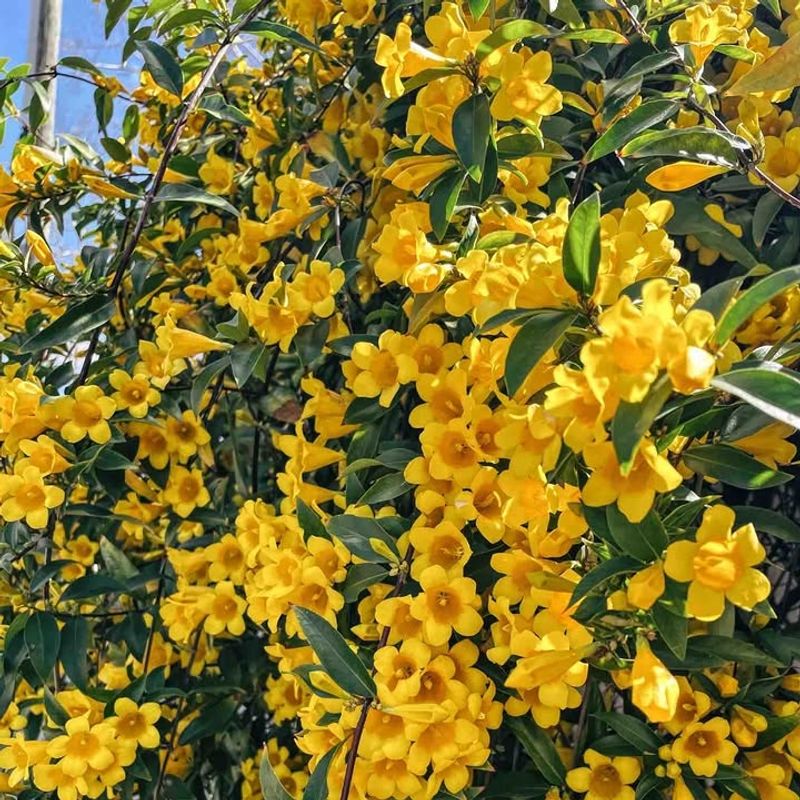
Walk past a Carolina Jessamine in full bloom and you will understand why so many Texas gardeners are obsessed with it. The fragrance alone is enough to stop you in your tracks.
Sweet, light, and floral, it fills the air around it with a scent that feels like springtime in a bottle.
Carolina Jessamine is the state flower of South Carolina, but it has made itself very much at home in Texas. It thrives in the warm, sometimes unpredictable Texas climate. Hot summers, occasional dry spells, none of that slows this vine down for long.
The cheerful yellow flowers appear in late winter and early spring, but the vine itself stays green and lush through the summer. That means even when the blooms fade, you still have a beautiful, leafy climber decorating your fence or trellis.
This vine grows well in full sun or partial shade. It is a great option for spots in your yard that do not get constant direct sunlight. Versatility is one of its strongest selling points.
Carolina Jessamine works beautifully on trellises, fences, arbors, and even mailbox posts. It twines naturally around structures, so you do not need to do much training. Just plant it, water it while it gets established, and let it climb.
One important note: all parts of Carolina Jessamine are toxic if eaten. Keep pets and small children away from it. With that in mind, it is still a stunning and rewarding vine for any Texas garden space.
4. Passionflower Vine
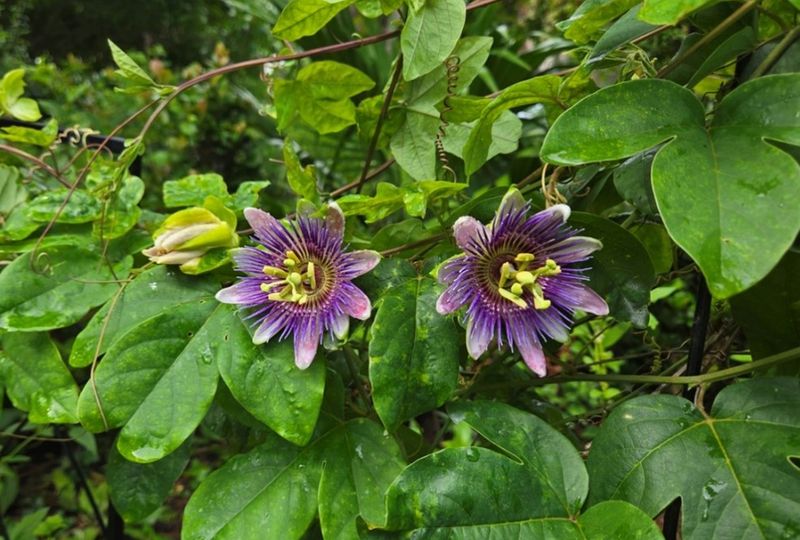
Nothing in the plant world looks quite like a Passionflower. The blooms are so intricate and unusual that first-time viewers often do a double take.
Purple, white, and blue petals surround a crown of wispy filaments that looks almost like something from a science fiction movie.
Native to the Americas, Passionflower Vine grows naturally in parts of Texas. That means it is already adapted to the climate and does not need a lot of extra care. Hot summers and occasional dry spells are no problem for this resilient climber.
Butterflies are absolutely wild about Passionflower. It serves as a host plant for several species, including the Gulf Fritillary and Zebra Longwing.
That means butterflies will lay their eggs on it, and you might get to watch caterpillars hatch and grow right in your backyard.
The vine grows vigorously and can cover a fence or trellis in a single season. It uses curling tendrils to grab onto structures and pull itself upward. Give it a sturdy support and it will reward you generously.
After the flowers fade, Passionflower produces small, round fruits called maypops. These fruits are edible and have a sweet, tropical flavor.
Wildlife like birds and small mammals enjoy them too, so your yard becomes a little ecosystem all on its own.
If you want a vine that sparks conversation, attracts wildlife, and looks like nothing else in the neighborhood, Passionflower Vine is your summer superstar. Plant it in full sun for the best results.
5. Black-Eyed Susan Vine
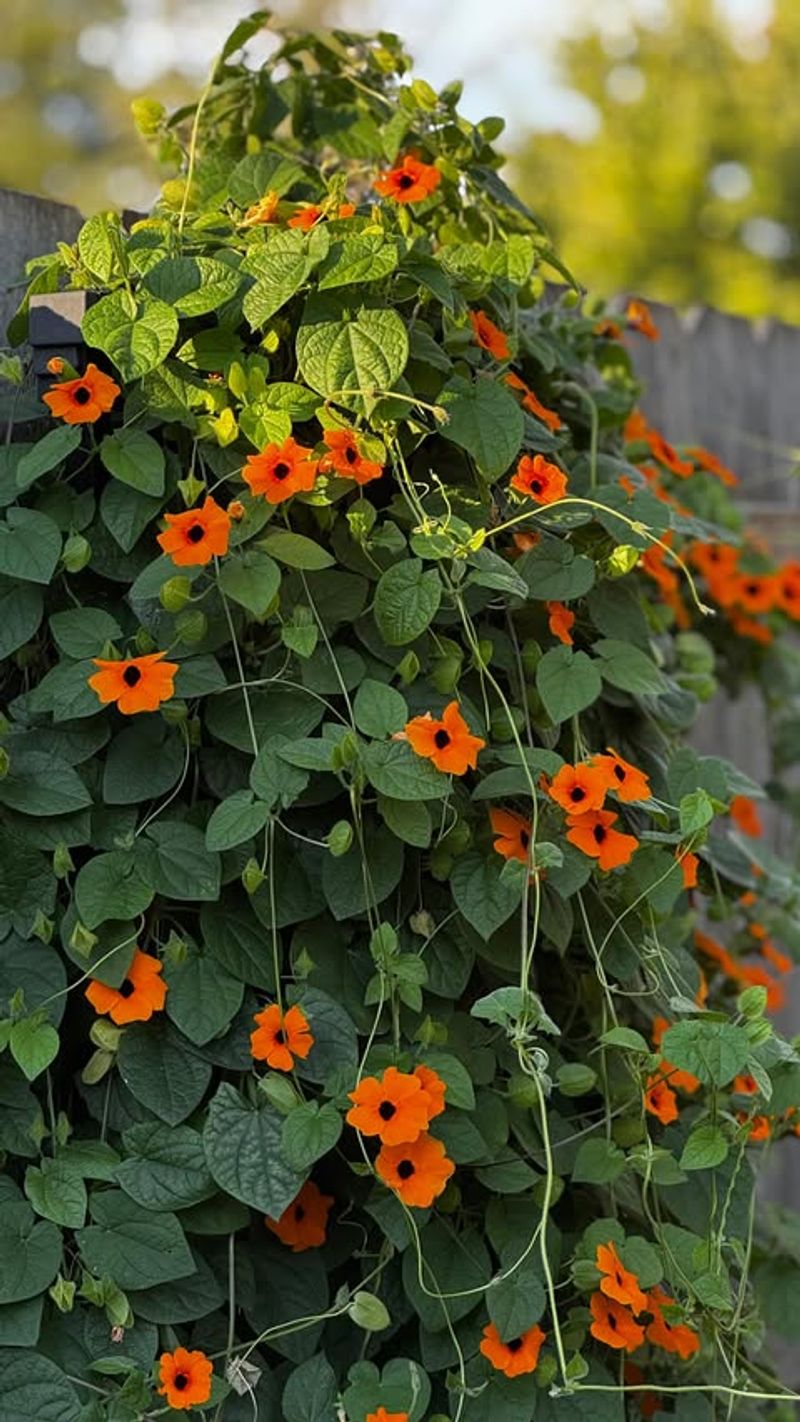
Cheerful, fast, and loaded with color, Black-Eyed Susan Vine is one of those plants that just makes people smile. The flowers are small but mighty, with bright orange or yellow petals surrounding a dark chocolate-brown center.
They look like tiny suns scattered across a green canvas. Technically an annual in most parts of Texas, this vine grows so fast that it feels like it has been there forever.
From seed to full coverage, it can transform a bare trellis or fence into a burst of color in just a few weeks. That speed is a huge advantage during the short Texas growing season.
Black-Eyed Susan Vine loves the heat, which makes it a natural fit for Texas summers. It thrives in full sun and keeps producing flowers as long as the temperatures stay warm. The more sunshine it gets, the more it blooms.
It is a lightweight climber, so it works well on smaller structures like mailbox posts, small trellises, or container gardens with a stake. You do not need a massive fence or arbor to enjoy it.
Even apartment balconies can host this cheerful vine in a pot. Watering consistently helps it stay healthy and blooming. It does not like to dry out completely, so check the soil regularly during hot Texas summers.
A layer of mulch around the base helps hold moisture in. For a pop of instant summer color that costs very little and grows like crazy, Black-Eyed Susan Vine is a top pick for Texas gardeners of all experience levels.
6. Hyacinth Bean Vine
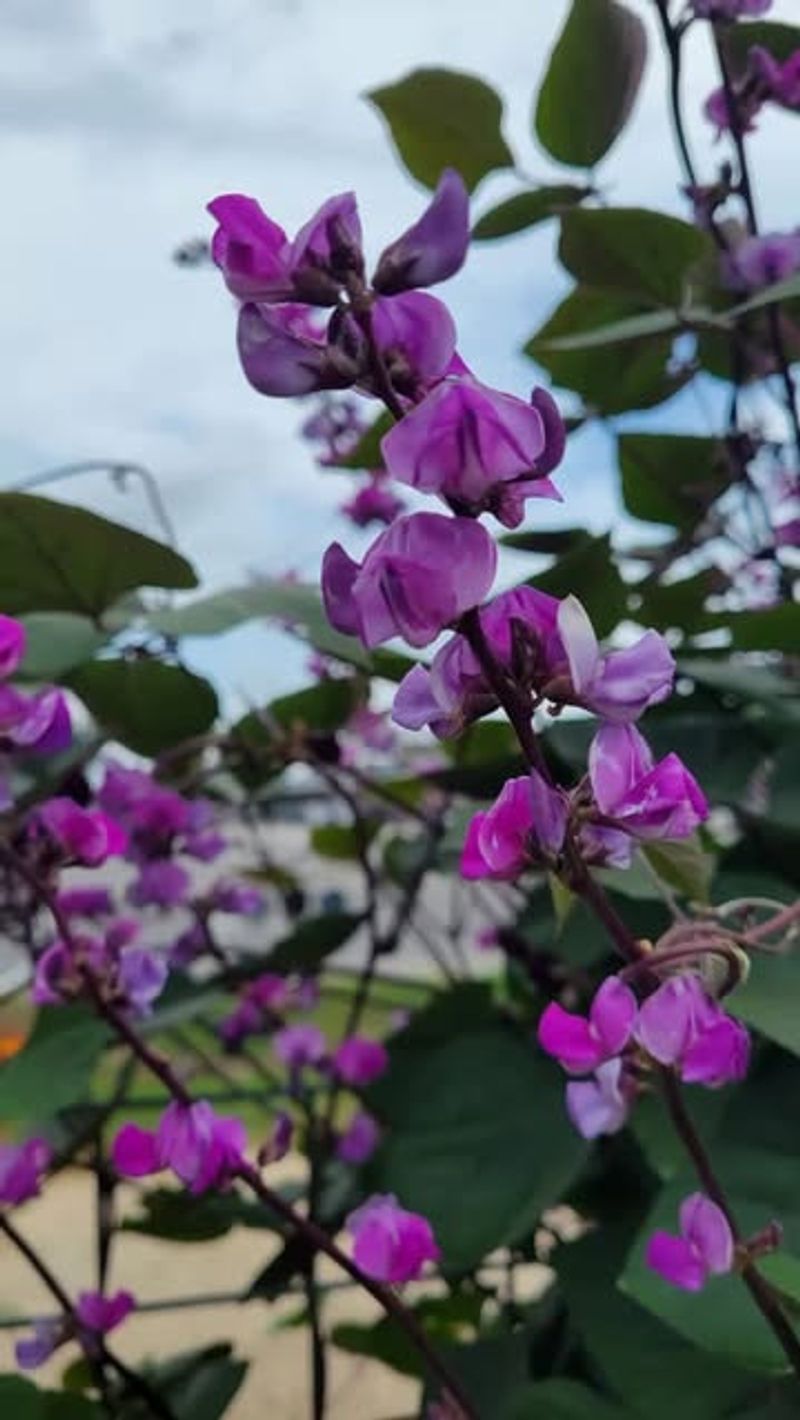
There is something almost theatrical about Hyacinth Bean Vine. From the moment it starts climbing, it puts on a show.
First come the purple and white flowers, then the glossy, deep-purple seed pods that look almost too beautiful to be real. It is a vine that earns attention at every stage of growth.
Thomas Jefferson reportedly grew Hyacinth Bean Vine at Monticello, so this plant has some serious history behind it. Centuries later, it is still a beloved garden favorite across the American South, including right here in Texas.
Some things never go out of style. In Texas, Hyacinth Bean Vine behaves as a fast-growing annual. It can climb six to fifteen feet in a single season, which means it covers ground quickly.
If you have an ugly fence or a bare arbor that needs a makeover, this vine can handle the job in record time.
Full sun is where it performs best. Plant it in a sunny spot with well-drained soil, give it something sturdy to climb, and water it regularly while it gets established. After that, it is fairly low-maintenance and keeps on growing.
The seed pods are eye-catching and stay on the vine for weeks. They add a bold, dramatic element to the garden even after the flowers have finished. Dried pods can also be saved and replanted the following year.
If you want a vine that looks exotic, grows fast, and gives your Texas yard serious personality, Hyacinth Bean Vine is the one to choose this summer.
7. Morning Glory
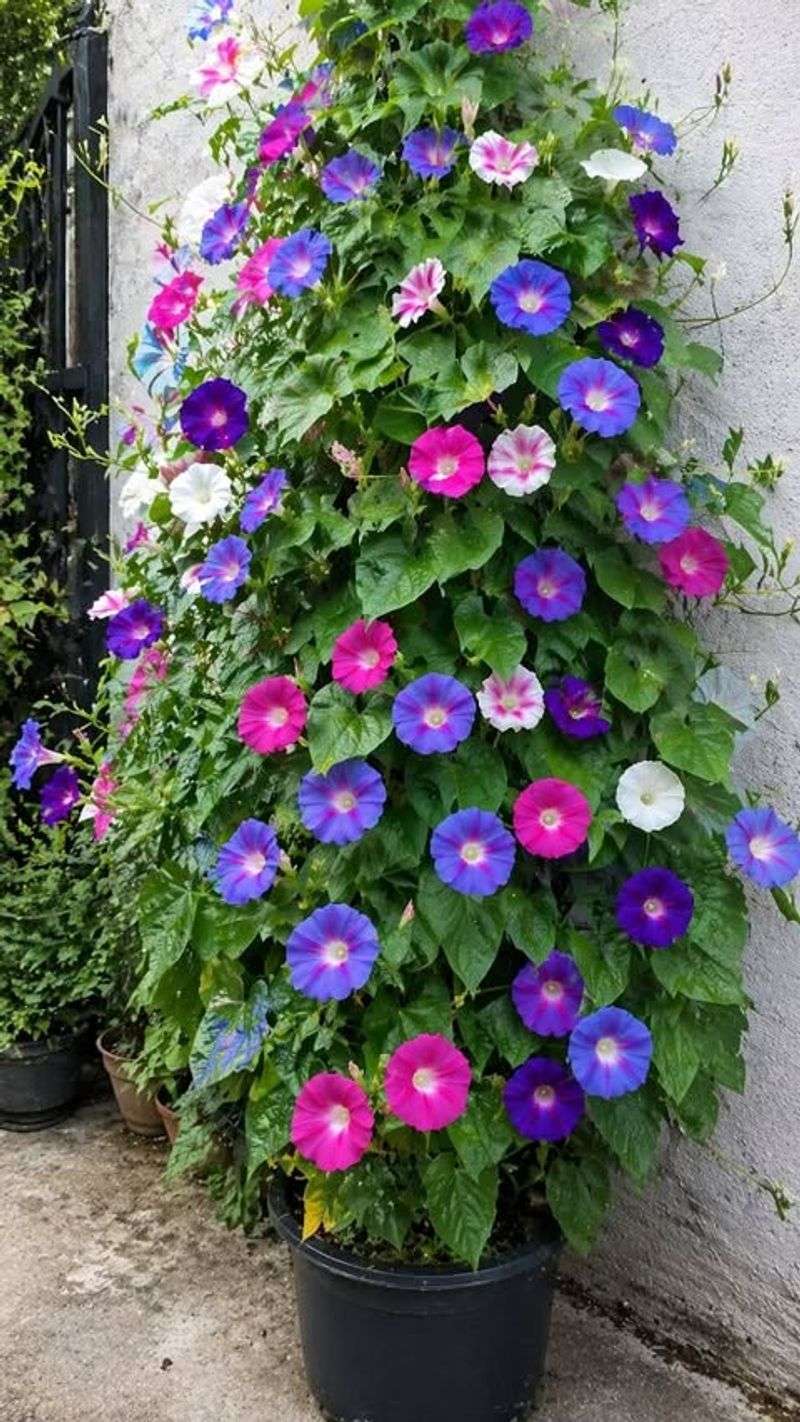
Ask almost any gardener about their first vine, and there is a good chance Morning Glory will come up. It is a classic for a reason.
Easy to grow, fast to climb, and absolutely gorgeous in full bloom, it has been winning over gardeners for generations. Texas summers give it exactly the warm conditions it craves.
Morning Glory gets its name from the way its flowers open in the morning and close by afternoon. Each bloom lasts just one day, but the vine produces so many flowers that you will have fresh ones greeting you every single morning.
It is like a daily gift from your garden. The color range is one of Morning Glory’s biggest selling points. You can find varieties in deep blue, vivid purple, hot pink, white, and even striped patterns.
Mixing a few different colors on the same trellis creates a stunning, multicolored display that looks almost painted.
It grows quickly from seed, which makes it one of the most budget-friendly vines you can plant. Direct sow the seeds into the ground after the last frost, and within weeks you will have a climbing vine reaching for the sky.
No expensive transplants needed. Morning Glory does best in full sun and average soil. Too much fertilizer actually slows down the blooms, so keep the feeding light.
Consistent watering during dry Texas summers helps keep the flowers coming all season long.
For a vine that delivers maximum color with minimum effort, Morning Glory is hard to beat. It is the perfect finishing touch for any Texas summer garden.