What Makes Sunflowers A Smart Choice For Arizona Gardens
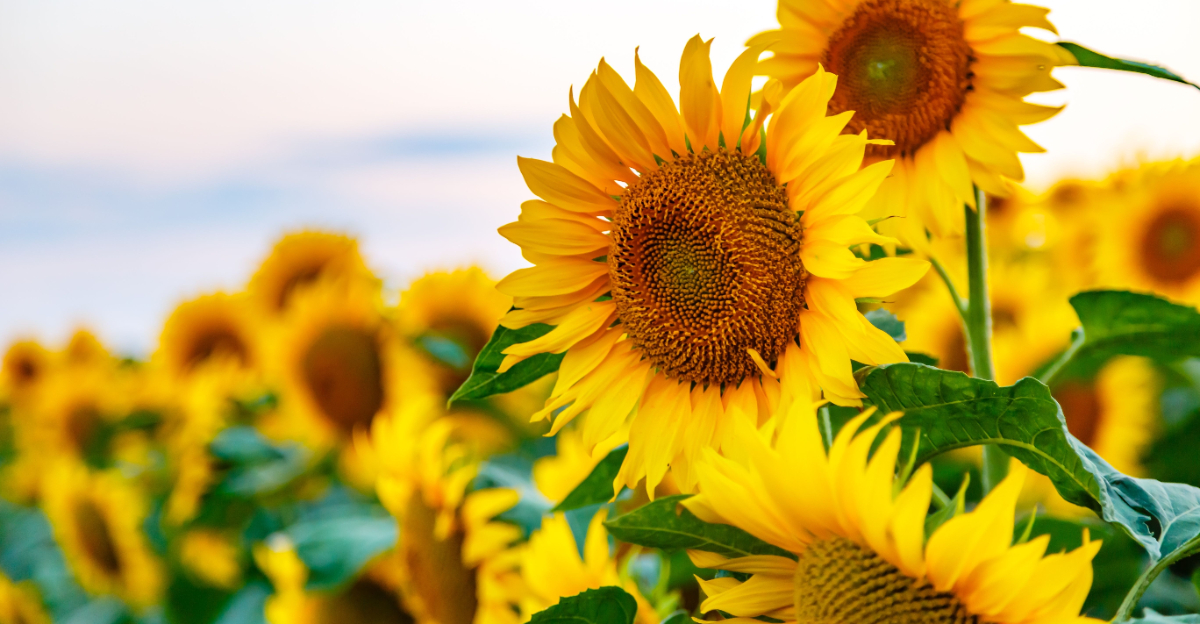
Sunflowers keep showing up in Arizona gardens for a reason, but it is not always obvious at first. Many plants struggle once heat builds and soil dries fast, yet these stand tall and keep going without constant attention.
Growth can be quick, and the overall look of a yard shifts faster than expected once they take off.
Size options make them easy to place, whether the goal is filling a small spot or creating something more noticeable. Timing plays a big role, and small early choices can shape how they look later in the season.
Even simple care can lead to a strong, steady presence.
Give them the right start, and they settle in with a consistency that surprises many people across Arizona.
1. They Handle Heat And Strong Sun With Ease
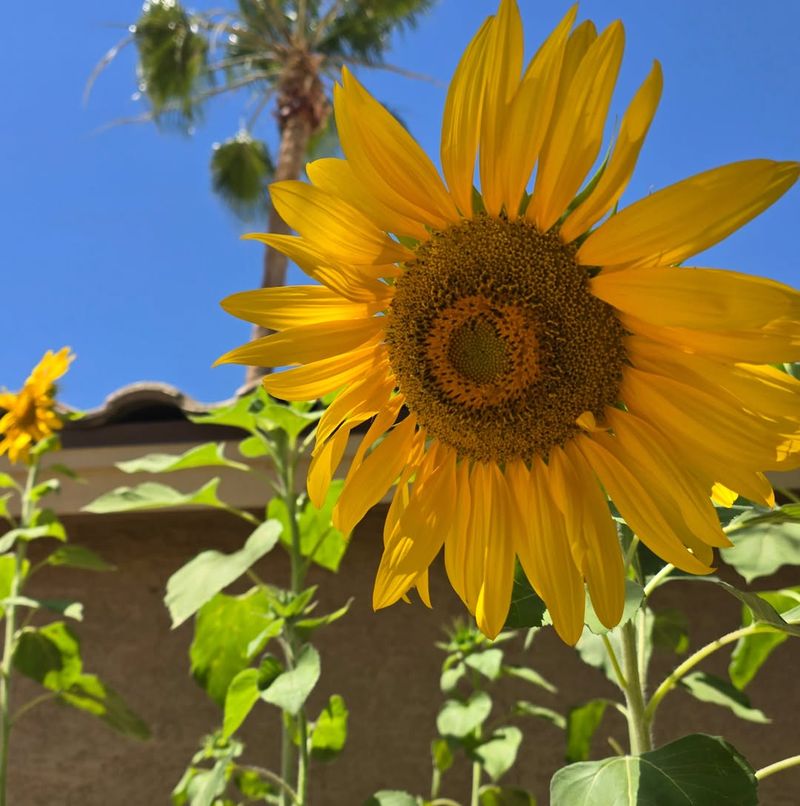
Sunflowers were practically built for places like Arizona. Native to North America, they evolved in open, sun-drenched environments where shade is rare and temperatures climb fast.
That history shows up in how they perform when most other plants start struggling.
In Phoenix and Tucson, summer temperatures regularly push past 100 degrees Fahrenheit. Most flowering plants wilt, fade, or simply stop blooming when the heat gets that intense.
Sunflowers keep going. Their thick stems and waxy leaves help them hold onto moisture without wilting under direct afternoon sun, which is exactly the kind of punishment Arizona dishes out daily.
What makes them especially well-suited to the desert is how they follow the sun. Young sunflowers track sunlight throughout the day, a process called heliotropism.
This helps them absorb maximum energy while managing heat stress efficiently. Once they reach maturity, the flower heads typically face east, which reduces exposure during the hottest afternoon hours.
Planting sunflowers in a south or east-facing bed in Arizona gives them the best start. They need at least six to eight hours of direct sunlight, which is rarely a problem here.
Unlike tropical plants that sulk in dry heat, sunflowers respond to full sun with stronger stems and bigger blooms.
2. Fast Growth Brings Quick Results
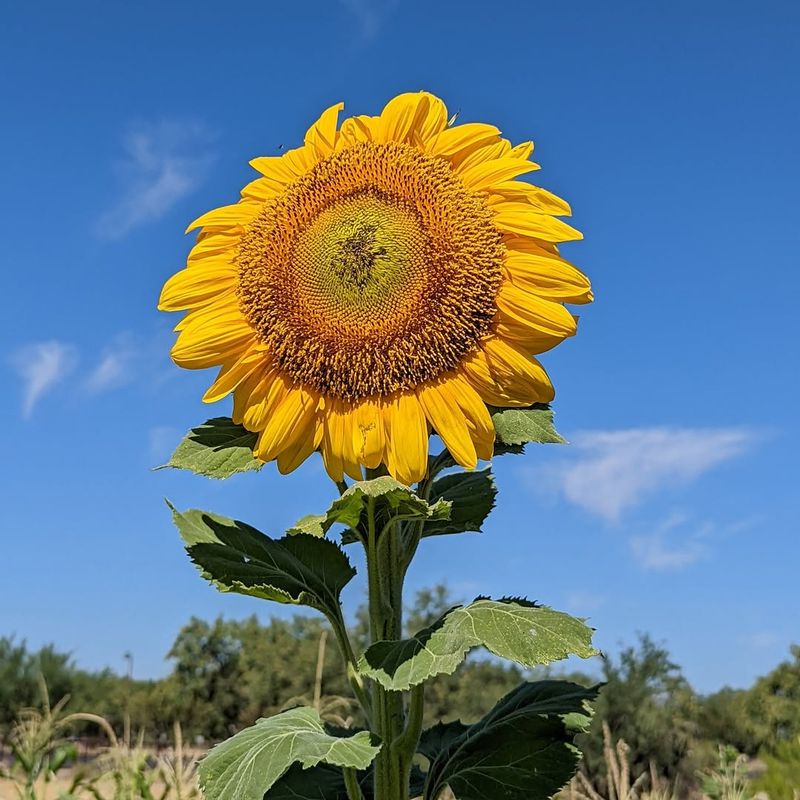
Few plants reward impatient gardeners the way sunflowers do. From the moment a seed hits the soil, growth happens fast.
Under warm Arizona conditions, sunflower seeds typically germinate within seven to ten days. Seedlings push up quickly and don’t look back.
Most standard varieties reach full height in sixty to seventy-five days from planting. Dwarf types like ‘Teddy Bear’ can bloom even sooner.
In Arizona, where the growing window in spring can feel short before extreme heat sets in, that quick turnaround is a real advantage. You can plant in late February or early March and have blooms well before the brutal July heat peaks.
Growth speed also means sunflowers are a great choice for filling gaps in a garden bed. If a section of your yard looks bare or unfinished, sunflowers can transform it within weeks.
There’s no waiting around for slow establishment like you get with shrubs or perennials that take a full season just to settle in.
Your Arizona Garden Changes Every Week. Your Plan Should Too.
Gardening in Arizona changes quickly throughout the season. Every Friday you’ll receive a simple weekly plan showing exactly what to plant, prune, fertilize, harvest, and protect so you never miss the right timing.
Kids especially love growing sunflowers in Arizona because the progress is visible almost every day. Watching a plant go from a tiny seed to a towering stalk in just a few weeks is genuinely exciting, and it makes gardening feel worthwhile from the start.
3. Bright Blooms Attract Pollinators
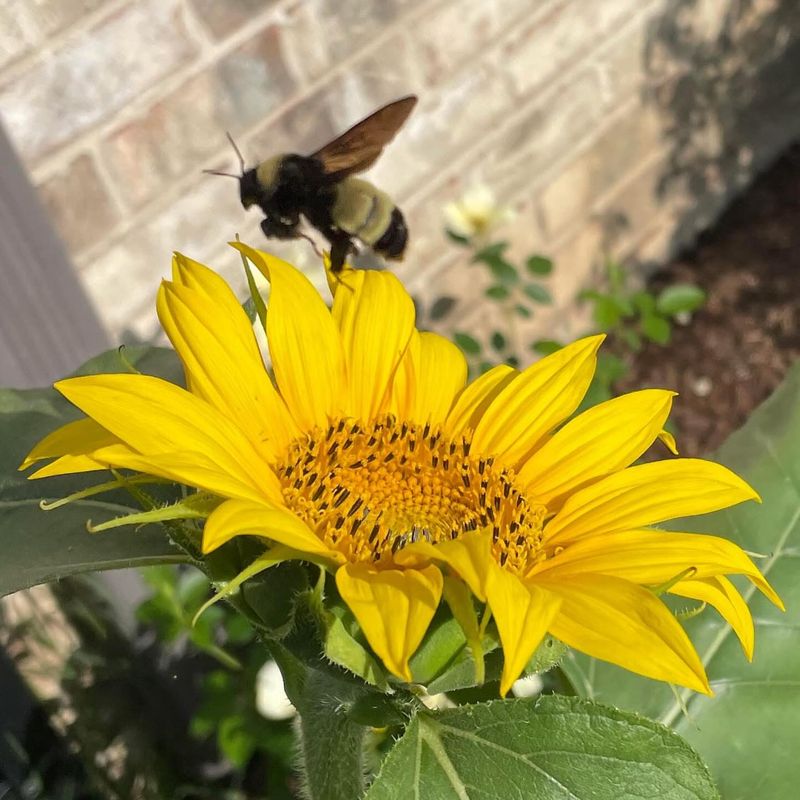
Walk past a blooming sunflower and you’ll almost always hear buzzing before you see the bees. Sunflowers are pollinator magnets, and that’s not just a casual observation.
In Arizona, native pollinators like the cactus bee and various species of mason bees are already working hard in the landscape. Adding sunflowers gives these insects a reliable, energy-rich stop during their foraging routes.
More pollinators in your yard also means better fruit set on vegetable plants, more seed production in wildflower patches, and a generally healthier garden ecosystem.
Monarch butterflies, which pass through parts of Arizona during migration, are also drawn to sunflowers. Planting a patch near other nectar plants creates a layered buffet that supports multiple species at once.
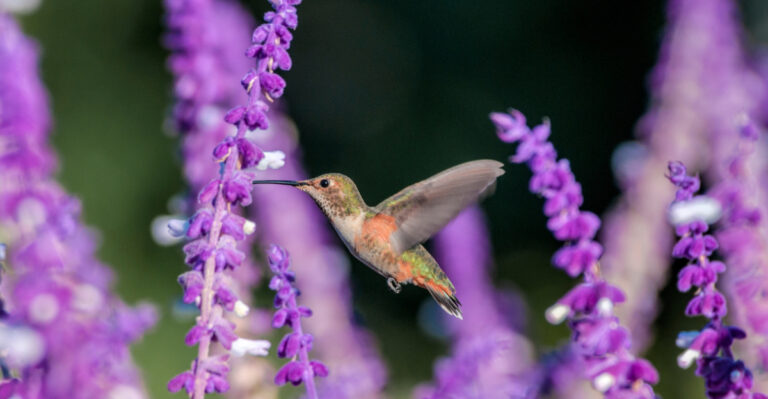
Even hummingbirds have been spotted near sunflower patches in Arizona, attracted by nearby insect activity and occasional nectar.
Single-petal sunflower varieties tend to attract more pollinators than fully double-flowered types, since the pollen and nectar are more accessible. Varieties like ‘Lemon Queen,’ ‘Italian White,’ and ‘Autumn Beauty’ are excellent choices for pollinator-focused Arizona gardens.
4. Low Water Needs Once Established
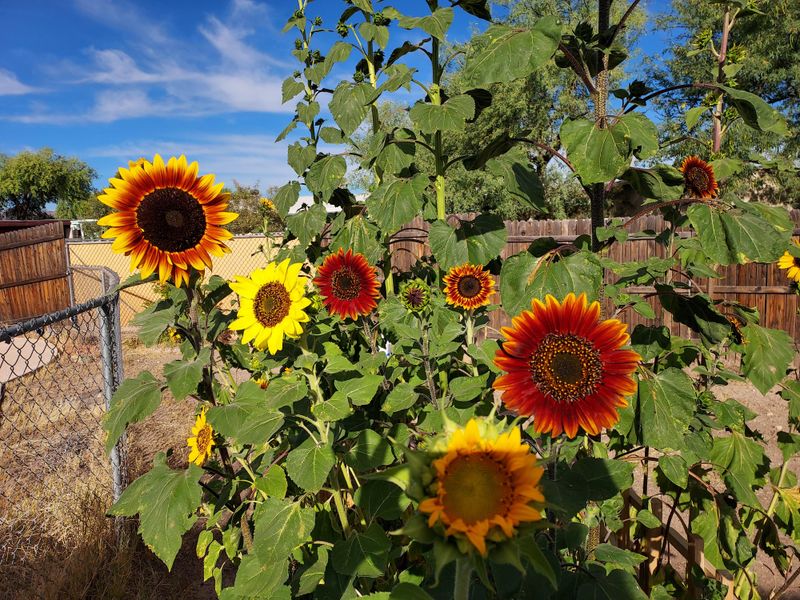
Water is precious in Arizona, and every plant you choose should earn its place in the irrigation schedule. Sunflowers make that case easily.
Once they get past the seedling stage and establish a strong root system, their water needs drop significantly compared to most flowering annuals.
Young sunflowers need consistent moisture to get started, roughly every few days during the first two to three weeks. After that, deep but infrequent watering is the better approach.
Encouraging roots to grow downward helps the plant access soil moisture more efficiently, which matters a lot in Arizona’s dry climate where surface soil dries out fast.
Established sunflowers in Arizona typically do well with watering once or twice a week during peak summer heat, depending on your soil type and how hot conditions get.
Sandy soils drain faster and may need slightly more frequent watering than clay-heavy or amended beds.
Mulching around the base of the plants helps retain soil moisture between watering sessions and keeps root temperatures from spiking.
Compared to a lawn or a traditional flower bed filled with thirsty annuals, a sunflower patch is genuinely low-maintenance from a water standpoint. Drip irrigation works especially well for sunflowers in Arizona because it delivers water directly to the root zone without wasting it on foliage or open soil.
5. Strong Stems Hold Up In Dry Conditions
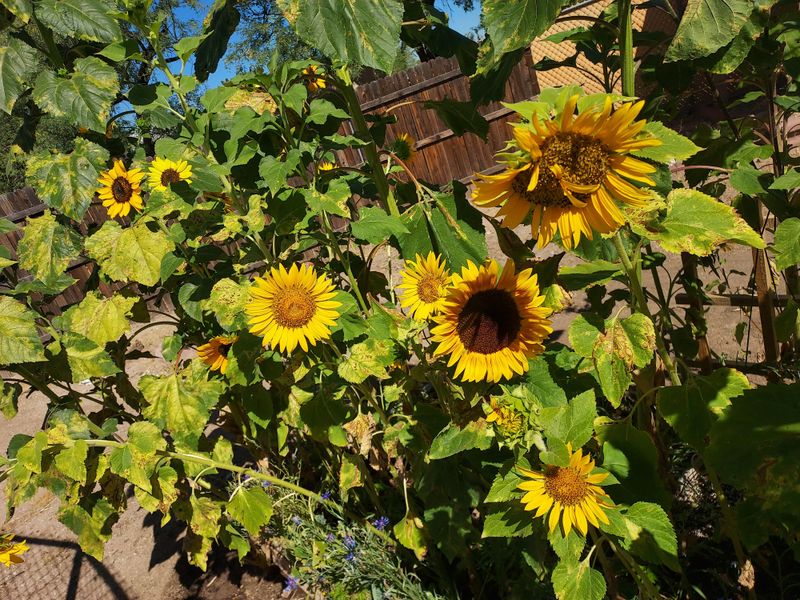
Arizona wind is no gentle breeze. Dust storms, monsoon gusts, and persistent afternoon winds can snap weak-stemmed plants in half before they ever get a chance to bloom.
Sunflowers handle all of that better than most people expect.
Sunflower stems are fibrous and surprisingly tough. As they grow in dry, warm conditions, they develop thicker cell walls that help them stand upright even when wind picks up.
Gardeners in Tucson and the Phoenix metro area often notice that sunflowers planted in open beds stay upright through monsoon season with minimal staking required, especially when they’re grown in full sun where stems stay compact and strong.
Dry air actually works in sunflowers’ favor here. In humid climates, stems can become soft and prone to flopping.
Arizona’s low humidity keeps stem tissue firm, which is one reason sunflowers tend to perform structurally better in the desert than in wetter regions. That natural rigidity means less work for you as a gardener.
Taller varieties, like ‘Mammoth Russian’ or ‘American Giant,’ can reach heights of eight to twelve feet and may benefit from light staking in exposed spots. Shorter varieties bred for container growing or windy areas are even more stable.
Choosing the right variety for your specific Arizona microclimate makes a real difference in how well plants hold up season to season.
6. Easy To Grow From Seed
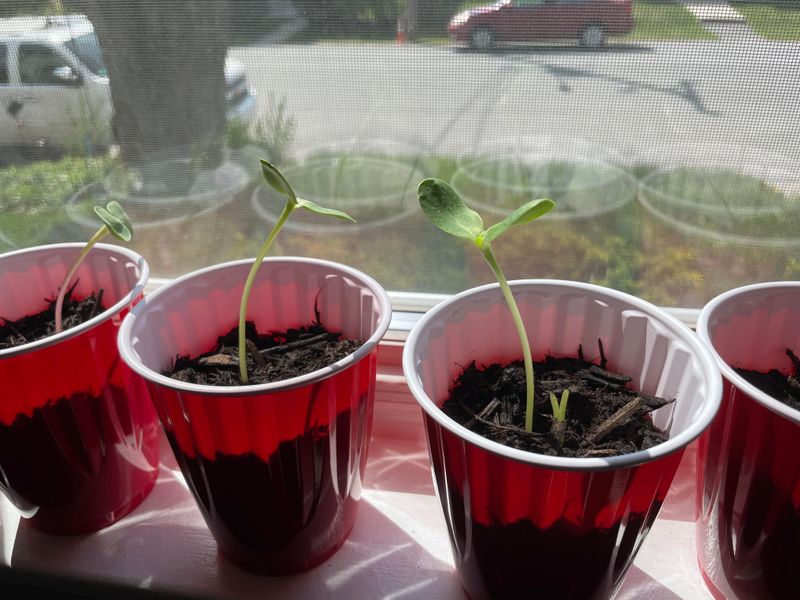
Not every gardener has the time or budget to buy transplants every season. Sunflowers solve that problem completely because they grow reliably and quickly from seed, even in Arizona’s challenging soil conditions.
Direct sowing is the preferred method here. Sunflowers have long taproots that don’t like being disturbed, so starting them indoors and then transplanting can set them back.
Dropping seeds directly into a prepared garden bed in Arizona, usually from late January through early March or again in late summer for a fall crop, gives you the best germination results.
The soil just needs to be loose, reasonably drained, and warm enough to support sprouting.
Arizona’s soil can be alkaline and compacted in many areas, but sunflowers are forgiving. A light amendment of compost worked into the top few inches before planting improves germination rates noticeably.
Plant seeds about an inch deep and water them in well. After that, nature handles most of the work.
Thinning seedlings once they reach a few inches tall helps the strongest plants thrive. It feels counterproductive to remove seedlings you just watched sprout, but crowded plants compete for nutrients and end up weaker overall.
Keeping the best ones spaced properly leads to healthier, fuller blooms by midsummer.
7. Add Height And Structure To Beds
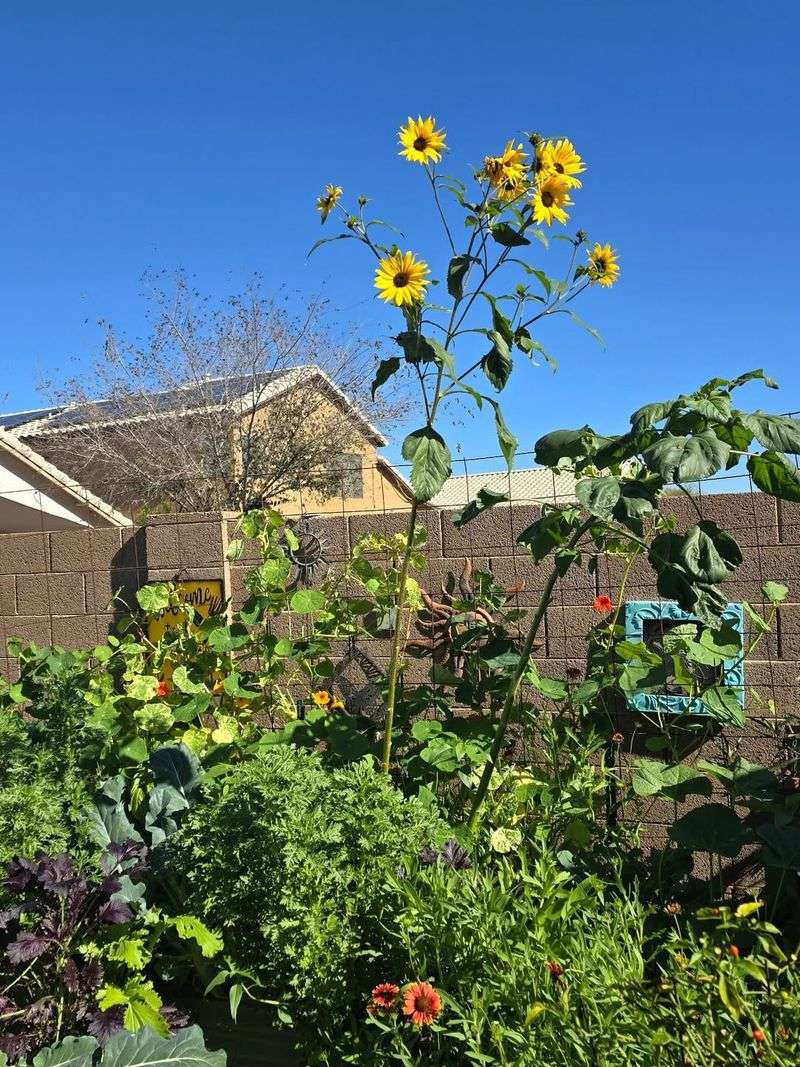
A flat garden bed can feel unfinished, no matter how many plants fill it. Sunflowers fix that instantly by adding vertical drama that most other annuals simply can’t deliver in the same growing window.
Tall varieties planted at the back of a border create a natural backdrop that makes shorter plants pop in front. In Arizona landscapes, where the surrounding terrain is often flat and open, that vertical element becomes even more visually impactful.
A row of eight-foot sunflowers along a fence line or property edge transforms a plain space into something that actually draws the eye.
Sunflowers also work well as a seasonal privacy screen. During the months they’re in bloom, a dense row along a patio or garden perimeter blocks sightlines without requiring a permanent structure.
For renters or homeowners who want flexibility in their outdoor space, that kind of temporary structure is genuinely useful.
Mixing sunflower varieties with different heights creates layered depth in a bed. Shorter types like ‘Sunspot’ or ‘Big Smile’ sit comfortably at eighteen to twenty-four inches, while giants tower above them.
Layering plants by height is a classic design technique, and sunflowers make it easy because they grow predictably and stay in place once established.