These 10 Native Michigan Plants Practically Grow Themselves In Heavy Clay Soil
Clay soil is a reality for a huge number of Michigan gardeners, and the plants that perform well in it are worth knowing by name.
That dense, slow draining ground turns away most things that are not built for it, and years of trying to force plants into unfavorable soil gets expensive and discouraging fast. Native Michigan plants sidestep that problem almost entirely.
They developed alongside the actual soil conditions found across this state, including the heavy clay stretches that dominate so many yards in the lower peninsula, and they do not need the conditions improved before they are willing to grow.
Several of them spread confidently once established, filling difficult areas without asking for fertilizer, supplemental watering, or seasonal intervention.
The ten plants here were chosen specifically because they handle clay with a kind of ease that feels almost unfair compared to how much effort non native plants demand in the same ground.
Once they are in, they largely take care of themselves, which is exactly what a difficult garden spot needs.
1. Swamp Milkweed (Asclepias incarnata)
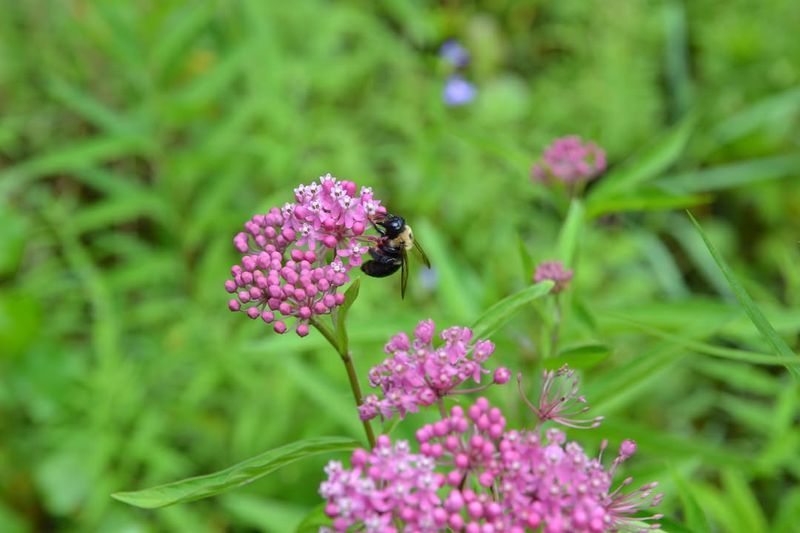
Few plants earn their spot in a yard quite like Swamp Milkweed. This native beauty has been thriving in the state’s wet meadows and marshy edges for generations, and it brings that same toughness straight into your backyard garden.
The clusters of rosy pink blooms are honestly stunning, and they show up reliably every summer without much fuss from you.
What makes this plant so impressive is how perfectly it handles heavy clay. Most plants sulk in waterlogged, dense soil, but Swamp Milkweed practically celebrates it.
The roots push deep and anchor firmly, pulling nutrients from soil that would frustrate almost any other perennial. It’s naturally adapted to exactly the kind of challenging moisture-retentive ground that gardeners deal with constantly.
Beyond its toughness, this plant is a monarch butterfly magnet. Monarch caterpillars depend on milkweed as their only food source, so planting it means you’re actively supporting one of North America’s most beloved insects.
Pollinators of all kinds swarm the flowers throughout the summer months, making your yard feel alive and buzzing with energy.
Plant it in a sunny to partly sunny spot and give it one good watering when you first put it in the ground. After that, Michigan’s natural rainfall usually handles everything else.
It spreads slowly by seed and underground rhizomes, gradually filling in an area with gorgeous, wildlife-friendly growth that practically takes care of itself.
2. Blue Flag Iris (Iris versicolor)
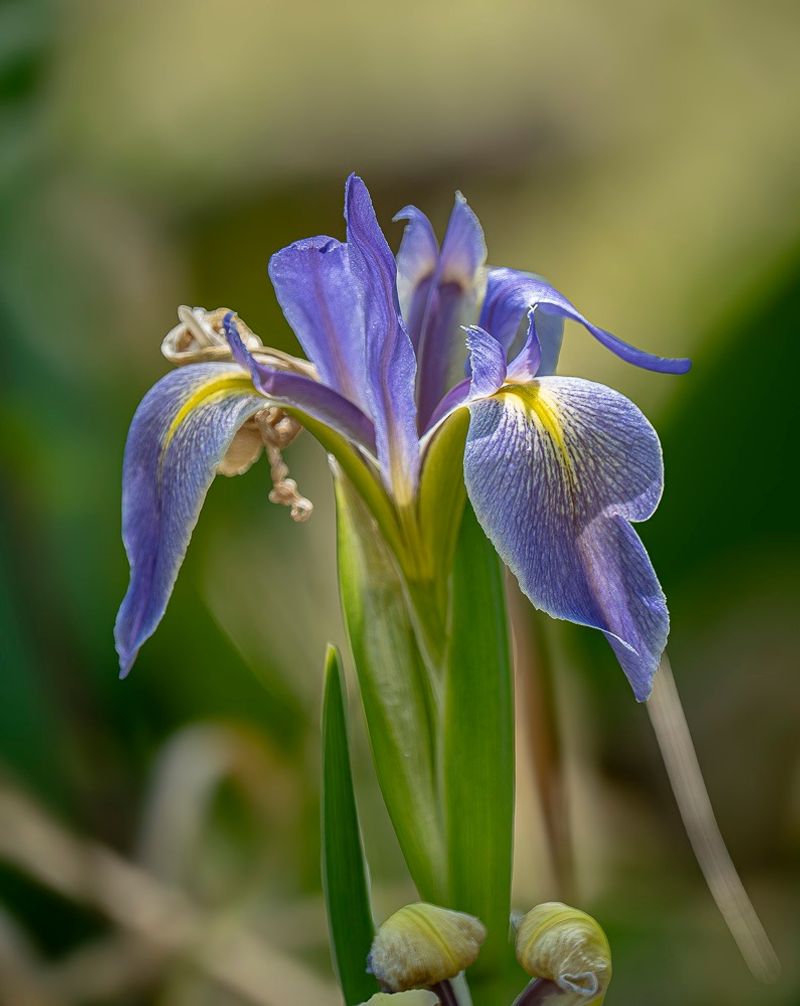
There is something almost magical about Blue Flag Iris blooming along a wet garden edge in early summer. The flowers are a rich violet-blue with intricate yellow and white markings, and they look like something straight out of a painting.
Native to Michigan and the broader Great Lakes region, this iris has been decorating wetland edges and clay-heavy soils for thousands of years without any human help.
Heavy clay and poorly drained low spots are exactly where Blue Flag Iris feels most at home. Rain gardens, swampy corners, and spots where water pools after a big storm are all perfect locations for this plant.
Your Michigan Garden Changes Every Week. Your Plan Should Too.
Gardening in Michigan changes quickly throughout the season. Every Friday you’ll receive a simple weekly plan showing exactly what to plant, prune, fertilize, harvest, and protect so you never miss the right timing.
While other perennials struggle and rot in standing water, Blue Flag Iris just keeps growing and spreading, filling in those difficult wet areas with bold, strap-like foliage that stays attractive all season long.
One fun fact worth knowing: Blue Flag Iris was used medicinally by several Native American tribes for centuries. The roots were used carefully for specific purposes, though the plant itself is toxic if ingested, so it’s best admired rather than handled casually.
It’s a plant with real history woven right into Michigan’s landscape.
For best results, plant it in full sun to partial shade in a spot that stays consistently moist. It spreads steadily through rhizomes over time, creating a lush, low-maintenance colony that handles our unpredictable weather with zero complaints.
It’s genuinely one of the most beautiful and reliable clay-tolerant plants available.
3. Joe Pye Weed (Eutrochium maculatum)
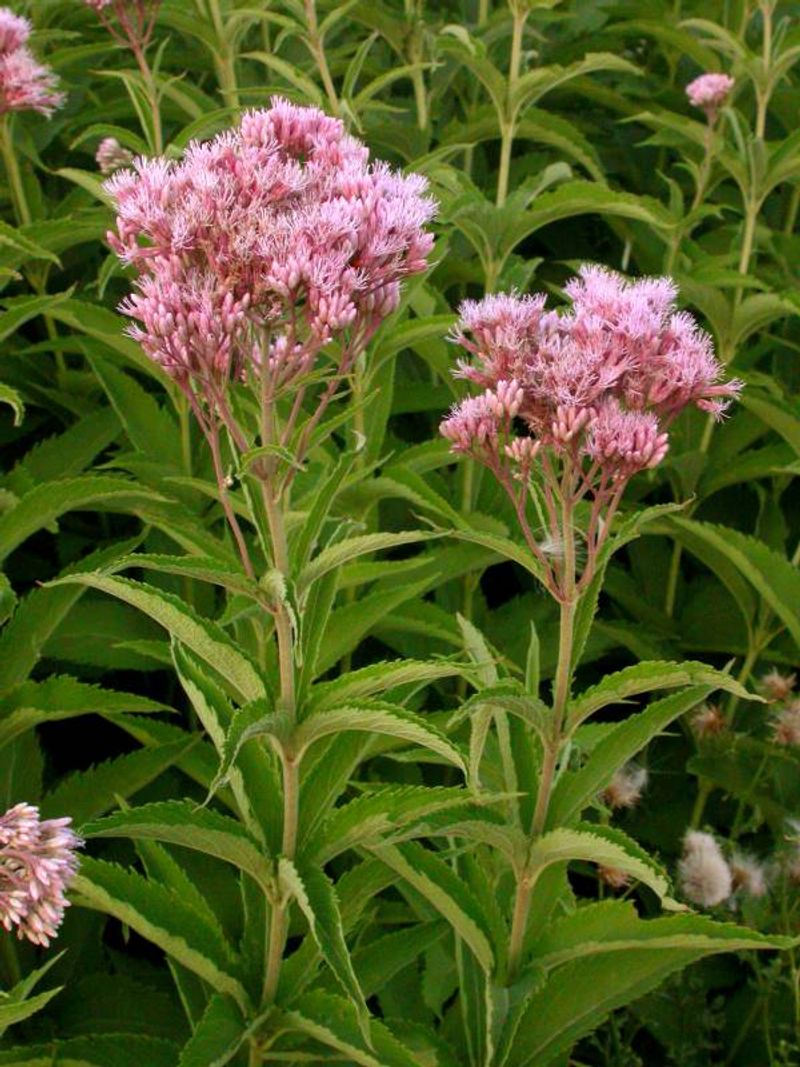
Walk past a patch of Joe Pye Weed in late summer and you will immediately understand why gardeners love it.
The towering stems can reach six to eight feet tall, topped with massive, dusty mauve-pink flower clusters that butterflies and bees absolutely cannot resist.
It’s bold, dramatic, and unmistakably native, with a presence that transforms any garden corner into something genuinely impressive.
Clay soil is no problem for this powerhouse perennial. Joe Pye Weed naturally grows in moist, fertile lowlands and floodplain edges across Michigan, so it’s completely comfortable in the dense, nutrient-rich conditions that heavy clay provides.
Once established, it pushes roots deep and grows with impressive vigor, even during the hot, humid summers that stress out less adapted plants.
The name itself has an interesting backstory. It’s widely believed to reference a Native American healer named Joe Pye who reportedly used the plant to treat fevers during colonial times, though historians debate the exact details.
Either way, the plant’s long history in North American landscapes adds a layer of character that makes it even more appealing to grow.
Give it a spot with full to partial sun and decent moisture, and it will reward you every single year without replanting. Cut it back in early spring before new growth emerges to keep it tidy.
Joe Pye Weed is also deer-resistant, which is a huge bonus for gardeners dealing with hungry wildlife roaming through the neighborhood.
4. New England Aster (Symphyotrichum novae-angliae)
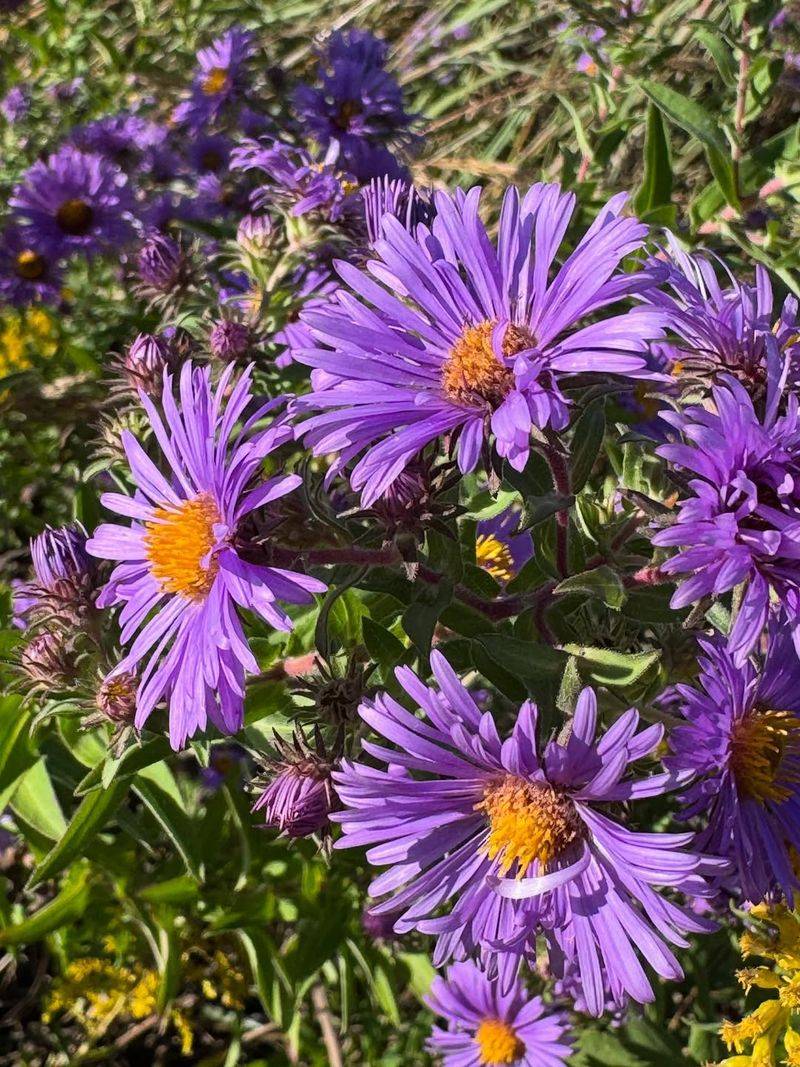
When most of the garden starts winding down in autumn, New England Aster is just hitting its peak. The vivid purple flowers with bright yellow centers explode across the plant in September and October, creating a show of color that genuinely lights up the yard.
Monarch butterflies fueling up for their migration south absolutely flock to these flowers, making fall gardening feel incredibly rewarding in Michigan. Clay soil does not slow this plant down at all.
New England Aster naturally grows in moist meadows, roadsides, and low areas throughout Michigan, meaning it’s completely adapted to the moisture fluctuations and dense soil texture that challenge so many other garden plants.
It handles spring wetness and summer dry spells with impressive resilience, bouncing back without any special treatment from the gardener.
Growth can be vigorous, sometimes reaching four to six feet tall in rich clay conditions. Pinching the stems back in early summer helps keep the plant more compact and bushy, which also encourages heavier flowering come fall.
It’s a simple trick that makes a noticeable difference in how full and colorful the plant looks when bloom time arrives.
Plant New England Aster in full sun for the best flowering performance. It spreads by both seed and underground shoots over time, slowly naturalizing into a reliable, low-maintenance colony.
Michigan’s native bees, especially bumblebees, rely heavily on late-season bloomers like this one, so growing it means you’re genuinely contributing to the local ecosystem in a meaningful way.
5. Cardinal Flower (Lobelia cardinalis)
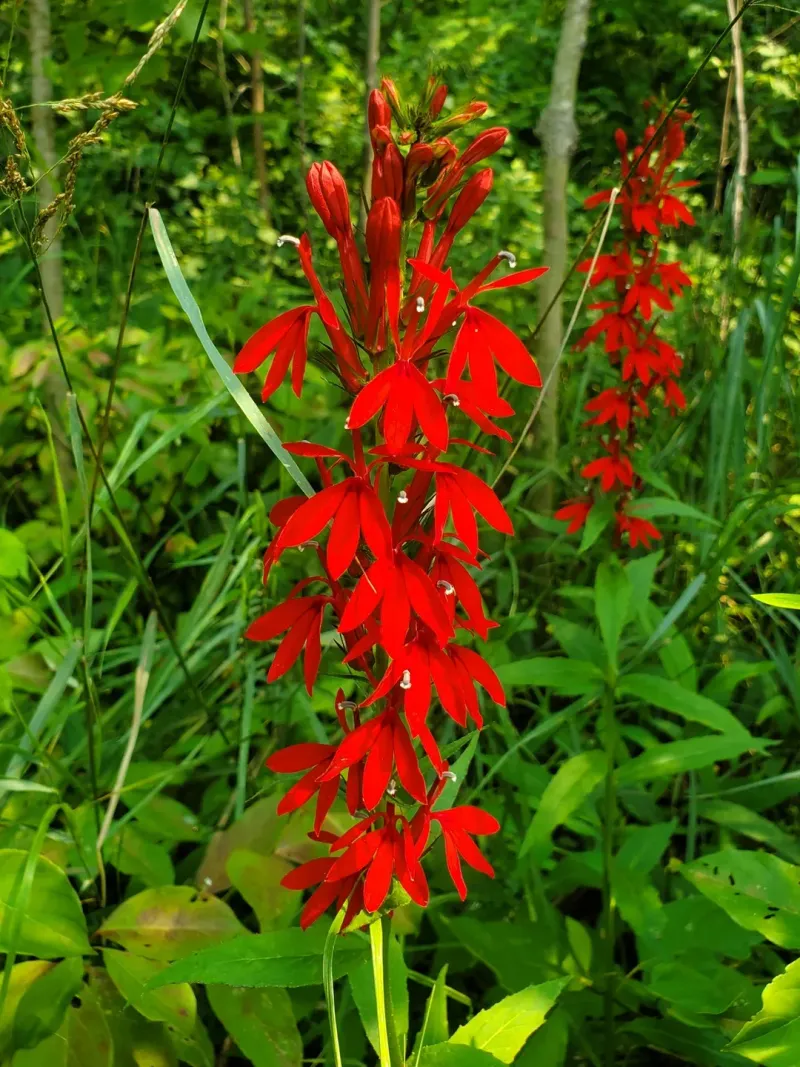
Bright red is not a color you see often in native gardens, which is exactly what makes Cardinal Flower so unforgettable.
The tall spikes of brilliant scarlet blooms appear in midsummer and practically glow against green foliage, drawing hummingbirds in from what seems like miles away.
Ruby-throated hummingbirds and Cardinal Flower have a relationship built over millions of years, and watching that interaction up close in your own yard is genuinely exciting.
Moist clay is this plant’s natural territory. Cardinal Flower grows wild along streambanks, wet meadow edges, and low woodland areas where soil stays consistently damp.
Heavy clay that holds moisture is actually ideal, giving the roots a cool, wet environment to thrive in throughout the warm summer months. It’s one of those plants that makes you appreciate clay soil rather than fight it.
One thing to keep in mind is that Cardinal Flower behaves as a short-lived perennial, typically lasting two to three years before the original plant fades. The good news is it self-seeds readily, and young seedlings establish quickly in moist soil.
Once you have it growing in your yard, it tends to stick around and reappear in new spots nearby, spreading naturally without much effort on your part.
Plant it where it gets morning sun and some afternoon shade to prevent the soil from drying out too fast. Keep the area consistently moist, especially during the first season.
After that, Cardinal Flower rewards minimal care with maximum drama, bringing vivid color and hummingbird activity to the garden all summer long.
6. Switchgrass (Panicum virgatum)
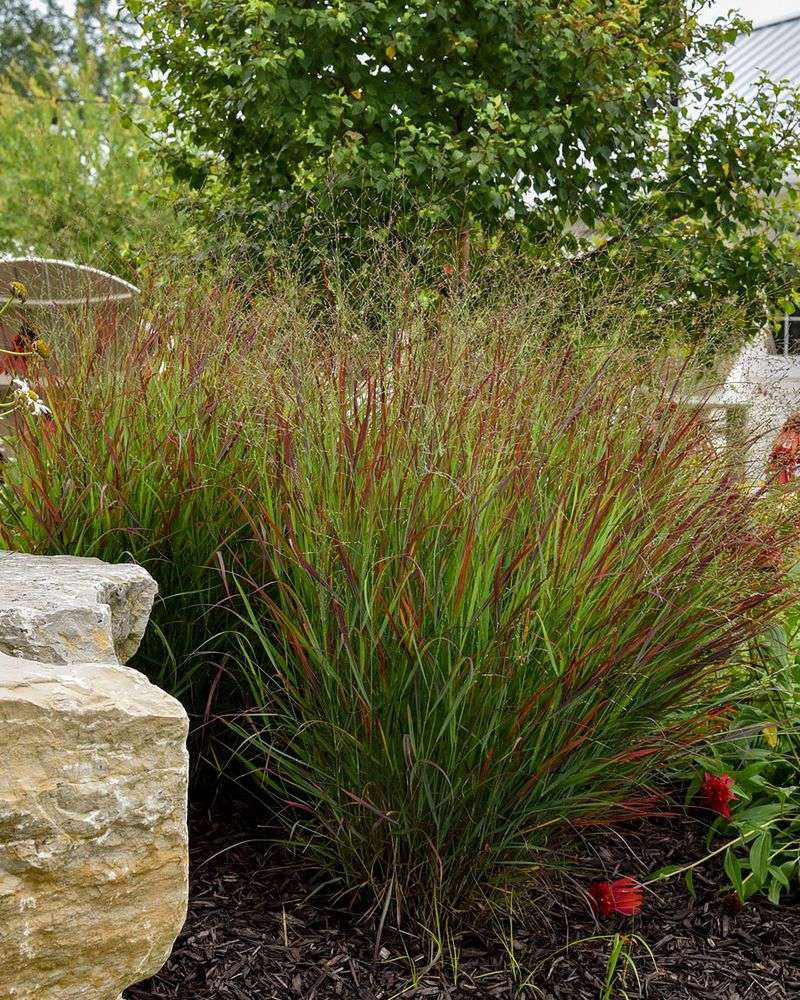
Switchgrass might just be the hardest-working plant on this entire list. It’s a native warm-season grass with roots that can push four to six feet deep into the ground, which means it can access moisture and nutrients that most plants simply cannot reach.
Those deep roots also do something incredibly valuable in clay soil: they break it up over time, gradually improving drainage and soil structure in ways that benefit everything growing nearby.
Across Michigan, Switchgrass grows naturally in prairies, open woodlands, and along roadsides where soil conditions vary wildly. It handles wet clay in spring, baked hard ground in summer, and everything in between without missing a beat.
Few plants offer that kind of broad adaptability, which is why landscape professionals across the Midwest rely on it for difficult sites that other plants cannot handle successfully.
The ornamental appeal is real too. Airy, cloud-like seed heads emerge in late summer and catch the light beautifully, turning golden and copper as autumn arrives.
Many cultivars are available, including varieties with red fall color or compact habits, so you can choose one that fits your specific garden space perfectly. Birds also love the seeds during the colder months, giving the plant year-round value.
Plant Switchgrass in full sun and it will establish quickly, even in dense clay. Cut it back to about four inches in late winter before new growth begins.
It’s drought-tolerant once established, deer-resistant, and virtually maintenance-free after the first year, making it one of the most practical native plants you can possibly add to a Michigan landscape.
7. Culver’s Root (Veronicastrum virginicum)
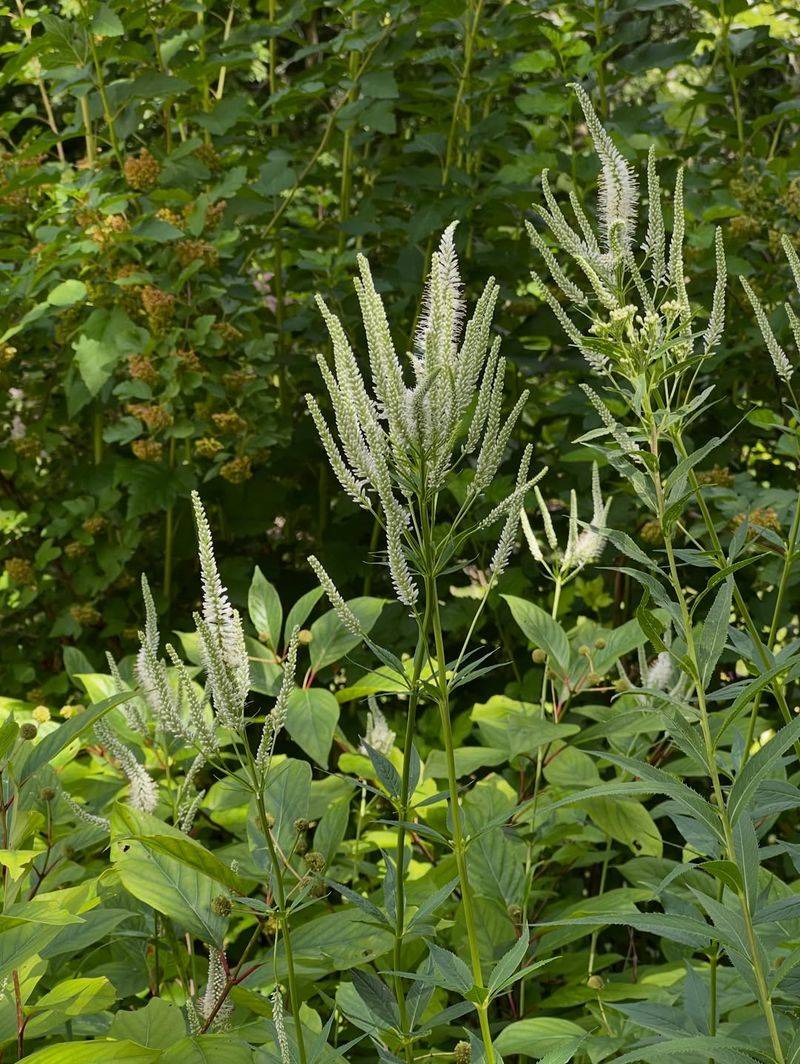
Culver’s Root is the kind of plant that makes visitors stop and ask what it is. The tall, elegant spikes of tiny white flowers rise in candelabra-like formations above whorled green leaves, creating a vertical accent that’s hard to replicate with any other plant.
It blooms in midsummer when the garden needs that upright, refined structure, and it delivers that look reliably in Michigan’s heavy clay soil year after year.
Moist, moisture-retentive soils are exactly where this plant performs best. In the wild, Culver’s Root grows in moist prairies, open woodlands, and along stream edges throughout Michigan and the broader Midwest.
The consistently damp conditions that heavy clay creates suit it perfectly, allowing it to grow tall and strong without the stress that drier soils would cause. It’s a plant that has essentially evolved alongside any landscape.
Pollinators go absolutely wild for the flowers. Bumblebees, native bees, wasps, and butterflies all visit the blooms throughout the long flowering period, which can last several weeks.
If supporting Michigan’s native pollinator populations matters to you, Culver’s Root is one of the most impactful plants you can add to your yard. It’s both beautiful and genuinely ecologically valuable.
Give it full sun to light shade and consistent moisture for the best results. It grows three to six feet tall and spreads slowly by underground rhizomes, forming attractive clumps over time.
Staking may be needed in shadier spots where stems stretch toward light. Overall, it’s an elegant, low-fuss native that rewards Michigan gardeners with impressive height, beautiful blooms, and a buzzing crowd of pollinators every summer.
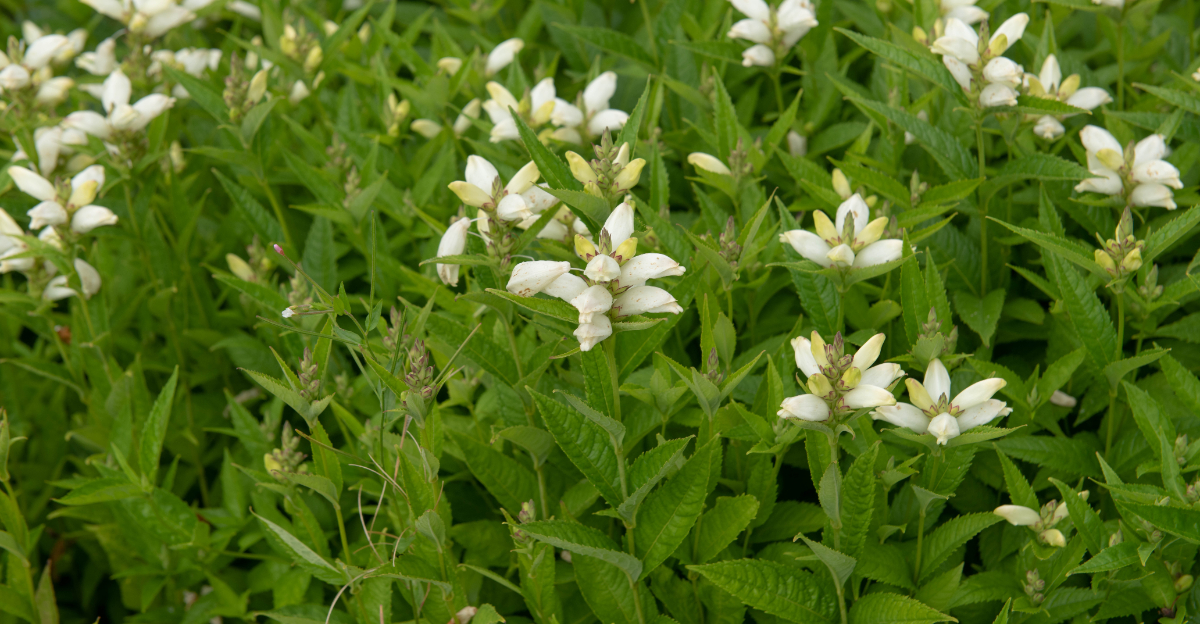
8. Turtlehead (Chelone glabra)
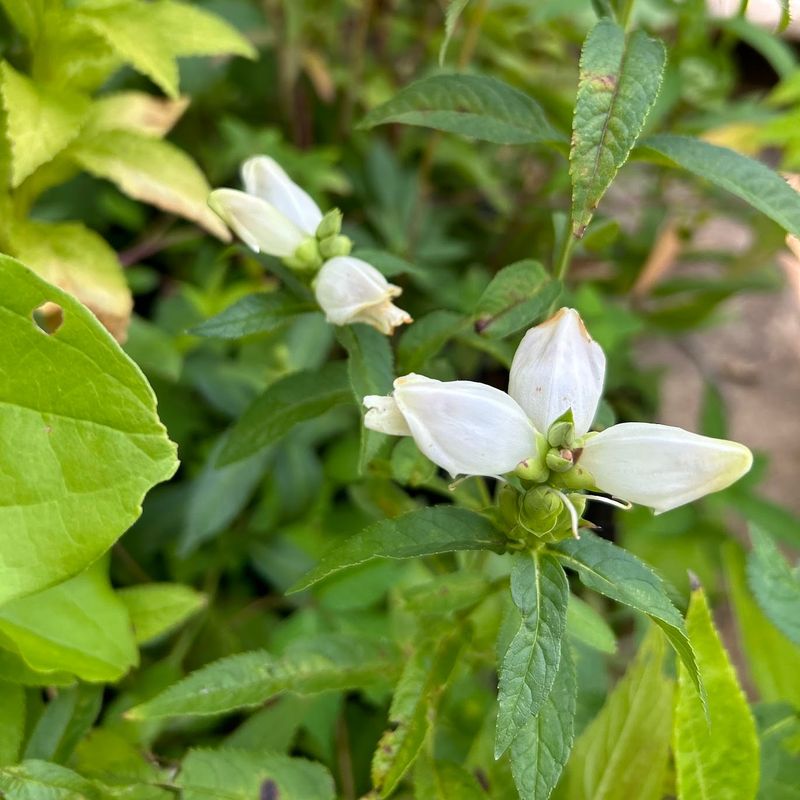
The name alone is enough to make you curious. Turtlehead gets its quirky common name from the shape of its flowers, which look remarkably like the head of a turtle poking out of its shell.
Up close, the resemblance is genuinely striking, and it makes this plant one of the most fun and conversation-worthy natives you can grow in a Michigan yard. It’s charming, unusual, and surprisingly tough.
Wet, heavy clay is Turtlehead’s natural habitat. It grows wild in Michigan along stream banks, wet woodland edges, and low-lying areas where water collects and drainage is slow.
Rain gardens and poorly drained corners of the yard that flood regularly are ideal spots for this plant, because it genuinely thrives where most other garden plants would struggle or simply refuse to grow at all.
Blooming in late summer and early fall, Turtlehead fills a valuable gap when many other plants have already finished their show.
The white or pale pink flowers attract bumblebees that are large enough to pry the tight blooms open, creating a fascinating pollination interaction that’s fun to watch.
Baltimore checkerspot butterflies also use Turtlehead as a host plant for their caterpillars, adding serious wildlife value to this already impressive native.
Plant it in partial to full shade with consistent moisture for best performance. It grows two to three feet tall and spreads gently over time, forming tidy clumps that fit well in smaller Michigan garden spaces.
Minimal maintenance is needed once it’s established. It’s honestly one of the most underrated native plants available for challenging wet clay conditions in Michigan yards.
9. Black-Eyed Susan (Rudbeckia hirta)
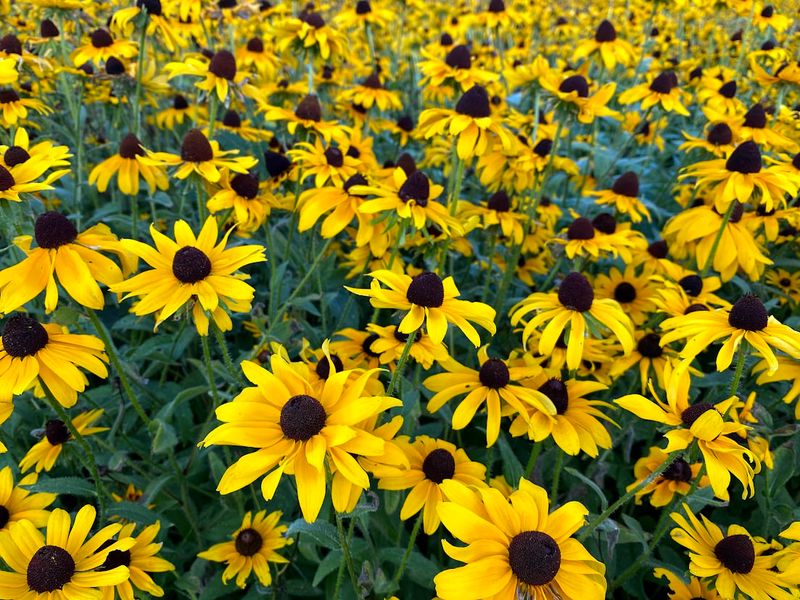
Cheerful, bright, and instantly recognizable, Black-Eyed Susan is one of Michigan’s most beloved native wildflowers for good reason.
The golden-yellow petals surrounding a rich chocolate-brown center are practically synonymous with summer in the Midwest, and this plant delivers that classic look in even the most challenging clay soil conditions.
It’s the kind of flower that makes a garden feel warm and welcoming from the moment it opens.
Clay soil with reasonable drainage suits Black-Eyed Susan very well. It’s not as water-loving as some of the other plants on this list, but it handles the moisture-holding capacity of clay without complaint as long as the ground isn’t completely waterlogged for extended periods.
Across Michigan, it grows naturally in open meadows, roadsides, and disturbed areas where soil quality varies widely, proving its adaptability over and over again.
Technically a short-lived perennial or biennial, Black-Eyed Susan keeps itself going through enthusiastic self-seeding. Once you plant it, you’ll likely have it in your Michigan garden indefinitely, with new seedlings popping up each spring to replace older plants.
This self-renewing habit makes it one of the most low-effort natives you can grow, requiring almost no replanting or intervention from the gardener over time.
Full sun brings out the best in this plant, producing the most flowers and the sturdiest stems. It blooms from early to midsummer and often continues into fall, providing months of color.
Goldfinches love the seed heads in autumn, so leaving them standing through winter benefits local birds. It’s a simple, happy, hardworking native that truly earns its place in any Michigan garden.
10. River Birch (Betula nigra)
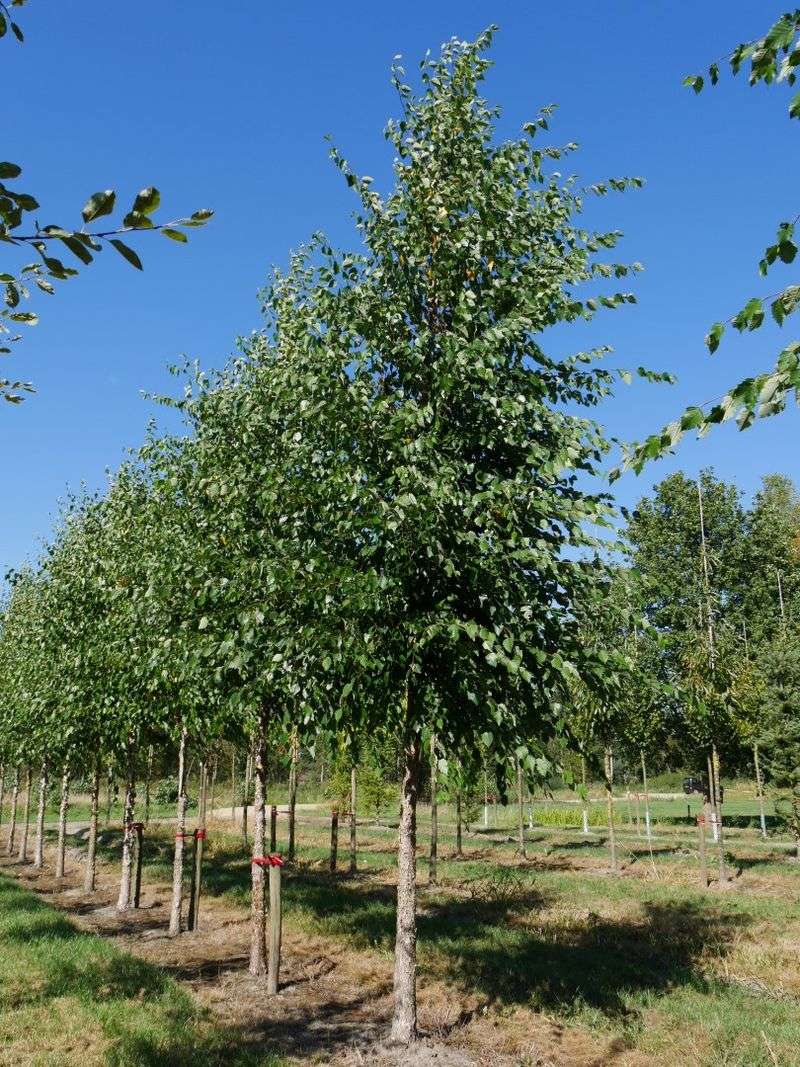
If you want a native tree that genuinely thrives in Michigan’s heavy clay and wetter soils, River Birch is the answer. The peeling, cinnamon-colored bark is eye-catching in every season, giving the tree a sculptural, artistic quality that most shade trees simply cannot match.
It’s the kind of tree that becomes a true focal point in the landscape, beautiful even in winter when the leaves are long gone and the bark takes center stage.
River Birch naturally grows along Michigan’s riverbanks, floodplains, and low-lying areas where soil stays consistently wet and heavy. Unlike most shade trees that struggle or show decline in waterlogged clay, River Birch handles those conditions with remarkable ease.
It’s one of the very few large native trees that Michigan homeowners can confidently plant in a soggy, clay-heavy yard without worrying about long-term performance.
Growth is genuinely fast compared to many native trees, often adding one to two feet per year under good conditions. It typically reaches 40 to 70 feet tall at maturity, providing serious shade and wildlife habitat over time.
Birds nest in the branches, and the small seeds feed numerous species through winter. The tree also supports over 400 species of caterpillars according to entomologist Doug Tallamy’s research, making it one of the most ecologically valuable trees you can plant in Michigan.
Plant River Birch in full sun to partial shade where it receives consistent moisture. It adapts well to urban conditions and compacted clay soils, making it a practical choice for Michigan front yards, backyards, and rain garden borders.
Once established, it requires almost no maintenance and rewards you with decades of beauty, shade, and incredible wildlife value right in your own yard.