These Arizona Perennials Spread Steadily And Keep Borders From Looking Bare
Garden borders can start looking patchy surprisingly fast once intense heat and dry soil begin stressing smaller plants in Arizona.
Empty gaps often become much more noticeable by midsummer, especially in areas where flowers fade early or growth slows down during long hot stretches.
Spreading perennials help solve that problem naturally over time. Some gradually fill open spaces with thicker growth, while others form wide clumps that keep borders looking fuller through the warmest months of the year.
Steady growth also helps reduce bare soil, which can dry out faster under strong afternoon sun.
Plant choice matters though. Aggressive spreaders can quickly become difficult to control in smaller yards or tight planting areas.
Slower growing varieties usually work better when gardeners want fuller borders without constant trimming or dividing.
A few reliable perennials can completely change how finished and colorful garden edges look once summer heat settles in.
1. Desert Zinnia Gradually Fills Open Gravel Areas
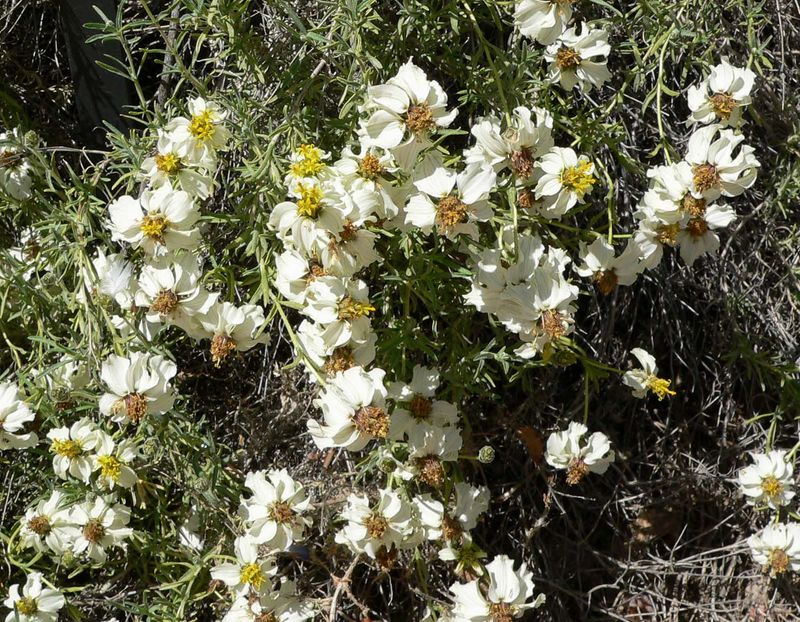
Gravel gardens can look surprisingly full when desert zinnia gets comfortable. Give it a season or two, and you will notice new plants popping up nearby without any help from you.
Desert zinnia spreads mostly by reseeding. Seeds drop close to the parent plant, germinate after monsoon rains, and slowly build a colony across open rocky soil.
It is not aggressive, but it is consistent.
Each plant stays fairly compact, usually under a foot tall. Groups of them together, though, create a low carpet of bright white flowers that covers bare gravel beautifully.
Full sun is where it performs best. Partial shade tends to reduce flowering and slow spreading.
Plant it along dry borders or in gravel strips where other plants struggle to establish.
Watering once or twice a month during summer is usually enough. Overwatering is the most common mistake.
Roots rot quickly in poorly drained soil, so lean gravel or decomposed granite works best.
Deadheading is optional. Leaving spent flowers on the plant allows seeds to drop naturally, which encourages future spreading.
This is one plant that actually rewards a hands-off approach.
Once established, desert zinnia usually needs very little attention to keep returning year after year.
Its long bloom season also helps gravel gardens look brighter during stretches when many other desert flowers begin slowing down.
2. Blackfoot Daisy Spreads Steadily In Dry Soil
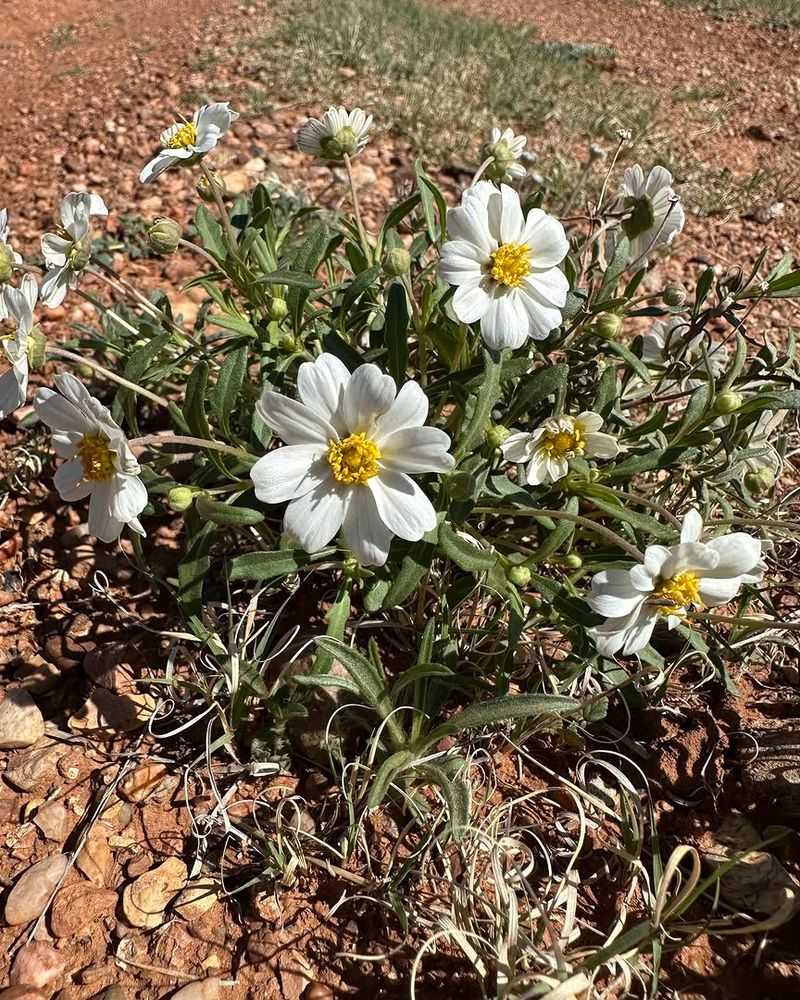
Few plants look this cheerful while asking for almost nothing in return. Blackfoot daisy blooms for months, reseeds freely, and slowly expands its footprint across dry, rocky borders.
Native to the Southwest, it thrives in lean, well-drained soil. Rich or amended soil actually causes problems, making plants floppy and short-lived.
Keep the soil poor and the drainage sharp.
Spreading happens through seed. Plants drop seeds after each bloom cycle, and new seedlings appear within a foot or two of the original.
Over several seasons, a single plant can become a loose, natural-looking cluster.
Expect blooms from early spring through late fall, sometimes longer in warmer zones. The flowers are small but plentiful, covering the plant in white and yellow for weeks at a time.
Your Arizona Garden Changes Every Week. Your Plan Should Too.
Gardening in Arizona changes quickly throughout the season. Every Friday you’ll receive a simple weekly plan showing exactly what to plant, prune, fertilize, harvest, and protect so you never miss the right timing.
Established plants handle drought well. Deep, infrequent watering every two to three weeks during hot months keeps them healthy without encouraging rot.
Trim plants back lightly in late winter to encourage fresh growth. Heavy pruning is unnecessary.
Just clean up any dried outer stems, and the plant bounces back quickly once temperatures warm up.
Blackfoot daisy also attracts plenty of bees and small pollinators once flowering begins heavily in spring. Gravel pathways, dry slopes, and sunny borders are some of the best places to let it spread naturally over time.
3. Trailing Indigo Bush Softens Bare Slopes Naturally
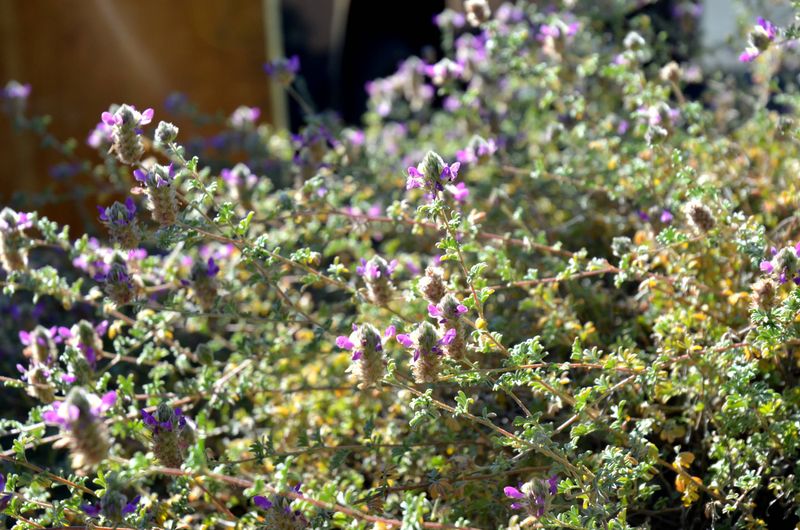
Bare slopes are notoriously hard to plant. Soil erodes, water runs off fast, and most plants struggle to anchor themselves.
Trailing indigo bush handles all of that without much fuss.
Its low, spreading stems hug the ground and extend outward season by season. Over time, it covers exposed soil with a mat of fine-textured foliage that holds the slope together naturally.
Spring brings a flush of small purple flowers that attract native bees. The blooms are not huge, but they are plentiful and add real color to otherwise plain rocky areas.
Established plants are very drought tolerant. Supplemental water once or twice a month during summer is usually sufficient.
On slopes with fast-draining soil, water slightly more often until roots are established.
No heavy pruning needed. Tip-pinching in early spring encourages bushier growth and denser ground coverage.
Avoid cutting back hard, since older wood on this plant recovers slowly.
It pairs well with desert marigold and brittlebush on slopes. The combination creates layered coverage at different heights, reducing bare soil exposure significantly.
Slopes that once looked patchy can look surprisingly lush within two growing seasons.
4. Damianita Forms Wider Mounds Over Time
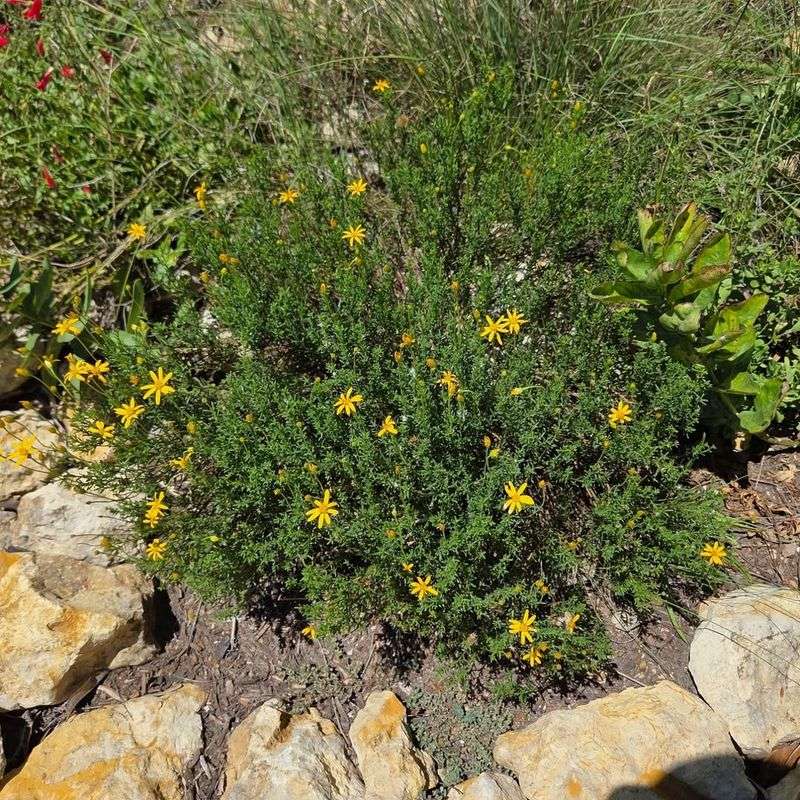
Damianita is one of those plants that rewards patience. In year one, it looks modest.
By year three, it has formed a full, rounded mound covered in yellow flowers that brightens any border edge.
Native to the Chihuahuan Desert region, it handles extreme heat, alkaline soil, and long dry spells without complaint. Sandy or gravelly soil suits it perfectly.
Heavy clay is the one condition it struggles with consistently.
Mounds typically reach one to two feet tall and spread slightly wider over time. Growth is slow but steady, and the plant holds its shape well without frequent trimming.
Bloom time peaks in spring, but sporadic flowering continues into fall, especially after monsoon rains. The bright yellow flowers have a slightly herbal scent that some gardeners find pleasant.
Water deeply once every two to three weeks during the first summer. After that, established plants survive on natural rainfall in most low-desert areas, though supplemental water during extreme heat improves performance.
Plant damianita in groups of three or five for the most natural look. Odd-numbered clusters spread outward and eventually merge, creating a continuous mounded border that stays full and structured season after season.
5. Hardy Verbena Creeps Comfortably Between Stones
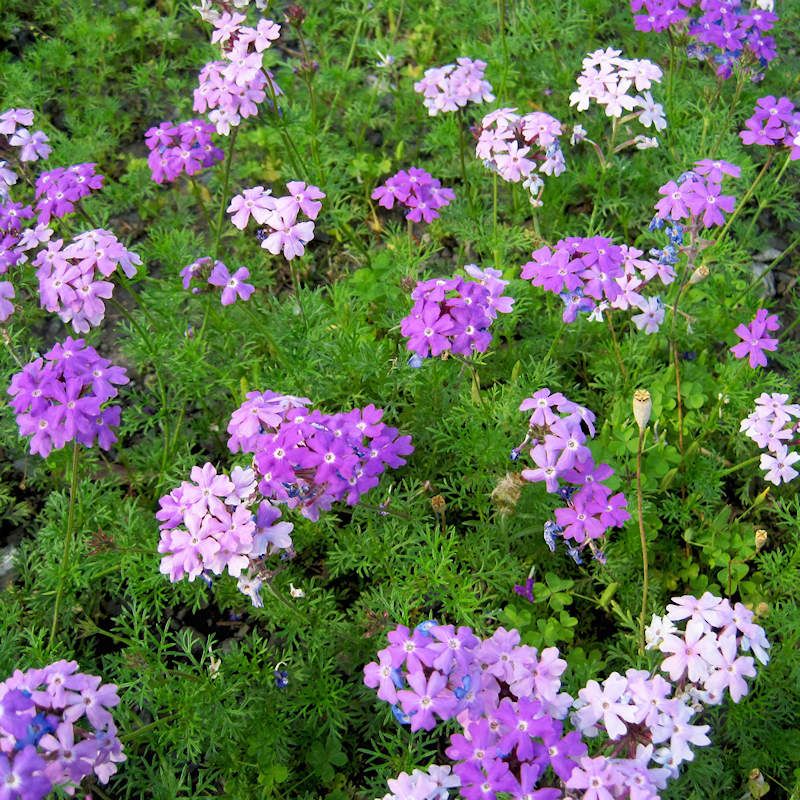
Watching verbena creep between stones is one of those slow garden satisfactions that sneaks up on you. One season it is a small plant.
The next, it has woven itself through gaps and covered bare soil you forgot was there.
Hardy verbena spreads through trailing stems that root where they touch the ground. It does not need any help from you.
Just plant it near stones or along border edges and let it find its own path.
Purple and pink flower clusters appear in spring and again after monsoon rains. Pollinators visit constantly during peak bloom, so borders with verbena tend to feel lively and active.
Heat tolerance is strong. Verbena handles triple-digit temperatures without wilting badly, especially when planted in spots with afternoon shade or near light-colored gravel that reflects heat less aggressively.
Water every one to two weeks during hot months. Stems can look a little ragged by midsummer, but a light trim and a good watering usually bring them back to life quickly.
Pair it with low-growing desert plants like blackfoot daisy or desert zinnia. Together they create a layered, informal border that spreads naturally and keeps bare soil covered through most of the year.
6. Pink Muhly Grass Broadens Into Soft Clumps
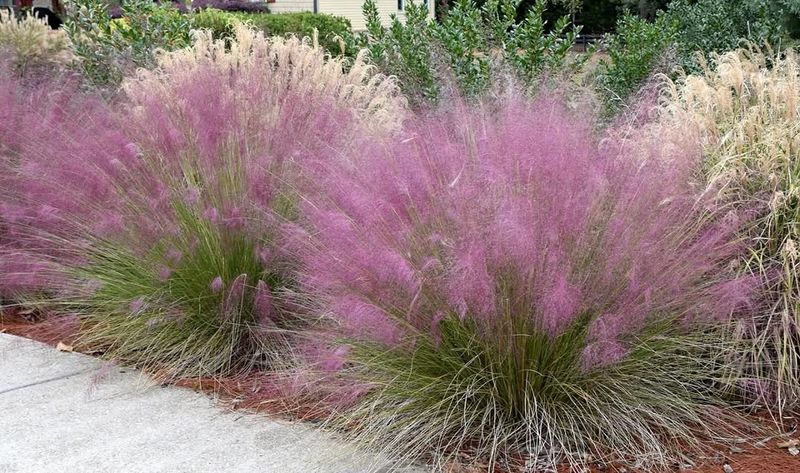
Few plants transform a border the way pink muhly grass does in fall. Those feathery pink plumes catch the light and create a soft, hazy glow that makes the whole garden feel warmer.
Clumps expand slowly over several years by sending up new shoots from the outer edges of the root mass. Growth is gradual but reliable.
A small transplant can reach two feet wide within three to four seasons.
Full sun brings out the best color in the plumes. Plants in partial shade often produce fewer flower stalks and less vivid pink tones.
South-facing borders with reflected heat actually improve performance.
Drought tolerance is solid once established. Water every two weeks during summer.
Newly planted clumps need more frequent watering in the first season to develop deep roots before summer heat peaks.
Cut clumps back to about six inches in late winter before new growth begins. This keeps them tidy and encourages dense, fresh foliage each spring.
Skipping the trim is not a disaster, but growth can look messy.
Pair it with desert marigold or autumn sage for a color combination that peaks in fall. The contrast between yellow flowers and pink plumes looks intentional and polished without much planning required.
7. Desert Ruellia Slowly Covers Sunny Open Areas
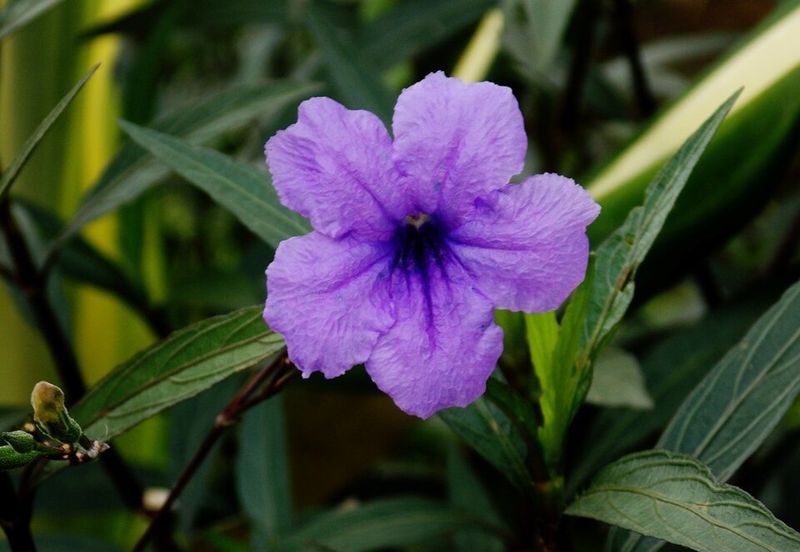
Purple trumpet flowers on a plant that spreads on its own sounds like a gardener’s dream. Desert ruellia delivers exactly that, slowly covering open sunny areas with minimal care required.
Spreading happens two ways. Underground rhizomes push outward season after season, and seeds also disperse nearby after bloom.
Both methods work together, gradually filling open soil without becoming invasive in most garden settings.
Flowers appear almost continuously from late spring through fall, especially during and after monsoon season. Each bloom lasts only a day, but new ones open constantly, keeping the plant looking full and colorful for months.
Hot, exposed spots suit it perfectly. Reflected heat from walls, driveways, or light-colored gravel does not slow it down.
In Arizona, south-facing beds with intense afternoon sun are where it performs most reliably.
Water every one to two weeks during summer. Overwatering encourages rapid spreading that can become difficult to manage in smaller gardens.
Keep irrigation moderate to maintain steady but controlled growth.
If spreading becomes too wide, simply pull unwanted stems or rhizome shoots in spring. Control is easy at that stage.
Once established, desert ruellia is a reliable, low-effort filler for borders that always seem to have empty spots.
8. Chocolate Flower Expands Gently Through Warm Borders
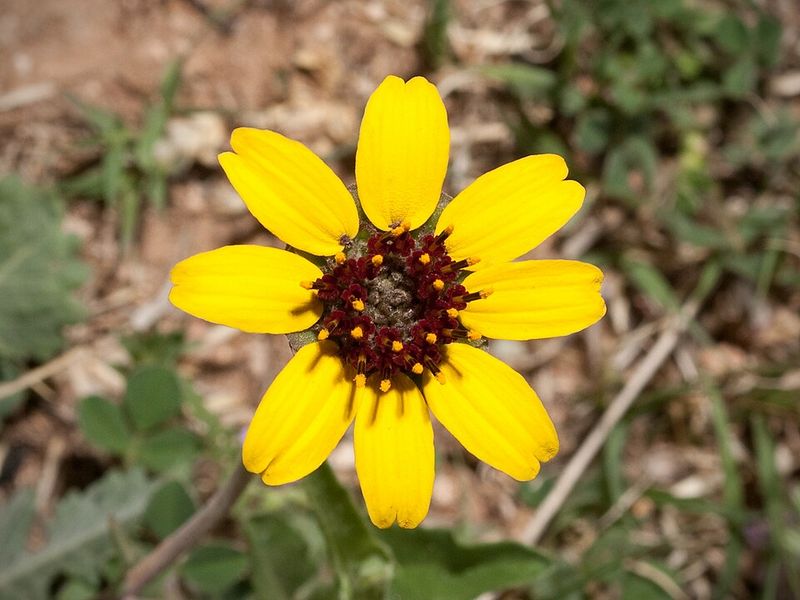
A flower that actually smells like chocolate is hard to walk past without stopping. Chocolate flower earns its name honestly, and beyond the scent, it is a surprisingly useful spreading perennial for warm borders.
Spreading happens mostly through reseeding. Seeds drop near the parent plant after each bloom cycle, and new seedlings establish themselves in surrounding soil.
Over two or three seasons, a single plant becomes a loose, natural grouping.
Bloom time is long. Flowers open in spring and continue through summer and fall, often peaking again after monsoon rains.
The yellow daisy-like blooms are modest in size but appear in large numbers across the plant.
Morning is the best time to catch the chocolate scent. It fades as temperatures climb during the day.
Planting near a walkway or garden entry lets you enjoy it during cooler morning hours.
Well-drained soil and full sun are the main requirements. It tolerates alkaline conditions, which makes it well-suited to the rocky, mineral-heavy soils common across the Southwest desert regions.
Water deeply but infrequently once established. Every two weeks during summer is a reasonable baseline.
Reduce watering in fall and winter when growth slows. Consistent neglect, within reason, actually suits this plant just fine.
9. Angelita Daisy Thickens Quickly In Full Sun
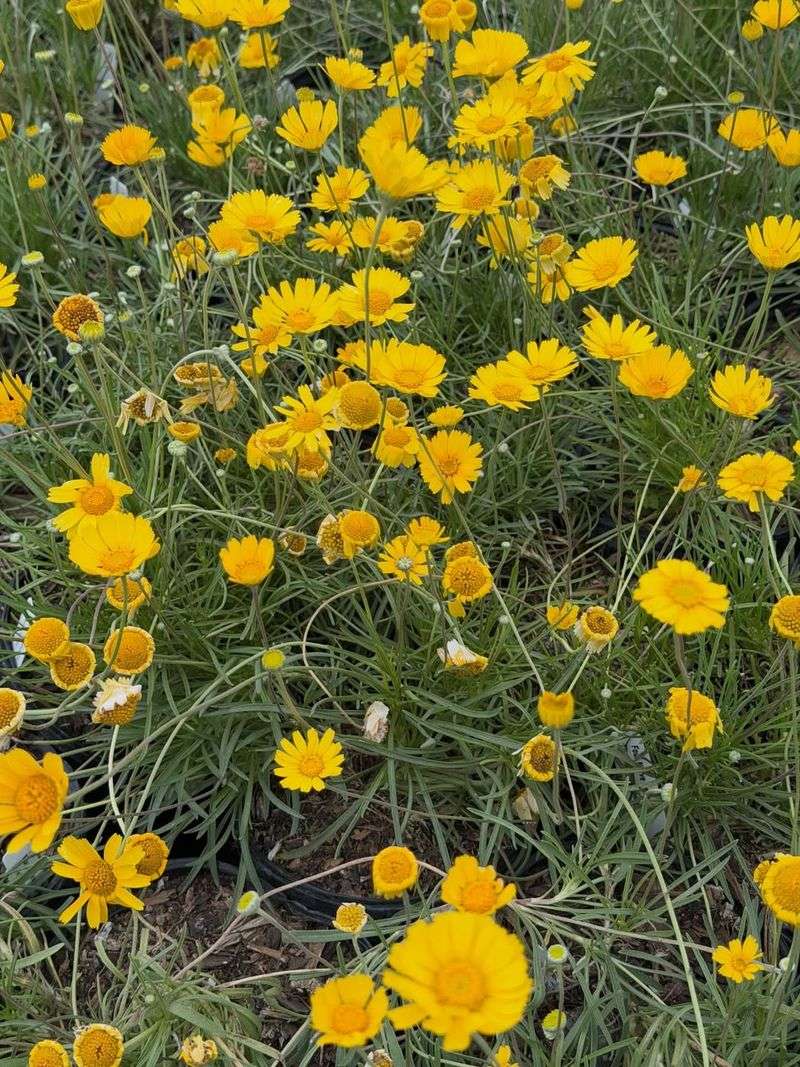
Yellow flowers from early spring all the way through fall sounds almost too good to be true. Angelita daisy actually delivers on that, and it does it while spreading steadily into bare gaps along sunny borders.
Growth is quicker than most desert perennials. Within one full growing season, a single plant fills noticeably more space.
By year two, it has often doubled its original footprint through gentle clump expansion.
Full sun is non-negotiable for strong performance. Shaded plants bloom poorly and grow slowly.
Place it along south or west-facing borders where sunlight is direct and intense for most of the day.
Well-drained soil keeps roots healthy through summer heat. Decomposed granite or sandy loam works well.
Avoid planting near drip lines from larger trees, where soil stays moist too long between waterings.
Water every one to two weeks during summer. Drought tolerance improves significantly after the first season.
Overwatering is a more common problem than underwatering once plants are established.
Light trimming in late winter removes old flower stalks and encourages fresh growth. No severe cutting needed.
Just tidy up the outer edges and the plant rebounds quickly when warm weather returns in spring.