These Are The 9 Easy Flowers To Plant Around Trees In Oregon
Tree bases can be tricky little spots in an Oregon yard. They look empty, so of course every gardener wants to tuck flowers there and make the area prettier. Then the tree reminds everyone who was there first.
Roots take space, shade shifts through the day, and rain may not reach the soil evenly under the branches.
Still, that does not mean the area has to stay bare and boring. Some easy flowers can handle the challenge and make the ground around trees look more finished.
They bring color without asking for constant attention, which is exactly the kind of bargain gardeners love.
The best choices work with the tree instead of fighting it. A soft ring of blooms can turn a plain trunk into a charming garden feature. It is a small change, but it can make the whole yard feel more cared for.
1. Hellebores Bloom Early Under Trees
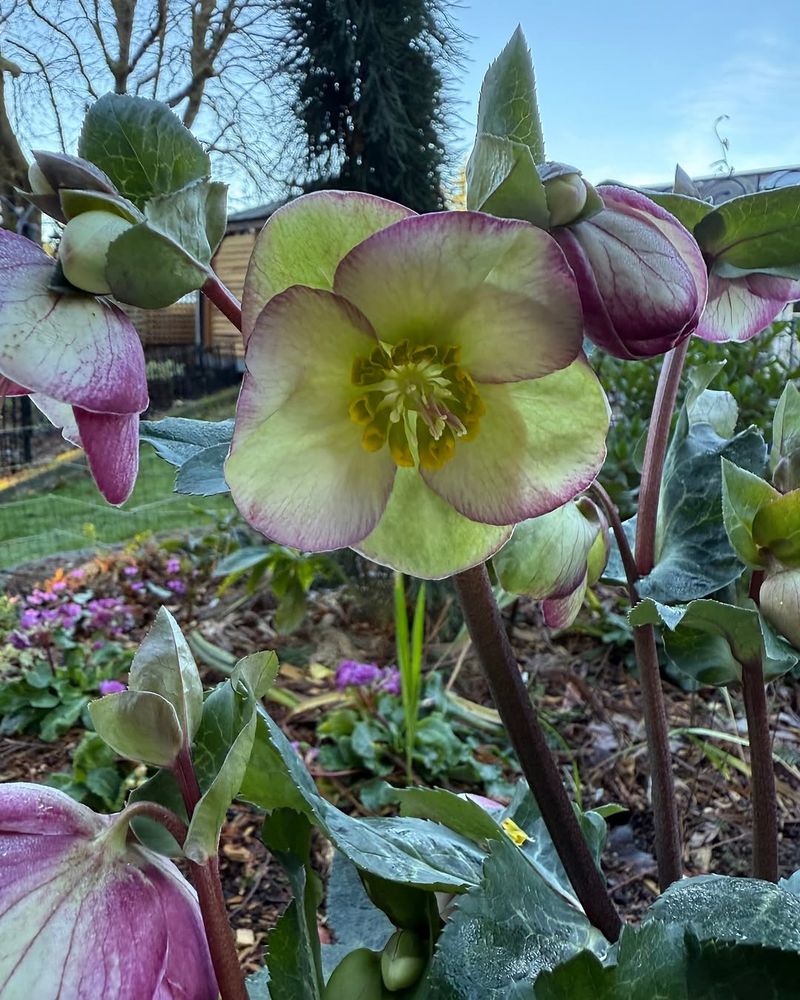
Few plants are as quietly impressive as hellebores. They push up their nodding blooms in late winter, sometimes even while snow is still on the ground. For gardeners in our state, that early color is a real treat after months of gray skies.
Hellebores grow well in the deep shade under large trees. Their roots handle competition from tree roots better than most flowers. Once they settle in, they ask for very little attention.
No deadheading, no dividing, and almost no watering once established. These plants are evergreen, which means they keep their dark, leathery leaves all year long. That makes them useful even when they are not in bloom.
The foliage covers bare soil and adds structure to a shaded garden bed. Colors range from creamy white to deep burgundy, soft pink, and almost black.
Some varieties have spotted petals or double blooms that look almost too fancy for such a tough plant. You can find many varieties at local nurseries across the Pacific Northwest.
Plant hellebores in fall or early spring. Give them rich, well-drained soil with some compost mixed in. Water them during their first summer to help them establish.
After that, they are remarkably self-sufficient. They also self-seed gently, so over time you may find little hellebore seedlings popping up nearby, slowly filling in the space around your tree.
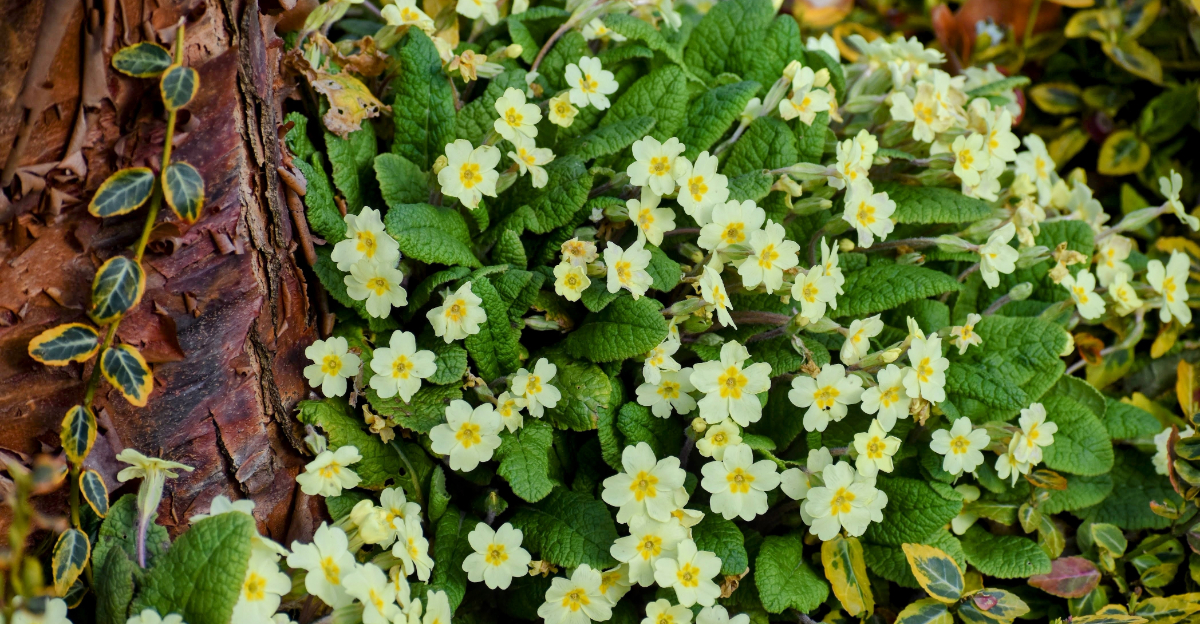
2. Primroses Brighten Damp Shade
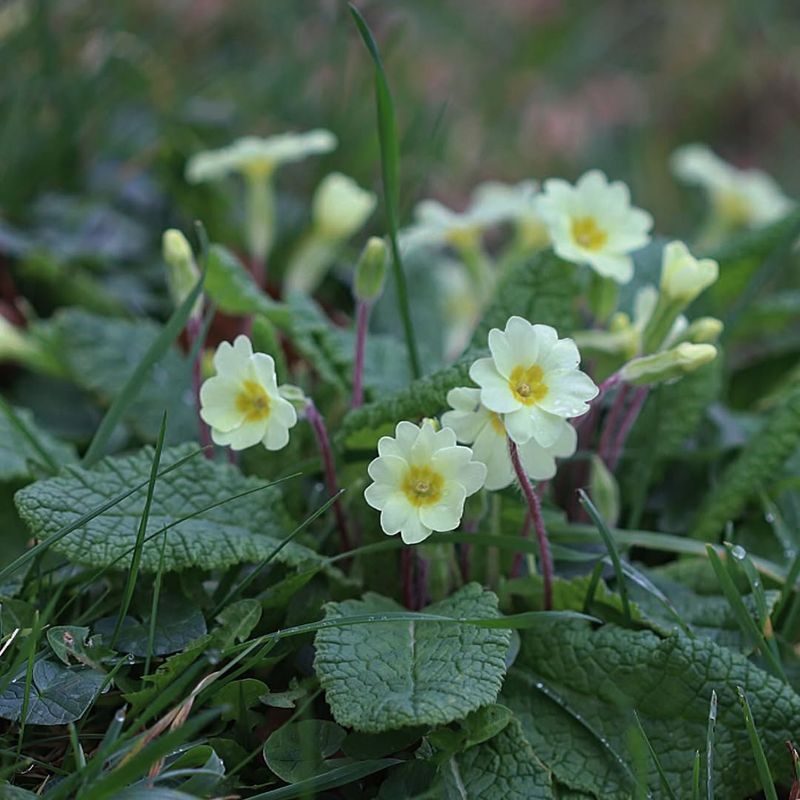
Bright, cheerful, and surprisingly tough, primroses are one of the best flowers you can plant under a tree in our region.
They love cool, moist conditions, and our wet Pacific Northwest winters give them exactly what they need to thrive.
Primroses bloom in early spring, often starting in February or March. They come in almost every color you can think of, from bold red and golden yellow to soft lavender and creamy white.
Planting a mix of colors under a tree creates a look that feels like a wildflower meadow. These plants do best in partial to full shade. Too much direct sun in summer can stress them out.
Under a tree, they get the filtered light they prefer. The tree canopy also helps protect them from late frosts that can damage early blooms.
Your Oregon Garden Changes Every Week. Your Plan Should Too.
Gardening in Oregon changes quickly throughout the season. Every Friday you’ll receive a simple weekly plan showing exactly what to plant, prune, fertilize, harvest, and protect so you never miss the right timing.
Primroses prefer moist, rich soil. If the ground under your tree tends to dry out in summer, adding a layer of mulch around the plants helps hold moisture in. A little compost worked into the soil before planting goes a long way.
They are short plants, usually only six to eight inches tall, so they work well as a low border around the base of a tree.
Some types are perennials that return each year, while others are biennials. Either way, they are easy to find at garden centers throughout the state every spring.
3. Hardy Cyclamen Handles Tree Roots Well
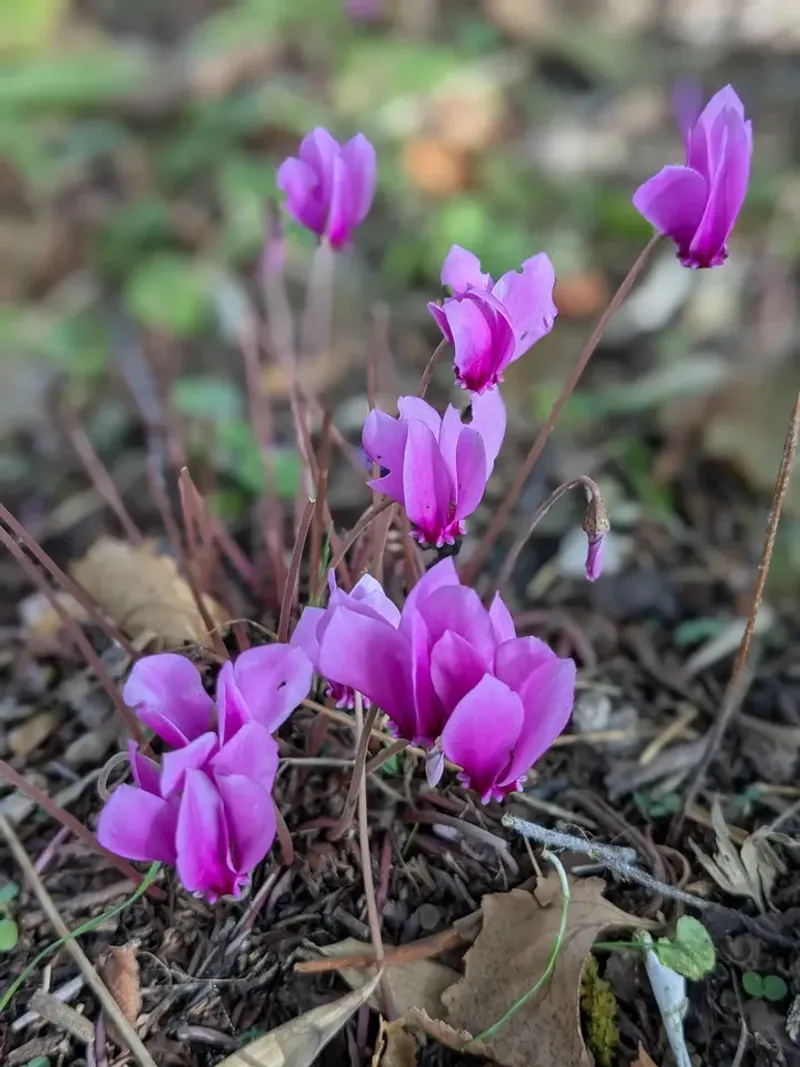
Most people know cyclamen as a houseplant, but the hardy outdoor varieties are a completely different story.
Hardy cyclamen can grow right through tree roots, in dry shade, and in some of the toughest spots in the garden. That makes them almost perfect for planting under trees.
There are two main types worth knowing. Cyclamen hederifolium blooms in late summer and fall, while Cyclamen coum blooms in late winter and early spring.
Planting both gives you flowers under your tree across multiple seasons, which is a smart move for any garden.
The leaves are just as beautiful as the flowers. They are marbled with silver and green patterns, almost like tiny works of art.
The foliage appears after the flowers and stays through winter, giving the ground under the tree a decorative look even when nothing else is blooming.
Hardy cyclamen grow from corms, which are small, flat, disc-shaped structures similar to bulbs.
Plant them just below the soil surface in late summer for fall bloomers, or in early fall for spring bloomers. They prefer well-drained soil and do not like sitting in wet conditions for too long.
Once established, these plants spread slowly on their own and come back reliably every year.
They are one of the few flowering plants that truly do not mind competing with aggressive tree roots. Our state’s mild winters make them an excellent long-term investment for any shaded garden space.
4. Violets Spread Softly In Shade
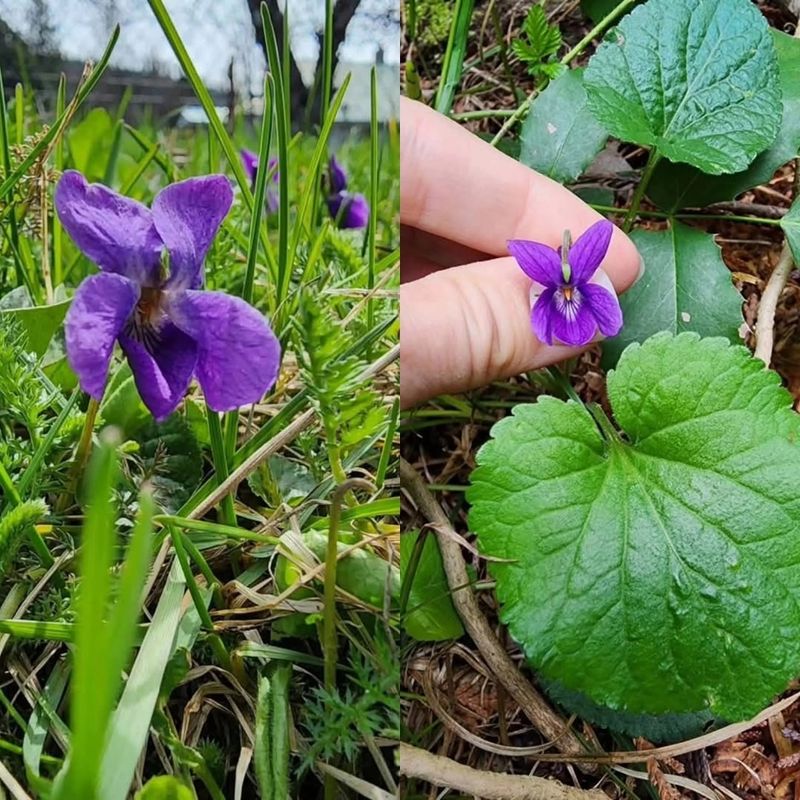
There is something wonderfully old-fashioned about violets. They have been growing in woodland gardens for centuries, and for good reason. These small, sweet flowers are perfectly built for life in the shade under trees.
Native violets, in particular, are a great choice for Pacific Northwest gardens. Viola adunca, the western dog violet, is native to our region and grows naturally in forested areas.
Planting native species supports local pollinators like native bees and butterflies that depend on these plants.
Violets spread by both seeds and underground runners. Over a few seasons, a small patch can expand into a lovely, low-growing carpet of green leaves dotted with purple, blue, or white flowers.
That spreading habit is exactly what you want when trying to cover bare ground under a tree.
They bloom in spring, usually from March through May depending on your location in the state.
After blooming, the heart-shaped leaves stay green through the growing season, keeping the area looking tidy and full.
Violets are not picky about soil. They will grow in clay, sandy soil, or loam, as long as they get some moisture. Under a tree with leaf litter, they often find everything they need naturally.
You can plant them from nursery starts or simply let them self-seed if you already have some in the garden. Either way, they are one of the most effortless flowers you can grow in a shaded spot.
5. Sweet Woodruff Makes A Flowering Carpet
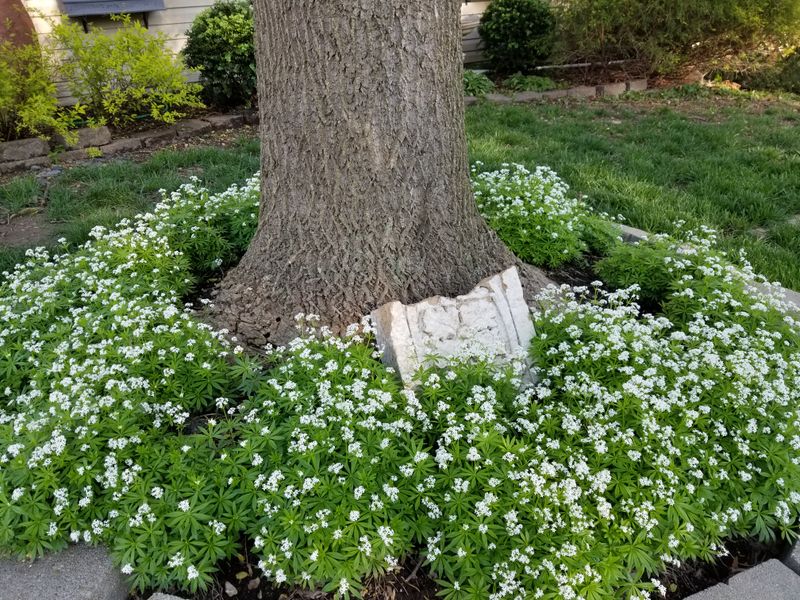
If you want something that covers ground fast and looks great doing it, sweet woodruff is your answer.
This low-growing perennial spreads quickly under trees, forming a dense, fragrant mat of foliage that keeps weeds from taking over.
Sweet woodruff produces tiny white star-shaped flowers in late spring. They are small but appear in such large numbers that a patch in full bloom looks like a sprinkle of snow across the forest floor. The effect is charming and very easy to achieve.
The leaves grow in neat whorls around the stem, giving the plant a tidy, structured look even when it is not in bloom.
When dried, the foliage releases a sweet, hay-like scent. Historically, it was used to stuff mattresses and freshen rooms, which is a fun little fact to share with guests in your garden.
This plant thrives in moist, shaded conditions, which makes it a natural fit for life under trees in our region. It handles the competition from tree roots well and does not need much fertilizer or extra care once it gets going.
Plant sweet woodruff in spring or fall. Space plants about a foot apart and water them regularly during the first season. After that, they spread on their own and fill in gaps without any help from you.
It is one of the most reliable ground covers for difficult shaded areas across the Pacific Northwest.
6. Ajuga Fills Bare Spots Fast
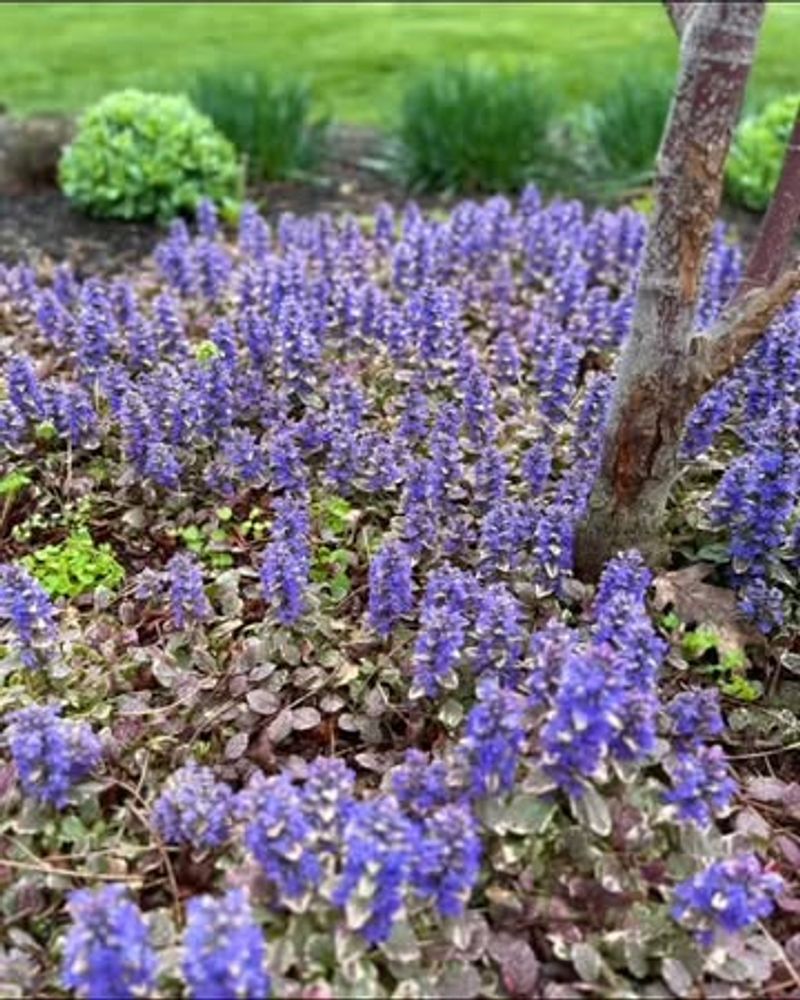
Speed matters when you are trying to cover bare ground under a tree. Ajuga, also called bugleweed, is one of the fastest-spreading ground covers you can plant in a shaded spot. It moves quickly, looks great, and blooms every spring without any fuss.
The flower spikes are a striking blue-purple color and stand about four to six inches tall above the foliage.
They appear in April and May and attract bees, which is always a bonus. After the blooms fade, the leaves carry the show through the rest of the growing season.
Ajuga leaves come in a surprising range of colors depending on the variety. Some are deep bronze-purple, others are green and cream variegated, and some have a chocolate-brown tone.
Mixing varieties creates a patchwork effect that looks intentional and eye-catching under the tree.
One thing to know about ajuga is that it spreads by surface runners, similar to strawberries. This is great for filling in bare spots, but you may need to trim it back occasionally if it creeps into areas where you do not want it.
It grows well in full shade to partial shade and handles dry soil better than many shade plants.
That is a real advantage under large trees where the soil can get quite dry in summer. Plant ajuga in spring or fall and give it a good watering to get started. After that, it practically takes care of itself throughout the season.
7. Lamium Adds Silver Leaves And Small Blooms
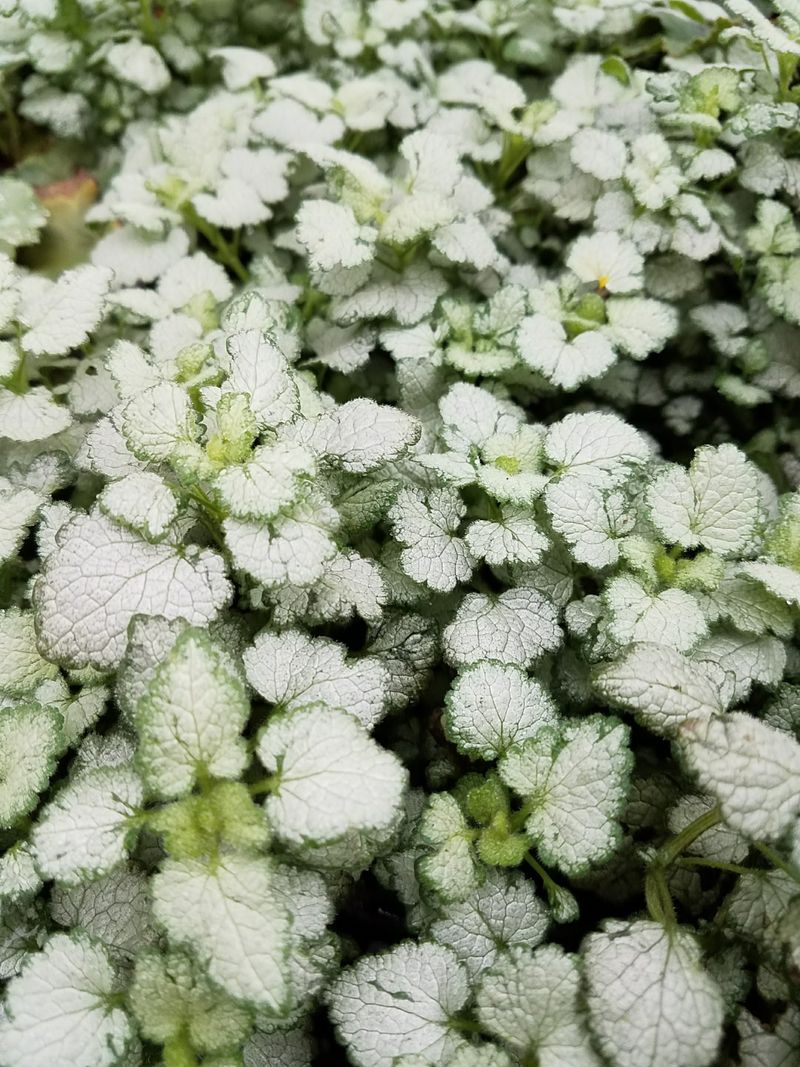
Shade gardening gets a lot more interesting when you add plants with silver foliage. Lamium, also called spotted dead nettle, is one of the best options for bringing light into a dark corner under a tree.
Its leaves are splashed with silver or white, which almost seems to glow in low-light conditions.
Beyond the foliage, lamium produces small but pretty flowers in pink, purple, or white. They bloom in spring and sometimes again in fall if conditions are right.
The combination of silver leaves and delicate blooms makes this plant look far more high-maintenance than it actually is.
Lamium spreads by creeping stems that root where they touch the ground. It fills in bare areas steadily without becoming too aggressive.
If it starts to look tired or leggy in midsummer, you can shear it back hard and it will bounce back with fresh new growth within a few weeks.
It grows in full shade to partial shade and handles dry soil fairly well once established. That makes it a solid choice for spots under trees where moisture is limited. It is also deer-resistant, which is a real plus for gardens in rural and semi-rural areas of our state.
Plant lamium in spring or fall. Space plants about twelve to eighteen inches apart. They will fill in the gaps over the course of one growing season.
Pair them with hostas or ferns for a layered look that feels lush and full even in the deepest shade.
8. Brunnera Brings Blue Flowers In Spring
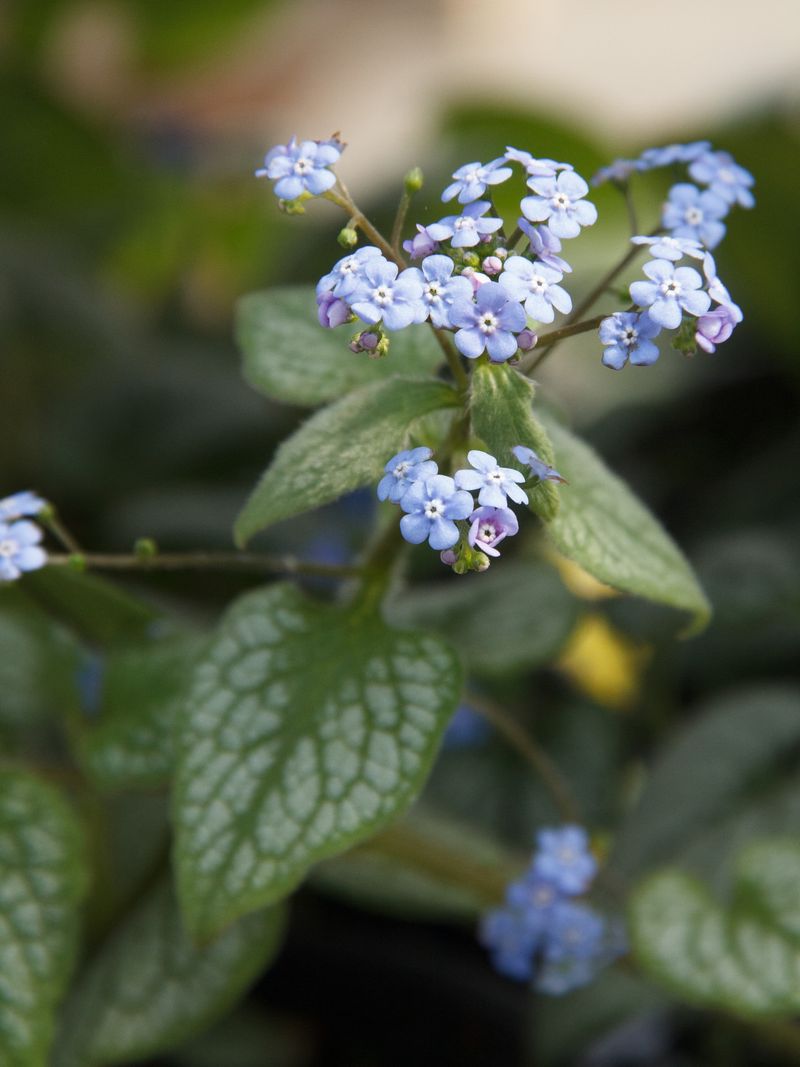
Brunnera is a plant that earns its place in the garden twice over. First, it puts on a gorgeous show of tiny sky-blue flowers in spring that look almost identical to forget-me-nots.
Then, after the blooms fade, it reveals large, heart-shaped leaves that are some of the most beautiful foliage in the shade garden.
The most popular variety is called ‘Jack Frost,’ and for good reason. Its leaves are covered in a silvery overlay with green veins, making each leaf look like a piece of stained glass. Even on a cloudy Pacific Northwest day, those leaves seem to shimmer and catch the light.
Brunnera is a true perennial that comes back reliably every year. It does not spread aggressively, so you do not have to worry about it taking over.
It grows in clumps that slowly get bigger over time, which makes it easy to manage and divide if you want more plants.
This plant prefers moist, humus-rich soil and does best in partial to full shade. It is not a fan of hot, dry conditions, but that is rarely a problem under the cool, damp canopy of trees in our state’s western regions.
Plant brunnera in spring or fall. Water it regularly during the first season. After that, it is fairly low-maintenance.
Pair it with hellebores or ferns for a combination that looks sophisticated and holds up beautifully throughout the entire growing season in shaded garden beds.
9. Lungwort Works Well In Cool Shade
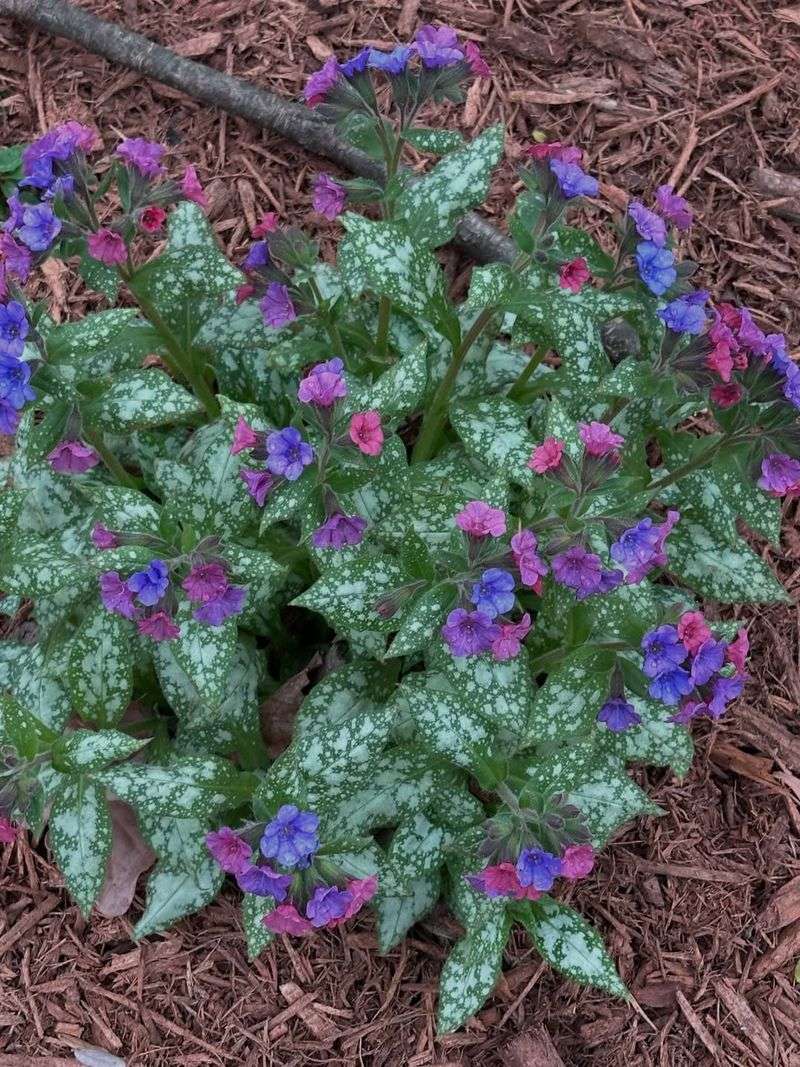
Lungwort has a funny name, but it is a seriously useful plant for shaded spots under trees. It is one of the earliest perennials to bloom each spring, often flowering in February or March alongside hellebores.
That early color is something any gardener in our state can appreciate. The flowers are a fascinating mix of pink and blue, sometimes appearing in both colors on the same plant at the same time.
That happens because the flower color changes as it ages. Young flowers are pink and shift to blue as they mature, giving the plant a two-toned look that is genuinely eye-catching.
Lungwort leaves are equally interesting. Most varieties have leaves spotted or splashed with silver, which brightens up dark corners under trees. The foliage stays attractive long after the blooms have faded, giving you something to look at all season long.
This plant prefers cool, moist, shaded conditions. It does not handle heat or drought well, but our region’s cool, wet climate suits it perfectly.
Under a large tree where the soil stays moist and temperatures stay moderate, lungwort can thrive for many years with minimal care.
Plant it in fall or early spring in well-amended soil. Keep it watered during dry spells in summer. Divide clumps every few years to keep the plants vigorous and to create more plants for other spots in the garden.
It pairs beautifully with brunnera and sweet woodruff for a layered, textured look under trees.