These Are The Florida Native Flowering Vines That Cover Structures And Support Painted Buntings
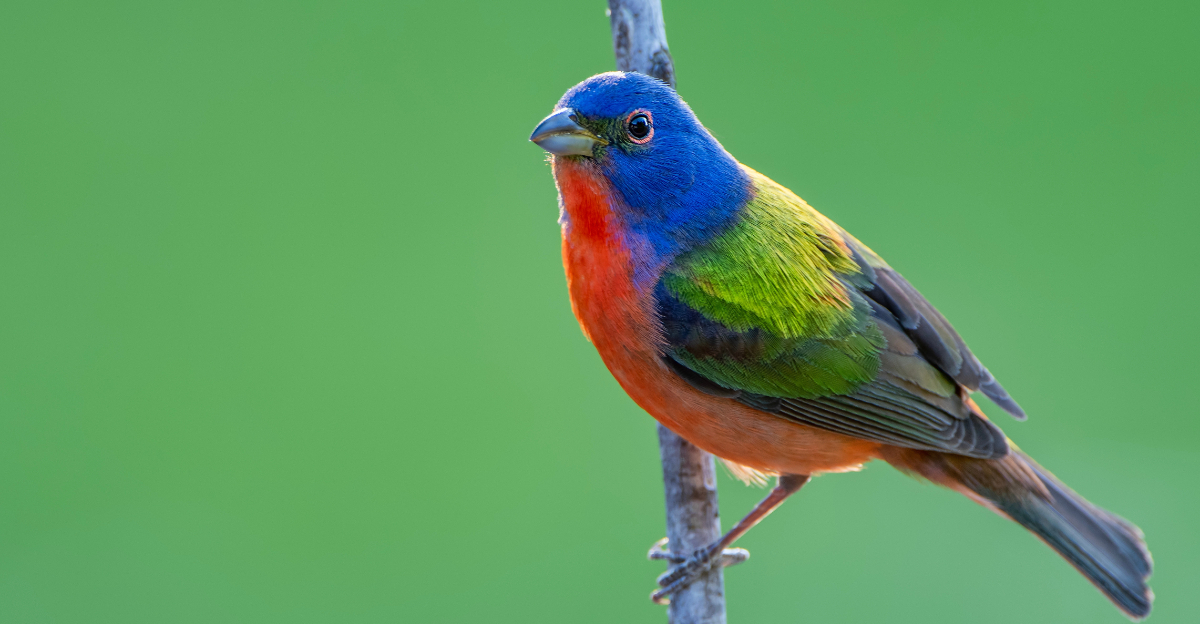
If you’ve ever locked eyes with a Painted Bunting in the wild, you already know that feeling. It stops you cold.
A bird that looks like somebody handed a kindergartner a box of watercolors and said go nuts. Now imagine attracting them right to your own fence, pergola, or trellis.
Not once, but all season long. The secret most Florida gardeners completely overlook?
It’s not the bird feeder. Painted Buntings are picky about habitat, and native flowering vines are one of the biggest pieces of that puzzle.
The right vine does triple duty in a Florida yard: it covers your ugly chain-link or bare pergola and pumps out blooms that draw in pollinators. It also creates exactly the kind of sheltered, food-rich environment that makes Painted Buntings feel at home.
So before you string up another feeder and wonder why the good birds skip your yard, look at what your landscape is offering. Let’s talk about the Florida native vines that actually bring the magic to your structures.
1. Coral Honeysuckle Covers Trellises With Bird-Friendly Blooms
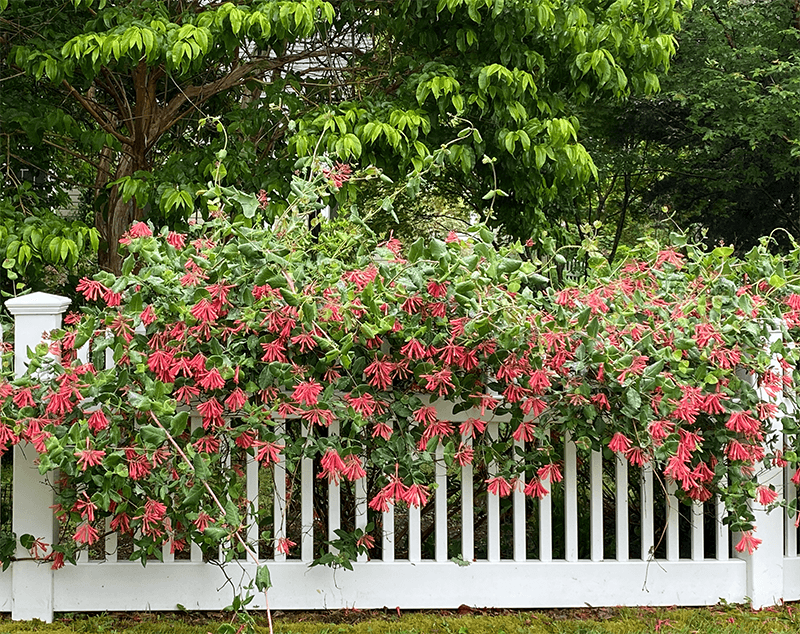
A trellis can become part of a bird-friendly planting the moment coral honeysuckle, Lonicera sempervirens, starts climbing it. This Florida native vine produces tubular coral-red flowers with yellow throats, and those long blooms are shaped perfectly for hummingbirds.
Ruby-throated hummingbirds visit regularly, and native bees and butterflies follow along when the vine is in flower.
Coral honeysuckle blooms most heavily in spring.
It can rebloom through summer and into fall in many Florida gardens, especially when given a sunny to partly shaded spot. After the flowers fade, small red berries form on the vine.
Those berries can attract songbirds, and the dense leafy growth gives birds a covered place to perch or move through quietly.
This vine grows well on trellises, fences, and arbors. It is a much better choice than Japanese honeysuckle, Lonicera japonica, which is an invasive species that spreads aggressively and crowds out native plants.
Coral honeysuckle stays manageable with light pruning and does not take over a garden the way the invasive look-alike does.
For Painted Buntings, the vine itself is not a direct food source.
But the cover it provides and the insects it attracts add to the kind of layered habitat these birds use. Pair it with native grasses and seed-bearing plants nearby, and the structure it covers becomes part of a more complete bird-friendly corner.
It grows well in most Florida soils and handles both sandy and slightly moist conditions. Full sun brings the most flowers, but it tolerates partial shade without losing its appeal.
2. Maypop Passionflower Adds Dense Cover And Summer Flowers
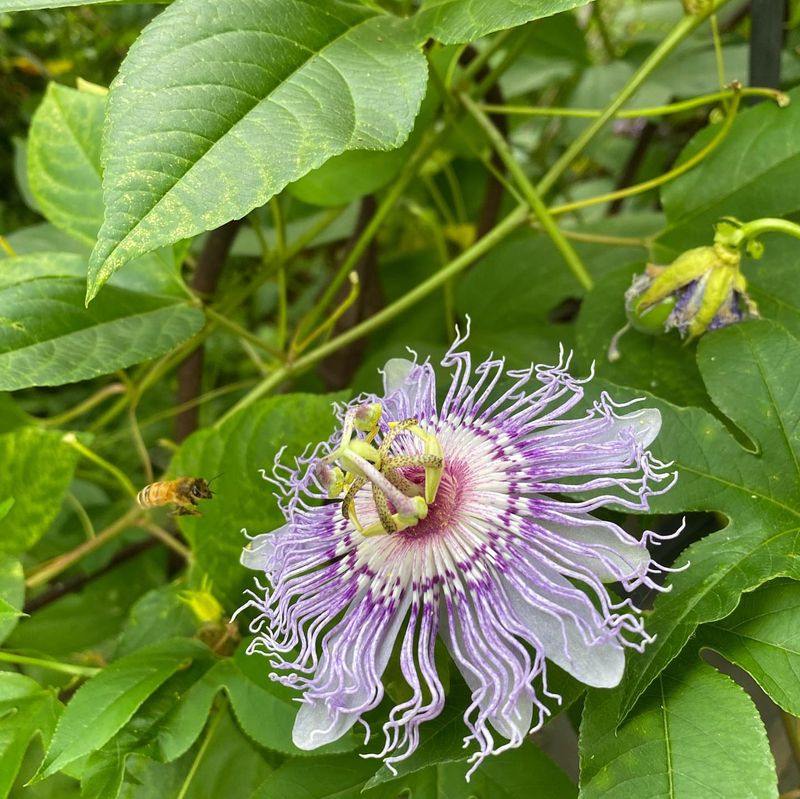
Dense summer growth can make a structure feel more alive, and maypop passionflower, Passiflora incarnata, does exactly that. The flowers are among the most visually striking of any Florida native vine.
They have layered purple and white petals and a fringe-like corona that catches attention from several feet away. Blooms appear from late spring through summer, and they draw in Gulf fritillary and zebra longwing butterflies, which use the vine as a host plant for their caterpillars.
Your Florida Garden Changes Every Week. Your Plan Should Too.
Gardening in Florida changes quickly throughout the season. Every Friday you’ll receive a simple weekly plan showing exactly what to plant, prune, fertilize, harvest, and protect so you never miss the right timing.
Beyond the flowers, the vines grow thickly enough to create real cover on a fence, trellis, or sunny arbor. That kind of density is useful for birds moving through a yard looking for sheltered spots.
The vine also produces edible yellowish-green fruit called maypops, which ripen in late summer and early fall. Wildlife including birds and small mammals may take advantage of the fruit when it drops.
One thing to plan for is the vine’s spreading habit. Maypop passionflower can wander and send up new shoots from its root system, sometimes appearing several feet from where it was planted.
Giving it enough room and guiding its growth along a support helps keep it where you want it. It grows best in full sun with well-drained soil and can handle dry conditions once it is established.
For a Painted Bunting-friendly yard, the dense growth of this vine adds a useful layer of cover near the ground and mid-level. Combine it with native grasses and seed-bearing plants to give buntings the protected feeding edges they look for.
Managed well, maypop passionflower is one of the more rewarding native vines for both butterflies and birds.
3. Crossvine Climbs Fast Over Arbors And Fences
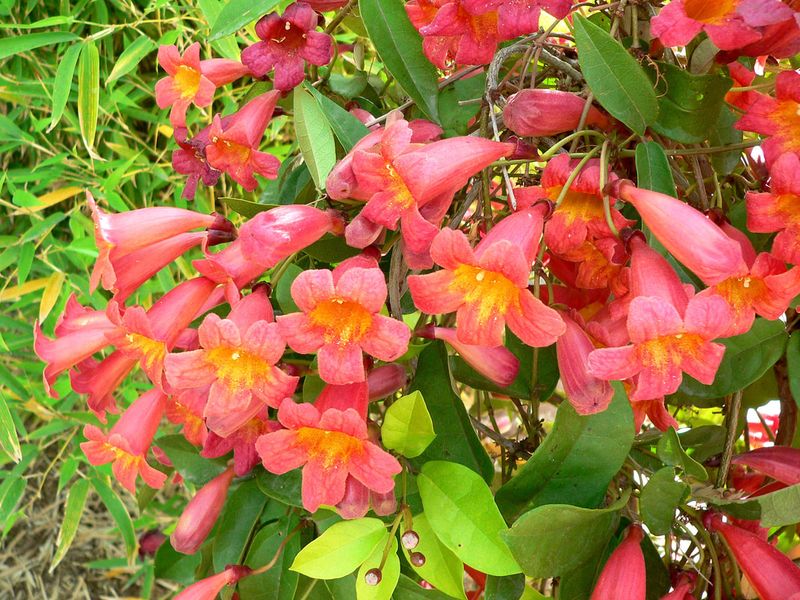
Fast coverage works best when the support is strong, and crossvine, Bignonia capreolata, is the kind of vine that will use every inch of a sturdy arbor or fence. It climbs with adhesive discs at the tips of its tendrils, gripping surfaces firmly and pulling itself upward quickly.
In spring, it produces clusters of trumpet-shaped flowers in shades of orange, red, and yellow that hummingbirds visit actively.
Crossvine is semi-evergreen in most parts of Florida.
That means it holds its leaves through mild winters and may drop some foliage during colder stretches before pushing new growth in spring. The flowers appear early in the season, sometimes before many other native plants have started blooming, which makes them a useful early nectar source.
The vine can grow 30 to 50 feet in length over time, so placing it on a large, sturdy structure from the start is the practical choice.
Because of its vigor, crossvine is not the right fit for a small decorative trellis. It performs best on a substantial fence, a large pergola, or a strong arbor where its growth adds coverage rather than becomes a management problem.
Light pruning after the main bloom period helps keep the plant tidy and can encourage reblooming in some seasons.
For bird-friendly gardens, the dense canopy crossvine creates on a large structure adds a useful sheltered layer.
Birds, including those moving through during migration, may use that cover. Insects drawn to the flowers add food value nearby.
Pair it with native understory shrubs, grasses, and seed-bearing plants.
A crossvine-covered structure can become one of the more active spots in the garden through spring and into summer.
4. Virginia Creeper Gives Birds Berries And Thick Cover
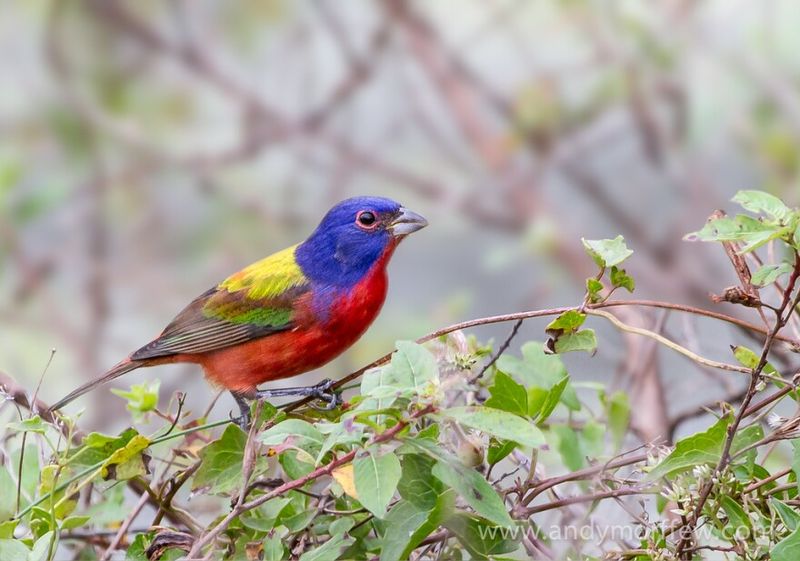
Berries matter when the flowers are gone, and Virginia creeper, Parthenocissus quinquefolia, delivers them reliably in fall. The small dark blue-black berries ripen in clusters and are eaten by a wide range of native birds, including thrushes, woodpeckers, warblers, and mockingbirds.
The vine climbs using adhesive pads that grip surfaces tightly.
Its five-lobed leaves create a thick, layered cover that birds use for shelter and movement through a yard.
In parts of Florida where fall temperatures drop enough, Virginia creeper can show some red and orange color before the leaves drop. In warmer areas it may stay green longer into the season.
Either way, the berries are the main wildlife draw, and they tend to disappear quickly once birds discover them. The vine grows vigorously and can cover a large fence, wall, or naturalized structure in a few seasons.
That vigor is worth planning for. Virginia creeper should not be allowed to climb painted siding, wood trim, gutters, or delicate fences.
Its adhesive pads can be difficult to remove from surfaces and may cause damage over time. It works best on naturalized structures, chain-link fences, or brick walls where surface damage is not a concern.
Large trellises can also work when its growth is expected and welcome.
For Painted Bunting support, this vine contributes most through the dense cover it creates and the berry crop it produces in fall. Buntings rely primarily on seeds, but the sheltered edges that Virginia creeper creates near the ground and mid-level are exactly the kind of habitat these birds use.
Combined with native grasses and low seed-bearing plants, a Virginia creeper-covered fence can anchor a productive and bird-active corner of the garden.
5. Virginia Virgin’s-Bower Softens Fences With Late Flowers
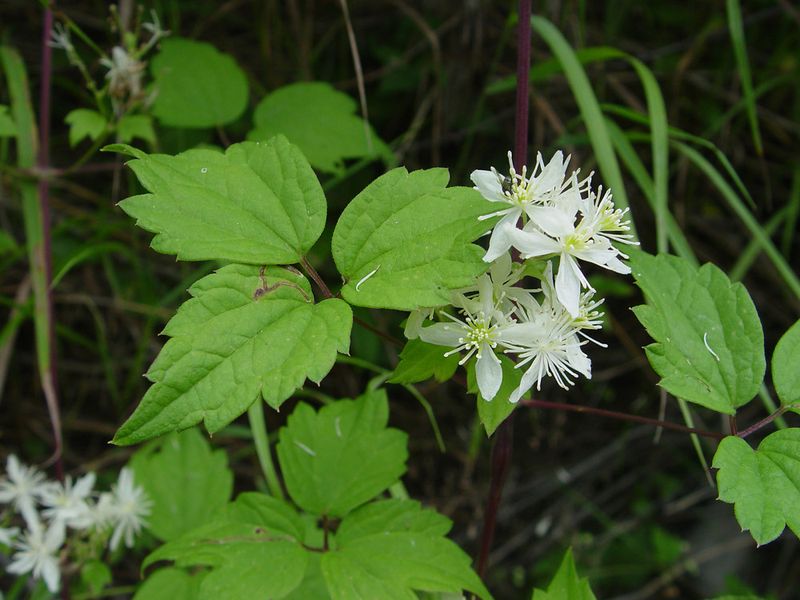
Late flowers can keep a fence useful longer.
Virginia virgin’s-bower, Clematis virginiana, is one of the few Florida native vines that blooms in late summer and early fall when most other plants have finished. The flowers are small and white, appearing in frothy clusters that soften the look of a fence or trellis and attract native bees, wasps, and small pollinators.
After the flowers fade, fluffy silvery seedheads form and cling to the vine through fall and into winter.
They give the plant a different kind of visual texture through the quieter months.
This vine works well on fences, trellises, and naturalized edges where a somewhat wild look fits the planting style. It twines by wrapping its leaf stems around a support, so a fence with open sections or a wire trellis gives it the grip it needs to climb well.
Growth can be moderate to vigorous depending on the site, and the vine may need some guidance early in the season to send it in the right direction.
One important distinction to make at the nursery or online is between Virginia virgin’s-bower and sweet autumn clematis.
Sweet autumn clematis, Clematis terniflora, is a non-native species that looks similar but is considered invasive in many areas. Always confirm the botanical name, Clematis virginiana, before purchasing.
For bird-friendly gardens, the dense late-season growth adds cover at a time of year when migrating birds are moving through. The seedheads may occasionally be used as nesting material by some species.
Paired with native shrubs and grasses nearby, this vine can extend the active season of a fence or naturalized edge.
It also supports the layered habitat structure that benefits birds like Painted Buntings passing through in fall.