Florida Native Plants To Replace Your Crape Myrtles Along Fence Lines And Driveway
Crape myrtles are everywhere in Florida and most of them are in the wrong place doing the wrong job. Fence lines are crowded with trees that outgrow the space, and driveways are flanked by varieties that needed twice the room they got.
Then comes the annual crape murder pruning ritual, which leaves stumps where there should be canopy. Florida tolerated crape myrtles for decades because the options were not well known.
That has changed. A solid lineup of natives now fills the same structural role along fence lines and driveways.
They offer better wildlife value, more honest growth habits, and no need for the kind of aggressive pruning that turns a beautiful tree into an eyesore every February. Some of them bloom longer than crape myrtles.
Some offer berries, habitat, and canopy that crape myrtles simply cannot provide. Your fence line and driveway can do a lot more work for Florida’s ecosystem than a row of crape myrtles ever will.
1. Plant Simpson’s Stopper For A Native Fence-Line Screen
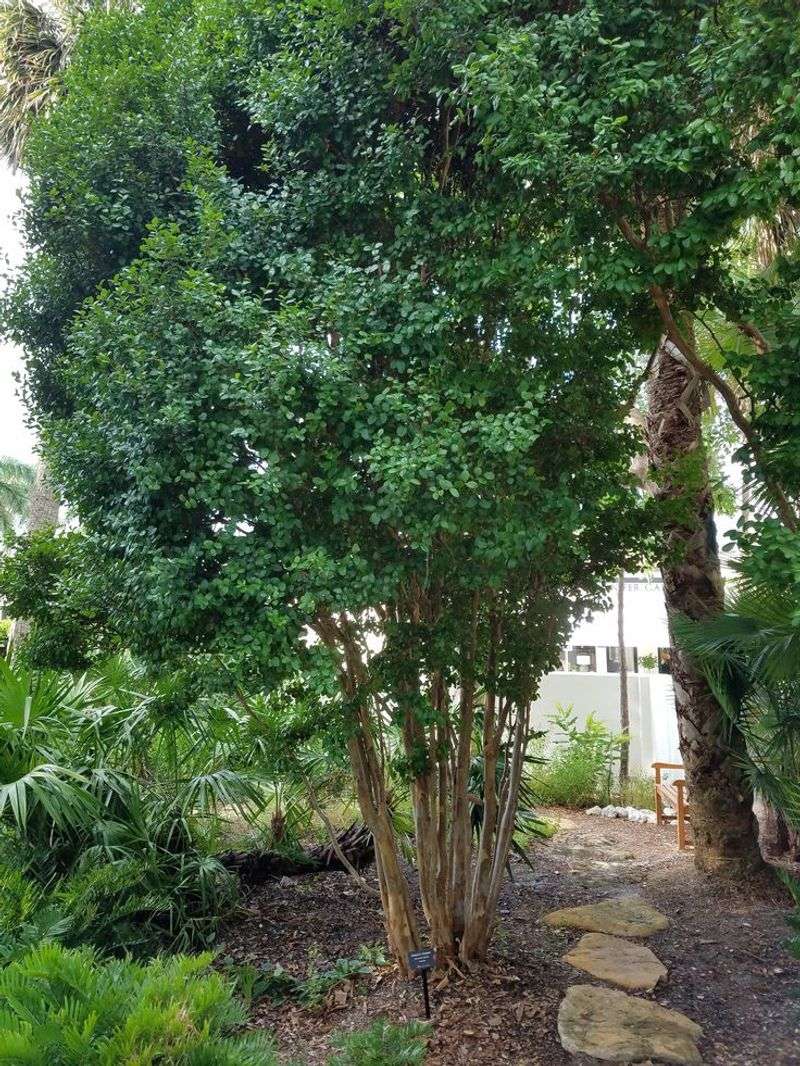
Picture a bare or tired-looking fence line finally filled in with something alive, fragrant, and genuinely useful. Simpson’s stopper, known botanically as Myrcianthes fragrans, is a native evergreen shrub or small tree that can do exactly that job.
According to UF/IFAS, it is well suited for use as a hedge, screen, or specimen plant in local landscapes.
Small white flowers appear in clusters and carry a light, pleasant fragrance. Female plants produce orange-red berries that birds find attractive, making this a fence-line plant that does double duty as a wildlife resource.
UF/IFAS notes that it grows in a range of well-drained soils and handles sun to partial shade.
Mature plants can reach 15 feet or taller if left unpruned, so give them enough room along the fence rather than cramming them in. Avoid shearing them into tight geometric shapes, which removes the flowering tips and reduces berry production.
Plant them far enough from property lines and structures so their natural canopy can fill out without constant cutting back.
Leaf litter and berry drop are worth thinking about if the fence line borders a pool deck or a clean patio. For a naturalistic border or a wildlife-friendly screen, though, Simpson’s stopper is a strong native choice that earns its place along almost any fence.
2. Choose Walter’s Viburnum Where Driveways Need Soft Privacy
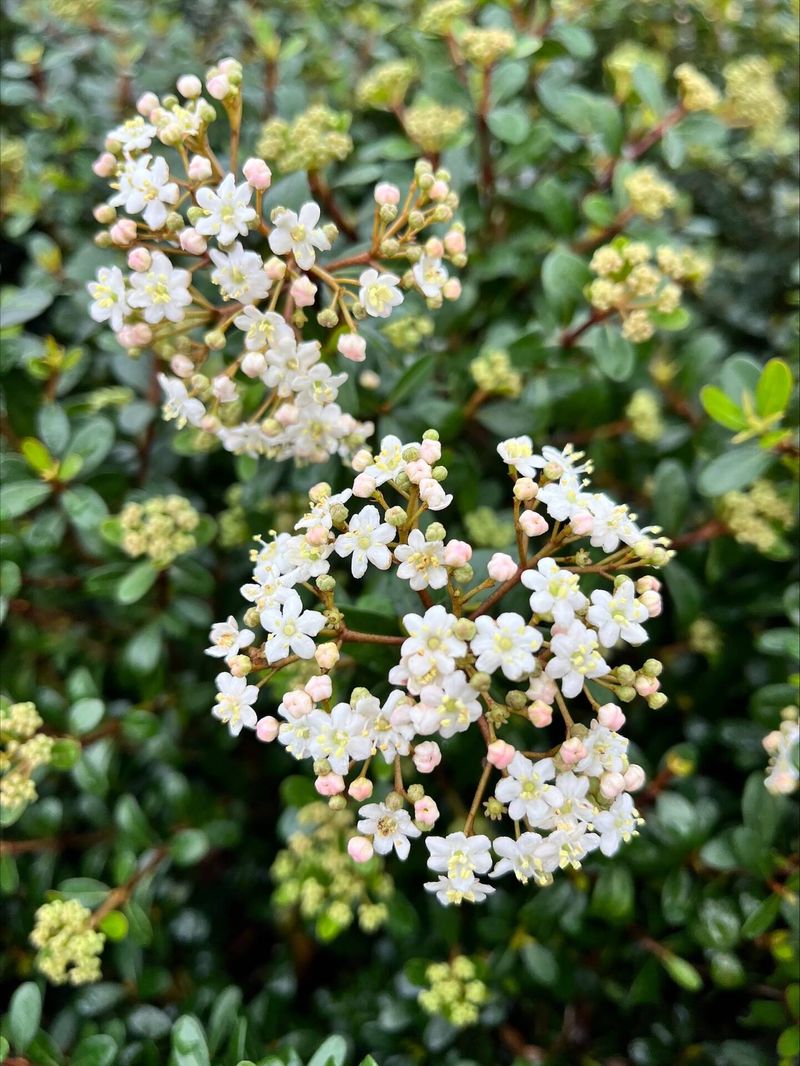
A driveway without any plant buffer can feel exposed, but a rigid wall of clipped shrubs is not the only answer. Walter’s viburnum, Viburnum obovatum, offers a softer, more natural kind of privacy.
It works well along driveway edges where homeowners want screening without a fortress feel.
UF/IFAS recognizes Walter’s viburnum as a native Florida shrub or small tree that produces clusters of small white flowers in late winter to early spring. Those blooms attract pollinators, and the fruit that follows provides food for birds.
The plant can be pruned into a hedge or allowed to grow in a more open, layered form depending on the look you want.
Your Florida Garden Changes Every Week. Your Plan Should Too.
Gardening in Florida changes quickly throughout the season. Every Friday you’ll receive a simple weekly plan showing exactly what to plant, prune, fertilize, harvest, and protect so you never miss the right timing.
Different cultivars vary quite a bit in mature size. Some stay compact while others reach 10 to 12 feet.
Check the tag or ask your nursery specifically about the cultivar before buying. That helps you avoid a plant that crowds car doors, blocks gate access, or overhangs the pavement as it fills out.
Keep it set back from the driveway edge by several feet to allow for mature spread and easy access. With the right spacing and a little selective pruning each year, Walter’s viburnum can give a driveway layered, seasonal privacy.
That is something a row of crape myrtles rarely delivers.
3. Use Yaupon Holly For A Tough Evergreen Border
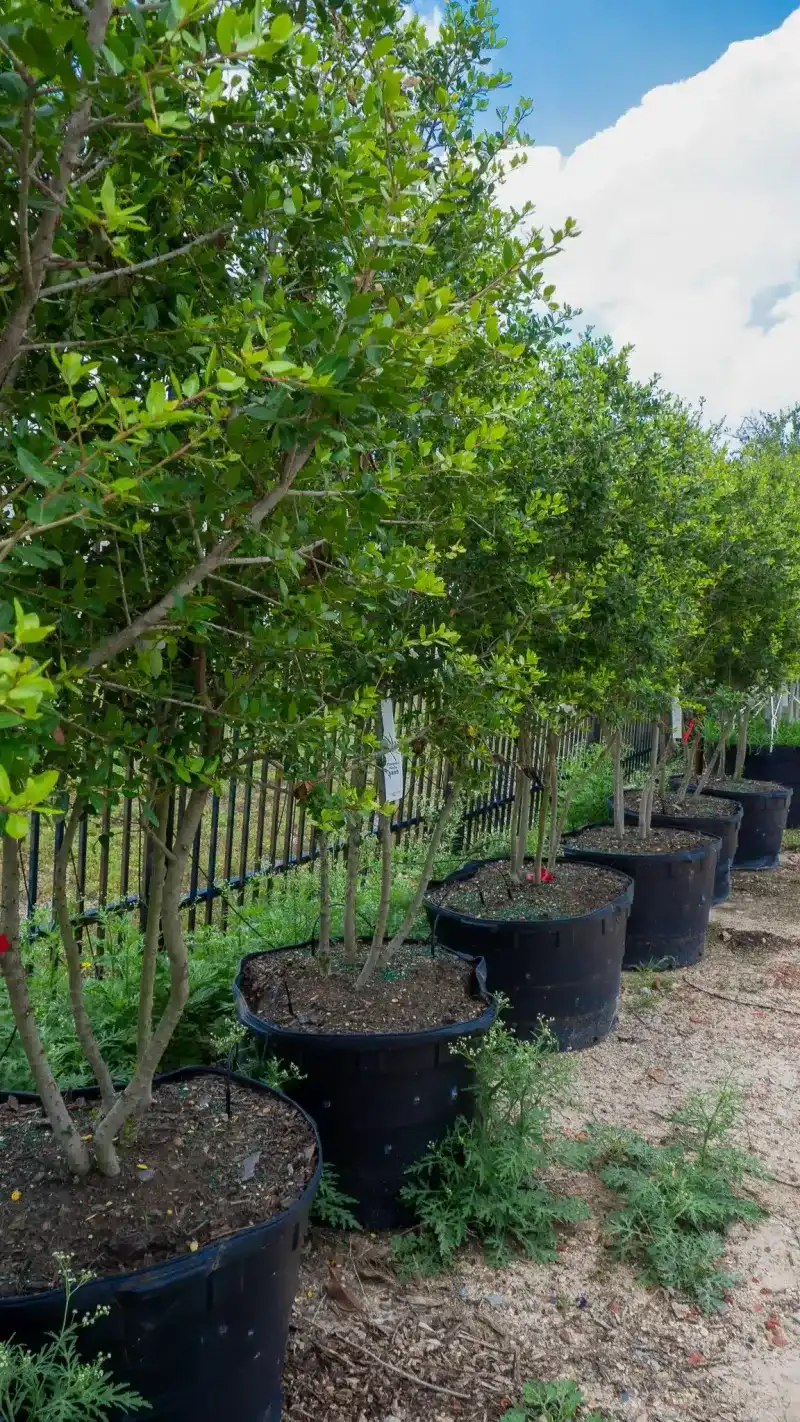
Year-round green structure along a long fence line or driveway is hard to beat, and yaupon holly, Ilex vomitoria, delivers that reliably. This native evergreen shrub or small tree is one of the most adaptable plants available for local landscapes.
According to UF/IFAS Gardening Solutions, it tolerates drought, wet soils, sun, and partial shade.
Female plants produce small red berries in winter that birds eat readily. The wildlife value is real and documented.
UF/IFAS notes that yaupon holly supports birds and other wildlife, making it a productive choice for a fence-line border that does more than just look tidy.
Cultivar selection matters a lot here. Some cultivars stay compact and rounded at 3 to 5 feet, while others grow into large shrubs or small trees reaching 15 to 25 feet.
Match the cultivar to your fence height, driveway clearance, and pruning tolerance before you buy.
Near a driveway, think about berry drop on pavement and visibility at corners or intersections. Set plants back far enough from the road edge so mature branches do not hang over car doors or block sightlines.
Yaupon holly can be lightly pruned to shape, but heavy shearing removes the berry-producing tips. A little selective trimming each season goes much further than hard clipping for keeping it neat and productive along a fence-line border.
4. Plant Flatwoods Plum For Spring Flowers Near Open Fence Lines
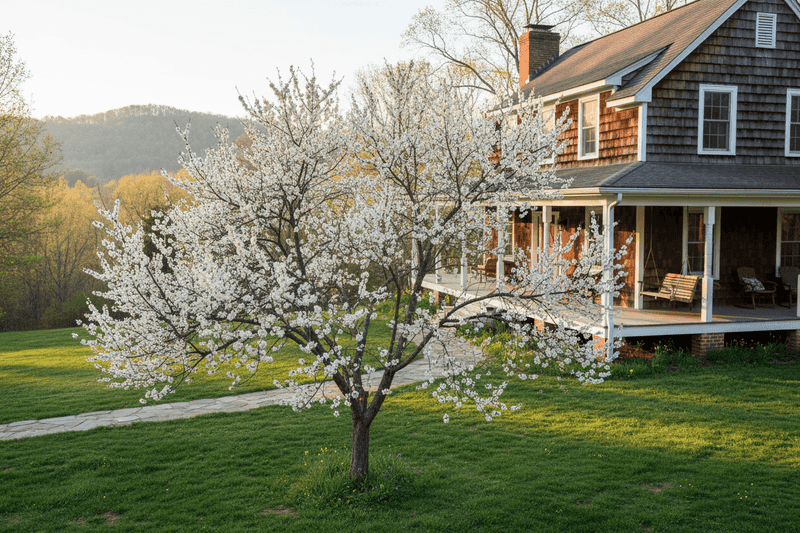
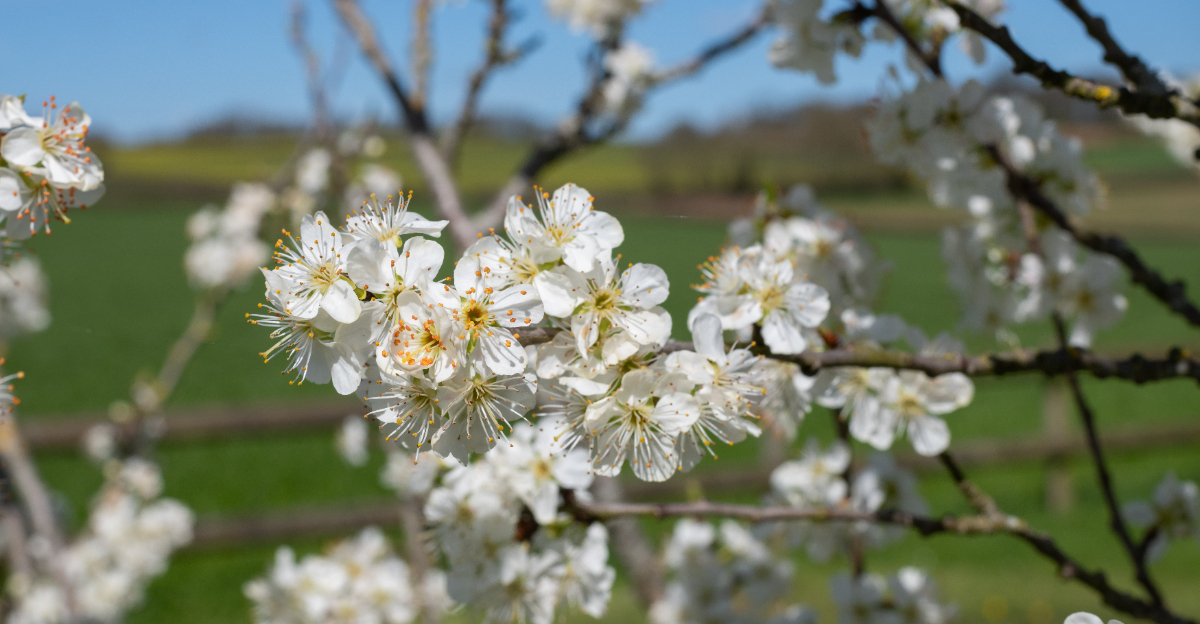
Before the leaves even fully open, flatwoods plum puts on a show. Prunus umbellata bursts into clouds of small white flowers in late winter or early spring.
That makes it one of the most striking native flowering trees available for open fence lines in this state.
UF/IFAS describes flatwoods plum as a native small tree that can reach 15 to 20 feet. It produces fruit that wildlife use, and the spring bloom can attract pollinators during an early season when few other plants are flowering.
For a fence line that needs a seasonal anchor instead of a plain evergreen wall, this plant earns attention.
The key word here is open. Flatwoods plum needs room to develop its natural branching habit without constant cutting.
It is not a good fit for a narrow formal driveway strip where branches would overhang cars or block a gate. A roomy side yard, a back fence line, or a naturalistic border gives it the space to look its best.
Fruit drop is worth considering if the fence line is near a patio or walkway. For a looser, more naturalistic design, flatwoods plum can replace a crape myrtle row beautifully.
It works especially well where spring bloom and wildlife value are the priorities. Give it space, and it rewards you generously each spring.
5. Choose Red Buckeye For A Native Flowering Accent
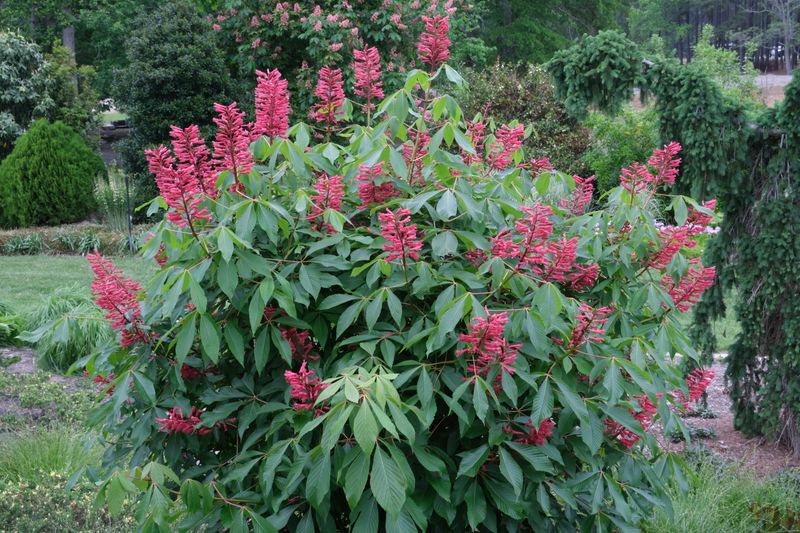
Hummingbirds arrive in early spring looking for nectar, and red buckeye is one of the native plants that reliably draws them in. Aesculus pavia produces showy upright clusters of red tubular flowers.
They bloom just as hummingbirds are moving through, making it a plant with real wildlife timing built in.
UF/IFAS recognizes red buckeye as a native shrub or small tree with ornamental flower value and hummingbird appeal. It typically reaches 10 to 15 feet and tends to grow wider than many homeowners expect.
The foliage may look thin or sparse in summer heat, and the plant can drop leaves earlier than fully evergreen species.
That seasonal quality is worth understanding before you plant a row of them along a driveway expecting year-round fullness.
Red buckeye works best as an accent plant, placed where its spring flower display is the main event and where its off-season appearance will not disappoint.
Mixing it with evergreen natives nearby helps cover the quieter months.
Keep it away from tight driveway edges and narrow walkways where its spread and root zone need room. The seeds and plant parts are toxic to humans and pets, so avoid planting near areas where children or animals play.
Red buckeye works well as a seasonal accent in a naturalistic border or wider fence-line planting. It adds a burst of native spring color that few plants in this state can match.
6. Use Beautyberry Where A Loose Wildlife Shrub Fits
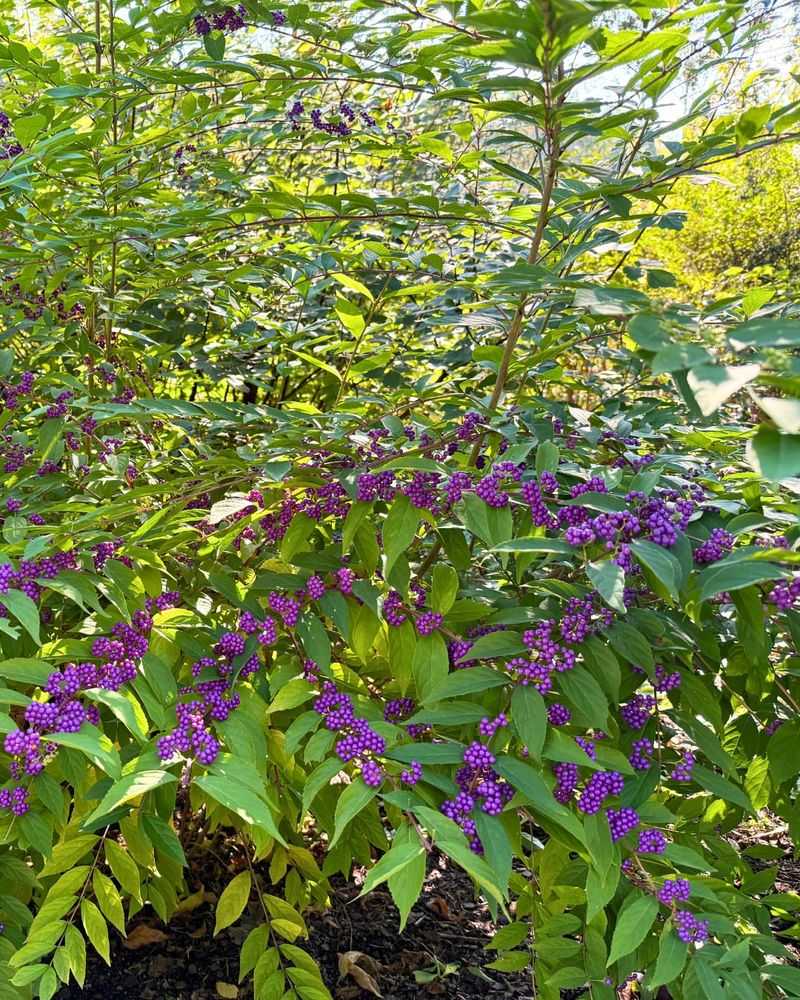
Late summer and fall along a fence line can feel dull after the spring bloomers have finished. American beautyberry changes that with clusters of vivid purple fruit that practically glow against the foliage.
Callicarpa americana is a native shrub with one of the most eye-catching displays in the native landscape. It shines during the months when most other shrubs are just sitting there.
UF/IFAS confirms that American beautyberry is native to this state and that its fruit is eaten by a wide range of birds and other wildlife. The plant typically grows 4 to 8 feet tall and wide, with long arching branches that give it a loose, fountain-like shape.
That open habit is part of its charm in a naturalistic border, but it can feel unruly in a tight spot.
Do not squeeze it into a narrow driveway strip or a formal bed where its spreading branches will constantly need cutting back. It can self-seed, so be prepared to pull seedlings that pop up nearby.
Make sure you are buying native American beautyberry from a reputable nursery, not an imported species or an unlabeled hybrid that lacks the same wildlife value.
For a roomy fence line where a loose, arching, wildlife-friendly shrub fits the design, beautyberry is one of the most rewarding native plants you can add. The purple fruit alone will have neighbors stopping to ask what it is.
7. Plant Buttonwood Along Sunny Coastal Driveways
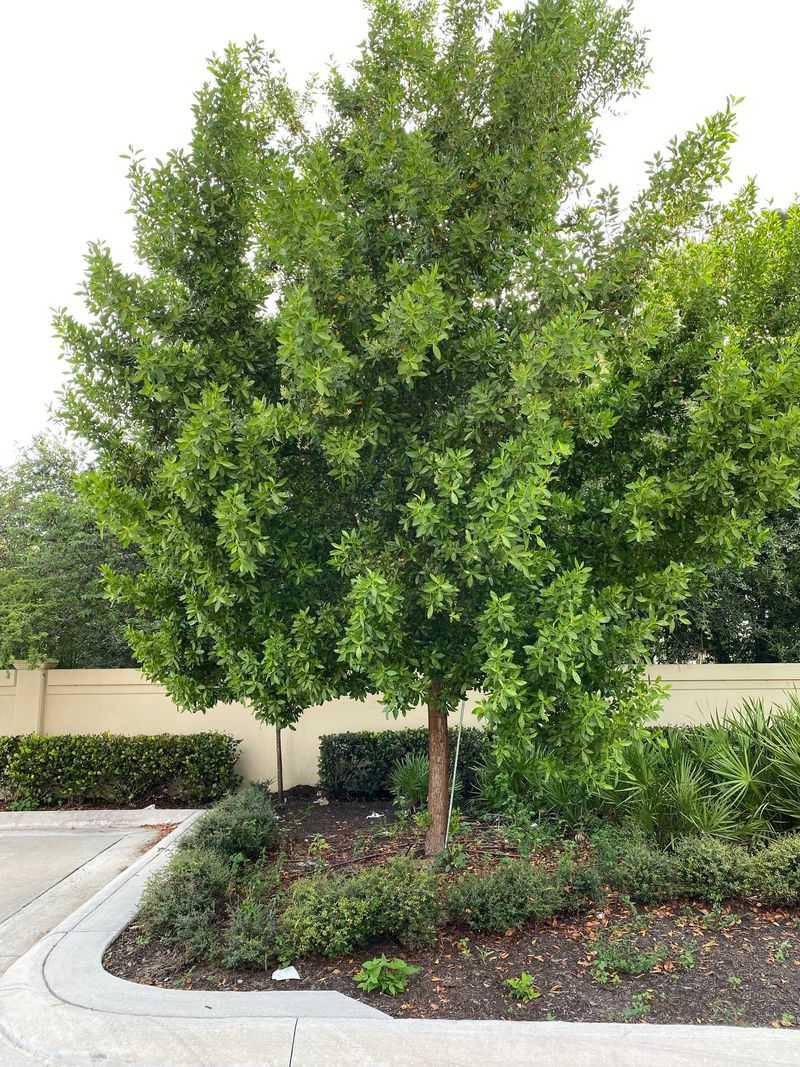
A driveway near the coast takes a beating from salt wind, reflected heat off pavement, and sandy soil that dries out fast between rains. Most ornamental shrubs struggle in those conditions, but buttonwood, Conocarpus erectus, handles them with ease.
UF/IFAS identifies buttonwood as a native coastal shrub or small tree with strong salt tolerance. That makes it a practical choice for driveways and fence lines in coastal areas where other plants fail.
It can grow as a large shrub or be trained into a small tree depending on pruning. The silvery-green foliage gives it a distinctive look that reads as tropical and tidy at the same time.
Buttonwood is best suited to warmer coastal areas and southern regions. Gardeners in cooler inland sites or northern regions should check with their local Extension office before planting, since cold sensitivity can be a factor.
Do not force it into a narrow driveway strip where its mature canopy will have nowhere to go.
Give it room to develop naturally and prune thoughtfully rather than shearing it hard on a schedule. Hard shearing removes the fine branch tips that give it its characteristic texture.
A sunny coastal driveway needs screening, structure, and a plant tough enough to handle salt and wind. Buttonwood is a native option worth serious consideration for that job.
Pair it with other coastal natives for a border that feels completely at home by the water.
8. Choose Chickasaw Plum For A Thicket-Style Native Border
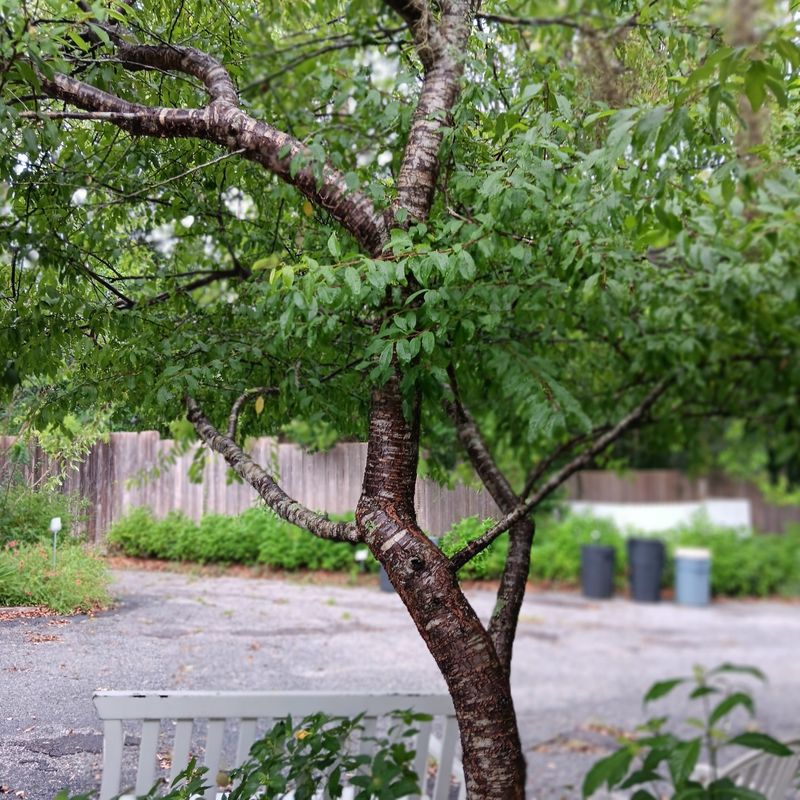
Some fence lines do not need a tidy hedge. They need a living boundary with real character, seasonal bloom, and enough density to give wildlife somewhere to shelter and feed.
Chickasaw plum, Prunus angustifolia, is a native shrub or small tree that can build exactly that kind of border when the site has room for it.
UF/IFAS notes that Chickasaw plum produces white flowers in late winter to early spring and that its small fruit is eaten by birds and other wildlife.
The plant tends to form thickets through suckering, spreading outward over time to create a dense, layered mass of branches.
That habit is genuinely useful along a roomy fence line where a natural, wildlife-friendly edge is the goal.
Along a narrow driveway, a formal bed, or a walkway where spread needs to stay controlled, that same suckering habit can become a management challenge. Be honest about your site before you plant.
If you choose Chickasaw plum for a fence line, plan to manage the suckers from the start. Remove them as they appear rather than letting the thicket grow unchecked into areas where it is not wanted.
Used in the right spot with some basic management, Chickasaw plum can replace a row of crape myrtles with something far more useful.
It feeds birds, blooms in late winter, and gives a fence line layered character that no non-native ornamental tree can replicate.