This Is How Florida Gardeners Keep Plumeria Producing Blooms From Summer Through Fall
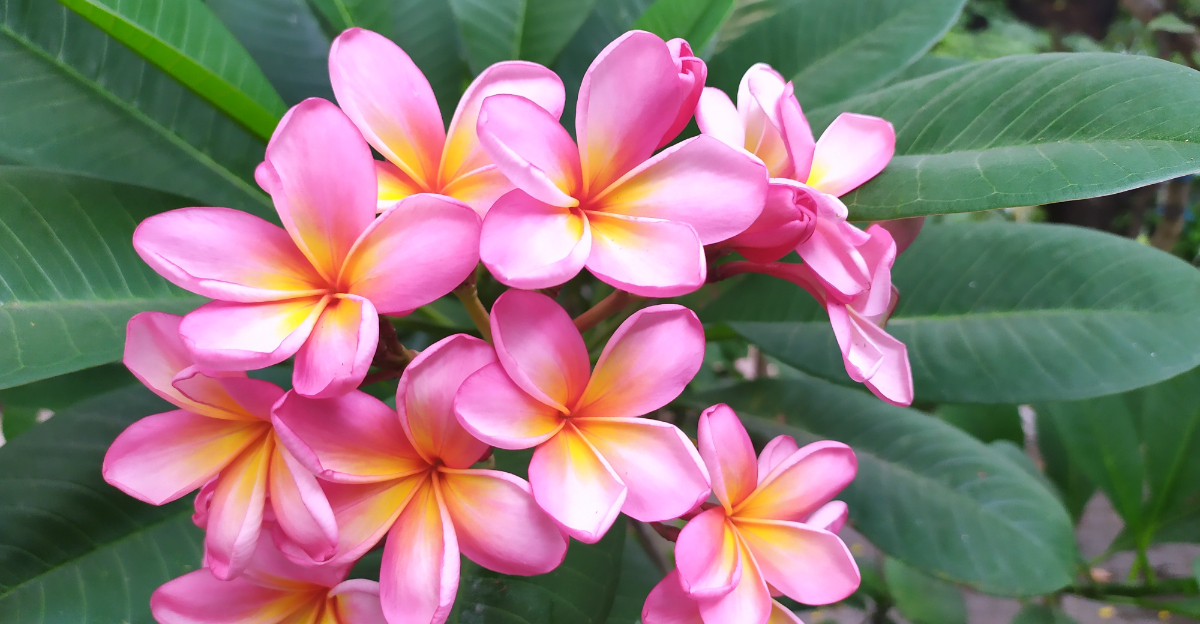
Plumeria is one of those plants that makes people feel like they’re living their best tropical life the day they bring it home. Fast forward a few months and the honeymoon is over.
The thing is leafing out beautifully, smelling like absolutely nothing, and producing zero blooms while you stand there wondering what went wrong. Here’s the part nobody tells you at the nursery: plumeria is basically a performance-based plant.
It rewards the gardeners who understand its rhythm and completely ghosts the ones who don’t. Florida’s climate gives you a genuine leg up because the heat and humidity that make summer miserable for you?
Plumeria treats that like a five-star vacation. But heat alone doesn’t flip the bloom switch.
There’s a specific combination of feeding cycles, sun exposure, and tough-love pruning that tells this plant to stop hoarding energy and start putting on a show. Get those three things working together and your plumeria won’t know when to quit.
1. Give Plumeria The Strongest Sun You Can
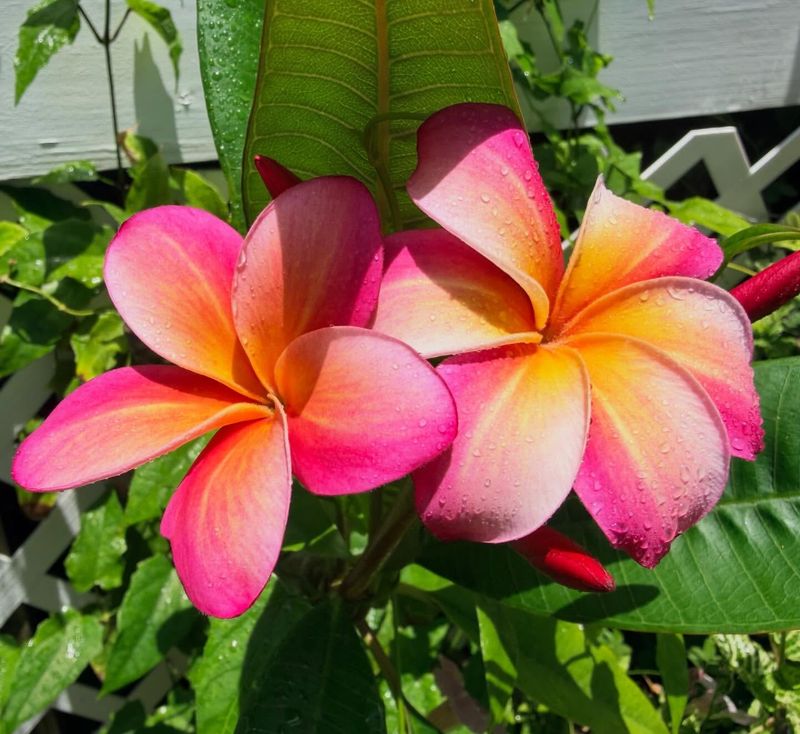
Light is the first bloom check, and it is the one most gardeners overlook once a plant is already in the ground or settled on a patio. Plumeria needs strong, direct sun to push out flower clusters consistently.
Many growers find that six or more hours of direct sun each day gives the plant what it needs to shift from leafy growth into flowering mode.
Shade from a nearby oak, a tall fence, a roofline overhang, or a patio cover can quietly reduce the light a plumeria receives.
The problem may not be obvious at first glance. Walk around your plant at different times of day and notice how much direct sun actually hits the canopy.
Even partial shade during the peak afternoon hours can reduce bloom production over the course of a season.
Container plants have an advantage here because they can be moved to a sunnier spot when needed. In-ground plants require more planning, so placement matters from the start.
Pruning nearby shrubs or trimming low tree branches can sometimes open up enough light to make a real difference. More direct sun usually means stronger branch tips, and branch tips are where flower buds form on plumeria.
If the light situation cannot be improved much, adjusting other care factors becomes even more important.
2. Water Deeply But Let The Soil Drain
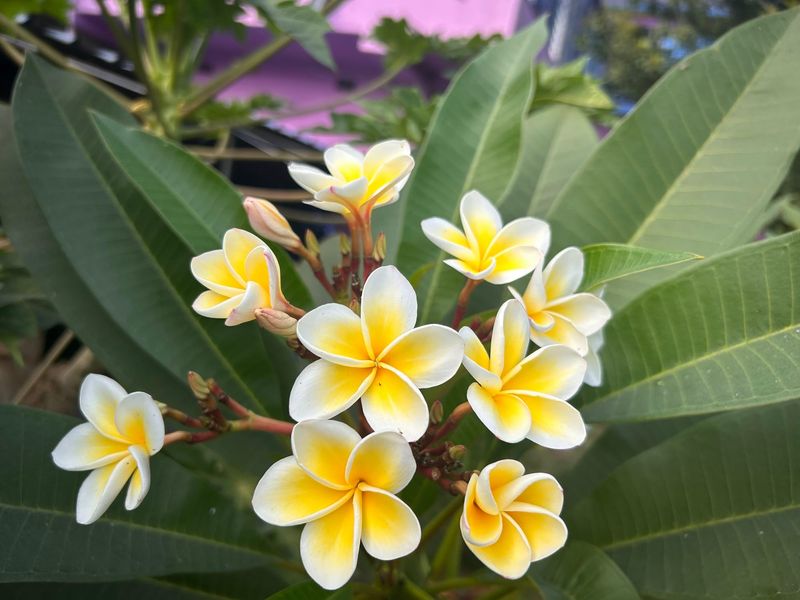
Watering should match the season, not the calendar. During active summer growth, plumeria does need regular moisture to support both leaf and flower development.
The key is how water is applied and how quickly the soil releases it afterward. Deep, thorough watering encourages roots to reach downward.
Shallow, frequent watering can keep the upper soil layer too wet and the deeper root zone too dry.
Plumeria does not do well when roots sit in constantly wet conditions. After a deep watering, the soil should be allowed to dry out slightly before watering again.
In sandy or well-amended beds, this usually happens naturally within a few days. In heavier soils or spots with poor drainage, water can linger much longer than expected.
Your Florida Garden Changes Every Week. Your Plan Should Too.
Gardening in Florida changes quickly throughout the season. Every Friday you’ll receive a simple weekly plan showing exactly what to plant, prune, fertilize, harvest, and protect so you never miss the right timing.
Summer rain complicates this balance in ways that catch even careful gardeners off guard. A week of afternoon thunderstorms may mean the plant gets more water than it needs, especially in containers where drainage holes can get blocked or saucers fill up.
Check soil moisture before adding more water rather than following a fixed schedule. A plant that looks a little droopy in midday heat may just be responding to temperature, not a lack of water.
Letting the soil guide watering decisions usually produces better results than sticking to a set routine.
3. Feed While Growth Is Active
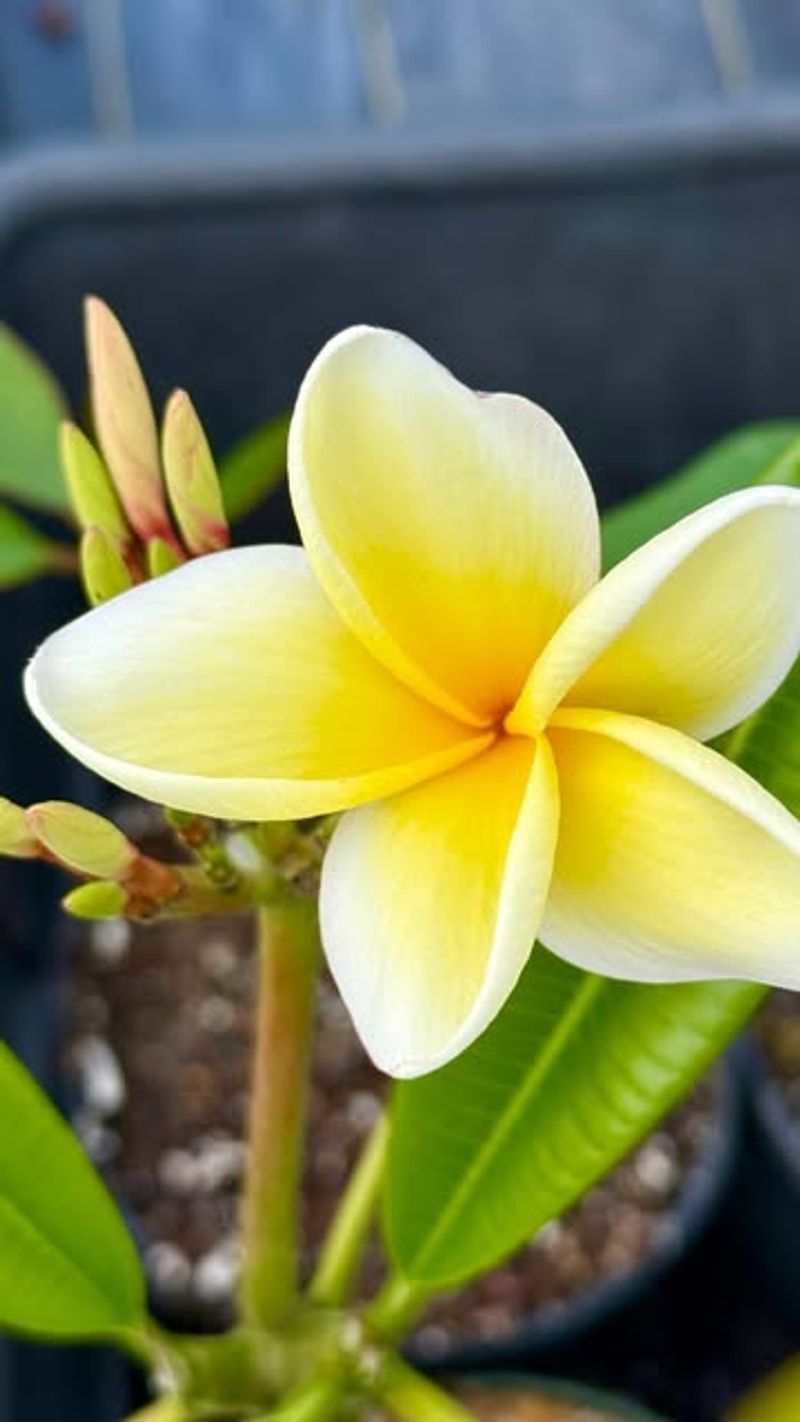
Active growth is the feeding window, and plumeria signals that window clearly. When new leaves are pushing out from branch tips and the plant looks healthy and vigorous, that is the right time to consider fertilizer support.
Feeding a plumeria that is actively growing can help sustain both foliage and flower production through the warm season.
Plumeria often responds well to fertilizers that are higher in phosphorus relative to nitrogen. A fertilizer labeled for flowering tropicals or one with a middle number higher than the first can support bloom development.
Always follow the product label for application rates and timing. More fertilizer does not mean more flowers, and overfeeding can push excessive leaf growth at the expense of blooms.
Fertilizer also cannot fix a poor site. If the plant is sitting in shade, if the soil stays wet, or if the root system is stressed, feeding will not trigger blooming.
Compaction or previous root damage can also keep the plant from responding. Think of fertilizer as support for a plant that already has good sun and drainage, not as a solution to deeper problems.
Feeding can be tapered as temperatures begin to cool and active growth slows. In most warm regions, the main feeding window runs from late spring through late summer, though this can vary by plant health and local conditions.
4. Keep Containers From Sitting In Summer Rain
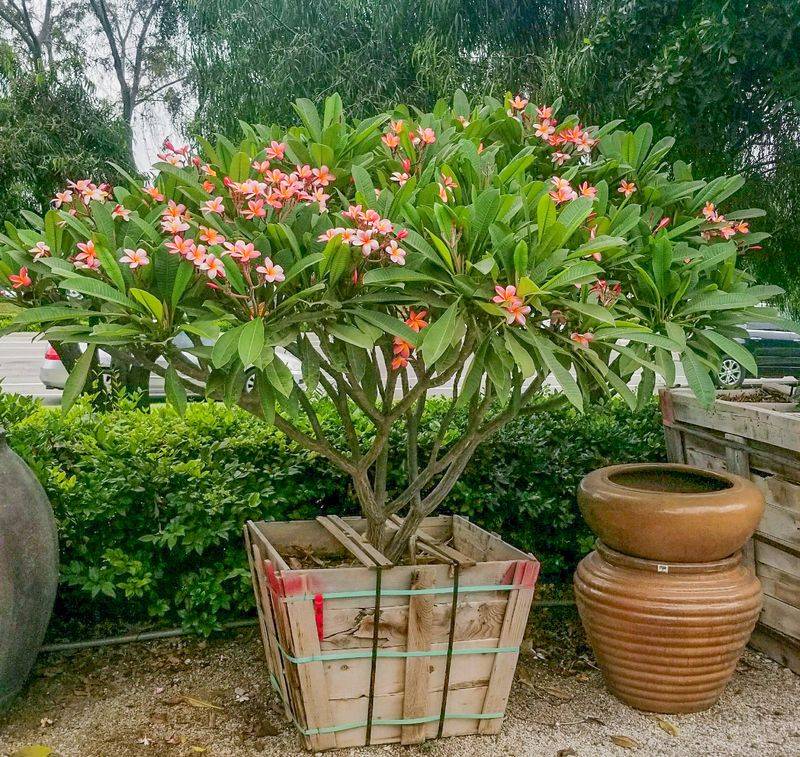
A pot can help only if it drains. Many gardeners grow plumeria in containers precisely because it gives them more control over the plant’s environment.
Containers let you move the plant, adjust sun exposure, and protect it from cold. But a pot that holds water or sits in a pooling saucer can create root problems faster than most gardeners expect.
Drainage holes must be open and unobstructed. Potting mix should be loose and fast-draining, not dense or moisture-retaining.
During the summer rainy season, a container sitting on a flat surface under a roof edge can catch concentrated runoff from each storm. That kind of repeated soaking, especially in a container that drains slowly, can stress roots and reduce flowering over time.
Saucers are useful for protecting surfaces, but they should be emptied after rain or watering so water does not sit against the drainage holes. Raising containers slightly on pot feet or bricks can help excess water escape more freely.
Container plants also tend to dry out faster than in-ground plants during hot weather, so moisture checks are needed more often. The goal is a consistent cycle of thorough watering followed by good drainage and a brief drying period before the next watering.
Getting that rhythm right through a wet Florida summer takes attention, but it pays off in healthier roots and more consistent blooming.
5. Prune Only When You Have A Clear Reason
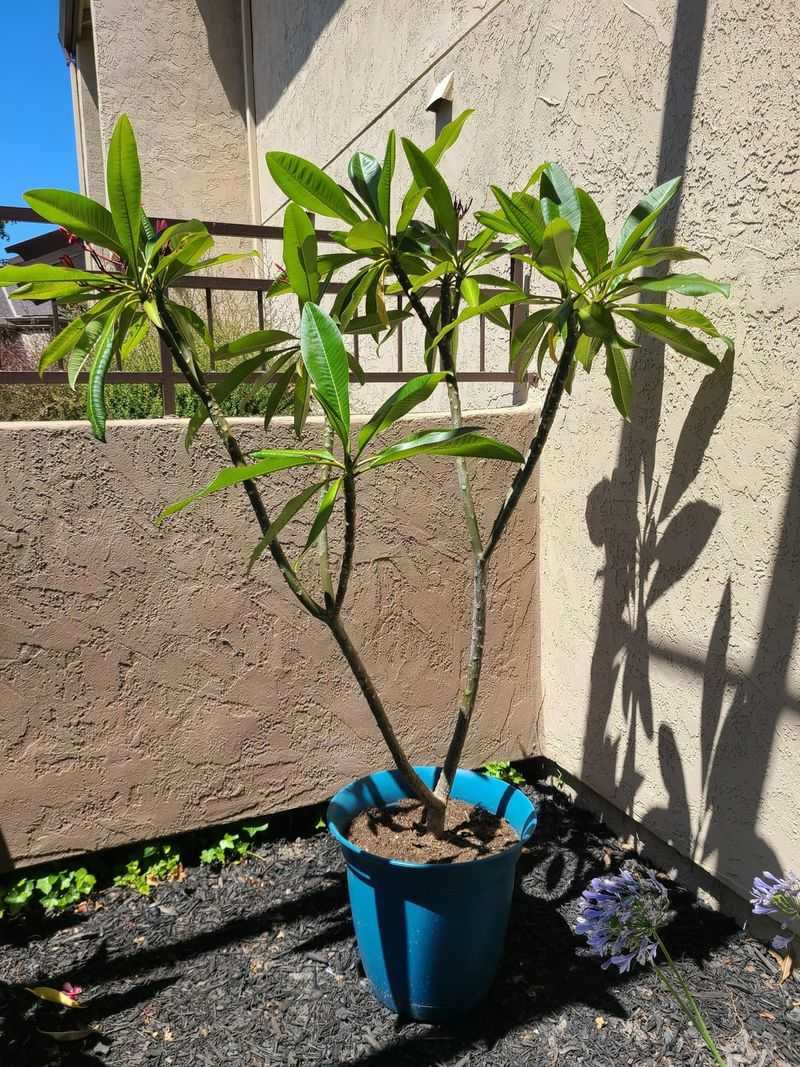
Every cut has a cost when flowers are the goal. Plumeria produces flower clusters at the tips of branches, so removing a branch tip removes a potential bloom site for that growth cycle.
Pruning is sometimes necessary, but it should always be done with a clear purpose rather than as routine maintenance or an attempt to push more flowers.
Good reasons to prune include removing branches that are clearly damaged or crossing and rubbing against each other.
You can also remove branches growing in a direction that creates structural problems. Shaping a plant that has become unbalanced or too large for its space is also reasonable.
What is less useful is cutting back healthy branches hoping to trigger a flush of new blooms. That approach can delay flowering rather than encourage it.
Timing matters too. Pruning during the active summer bloom season interrupts the natural cycle.
If pruning is needed, doing it before the season ramps up gives branch tips more time to recover and develop new flower buds. Any cut made during the June-through-fall period should be intentional and minimal.
Plumeria sap is irritating to skin and eyes, so wearing gloves and eye protection when pruning is a sensible habit. After a cut, the branch tip will eventually push out new growth, but it may take several weeks or longer before that tip is ready to bloom again.
6. Watch For Rust, Mites, And Leaf Stress
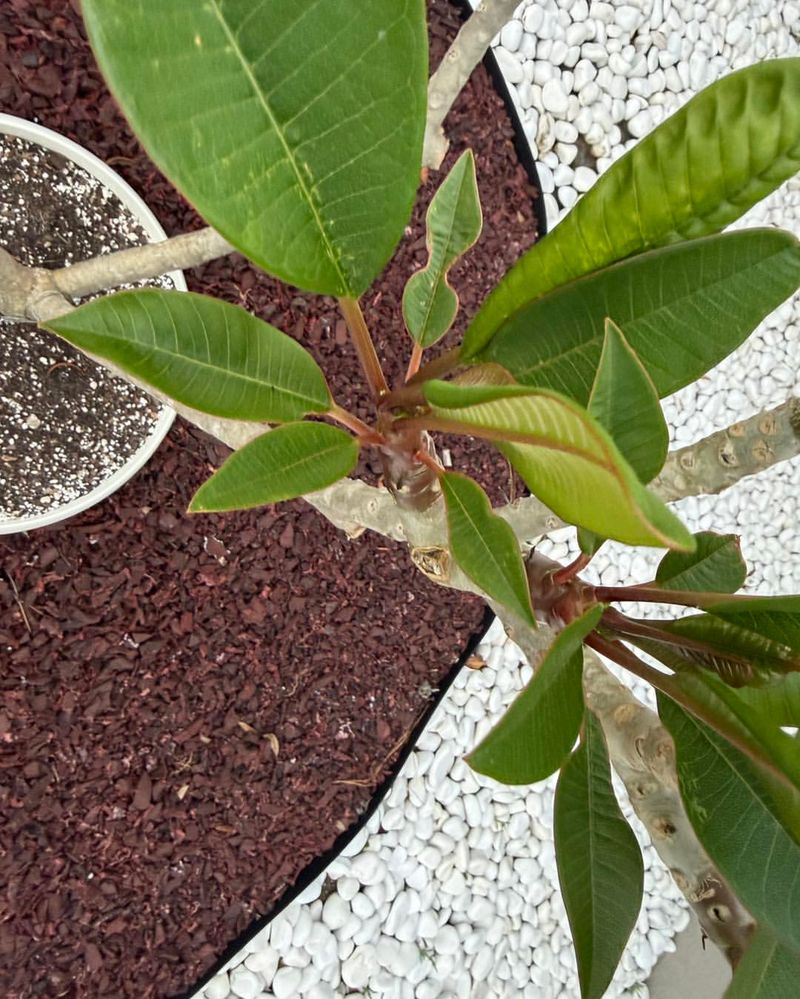
Leaf problems usually show clues before blooms slow down, which means catching them early gives you the best chance to respond before flower production drops. Plumeria rust is one of the most common issues in warm, humid conditions.
It appears as orange or yellow powdery spots, usually on the underside of leaves. Heavy rust infections can cause leaves to drop early and weaken the plant’s ability to support flowering.
Spider mites are another warm-weather problem. They tend to show up during hot, dry stretches and are often found on the undersides of leaves.
Fine webbing, stippled or dull-looking foliage, and leaves that seem to lose color unevenly can all point toward mite activity. Checking leaf undersides regularly is one of the most useful habits a plumeria grower can build.
Other signs of stress include yellowing leaves, unusual spotting, distorted new growth, or a general slowdown in the plant’s energy. Before treating anything, take a close look at what is actually happening and where on the plant it is occurring.
Many problems are manageable when caught early. For confirmed pest or disease issues, look for products labeled for use on ornamentals and follow the directions carefully.
Avoid guessing with homemade treatments, since some can cause more leaf damage than the original problem. A healthy, unstressed plant is always more likely to keep blooming.
7. Protect Buds And Branches During Storm Season
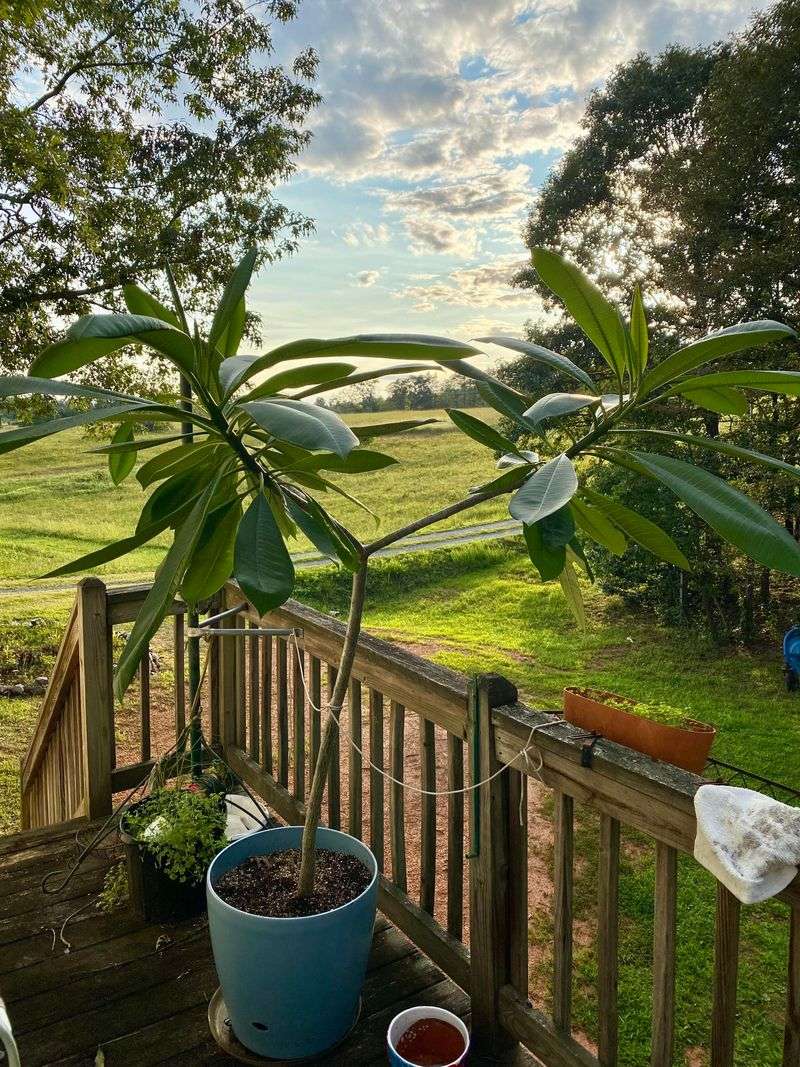
Storm season changes the way containers should be placed, and it also changes how much attention branch tips and developing buds need. Summer and early fall storms can arrive quickly and bring strong gusts.
Those gusts can snap soft new growth, knock over top-heavy containers, and strip developing flower clusters from branch tips before they fully open.
Container plants are the most vulnerable because they can tip over or slide across hard surfaces during strong winds. Moving pots to a sheltered spot before a named storm or a forecast of heavy wind is one of the most practical things a container grower can do.
A garage, a covered porch with solid walls on at least two sides, or a spot tucked behind a solid fence can reduce wind exposure significantly.
Roof runoff is worth thinking about too. A container sitting under a roofline edge can receive concentrated bursts of water during heavy rain.
That water can dislodge soil, erode the root zone, and push excess moisture into a pot that has no time to drain between storm bands. For in-ground plants, checking that the planting area drains well after a major storm helps prevent prolonged wet conditions around the roots.
Securing or removing any support stakes that might shift and damage branches during high winds is also worth doing before storms arrive. A little preparation before a storm is easier than dealing with broken branches after.
8. Adjust Late-Summer Care By Region
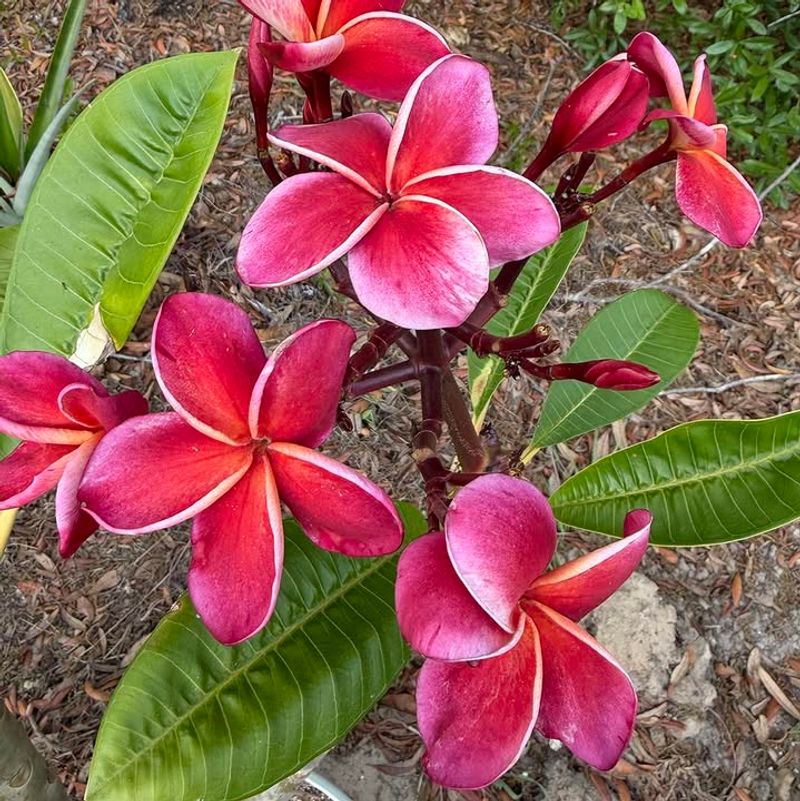
Late summer does not feel the same in every region of the state, and plumeria care should reflect that. South Florida gardeners typically have the longest warm season, which means plumeria can often continue pushing flower clusters well into fall and sometimes beyond.
The trade-off is that the rainy season can be intense and prolonged, putting more pressure on drainage and increasing rust and fungal risk.
Central Florida sits in a middle ground. Summer heat and humidity support strong growth, but temperatures can shift more noticeably by October.
Gardeners in this region often see good summer bloom runs, but planning for cooler nights in late fall becomes relevant earlier than it does further south. Container plants give Central Florida growers flexibility that in-ground plants cannot provide.
North Florida is a different situation. Plumeria is cold-sensitive and can sustain damage from temperatures that drop into the mid-30s or below.
Growing in containers is usually the most practical approach for gardeners in northern region.
Pots can be moved indoors or into a protected space when cool weather arrives. The bloom season may be shorter, but a well-cared-for container plant can still produce flowers through the warmer months.
Wherever you garden in the state, watch how your specific plant responds to late-summer conditions.
Adjusting care accordingly is more reliable than following a fixed regional schedule.