Fast-Growing Climbing Plants For Virginia Fences That Won’t Harm Your Foundation
Your fence has one job: define your space. But somewhere between functional and forgettable, most fences stop trying.
The fix is easier than you think, and it grows.
A well-chosen climbing plant can turn a bare fence into something your neighbors will actually ask about. The trick is picking one that works with Virginia’s climate without quietly dismantling your foundation in the process.
Because yes, some vines are basically that houseguest who seems charming at first and then ruins your walls. The eight plants on this list are fast, beautiful, and genuinely well-behaved.
Some bring bold flowers, others fiery fall color, and a few stay green long after everything else has called it a season. Native, low maintenance, and foundation-safe, they check every box without compromising on looks.
Pick one, plant it, and let your fence finally earn its keep.
Virginia Creeper (Parthenocissus Quinquefolia)
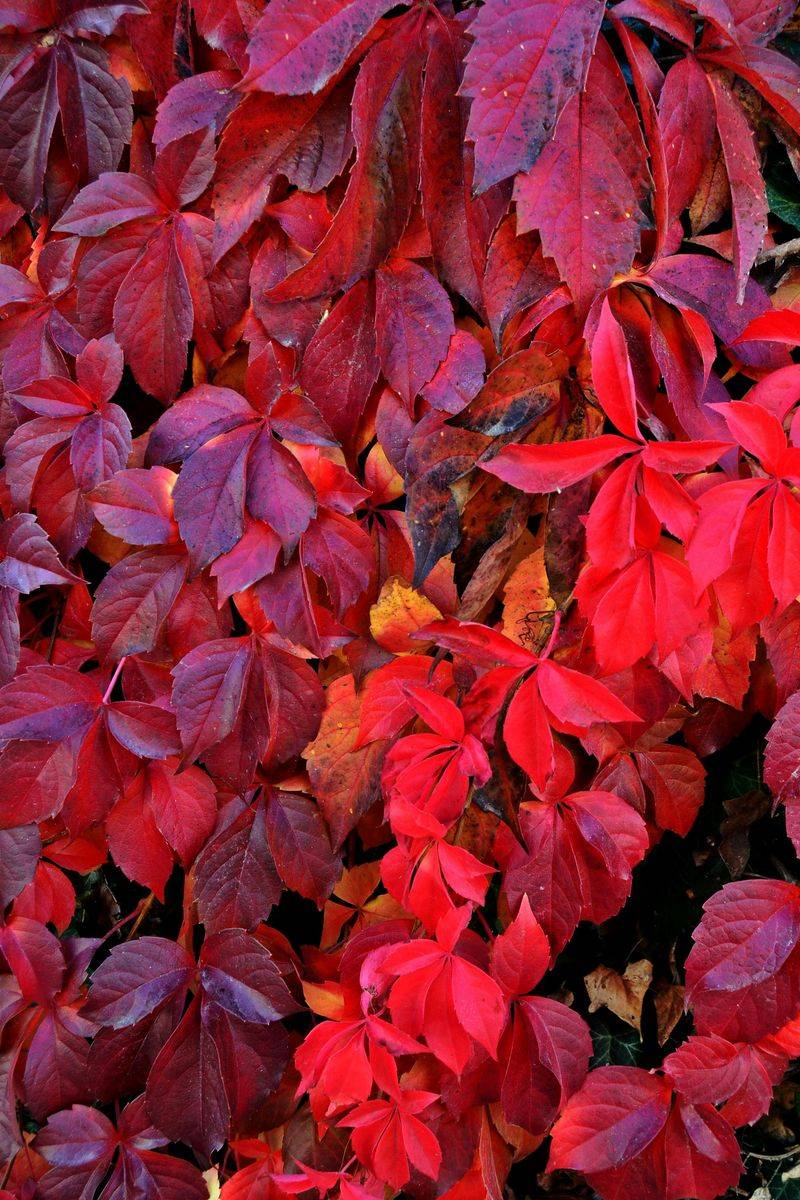
Image Credit: © Duygu Kamar / Pexels
Few plants put on a fall show quite like Virginia Creeper does.
This native vine turns a blazing, fire-engine red every autumn, making your fence look like something out of a painting. It grows fast, sometimes up to fifteen feet in a single season, so you will not be waiting long for results.
Unlike English Ivy, this plant does not use roots that dig into mortar or crack foundations. Instead, it clings with tiny adhesive pads that grip surfaces without causing structural damage.
That makes it one of the safest fast-growing climbing plants for Virginia fences near your home. During summer, the leaves are a deep, rich green that provides excellent shade and privacy.
Birds absolutely love the small dark berries that appear in late summer, so expect some feathered visitors. The vine is also drought-tolerant once established, which is a huge plus during Virginia’s hot, dry summers.
Planting is straightforward: give it a sunny to partially shaded spot and decent soil, and it takes off on its own. No fancy fertilizers or complicated pruning schedules are needed to keep it happy.
Just guide it toward your fence in the first year, and it will figure out the rest. One small caution: the berries are mildly toxic to humans, so keep that in mind if small children play nearby.
Beyond that, this plant is low-maintenance, wildlife-friendly, and genuinely stunning all year long. It is hard to beat a plant that practically takes care of itself.
Climbing Hydrangea (Hydrangea Anomala Petiolaris)
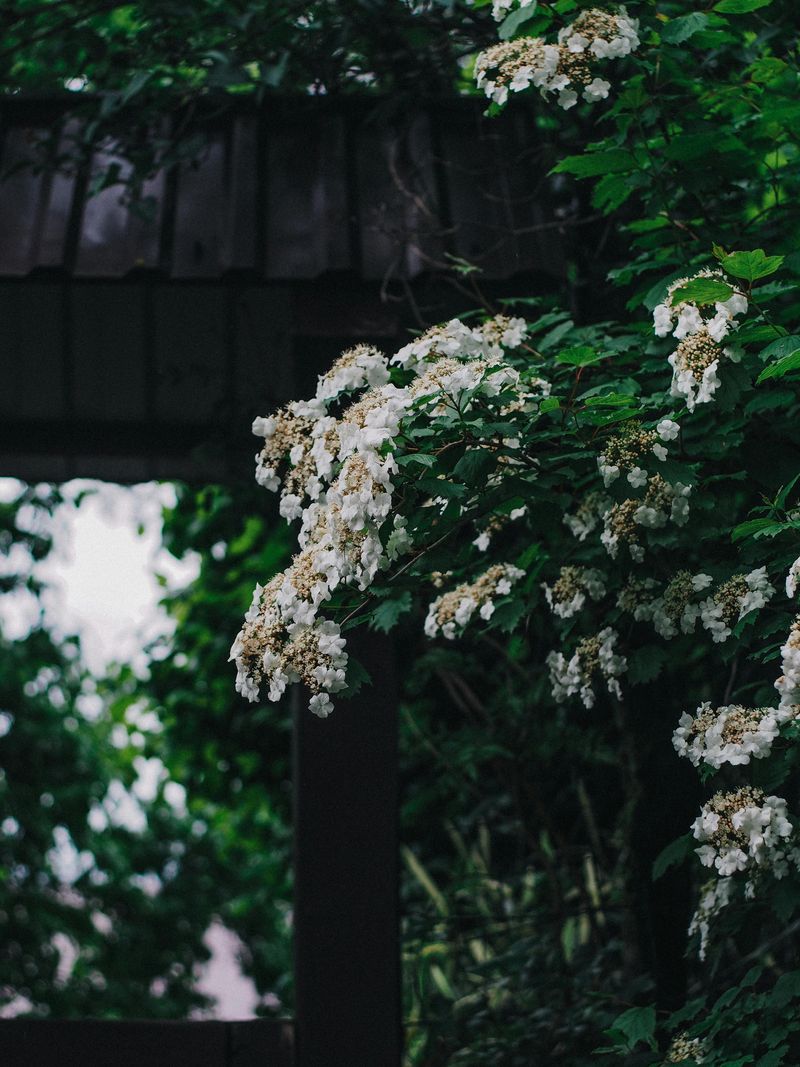
Climbing Hydrangea is the slow starter that becomes the star of the garden.
For the first couple of years, it seems like it is doing absolutely nothing. Then suddenly it explodes with growth and enormous white flower clusters that stop people in their tracks.
Patience with this plant pays off in a big, beautiful way.
Unlike some aggressive climbers, it attaches to surfaces using small aerial rootlets. These do not penetrate wood or masonry deeply enough to cause damage.
That makes it a safe and elegant choice for fences and even walls near your home’s foundation. The attachment method is gentle but surprisingly secure.
Your Virginia Garden Changes Every Week. Your Plan Should Too.
Gardening in Virginia changes quickly throughout the season. Every Friday you’ll receive a simple weekly plan showing exactly what to plant, prune, fertilize, harvest, and protect so you never miss the right timing.
The flowers bloom in early summer and have a soft, sweet fragrance that drifts across the yard on warm evenings. Each bloom cluster can reach up to ten inches across, creating a stunning layered effect on a fence.
Even after the blooms fade, the dried flower heads add interesting texture through winter. Shade tolerance is one of this plant’s greatest strengths.
Unlike most climbers, Climbing Hydrangea thrives in dappled shade, making it perfect for north-facing fences or spots under tree canopies. Few vines offer this much beauty in low-light conditions.
Plant it in moist, well-drained soil and give it something sturdy to grab onto from the start. Once established, it is remarkably self-sufficient and rarely needs attention beyond occasional watering during dry spells.
For a shaded fence that needs some serious charm, this is the vine to reach for.
Coral Honeysuckle (Lonicera Sempervirens)
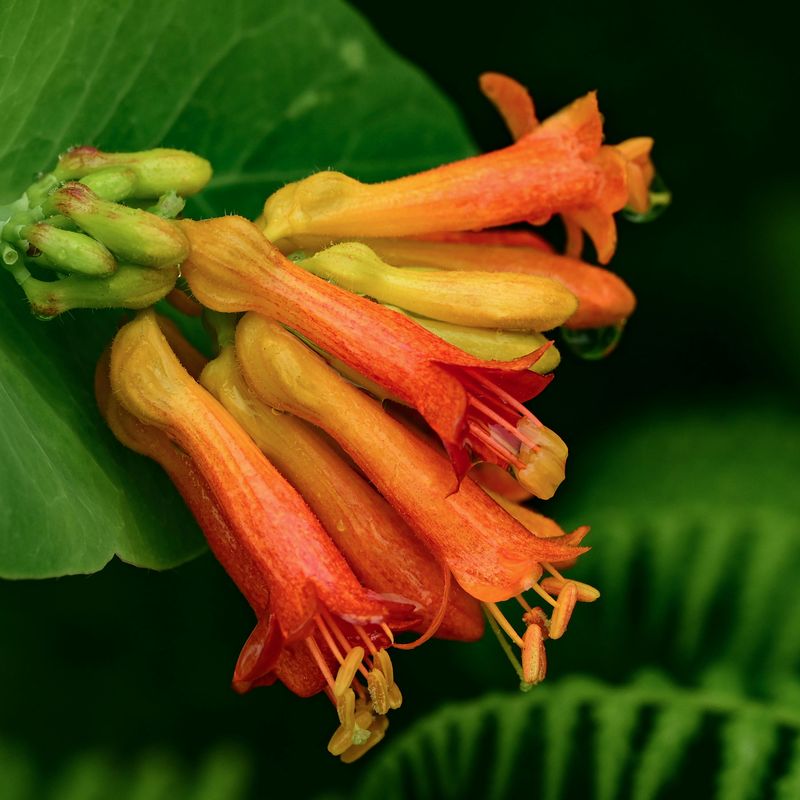
Coral Honeysuckle is what happens when a plant decides to be both beautiful and responsible.
Unlike its invasive cousin Japanese Honeysuckle, this native species stays exactly where you put it. It won’t spread aggressively into neighboring yards or natural areas.
It is the well-behaved, gorgeous alternative that Virginia gardeners have been looking for. The slender, tubular flowers are a rich coral red on the outside and golden yellow inside, blooming from spring all the way into fall.
Ruby-throated hummingbirds are particularly drawn to these blooms, often returning to the same vine multiple times a day. Planting it along a sunny fence basically sets up a front-row seat to some incredible wildlife watching.
Growth is steady and manageable, typically reaching ten to twenty feet depending on conditions. It twines naturally around fence rails and wire without needing clips or ties to hold it in place.
A light trim in early spring keeps the shape tidy and encourages fresh, vigorous new growth. This vine handles Virginia’s humidity, heat, and occasional drought better than many ornamental climbers.
It prefers full sun but tolerates partial shade without losing its cheerful, colorful personality. Soil quality is not a major concern either, since it adapts to a wide range of conditions.
For homeowners who want fast coverage and local wildlife support, Coral Honeysuckle checks every single box. It feeds birds, attracts pollinators, stays in bounds, and looks stunning all season long.
That combination is genuinely hard to find in a single plant.
Crossvine (Bignonia Capreolata)
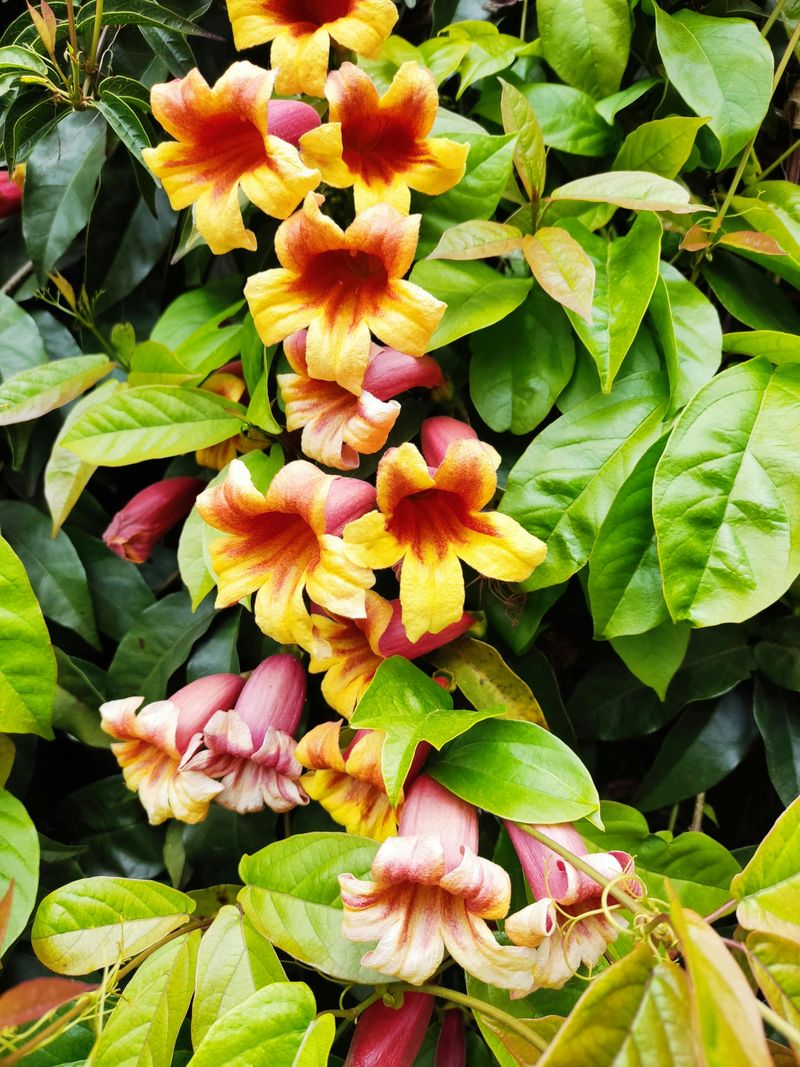
Image Credit: © laura dominguez / Pexels
Crossvine earns its name from a surprising little detail: slice through the stem and you will see a perfect cross shape inside.
Beyond that quirky fact, this native vine is one of the earliest bloomers you can grow on a Virginia fence. It bursts into color in early spring when everything else is still waking up.
That head start makes it a showstopper when the rest of the garden looks bare. The flowers are trumpet-shaped and come in a warm blend of orange, red, and yellow that practically glows in morning light.
They appear in clusters, covering the vine so densely that the foliage nearly disappears behind the blooms. Hummingbirds and butterflies arrive almost immediately after the first flowers open.
Growth is vigorous, reaching up to fifty feet in the right conditions, so a strong fence or structure is a must. The vine climbs using tendrils with adhesive tips, gripping surfaces without digging into wood or masonry.
This climbing method makes it foundation-safe and easy to remove or redirect if needed. Crossvine is semi-evergreen in Virginia, meaning it holds onto its attractive, glossy leaves through most of the winter in milder years.
That gives your fence year-round coverage and a polished look even in January. Few climbing plants offer that kind of visual consistency across all four seasons.
Plant it in full sun for the best bloom performance, though partial shade is tolerated. Once established, it is drought-resistant and requires almost no special care to keep thriving.
For early-season color and reliable coverage, Crossvine rarely disappoints.
Dutchman’s Pipe (Aristolochia Macrophylla)
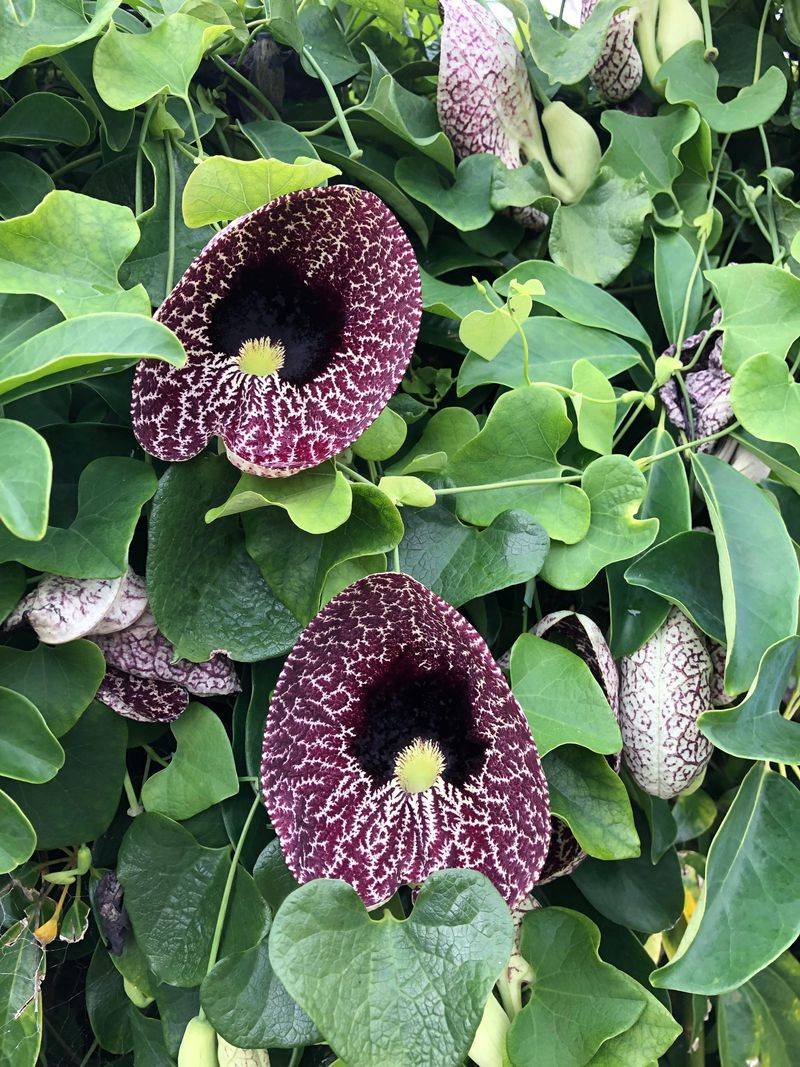
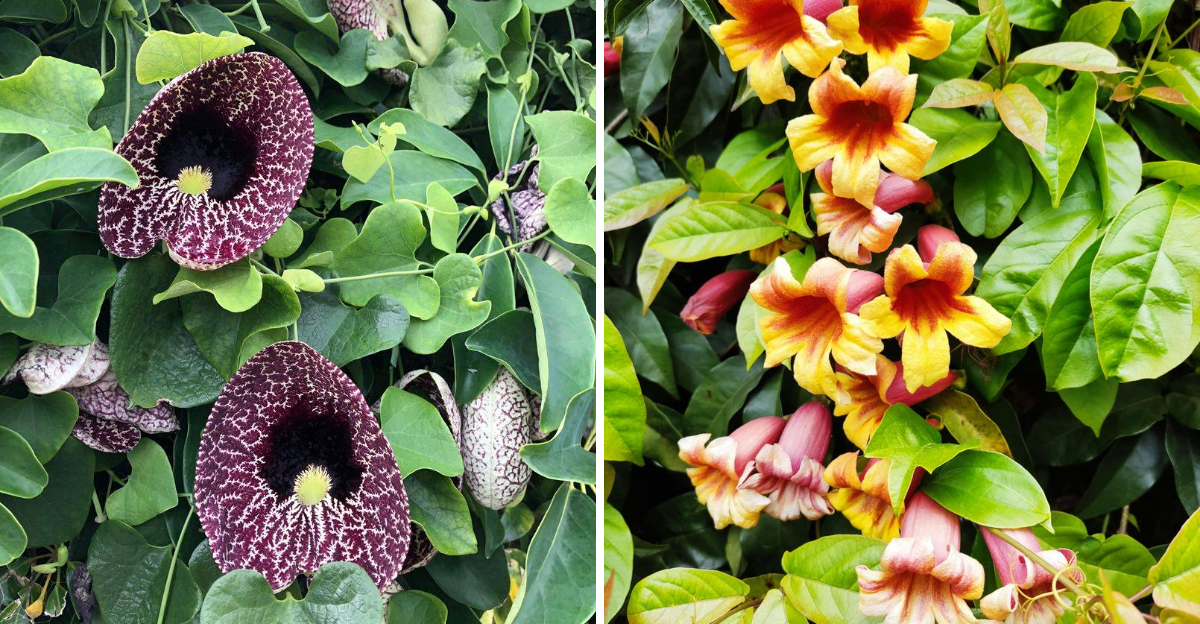
Dutchman’s Pipe has one of the most unusual flowers in the entire plant kingdom.
The blooms look exactly like old-fashioned curved pipes, bizarrely fascinating up close. But the real star is its enormous, tropical-looking leaves that create a dense, lush wall of green.
Each leaf can grow up to a foot wide, providing some of the best privacy coverage of any climbing plant available. By midsummer, a well-established Dutchman’s Pipe can completely block the view through a fence.
For homeowners who want privacy without installing solid panels, this vine is a brilliant solution. Growth is fast and enthusiastic, easily covering fifteen to thirty feet of fence in a few seasons.
The twining stems wrap around supports rather than using adhesive roots, so there is no risk of damage to wood, brick, or your home’s foundation. It is a vigorous climber that knows how to behave itself structurally.
One ecological bonus: Dutchman’s Pipe is one of the primary host plants for the Pipevine Swallowtail butterfly, one of the most stunning butterflies in North America.
Planting this vine essentially creates a butterfly nursery right in your backyard. Watching those iridescent blue-black wings flutter around your fence is something you will never get tired of.
It prefers partial shade and moist soil, making it ideal for spots that other climbers avoid. Give it a shaded fence with some moisture retention in the soil and it will reward you generously.
For a dramatic, wildlife-supporting vine, few choices are this rewarding.
American Wisteria (Wisteria Frutescens)
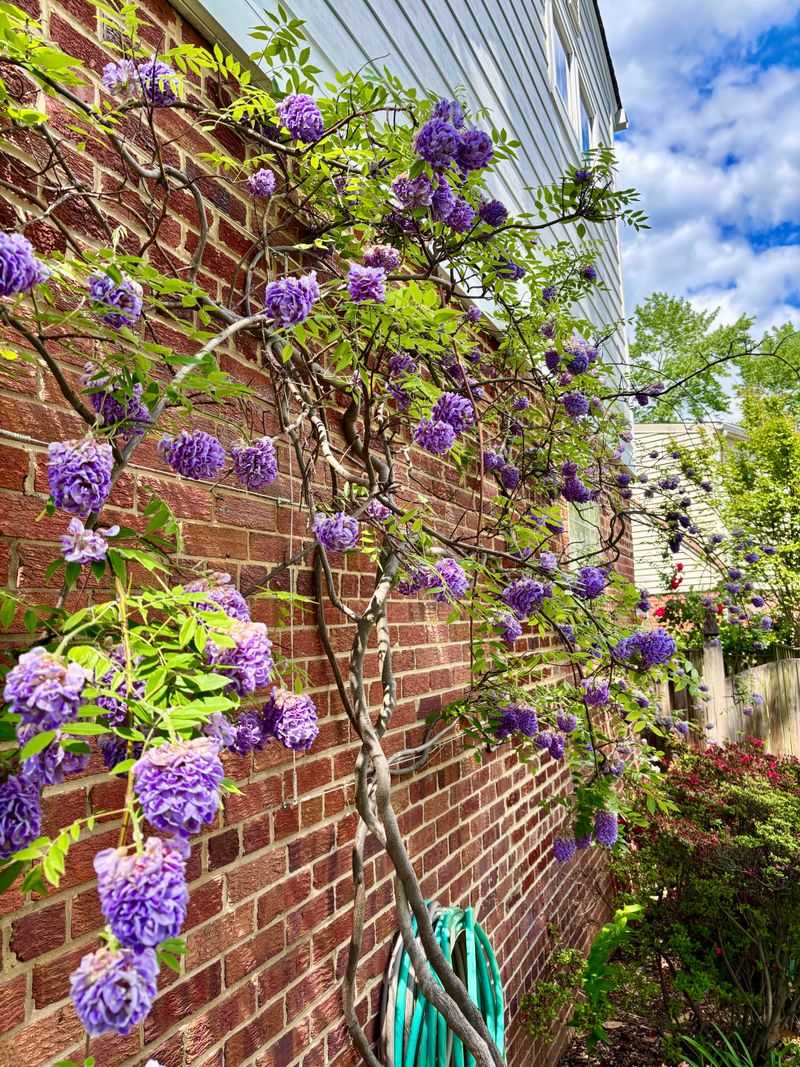
American Wisteria gives you all the purple-blooming romance of the notorious Asian varieties, and without the hostile takeover of your yard.
The cascading clusters of lavender-purple flowers smell incredible and look like something out of a fairy tale when in full bloom. Best of all, this native species is actually manageable, which is something you absolutely cannot say about its Asian cousins.
The blooms appear in late spring, right after the leaves emerge. The fragrance carries surprisingly far on a warm afternoon breeze.
Some cultivars like Amethyst Falls even rebloom lightly in summer, giving you a second round of that gorgeous purple display. For a fence with serious visual impact, few flowering vines come close to this level of drama.
Root behavior is where American Wisteria truly sets itself apart from invasive species. The roots are not nearly as aggressive or destructive, making this vine a safe option near fences, patios, and even home foundations.
You get the beauty without the structural anxiety that comes with planting Asian Wisteria anywhere near your house. Full sun produces the most abundant blooms, though partial sun still yields respectable flower production.
A strong fence or sturdy trellis is essential because this vine gets heavy with age and needs solid support. Pruning twice a year, once after blooming and once in late summer, keeps it shapely and encourages repeat flowering.
Among all fast-growing climbing plants for Virginia fences, American Wisteria might be the one that draws the most compliments from neighbors. It is the vine that makes people stop their cars to ask what it is.
Plant it once and enjoy it for decades.
Passionflower (Passiflora Incarnata)
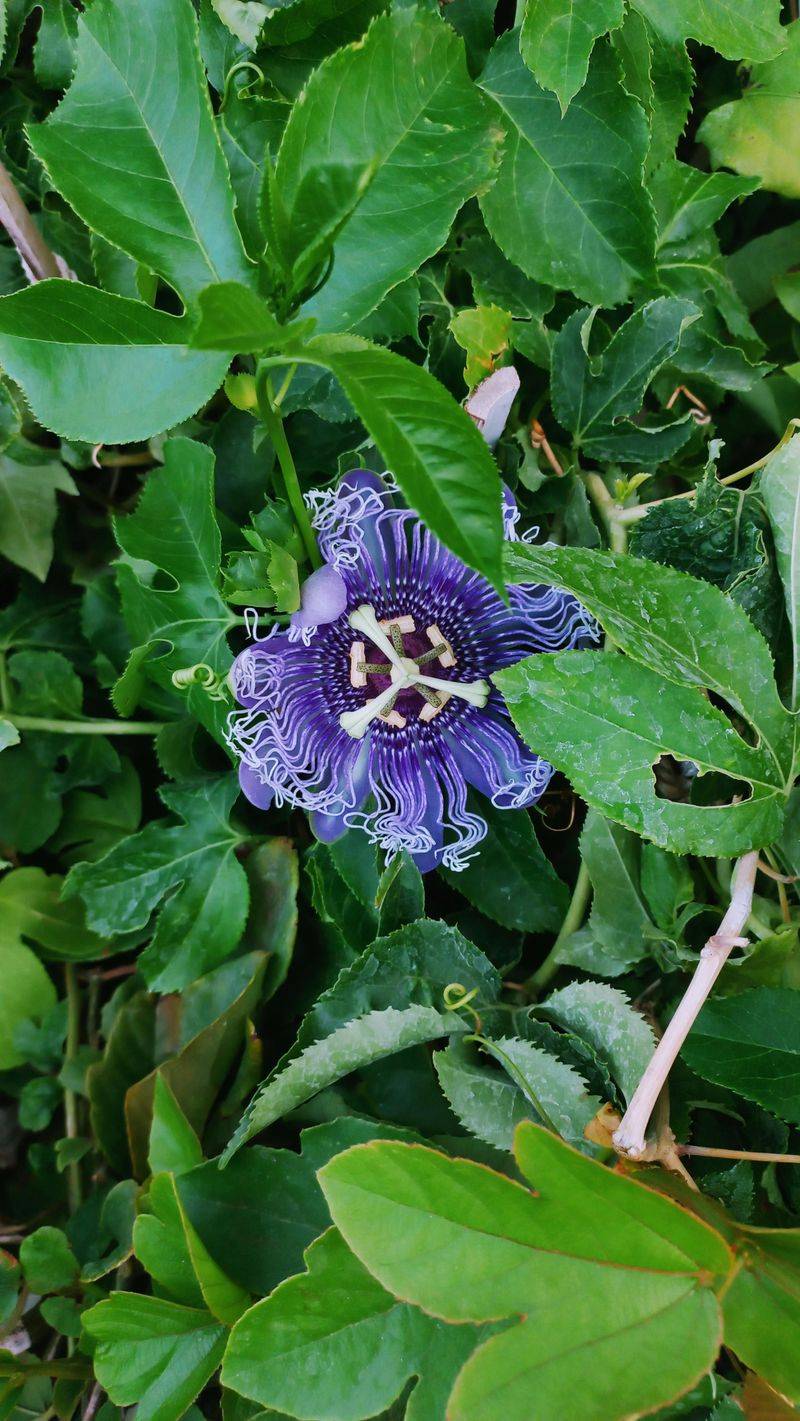
Nothing prepares you for your first look at a Passionflower bloom.
The flower is so intricate and otherworldly that people often think it must be artificial. Layered purple fringe, geometric center, and an elaborate structure that looks hand-assembled by a jeweler.
Yet this exotic-looking beauty is completely native to Virginia and grows as easily as a weed once it settles in.
Growth is fast and enthusiastic, with the vine spreading ten to twenty feet in a single season. It uses curling tendrils that wrap gently around fence rails and wires.
Those tendrils do not damage wood or masonry, so your fence and foundation stay completely safe. It climbs eagerly without ever becoming a structural problem.
After the flowers fade, the vine produces egg-sized green fruits called maypops that turn yellow when ripe. These fruits are edible and surprisingly tasty, with a sweet, tropical flavor that catches most people completely off guard.
Wildlife loves them too, so expect birds and small animals to become regular visitors by late summer. Passionflower is also the host plant for Gulf Fritillary and Zebra Longwing butterflies, two species that lay their eggs exclusively on this vine.
Planting it turns your fence into a butterfly nursery, which adds a whole new layer of magic to your garden. Few plants create that kind of living, buzzing ecosystem on their own.
For fast-growing climbing plants for Virginia fences that deliver non-stop wow factor, Passionflower is the unexpected champion. It is tough, native, wildlife-friendly, and produces blooms that look like they belong in a tropical rainforest.
Your fence will never look ordinary again.
Virgin’s Bower (Clematis Virginiana)
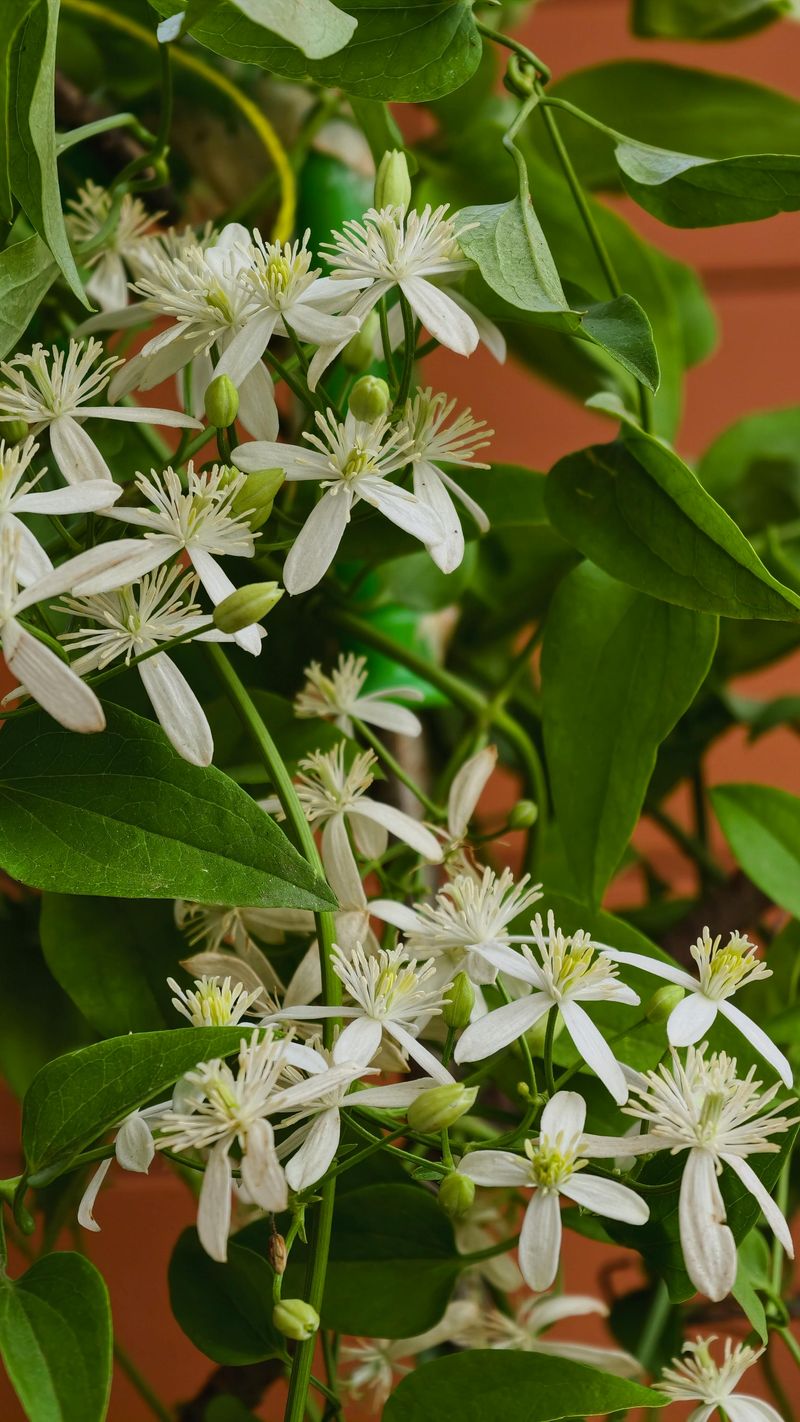
Virgin’s Bower is one of those plants that earns its place on a fence without ever causing trouble.
This native clematis grows fast, reaching fifteen to twenty feet in a single season. It grips surfaces with twining leaf stalks rather than adhesive roots, keeping your foundation completely safe.
In late summer, it bursts into clouds of small white flowers that cover the vine so densely it looks like fresh snow settled on your fence. The fragrance is light and pleasant, carrying gently on a warm breeze without being overwhelming.
After the blooms fade, the seed heads transform into silky, feathery clusters that catch the light beautifully and add visual interest well into autumn. Birds love the seeds, so expect regular visitors once the plant matures.
It handles Virginia’s heat and humidity without complaint and adapts to both full sun and partial shade, making it one of the most versatile climbers on this list. Moist, well-drained soil gives the best results, though established plants are surprisingly drought-tolerant.
One thing to note: all parts of the plant are mildly toxic if ingested, so keep that in mind if children or pets spend time nearby.
For a fast, reliable, and genuinely foundation-safe climber, Virgin’s Bower delivers exactly what this list promises.