7 Foundation Plants That Thrive In Texas Heat And Clay Soil
Texas gardens can be tricky, especially when you’re dealing with blazing heat and heavy clay soil. Many plants struggle under these conditions, but there are foundation plants built to handle the challenges and still look beautiful all year long.
Choosing the right varieties means your garden can thrive with less effort, providing structure, greenery, and seasonal interest around your home.
These tough foundation plants are heat-tolerant and adapt well to clay soil, which holds water but can be dense and compact. They can create lush borders, fill in garden beds, and complement your landscaping without constant attention.
Many also provide flowers, berries, or textured foliage that add visual interest and attract pollinators.
By selecting plants suited to Texas’ harsh conditions, you can enjoy a healthy, attractive foundation garden that stays strong through heat waves, dry spells, and heavy clay challenges, giving your yard curb appeal and year-round resilience.
1. Texas Sage (Leucophyllum Frutescens)
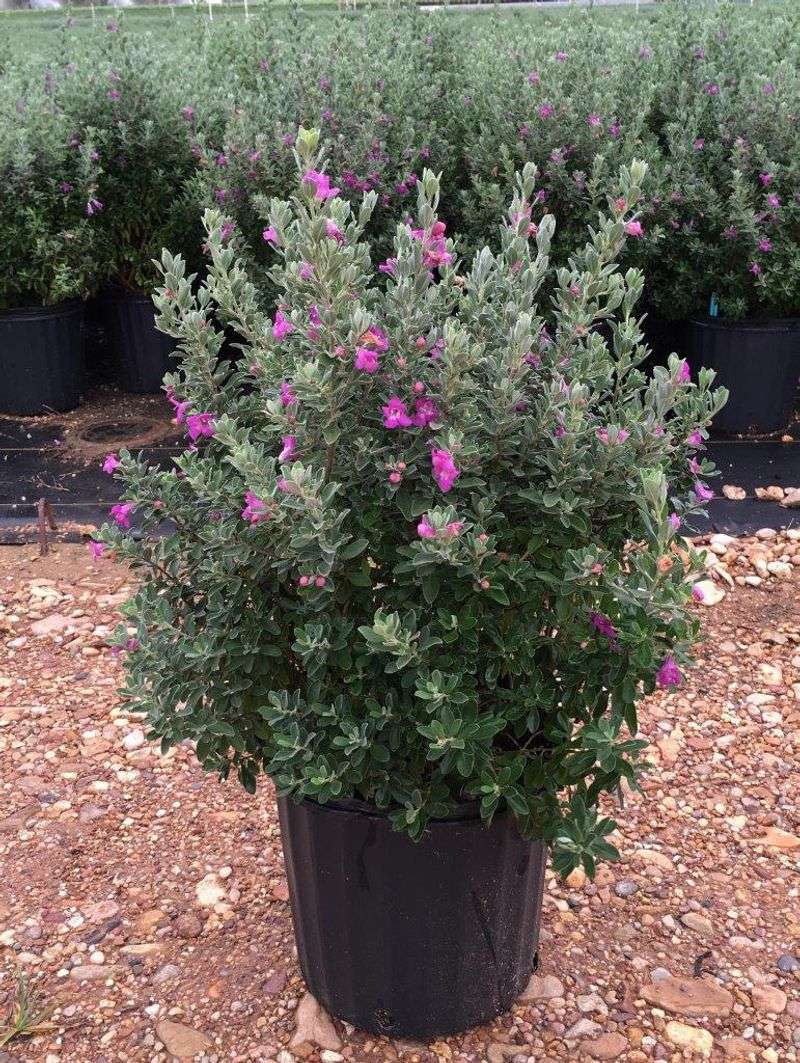
Walk through any Texas neighborhood after a summer rainstorm, and you will likely spot a burst of purple color along a fence line or front porch. That is Texas Sage doing what it does best.
Also called Cenizo or Barometer Bush, this native shrub is famous for blooming right after a good rain, almost like it is celebrating the moisture. Gardeners across the state love it for that reason alone.
Texas Sage thrives in full sun and handles clay soil better than most shrubs on the market. Its silvery-green foliage reflects heat and keeps the plant looking fresh even during brutal Texas summers.
It grows slowly and steadily, eventually reaching four to eight feet tall and wide, making it a natural fit for foundation planting along a home’s front face.
Watering needs are minimal once the plant gets established. In fact, overwatering is one of the few ways to cause problems with this tough shrub.
It prefers well-drained spots, so if your clay soil tends to pool water, consider planting it on a slight slope or raised bed. Pruning is rarely needed, but a light trim after blooming keeps it looking neat.
Pollinators absolutely love the purple flowers, so expect to see bees and butterflies visiting regularly. Texas Sage is also deer-resistant, which is a big bonus in many parts of Texas.
If you want a plant that is native, low-maintenance, and genuinely beautiful, this one checks every box.
2. Yaupon Holly (Ilex Vomitoria)
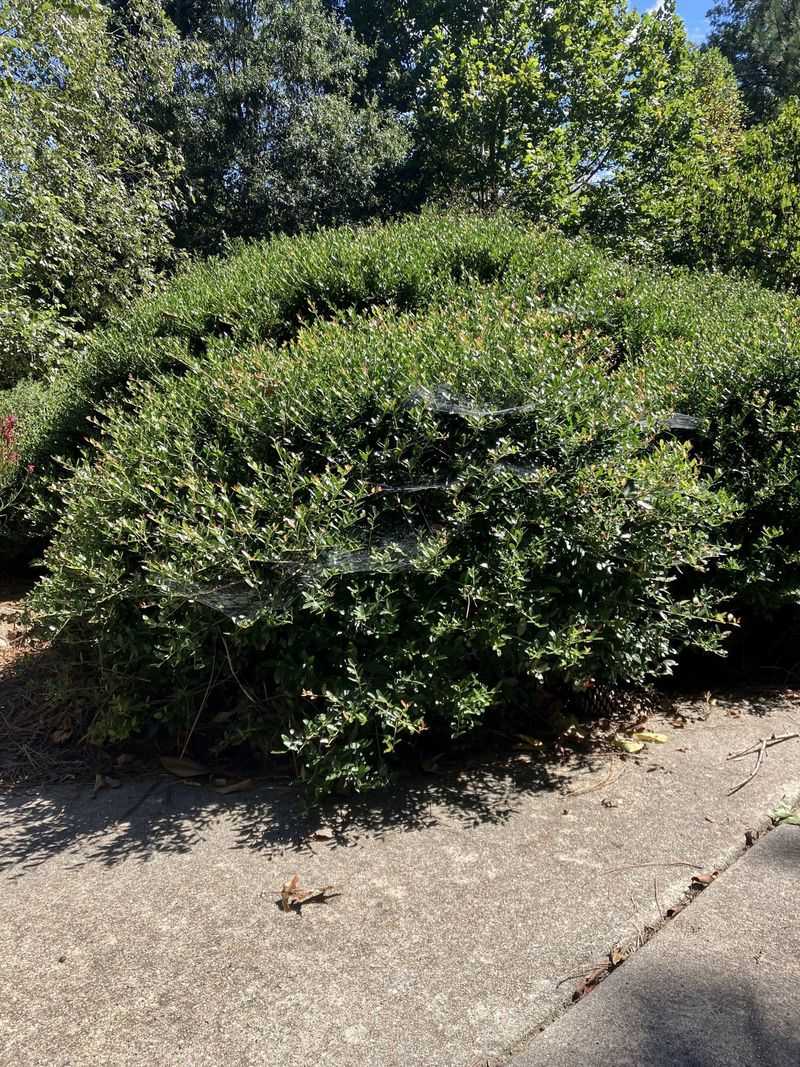
If there is one plant that truly belongs in a Texas yard, it is Yaupon Holly. This native evergreen shrub is almost impossible to stress out.
It handles scorching heat, heavy clay soil, occasional flooding, and even drought without missing a beat. Homeowners across Texas from the Panhandle to the Gulf Coast rely on it for year-round structure and color in their landscapes.
Yaupon Holly keeps its glossy green leaves through every season, giving your home a polished, finished look no matter what time of year it is. In winter, female plants produce clusters of bright red berries that birds absolutely flock to.
Your Texas Garden Changes Every Week. Your Plan Should Too.
Gardening in Texas changes quickly throughout the season. Every Friday you’ll receive a simple weekly plan showing exactly what to plant, prune, fertilize, harvest, and protect so you never miss the right timing.
If you want to bring cardinals, mockingbirds, and other native birds into your yard, planting a Yaupon Holly is one of the easiest ways to make it happen.
This shrub is incredibly versatile. It can be shaped into a formal hedge, left to grow in its natural rounded form, or even trained into a small tree.
It responds well to pruning, so you are always in control of its size and shape. Varieties range from compact dwarf types that top out at three feet to larger selections that can reach fifteen feet or more.
Clay soil is not a dealbreaker for Yaupon Holly. It adapts to heavy soils with ease and does not require much fertilizer to stay healthy.
For Texas gardeners who want a tough, wildlife-friendly plant that looks great all year, Yaupon Holly is a top choice worth adding to any foundation bed.
3. Dwarf Burford Holly (Ilex Cornuta ‘Burfordii Nana’)
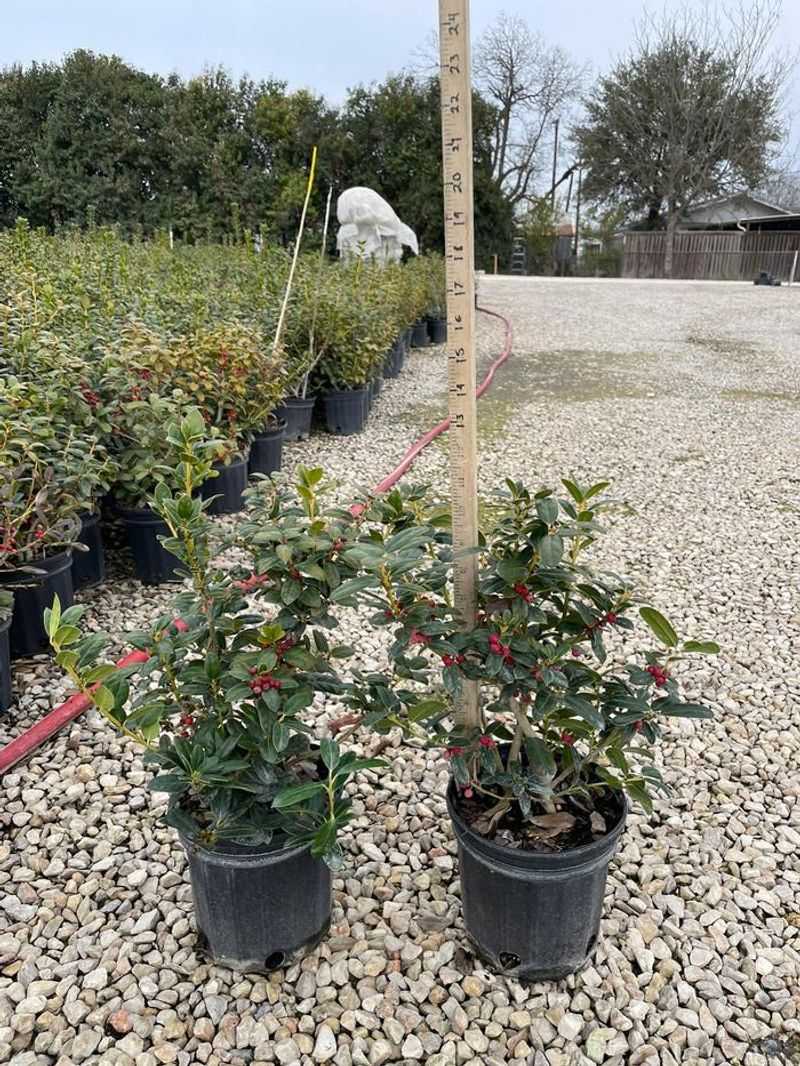
Neat, compact, and incredibly tough, Dwarf Burford Holly has earned its reputation as one of the most dependable foundation shrubs in Texas. Unlike its larger parent plant, this dwarf variety stays manageable in size, usually topping out at four to six feet tall and wide.
That makes it a perfect fit for planting directly against a home’s foundation without worrying about it overtaking windows or walkways.
The foliage is one of its best features. Deep, glossy green leaves catch the light beautifully and stay vibrant through the hottest Texas summers.
In fall and winter, the plant produces a generous crop of bright red berries that add a festive pop of color. Birds love those berries too, so your yard becomes a small wildlife haven without any extra effort on your part. Clay soil? No problem at all.
Dwarf Burford Holly handles dense, heavy soils better than many ornamental shrubs. It also tolerates full sun and dry spells once it is established.
When you first plant it, give it regular water to help the roots settle in. After that first season, it becomes much more self-sufficient and requires very little attention to stay healthy and attractive.
Formal gardens and symmetrical landscaping designs look especially sharp with Dwarf Burford Holly. It responds beautifully to shaping and holds its form well between pruning sessions.
For Texas homeowners who want a classic, low-fuss foundation plant that delivers year-round beauty, this dependable holly is hard to beat.
4. Wax Myrtle (Morella Cerifera)
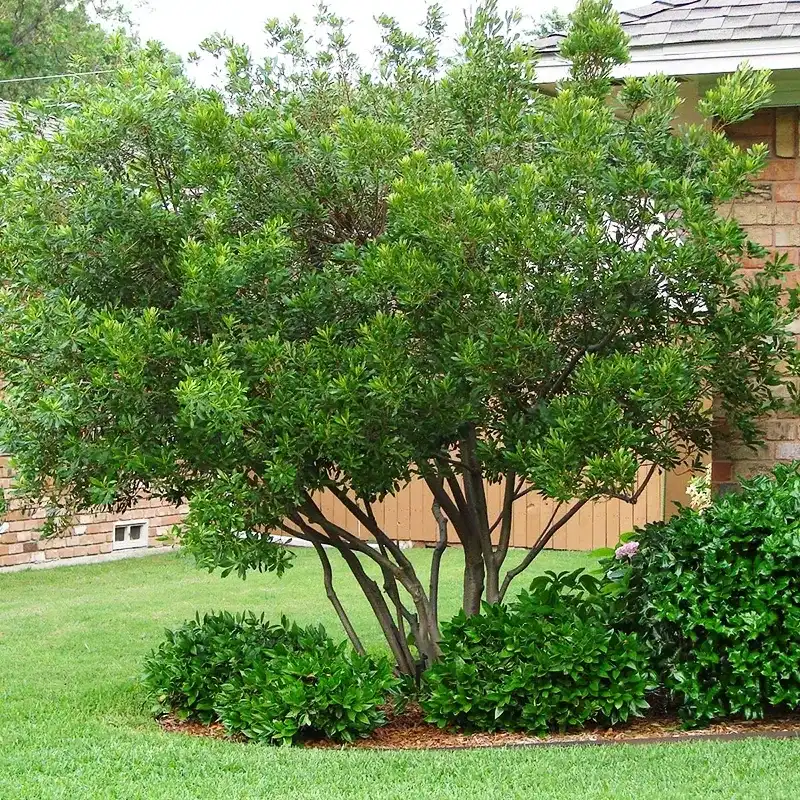
There is something refreshing about a plant that smells as good as it looks. Wax Myrtle has aromatic leaves that release a pleasant, spicy scent when brushed or pruned.
Native to Texas and much of the southeastern United States, this fast-growing evergreen shrub brings both beauty and function to any foundation planting. It is especially popular in the Houston and San Antonio areas where clay soil and humidity are common challenges.
Wax Myrtle grows quickly, which is great news if you want to fill in a bare foundation bed in a hurry. Left unpruned, it can reach ten to fifteen feet tall and takes on a soft, natural form.
It also responds well to regular trimming and can be maintained as a compact hedge if you prefer a more structured look. Gardeners who want flexibility in their landscape will appreciate how easily it adapts to different shapes and sizes.
Small blue-gray berries appear on female plants in late summer and fall, and birds go absolutely wild for them. Yellow-rumped warblers, in particular, are known to seek out Wax Myrtle berries during their migration through Texas.
Planting this shrub near your home is practically an invitation to enjoy a backyard bird show every season.
Wax Myrtle handles clay soil and occasional flooding without complaint, making it one of the most adaptable native shrubs available. It is also resistant to most pests and diseases.
For Texas gardeners who want a fast-growing, wildlife-supporting foundation plant, Wax Myrtle is a smart and satisfying choice.
5. Loropetalum (Loropetalum Chinense)
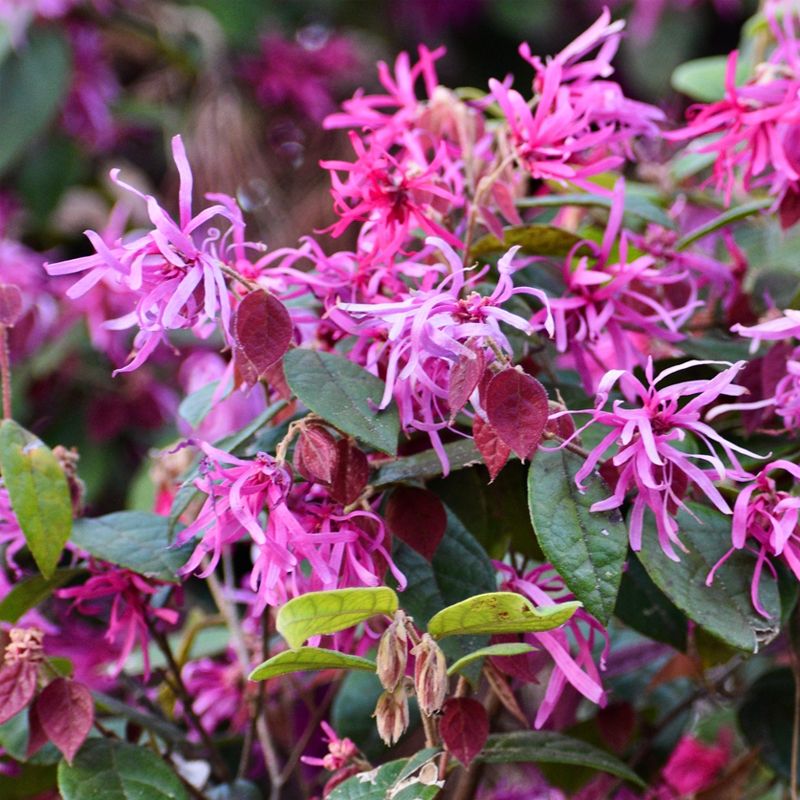
Bold, colorful, and surprisingly tough, Loropetalum is the plant that turns heads in a Texas neighborhood.
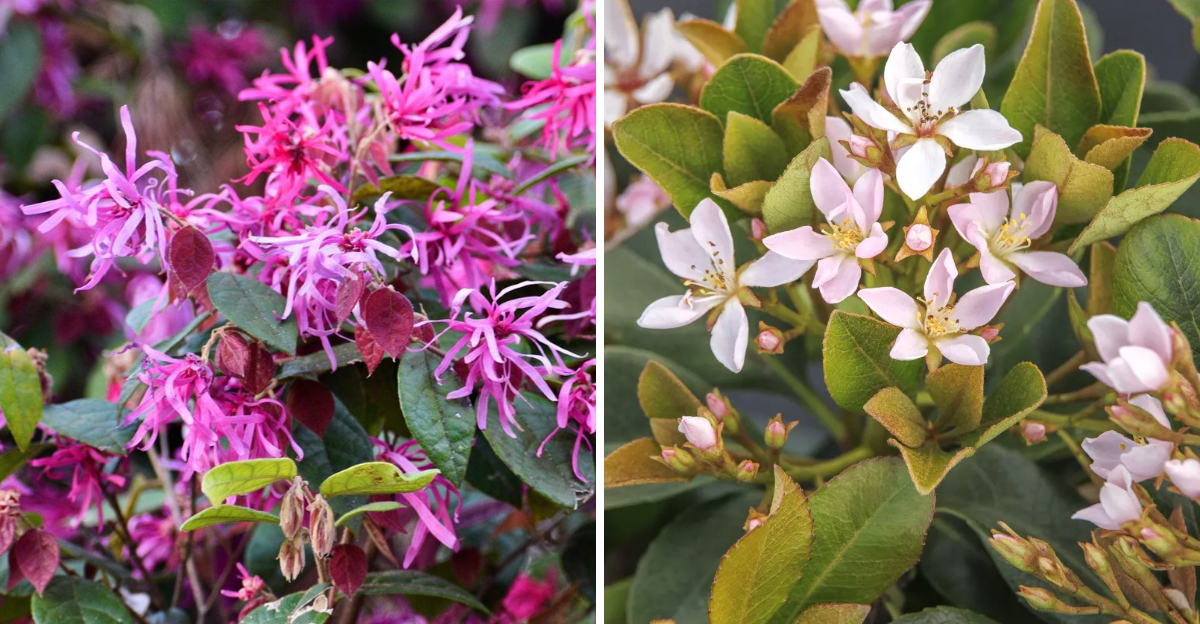
Also called Chinese Fringe Flower, this evergreen shrub brings dramatic color to the landscape with its deep burgundy or purple foliage and bright pink, fringe-like blooms.
It is one of the few foundation plants that offers stunning color even when it is not flowering, thanks to those rich, dark leaves that hold their color all year long.
Texas summers can be brutal, but Loropetalum handles the heat without flinching. It grows well in clay soil and adapts to a range of conditions, from full sun to partial shade.
In shadier spots, the foliage color may be slightly less intense, but the plant stays healthy and attractive either way. Gardeners in Dallas, Austin, and Houston have all had great success with Loropetalum as a foundation shrub.
Spring is when this plant really puts on a show. Masses of hot pink flowers cover the branches, creating a look that is hard to match in any landscape.
A lighter repeat bloom often follows in fall, giving you two seasons of floral color to enjoy. The plant grows at a moderate pace and comes in several sizes, from compact three-foot varieties to larger selections that reach eight feet or more.
Pruning right after the spring bloom keeps the plant tidy and encourages healthy growth. Loropetalum is also resistant to most pests and rarely needs much fertilizer.
For Texas homeowners who crave color and texture in their foundation beds, this shrub is an outstanding and reliable option.
6. Indian Hawthorn (Rhaphiolepis Indica)
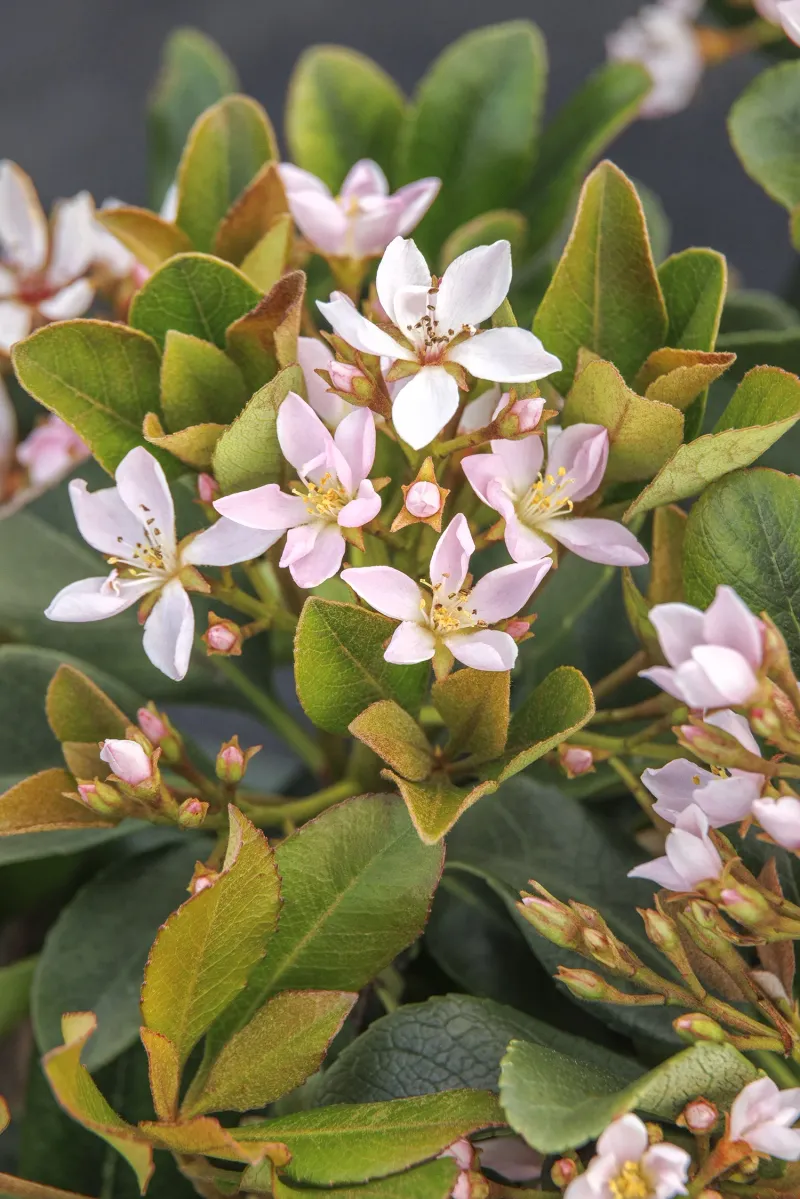
Compact, cheerful, and remarkably easy to grow, Indian Hawthorn is a favorite foundation plant for Texas homeowners who want beauty without the fuss.
Each spring, this rounded evergreen shrub bursts into bloom with clusters of small pink or white flowers that cover the plant from top to bottom.
The show lasts for several weeks, and when the flowers fade, small dark blue berries take their place and attract birds through the fall and winter months.
Indian Hawthorn stays dense and tidy on its own, making it one of the lower-maintenance options on this list. It rarely needs pruning more than once a year, and even then, just a light trim after flowering is usually enough to keep it looking sharp.
It grows slowly and stays in the two-to-four-foot range for most varieties, which makes it ideal for planting under windows or along walkways where you do not want plants blocking the view.
Clay soil is not a problem for Indian Hawthorn. It tolerates heavy soils well and handles the heat that Texas dishes out every summer.
Once established, it is quite drought-tolerant, though it appreciates some supplemental water during extended dry spells. Full sun brings out the best flowering performance, but it can also handle partial shade without much complaint.
One thing to watch for is Entomosporium leaf spot, a fungal disease that can cause brown spots on the leaves. Good air circulation and avoiding overhead watering help prevent this issue.
Overall, Indian Hawthorn is a solid, dependable choice for Texas foundation beds that need year-round color and structure.
7. Autumn Sage (Salvia Greggii)
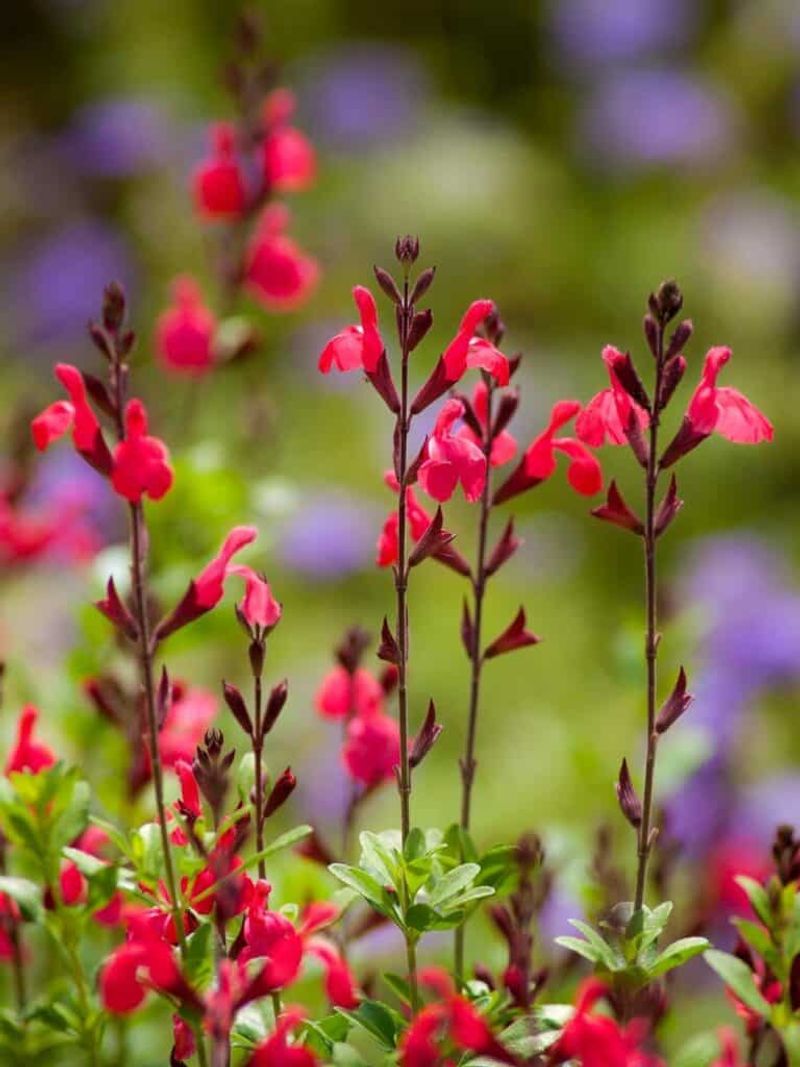
Few plants in Texas earn as much admiration as Autumn Sage. Native to the Chihuahuan Desert and the rocky hills of central Texas, this tough little perennial is built for heat, drought, and clay soil.
But what really makes gardeners fall for it is the blooms. From spring all the way through fall, Autumn Sage pumps out vibrant flowers in shades of red, coral, pink, and white. It is one of the longest-blooming plants you can add to a Texas foundation bed.
Hummingbirds are drawn to those tubular red flowers like magnets. If you have ever wanted to watch a hummingbird hover just a few feet from your front door, planting Autumn Sage near your foundation is one of the best ways to make it happen.
Butterflies also visit regularly, turning your yard into a lively, colorful scene throughout the warm months.
Autumn Sage loves full sun and performs best when it gets at least six hours of direct light each day. It grows in a loose, mounding shape, usually reaching two to three feet tall and wide.
A light pruning in late winter or early spring encourages fresh growth and keeps the plant looking full and healthy going into the new bloom season. Cutting it back by about one-third is usually enough.
Established plants are impressively drought-tolerant and rarely need supplemental watering once their roots are settled in. Deer tend to leave Autumn Sage alone, which is a welcome bonus for gardeners in rural and suburban parts of Texas.
For color, wildlife value, and pure toughness, Autumn Sage is a standout performer in any Texas landscape.