Fire Resistant Texas Ground Covers That Look Better Than Rock Mulch
Rock mulch became a popular landscaping choice in Texas partly because it does not burn, and in fire-prone areas that is a real consideration worth taking seriously.
The problem is that rock mulch absorbs heat, radiates it back through the night, raises soil temperatures significantly, and creates growing conditions that stress the plants it surrounds.
It also looks exactly like what it is, a low effort solution that prioritizes function over any kind of visual appeal. Fire resistant native groundcovers solve both problems at once.
They stay low, cover the soil effectively, and in a dry fire-adapted landscape, many of them are naturally poor fuel sources while still looking like something a yard was designed around rather than settled for.
Texas has strong native options in this category, plants that handle heat, drought, and poor soil while creating the kind of ground-level presence that makes a landscape look intentional from every angle.
1. Silver Ponyfoot
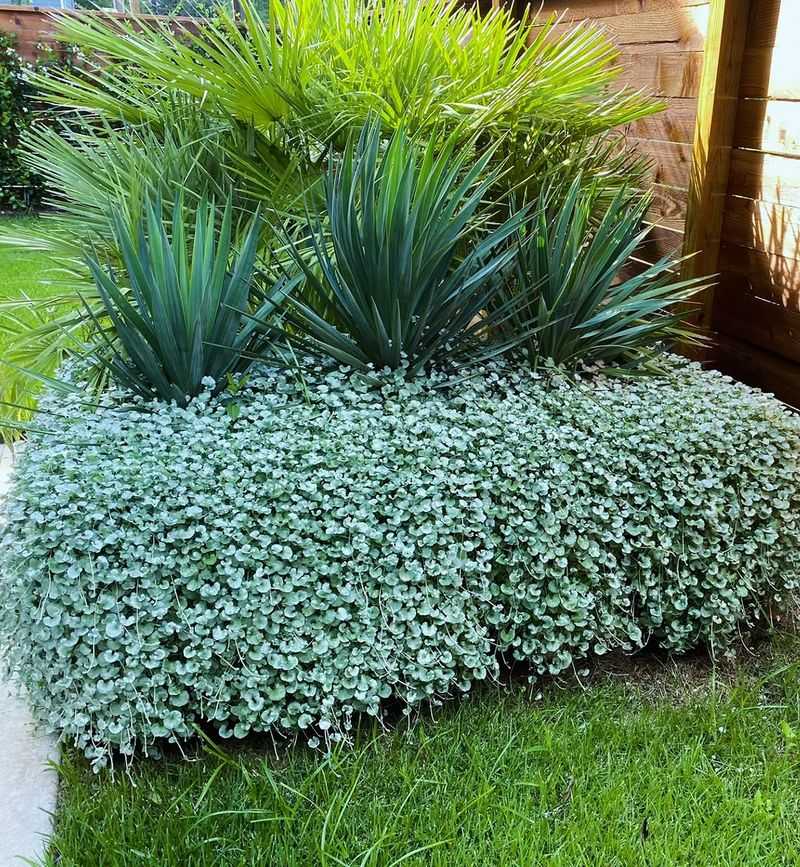
Picture a plant that practically glows in the summer sun. Silver Ponyfoot (Dichondra argentea) earns its name from its small, rounded leaves coated in a soft silver sheen that reflects sunlight and heat.
That reflective quality is more than just pretty. It actually helps the plant stay cooler than surrounding surfaces, making it a smarter choice than rock mulch for fire-wise landscaping.
Silver Ponyfoot spreads quickly along the ground, filling in bare spots with a soft, flowing carpet of foliage. It hugs the soil closely and rarely grows taller than a few inches.
That low profile keeps it from becoming a ladder fuel that could carry flames upward toward trees or structures.
One of its standout traits is moisture retention. The leaves hold more water content than dry mulch materials, which means the plant resists ignition far better during dry spells.
In Texas summers, that extra resistance matters a lot. It also means less supplemental watering once the plant settles in.
Silver Ponyfoot thrives in full sun and handles drought with surprising toughness. It spreads by trailing stems that root as they go, so you get natural coverage without replanting.
It pairs beautifully with other native plants and works especially well along walkways, slopes, and open beds where rock would otherwise bake in the heat.
Gardeners across Central and West Texas have embraced it as a reliable alternative to traditional mulch. The silver color adds contrast to green plantings nearby. It truly earns its place in any fire-conscious Texas landscape.
2. Horseherb
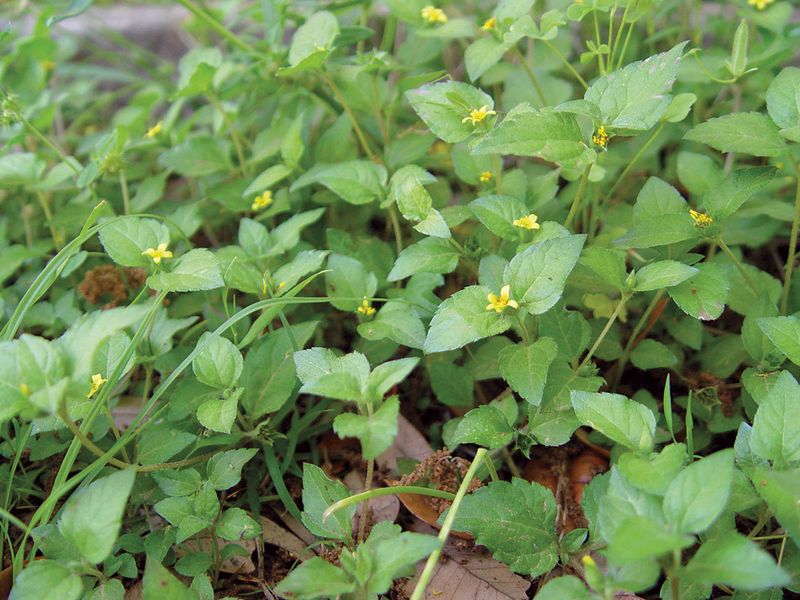
Walk barefoot across a patch of Horseherb and you will immediately notice how cool and soft it feels underfoot. Known scientifically as Calyptocarpus vialis, this humble native plant has been quietly carpeting Texas yards and roadsides for centuries.
It grows so naturally here that many people mistake it for a weed, but smart gardeners know better.
Horseherb stays low, usually no more than six to eight inches tall, and spreads outward in a thick, dense mat. That dense growth pattern is a key reason it performs well in fire-wise landscapes.
Your Texas Garden Changes Every Week. Your Plan Should Too.
Gardening in Texas changes quickly throughout the season. Every Friday you’ll receive a simple weekly plan showing exactly what to plant, prune, fertilize, harvest, and protect so you never miss the right timing.
A solid layer of moisture-holding green leaves simply does not catch and carry fire the way dry, loose mulch or rock beds do.
One of the best things about Horseherb is how well it handles shade. Many ground covers struggle under tree canopies, but Horseherb thrives in partial to full shade, making it a go-to option for those tricky spots in the yard where little else wants to grow.
It also tolerates foot traffic reasonably well, which is a bonus for high-use areas. Small yellow flowers appear throughout the growing season, adding a cheerful touch without overwhelming the tidy carpet look.
The plant spreads on its own once established, filling gaps naturally and reducing the need for constant maintenance. It rarely needs fertilizer and handles dry periods with grace.
Compared to rock mulch, Horseherb keeps the soil noticeably cooler and supports beneficial insects at the same time. For shaded areas of a Texas yard, it is one of the most practical and attractive ground cover choices available.
3. Frogfruit
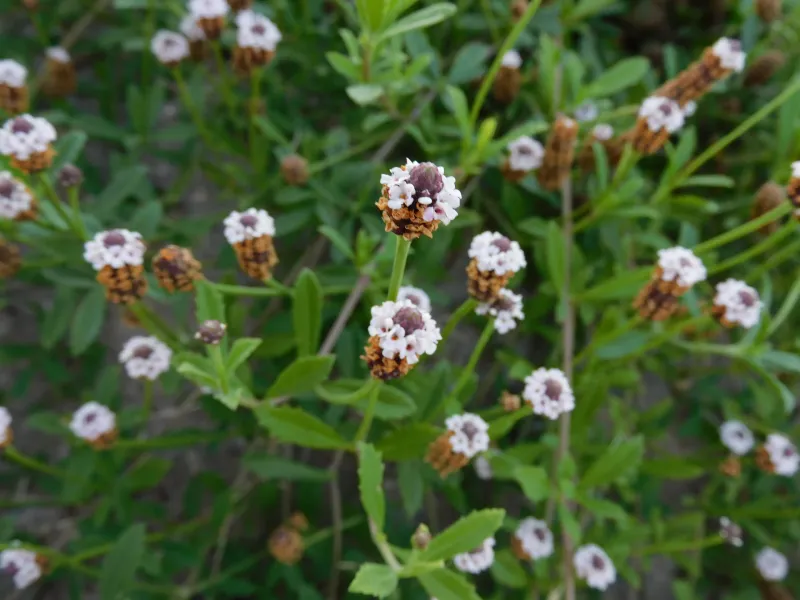
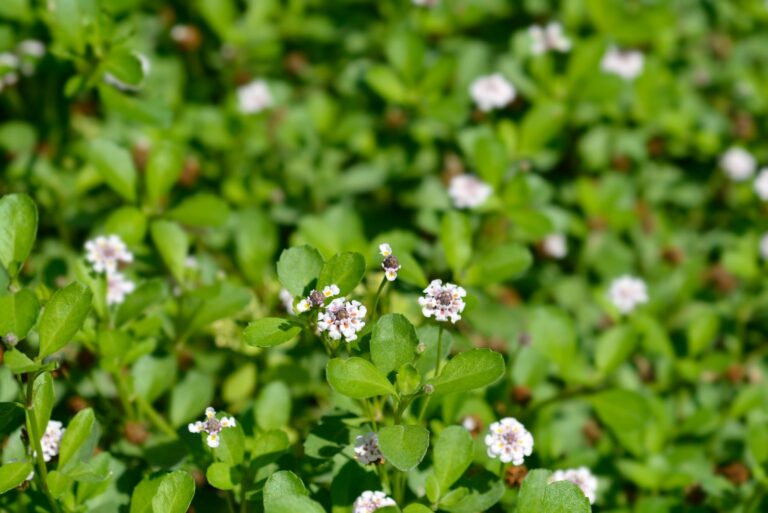
Frogfruit might have the most memorable name on this list, and it absolutely lives up to the curiosity that name inspires. Phyla nodiflora is a tough, spreading native that blankets bare soil with a tight weave of small leaves and stems.
That dense, interlocking growth creates a living mat that holds moisture close to the ground and resists the kind of dry conditions that make fire spread so easily.
What sets Frogfruit apart from many other ground covers is its role as a pollinator magnet. Tiny white and lavender flowers bloom almost continuously from spring through fall, drawing in bees, butterflies, and other beneficial insects.
The Phaon Crescent butterfly relies on it almost exclusively as a host plant, making it a genuinely ecological choice for Texas gardeners who care about their local wildlife.
Frogfruit handles both sun and light shade, and once established, it is impressively drought tolerant. It spreads by rooting along its stems as it creeps across the soil, which means it fills in coverage gaps on its own over time.
This self-spreading habit also makes it a cost-effective option since you do not need to buy many plants to cover a large area.
In terms of fire resistance, the moist, low-growing mat it forms is far less flammable than loose rock mulch with dry debris collecting between stones. It also stays much cooler to the touch on hot Texas afternoons, making outdoor spaces more comfortable overall.
Frogfruit works beautifully along borders, in open lawn areas, or between stepping stones where its soft texture adds a welcoming feel.
4. Texas Sedge
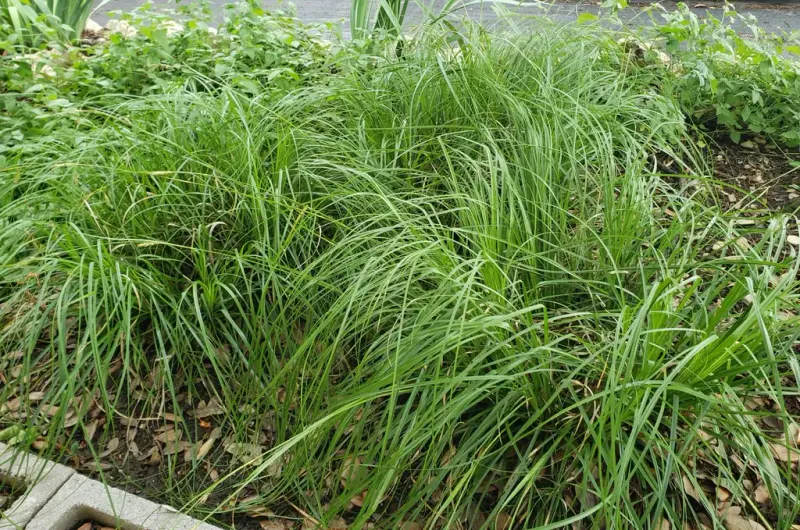
Not every corner of a Texas yard gets full sun, and that is exactly where Texas Sedge earns its reputation. Carex texensis is a fine-textured, grass-like native sedge that forms tidy, arching clumps in part shade to full shade conditions.
It brings a clean, natural look to the landscape that rock mulch simply cannot match, no matter how neatly it is arranged.
Texas Sedge stays relatively short, usually topping out around six to ten inches, and it does not spread aggressively. That makes it easy to manage in defined garden beds and under tree canopies where other plants struggle to establish.
Its moderate growth habit also means less trimming and edging over time, which busy homeowners genuinely appreciate.
From a fire-wise perspective, Texas Sedge offers real advantages. Its moisture-retaining leaves and dense clumping habit keep the ground surface cooler and less prone to drying out completely during drought.
Dry, dry debris is less likely to accumulate in the same way it does around rocks, where fallen leaves and twigs can build up and become a fire hazard.
Interestingly, Texas Sedge has a quiet elegance that suits both formal and naturalistic garden styles. It pairs well with shade-loving perennials, ferns, and native wildflowers, creating layered plantings that look intentional and polished.
It also provides light cover for small ground-dwelling insects and beneficial organisms in the soil.
Watering needs are modest once established, and the plant handles occasional dry spells without much drama. For shaded beds in Central and East Texas, it is one of the most refined and reliable low-maintenance ground covers you can choose.
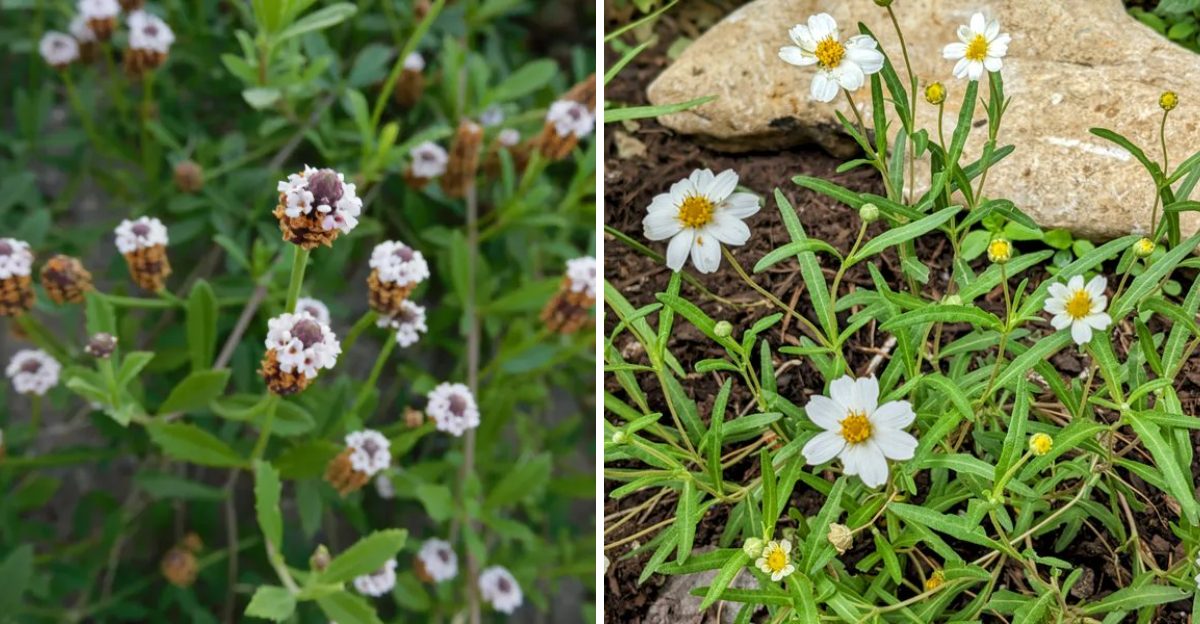
5. Blackfoot Daisy
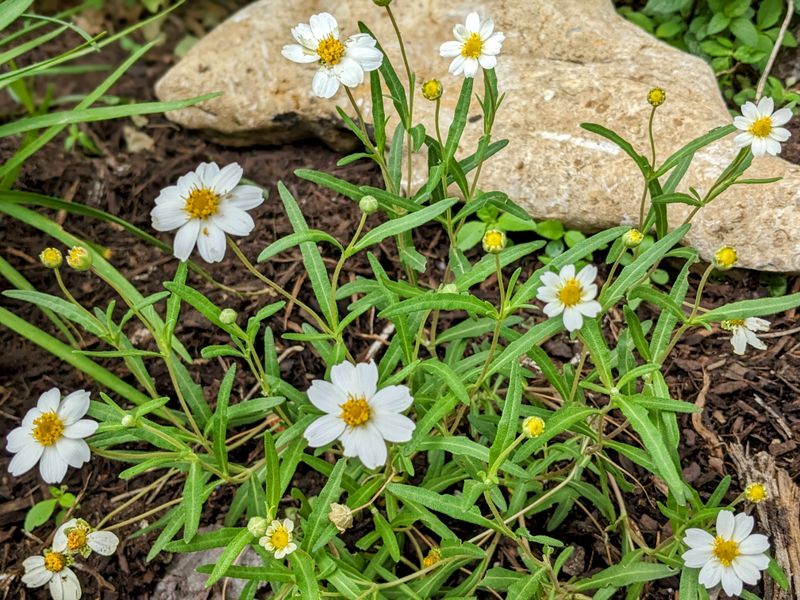
Few native plants in Texas deliver as much cheerful energy as Blackfoot Daisy.
Melampodium leucanthum is a compact, mounding perennial that stays low to the ground while producing a near-constant display of white, yellow-centered flowers from early spring through late fall.
That blooming season is genuinely impressive and makes it one of the most rewarding ground-level plants for Texas gardeners.
Standing usually no taller than twelve inches, Blackfoot Daisy fits comfortably into fire-wise landscaping plans. Its low, tight growth habit limits the amount of vertical fuel available for fire to climb.
The plant also contains a relatively high moisture content in its foliage during active growing periods, which reduces its flammability compared to dry rock mulch beds filled with accumulated debris.
Drought tolerance is one of its strongest selling points. Once established in well-drained soil, Blackfoot Daisy thrives on minimal water and actually prefers to stay on the dry side.
It performs best in full sun with rocky or sandy soils, making it perfectly suited to the challenging conditions found across much of Central, West, and South Texas.
Beyond its practical benefits, the plant has real visual charm. The white flowers look crisp and fresh against gray-green foliage, and the overall texture adds softness to landscapes that might otherwise feel harsh or barren.
It works well along borders, driveways, and in open beds where its mounding form creates natural definition.
Pollinators love it too. Bees and butterflies visit the flowers regularly throughout the season, adding movement and life to the yard in a way that no rock mulch ever could.
6. Woolly Stemodia
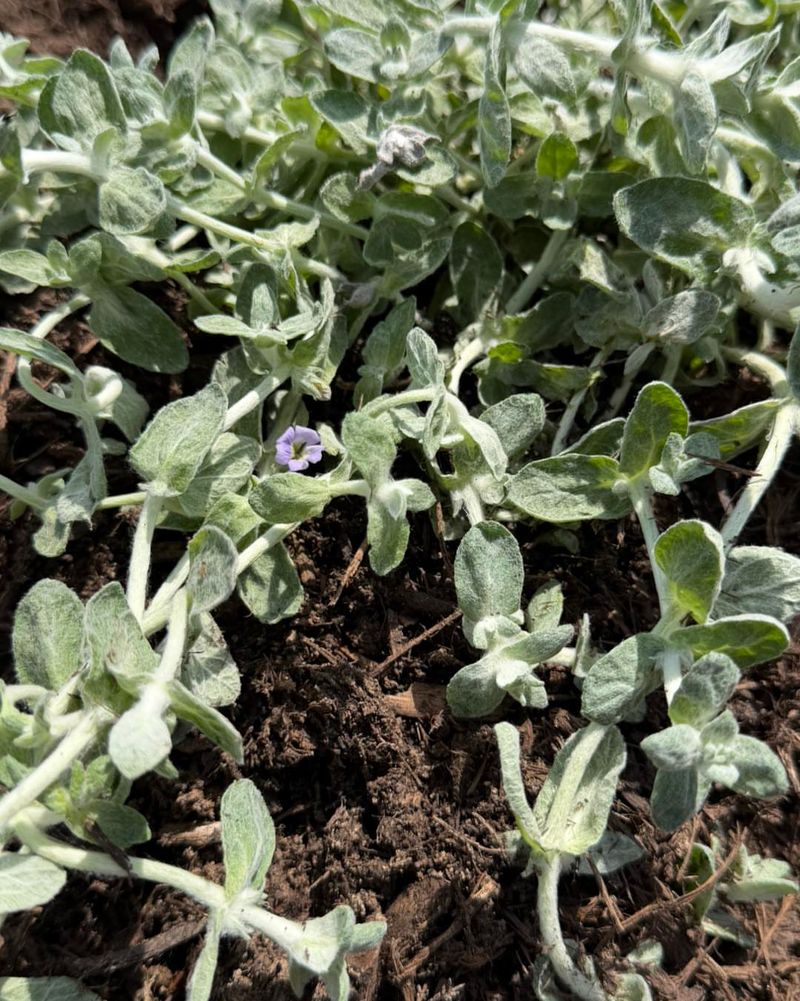
There is something almost sculptural about Woolly Stemodia. Stemodia lanata is covered in a dense layer of soft white hairs that give its foliage a striking silver-gray appearance, almost like it is dusted with frost even in the middle of a Texas summer.
That woolly coating is not just for looks. It actually helps the plant reflect intense sunlight and conserve moisture in harsh, dry conditions.
Woolly Stemodia spreads into a low, dense mat that stays close to the ground and covers soil efficiently. That growth pattern reduces bare soil exposure, which in turn limits the accumulation of dry, flammable debris that often builds up around rock mulch.
The plant itself stays moist enough during normal growing conditions to resist catching fire easily, making it a genuinely smart choice for fire-wise Texas landscaping.
It thrives in full sun and extremely well-drained soils, preferring conditions that many other plants would find too harsh. Rocky slopes, gravel beds, and hot, exposed areas are exactly where Woolly Stemodia performs best.
West Texas and the Hill Country are natural fits for this tough little plant. Maintenance needs are minimal. Once established, it asks for very little water and does not require regular fertilizing or pruning to stay attractive.
Small lavender flowers appear along the stems during the growing season, adding a delicate color contrast against the silver foliage.
For homeowners looking to replace hot, lifeless rock mulch with something that actually contributes to a fire-resistant landscape, Woolly Stemodia brings both beauty and function in equal measure. It is a standout choice for Texas fire-wise gardens.