What Attracts Red-Tailed Hawks To Your Maryland Yard
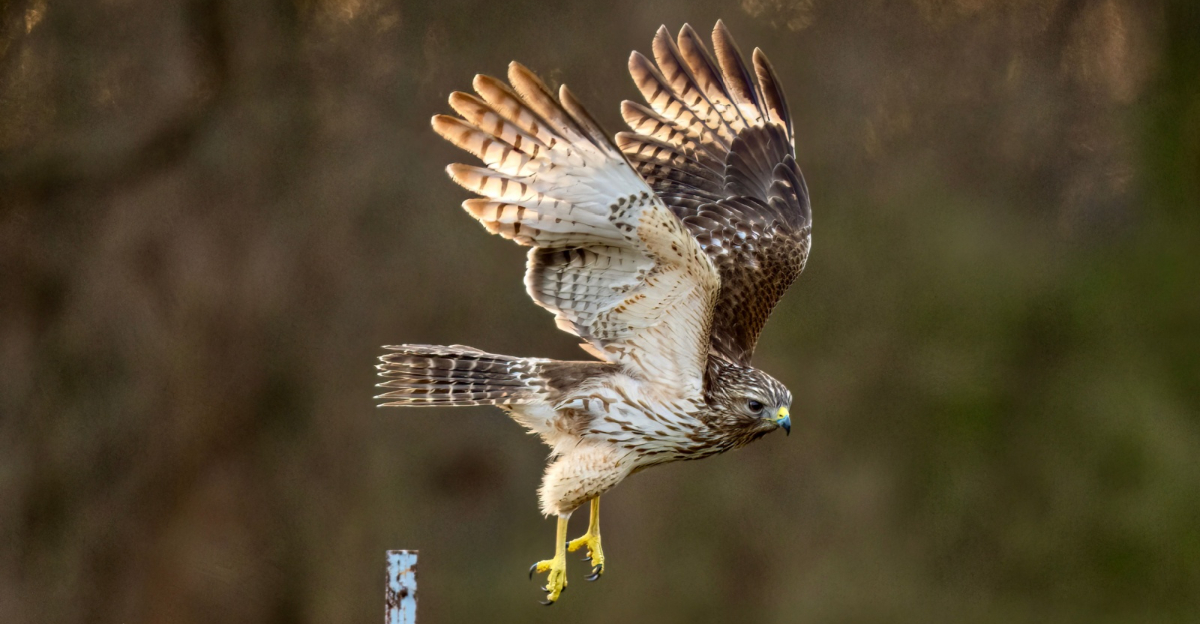
A shadow sweeps across the yard, and there it is, a red-tailed hawk landing boldly on the fence post, scanning the ground with razor-sharp focus.
Red-tailed hawks are one of Maryland’s most recognizable raptors, thriving across the state’s diverse landscapes.
From the open farmlands of the Eastern Shore to the tree-lined neighborhoods of Baltimore County, these birds are everywhere.
A hawk landed on my garden gate one quiet morning and didn’t move for nearly an hour. No flinching, no scanning for threats.
Just cold, methodical study of every inch of the lawn. Like it had already decided the place belonged to it.
That hour changed how I see my yard entirely. What pulls these birds in isn’t mystery. It’s architecture. The right trees. The right gaps. The right density of things that scurry and scatter beneath the grass.
Maryland’s suburban and rural properties are, for many hawks, not a detour from the wild. They are the wild.
So what exactly makes a backyard cross that threshold? And does yours already have it, without you ever knowing?
Your Yard May Be Full Of Hawk Prey
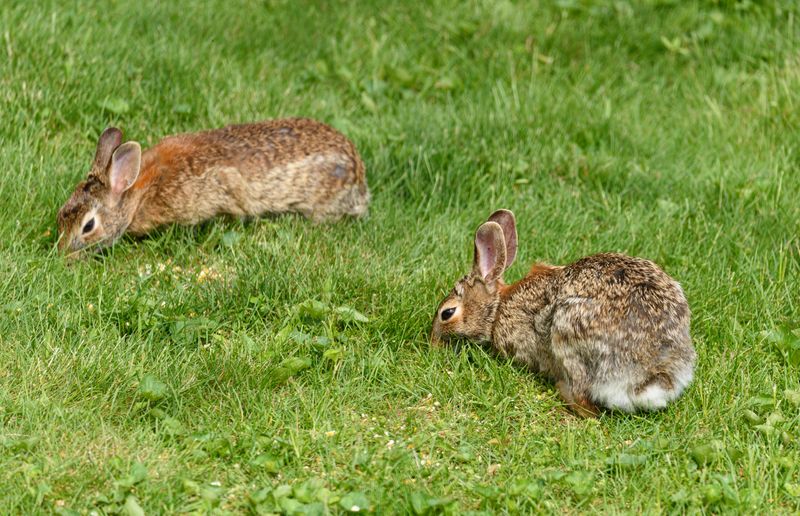
A red-tailed hawk is basically a feathered hunter with excellent eyesight, and your yard might be a full buffet without you even knowing it.
If your lawn harbors mice, voles, or rabbits, you have essentially hung up a welcome sign for one of North America’s most skilled predators.
These raptors can spot a mouse from 100 feet in the air, which is honestly more impressive than anything most of us can do before coffee.
Mice and voles love to tunnel beneath leaf piles, compost heaps, and overgrown garden beds.
Rabbits, meanwhile, graze openly in lawns during early morning and dusk.
All of that activity is like a flashing neon sign to a hawk scanning from above.
The more small mammals moving through your property, the more frequently a hawk will swing by for a look.
Birdseed spilled from feeders is a sneaky attractant too, because it pulls in mice and sparrows, which in turn pull in hawks.
So if you have been wondering why a large raptor keeps eyeing your garden, the answer is probably scurrying around just beneath the surface.
Keeping your lawn trimmed short actually makes it easier for hawks to hunt, which means you might see them more often if the grass stays low.
Think of a well-kept yard as an open-air hunting ground that red-tailed hawks find irresistible. Where the prey is, the hawk will follow.
The Hawk May Be Checking Whether Your Yard Is Worth Revisiting
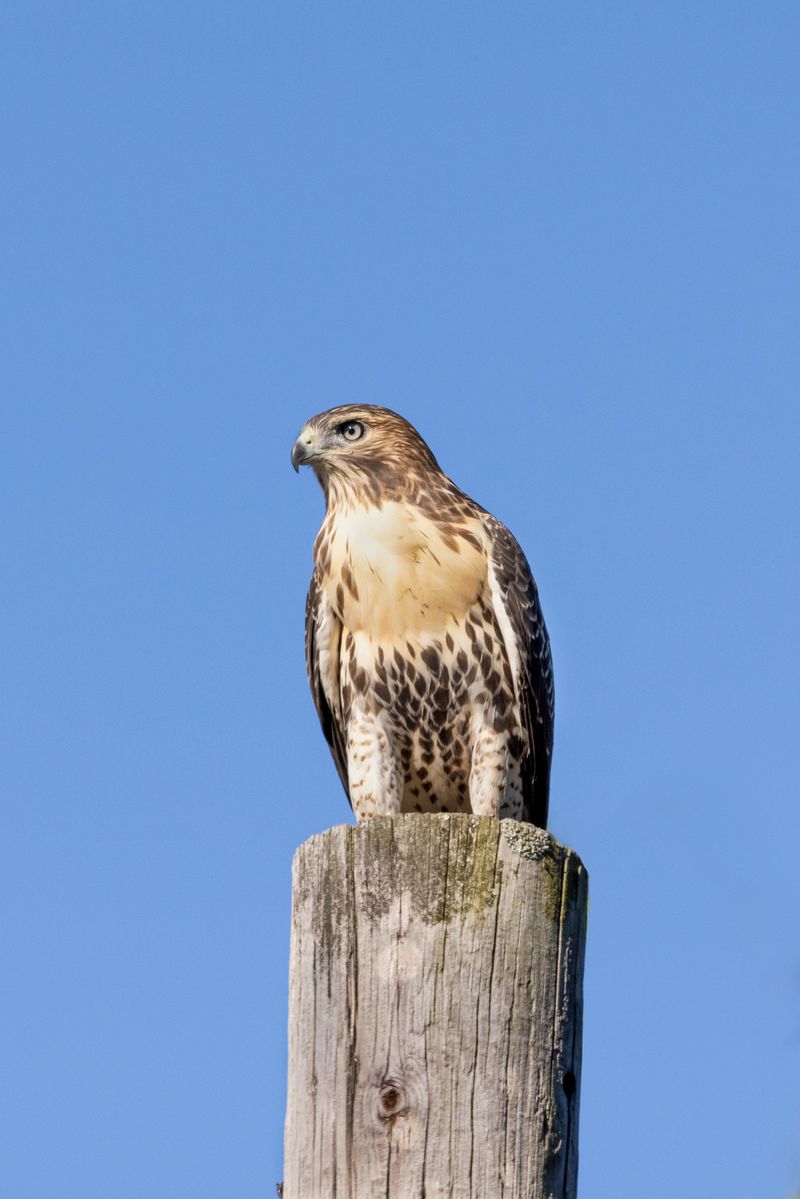
Hawks do not wander. They operate.
A single red-tailed hawk can claim a territory so vast it swallows entire neighborhoods whole.
Once a hawk decides your yard falls within its zone, expect regular flyovers and perch stops as it works its beat.
Scouting behavior often looks like slow, lazy circling high in the sky. Do not let that relaxed style fool you.
Your Maryland Garden Changes Every Week. Your Plan Should Too.
Gardening in Maryland changes quickly throughout the season. Every Friday you’ll receive a simple weekly plan showing exactly what to plant, prune, fertilize, harvest, and protect so you never miss the right timing.
The bird is mapping out every hedge, brushy edge, and open patch of ground below, cataloging where prey is most likely to appear.
Yards that offer a mix of open lawn and dense cover are particularly interesting to a hawk on patrol because they create natural edges where small animals move between habitats.
Red-tailed hawks are also loyal to productive territories. If your yard has delivered good meals before, the hawk will return again and again, sometimes following almost the same flight path each visit.
Neighbors sometimes notice the same bird showing up at predictable times, almost like a scheduled appointment.
This territorial loyalty means that once a hawk scouts your property and finds it promising, you may have a regular visitor for months or even years.
The smartest move a hawk makes is choosing the right territory, and your yard just might have made the cut. That kind of dedication from a wild animal is quietly flattering.
Fence Posts And Open Lawns Give Them The Perfect Hunting Setup
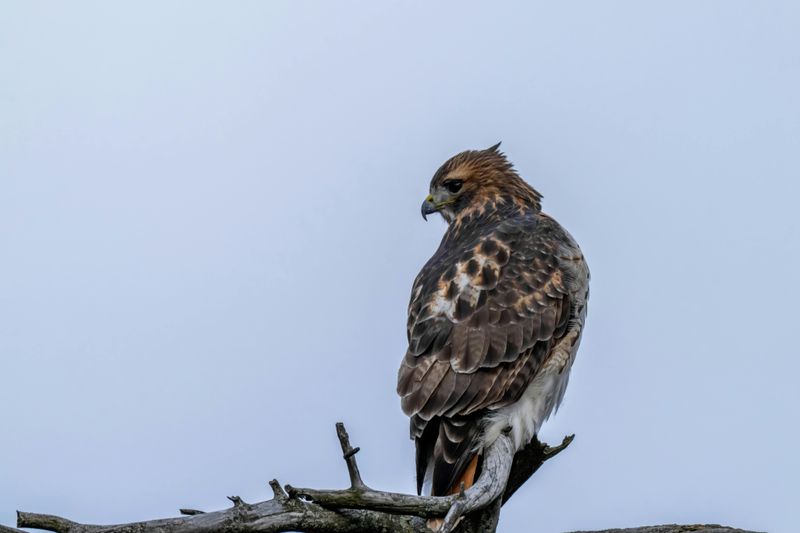
You glance outside and there is a hawk sitting completely still on your fence post, looking like it was carved from wood.
That stillness is not laziness, it is pure strategy. Red-tailed hawks are perch hunters, meaning they rely heavily on finding a high spot with a clear view and then waiting for something to move below.
Open ground is the key ingredient here.
A hawk needs to see the ground clearly to spot prey, so wide lawns, mowed meadows, and open garden beds are prime hunting zones.
If your yard has good sight lines from a nearby post, pole, or tree branch, a hawk will use that spot as a launch pad.
From just 20 to 30 feet up, these birds can detect the faint movement of a vole tunneling just under the grass surface.
Perching also conserves energy, which matters a lot for a large bird. Soaring and stooping burns calories fast, so finding a reliable high point near rich hunting ground is the hawk equivalent of working smarter, not harder.
Yards with fence lines, garden arbors, or even basketball hoops near open turf are surprisingly popular perch spots.
If you have ever noticed a hawk sitting in the same spot repeatedly, that location has earned its status as a premium hunting post.
Once a red-tailed hawk finds that perfect perch with open ground below, it will keep coming back as long as the hunting stays good. Good strategy never goes out of style.
Every Tall Perch In Your Yard Is Already On Their Map
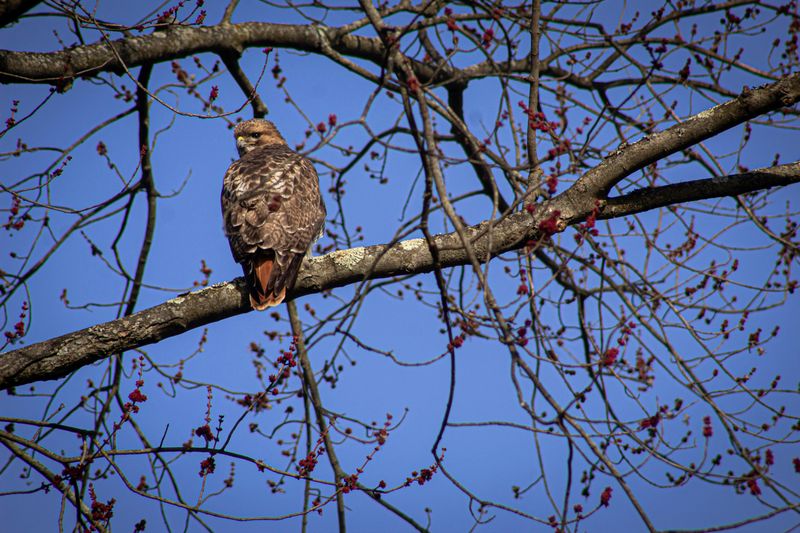
Tall trees and utility poles are basically hawk skyscrapers, and red-tailed hawks are very willing tenants.
Height equals advantage for a bird that hunts by sight, and the taller the perch, the wider the view.
Maryland yards with mature oaks, sycamores, or tulip poplars are almost magnetically attractive to these raptors. Those towering trees offer both elevation and a commanding sightline over the surrounding land.
Utility poles are equally popular, especially in neighborhoods where large trees are sparse.
You have probably seen a hawk sitting at the very top of a power pole along a busy road, completely unbothered by passing cars.
That pole gives it a 360-degree view of the surrounding fields and lawns, making it one of the best hunting platforms available in a suburban setting.
Some utility companies actually track hawk nesting on transmission towers because it happens so frequently. Nesting is another big reason tall structures matter.
Red-tailed hawks build bulky stick nests high in tree canopies or on tower platforms, and once a nest is established, a pair may return to the same site for many years.
If your yard has a large mature tree with strong upper branches, it could become home to a nesting pair.
That would mean regular hawk activity from late winter straight through summer as the adults raise their young.
A yard with towering trees is not just beautiful landscaping, it is premium hawk real estate. Height, it turns out, changes everything.
Your Yard Gives Hawks A Reason To Stay Year-Round
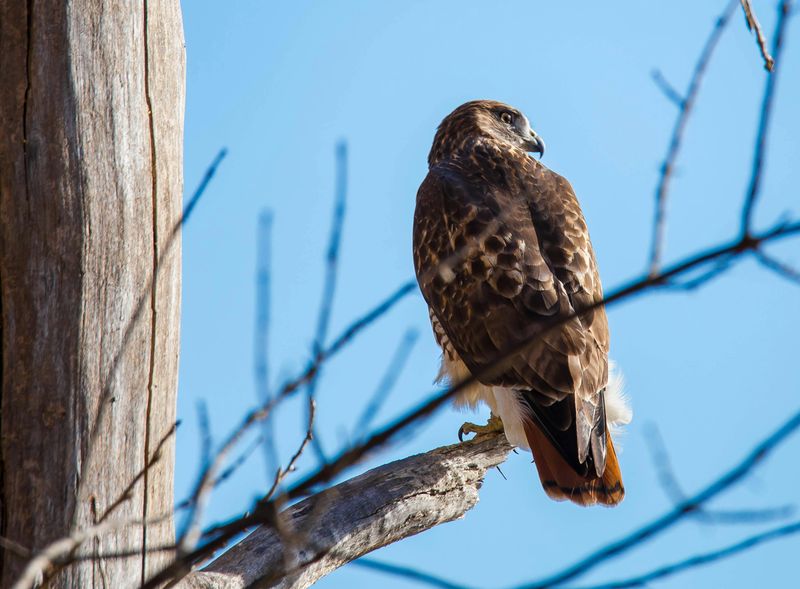
Unlike many birds that pack up and head south when temperatures drop, red-tailed hawks stick around Maryland through all four seasons.
That makes them one of the most reliably visible raptors in the state, whether you are shoveling snow in January or mowing the lawn in July.
Spotting one in the middle of a cold February morning carries a different kind of excitement because you know that bird chose to stay.
Year-round residency means these hawks are always in the market for a good territory. They do not get a seasonal reset somewhere warmer and return with fresh eyes.
Instead, they learn the landscape deeply over time, returning consistently to yards that produce prey in winter and open fields that stay active with rabbits in spring.
That accumulated local knowledge makes resident hawks incredibly efficient hunters compared to migratory birds just passing through.
For Maryland homeowners, this means there is never really an off-season for hawk watching. Winter actually offers some of the clearest views because deciduous trees have dropped their leaves, leaving hawks fully visible on bare branches.
Feeding wildlife in your yard during colder months, like maintaining a brush pile that shelters mice, can keep a hawk returning all winter long.
A bird this consistent and adaptable has earned its place as one of Maryland’s most iconic backyard visitors.
No matter the season, when you spot that rusty-red tail catching the sunlight, you know a true local is watching over the yard. Some neighbors just never leave.
Yards That Border Woods Or Open Fields Make Prime Hawk Habitat
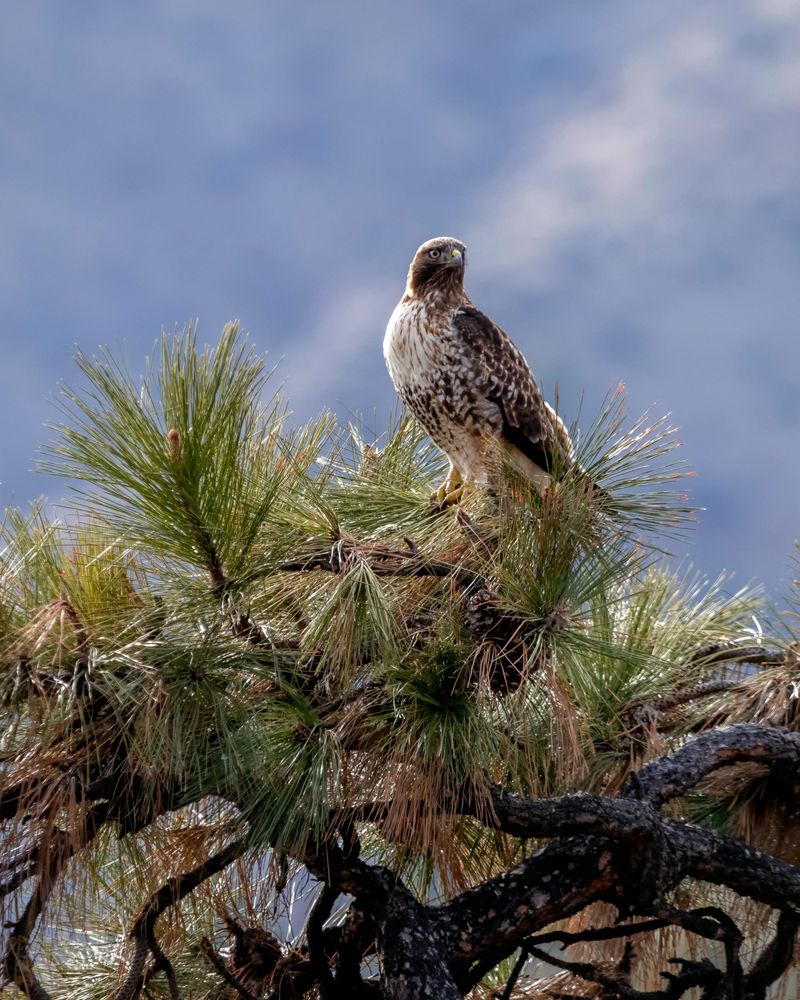
Your yard might be sitting on one of wildlife biology’s most powerful concepts: edge habitat. When a yard shares a border with woods on one side and open lawn or farmland on the other, it creates what ecologists call an ecotone.
That is simply a transition zone where two different habitats meet. For red-tailed hawks, these edges are basically the most exciting places on the map. Small mammals love edges too.
Mice, chipmunks, and rabbits use the cover of woodland edges to stay safe while sneaking out to forage in open ground.
That predictable movement pattern makes edge zones incredibly productive hunting corridors for hawks.
A bird that finds a yard bordering both forest and field has essentially found a natural funnel where prey concentrates.
If your property backs up to a tree line, a meadow, or even a large undeveloped lot, you are living on prime hawk territory whether you intended to or not.
The hawk does not care about your property lines. It cares about where the mice run and where the sight lines open up.
Many Maryland homeowners near state parks, golf courses, or agricultural land report seeing red-tailed hawks almost daily for this exact reason.
Encouraging native grasses or a brush pile along your yard’s edge can make the habitat even richer and increase hawk visits. Living on the edge, it turns out, is exactly where the action is.
The Food Chain Ends Here, In Your Backyard
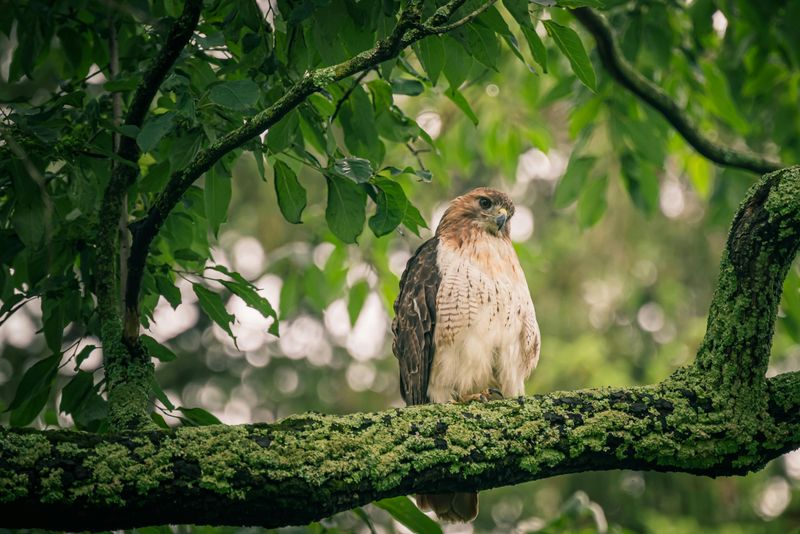
Seeing a red-tailed hawk in your yard is not just exciting. It is actually a quiet environmental report card telling you that things are going well.
Apex predators like hawks only thrive where the food web beneath them is intact. If the mice, voles, and rabbits are healthy and abundant, the hawk shows up.
When the hawk shows up, your yard has passed a serious ecological test. A functioning backyard ecosystem includes layers: plants that feed insects, insects that feed songbirds, small mammals that feed raptors.
When all those layers are present and active, the whole system hums. Red-tailed hawks sit near the top of that local food chain, so their regular presence signals that the layers below are working.
Yards heavy with native plants tend to support more insects and small mammals, which in turn attract more hawks.
Choosing native shrubs, grasses, and wildflowers for your landscaping does more than look good. It builds a living system that supports everything from ground beetles to broad-winged raptors.
There is something genuinely moving about knowing your gardening choices ripple all the way up to a bird that can see for miles. A hawk overhead means your yard is alive in all the right ways.
That is something worth protecting.
Maryland Yards Offer The Perfect Mix Of Perches, Prey, And Open Space
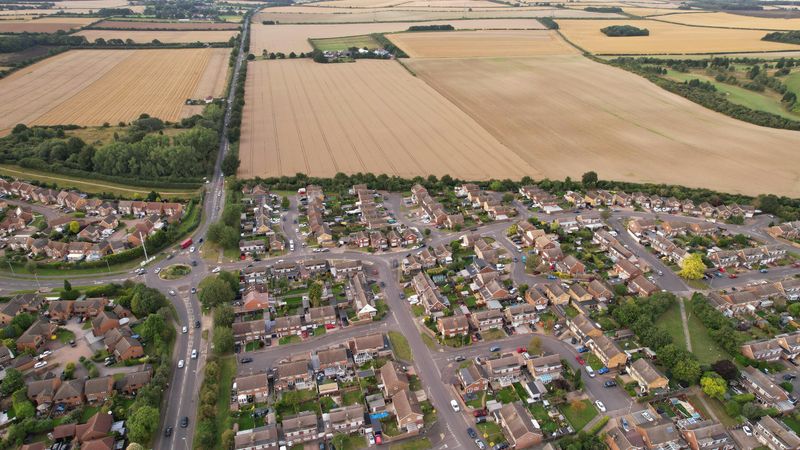
Red-tailed hawks did not retreat when humans moved in. They adapted, thrived, and never looked back.
Maryland offers an ideal mix of developed neighborhoods, farmland, and natural corridors that suits them perfectly.
Suburban yards give hawks reliable perch structures like fences, rooftops, and telephone poles, plus open lawns that function like mini prairies.
Rural properties offer even more space, with larger fields, hedgerows, and woodlots that can support multiple hawks within a small area.
Both settings provide the core ingredients the birds need: elevation, open hunting ground, and a steady supply of small prey animals.
Human activity, surprisingly, can even help. Mowing lawns short exposes mice and voles to aerial view.
Construction sites temporarily displace small mammals, pushing them into adjacent yards where hawks quickly take notice.
Even busy roads lined with grassy medians become productive hawk hunting zones because those strips harbor rodents year-round.
Red-tailed hawks in Maryland have figured out how to make modern landscapes work for them, and they are thriving because of it. Spotting one gliding low over a subdivision or sitting calmly on a mailbox post reveals just how adaptable this species truly is.
In a world where wildlife often struggles to keep up with human expansion, the red-tailed hawk is winning. And your yard might be part of why.