These Are The Arizona Hummingbird Plants That Produce Nectar Through The Driest Months
The toughest part of the year can make a yard feel surprisingly quiet. Flowers fade, growth slows down, and many plants stop putting on the colorful display they had earlier in the season.
Even wildlife activity can seem different once the hottest and driest conditions settle in.
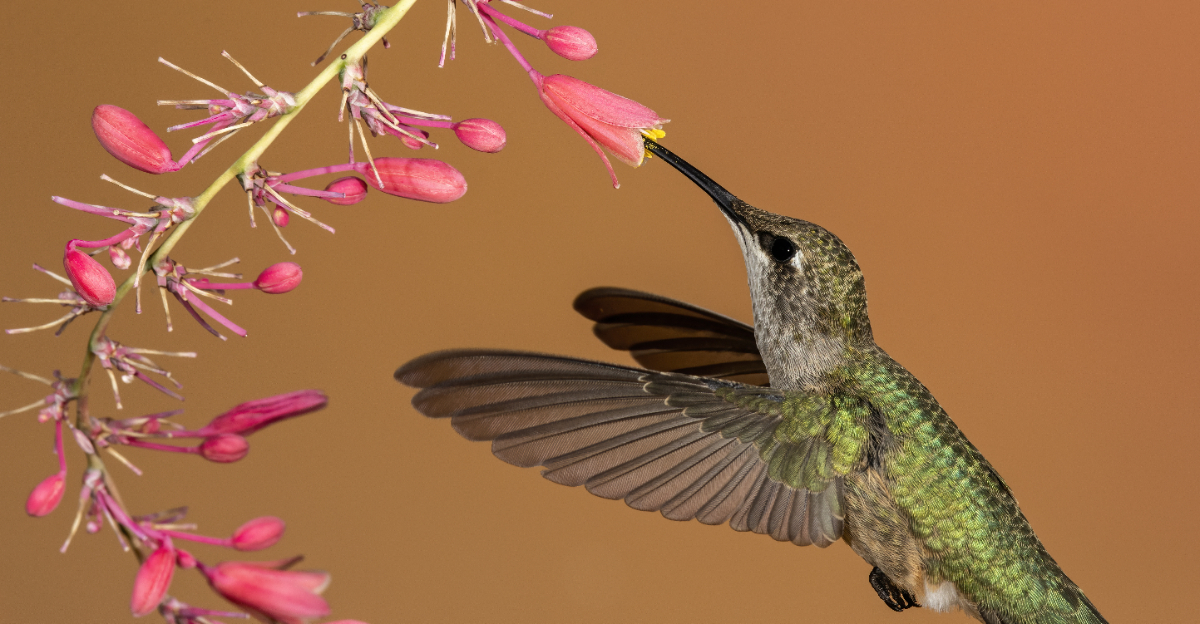
Hummingbirds do not disappear when that happens. They still need reliable food sources, and they quickly notice which yards continue providing what they need when nectar becomes harder to find.
A few well chosen plants can make a remarkable difference during this stretch of the year.
Some flowers seem to struggle as conditions become harsher. Others keep producing blooms long after many nearby plants have slowed down.
That steady supply of nectar can turn an ordinary yard into a regular stop for hummingbirds searching for their next meal.
Arizona landscapes have several plants that keep producing nectar when conditions become especially dry. Some are far more reliable than they first appear.
1. Red Yucca Keeps Blooming Through Extreme Heat
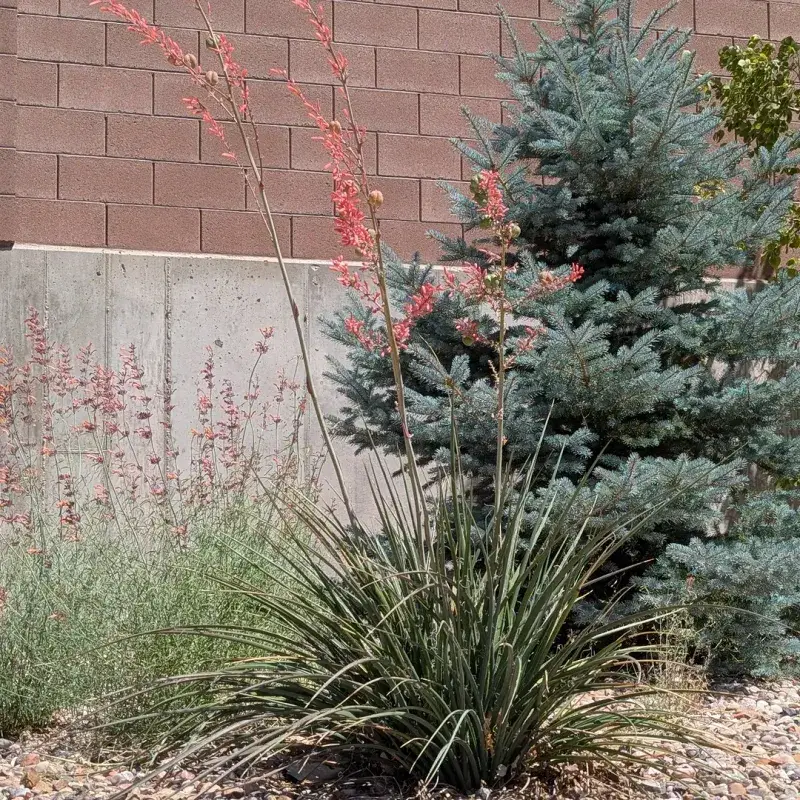
Few plants shrug off brutal summer heat quite like Red Yucca. While other plants wilt and retreat, this one keeps sending up tall, arching flower stalks loaded with tubular coral-pink blooms.
Hummingbirds zero in on those long, curved flowers because the shape is practically built for their beaks. Each stalk can carry dozens of individual blossoms, keeping nectar available for weeks at a stretch.
Red Yucca is not a true yucca, despite the name. It belongs to the agave family, which explains its impressive drought tolerance.
Established plants rarely need supplemental water once rooted in well-draining soil.
Bloom season typically runs from late spring into midsummer, sometimes pushing into early fall depending on conditions. That timing overlaps perfectly with the driest stretch of the year in the Sonoran Desert region.
Plant it in full sun and leave it alone. Overwatering is the most common mistake gardeners make with this plant.
Sandy or rocky soil works best, and it handles reflected heat from walls and pavement without complaint.
Beyond hummingbirds, Red Yucca also attracts native bees and certain sphinx moths at night. One plant can anchor a whole pollinator corner.
It grows in clumps and spreads slowly, so give it some space but expect it to earn every inch.
2. Chuparosa Provides Nectar During Dry Spells
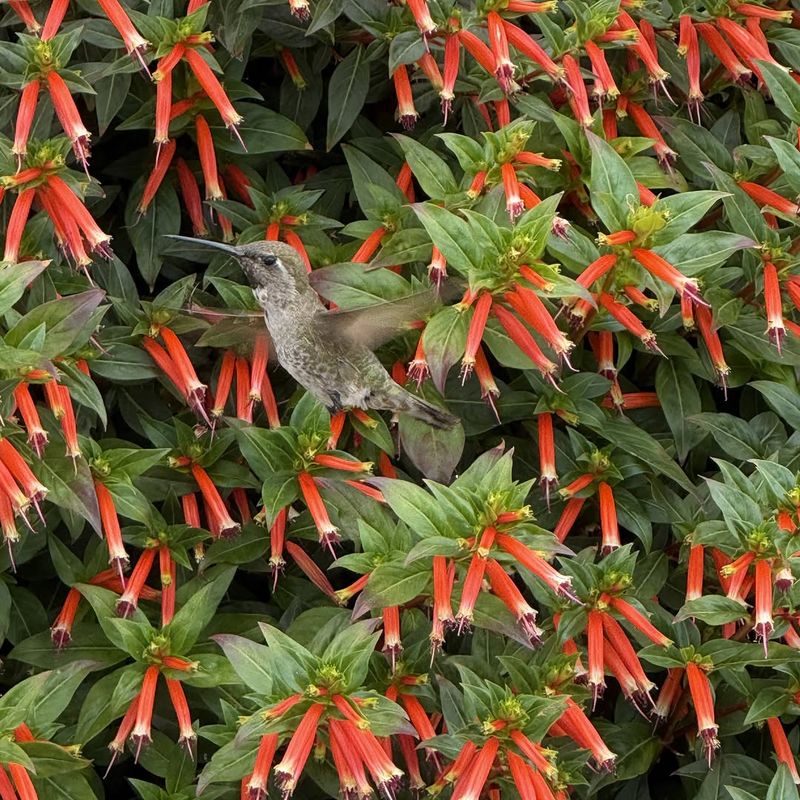
Chuparosa literally translates to “hummingbird” in Spanish, so its reputation is built right into its name. Native to the Sonoran Desert, this shrub blooms heavily during late winter and early spring, then continues producing flowers on and off through summer dry spells.
What makes Chuparosa remarkable is its ability to flower without leaves. During the hottest and driest periods, the plant drops its foliage to conserve moisture but keeps pushing out small, bright red tubular blooms on bare green stems.
Hummingbirds rely on it heavily during migration and breeding season. The flowers are perfectly shaped for hovering visitors, and the plant produces enough nectar to keep multiple birds returning throughout the day.
It grows naturally in washes and rocky slopes, so it handles fast-draining soil well. Once established, Chuparosa needs very little supplemental irrigation.
Your Arizona Garden Changes Every Week. Your Plan Should Too.
Gardening in Arizona changes quickly throughout the season. Every Friday you’ll receive a simple weekly plan showing exactly what to plant, prune, fertilize, harvest, and protect so you never miss the right timing.
A deep soak every couple of weeks during summer is usually plenty.
Size-wise, expect a loose, sprawling shrub reaching four to six feet in both height and width. It works well as an informal hedge or in a naturalistic desert planting where its wild shape fits right in.
Pair it with other native bloomers to extend the nectar season across multiple months. Chuparosa fills an important gap when fewer plants are flowering, making it a backbone plant for any hummingbird-focused garden in the low desert.
3. Baja Fairy Duster Produces Flowers For Months
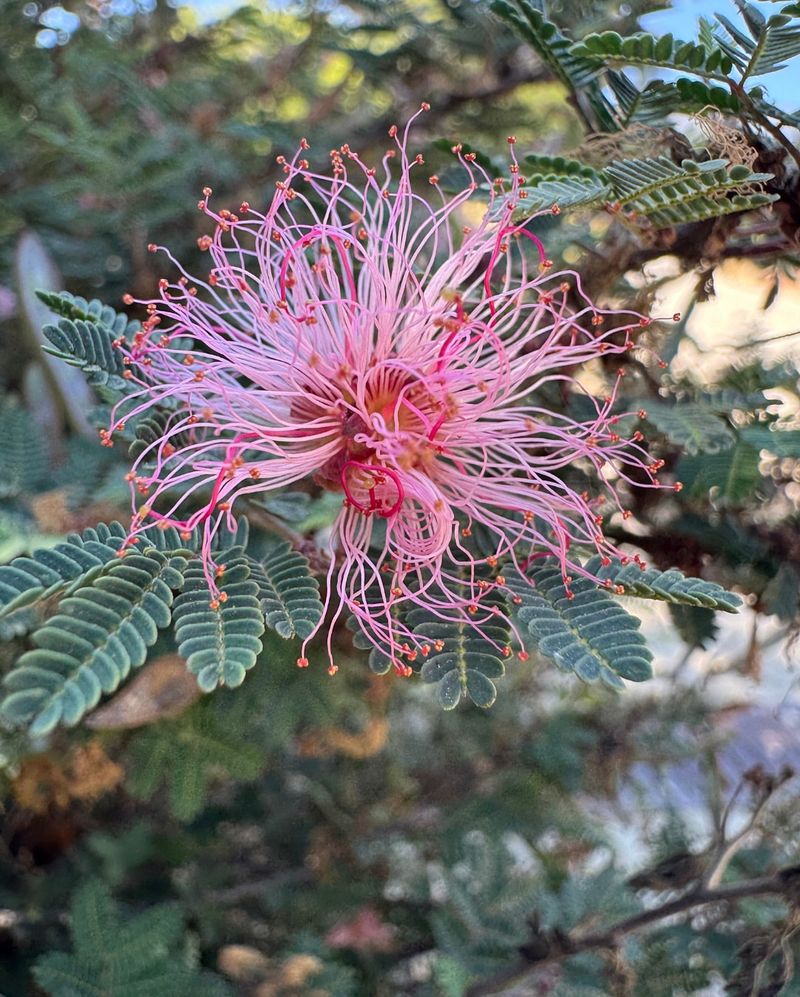
Baja Fairy Duster puts on a show that lasts longer than almost anything else in a dry-climate garden. Unlike its close relative the native Fairy Duster, the Baja variety blooms more heavily and keeps going well into summer heat.
Those fluffy, powder-puff flowers in shades of deep pink and red are irresistible to hummingbirds. The blooms are not large individually, but the plant produces them in such quantity that the whole shrub looks lit up during peak flowering.
It handles heat and drought once established, though it appreciates occasional deep watering during extended dry stretches. Full sun brings out the best bloom performance.
Partial shade tends to reduce flowering noticeably.
Baja Fairy Duster grows quickly to about five or six feet tall and wide. It works well as a background shrub or planted along a wall where reflected heat actually boosts its performance rather than harming it.
Pruning after a bloom flush encourages fresh growth and another round of flowers. Hard pruning in late winter can rejuvenate older plants that have gotten leggy or sparse in the center.
Birds and butterflies visit alongside hummingbirds, making this a genuinely multi-purpose plant. In the low desert, it often blooms from late winter through early summer, then again after monsoon rains arrive.
That extended bloom window makes it one of the most valuable plants you can add to a wildlife-friendly yard.
4. Desert Honeysuckle Keeps Hummingbirds Coming Back
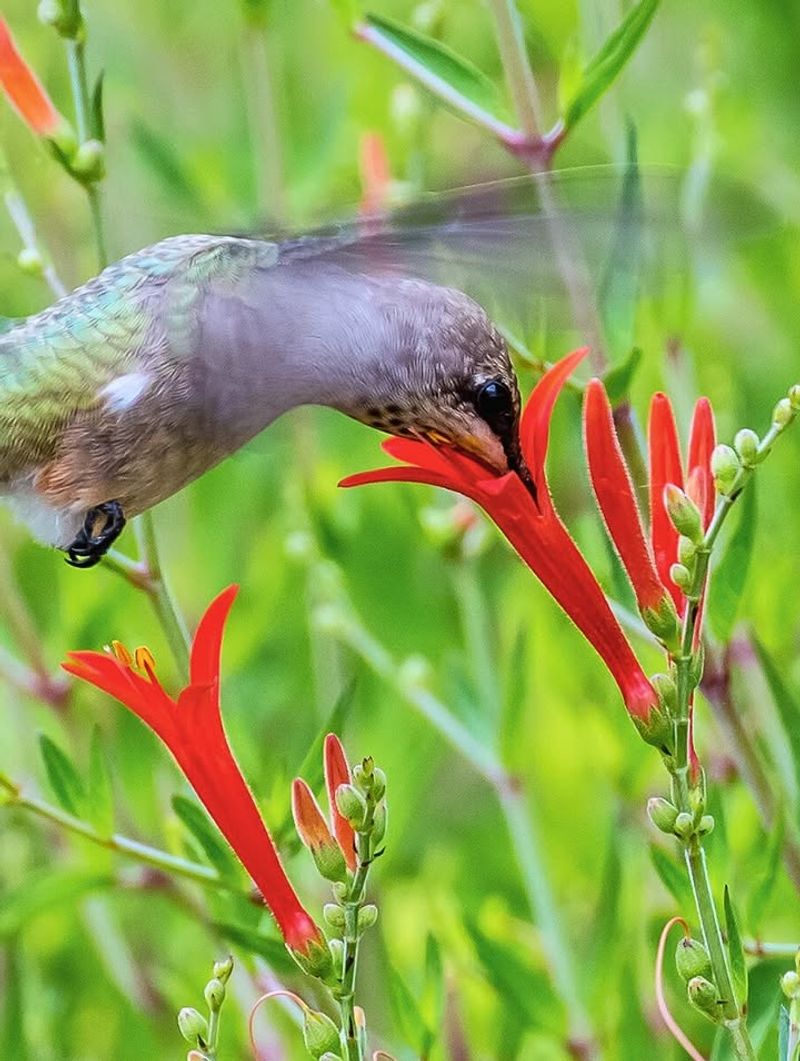
Orange is a color hummingbirds cannot ignore, and Desert Honeysuckle delivers it in abundance. Clusters of long, bright orange tubular flowers cover this shrub from late spring through summer, sometimes stretching into fall after monsoon moisture arrives.
Anisacanthus thurberi, its botanical name, grows natively in desert canyons and washes across the Southwest. That background gives it serious staying power during dry, hot conditions that would flatten less-adapted plants.
Established plants handle extended drought without much fuss. They may drop some leaves during extreme heat, but flowering continues even when the plant looks stressed.
That resilience is exactly what makes it valuable during the driest months.
Growth habit is upright and somewhat open, typically reaching four to six feet tall. It works well in mixed desert borders or as a backdrop plant where its height adds structure without overwhelming smaller neighbors.
Light pruning after each bloom flush keeps the plant tidy and encourages fresh flowering stems. A harder cutback in late winter prevents the base from becoming too woody and opens up the plant for vigorous spring regrowth.
Hummingbirds return to reliable food sources, and a well-established Desert Honeysuckle becomes one of those dependable stops. Once the local birds learn where it is, they will check it daily.
Plant at least two or three together to create a nectar station that holds attention throughout the long, dry summer stretch.
5. Desert Willow Flowers Through The Warm Season
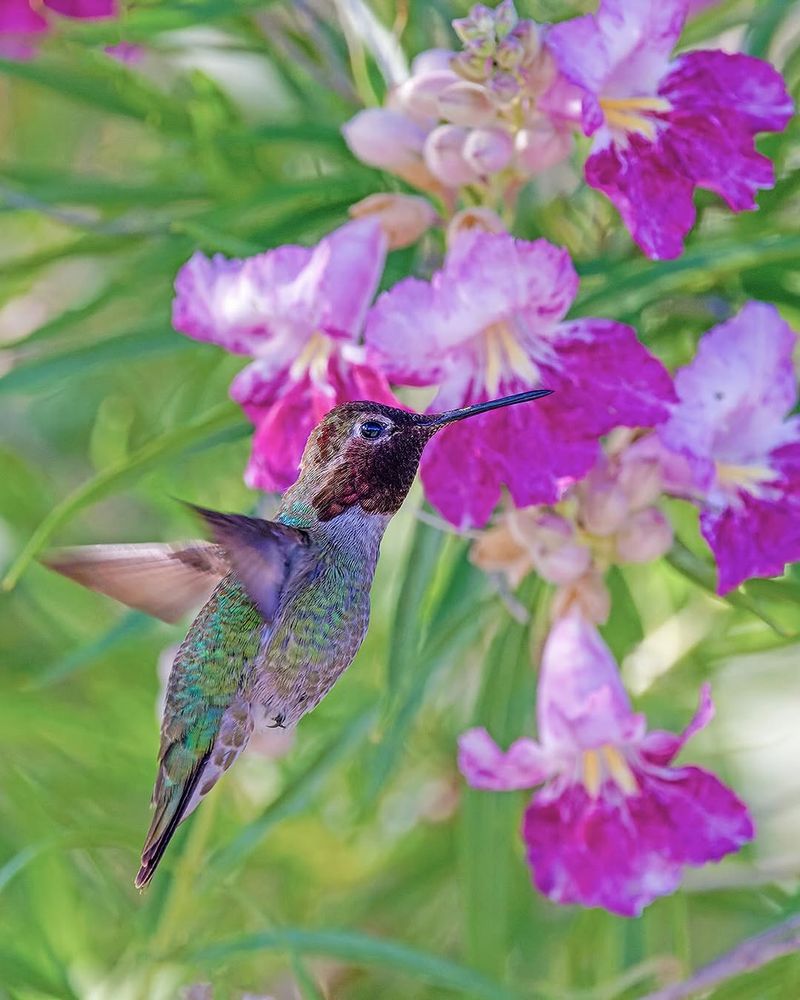
Desert Willow is not actually a willow at all. It belongs to the trumpet vine family, which becomes obvious the moment you see its showy, orchid-like blooms in shades of pink, lavender, and white.
Flowering starts in late spring and continues in waves through summer and into early fall. Each bloom cycle is triggered by warmth and moisture, so monsoon rains often spark a fresh flush of flowers right when summer feels most relentless.
Hummingbirds visit the trumpet-shaped flowers repeatedly throughout the day. The blooms are large enough to be visible from a distance, which helps birds locate the tree quickly during their daily foraging routes.
Desert Willow grows into a small multi-trunk tree, typically reaching fifteen to twenty-five feet tall. It works well as a shade tree in smaller yards while doubling as a serious nectar source.
Few plants pull off both roles as naturally.
Water young trees regularly during establishment, then back off significantly once roots are settled.
Mature trees in the low desert often survive on rainfall alone, though supplemental deep watering during prolonged dry stretches improves bloom performance noticeably.
It drops its leaves in winter and looks completely bare for several months. New gardeners sometimes worry something is wrong.
Nothing is. Come late spring, the branches fill back out and flowering begins again right on schedule.
It is one of the most rewarding trees for a hummingbird-focused yard in the region.
6. Autumn Sage Continues Blooming With Minimal Water
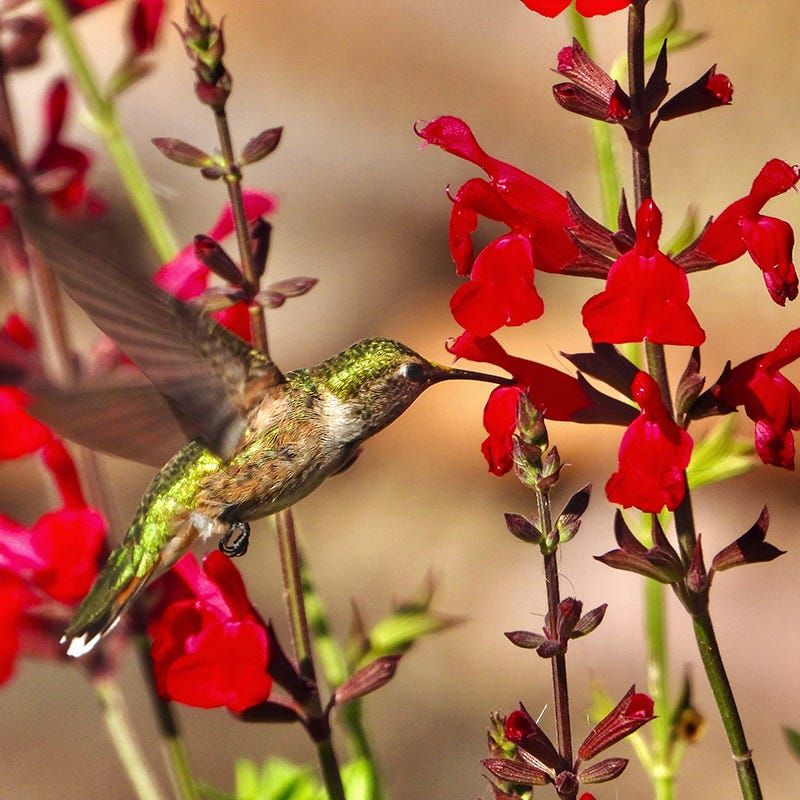
Autumn Sage earns its place in any hummingbird garden through sheer persistence. Salvia greggii blooms from spring all the way through fall, often pausing only briefly during the most intense summer heat before resuming with full force.
Red is the most common flower color, but cultivars come in coral, pink, peach, and white. Hummingbirds show the strongest preference for the red forms, though all colors attract some visits.
Mixing varieties creates a longer overall bloom window and more visual interest.
Water needs are genuinely low once established. Overwatering is a bigger concern than drought for this plant.
Good drainage is non-negotiable. Clay-heavy soil holds too much moisture and leads to root problems quickly.
Plants stay compact, usually reaching two to three feet tall and wide. That manageable size makes Autumn Sage easy to work into borders, container plantings, or along pathways where hummingbirds can be enjoyed up close.
Deadheading spent flower spikes encourages faster reblooming. A light shearing after each major bloom flush keeps plants tidy and pushes new growth that carries the next round of flowers.
Cold hardiness is another advantage. Autumn Sage handles temperatures well below freezing, making it useful across a wider range of elevations than many other heat-loving plants on this list.
Higher-elevation desert gardens in particular benefit from a plant that handles both cold winters and hot summers without missing many beats throughout the growing season.
7. Cape Honeysuckle Extends The Nectar Supply
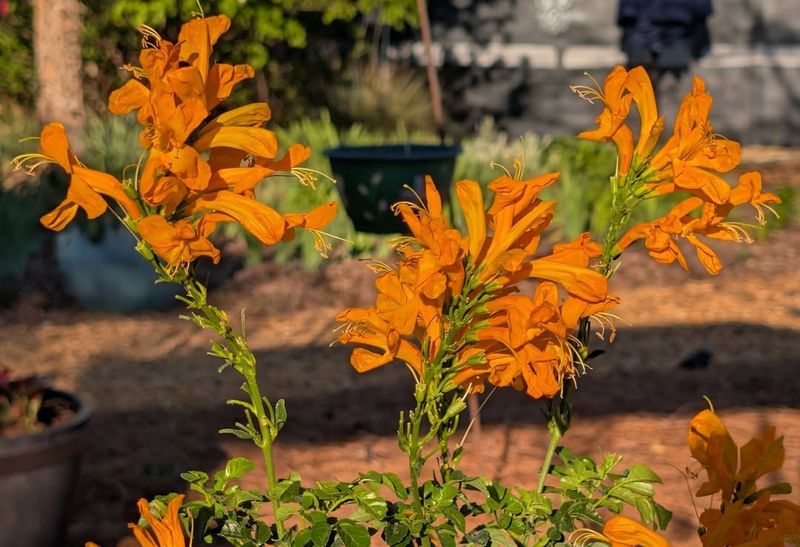
Cape Honeysuckle shows up late in the season and keeps going when most other plants have already wound down. Its vivid orange or yellow-orange tubular flowers peak in fall and can continue through winter in frost-protected spots.
Tecoma capensis, native to South Africa, has adapted extremely well to low-desert conditions.
Hot summers do not slow it down, and it blooms most heavily when temperatures begin to ease in autumn, right when migrating hummingbirds need reliable fuel for their journey south.
Growth habit is vigorous and sprawling. Without support, it forms a large mounding shrub.
Trained against a wall or fence, it climbs aggressively and can cover a large surface area quickly. Either way, the flower display is dramatic.
Water it occasionally during summer to maintain good health and bloom production. Established plants tolerate dry conditions, but consistent deep watering every couple of weeks during peak heat improves flower output noticeably.
Hard pruning in late winter or early spring keeps the plant from becoming an unmanageable tangle. Cut it back to a reasonable framework and it rebounds fast, filling in with fresh growth before temperatures climb again.
One practical note: Cape Honeysuckle can spread aggressively in some situations, so it is worth checking local guidelines on its use in your specific area before planting.
Used thoughtfully, it is one of the most effective season-extending nectar plants available for warm-climate gardens.
8. Firecracker Bush Thrives During Peak Summer Heat
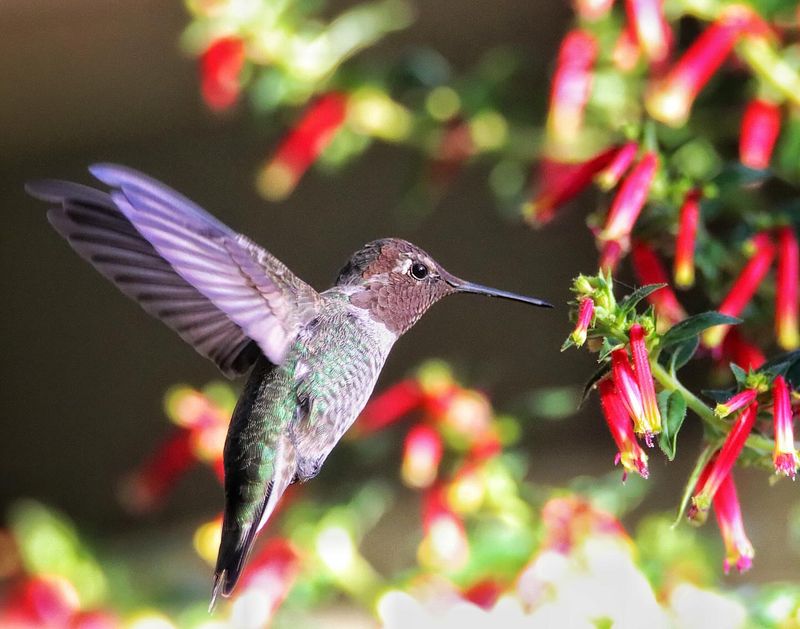
Peak summer heat stops most plants cold. Firecracker Bush treats it like an invitation to bloom harder.
When temperatures push past 105 degrees, this plant is often at its most productive.
Clusters of narrow, tubular flowers in vivid orange-red cover the branch tips throughout summer. Hummingbirds are drawn to that color and shape instantly.
A mature plant can keep multiple birds busy at once, with enough nectar to sustain serious competition between territorial males.
Firecracker Bush, also called Bouvardia ternifolia, is native to rocky slopes and canyon walls in the desert Southwest and into Mexico. That origin explains its preference for lean, well-draining soil and full sun exposure.
Water it deeply but infrequently once established. Consistent overwatering leads to root problems faster than drought ever would.
Sandy or gravelly soil is ideal, and raised beds or slopes work particularly well for drainage.
Expect it to grow about three to four feet tall with a similar spread. Cut it back by about a third in late winter to keep growth compact and encourage strong new flowering stems for the coming season.
One underappreciated quality of Firecracker Bush is its ability to handle reflected heat from walls, pavers, and patios without skipping a beat.
Plant it near south- or west-facing structures where other plants struggle, and it will reward you with consistent color and steady nectar production through the toughest months of the year.