How To Protect Your Arizona Citrus Tree Bark From Summer Sunburn
There is nothing more frustrating than seeing a healthy citrus tree struggle during the hottest part of summer. The leaves may still look fine, watering may be on schedule, and the tree may seem perfectly healthy from a distance.
Then one day you notice damage on the trunk or larger branches and start wondering what went wrong.
Many gardeners focus on protecting leaves and fruit when temperatures soar. Bark, however, is often overlooked until problems become visible.
Once summer heat becomes intense, prolonged sun exposure can create issues that are difficult to ignore.
Arizona summers can be especially tough on citrus trees, particularly young trees and those with exposed trunks.
The good news is that a few simple precautions can help reduce the risk of sunburn and protect vulnerable bark during the hottest weeks of the year.
Taking action now can help prevent damage before it starts and keep your tree in better condition through summer.
1. Trunk Wraps Can Help Protect Bark From Summer Sunburn
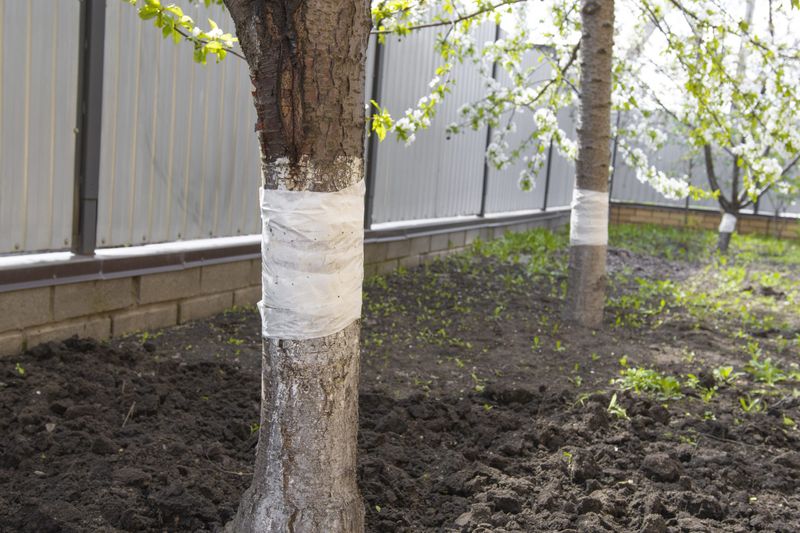
Wrapping your citrus trunk is one of the fastest ways to block direct sun from scorching exposed bark. A simple trunk wrap creates a physical barrier between the bark and intense afternoon rays.
Use white or light-colored tree wrap, burlap, or even cardboard. Light colors reflect heat instead of absorbing it.
Dark materials can actually make things worse by trapping heat against the bark.
Wrap from the base of the trunk up to the lowest branches. Overlap each layer slightly so no gaps are left open.
Gaps allow sunlight to sneak through and cause spotty damage.
Secure the wrap loosely. Tight wrapping can cut off airflow and cause moisture buildup under the material.
Both conditions create problems for bark health.
Check your wrap every few weeks during summer. Wind, rain, and heat can loosen or shift the material over time.
A wrap that has slipped down is no longer doing its job.
Trunk wraps work best when applied before temperatures climb in late spring. Getting ahead of the heat is always easier than trying to recover from damage after it happens.
In the low desert regions of the Southwest, citrus bark can burn surprisingly fast once summer arrives.
2. Paint Exposed Bark To Reduce Sunburn Risk
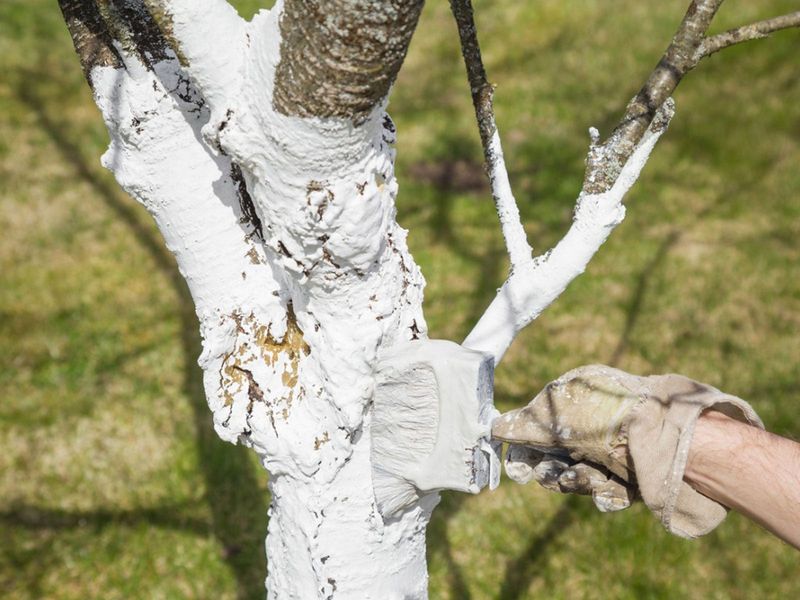
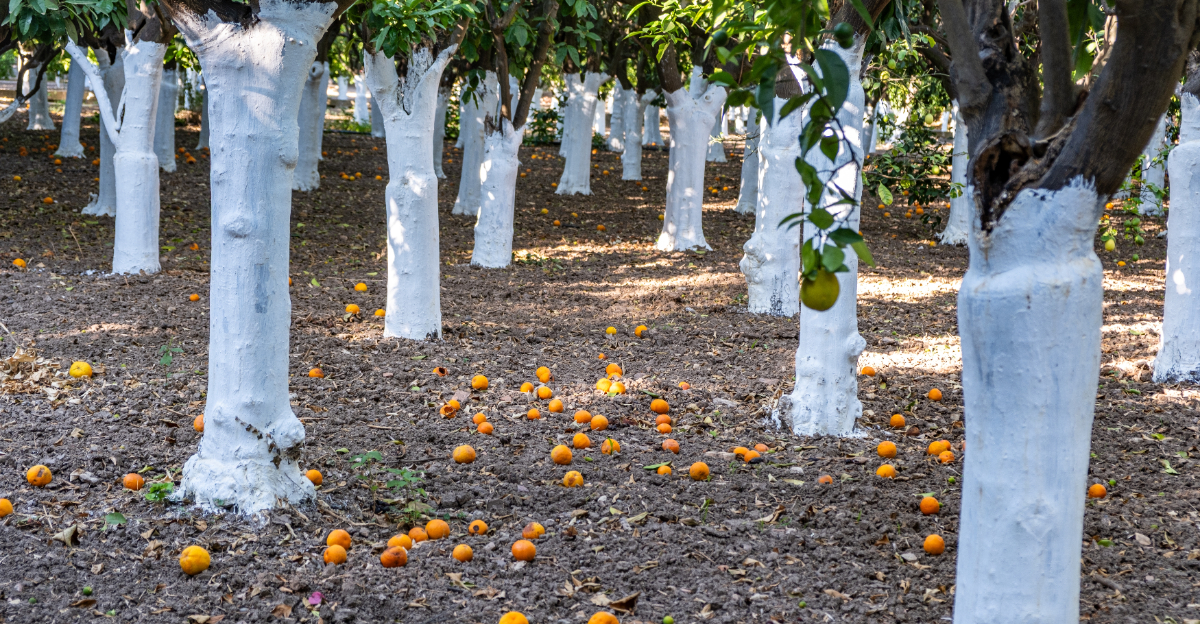
White interior latex paint is one of the most practical tools a citrus grower can use during summer. Diluted and brushed directly onto the trunk, it reflects sunlight and keeps bark temperatures lower.
Mix one part white latex paint with one part water. Full-strength paint can seal the bark too tightly and reduce natural gas exchange.
A diluted mix protects without smothering.
Apply the mixture to all exposed trunk areas, including any limbs that face south or west. Focus especially on spots where the canopy does not provide shade during peak afternoon hours.
Reapplication is sometimes needed after heavy rain or several months of intense sun. Paint weathers and fades, reducing its reflective ability over time.
A fresh coat before summer peaks keeps protection strong.
Your Arizona Garden Changes Every Week. Your Plan Should Too.
Gardening in Arizona changes quickly throughout the season. Every Friday you’ll receive a simple weekly plan showing exactly what to plant, prune, fertilize, harvest, and protect so you never miss the right timing.
Some gardeners use commercial tree paint products instead of DIY mixes. Both work, but always check that commercial products are labeled safe for fruit trees before applying them.
Painting bark is a well-established method used across hot, dry climates including the Sonoran Desert region. It costs very little and takes only a few minutes per tree.
Consistent use year after year gives your trees a much stronger chance of coming through summer without cracking or splitting bark.
3. Protect The South And West Sides Of The Trunk
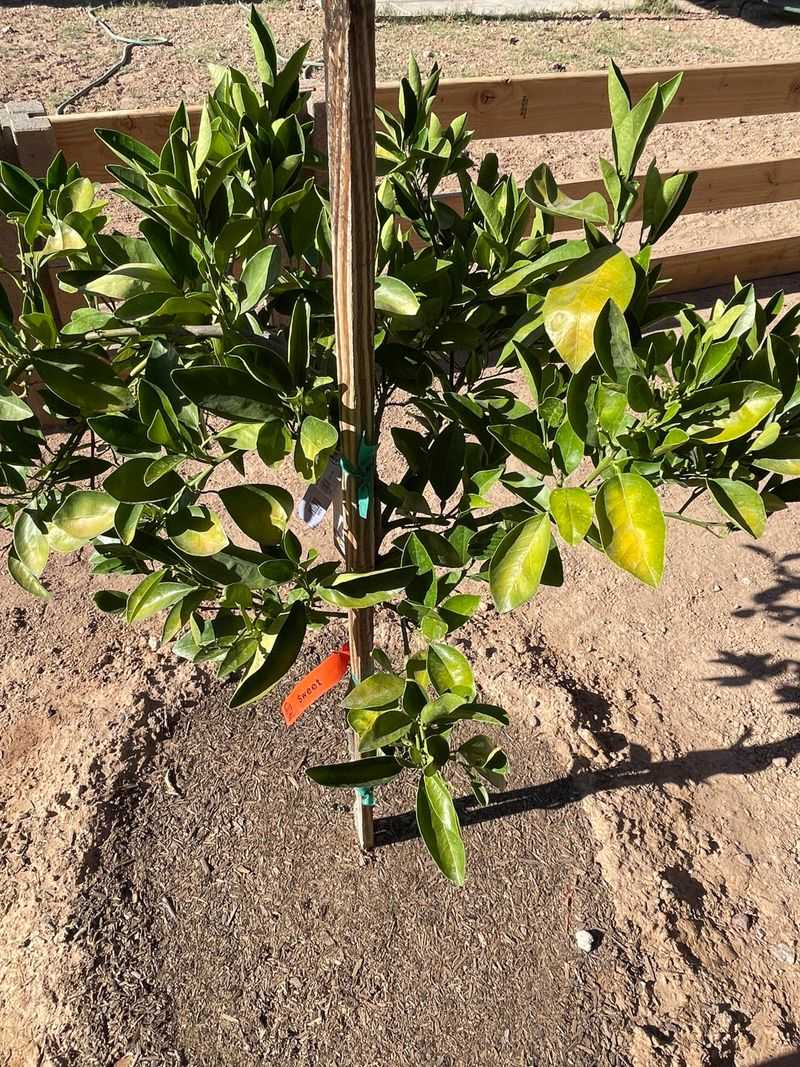
Not all sides of your tree face the same risk. South and west-facing bark takes the hardest hit during summer afternoons when the sun is at its most intense angle.
Morning sun from the east is gentler and less damaging. Afternoon sun from the west delivers concentrated heat for several hours straight.
That prolonged exposure is what causes bark to dry out and crack.
When wrapping or painting, always prioritize these two sides. If you only have time or materials for partial coverage, start with the south and west exposures first.
Shade cloth can also help if positioned correctly. A simple shade structure on the west side of a tree can cut afternoon heat significantly.
Even partial shade during peak hours reduces bark stress.
Nearby walls or fences can make things worse. Concrete and block walls facing west absorb heat all day and radiate it back toward your tree at night.
Be aware of what surrounds your citrus when planning protection.
In the low desert, afternoon temperatures against a west-facing wall can exceed ambient air temps by 10 to 15 degrees.
Planting citrus away from these surfaces or adding insulation between the wall and tree helps reduce that extra heat load on vulnerable bark.
4. Avoid Heavy Pruning Before Extreme Summer Heat
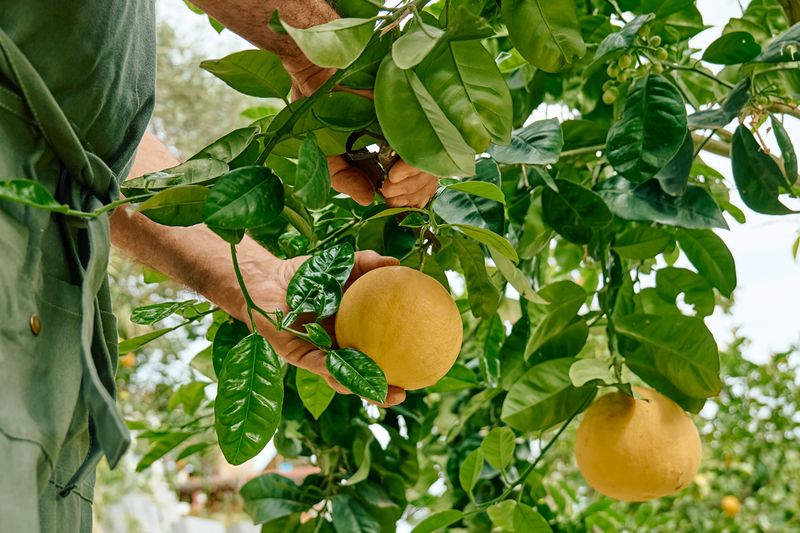
Pruning opens up the canopy and lets sunlight reach bark that was previously shaded. Right before summer, that newly exposed bark has zero tolerance for intense heat.
Heavy pruning in May or June is one of the most common mistakes citrus growers make. Branches that were shading the trunk for months suddenly get removed, leaving bark exposed just as temperatures peak.
If pruning is necessary, finish it by late winter or very early spring. Bark has time to harden and adjust before the worst heat arrives.
Timing matters more than most people realize.
Light shaping is fine during warmer months if needed. Removing a few small branches will not dramatically change sun exposure.
Major structural cuts are the ones that cause problems.
After any pruning, check which trunk areas are now exposed. Apply paint or wrap to those spots immediately.
Do not wait to see if damage develops before acting.
Citrus trees in hot desert climates carry their own shade through their canopy. Preserving that canopy structure through summer is one of the simplest and most natural forms of bark protection available.
Letting the tree shade itself reduces the need for extra intervention and keeps bark stable through even the most brutal stretches of summer heat across the region.
5. Maintain Consistent Soil Moisture During Hot Weather
Bark stress during summer is not only about sun exposure. Drought stress from inconsistent watering makes bark far more vulnerable to heat damage.
When a citrus tree lacks water, it cannot move moisture efficiently through its tissues. Bark dries out faster and loses its natural flexibility.
Dry, brittle bark cracks under heat much more easily than well-hydrated bark.
Deep, infrequent watering works better than shallow daily sprinkles. Water needs to reach the deeper root zone where it stays cooler longer.
Surface moisture evaporates quickly in desert heat and does little for the tree.
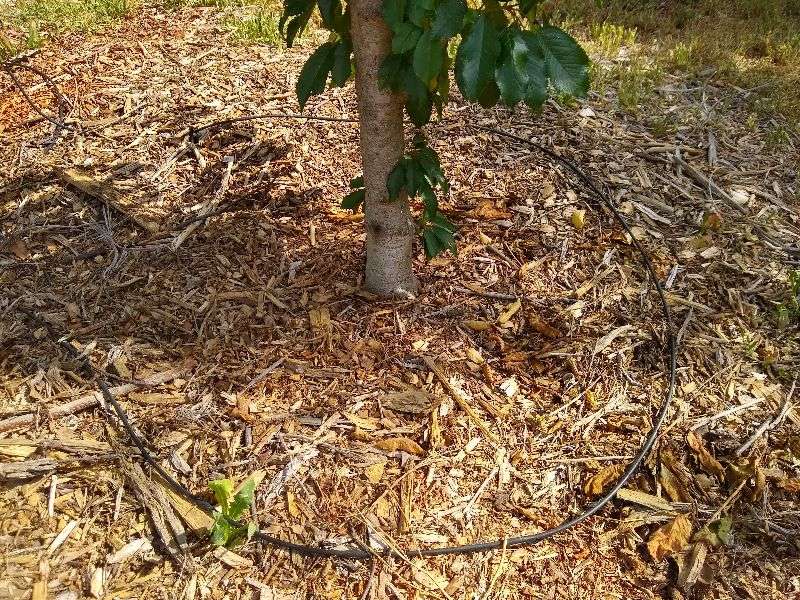
Drip irrigation set on a consistent schedule takes the guesswork out of summer watering. Adjust run times as temperatures rise.
A tree that was fine with three-day watering intervals in spring may need watering every two days once summer peaks.
Mulch around the base of the tree helps retain soil moisture between watering sessions. Keep mulch a few inches away from the actual trunk to prevent bark rot.
A two to three inch layer works well for moisture retention.
Consistent hydration supports every other protective measure you put in place.
Paint and wraps help on the outside, but a well-watered tree handles heat stress from the inside out.
6. Watch For Cracks Forming In Sun Exposed Bark
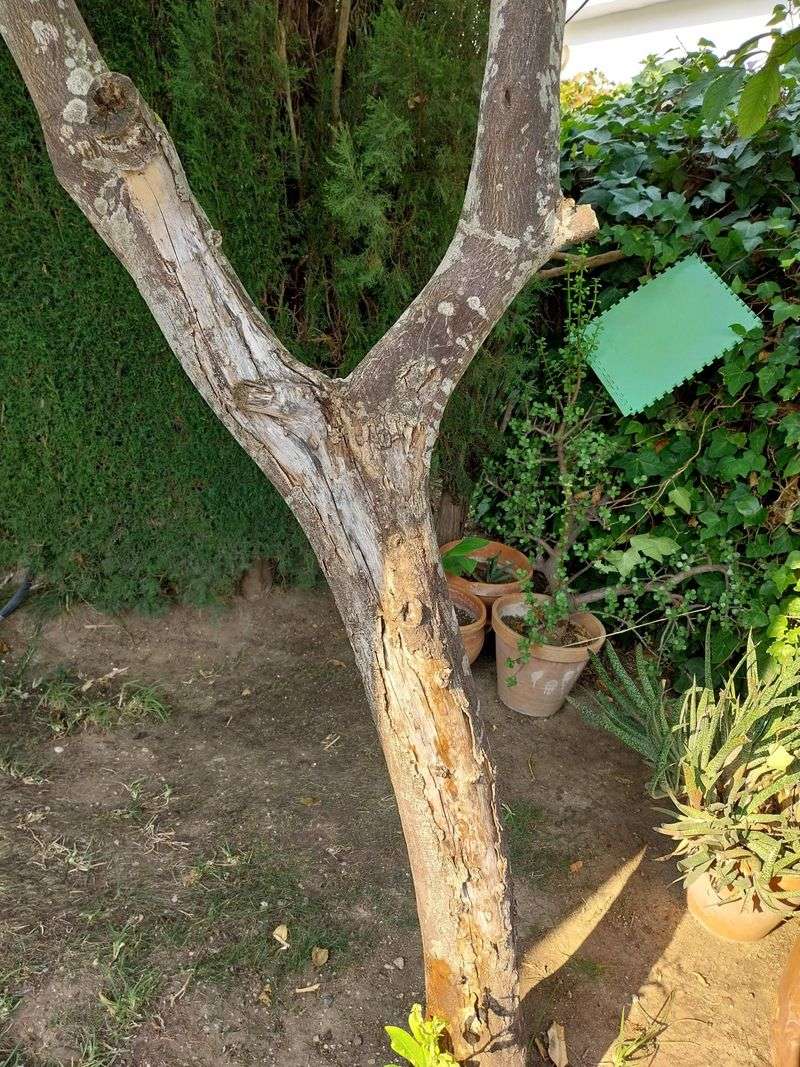
Catching bark damage early gives you a real chance to stop it from spreading. Cracks that start small can grow quickly once summer heat intensifies.
Look for any lengthwise splits along the trunk, especially on the south and west sides. Sunburned bark often looks faded, slightly sunken, or papery before it starts to crack.
Catching it at that early stage is ideal.
Check your trees every week or two during peak summer months. A quick visual inspection takes only a minute.
Consistent monitoring is far easier than managing advanced damage later in the season.
Peeling bark is another warning sign. Healthy citrus bark does not peel on its own during summer.
If you see sections lifting or curling away from the trunk, sun damage is likely the cause.
Once cracks appear, apply white tree paint or a protective wrap immediately. You cannot reverse bark damage, but you can stop additional exposure from making things worse.
Severe cracking that exposes the inner wood layer creates an entry point for pests and disease.
Keeping an eye on your trees throughout summer is one of the most underrated protective habits a citrus grower can build.
7. Replace Damaged Protective Wraps When Needed
Old wraps do not protect like new ones. Heat, UV exposure, and wind break down tree wrap materials faster than most people expect.
A wrap that looked fine in May can become brittle, loose, or torn by July. Check the condition of your wraps every few weeks rather than assuming they are still working.
Visual checks take almost no time and prevent a lot of avoidable damage.
Look for wraps that have slipped down, split open, or developed large gaps. Even small gaps allow direct sun to hit bark underneath.
Partial coverage is better than none, but full coverage is the goal.
When replacing a wrap, remove the old material completely before applying a new layer. Leaving damaged material in place can trap moisture or debris against the bark.
Always start fresh with clean, dry wrap.
Keep extra wrap material on hand throughout summer. Running out mid-season and waiting for a delivery leaves bark exposed during the hottest stretch of the year.
A small backup supply is worth having.
Replacing wraps promptly is a small habit that pays off significantly.
Protective materials are inexpensive compared to the time and effort needed to nurse a damaged tree back to health.