These Texas Garden Spiders Look Frightening But Are Doing Important Work
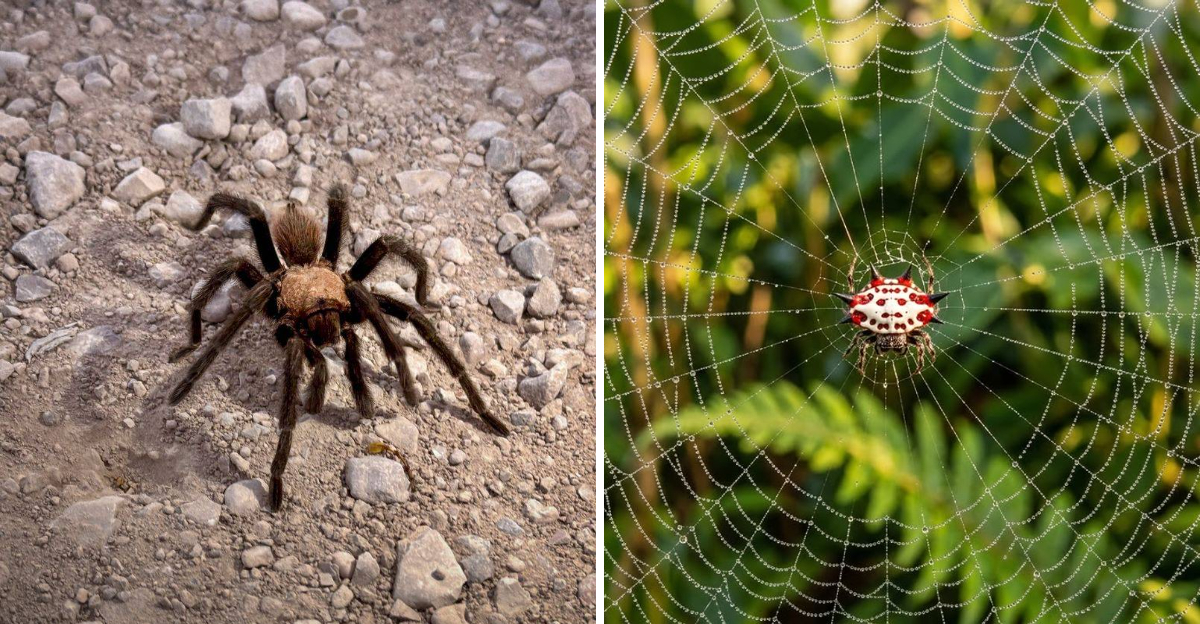
You’re out in the Texas backyard on a warm summer morning, coffee in hand, feeling good about life, and then you nearly walk face-first into an enormous web stretched between your tomato cages.
And sitting right in the middle of it is a large, patterned spider that looks like it has absolutely no intention of moving.
Totally normal Tuesday in a Texas garden. The truth is, Texas yards are absolutely full of spider activity, and while some of these eight-legged residents can stop you in your tracks at first glance, most of them are genuinely on your side.
That fast mover darting across the mulch, the plump spiky creature hanging near your shrubs: they’re out there working hard to keep your garden healthier than it would be without them.
Getting to know them makes sharing the yard a whole lot easier.
1. Yellow Garden Spiders Catch Insects In Big Webs
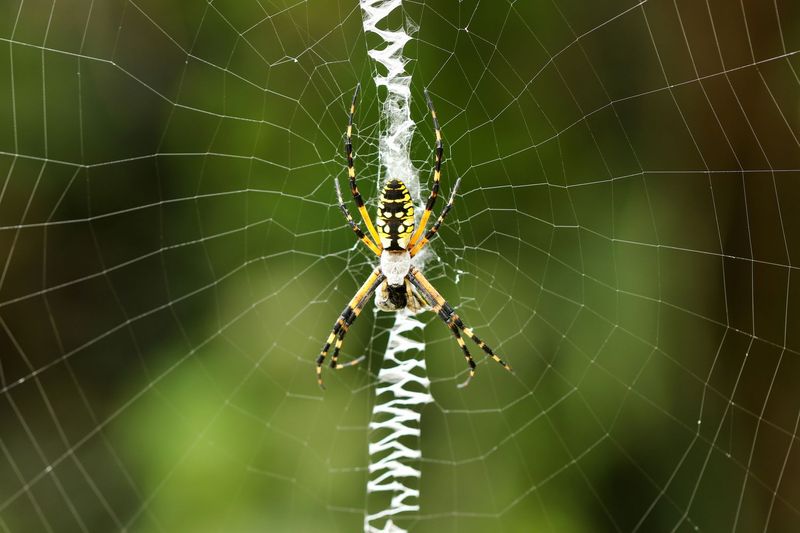
One of the most striking sights in a Texas garden is a large yellow and black spider hanging in an enormous circular web, sometimes stretching nearly two feet across.
That is the yellow garden spider, also known as Argiope aurantia, and while it can startle even the most experienced gardeners, it is doing genuinely useful work out there.
These spiders build their webs in open, sunny spots, often between garden stakes, across vegetable beds, or along fence lines where flying insects are plentiful.
A distinctive zigzag band of silk runs through the center of the web, and the spider typically rests head-down in the middle, waiting patiently.
Grasshoppers, moths, beetles, and other garden insects that fly or jump into the web become wrapped in silk quickly.
In Texas, yellow garden spiders are most visible in late summer and early fall when the females grow quite large. Their size is honestly the main reason people find them frightening.
Females can measure about an inch in body length, and with their legs spread, they look even bigger.
If you find one in your garden, the best approach is simply to leave it alone and give it space. These spiders are not aggressive and will not seek out contact with people.
Enjoy watching the web from a comfortable distance and appreciate the insect control happening right in your own backyard.
2. Spiny Orb Weavers Build Webs Around Shrubs
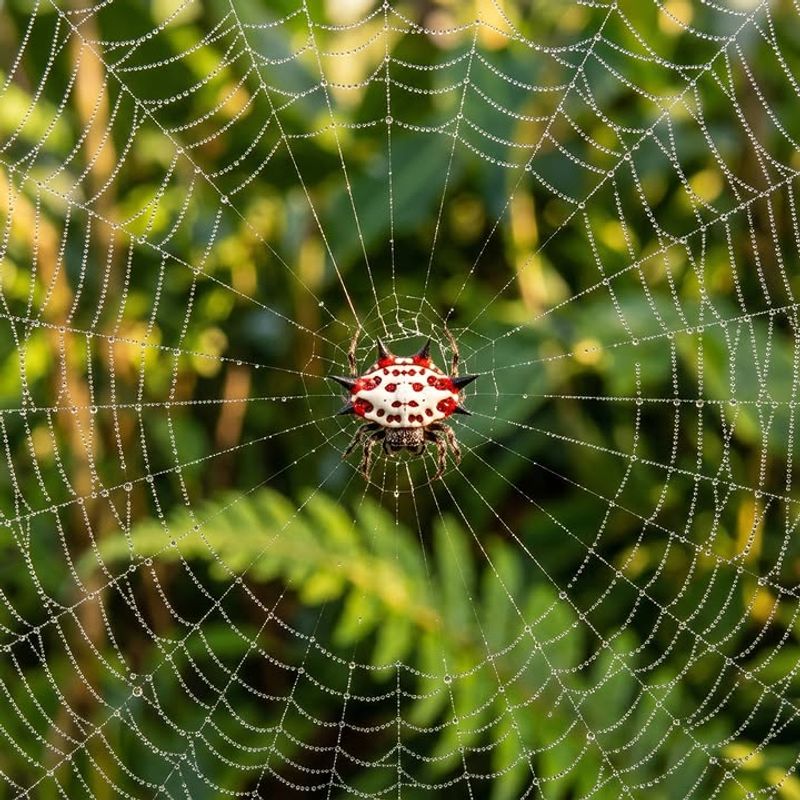
Tucked into the branches of a Texas shrub or stretched across a low garden hedge, a small but wildly shaped spider might catch your eye and make you do a double take.
Spiny orb weavers, sometimes called crab spiders or kite spiders, have a wide, flattened body covered in pointed spines that make them look almost prehistoric.
Their unusual shape tends to alarm people who are not expecting to find something so ornate hiding near their plants.
Despite their dramatic appearance, spiny orb weavers are quite small. Their body is often no bigger than a thumbnail, though the spines make them appear larger.
They spin small, tidy orb webs in shrubs, along fence lines, and around the edges of flower beds, often at a height that puts the web right at face level for someone walking through the garden.
Your Texas Garden Changes Every Week. Your Plan Should Too.
Gardening in Texas changes quickly throughout the season. Every Friday you’ll receive a simple weekly plan showing exactly what to plant, prune, fertilize, harvest, and protect so you never miss the right timing.
Like other orb weavers, they catch flying insects that blunder into their webs. Gnats, small moths, and other soft-bodied insects are common prey.
In a Texas landscape with lots of warm-season plantings and active insect populations, these spiders stay busy through much of the year.
Homeowners who spot them near their shrubs can simply walk around them and let them work. Spiny orb weavers are not considered a threat to people, and their webs are usually small enough that they are easy to spot and avoid during routine garden tasks.
3. Green Lynx Spiders Hunt On Garden Plants
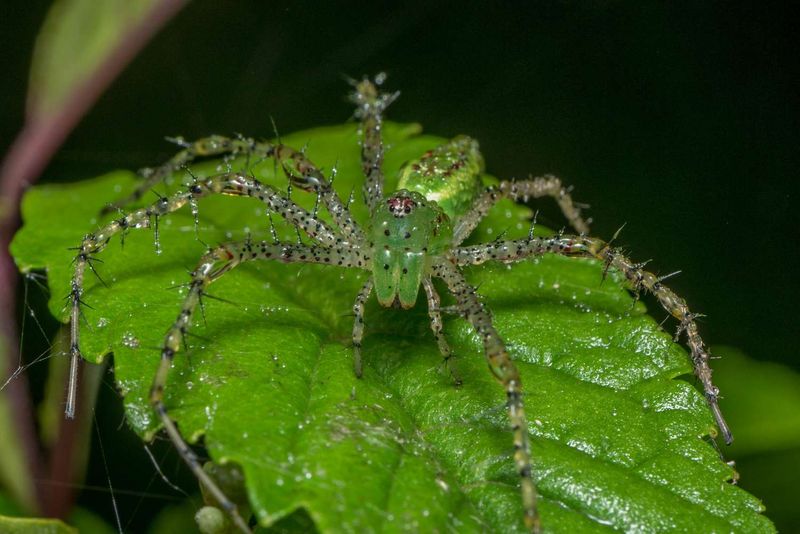
Blending almost perfectly into the stems and leaves of garden plants, the green lynx spider is a natural hunter that many Texas gardeners walk right past without ever noticing.
Bright lime green with small spiny projections on its legs and large, alert eyes, this spider does not build a web to catch its meals.
Instead, it waits, watches, and then lunges at insects that land nearby.
Green lynx spiders are commonly found on flowering plants, vegetable crops, and native wildflowers across Texas. They seem especially fond of plants with dense foliage or lots of blooms where insect traffic is heavy.
Caterpillars, moths, wasps, and various garden beetles are among the insects they may catch. Their speed and accuracy when striking are genuinely impressive for a spider their size.
Female green lynx spiders can grow fairly large, and during late summer and fall, they guard egg sacs attached to plant stems with notable intensity. A female protecting her eggs may rear up on her legs and look quite threatening if you reach near her accidentally.
That posture is the main reason people find them alarming.
Giving her space is the sensible approach. Once the eggs hatch and the spiderlings scatter, the female typically moves on.
In the meantime, she is keeping pest insects off your plants in a way that requires no sprays or effort on your part at all.
4. Wolf Spiders Patrol Soil And Mulch
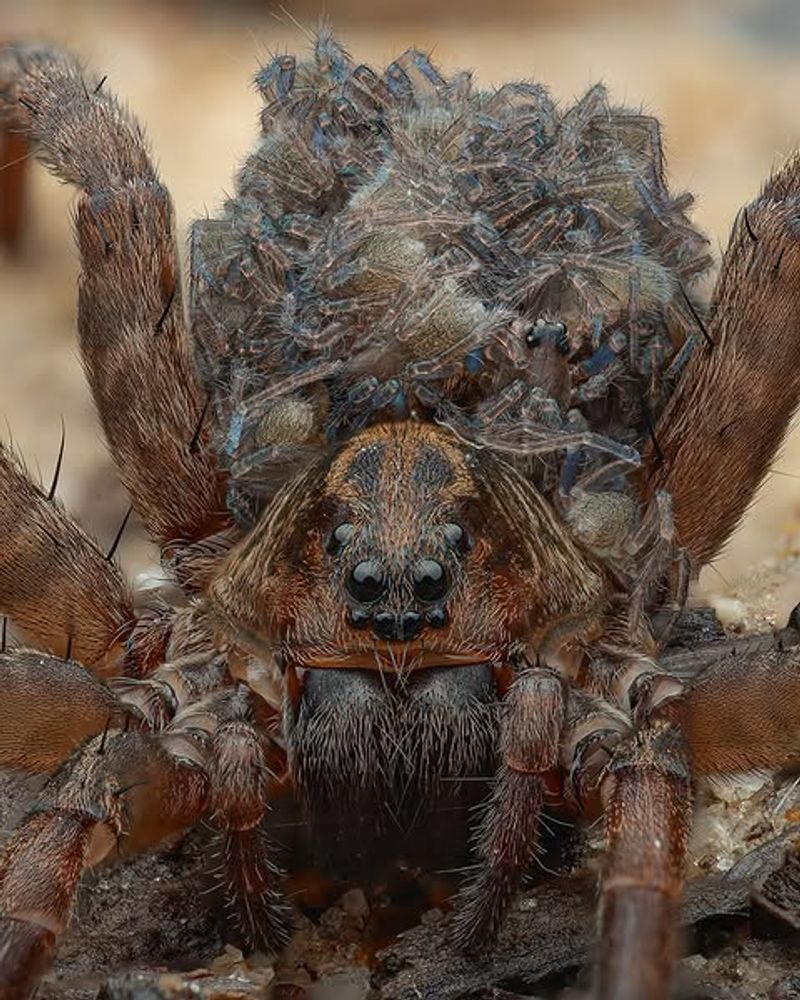
Flipping over a pot or pulling back a layer of mulch in a Texas garden bed and suddenly having a large, fast-moving brown spider sprint away is an experience that tends to get the heart racing. Wolf spiders have that effect on people.
They are big, hairy, quick, and they move in a way that feels unpredictable. But what they are actually doing is patrolling your garden floor for insects.
Wolf spiders do not build webs to catch prey. They are active hunters that roam soil surfaces, mulch edges, leaf litter, and ground cover looking for insects, grubs, and other small invertebrates.
In Texas gardens, they are active through much of the year because of the warm climate, and they tend to be most noticeable in spring and fall when temperatures are mild and insect activity picks up near the soil surface.
Female wolf spiders carry their egg sacs attached to their bodies, and after hatching, the tiny spiderlings ride on the mother’s back for a short time. If you happen to disturb a female carrying young, it can look overwhelming because dozens of tiny spiders scatter at once.
It is startling but completely harmless to you.
Rather than disturbing them, let wolf spiders do their work in your garden beds. They are one of the more effective ground-level insect hunters you can have in a Texas landscape, and they ask for nothing in return except a little undisturbed mulch.
5. Jumping Spiders Stalk Insects On Leaves
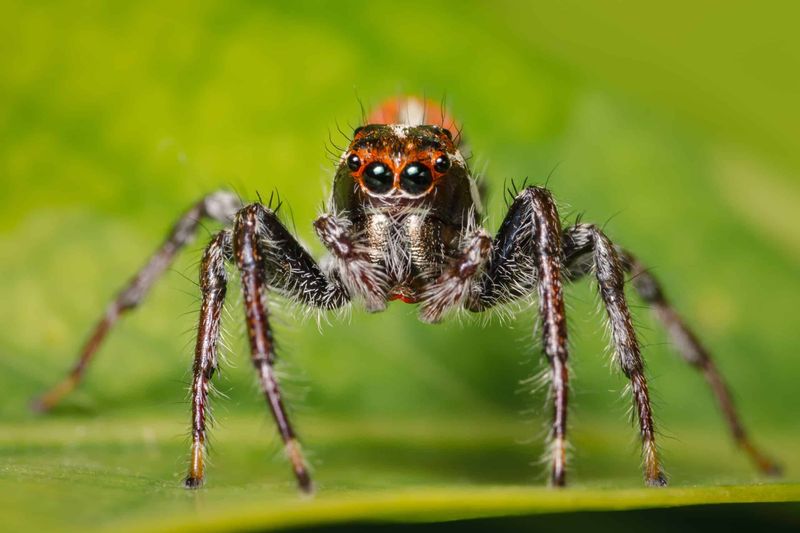
Few spiders in a Texas garden are as charming once you actually look closely at them as jumping spiders.
They have enormous front-facing eyes that give them an almost cartoon-like, curious expression, and they tend to turn and look directly at you when you approach, which some people find endearing and others find deeply unsettling.
Either way, they are some of the most skilled insect hunters in the garden.
Jumping spiders hunt entirely by sight. They stalk insects slowly across leaves, stems, and garden surfaces, then launch themselves with impressive precision to land on their target.
Their jumps can cover distances many times their own body length. In Texas gardens, they are active on warm, sunny days and can be spotted on vegetable leaves, flowering perennials, wooden fence boards, porch railings, and along the edges of raised beds.
They are relatively small, typically less than half an inch in body length, but their bold behavior and bright markings make them easy to notice.
Some species have iridescent colors or striking patterns that are genuinely beautiful under a magnifying glass or phone camera.
Jumping spiders are considered harmless to people and tend to retreat rather than stand their ground when approached.
Watching one hunt on your tomato plants or bean vines is a reminder that not everything in the garden working against pest insects looks like a wasp or a ladybug.
Sometimes it has eight legs and enormous eyes.
6. Crab Spiders Wait Around Flowers
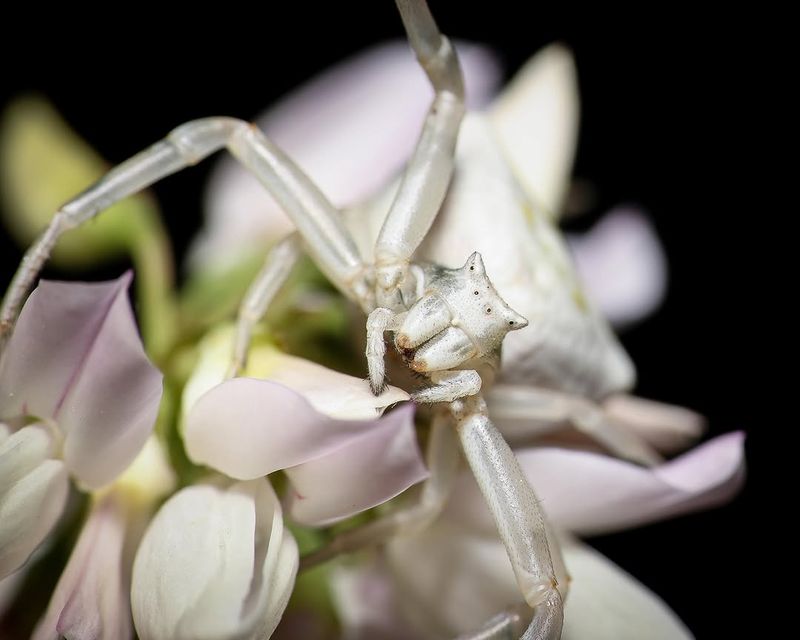
Sitting perfectly still on a flower petal, a crab spider is easy to miss until a bee or butterfly lands nearby and things move very fast.
Crab spiders are ambush hunters that position themselves on blooms and wait for pollinators or other flower-visiting insects to come close enough to catch.
Their wide, crab-like front legs are held open and ready, which is exactly where their common name comes from.
In Texas flower gardens and native plantings, crab spiders show up on coneflowers, black-eyed Susans, zinnias, and other blooms where insect traffic is steady.
Some species can slowly shift their body color to match the flower they are resting on, which helps them stay hidden.
A white crab spider on a white bloom can be nearly invisible until it moves.
Their presence on flowers does mean they occasionally catch beneficial insects along with pest species. That is simply part of how garden ecosystems work.
No predator in nature selects only pest insects with perfect precision. Even so, crab spiders play a role in the overall balance of insect activity in a Texas garden.
If you spot one on a bloom while deadheading flowers or checking your vegetable plants, simply work around it. These spiders are small and pose no real concern to gardeners.
Watching one wait in total stillness on a sunflower is a small but genuine reminder that your Texas garden is alive with activity at every level.
7. Grass Spiders Build Funnel Webs In Lawns
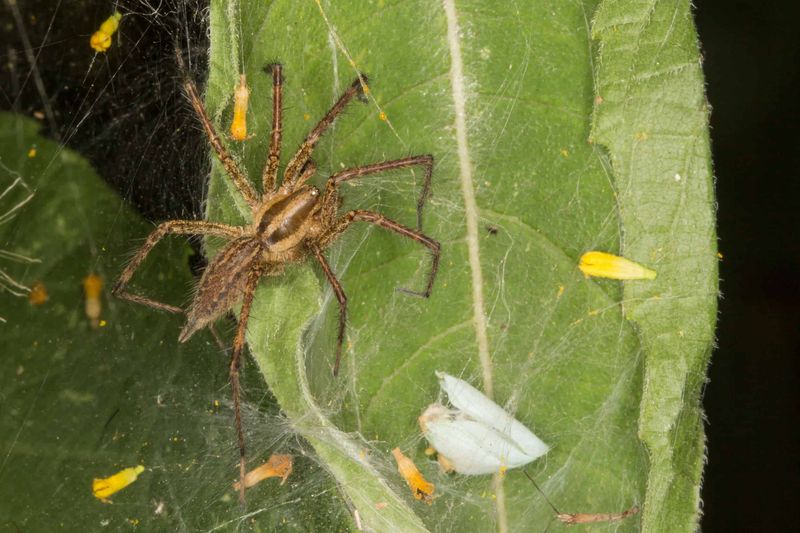
On a dewy Texas morning, a lawn can suddenly look like it has been decorated overnight with dozens of small, flat webs each leading into a narrow funnel disappearing into the grass.
These belong to grass spiders, and while the sight of all those webs can make some homeowners uneasy, it simply means the lawn has a healthy population of these quiet, useful hunters.
Grass spiders build sheet-like webs close to the ground with a funnel-shaped retreat at one end where the spider waits. When an insect walks across the flat web surface, the spider rushes out from the funnel, grabs it, and pulls it back inside.
They are fast and efficient, and their webs tend to be most visible in the early morning when dew collects on the silk.
In Texas, grass spiders are common in lawns, groundcover plantings, and low shrub beds throughout much of the year. They tend to stay low and hidden, and most homeowners never actually see the spider itself, only the webs.
The spiders themselves are brown and somewhat plain-looking, resembling wolf spiders but smaller and less bold.
There is no need to treat or remove grass spider webs from a lawn. The webs break down quickly and disappear once the dew dries.
These spiders are not considered a concern to people, and they are catching insects right at ground level where lawn pests like crickets and small beetles tend to travel.
8. Texas Tarantulas Help Control Insects
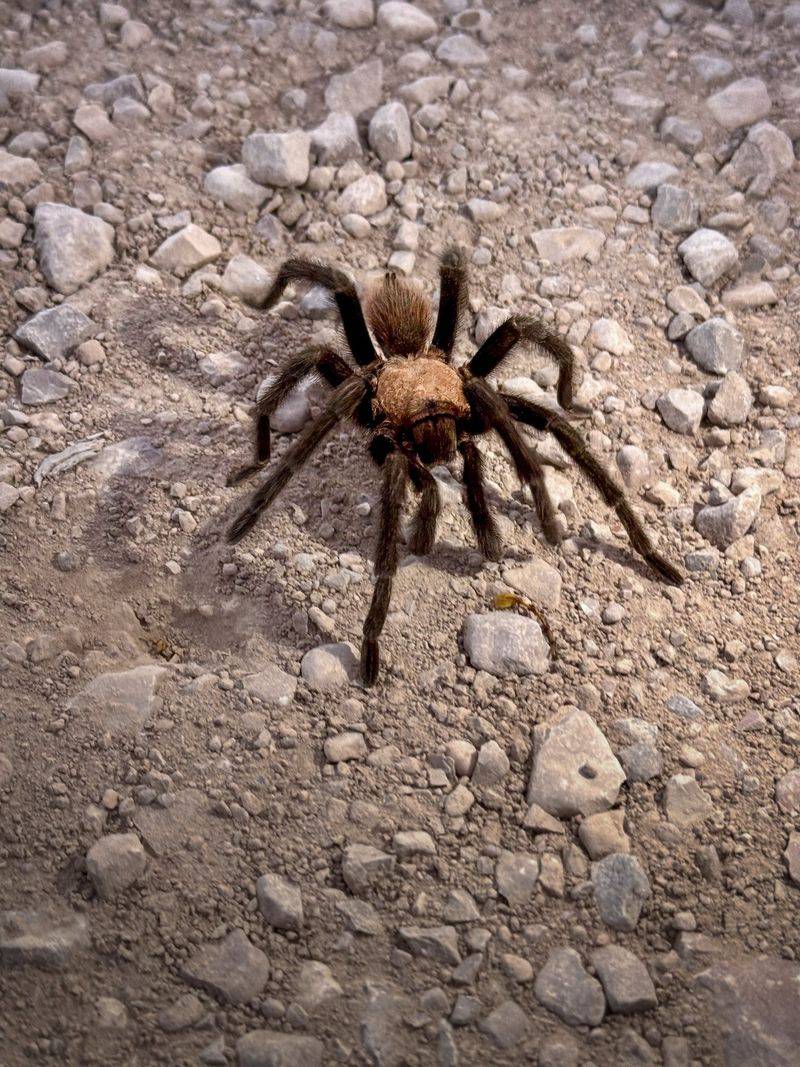
Few things stop a Texas homeowner cold on a warm fall evening like spotting a large, slow-moving tarantula crossing a gravel path or climbing a porch step.
The Texas brown tarantula is the largest spider most Texans will ever encounter in their own backyard, and its sheer size tends to trigger alarm even in people who are otherwise comfortable around spiders.
Despite their intimidating appearance, Texas brown tarantulas are generally slow-moving and non-aggressive. They spend much of their lives in burrows in dry, open ground, emerging mainly at night to hunt.
Their diet includes insects, beetles, grasshoppers, and occasionally other small invertebrates they encounter while roaming. In areas with heavy insect populations, they can be a surprisingly effective presence.
Male tarantulas are the ones most commonly seen wandering in fall, as they leave their burrows in search of mates. This is when homeowners in central and west Texas are most likely to encounter one crossing a driveway or yard.
The wandering males look large and purposeful, and they can cover a fair amount of ground in a single evening.
If you find a tarantula near your home, the best response is simply to observe it from a safe distance and let it move on. Avoid handling it, as even calm tarantulas may respond defensively if grabbed.
Watching one walk slowly through a Texas landscape on a quiet fall night is, for many people, one of the more memorable backyard wildlife encounters they will ever have.