Arizona Homeowners Are Replacing Their Oleander With These Native Privacy Plants
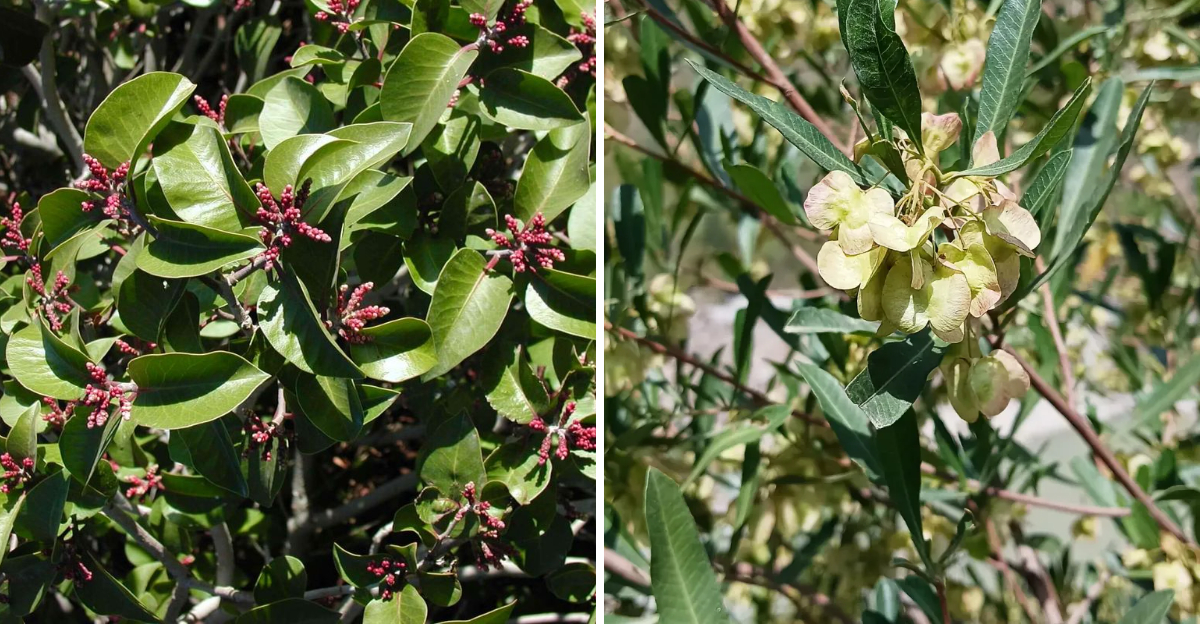
Oleander hedges have filled many Arizona yards for privacy, but many homeowners are starting to replace them as maintenance becomes harder over time.
What starts as a simple hedge often turns into a long-term task that takes more effort than expected.
Native plants are becoming a popular alternative because they handle heat, dry soil, and tough conditions without constant trimming. They grow in a more natural way and can still form solid privacy screens once established.
More people are now focusing on plants that stay manageable instead of growing into heavy maintenance jobs. Privacy still matters, but ease of care is becoming just as important when choosing what stays in the yard.
That is why oleander is slowly being replaced with native options that better match the climate and daily upkeep needs.
1. Arizona Rosewood Forms A Thick Evergreen Barrier
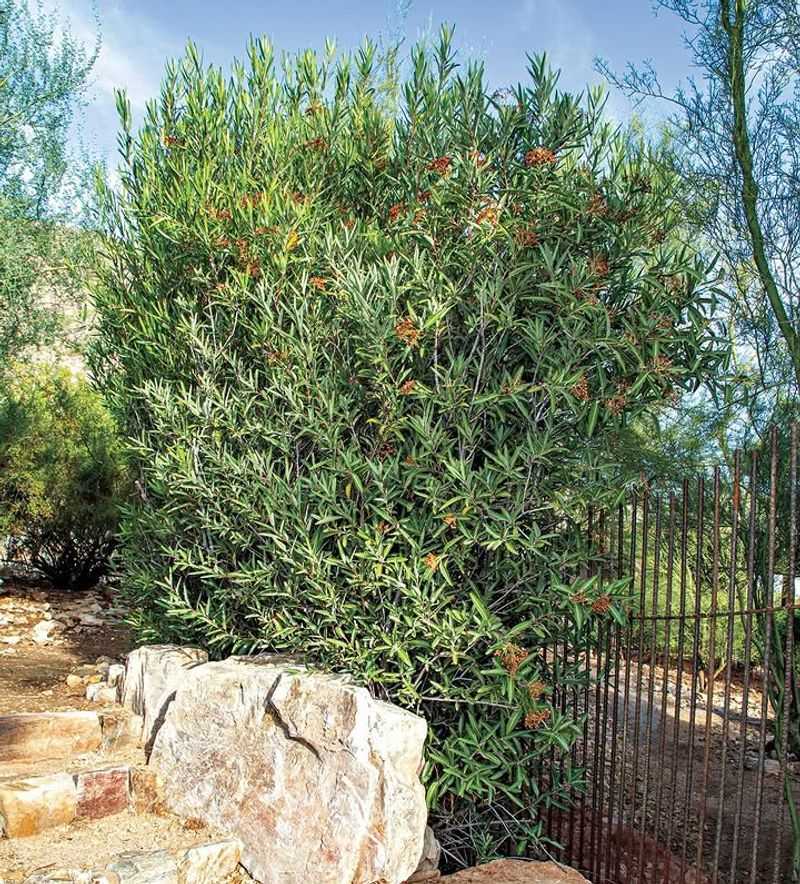
Arizona rosewood is one of those plants that earns more respect the longer you grow it. Vauquelinia californica stays green year-round, holds its shape without much pruning, and grows dense enough to block both sound and sightlines effectively.
It typically reaches 8 to 15 feet tall depending on water and soil conditions. The leathery, dark green leaves give it a refined look that blends well with both formal and naturalistic landscapes.
White flower clusters appear in late spring and bring in pollinators.
This shrub handles full sun without complaint and adapts to rocky, well-drained soils. Supplemental water during the first two summers helps roots establish, but after that, natural rainfall often carries it through.
Deep, infrequent watering is better than frequent shallow irrigation.
One of its strongest qualities is cold tolerance. Arizona rosewood handles overnight freezes that damage more tender plants, making it reliable even in higher elevation yards in Flagstaff and surrounding areas.
Planting it along a property line gives you a living wall that never looks bare. Birds use the dense branching for nesting cover.
Compared to oleander, which drops toxic sap, this plant is a far safer and more ecologically useful choice for any family yard in the region.
Over time, it becomes one of those background plants you stop worrying about because it simply holds its structure and purpose through every season.
2. Jojoba Provides Privacy With Minimal Water
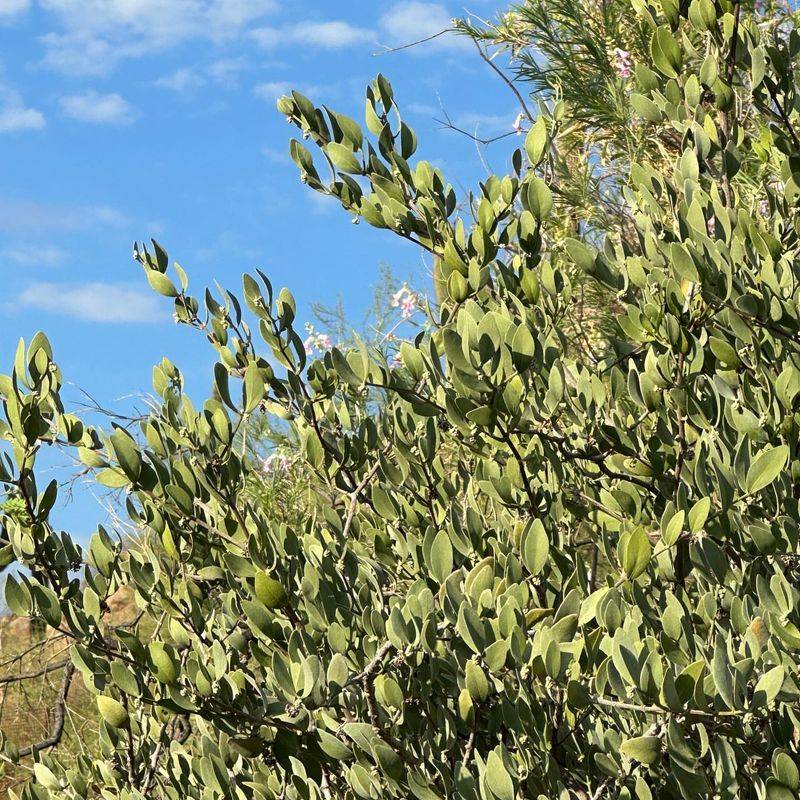
Jojoba has been living in the Sonoran Desert for thousands of years without anyone watering it. That track record says a lot.
Simmondsia chinensis is one of the most drought-adapted native shrubs available, and it doubles as a surprisingly effective privacy screen.
It grows slowly but steadily, reaching 5 to 10 feet tall over several years. The thick, waxy leaves reflect sunlight and hold moisture internally, which is exactly how it survives brutal summer heat.
Once established, jojoba needs almost no supplemental irrigation.
The dense branching pattern fills in from the ground up, which is ideal for blocking low sightlines near fences or gates. Birds and small mammals use it for shelter and food.
Female plants produce seeds that are a known food source for quail and other native wildlife.
Jojoba is also dioecious, meaning male and female plants are separate. Planting a mix of both ensures seed production if wildlife habitat is a goal.
Your Arizona Garden Changes Every Week. Your Plan Should Too.
Gardening in Arizona changes quickly throughout the season. Every Friday you’ll receive a simple weekly plan showing exactly what to plant, prune, fertilize, harvest, and protect so you never miss the right timing.
Even a single plant adds meaningful coverage along a property line.
Soil drainage matters more than soil richness for jojoba. Sandy, gravelly ground is ideal.
Avoid areas where water pools after rain. In the right spot, this plant asks for almost nothing and gives back consistent, year-round coverage that holds up even in the hottest stretches of summer.
One surprising detail is that jojoba can live for decades, staying structurally strong and useful once established in the landscape.
3. Desert Hackberry Grows Into A Reliable Living Screen
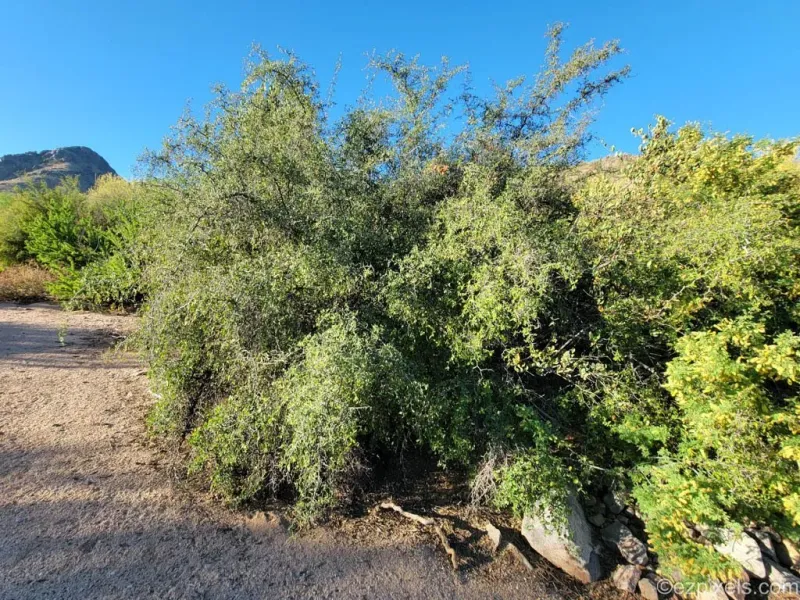
Not every privacy plant needs to look polished to do its job well. Desert hackberry, Celtis pallida, is a tough, thorny native shrub that grows into a dense, nearly impenetrable screen over time.
It is not glamorous, but it works.
It can reach 6 to 12 feet tall with a wide, arching spread. The thorny branches interlock as the plant matures, creating a barrier that deters foot traffic while blocking sightlines.
That combination makes it especially useful along back fences or property edges.
Desert hackberry produces small orange-red berries that birds absolutely love. Mockingbirds, thrashers, and cactus wrens visit regularly during fruiting season.
Planting it is essentially setting up a free bird feeder that never needs refilling.
Water needs are very low once established. It handles reflected heat, caliche soils, and low rainfall without significant stress.
A deep watering every few weeks during summer establishment is usually enough to get roots going.
Pruning is optional. Left to grow naturally, it forms a layered, irregular shape that blends into desert surroundings.
If a tidier look is preferred, light shaping in late winter keeps it manageable without reducing coverage.
It becomes a quiet, reliable boundary plant that holds its form and function without needing constant attention.
4. Quailbush Handles Harsh Conditions While Adding Coverage
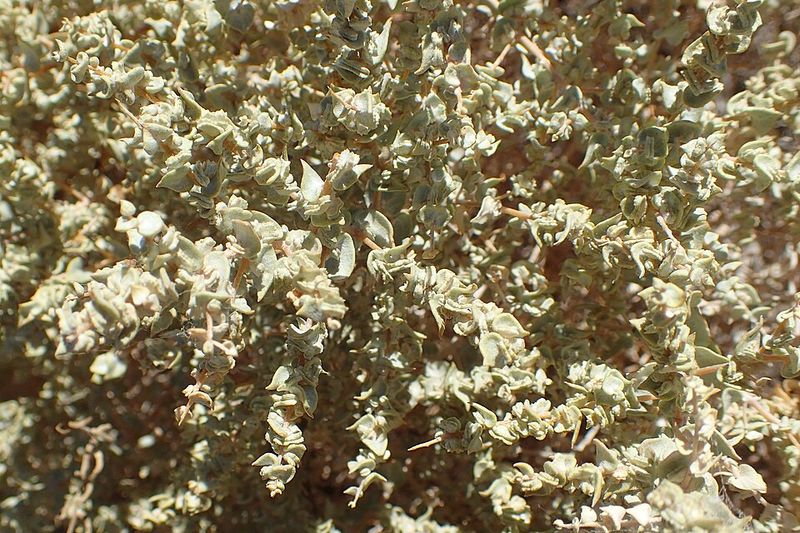
Quailbush earns its place in the harshest corners of any yard. Atriplex lentiformis is built for heat, salt, and alkaline soils that would stress most other plants.
If you have a difficult spot along a wall or roadside that nothing else wants to grow in, quailbush often fills it without complaint.
It grows quickly to 6 to 10 feet tall with a wide, rounded form. The silver-gray foliage reflects heat and gives the plant a soft, muted look that pairs well with desert gravel and rock.
Coverage comes fast compared to slower-growing natives.
True to its name, quail absolutely flock to this plant. It provides dense, low cover that ground-nesting birds rely on for shelter and escape from predators.
Planting it near a fence line creates both a privacy screen and a wildlife corridor in one move.
Water needs are low to moderate. During establishment, deep watering every week or two helps roots anchor.
After the first full growing season, natural rainfall typically sustains it in most low-desert locations without supplemental irrigation.
One thing to know: quailbush can spread by seed in moist conditions. Removing seed clusters before they drop keeps spread in check.
With minimal management, it holds its space, blocks unwanted views, and adds real ecological value to yards across the low desert region.
In return, it also brings steady seasonal structure to the landscape, holding its form through heat and wind without needing frequent upkeep.
5. Littleleaf Cordia Helps Block Unwanted Views
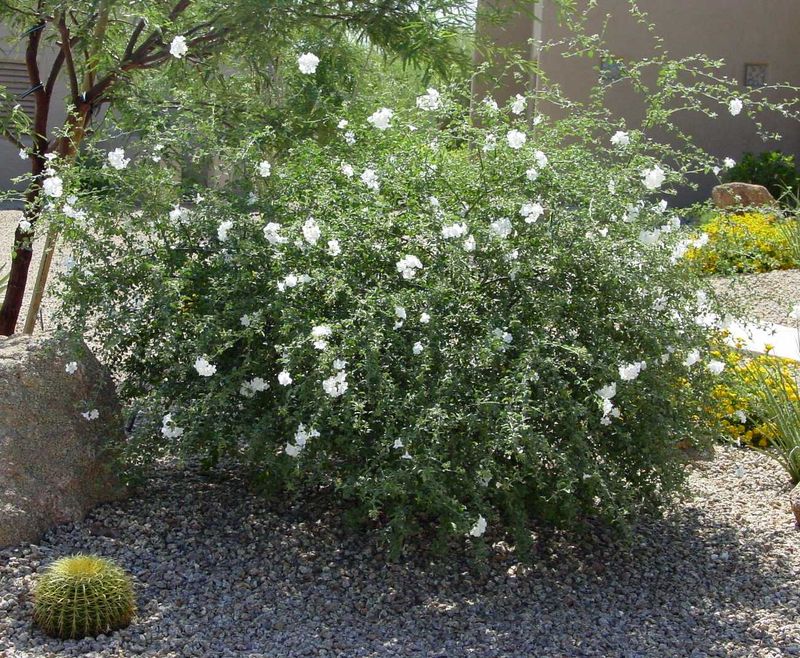
Littleleaf cordia does not always get the attention it deserves. Cordia parvifolia is a compact, drought-hardy native shrub with a naturally rounded shape that works well as a privacy planting along walls, paths, or property lines.
It typically grows 4 to 6 feet tall and wide, which makes it a good mid-height option for spots where taller plants would feel overwhelming. The small, rough-textured leaves stay on year-round in milder winters, giving consistent coverage through most of the year.
White tubular flowers appear repeatedly throughout the warm months. Those blooms bring in native bees, hummingbirds, and butterflies with impressive regularity.
Few desert shrubs offer that level of pollinator activity across such a long season.
Full sun and well-drained soil are the main requirements. Littleleaf cordia handles reflected heat from walls and concrete without significant leaf scorch, which is a real advantage in urban yards.
Established plants need very little supplemental water during cooler months.
Planting several in a loose row creates a soft, informal screen that feels natural rather than forced. It will not block views as completely as a taller shrub, but layering it in front of a larger plant like rosewood or jojoba adds depth and density to the overall screen.
For a mid-layer privacy solution with strong wildlife value, this is a reliable and underused option in desert landscapes.
6. Sugar Bush Provides Year-Round Privacy
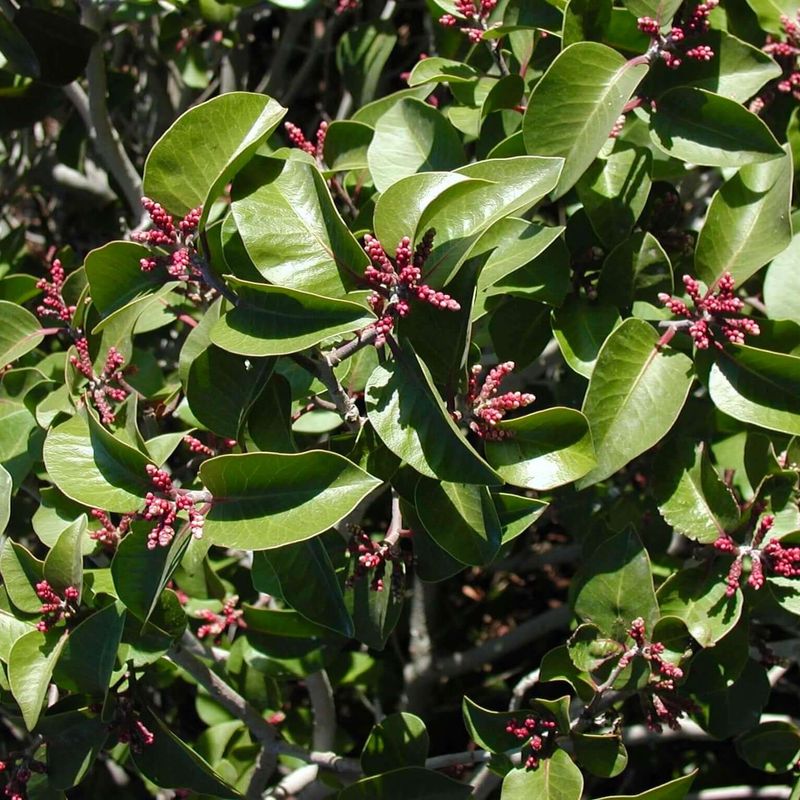
Sugar bush is the kind of plant that makes neighbors ask what it is. Rhus ovata has large, glossy, deep green leaves that look almost tropical but survive on desert rainfall.
That contrast between lush appearance and low water need is what makes it stand out.
It grows 6 to 12 feet tall with a dense, rounded canopy. The thick leaf coverage blocks sightlines effectively year-round.
In spring, clusters of small pinkish-white flowers appear at branch tips and attract bees and butterflies. Red sticky berries follow and draw birds through summer and fall.
Sugar bush performs best in full sun to partial shade with excellent drainage. Rocky hillside soils work well.
In flat urban yards, amending planting areas with gravel or planting on a slight berm helps prevent root rot during heavy monsoon rains.
Cold hardiness is solid. It handles temperatures down to around 15 degrees Fahrenheit, making it a good choice for higher elevation yards as well as low-desert locations.
Once roots are established after two to three seasons, supplemental watering becomes minimal.
Pruning is rarely needed. Sugar bush naturally maintains a full, tidy shape without much intervention.
For homeowners wanting a polished-looking privacy screen that blends beauty with function, this shrub delivers consistently across a wide range of desert conditions and yard types.
This shrub also serves as a reliable native option for stabilizing slopes and supporting local wildlife without demanding extra care.
7. Evergreen Sumac Forms A Durable Natural Screen
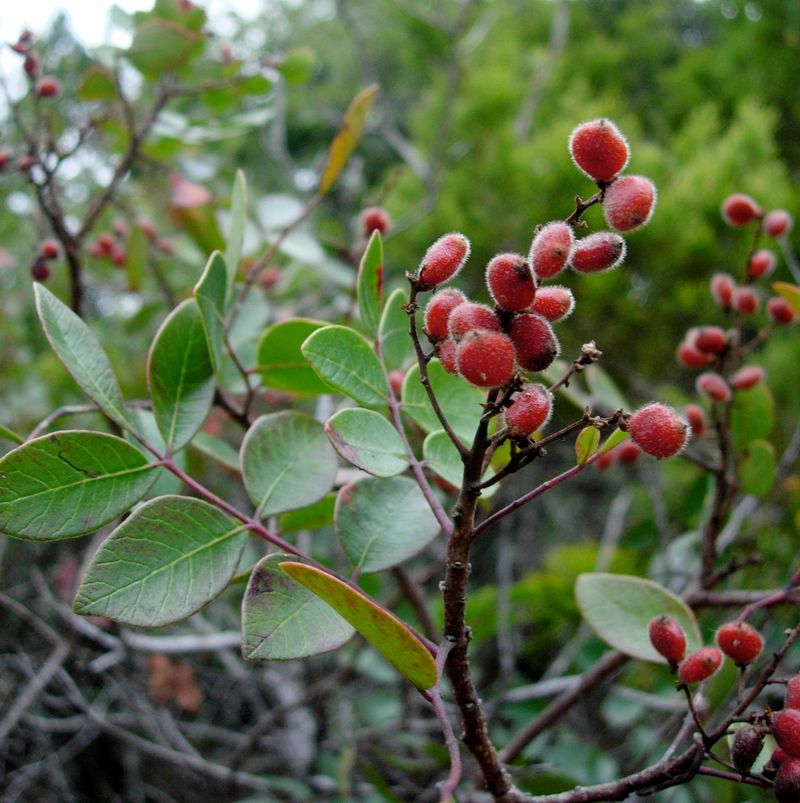
Evergreen sumac is tougher than it looks. Rhus virens holds its small, glossy leaves through winter cold and summer heat alike, making it one of the most reliably year-round native screens available in the desert Southwest.
It grows 6 to 12 feet tall and spreads nearly as wide. The branching structure is dense from the base up, so there are no gaps at the bottom where sightlines sneak through.
That ground-level density is something many tall shrubs fail to deliver.
Small white flower clusters appear in late summer and transition into red berries by fall. Birds, especially mockingbirds and robins during migration, feed heavily on those berries.
Planting evergreen sumac along a fence line essentially builds a seasonal rest stop for passing wildlife.
It adapts well to a range of soil types, including rocky caliche-heavy ground that discourages other plants. Once established after two seasons of regular deep watering, it handles drought with minimal stress.
Avoid overwatering, as standing moisture around roots causes more problems than dry spells.
Light shaping in late winter keeps the form tidy if needed, but many homeowners leave it completely natural. Compared to oleander, evergreen sumac is non-toxic, wildlife-friendly, and far better suited to the ecological conditions of the region.
It is a straightforward, no-fuss choice that rewards patience with solid, lasting coverage.
8. Hopbush Creates A Dense Natural Screen
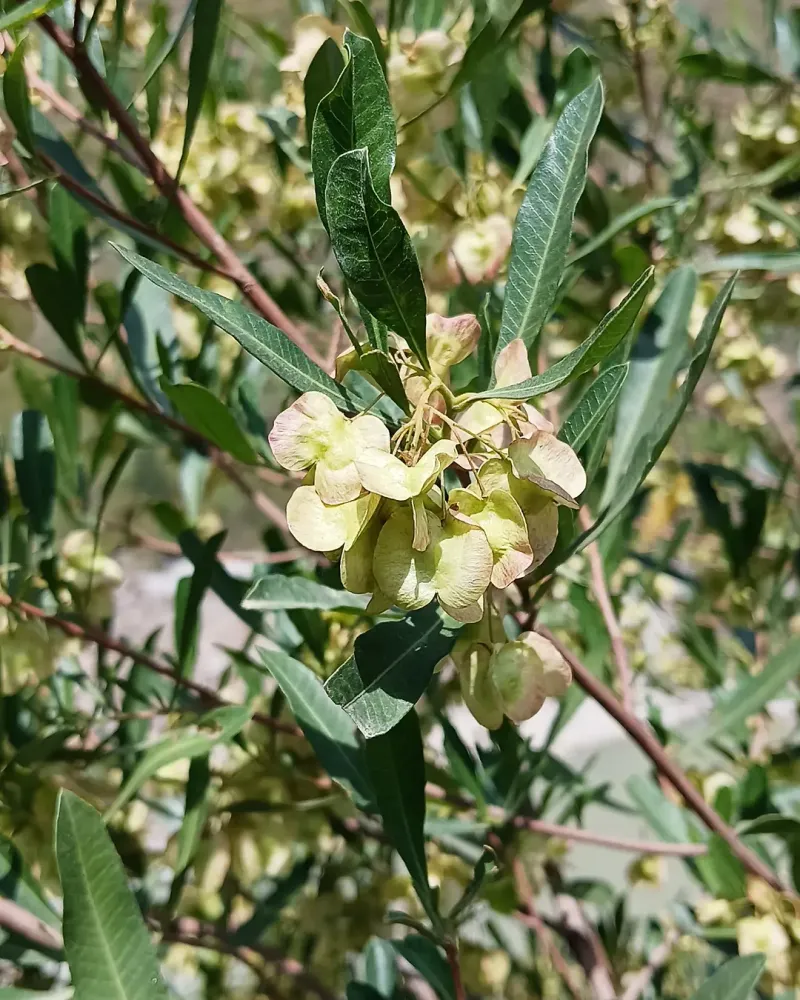
Few native shrubs pack as much screening power into a small footprint as hopbush. Known botanically as Dodonaea viscosa, this plant grows fast and fills in thick.
It can reach 10 to 15 feet tall with a spread that naturally blocks sightlines from neighbors or the street.
Hopbush thrives in full sun and handles reflected heat well. That makes it a strong performer in urban yards with concrete walls and south-facing exposures.
Once established, it survives on minimal supplemental water.
The foliage is narrow, dense, and often tinged with purple in the bronze-leafed variety. That color adds visual interest beyond just privacy.
Clusters of papery seed pods appear in late summer and attract birds to the yard.
Planting hopbush in a staggered row creates a living fence that looks natural rather than manicured. Space plants about 5 to 6 feet apart to allow full spread while still achieving solid coverage within a couple of seasons.
Maintenance is minimal. A light trim once a year keeps it tidy without stressing the plant.
For homeowners wanting fast, reliable coverage with low inputs, hopbush is hard to beat in desert climates.
Its adaptability across dry, windy, and reflective conditions is what allows it to stay reliable long after many faster-growing shrubs start to struggle.
It also tolerates a wide range of soil types as long as drainage is good, which makes it easier to establish in yards where other screening shrubs may struggle.