The Indiana Lawn Pests Most Homeowners Mistake For Drought Damage
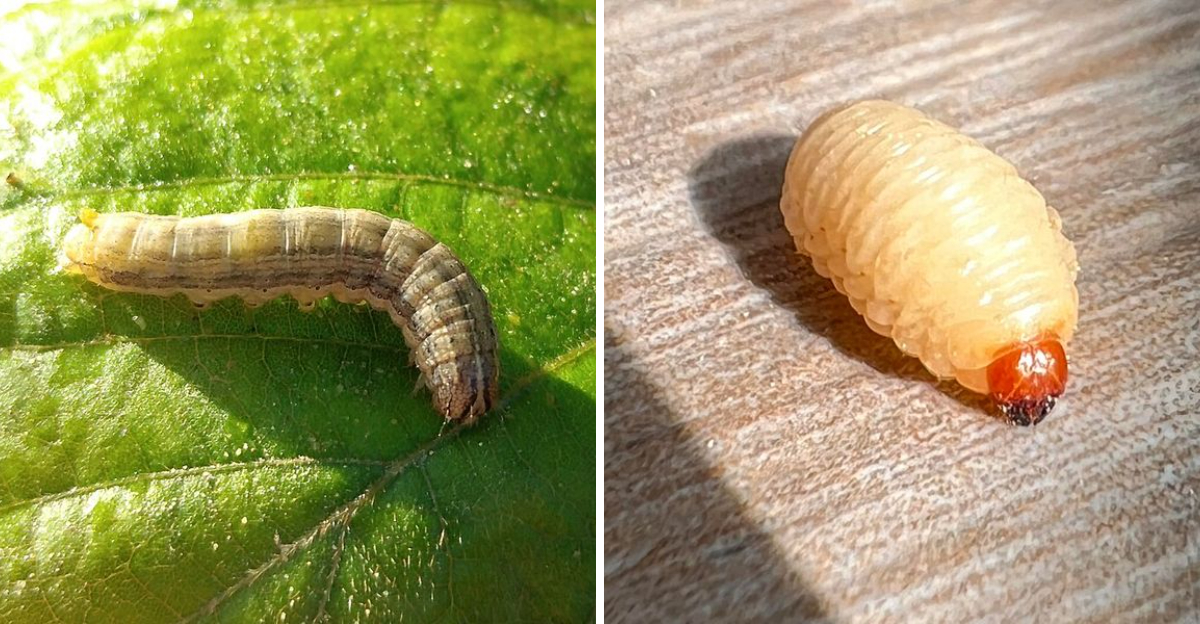
Your lawn looked fine last week. Now it looks like it gave up.
Brown patches are spreading across the grass, the blades are thinning, and every sign points to drought stress, except you have been watering on schedule.
Here is what most Indiana homeowners never consider: some of the most damaging lawn pests in the state are invisible until the harm is already done.
They live underground, feed at night, and leave behind damage that mirrors dry weather so closely that even experienced gardeners get fooled. You water more, the problem gets worse, and the real cause keeps spreading beneath your feet.
Six specific pests are responsible for a large share of misdiagnosed brown lawns across Indiana every summer.
Each one leaves behind a distinct set of clues, and once you know what to look for, you will never mistake pest damage for drought again.
White Grubs
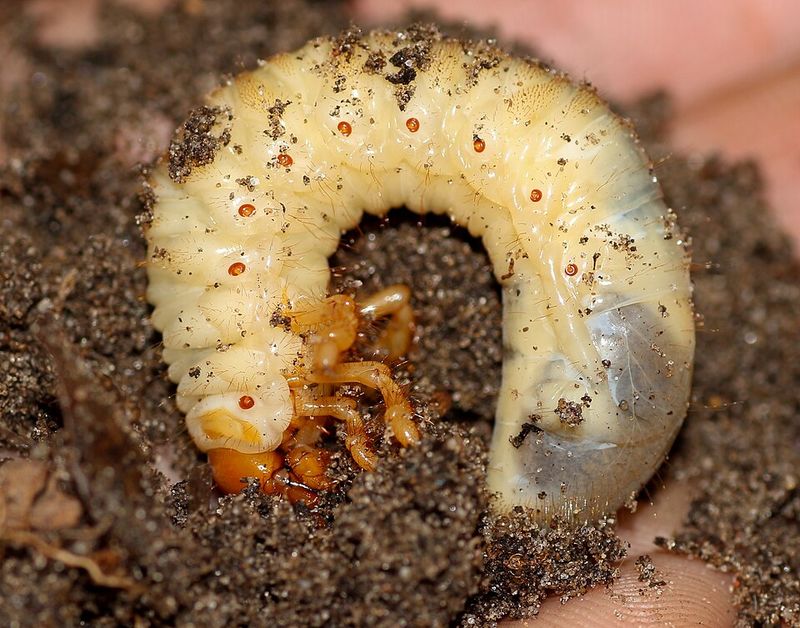
Pull back a patch of brown grass and you might find the culprit curled up right beneath your feet.
White grubs are the larvae of beetles like Japanese beetles and masked chafers. They spend the summer feeding on grass roots just below the soil surface.
Because they sever roots, the grass above loses its water supply completely. That is why the damage looks so much like drought stress.
A simple tug test tells you everything. Grab a handful of brown grass and pull gently.
If the turf lifts like loose carpet, grubs have eaten through the roots. Healthy drought-stressed grass holds firm when tugged.
Grub damage usually appears in late July through September in Indiana. Hot, dry summers make infestations worse because female beetles prefer laying eggs in dry, sunny turf.
Check for damage by cutting a one-square-foot section of sod about three inches deep. Finding three or more grubs per square foot means treatment is needed.
Biological controls like beneficial nematodes work well when applied in late summer. Neem oil products can also reduce populations without harsh chemicals.
Preventive grub treatments applied in June or July are the most effective option. Curative treatments work too but act more slowly after damage has already begun.
Skunks and moles digging up your lawn are another telltale sign of a grub problem. Those animals are not random visitors; they are hunting a meal underground.
White grubs thrive in compacted, poorly draining soil. Aerating your lawn each fall reduces the conditions that make it attractive to egg-laying beetles in the first place.
If you have had a grub problem before, do not wait for symptoms to appear again. A history of infestation in Indiana lawns is one of the strongest predictors of a repeat problem the following season.
Catching white grubs early is the difference between patching a few spots and reseeding your entire lawn. Do not let what looks like a dry spell turn into a much larger problem.
Chinch Bugs
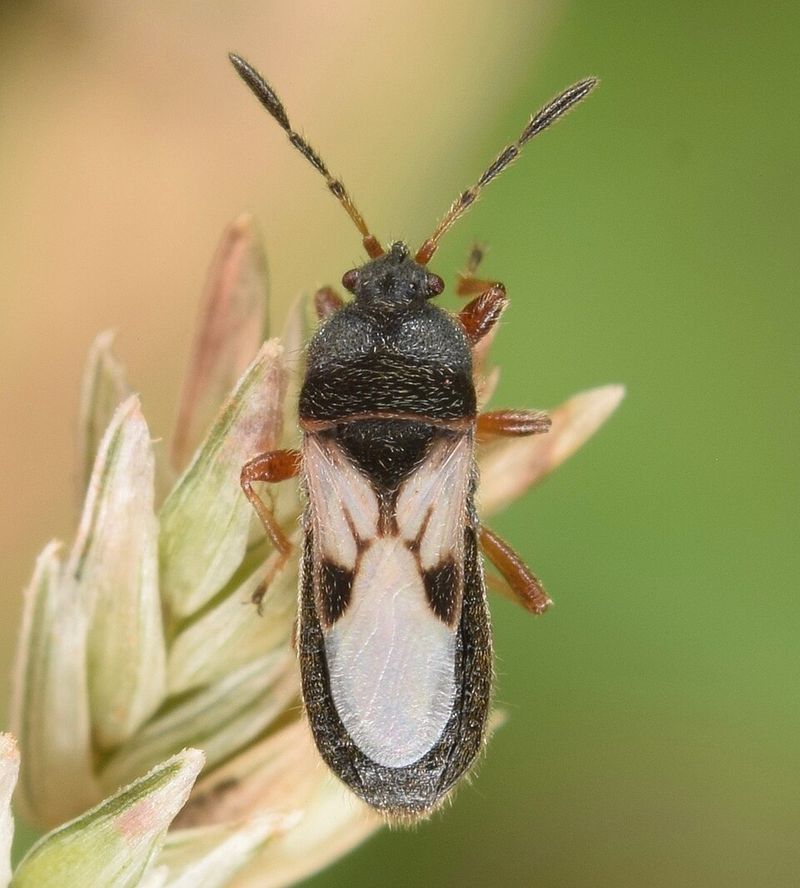
Chinch bugs are tiny, but they punch way above their weight class when it comes to lawn destruction.
Your Indiana Garden Changes Every Week. Your Plan Should Too.
Gardening in Indiana changes quickly throughout the season. Every Friday you’ll receive a simple weekly plan showing exactly what to plant, prune, fertilize, harvest, and protect so you never miss the right timing.
These small black-and-white insects measure less than a quarter inch long. They feed by piercing grass blades and sucking out the juices while injecting a toxin that blocks water movement.
The result is grass that turns yellow, then straw-colored, then brown in spreading irregular patches. Sound familiar? Most homeowners reach for the hose instead of a magnifying glass.
Chinch bugs love hot, sunny, dry conditions. Lawns with thick thatch layers are especially vulnerable because thatch gives them a cozy hiding spot.
To check for chinch bugs, try the float test. Remove both ends of a coffee can and push it several inches into the soil at the edge of a damaged area.
Fill the can with water and watch for tiny insects floating to the surface within ten minutes. Spotting even a few confirms an active infestation.
These pests thrive in Kentucky bluegrass and perennial ryegrass, both common in Indiana yards. Damage tends to start near driveways, sidewalks, and other heat-absorbing surfaces.
One thing that works in your favor is timing. Catching chinch bugs before mid-August gives your grass enough growing season left to recover on its own with minimal intervention.
Reducing thatch through dethatching or aeration removes their shelter and makes treatments more effective. Watering deeply but infrequently also stresses chinch bugs while keeping grass healthier.
Insecticidal soaps and pyrethrin-based sprays can manage smaller populations. For larger outbreaks, a licensed lawn care professional may recommend a targeted pesticide application.
The tricky part is that chinch bug damage and drought damage look almost identical side by side. Trust the float test, not your gut feeling, before you waste water on a pest problem.
Billbug Larvae
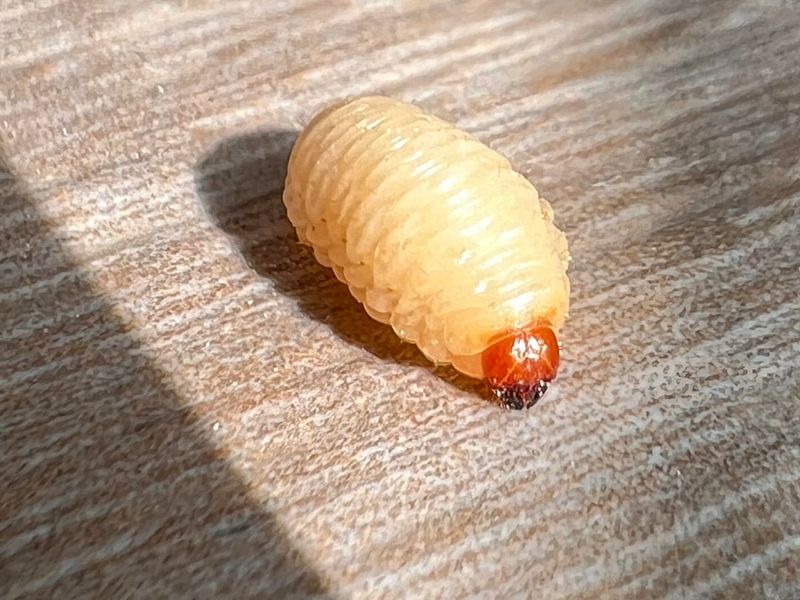
Billbug larvae might be the sneakiest pest on this list, and most Indiana homeowners have never even heard of them.
Adult billbugs are small weevils that lay eggs in grass stems during late spring. The larvae hatch and begin feeding inside the stem before moving down to attack the crown and roots.
Because damage starts inside the plant, you often do not notice anything wrong until midsummer. By then, large patches of turf are already brown and thinning fast.
One easy way to identify billbug damage is to tug on brown grass stems. The stem will snap off cleanly near the soil, and you may see a sawdust-like frass at the break point.
That powdery residue is a clear giveaway. Drought does not leave behind sawdust.
Billbug larvae are legless, creamy white, and about a half inch long when fully grown. They are often found just below the soil surface or inside the thatch layer.
Zoysiagrass and Kentucky bluegrass are their favorite targets in the Midwest. Lawns with heavy thatch are at higher risk because adults prefer laying eggs in dense turf.
Timing is everything with treatment. Targeting newly hatched larvae in June gives the best results before they burrow deeper into the soil.
Indiana’s warm summers shorten the treatment window considerably. Missing that June opportunity often means waiting until the following season to get the population under control.
Beneficial nematodes applied in early summer can reduce larval populations naturally. Some systemic insecticides also provide good control when applied at the right time of year.
Billbug damage is also easy to confuse with drought because the lawn does not respond to watering. If your grass stays brown despite consistent irrigation, that unresponsiveness is itself a clue worth investigating.
Keeping your lawn aerated and thatch under control goes a long way toward prevention. A healthy root system also helps grass recover faster after minor feeding damage occurs.
Sod Webworm
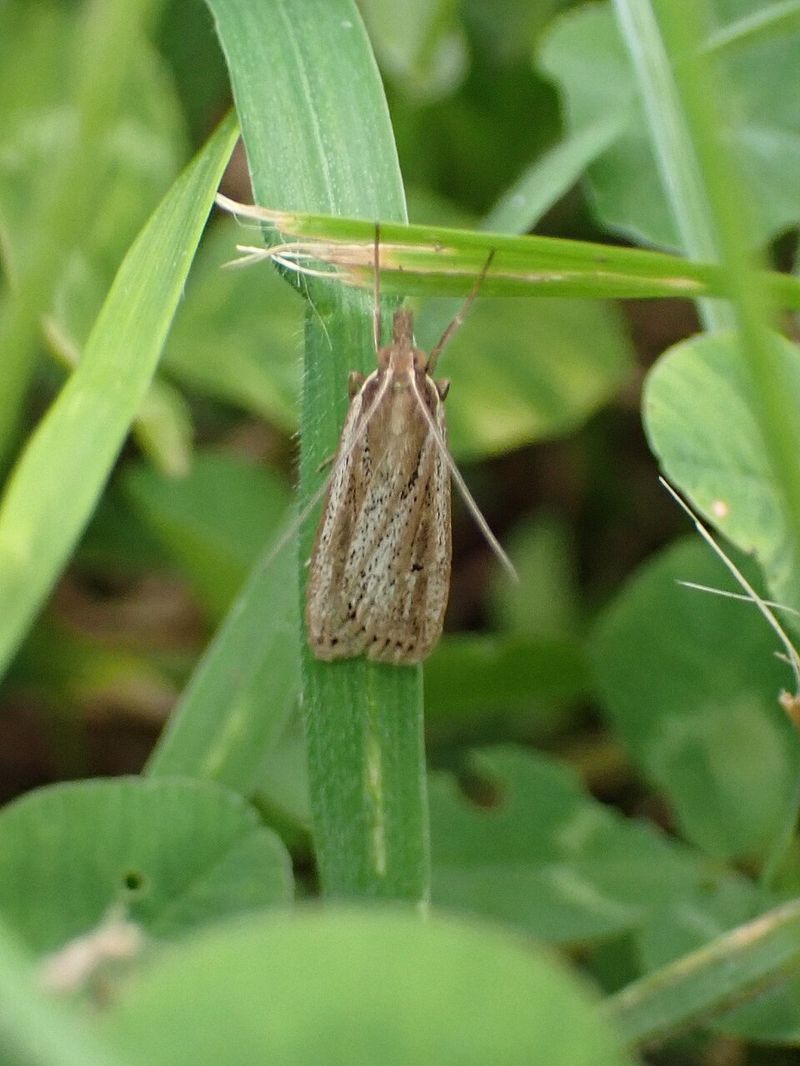
If you have ever noticed small tan moths zigzagging low over your lawn at dusk, you have already met the sod webworm’s parents.
Those moths are not the problem themselves. They are laying eggs in the turf, and the larvae that hatch are the ones doing serious damage to your grass.
Sod webworm larvae feed on grass blades at night, chewing them down close to the thatch layer. During the day, they hide in silk-lined tunnels woven through the thatch.
The damage appears as small, ragged brown patches that grow larger over the summer. Because the patches look dry and burned, most people assume the lawn just needs water.
A soap flush test reveals the truth quickly. Mix two tablespoons of dish soap in a gallon of water and pour it over a two-square-foot area at the edge of damage.
Sod webworm larvae will surface within minutes, wriggling up through the turf. Spotting several larvae confirms the infestation and rules out drought stress entirely.
Birds pecking aggressively at your lawn are another strong hint. Robins and starlings are expert hunters, and they follow the larvae like a buffet line.
Sod webworms tend to peak in Indiana from late June through August. Warm, dry summers accelerate their life cycle and lead to more generations in a single season.
Heavy thatch is their greatest ally. Lawns with more than half an inch of thatch give larvae the perfect environment to feed, hide, and overwinter without ever being exposed.
Bacillus thuringiensis, commonly called Bt, is a natural and effective treatment for young larvae. Spinosad-based products also work well and are safer for beneficial insects in your yard.
Catching webworm damage early saves you from a full reseeding project in September. Watch for those low-flying moths at sunset; they are your earliest warning sign.
Armyworms
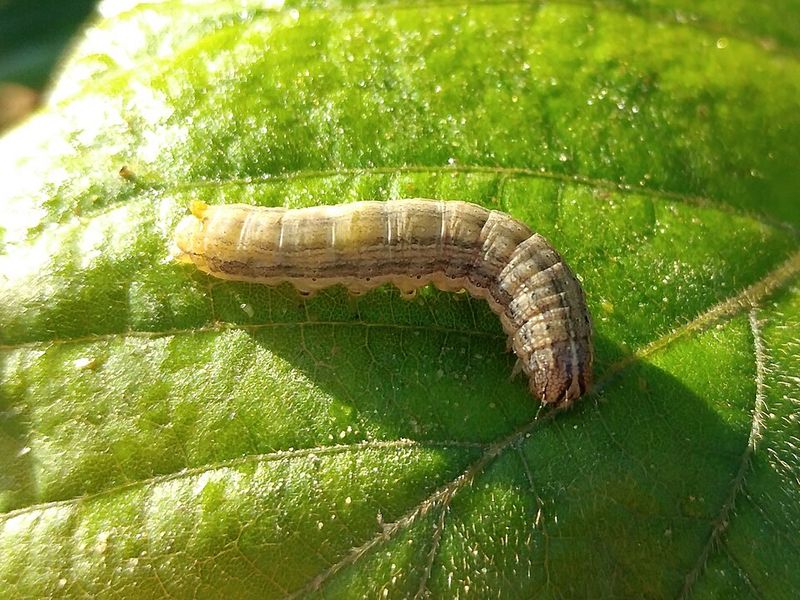
Image Credit: Wee Hong, licensed under CC BY-SA 4.0. Via Wikimedia Commons.
Armyworms earned their name for a reason: they travel in groups and consume everything in their path.
These caterpillars are the larvae of a night-flying moth, and they can strip a lawn nearly bare within days under heavy infestation.
Most homeowners wake up to sudden, widespread brown damage and assume a drought hit overnight.
Fall armyworms are the most destructive species in Indiana, typically showing up from August through October. They prefer well-fertilized, lush lawns, so a healthy yard is not always a protected one.
Armyworm caterpillars are greenish to brownish with distinct stripes running along their sides. They grow up to one and a half inches long and feed mostly at night or on cloudy days.
The damage pattern is one of the clearest clues. Armyworms tend to create large, spreading brown areas that move in a visible wave across the lawn.
Drought damage, by contrast, tends to appear in random patches tied to soil conditions or shade patterns. Armyworm damage looks more like something is actively marching through the turf.
Check by parting the grass near damaged edges and looking for caterpillars resting in the thatch. A soap flush also brings them to the surface quickly.
Birds following a moving brown line across your lawn is a classic armyworm signal. Where birds flock and feed, larvae are almost always present underneath.
Do not wait for a full infestation to confirm your suspicions. A single evening check along the damaged edge, flashlight in hand, is usually enough to spot active larvae before the situation gets out of control.
Spinosad and pyrethrin treatments applied in the evening give the best results. Treating at dusk targets larvae when they are most active and feeding.
Acting fast is the key with armyworms because populations explode quickly. The Indiana lawn pests most homeowners mistake for drought damage rarely move as fast as this one does.
Cutworms
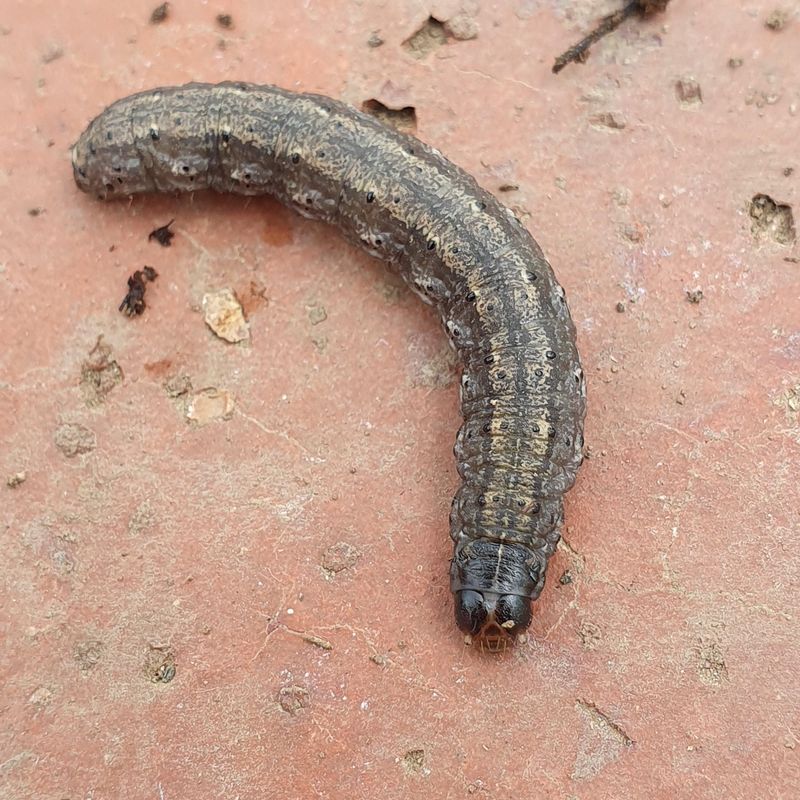
Cutworms are the quiet destroyers of the lawn pest world, working through the night while you sleep soundly inside.
These plump, smooth caterpillars curl into a tight C-shape when disturbed, which makes them easy to identify once you spot one. They feed at the soil surface, cutting through grass stems and crowns after dark.
The damage they leave behind looks like irregular brown patches scattered across the lawn. Because the grass is not pulled up, just severed and left in place, the scene mimics drought stress perfectly.
Cutworm damage tends to appear in late spring through early summer in Indiana. A second wave sometimes shows up in late August when a new generation of moths lays eggs.
Black cutworms and variegated cutworms are the most common species affecting home lawns in the Midwest. Both prefer areas with moist soil and dense thatch where they can hide during daylight hours.
To confirm cutworms, try a soap flush at dusk near the edge of a damaged patch. Larvae will surface within a few minutes, making identification straightforward.
You might also notice small holes in the soil near damaged areas where cutworms have burrowed down for the day. Those entry points are easy to miss but tell a clear story.
Cutworms rarely announce themselves until the damage is already visible, which is why a quick evening inspection once a week during peak season is worth building into your routine. Ten minutes with a flashlight can save you weeks of recovery work.
Beneficial nematodes applied in the evening to moist soil provide effective biological control. Pyrethrin-based sprays also work well when applied at dusk to catch larvae before they feed.
Mowing at the right height and reducing excess thatch limits hiding spots for future generations. Addressing Indiana lawn pests like cutworms early keeps small problems from becoming season-ending setbacks.