These Are The Ohio Native Plants That Can Replace Liriope Along Walkways And Actually Survive Brutal Winter
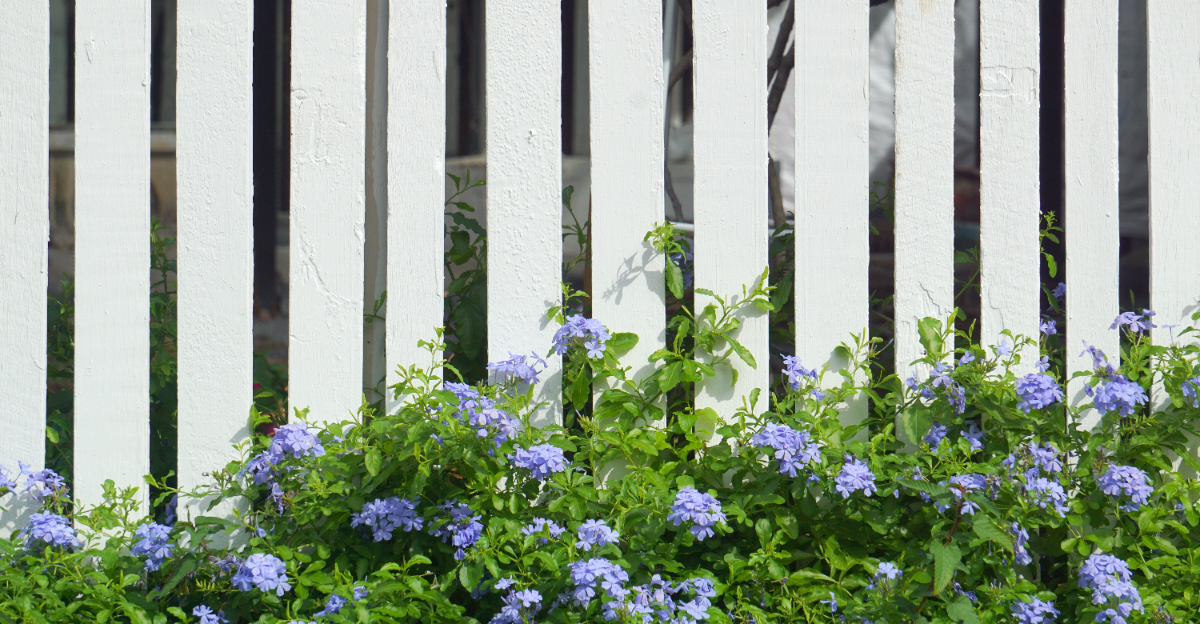
Liriope lines more Ohio walkways than any plant probably should. It became the default edging choice because it stays green, spreads reliably, and nobody has to think too hard about it.
But Ohio winters have a way of exposing its limits. Browning tips, winter burn along exposed edges, patches that thin out after a brutal freeze and never fully recover.
Every spring the same beds need the same cleanup and the same guesswork about what made it and what did not.
Our state has native plants that handle walkway edges with better winter hardiness, real wildlife value, and growth habits that stay tidy without annual rescue operations.
Some of them have been growing in the harshest conditions for thousands of years without anyone cutting them back in March to hide the damage. Your walkway edges can look better year round with plants that actually belong in this climate.
1. Pennsylvania Sedge Gives Walkways A Soft Native Edge
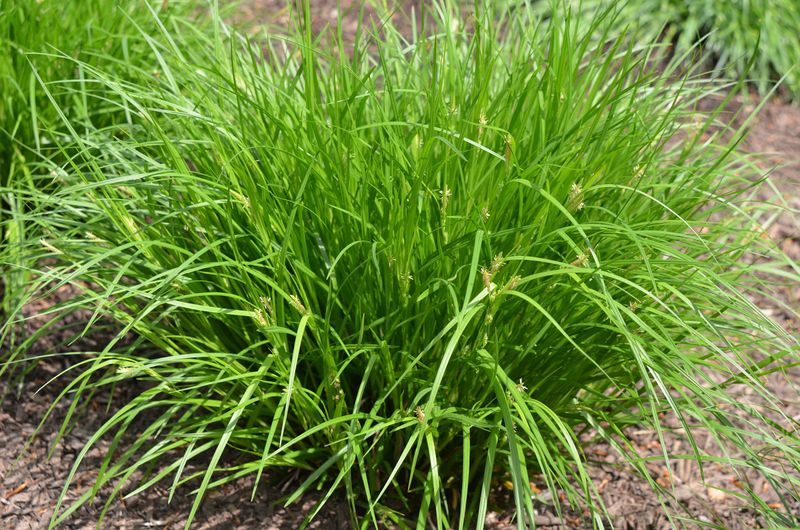
If you have ever wished liriope came in a version that actually belongs here, Pennsylvania sedge might be the closest thing you will find. Carex pensylvanica forms low, arching clumps of fine-textured leaves that spill softly along path edges.
They give shaded walkways a natural, flowing look without the rigid, uniform appearance of traditional border plants. Ohio State University Extension and native plant sources recognize it as a reliable native ground cover for part shade to full shade.
It is especially useful under trees where turf refuses to cooperate.
Spacing plugs about eight to twelve inches apart gives the plants room to fill in gradually over two to three seasons.
During the first summer, consistent watering is essential because young sedge clumps are shallow-rooted and will struggle if the soil dries out completely between rains.
Once established, Pennsylvania sedge is much more self-sufficient. It performs best where the soil stays reasonably moist and well-drained rather than waterlogged or bone dry.
Unlike liriope, Pennsylvania sedge is not evergreen in the classic sense. Leaves may look a little rough by late winter, but a light trim in early spring freshens the planting before new growth emerges.
Avoid cutting it back too hard or too early, since the foliage offers some protection during freeze-thaw cycles that are common across this state.
One practical caution worth keeping in mind: this sedge does not handle heavy foot traffic, compacted soil, or repeated salt exposure well. It works best where the walkway edge is clearly defined and people are not regularly stepping off the path.
Buying plugs from a reputable native plant nursery rather than digging from wild areas protects local populations and gives your planting the best start possible.
2. Wild Ginger Covers Shady Walkway Soil With Broad Leaves
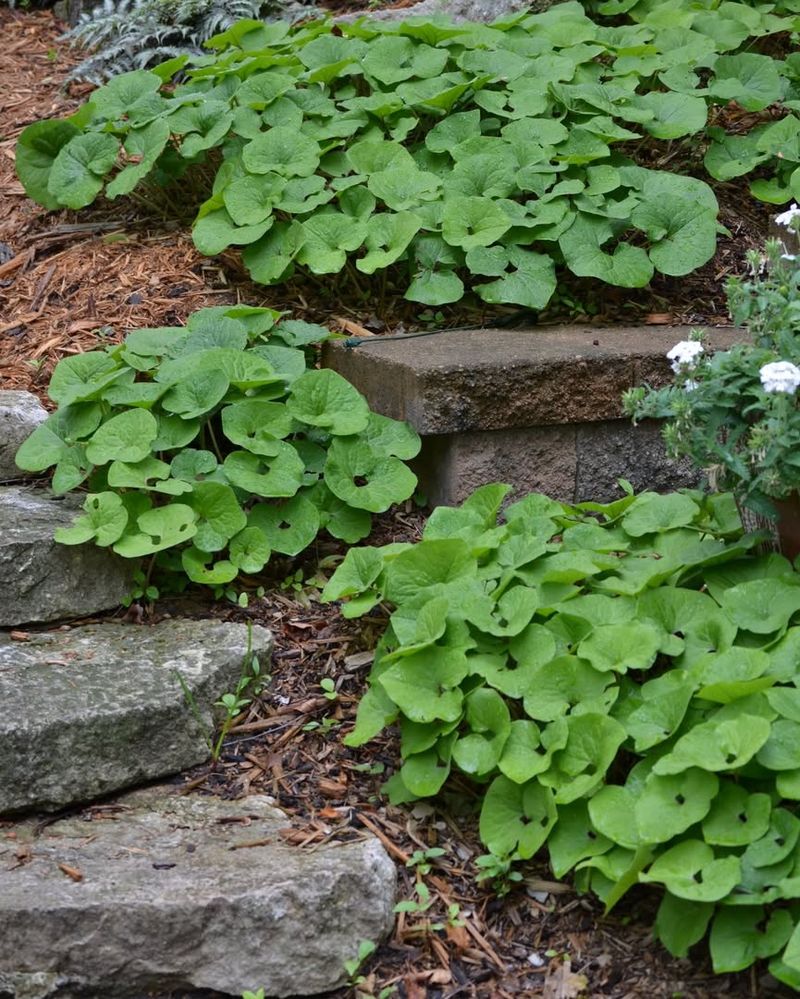
Forget the grassy look entirely. Wild ginger brings something completely different to shaded path edges, and that is actually the point.
Asarum canadense spreads low to the ground with broad, heart-shaped leaves that overlap to form a dense, lush carpet in spots where almost nothing else fills in well.
Your Ohio Garden Changes Every Week. Your Plan Should Too.
Gardening in Ohio changes quickly throughout the season. Every Friday you’ll receive a simple weekly plan showing exactly what to plant, prune, fertilize, harvest, and protect so you never miss the right timing.
It is the kind of plant that makes a shaded stone path feel like it belongs in a woodland garden rather than a forgotten corner of the yard.
This native ground cover thrives in moist, organically rich soil under deciduous trees, beside shaded stone paths, or along the edges of woodland-style borders.
Ohio DNR and native plant references support its use as a slow-spreading native ground cover suited to the understory conditions found across much of this state.
The key word is slow. Wild ginger does not rush to fill a space, so planting it in groups from the start gives you a fuller look much sooner than spacing plants too far apart.
During the first growing season, keeping the soil evenly moist is the single most important thing you can do. Dry spells set back establishment significantly, and a thin layer of leaf litter or fine mulch helps hold moisture without smothering the crowns.
Once the colony is settled in, it handles typical winters well, though the leaves are not evergreen and will drop in late fall.
Wild ginger is not the right fit for sunny, exposed, or dry walkway strips. It also does not appreciate foot traffic, compacted edges, or spots where deicing salt accumulates.
Use it where the path edge is shaded, the soil stays consistently moist, and people are unlikely to step off the pavement. Sourcing plants from reputable native nurseries protects wild populations and gives your border a healthier start.
3. Foamflower Adds Spring Blooms To Part-Shade Borders
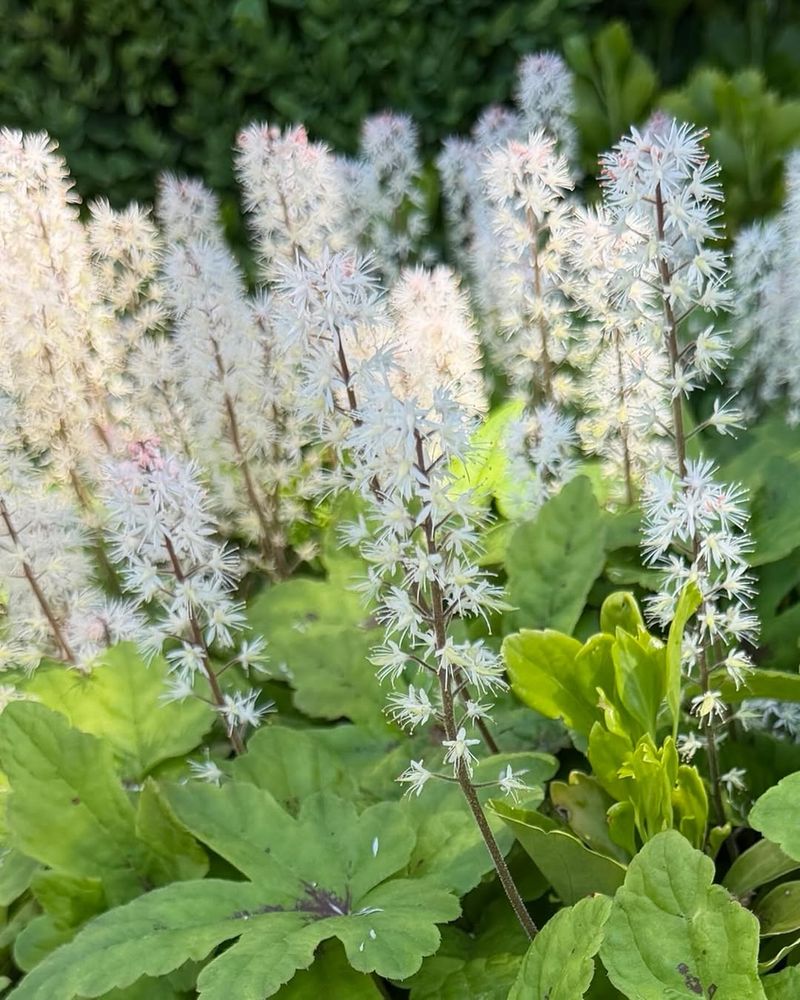
There is a moment every spring when foamflower earns its place along a shaded walkway without any argument. Tiarella cordifolia sends up slender spikes covered in tiny white to pale pink flowers that hover just above the foliage.
They soften the path edge in a way that liriope never quite manages. The leaves themselves are attractive too, with a lobed, slightly maple-like shape that holds its own through the growing season even after the blooms fade.
Foamflower performs best in part shade with moist, well-drained, organically rich soil. Native plant resources and university Extension guidance support its use in woodland-style borders, shaded front walks, and patio edges.
These are places where the soil is protected from harsh drying wind and intense afternoon sun. It does not do well in heavy clay that stays wet all season or in dry, exposed strips baked by reflected heat from pavement.
Grouping several plants together creates a much more satisfying look than spacing them as individual specimens. A sweep of foamflower along a shaded front walk or beside a patio edge reads as intentional and layered rather than sparse.
Keep mulch light around the crowns because burying them too deeply encourages rot, especially during wet springs when moisture lingers in the soil.
Winter survival is generally reliable across this state when plants are well-established before the first hard freeze.
New transplants set out late in the season may need a light layer of straw mulch over the crown during the first winter to reduce heaving from freeze-thaw cycles.
Foamflower does not tolerate foot traffic, so use it only where the path edge is clearly defined and the border is not regularly disturbed. Pairing it with Pennsylvania sedge or native ferns gives the planting season-long texture after the spring bloom fades.
4. Alumroot Brings Hardy Foliage To Tough Edges
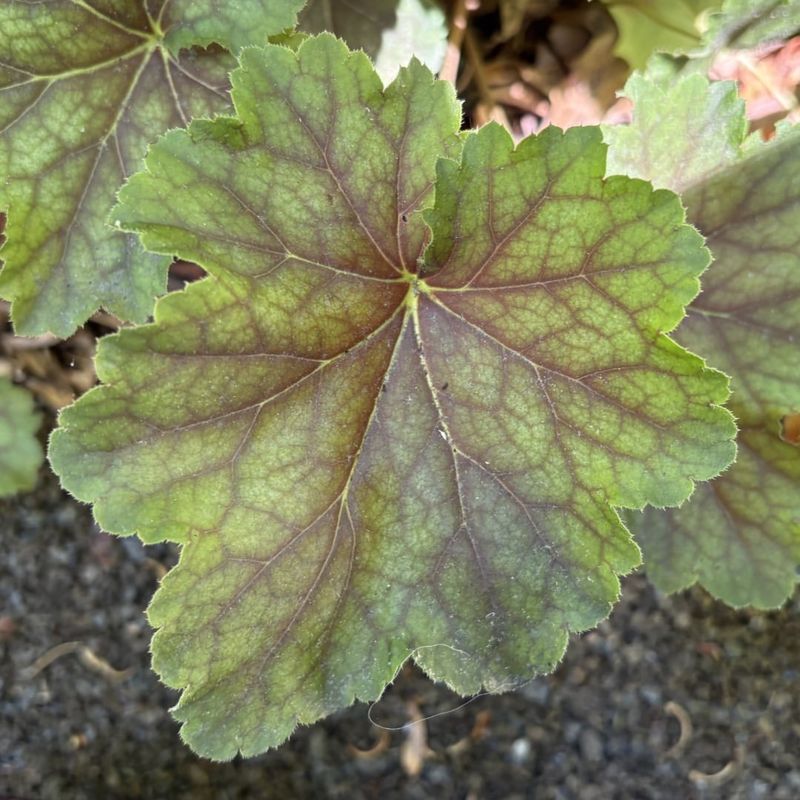
Walk past a patch of native alumroot in late October and you might be surprised at how good it still looks. Heuchera americana is the species native to Ohio and much of the eastern United States.
It holds its attractive lobed foliage well into the season and often retains some leaves through mild winters.
That staying power makes it a genuinely useful plant for walkway edges where you want something that does not completely disappear in the off-season.
Native alumroot fits part-shade to part-sun edges with well-drained soil best. Rocky slopes, raised path edges, and spots where water moves away quickly after rain suit it much better than flat, compacted, or poorly drained borders.
Native plant references note that the species tolerates dry to average soil conditions once established. That gives it an edge over foamflower or wild ginger in drier spots along the path.
One thing worth being careful about: the colorful coral bells sold at most garden centers are typically complex hybrids, not straight native species. If your goal is a truly native planting, look for Heuchera americana specifically.
You can also ask your nursery whether the selection you are considering is a straight species or a cultivar with significant hybrid parentage. Reputable native plant nurseries in this state can steer you toward appropriate choices.
Winter heaving is a real concern with alumroot. Freeze-thaw cycles can push the crown out of the soil, especially in the first winter after planting.
A light layer of mulch applied after the ground cools in late fall reduces that risk without trapping excess moisture against the crown. Check plants in early spring and gently press any heaved crowns back into the soil before new growth begins.
Avoid planting in spots where runoff or snowmelt pools around the base.
5. Woodland Phlox Softens Path Borders Before Summer Heat
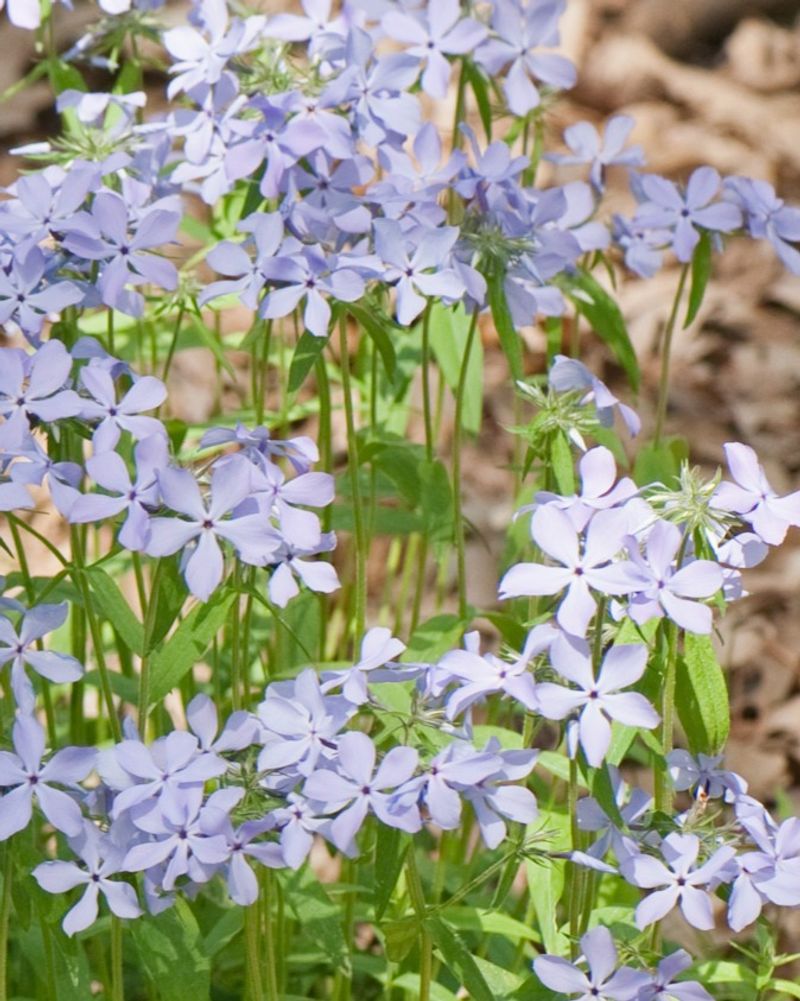
Few native plants make a shaded walkway feel more welcoming in April and May than woodland phlox in full bloom. Phlox divaricata covers path edges with loose clusters of lavender-blue to pale violet flowers that have a light, pleasant fragrance.
It gives spring borders a softness that no ornamental grass or sedge can match during that season. The low stems spread gently over time, filling in gaps between other plants without the aggressive behavior of non-native ground covers.
Woodland phlox prefers moist, well-drained soil in part shade to light shade. It fits naturally along the edges of tree-lined paths, shaded front walks, and woodland-style borders where the soil is protected by a canopy.
Native plant sources and university Extension guidance describe it as a spring ephemeral companion. It works well alongside native ferns, sedges, and other woodland perennials that carry the border through summer after the phlox blooms have finished.
Planting woodland phlox where the spring flowers are visible from the path or seating area makes the most of its short but striking bloom window. After flowering, the foliage stays low and relatively tidy, though it can look a little thin in midsummer.
Trimming back any leggy stems in early summer keeps the planting neater and encourages a denser mat of foliage heading into fall.
This plant does not tolerate heavy foot traffic, dry exposed edges, or spots where deicing salt accumulates in winter. It also struggles in heavy clay that stays saturated after rain.
Pairing woodland phlox with Pennsylvania sedge gives the border consistent texture from spring through fall. The sedge carries the look during the months when phlox is less showy.
Buy plants from native nurseries and avoid digging from natural areas, where wild populations are increasingly stressed by habitat loss.
6. Wild Strawberry Fills Sunny Walkway Gaps With Low Growth
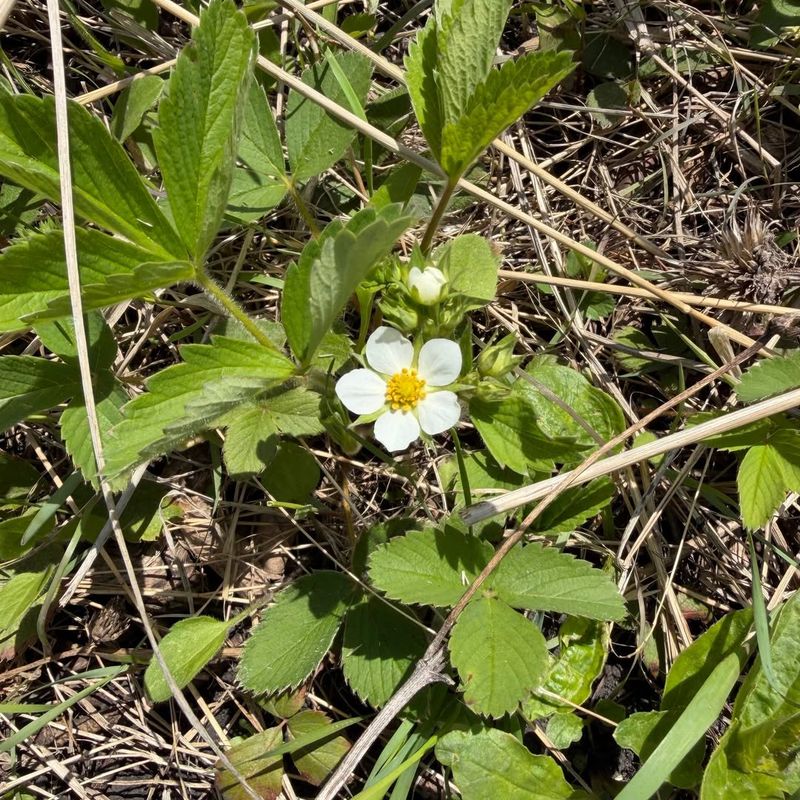
Most of the native plants on this list lean toward shade, but not every walkway runs through a woodland. Wild strawberry, Fragaria virginiana, is a low-growing native option for sunnier path edges, open borders, and thin spots.
It works where you want something that fills in without fuss and handles the exposure that comes with a south- or west-facing walk. It spreads by runners, produces small white flowers in spring, and sets tiny red fruits that birds find irresistible.
The informal, relaxed look of wild strawberry suits cottage-style gardens, naturalistic front yards, and low-maintenance borders. It works where a perfectly clipped edge is not the goal.
Ohio native plant references and DNR resources recognize Fragaria virginiana as a native species. It is well-suited to average to dry, well-drained soil in full sun to part shade.
It handles the lean, somewhat tough conditions that come with sunny walkway edges better than many shade-loving natives.
Spreading by runners means wild strawberry can creep into pavement joints or neighboring garden beds if left unchecked. Running a spade along the edge of the planting once or twice a season keeps it contained without much effort.
It is not a high-maintenance plant, but it does need occasional attention to stay where you put it, especially in borders that open onto lawn or gravel paths.
Wild strawberry is not a formal evergreen border and should not be used where a neat, uniform edge is expected year-round. It also does not hold up to regular foot traffic, so keep it back from heavily used pavement.
One practical note: confirm your identification before planting, since a few similar-looking plants are sometimes confused with wild strawberry in nursery settings.
Buying from a reputable native plant nursery in this state ensures you are getting the right species and not a non-native lookalike.