These Are The Only Roses That Actually Thrive In Texas Heat
Roses and Texas have a complicated history. The ambition to grow them is everywhere, and the results range from genuinely impressive to quietly discouraging depending almost entirely on variety selection.
Texas heat, humidity, and the intensity of a summer that does not let up for months separate roses that were built for this climate from ones that were bred for somewhere considerably more forgiving.
The varieties that struggle here do so in predictable ways, black spot that never clears up, rebloom that stops entirely by July, and plants that peak in spring and spend the rest of the season in decline.
The roses that actually thrive in Texas heat share a specific set of traits that have more to do with disease resistance and heat tolerance than they do with bloom size or fragrance.
Getting the variety right transforms the experience of growing roses in Texas from something that requires constant intervention into something that actually rewards the gardener season after season.
1. ‘Knock Out’ Roses
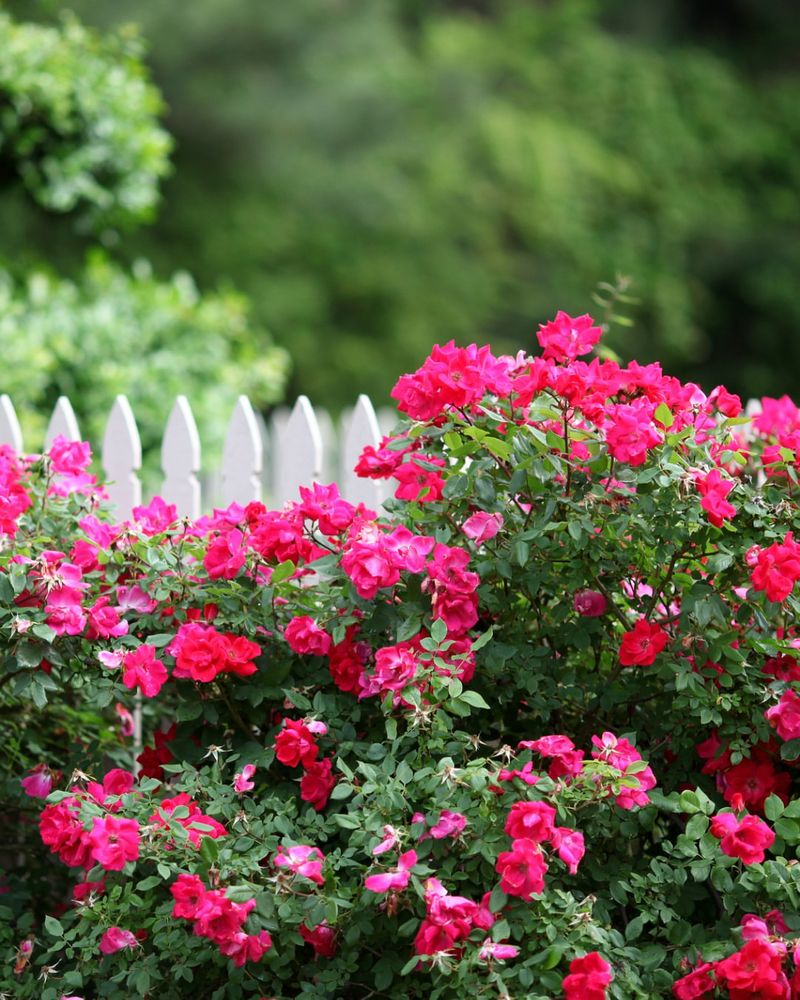
Walk through almost any Texas neighborhood in July, and you will likely spot a Knock Out rose still going strong while everything else looks wilted. That says a lot.
Introduced in 2000, the Knock Out rose quickly became one of the most popular shrub roses in America, and Texas gardeners were among its biggest fans right away.
What makes Knock Out roses so special is their incredible ability to keep blooming through long, brutal summers without much help from you. They are self-cleaning, meaning old blooms fall off on their own without deadheading.
That alone makes them a dream for busy gardeners who do not have time for daily upkeep.These roses are also highly resistant to black spot and other common rose diseases tend to thrive in Texas humidity.
You do not need to spray them constantly with chemicals to keep them looking good. They handle the tough stuff on their own.
Knock Out roses come in several colors, including red, pink, coral, and yellow. Most varieties grow into rounded shrubs about three to four feet tall and wide. They fit nicely along fences, in flower beds, or even in large containers on a patio.
Planting them in a spot with at least six hours of full sun gives the best results. Water deeply but not too often, and add a layer of mulch around the base to hold in moisture during hot spells.
With just a little attention, these tough roses will reward you with blooms from spring all the way through fall.
2. ‘Belinda’s Dream’
Ask any experienced Texas rose gardener which variety they trust most, and there is a good chance they will say Belinda’s Dream without hesitation. This rose has earned a legendary reputation in the Lone Star State, and for very good reason.
It was actually developed with Texas conditions in mind, which makes it stand out from most other varieties.
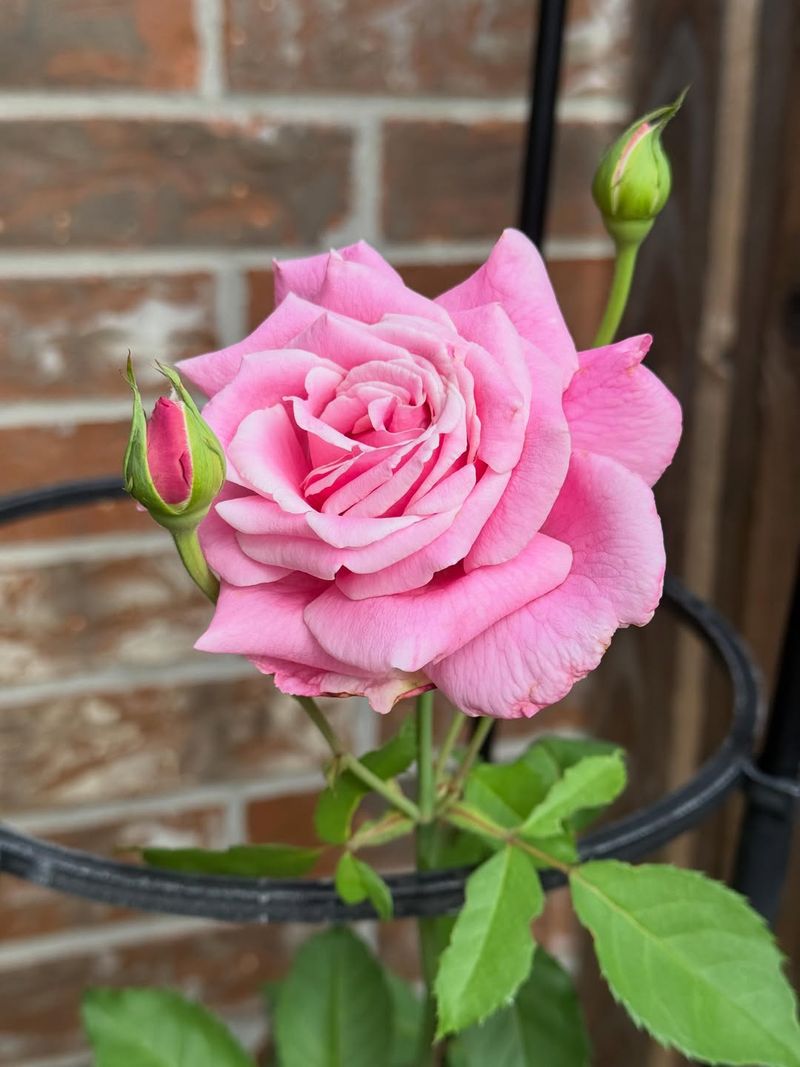
Belinda’s Dream produces large, fully double pink blooms with a sweet, classic fragrance that fills the garden on warm mornings.
Your Texas Garden Changes Every Week. Your Plan Should Too.
Gardening in Texas changes quickly throughout the season. Every Friday you’ll receive a simple weekly plan showing exactly what to plant, prune, fertilize, harvest, and protect so you never miss the right timing.
The flowers look like something you would find in an old-fashioned English garden, but they hold up beautifully even under intense Texas sun. That combination of beauty and toughness is rare and incredibly valuable.
One of the best things about this rose is how often it blooms. It puts out multiple flushes of flowers throughout the growing season, bouncing back quickly after each one.
Even during the hottest stretches of summer, it keeps producing blooms when other roses have already given up for the season.
Belinda’s Dream is also impressively resistant to black spot, which is a major plus in humid Texas climates. You will not need to babysit it with constant spraying or treatments. It handles most challenges on its own with minimal fuss.
This rose grows to about five or six feet tall, making it a great choice for a flowering hedge or a bold focal point in the landscape. Plant it in rich, well-draining soil with plenty of sun.
Water it regularly during the first season to help it establish strong roots, and it will take care of the rest.
3. ‘Sally Holmes’
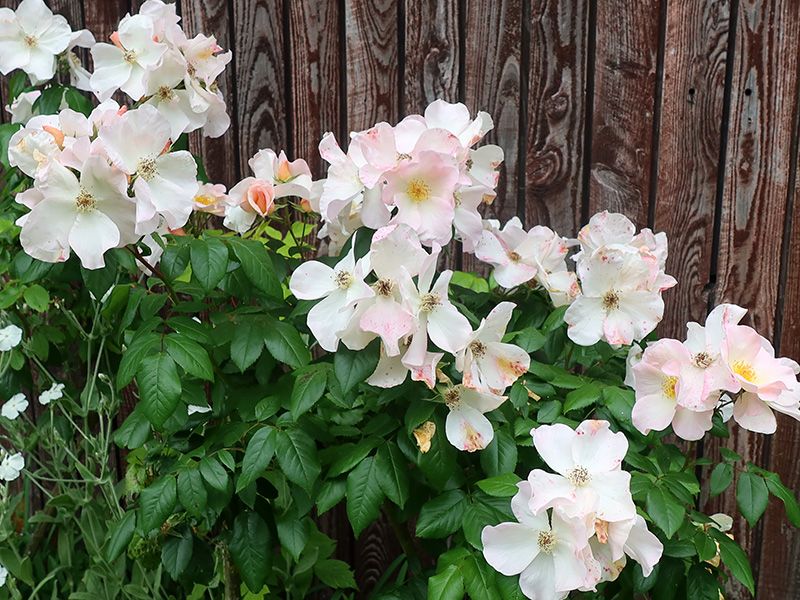
Some roses make you stop and stare, and Sally Holmes is definitely one of them. Unlike the classic full-petaled rose most people picture, Sally Holmes produces clusters of simple, single-petaled flowers in a soft creamy white with a blush pink center.
The effect is breathtaking, especially when the whole shrub is covered in blooms from top to bottom.
What surprises many gardeners is just how tough this rose actually is. Sally Holmes was bred in England but has adapted remarkably well to Texas conditions.
It handles summer heat with impressive ease, continuing to push out new flower clusters even when temperatures climb into the upper nineties and beyond.
The plant itself is vigorous and fast-growing, often reaching six to eight feet tall or even taller when given something to lean against. Many Texas gardeners train it along a fence or trellis where it can spread out and really show off.
When given space to grow, it becomes a true showstopper in any landscape. Disease resistance is another strong point for Sally Holmes.
Black spot and powdery mildew, two common problems for roses in humid Texas summers, rarely cause serious trouble for this variety. That means less time worrying and more time enjoying the garden.
For best results, plant Sally Holmes in a location with at least six hours of direct sunlight each day. It prefers well-draining soil and benefits from a deep watering once or twice a week during dry spells.
Add a thick layer of mulch around the base to keep roots cool and conserve moisture through the hottest months of summer.
4. ‘Mister Lincoln’
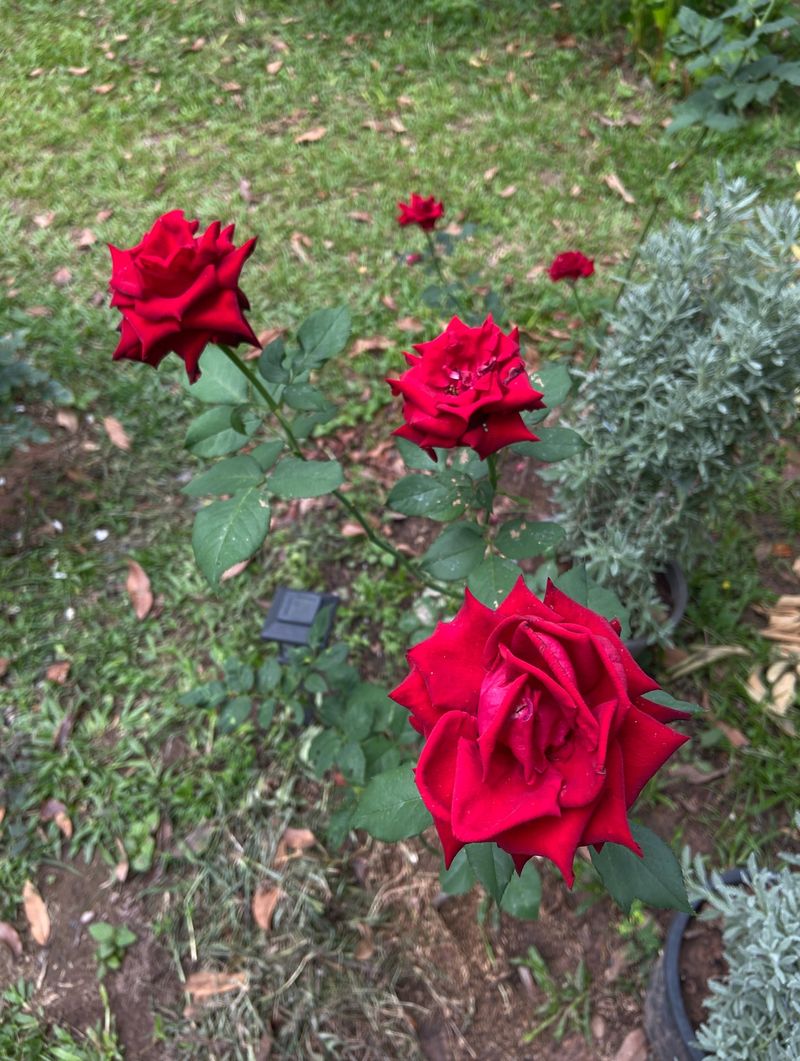
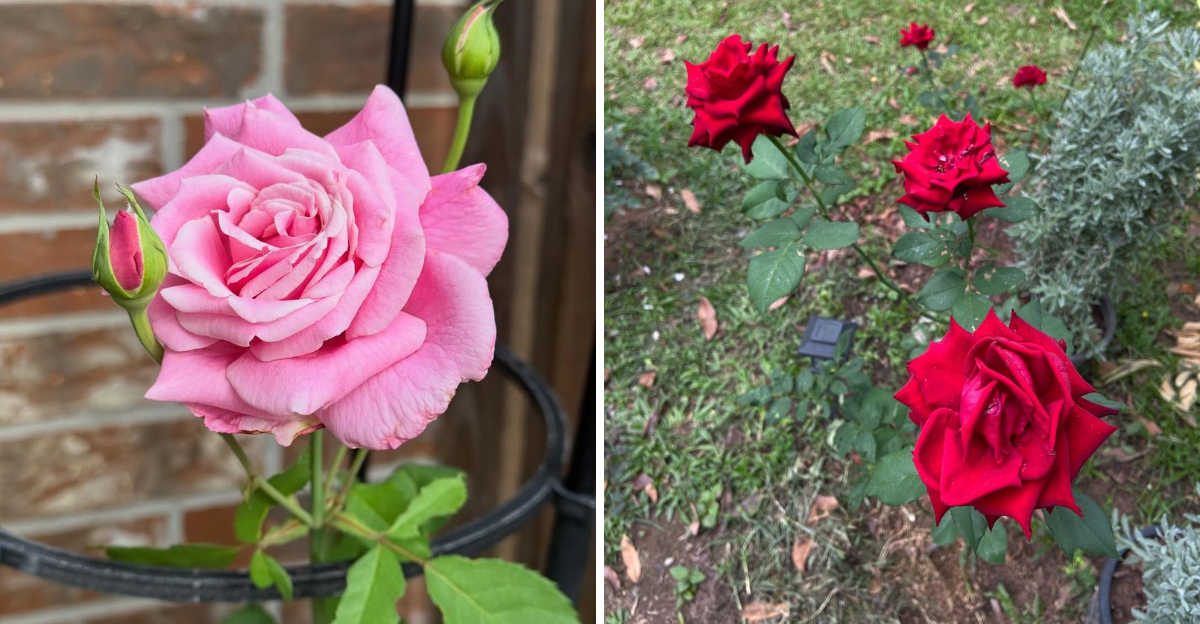
Few roses carry the kind of old-school prestige that Mister Lincoln does. Named after Abraham Lincoln and introduced back in 1964, this classic hybrid tea rose has stood the test of time for good reason.
Its deep, velvety red blooms are some of the most striking you will ever see in a rose garden, and the strong, rich fragrance is absolutely unforgettable.
What makes Mister Lincoln worth talking about in the context of Texas gardening is its surprisingly solid heat tolerance. Many hybrid tea roses struggle in hot climates, fading quickly or refusing to bloom during peak summer.
Mister Lincoln is different. It pushes through the heat and continues producing large, gorgeous flowers even under a blazing Texas sky.
The blooms themselves are big and full, with the classic high-centered shape that rose enthusiasts love. They hold their deep red color well in strong sunlight, which is not something every red rose can claim.
That color stability makes it a reliable choice for cut flower arrangements and garden display alike.
Mister Lincoln grows tall, often reaching five to six feet, which gives it a stately presence in the garden. It works well as a standalone specimen plant or planted in rows along a border. Pair it with lighter-colored flowers to really make those red blooms pop.
Like most hybrid tea roses, it benefits from regular fertilizing and consistent watering. Giving it a balanced rose fertilizer every four to six weeks during the growing season keeps it healthy and blooming well.
It is a little more demanding than some shrub roses, but the reward is absolutely worth the extra effort put in.
5. Floribunda And Sunbelt Series (E.G., Sunbelt Soul Sister)
Not every great rose has a famous name or a long history behind it. Sometimes the best performers are the ones bred specifically with modern problems in mind, and that is exactly what the Sunbelt Series is all about.
Developed by Kordes Roses, these floribundas were engineered for hot, humid climates where many traditional varieties simply cannot keep up with summer demands.
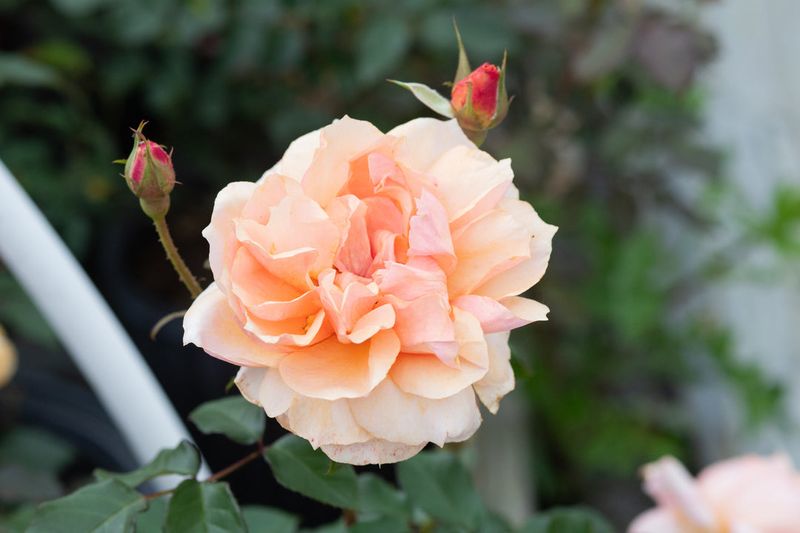
Sunbelt Soul Sister is one of the standout picks from this group. It produces generous clusters of soft pink and peach blooms that look beautiful together, almost like a bouquet growing right on the bush.
The flowers come in waves throughout the season, giving you consistent color from late spring all the way through the first cool snap of fall.
What sets these roses apart is the breeding focus on disease resistance and climate adaptability. They were not just tested in ideal greenhouse conditions.
They were put through real-world trials in regions with intense heat and high humidity, much like what Texas gardeners deal with every single summer.
Floribunda roses in general tend to be lower-growing and bushier than hybrid teas, usually topping out around three to four feet. That compact size makes them extremely versatile.
You can line them along a walkway, fill in a flower bed, or even grow them in large patio containers with great results.
Feeding them with a slow-release fertilizer at the start of the season and again in midsummer keeps them strong and productive.
They do best with regular watering and a good mulch layer to protect roots from extreme ground heat during the worst weeks of summer.
6. ‘Heat Wave’ Rose
There is something almost poetic about a rose called Heat Wave thriving in Texas summers. This floribunda cultivar lives up to its name in the best possible way, delivering bold, warm-toned blooms right through the hottest and most challenging weeks of the year.
If other roses in your garden have started looking tired and stressed by August, Heat Wave is just getting started.
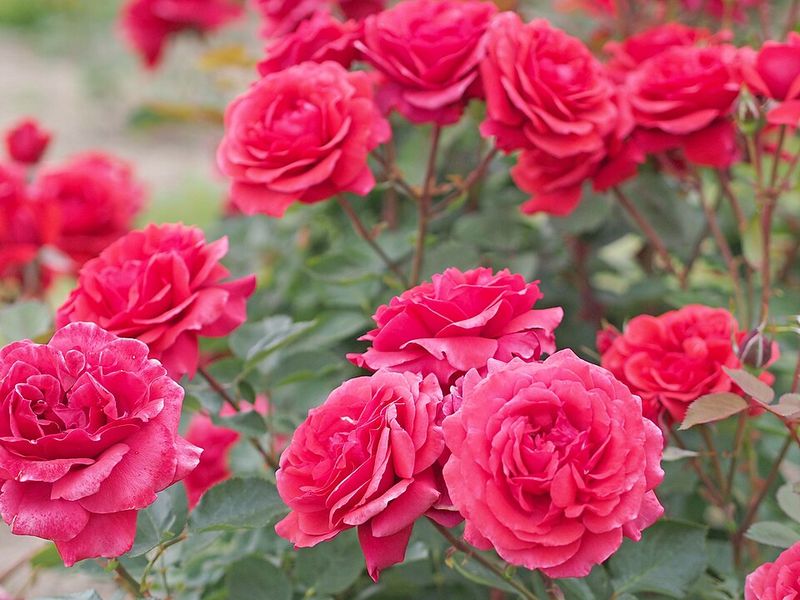
The flowers come in vivid shades of orange and coral with a warm, cheerful energy that brightens up any garden space.
They bloom in clusters, which means you get a lot of color all at once rather than just a single blossom here and there. The display is full and generous, which is exactly what you want from a summer rose.
Heat Wave was bred with tough foliage that stands up well to both intense sun and humid conditions. The leaves stay healthy and green even when the weather turns extreme, which is a real advantage in Texas where summer can feel relentless for weeks at a time.
This rose tends to grow in a compact, tidy shape, usually reaching around three to four feet in height. That makes it easy to manage and great for smaller garden spaces or mixed borders. It also works beautifully as a container plant on a sunny deck or patio.
For peak performance, plant Heat Wave in full sun and water deeply two to three times per week during dry stretches. Deadheading spent blooms encourages faster repeat flowering.
Apply a balanced fertilizer every month during the growing season to keep the energy levels high and the blooms coming in strong all summer long.