3 Ornamental Grasses New Jersey Wants Out Of Your Yard And Better Native Alternatives
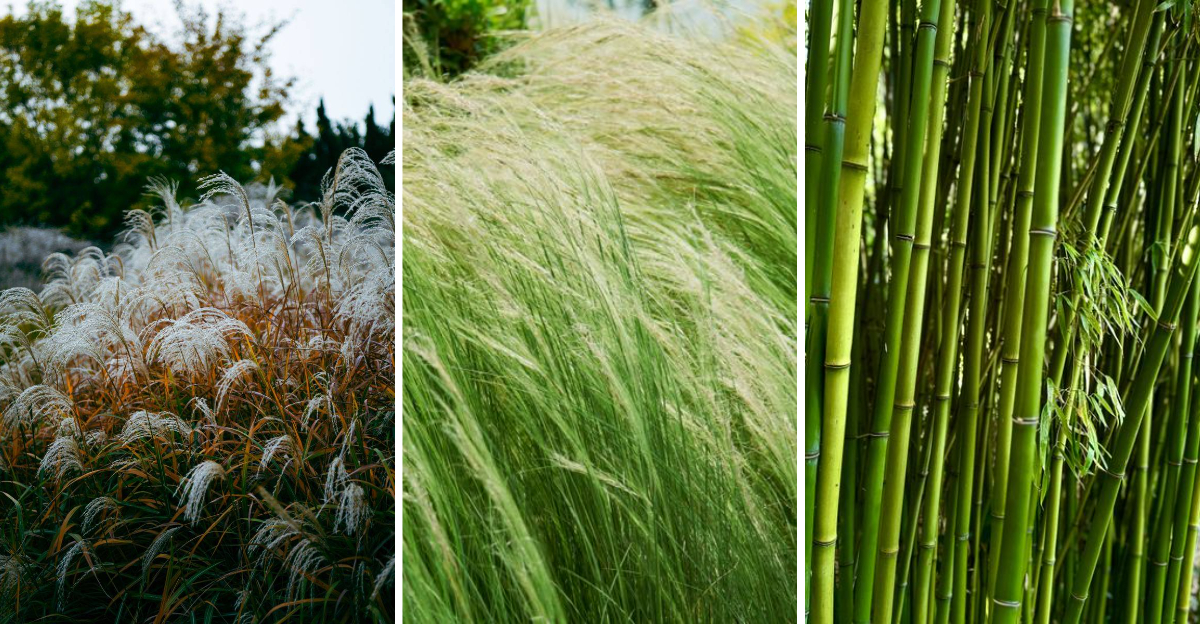
New Jersey just made it official, some of the most popular ornamental grasses in the state are now prohibited. The Invasive Species Management Act, signed in January 2026, has been a long time coming.
The law does not require you to dig anything up today. But it does raise a question worth asking: what exactly have you been growing, and what has it been doing to the landscape around you?
Three grasses that show up in garden centers across the state made the prohibited list. They look harmless swaying in a fall breeze, but they have been spreading further than most homeowners realize.
Native grasses do everything these plants promised and then some. They bring height, texture, and stunning fall color while actually supporting the birds, butterflies, and insects your yard depends on.
Here is what to know and what to consider planting instead.
1. Chinese Silver Grass
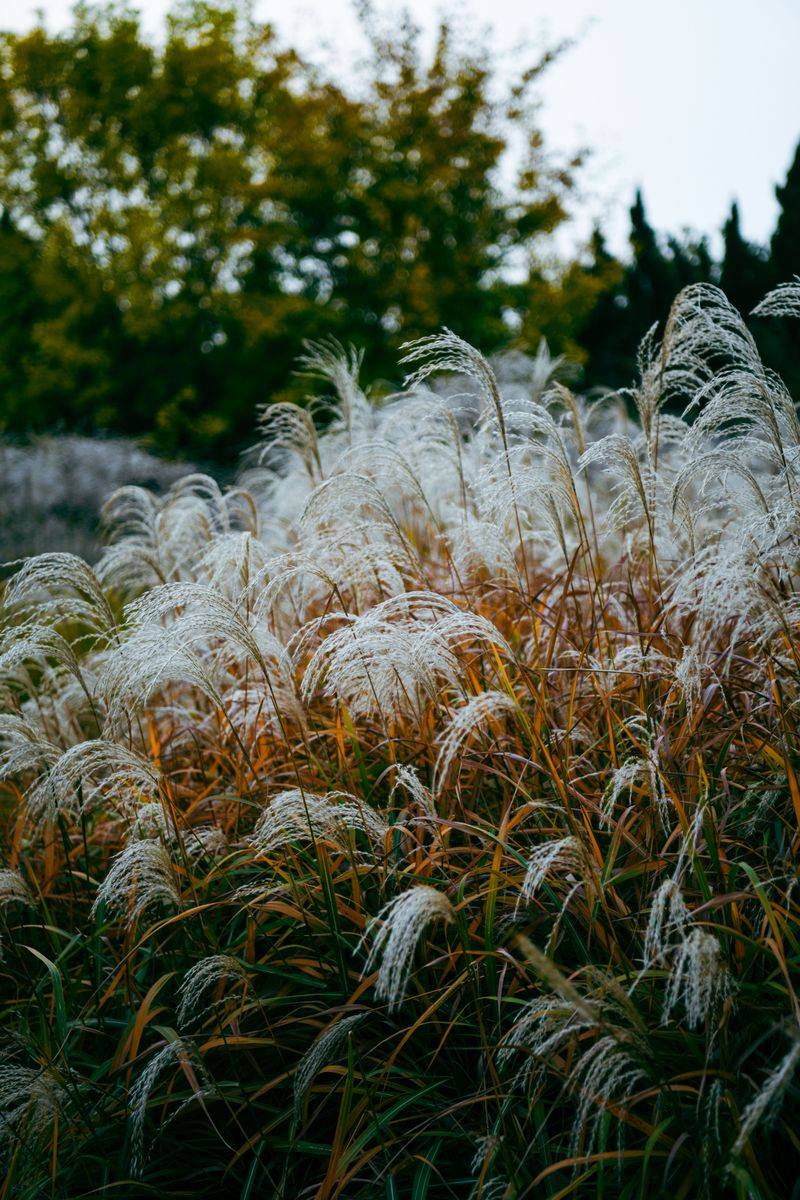
Image Credit: © Suki Lee / Pexels
You probably recognize this grass from countless suburban landscapes. Chinese Silver Grass (Miscanthus sinensis) towers over gardens with showy plumes that catch every breeze and turn golden in fall.
This Asian import seemed perfect when nurseries first introduced it decades ago. Homeowners loved the dramatic height and those feathery seed heads that looked so elegant swaying in autumn winds.
But those pretty seeds are the problem now. Each plant produces hundreds to thousands of seeds that scatter across your property and beyond.
The seedlings pop up in flower beds, vegetable gardens, and natural areas nearby. Once established, the thick root systems resist removal and outcompete everything around them.
New Jersey conservation groups have flagged this species as a serious ecological threat. It invades wetlands, forests, and meadows where native plants once thrived and supported local wildlife.
The state’s new Invasive Species Management Act, signed into law in January 2026, officially places it on the prohibited list. Sale, distribution, and propagation will be phased out over the coming years.
Two specific cultivars, NCMS1 and Tift M77, currently carry a temporary exemption under the law. That exemption expires two years after the law takes effect unless regulators decide to extend it.
If you already have Chinese Silver Grass in your yard, the law does not require removal. But understanding why New Jersey wants it gone is a good reason to reconsider keeping it long term.
2. Weeping Lovegrass
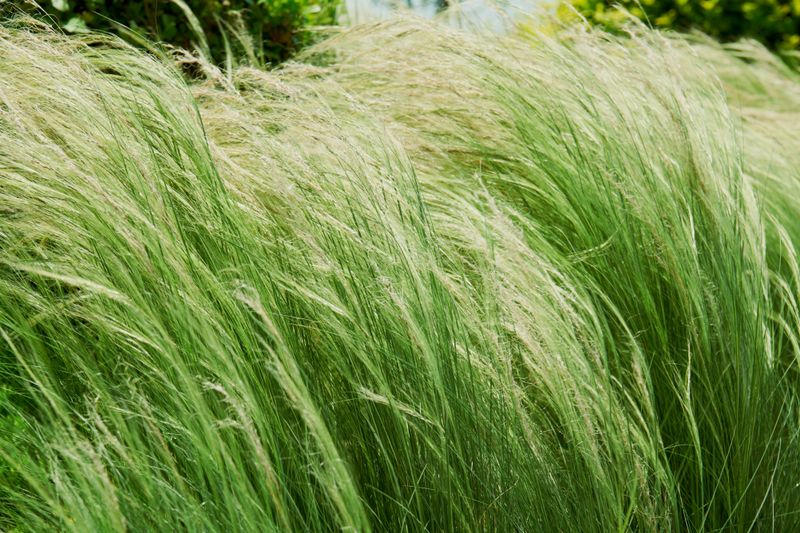
Image Credit: © Suki Lee / Pexels
Garden designers adore this grass for its fountain-like form. Weeping Lovegrass (Eragrostis curvula) creates soft mounds that spill gracefully over edges and photograph beautifully in any season.
Those delicate grey-green flower clouds seem harmless enough at first glance. The wispy texture adds movement without blocking views, making it popular for borders and mass plantings.
What starts as one clump quickly becomes dozens scattered across the yard. Seeds float on wind and water, landing in cracks, garden beds, and wild spaces far from the original planting spot.
The grass tolerates nearly any condition, which sounds appealing until it starts invading. Roadsides and open fields across the Mid-Atlantic region struggle to contain this aggressive spreader that originally came from Africa.
Your New Jersey Garden Changes Every Week. Your Plan Should Too.
Gardening in New Jersey changes quickly throughout the season. Every Friday you’ll receive a simple weekly plan showing exactly what to plant, prune, fertilize, harvest, and protect so you never miss the right timing.
Dense stands crowd out native vegetation and offer very little value to local wildlife. The insects, birds, and pollinators that depend on native plants simply do not benefit from a monoculture of Weeping Lovegrass.
New Jersey’s Invasive Species Management Act, signed in January 2026, places it on the prohibited species list alongside Chinese Silver Grass. The phased restrictions on sale and propagation will roll out over the next several years.
If you have it growing in your yard right now, removal is worth considering before it spreads further. The root system is not as aggressive as some invasives, making early removal more manageable than waiting.
The name sounds gentle and the appearance is undeniably pretty. But Weeping Lovegrass has caused enough ecological damage across the Mid-Atlantic to earn its place on New Jersey’s banned list.
3. Running Bamboo
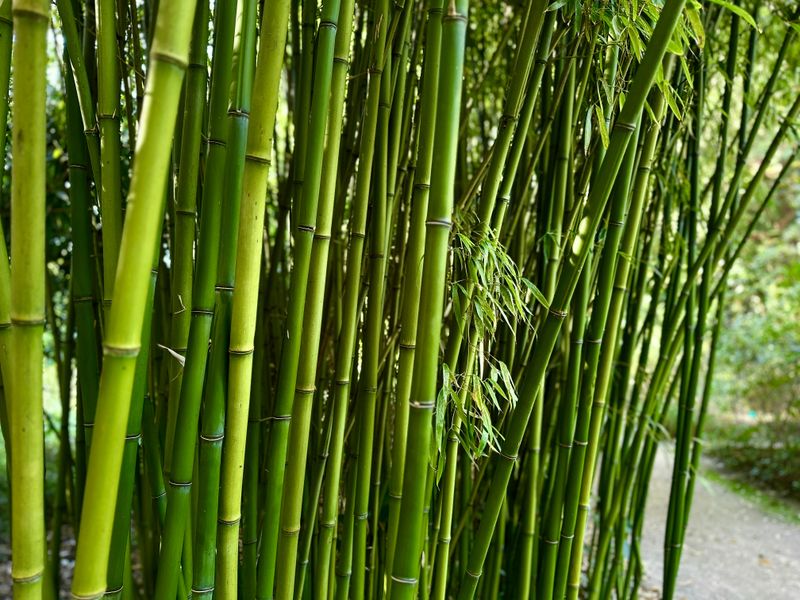
Image Credit: © Wart Oxana / Pexels
Nothing says exotic tropical paradise quite like bamboo swaying overhead. Running Bamboo (Phyllostachys) shoots up fast, creating instant privacy screens that block noise and nosy neighbors from view.
That rapid growth comes with a hidden cost most homeowners discover too late. Underground runners called rhizomes travel surprising distances, popping up through driveways, foundations, and into neighboring properties.
Even heavy-duty barriers often fail to contain the relentless spread underground. The shoots punch through asphalt, crack concrete, and damage underground infrastructure with force that costs thousands to repair.
Removing established Running Bamboo requires years of persistent effort and often professional help. The root system regenerates from tiny fragments left behind, turning removal into an endless frustrating cycle.
New Jersey’s Invasive Species Management Act, signed in January 2026, officially places Running Bamboo on the prohibited species list. It joins Chinese Silver Grass and Weeping Lovegrass as grasses the state no longer wants sold or propagated.
The law targets running varieties specifically, those that spread by rhizomes rather than staying in a contained clump. That distinction matters because clumping bamboo varieties are not currently on the prohibited list, though that could change as the law is implemented.
Running Bamboo originally comes from Asia and has no natural checks on its growth in North American ecosystems. Without predators or diseases to slow it down, it simply keeps spreading until something stops it.
New Jersey gardeners have several native alternatives that deliver height, privacy, and year-round interest, covered in the sections below.
4. Little Bluestem
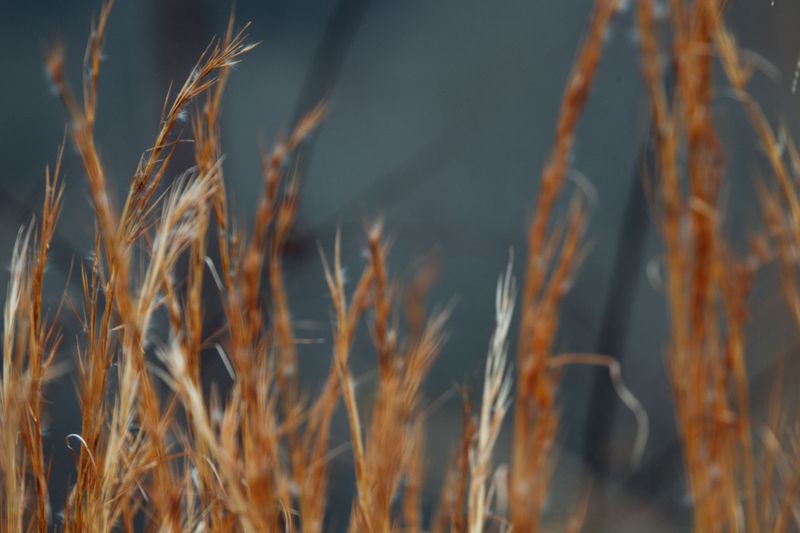
If you want that airy, feathery look, Little Bluestem (Schizachyrium scoparium) is the native swap worth making. It starts the season with upright blue-green stems that slowly shift to copper and red by fall.
Come winter, fluffy white seed heads stick around and keep the yard looking alive. That late-season presence is exactly what most ornamental grasses are purchased for.
Birds rely on those seed heads as a food source through the colder months. The dense base of the plant also gives insects and small wildlife a place to shelter.
It hosts several native skipper butterflies, actively supporting the local food web. That makes it far more useful to your yard’s ecosystem than any invasive ornamental grass ever was.
The root system runs deep, sometimes five feet underground. That makes it a strong choice for slopes, sandy patches, and erosion-prone areas.
Once established, Little Bluestem handles drought without extra watering. It asks for very little attention beyond a cutback in late winter.
It grows two to four feet tall and does best in full sun with well-drained soil. Poor, dry soil is actually where it performs best, it does not need to be pampered.
It was named Perennial Plant of the Year in 2022 by the Perennial Plant Association. If your yard has a tough dry spot where nothing else thrives, this grass will.
5. Switchgrass
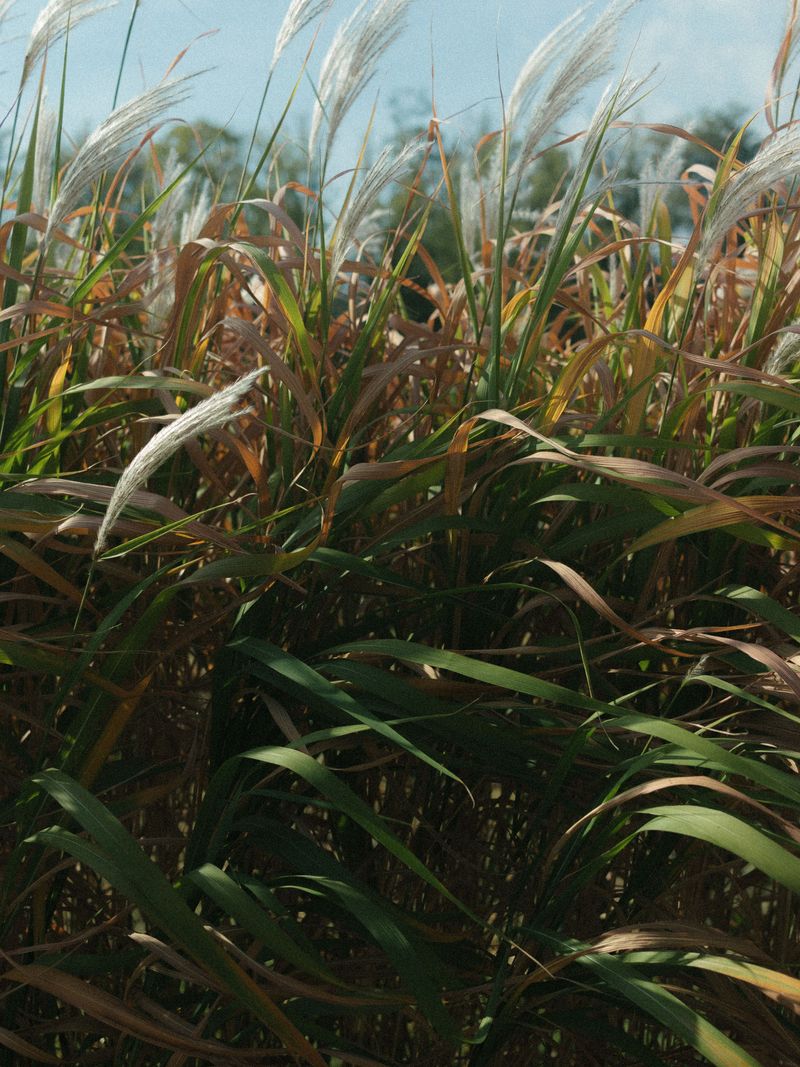
Switchgrass (Panicum virgatum) is a warm-season native grass that earns its place in the yard all four seasons. It grows three to six feet tall and forms a clean, upright clump that adds real structure to a border or meadow planting.
In midsummer, airy pink-tinged flower panicles appear above the foliage and catch the light beautifully. By fall, the whole plant shifts to golden yellow and beige tones that hold through winter.
Those seed heads that linger into the cold months are a reliable food source for sparrows, finches, and other songbirds. The dense clumps also provide cover and nesting shelter for birds and small mammals.
Switchgrass is a host plant for several native skipper butterflies, making it a solid pollinator garden addition. Deer tend to leave it alone, which is a bonus for New Jersey gardeners who know that struggle well.
Its deep root system handles clay, sand, drought, and even occasional flooding without complaint. That adaptability is rare, most ornamental grasses want specific conditions, while Switchgrass just works.
It does best in full sun but tolerates partial shade reasonably well. A single cutback in late winter before new growth appears is essentially the full maintenance routine.
Popular cultivars like ‘Northwind’ and ‘Shenandoah’ offer more compact, garden-friendly habits. Whether you plant it as a screen, a border backdrop, or a meadow anchor, Switchgrass pulls its weight.
6. Big Bluestem
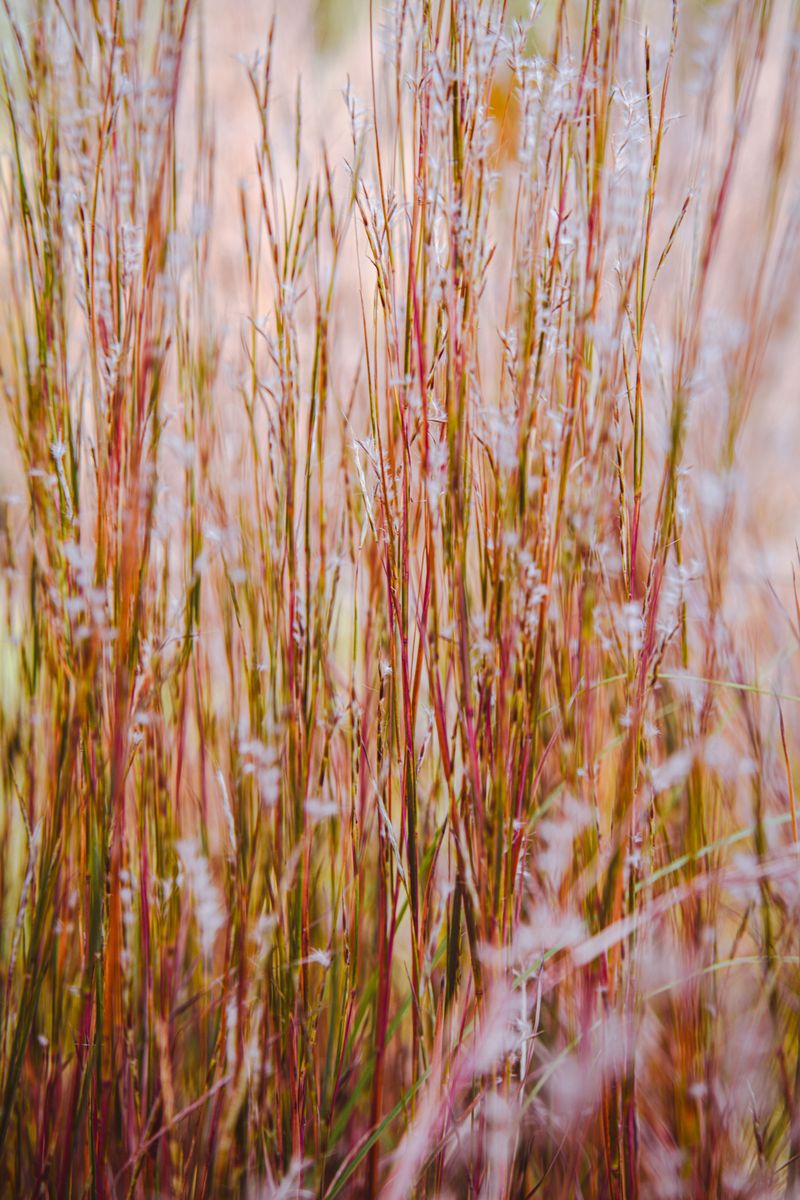
Big Bluestem (Andropogon gerardi) is the grass that once covered millions of acres of North American tallgrass prairie. It grows six to eight feet tall and brings serious architectural presence to any yard.
The foliage starts blue-green in spring and shifts to rich bronze, copper, and burgundy by fall. That color payoff is one of the best you will find in any ornamental grass, native or otherwise.
The seed heads are distinctive,three-branched and finger-like, which is why many gardeners know it by its nickname, Turkeyfoot. They rise above the foliage in late summer and stay attractive well into winter.
Birds like sparrows and bluebirds feed on the seeds throughout the colder months. The dense vegetation also provides cover and nesting material for wrens and other ground-nesting species.
Big Bluestem hosts over a dozen species of butterfly and moth larvae, including the Common Wood Nymph and several native skipper species. That ecological value puts it in a different category from most decorative grasses.
Once established, the deep root system makes it exceptionally drought tolerant and nearly indestructible. It grows in almost any soil, wet clay, dry sand, or anything in between.
It does best in full sun and should be given space, as it can be aggressive in small or highly manicured gardens. A cutback in early spring before new growth appears is all the maintenance it needs.
Plant it as a tall accent, a privacy screen, or a back-of-border anchor. New Jersey gardeners replacing banned ornamental grasses will find it hard to top.
7. Indiangrass
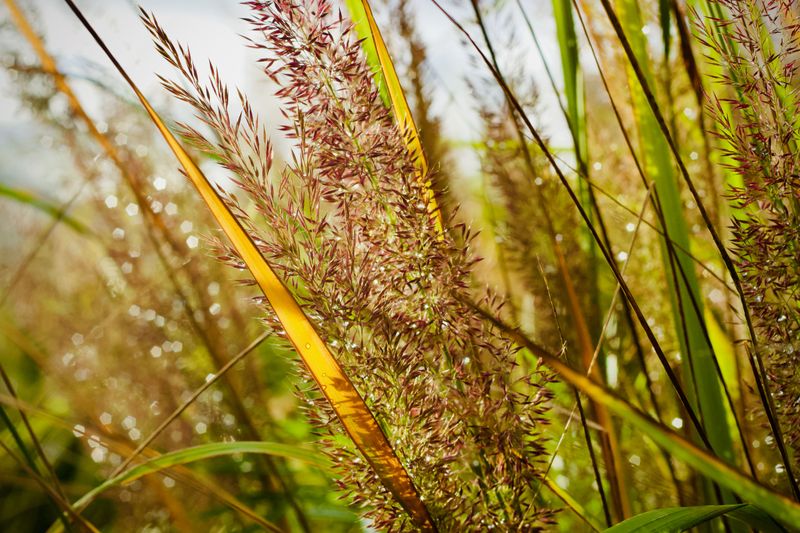
Indiangrass (Sorghastrum nutans) is one of the most visually dramatic native grasses you can plant in a New Jersey yard. It grows five to eight feet tall and produces golden-brown, feathery plumes that glow in late summer sun.
The foliage is blue-green through the growing season and turns a warm bronze-orange by fall. That seasonal shift makes it a strong companion to other native prairie plants like coneflowers and goldenrod.
The plumes appear from August through September and remain showy well into winter. Birds and small mammals rely on the seeds as a food source during the colder months.
Indiangrass is a clump-forming grass, meaning it stays where you put it and does not spread aggressively. That well-behaved habit makes it a much easier neighbor than many ornamental alternatives.
It thrives in full sun and tolerates a wide range of soils, clay, sandy, loamy, and limestone-based. Drought resistance is strong once the root system is established, which typically happens by the second season.
Deer tend to leave it alone, which is always a practical consideration for New Jersey gardens. It also handles heat without fuss, making hot exposed spots in your yard a non-issue.
Use it in mass plantings for the biggest visual impact, or mix it with other native grasses for a naturalistic prairie-style border. The golden plumes in a group planting are genuinely hard to beat in September.
Jersey Friendly Yards, the state’s own native plant resource, lists Indiangrass as a recommended native for New Jersey landscapes. That endorsement is as local as it gets.
8. Pink Muhly Grass
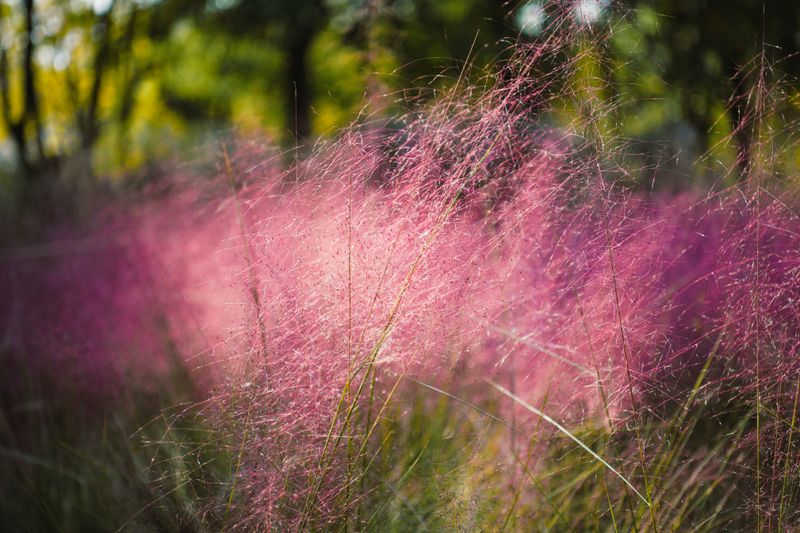
Pink Muhly Grass (Muhlenbergia capillaris) is arguably the showiest native grass on this list. Every fall it erupts into billowing clouds of pink-purple plumes that look like cotton candy floating above the foliage.
The display runs from September through November, arriving exactly when most other plants are winding down. That late-season color is genuinely hard to replicate with any other plant in the garden.
It grows two to three feet tall and forms a tidy, upright clump of fine-textured blue-green leaves. The compact size makes it versatile, it works equally well in borders, foundations, and mass plantings.
Pink Muhly Grass is listed as a native on the Pinelands Alliance website, confirming it belongs in New Jersey landscapes. It naturally occurs in the state’s Pine Barrens, so it is well adapted to local conditions.
It thrives in full sun and well-drained soil, and actually performs better in poor, lean soil than in rich garden beds. Too much nitrogen reduces flowering, so skip the fertilizer entirely.
Once established, it handles drought, heat, humidity, and sandy conditions without any intervention. A single cutback in late winter before new growth appears is the only maintenance required.
Deer tend to avoid it, and it attracts beneficial insects including ladybug beetles. The seeds also provide a small but reliable food source for birds in late fall.
Plant it in groups for the most dramatic effect, a mass planting in full sun on a bright October afternoon is one of the better things a garden can offer. It earns every square foot it occupies.