8 Desert Trees To Prune In June In Arizona Before Heat Takes Over
June in Arizona is one of those months where the smart move is usually to leave your trees alone and let them do their thing. The heat is serious, the soil is bone dry, and most desert trees are already working hard just to get through the day.
But here’s where it gets a little more nuanced.
If you’ve got branches that are crossing awkwardly, a canopy that’s looking unbalanced, or weak limbs that have no business being up there when the first big monsoon winds arrive, waiting until fall might not be the best call either.
Monsoon storms in Arizona can be genuinely intense, and a little selective trimming in early June can make a real difference in how your trees handle what’s coming. The key word is selective.
Light, purposeful, and strategic. Not a full haircut.
1. Blue Palo Verde Benefits From Careful Summer Shaping
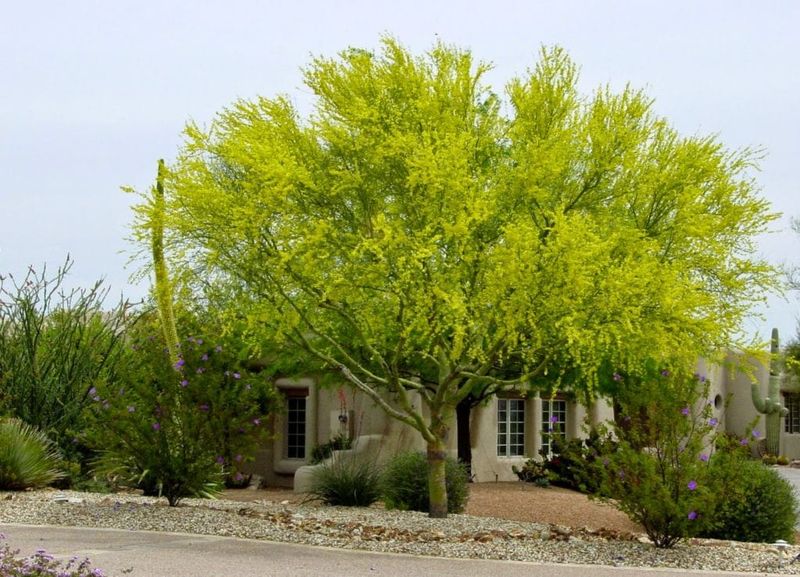
Monsoon winds can turn a top-heavy Blue Palo Verde into a real problem for Arizona yards. When branches grow unevenly through spring, the canopy can become lopsided and more vulnerable to storm damage.
June is a reasonable window to do some light structural work before the rain and wind season begins.
Blue Palo Verde is one of Arizona’s most recognizable native trees, valued for its striking green bark and feathery canopy that filters desert light beautifully.
Because it is well adapted to intense heat, it can tolerate selective pruning during early summer without serious setback.
The key is keeping the cuts minimal and purposeful.
Focus on removing any crossing or rubbing branches, low limbs that hang over walkways or driveways, and any weak growth that looks like it might snap under wind pressure.
Avoid removing large portions of the canopy at once, since stripping too much shade can expose the interior bark to strong Arizona sun.
A light touch goes a long way with this tree. Thinning a few problem branches rather than reshaping the whole tree helps maintain its natural desert character while still giving it better structural balance heading into the stormy summer months ahead.
2. Foothills Palo Verde Can Be Cleaned Up Lightly
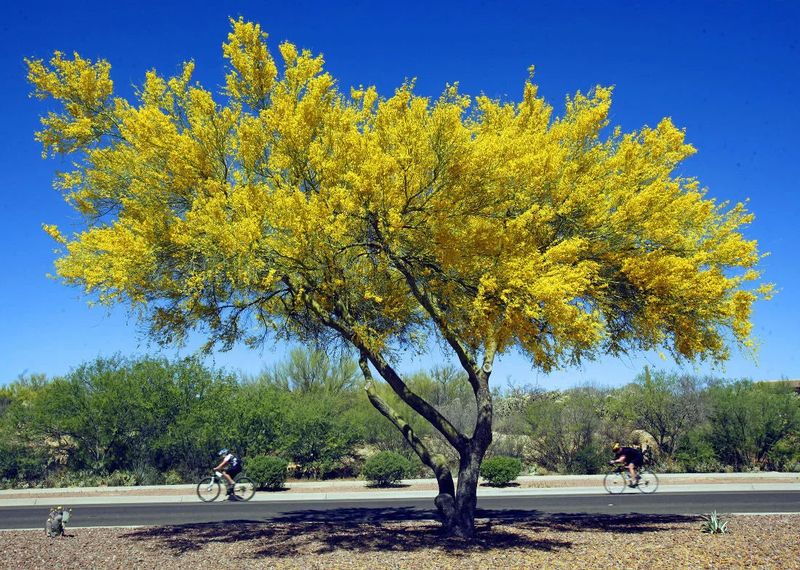
Low-hanging branches on a Foothills Palo Verde have a way of creeping across patios and pathways without much warning.
By the time June arrives in Arizona, spring growth has added enough new length that some branches may need a careful trim to keep the area around them safe and walkable.
The Foothills Palo Verde tends to grow with a more spreading, shrubby habit compared to its Blue Palo Verde cousin.
This makes it a good candidate for light clearance pruning in June, particularly when branches are interfering with foot traffic, vehicles, or outdoor seating areas.
Its heat tolerance makes it reasonably forgiving of careful summer work.
When cleaning up this tree in June, stick to removing only what is clearly in the way or structurally problematic. Branches that are damaged, broken, or crossing other limbs are fair targets.
Avoid cutting into healthy, established scaffold branches, since those are what give the tree its natural shape and provide the shade that keeps Arizona patios more comfortable during brutal summer afternoons.
Your Arizona Garden Changes Every Week. Your Plan Should Too.
Gardening in Arizona changes quickly throughout the season. Every Friday you’ll receive a simple weekly plan showing exactly what to plant, prune, fertilize, harvest, and protect so you never miss the right timing.
Removing too much canopy at once can stress the tree and reduce the shade it provides just when you need it most.
A small amount of selective cleanup done carefully is far better than a heavy trim that leaves the tree struggling in the heat.
3. Palo Brea Needs Selective Storm Prep Pruning
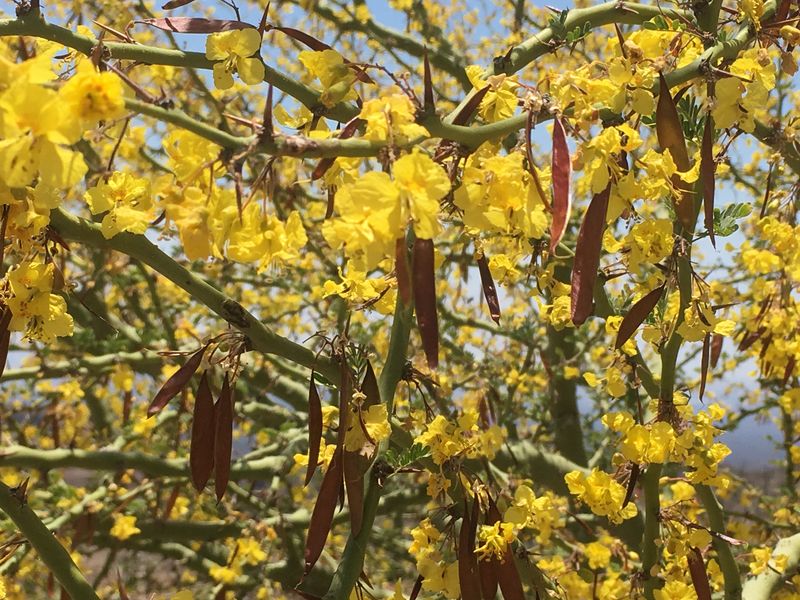
Before the first monsoon storm rolls through an Arizona neighborhood, taking a close look at a Palo Brea’s canopy can save a lot of headaches.
This tree tends to develop dense interior growth that, when combined with strong summer winds, can create significant leverage against the trunk and roots.
Palo Brea, sometimes called Jerusalem Palo Verde, brings beautiful green bark and a graceful canopy to Arizona desert landscapes.
It shares the heat tolerance common to palo verde relatives, which makes it one of the trees that can handle selective pruning in June without much stress if the work is done conservatively.
Timing matters, though, and keeping cuts to a minimum is essential during hot weather.
Storm prep pruning for Palo Brea focuses on thinning dense canopy clusters to let wind pass through rather than push against the tree like a sail.
Removing a handful of crowded interior branches, trimming any limbs that hang over rooflines or fences, and cutting back any growth that looks structurally weak are all reasonable June tasks.
Avoid heavy reshaping or removing large scaffold branches, as this can expose the tree’s interior to intense Arizona sun and put unnecessary stress on its system during the hottest part of the year.
Selective and careful is the approach that works best for this tree heading into summer storms.
4. Velvet Mesquite Handles Light Hot-Weather Pruning
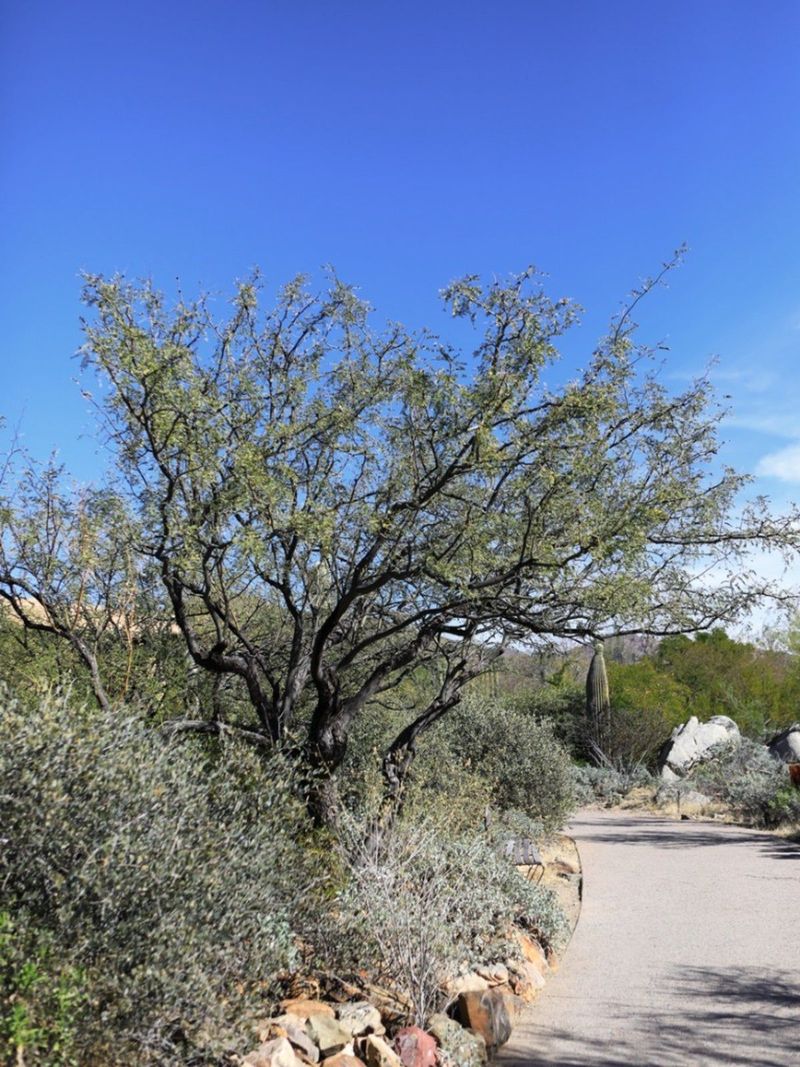
Few trees are more deeply tied to the Arizona desert experience than the Velvet Mesquite. Its wide canopy and deep roots have shaded desert ground for centuries, and in residential landscapes, it brings a sense of natural desert character that is hard to match.
When branches start drooping low or crossing each other awkwardly, June offers a chance to address those issues before monsoon season arrives.
Velvet Mesquite is notably resilient and heat-adapted, which means it can handle a modest amount of careful pruning during summer without much trouble. The goal in June should be clearance and structural improvement, not heavy shaping.
Raising the canopy slightly to clear driveways, sidewalks, or outdoor living areas is a practical task that most Velvet Mesquites handle well.
When working on this tree in June, focus on removing low-hanging limbs that create clearance problems, cutting out any damaged or broken wood, and thinning a small number of crossing branches that could rub and create entry points for pests or disease.
Mesquite thorns make this work a bit more physically demanding, so protective gloves and long sleeves are helpful.
Avoid cutting large limbs unnecessarily, since heavy pruning wounds during hot Arizona summers can be slow to close and may invite unwanted insects or fungal issues into the tree’s tissue. Light and selective is the right approach here.
5. Screwbean Mesquite Can Be Shaped For Better Structure
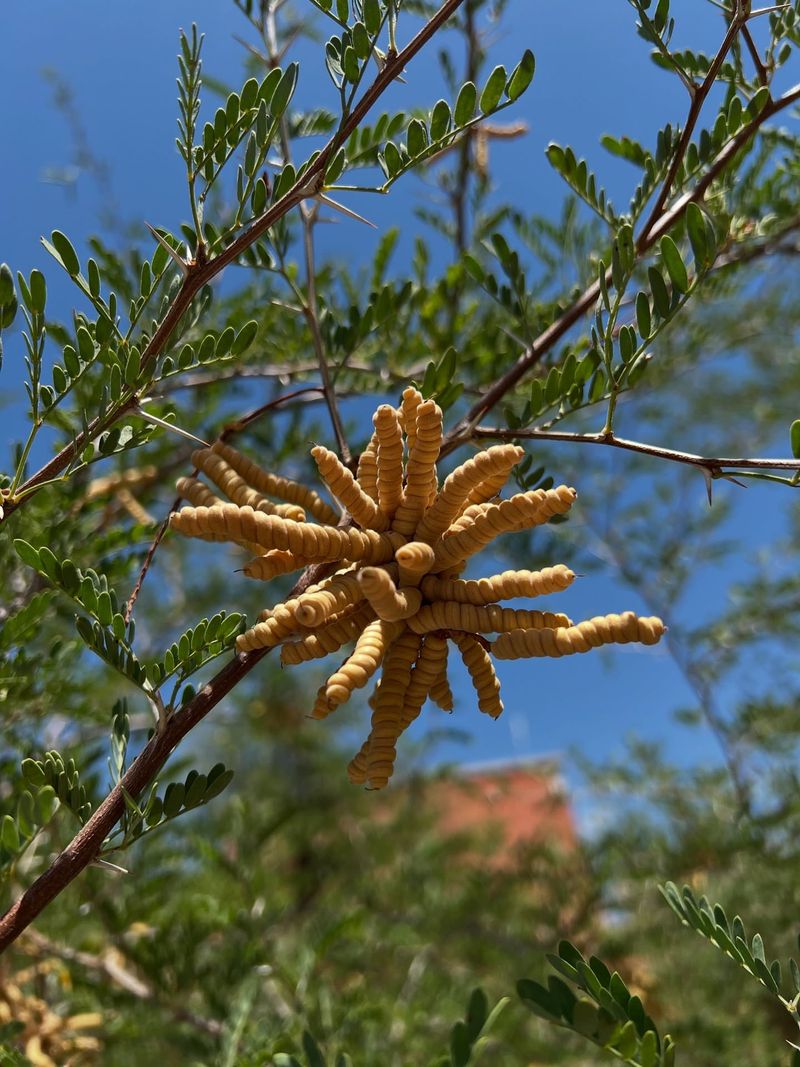
The spiral seed pods of a Screwbean Mesquite are one of those small desert details that make Arizona landscapes genuinely interesting.
This smaller, somewhat underappreciated native tree grows with a naturally irregular habit that can become tangled and problematic if left unattended for too long.
June is a workable time to give it some structural attention before monsoon winds test its framework.
Because Screwbean Mesquite tends to stay relatively compact compared to other mesquite species, shaping it for better structure is a manageable task for homeowners.
The focus should be on removing branches that cross or crowd each other, trimming any growth that extends awkwardly out of the canopy, and addressing any low limbs that interfere with foot traffic or irrigation access around the base of the tree.
Hot-weather pruning on Screwbean Mesquite should remain light and targeted. Removing too much foliage at once can reduce the shade the tree needs to protect its own bark and root zone during Arizona’s intense summer heat.
Aim for a cleaner, more open structure without stripping the canopy bare. If the tree has developed multiple competing leaders, carefully selecting and retaining the strongest one while removing weaker rivals can improve long-term stability.
This kind of thoughtful pruning sets the tree up for healthier growth through the monsoon season and beyond without putting it under unnecessary stress during hot weather conditions.
6. Honey Mesquite Benefits From Balanced Canopy Cleanup
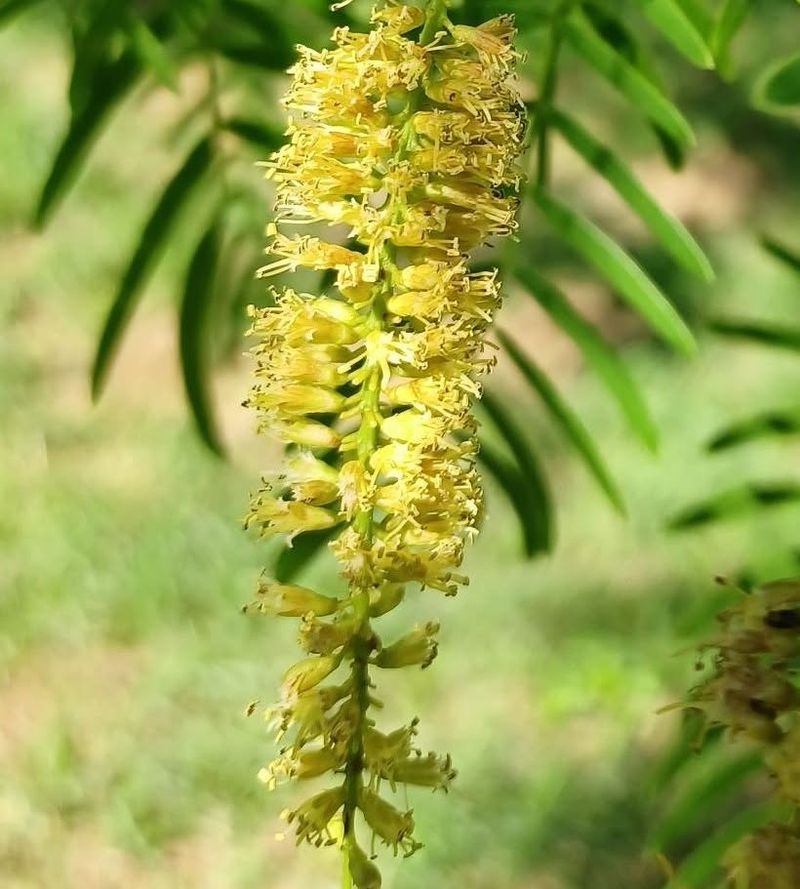
Canopy weight is something Arizona homeowners with Honey Mesquite trees think about as monsoon season approaches.
A wide-spreading Honey Mesquite that has gone a season or two without any attention can develop heavy outer branches that create significant leverage during strong summer storms.
Addressing that imbalance in June, before the rain arrives, is a reasonable and practical decision.
Honey Mesquite is one of the more widespread mesquite species found in Arizona desert landscapes. It grows vigorously and can develop a broad, somewhat unruly canopy if left entirely to its own devices.
Selective pruning in June focuses on reducing that outer canopy weight and removing branches that are more likely to fail under wind stress, rather than giving the tree a dramatic overall trim.
When working on a Honey Mesquite in early summer, look for branches that droop heavily toward the ground, limbs that cross and rub against each other, and any growth that creates clearance problems over driveways, patios, or sidewalks.
Removing a modest number of these problem branches can meaningfully reduce storm risk without compromising the tree’s shade value.
Keep cuts clean and avoid leaving long stubs, since clean cuts close more efficiently and reduce the chance of pest or disease entry.
Heavy pruning should be avoided during hot Arizona summers, as large wounds can be slow to compartmentalize when the tree is managing heat stress at the same time.
7. Chilean Mesquite Needs Careful Clearance Pruning
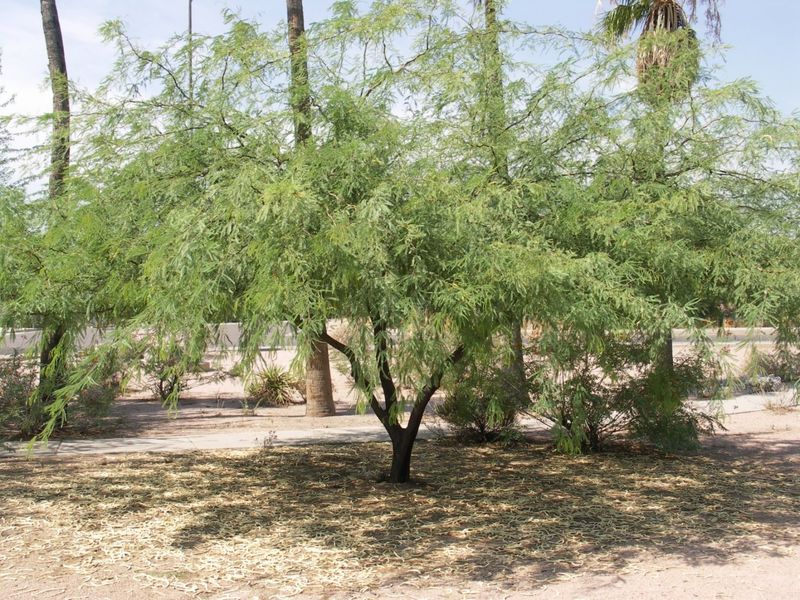
Driveways and patios in Arizona neighborhoods are often shaded by Chilean Mesquite, a fast-growing tree that has become very common in desert residential landscapes.
Its weeping, arching branch habit looks elegant when well maintained, but those same graceful branches can droop well below a comfortable clearance height if the tree is not given periodic attention.
June is a practical time to address that before summer storms add wind and weight to the equation.
Chilean Mesquite is not native to Arizona but has been widely planted because of its rapid growth and shade value in desert settings.
It tends to push new growth quickly through spring, which means by early June the canopy may have dropped noticeably lower than it was after the previous pruning.
Clearance pruning to raise the canopy over walkways, vehicles, and outdoor spaces is the most common June task for this tree.
When trimming Chilean Mesquite in summer, focus on raising the canopy skirt rather than thinning the entire tree heavily.
Removing low-hanging branches that have grown below a reasonable clearance height, cutting out any deceased or damaged wood, and addressing a small number of crossing interior branches are appropriate tasks.
Avoid heavy structural pruning during hot Arizona weather, since this tree can be more sensitive to large pruning wounds in summer than some native desert species.
Keeping cuts modest and working with the tree’s natural weeping form rather than against it produces the best long-term results.
8. Eucalyptus Can Be Pruned For Safer Summer Structure
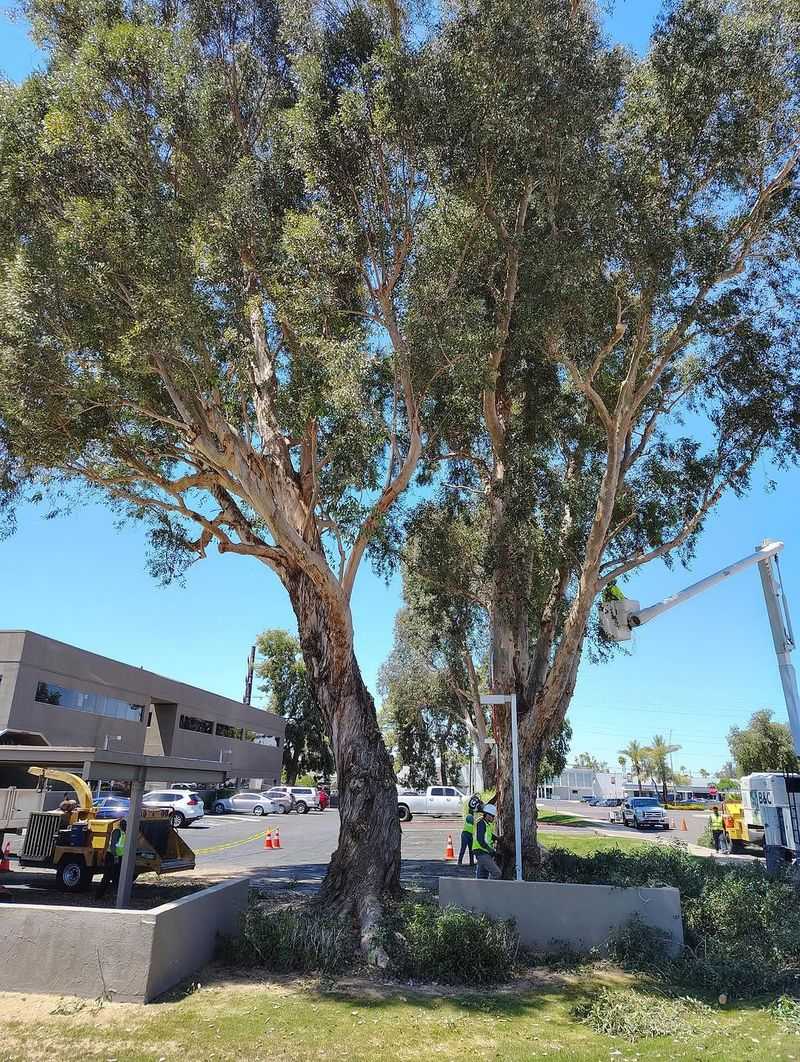
When a eucalyptus tree drops a large branch without warning, it tends to get people’s attention fast. These trees are known for what arborists sometimes call sudden limb failure, particularly during hot, dry conditions that are very familiar to Arizona summers.
Addressing heavy or structurally questionable branches in June, before the monsoon season intensifies, can reduce the risk of that kind of unexpected branch loss.
Eucalyptus trees are not native to Arizona but are widely found in older neighborhoods and commercial landscapes across the state.
Several species have naturalized well in the desert climate, thriving in the heat and dry conditions that challenge many other trees.
Because of their size and growth rate, they can develop significant canopy weight that becomes a concern when monsoon winds arrive.
June pruning on eucalyptus should focus on removing obviously heavy, overextended limbs, addressing any branches that hang over structures, fences, or high-traffic areas, and improving overall canopy balance.
This is not a tree to prune aggressively during hot weather, since heavy cuts can stress the tree and may encourage problematic regrowth.
Working with a qualified tree care professional is worth considering for eucalyptus trees, especially large specimens with branches near rooflines or power lines.
Keeping the work selective and focused on structural safety rather than dramatic reshaping is the most sensible approach for managing eucalyptus in Arizona’s challenging summer landscape conditions.