The Right Way To Harvest Basil In Oregon So It Keeps Growing All Summer
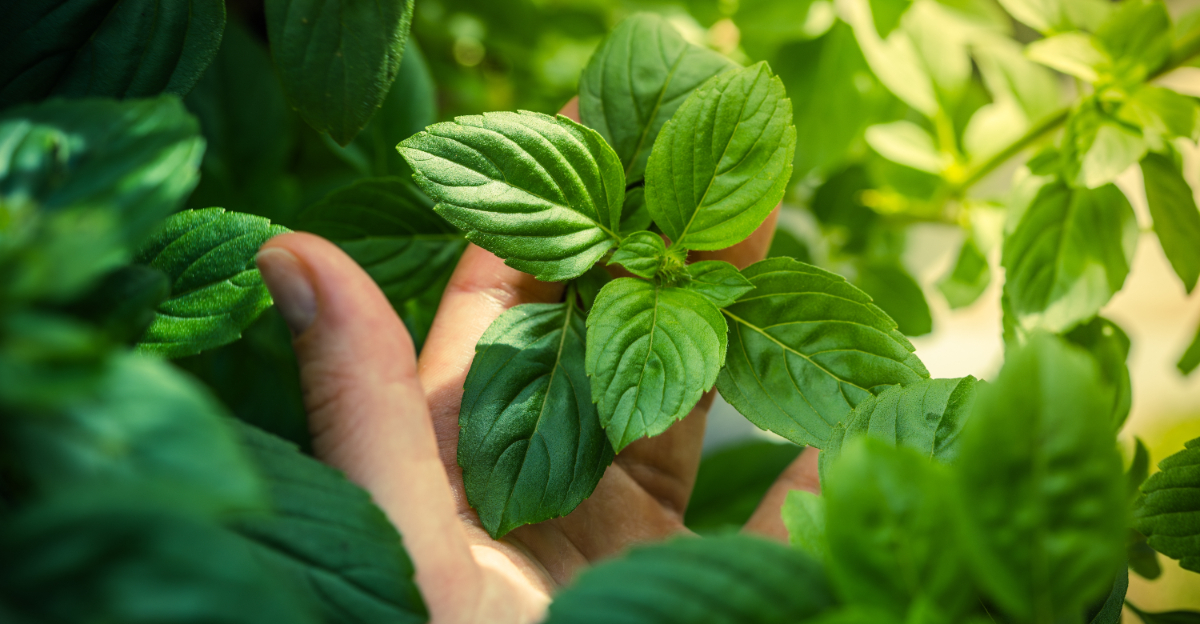
Basil can be one of the most rewarding summer herbs, but it needs the right kind of picking to stay productive.
In Oregon, cooler starts can make gardeners eager to grab leaves as soon as the plant fills out.
That works for a quick meal, but careless harvesting can slow the plant down later. Basil grows best when each cut encourages fresh branching instead of leaving weak stems behind.
The timing matters too, especially once warm days push the plant toward flowers. A few simple habits can turn one small plant into a steady supply for sauces, salads, and backyard dinners.
Harvest with care, and your basil can keep sending up tender new growth through the heart of summer.
1. Wait Until Basil Has Several Sets Of Leaves
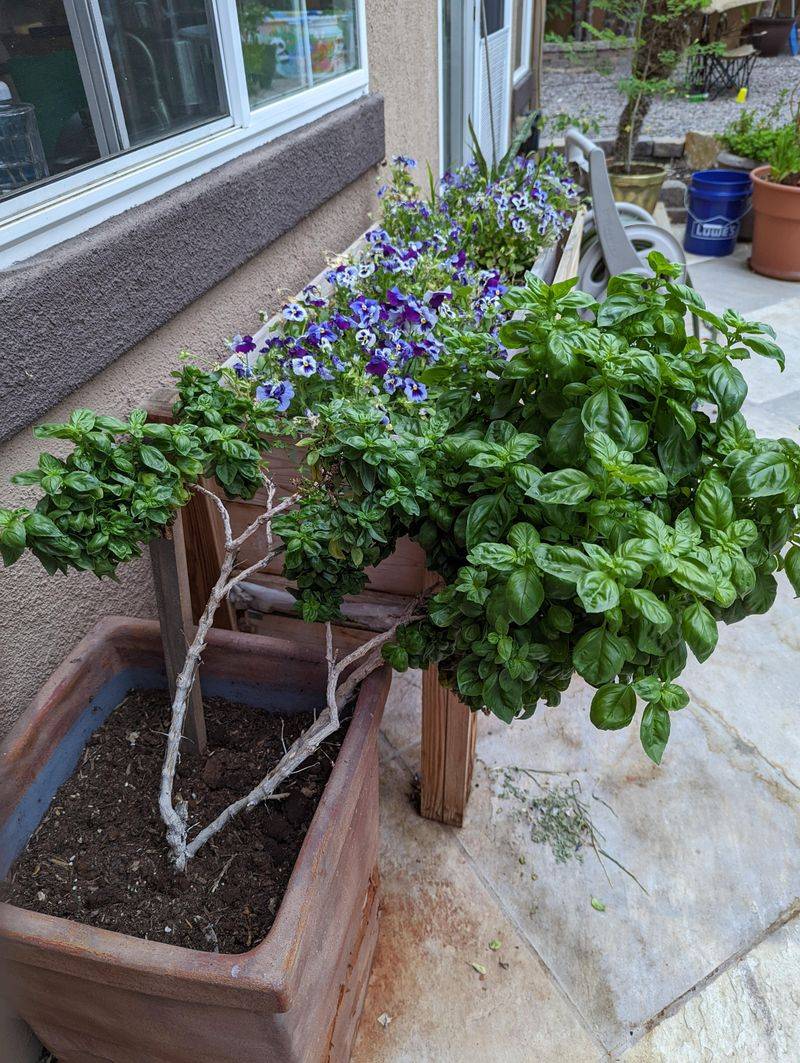
Patience really does pay off when it comes to basil. A lot of new gardeners want to start picking leaves the moment the plant pops up, but harvesting too early can seriously slow things down.
Basil needs time to build a strong root system and enough leaf surface to keep growing after you cut it.
The general rule is to wait until your plant has at least three to four sets of leaves before you take anything off. At that point, the plant is strong enough to handle the stress of being cut.
In Oregon, where the growing season starts a bit later, this usually means waiting until late May or early June for most outdoor plants.
A good sign that your basil is ready is when it looks full and bushy rather than tall and skinny. Thin, stretched-out plants are still struggling to establish themselves.
Give those a bit more time before you start harvesting.
Once your plant has several healthy sets of leaves, it is ready to become a productive part of your summer garden. Starting your harvest at the right time sets the whole season up for success.
Think of those early weeks as an investment that pays off with armfuls of fresh, fragrant basil later on.
2. Harvest From The Top, Not The Bottom
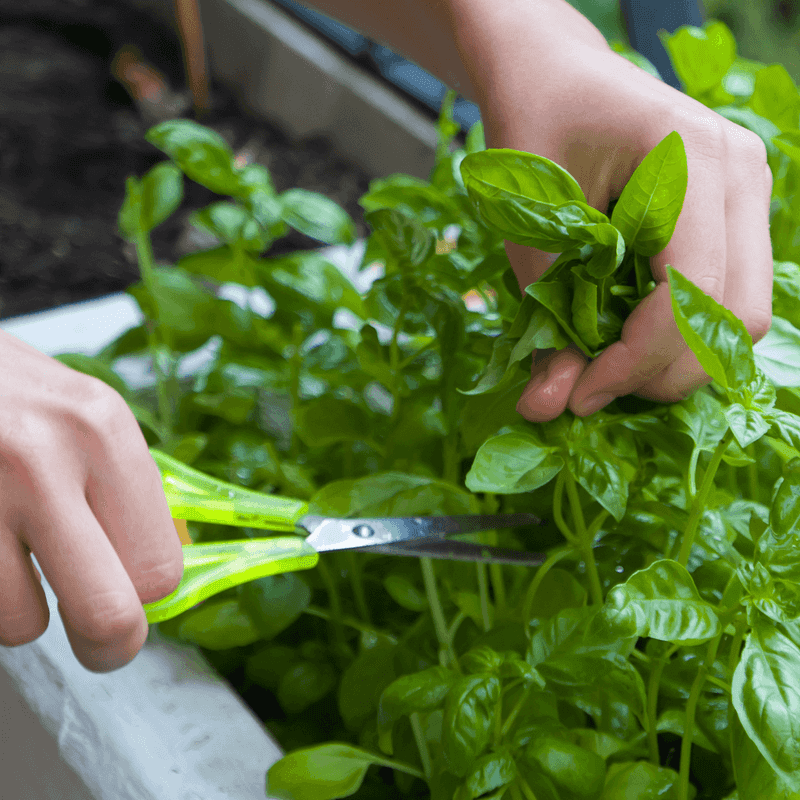
Most people instinctively reach for the big leaves at the bottom of the plant first. It seems logical because those leaves are the largest and easiest to grab.
But this is actually one of the most common mistakes basil growers make, and it can seriously limit how much the plant produces over time.
Basil grows from the top down. New growth always comes from the tips of the stems.
When you remove those top shoots, the plant responds by pushing out two new branches from just below the cut. That means every harvest from the top actually doubles the number of growing points on the plant.
Taking from the bottom does the opposite. Those lower leaves are older and less active in terms of new growth.
Removing them does not encourage the plant to branch out. It just leaves the plant looking bare at the base while the top stays the same.
Your Oregon Garden Changes Every Week. Your Plan Should Too.
Gardening in Oregon changes quickly throughout the season. Every Friday you’ll receive a simple weekly plan showing exactly what to plant, prune, fertilize, harvest, and protect so you never miss the right timing.
In Oregon, where the warm growing season is precious and relatively short, you want to get as much production as possible from each plant.
Harvesting from the top keeps the plant compact, bushy, and constantly producing new leaves.
It also keeps the plant looking healthy and full all summer long. Once you make this one simple change, you will notice a big difference in how productive your basil becomes.
3. Cut Just Above A Leaf Node
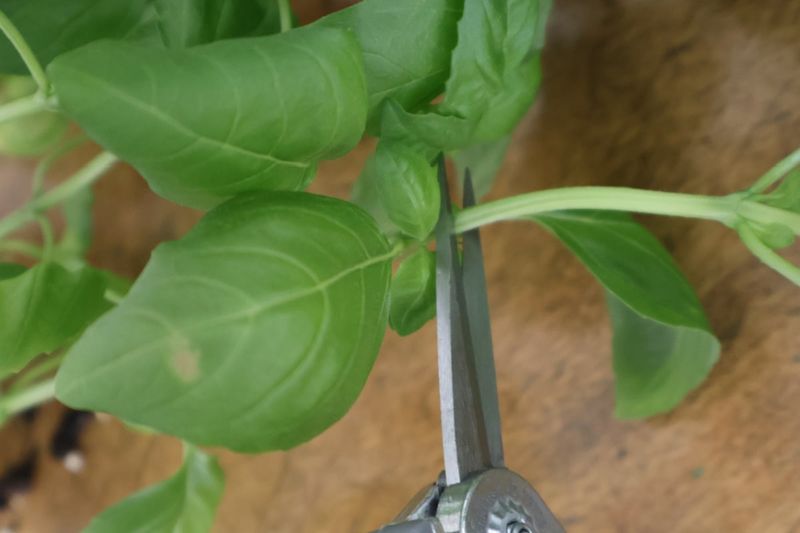
Here is something that sounds technical but is actually very simple once you see it. A leaf node is the spot on a stem where two leaves grow out from opposite sides.
It looks like a little joint or bump on the stem. This is where new branches will sprout after you make your cut.
When you harvest, always cut just above one of these nodes. Leave about a quarter inch of stem above it.
That small stub gives the plant a stable base for the new shoots to grow from. If you cut below the node or right through it, you remove the plant’s ability to branch out at that spot.
Getting this right makes a huge difference in how quickly your basil recovers after each harvest. Plants that are cut correctly bounce back fast and start pushing out new growth within just a few days.
On warm Oregon summer days, you might even notice new shoots appearing overnight.
Leaf nodes are easy to spot once you know what to look for. Just run your fingers along a stem and feel for the spots where leaves attach.
Those are your nodes. Aim to cut just above them every single time.
This one small habit will keep your basil plant growing in a full, rounded shape all season. It is the kind of detail that separates a so-so harvest from a truly productive one.
4. Take Stems Instead Of Random Single Leaves
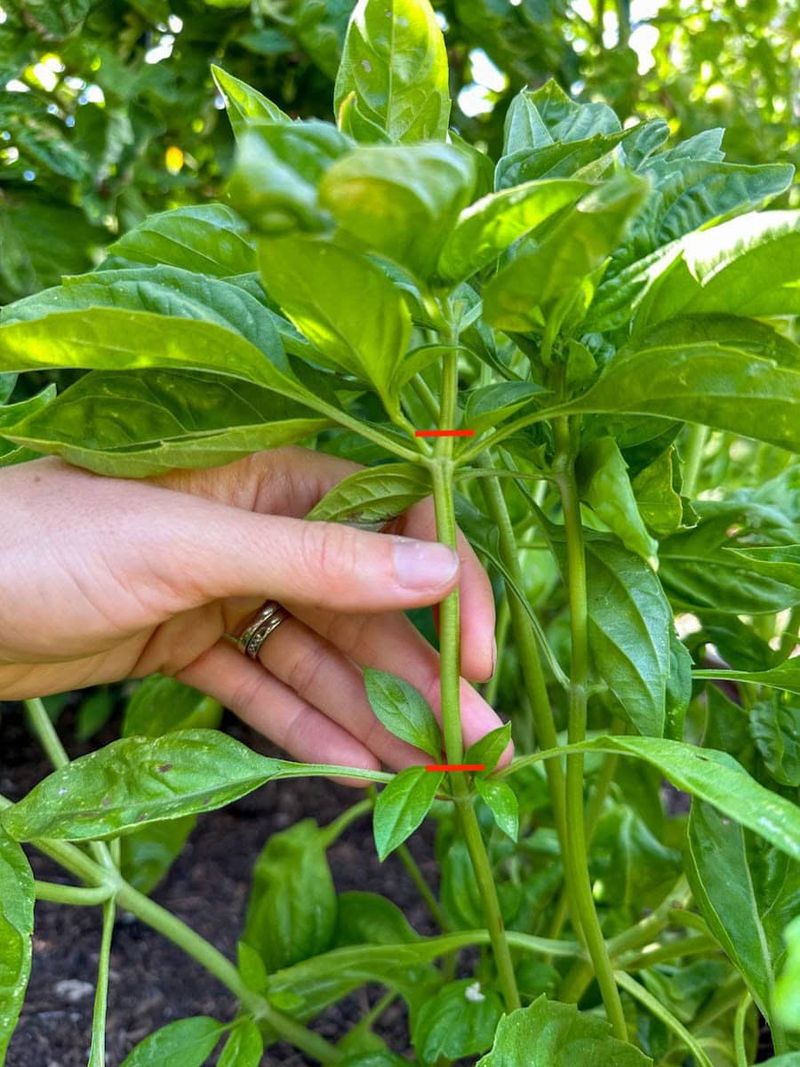
Picking one leaf at a time might feel like you are being careful and gentle with your plant. But it is actually less effective than harvesting whole stems.
Pulling individual leaves can leave behind odd-looking bare spots and does not encourage the kind of branching growth that keeps the plant productive.
Taking a full stem is a smarter move for several reasons. First, you get more basil at once.
A single stem with five or six leaves gives you much more than picking five or six scattered leaves from different spots.
Second, cutting a whole stem triggers the plant to send out two new branches right below where you cut. That means more stems and more leaves next time around.
Stem harvesting also keeps the plant looking tidy and balanced. When you snip random leaves from all over the place, the plant can start to look uneven and a little ragged.
Taking full stems encourages a neat, bushy shape that holds up well through the whole season.
For Oregon home gardeners, where space is often limited and every plant counts, this approach simply makes more sense. You get a better yield, a healthier plant, and a neater garden all at once.
Next time you head out to pick basil, grab a pair of scissors and go for the stems. Your plant will reward you with faster, fuller regrowth that keeps on giving through the entire summer.
5. Never Remove More Than One-Third At Once
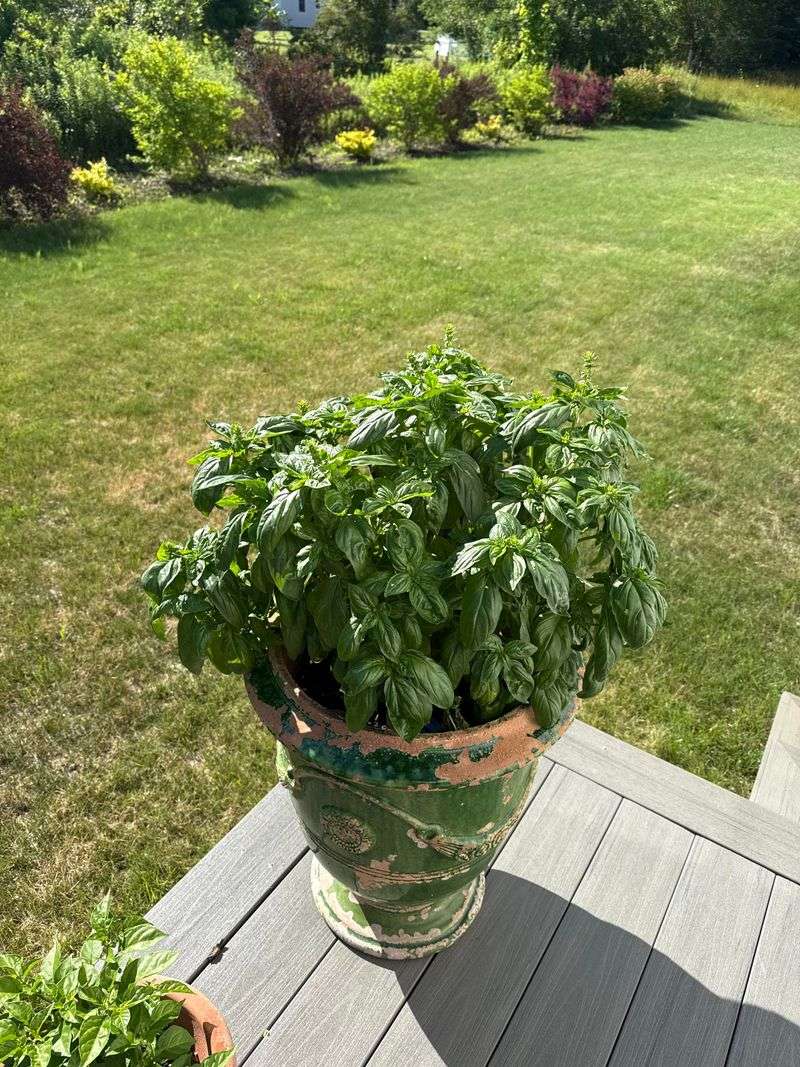
Basil is a generous plant, but it still has limits. Taking too much at one time puts the plant under serious stress, and a stressed plant slows way down.
Keeping to the one-third rule is one of the most important habits you can build as a basil grower.
The idea is straightforward. Never cut away more than one-third of the plant in a single harvest.
If your plant has twelve stems, take no more than four. This leaves the plant with plenty of leaves to continue making energy from sunlight.
A plant that keeps its leaves can recover quickly and push out new growth within days.
On warm, sunny Oregon summer days, basil grows fast. If you follow the one-third rule consistently, you can harvest from the same plant every week or two throughout the season.
That adds up to a lot of fresh basil from just a few plants over the course of a summer.
Gardeners who ignore this rule often find their plants looking weak and sparse by mid-July. Recovery takes much longer when the plant has been over-harvested.
Some plants never fully bounce back. Sticking to one-third keeps everything in balance.
Your plants stay lush, your harvests stay steady, and you end up with far more basil by the end of the season than you would by taking too much too soon. Think of it as a long game that always pays off.
6. Pinch Flower Buds Before They Open
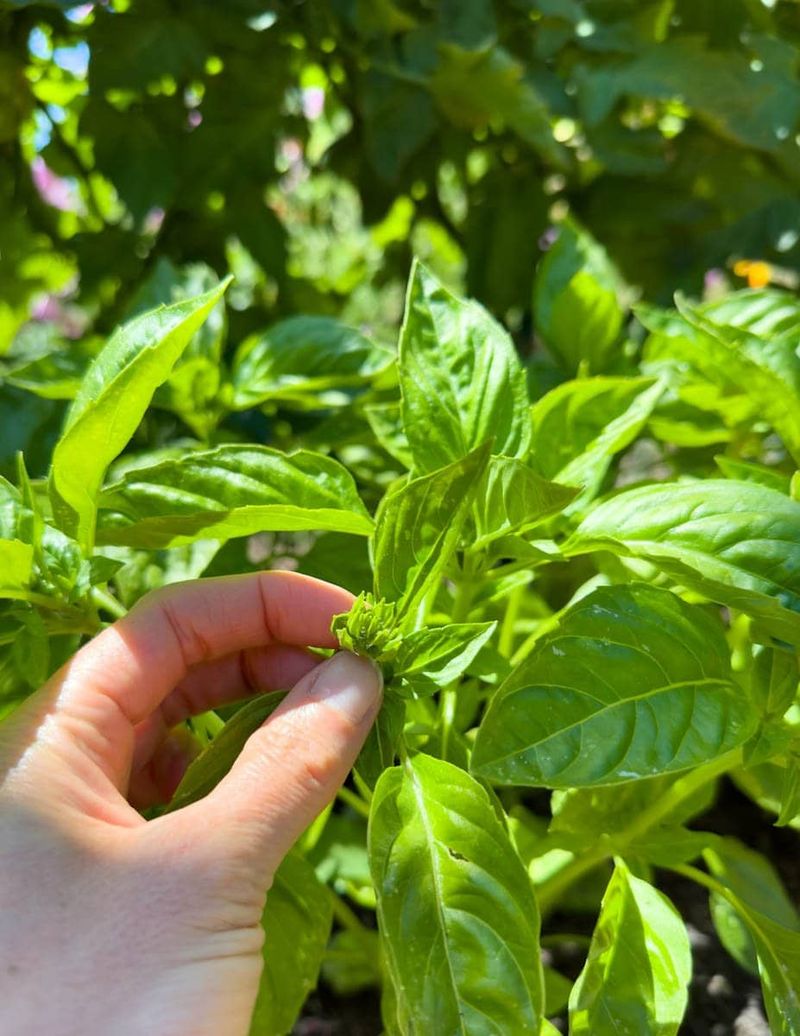
Flowering is basil’s way of finishing its job for the season. Once the plant goes to flower, it shifts all of its energy into making seeds instead of making leaves.
The leaves that remain become smaller, tougher, and a lot less flavorful. For home cooks who want sweet, tender basil all summer, this is a big problem.
The fix is simple. Keep an eye out for flower buds and pinch them off as soon as you spot them.
Flower buds look like tiny clusters of small pointed leaves forming at the very top of a stem. They appear before any actual flowers open.
If you catch them early, the plant quickly redirects its energy back to leaf production.
Basil plants often start developing buds in late July or early August when the days are long and warm. Check your plants every few days during this time.
It only takes a few seconds to pinch off a bud, and the payoff in leaf production is well worth the effort.
Some gardeners let one or two plants flower on purpose at the end of the season to collect seeds for next year. That is a smart idea, but keep the rest of your plants bud-free for as long as possible.
Consistent pinching is one of the easiest ways to extend your harvest well into September. Fresh-tasting basil in late summer is a reward that is hard to beat.
7. Harvest In The Morning For Best Flavor
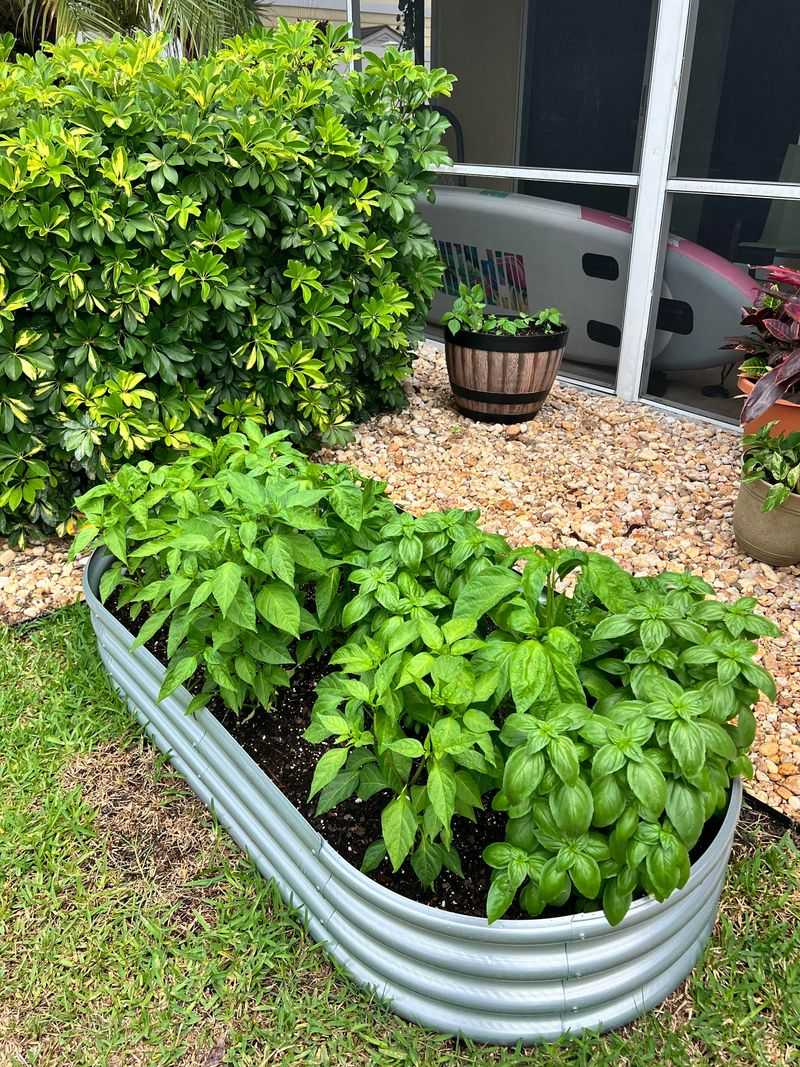
Timing your harvest to the right part of the day sounds like a small detail, but it genuinely affects how your basil tastes.
The best time to pick basil is in the morning, after the dew has dried but before the afternoon heat sets in.
This is when the plant’s essential oils are at their highest concentration, and those oils are what give basil its bold, sweet flavor.
As the day heats up, the plant naturally loses some of those aromatic compounds through evaporation. Basil picked at noon or in the late afternoon on a hot Oregon summer day will still taste good, but it will not have the same depth of flavor as morning-picked basil.
For cooking and especially for making pesto, that difference really comes through.
Morning harvesting also has a practical benefit. The leaves are firm and full of moisture first thing in the day.
Basil picked in the heat of the afternoon can wilt quickly once it is cut. Morning-harvested stems hold up much better and stay fresh longer, whether you use them right away or store them in a glass of water on your counter.
Getting into the habit of heading out to the garden with your scissors right after breakfast is a simple routine that makes a noticeable difference.
Your food will taste better, your basil will stay fresher longer, and you will enjoy the cool, quiet morning garden as a bonus. It is a small habit with a surprisingly big reward.
8. Use Clean Scissors For Bigger Cuttings
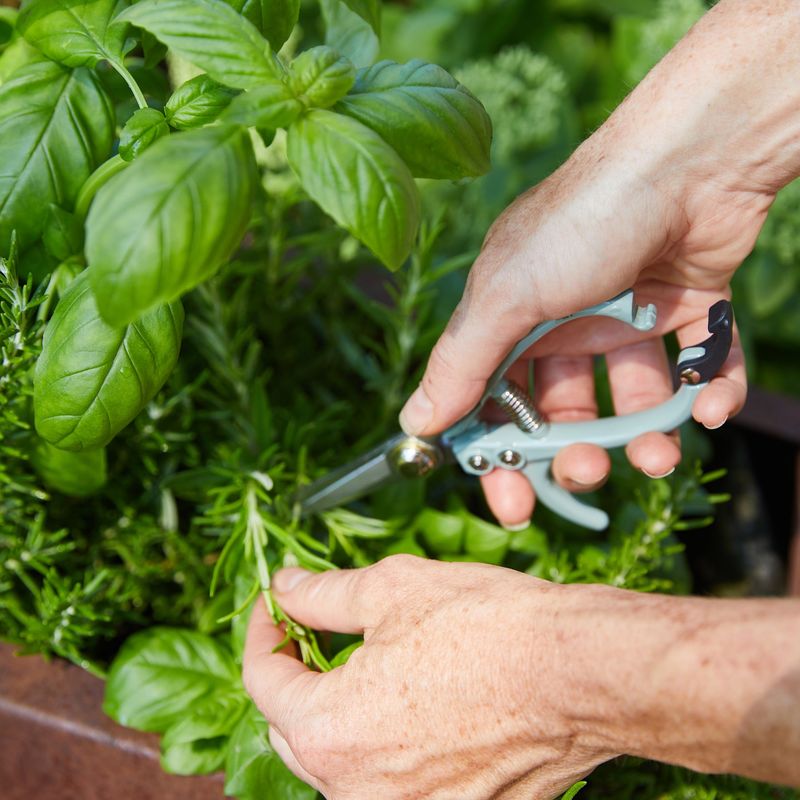
Sharp, clean scissors might not be the first thing that comes to mind when you think about growing basil, but they matter more than most people realize.
Tearing or pulling stems by hand can damage the plant tissue and leave ragged edges that are slow to heal.
Clean cuts with sharp scissors are faster for you and much gentler on the plant.
Dirty or dull blades can also introduce bacteria or fungal spores into the fresh cut. In Oregon’s damp spring and early summer conditions, this can become a real problem.
A quick wipe of your blades with rubbing alcohol before you start harvesting takes just a few seconds and keeps your plants safe from potential infection.
For small harvests of just a few leaves, clean hands work fine. But when you are taking several stems at once, scissors give you much more control.
You can aim your cut precisely above a leaf node without disturbing the rest of the plant. That precision makes a real difference in how quickly the plant recovers and starts pushing out new growth.
Keep a dedicated pair of small garden scissors near your herb bed so they are always ready to go. Rinse them off after each use and dry them well to prevent rust.
A good pair of scissors will last for many seasons. Treating your tools with a little care means they will always be ready when your basil is calling for a trim.