The Meaning Behind Seeing A Luna Moth In Your Ohio Yard
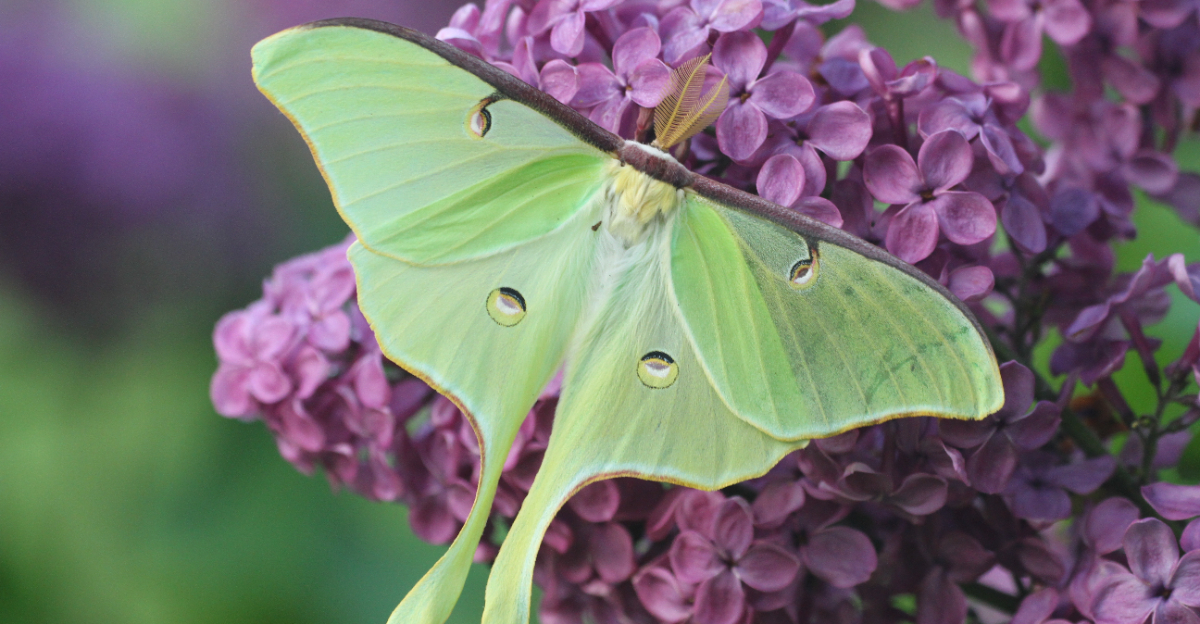
A luna moth in your Ohio yard is not something you forget. That wingspan, that color, that almost surreal stillness when it lands somewhere close enough to really look at.
Most people see one and immediately want to know what it means that this creature found its way to their particular patch of Ohio. Luna moths are not random wanderers.
They show up where conditions are right, where the right trees grow, and where the night environment still supports them. Those conditions help them complete a life cycle that is far more remarkable than most people realize.
A sighting says something real about your yard and the ecosystem it has become, or is becoming. Not every Ohio garden earns a luna moth visit, which is part of what makes one land with such weight when it happens.
What that visit actually means is worth understanding fully.
1. A Luna Moth Means Your Yard Still Feels Connected To The Woods
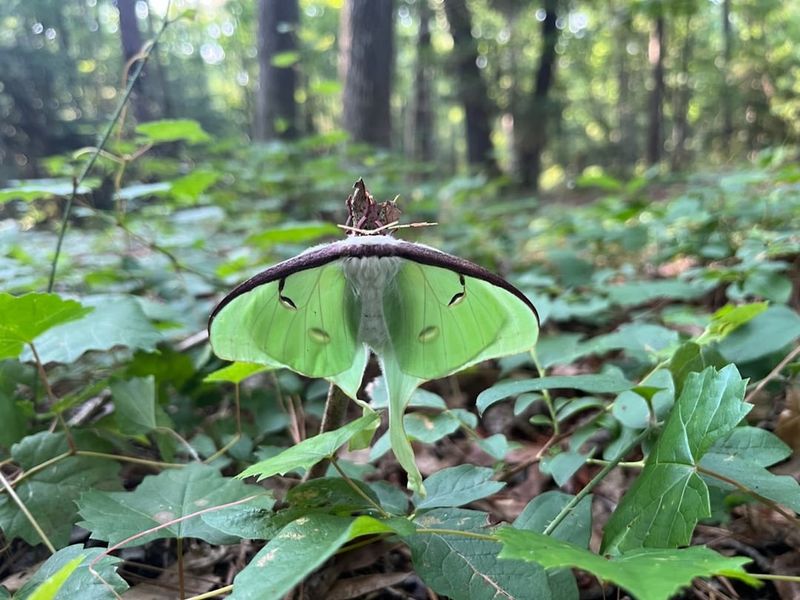
Walking out to grab something from the car late at night and catching a flash of pale green on a nearby tree is the kind of moment that stops you cold. Luna moths do not wander far from the habitat they need.
Seeing one near your home is a quiet signal that something in the surrounding area is working in their favor.
Luna moths depend on a mix of mature trees, relatively undisturbed ground, and low-light nights. Your yard does not have to be a forest.
But if one shows up, it likely means the area around your home has at least some of the conditions these moths rely on. A wooded edge nearby, a row of older trees, or even a neighbor’s large backyard can all play a role.
That said, one moth is not proof that the whole landscape is thriving. Think of it more like a small signal.
Something in the area is offering enough habitat for luna moths to complete at least part of their life cycle. That is worth noticing.
It is also worth thinking about what simple things you might already be doing, or not doing, that help keep that connection to the woods alive.
2. Mature Trees May Be Supporting More Life Than You Realize
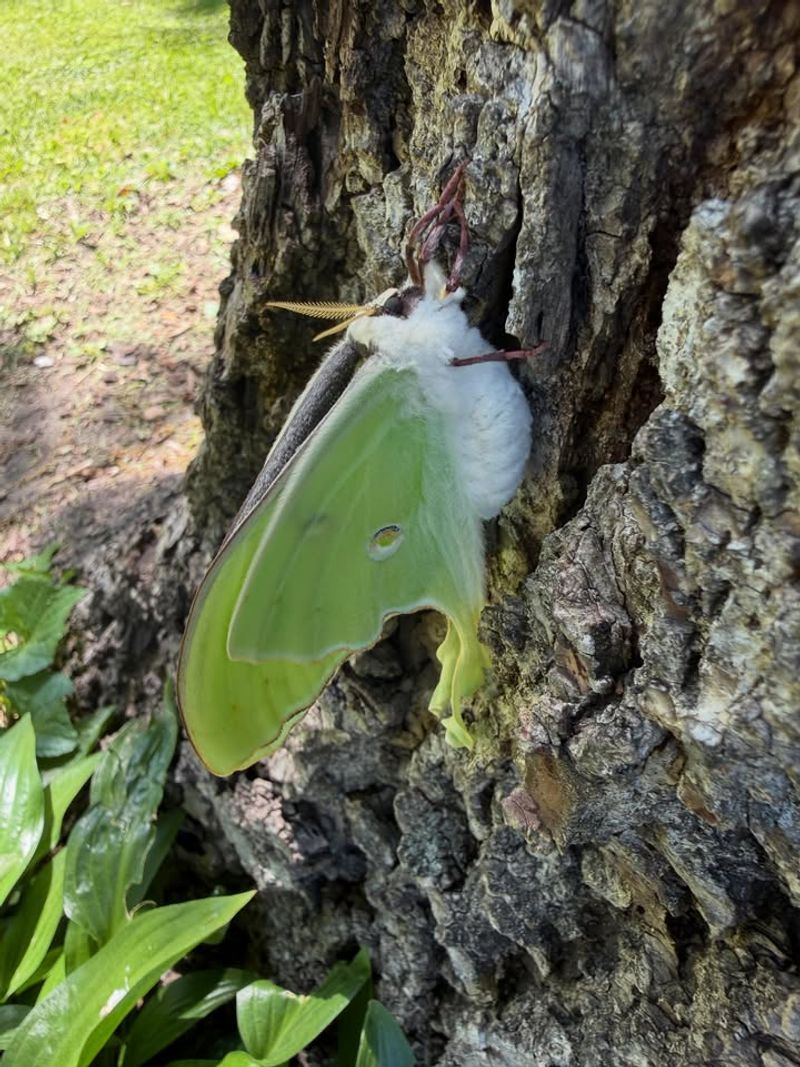
A big old tree in the backyard can feel like just a shade source or a spot to hang a hammock. But for insects like the luna moth, mature trees are much more than that.
Luna moth caterpillars feed on the leaves of certain host trees. These include black walnut, sweetgum, hickories, and white birch, depending on what is available in the region.
These are not small shrubs or ornamental plantings. They are large, established trees that take decades to grow.
When your yard has even one of these trees, or when a neighbor nearby has one, it can quietly support an entire generation of luna moths without you ever noticing.
The caterpillars feed, grow, and eventually form cocoons, all while staying up in the canopy or tucked into leaf litter below.
Your Ohio Garden Changes Every Week. Your Plan Should Too.
Gardening in Ohio changes quickly throughout the season. Every Friday you’ll receive a simple weekly plan showing exactly what to plant, prune, fertilize, harvest, and protect so you never miss the right timing.
Mature trees also support birds, beetles, and dozens of other insects that many Ohio gardeners never see simply because the activity happens at night or high above eye level.
Keeping large trees healthy and standing, rather than removing them, preserves habitat that took a long time to build.
A tree that looks ordinary from the outside may be doing extraordinary work for the local food web around it.
3. Nighttime Darkness Makes This Green Visitor Easier To Find
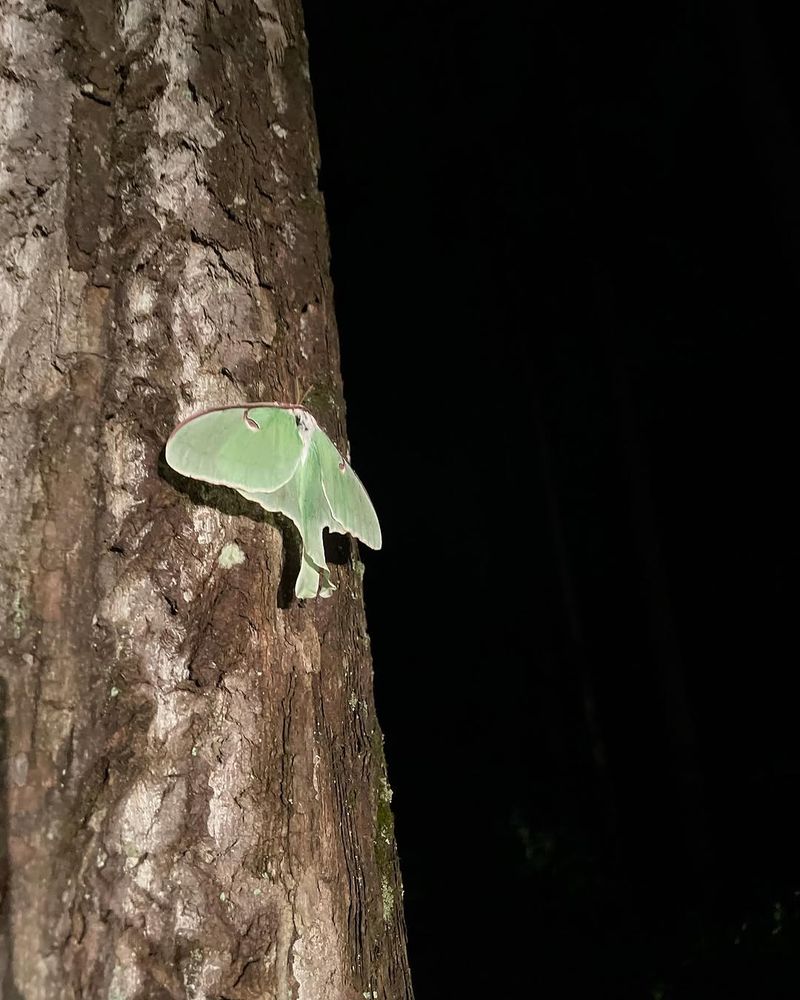
A porch light can turn an ordinary night into a surprise encounter with something unexpected. Luna moths are nocturnal, meaning they are active after dark.
They fly, find mates, and rest during the nighttime hours. Yards that stay relatively dark after sunset give these moths a quieter environment to move through without as many disruptions.
Outdoor lighting affects more than just visibility. Bright lights can interfere with the natural movement patterns of many nighttime insects.
Moths are known to be attracted to artificial light sources, which can pull them away from the routes and behaviors they would follow in darker conditions. A yard flooded with light all night long can become a more confusing space for insects trying to navigate naturally.
Darker yards are not just better for moths. They also tend to support a broader range of nighttime wildlife, from fireflies to toads to bats.
If you spotted a luna moth near your home, the darkness of your surroundings may have played a role in making that sighting possible. Keeping unnecessary lights off after a certain hour can help maintain a calm, dark environment.
Switching to motion-activated fixtures can also make luna moths feel less exposed.
4. Host Trees Could Be Feeding The Next Generation Nearby
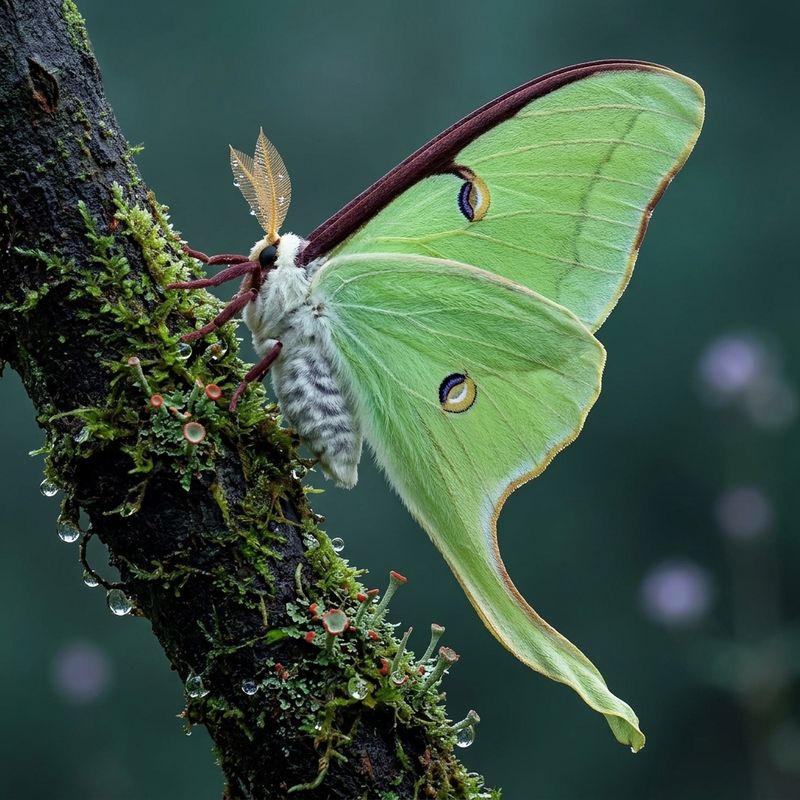
Adult luna moths do not eat at all. Once they emerge from their cocoons, their only focus is finding a mate.
They have no working mouthparts for feeding, which means they are not visiting flowers, sipping nectar, or looking for food sources the way butterflies do. Their entire adult life lasts about one week.
All of the feeding happens earlier, during the caterpillar stage. Luna moth caterpillars are bright green and chunky, blending in well with the leaves they eat.
They rely on suitable host trees like black walnut, hickories, sweetgum, and white birch. If a luna moth is seen in your yard, it does not necessarily mean the host tree is in that exact spot.
The moth may have emerged or traveled from a nearby wooded area, a neighbor’s property, or a tree just down the road.
Thinking about host trees as a neighborhood resource is helpful. You do not need to own the tree for the moth to benefit from it.
But if you do have a large native tree on your property, it may already be supporting caterpillars you have never noticed. Checking leaves for feeding signs in late summer can give you a better sense of what is happening above your head.
5. A Quiet Yard Gives Giant Silk Moths A Safer Stop
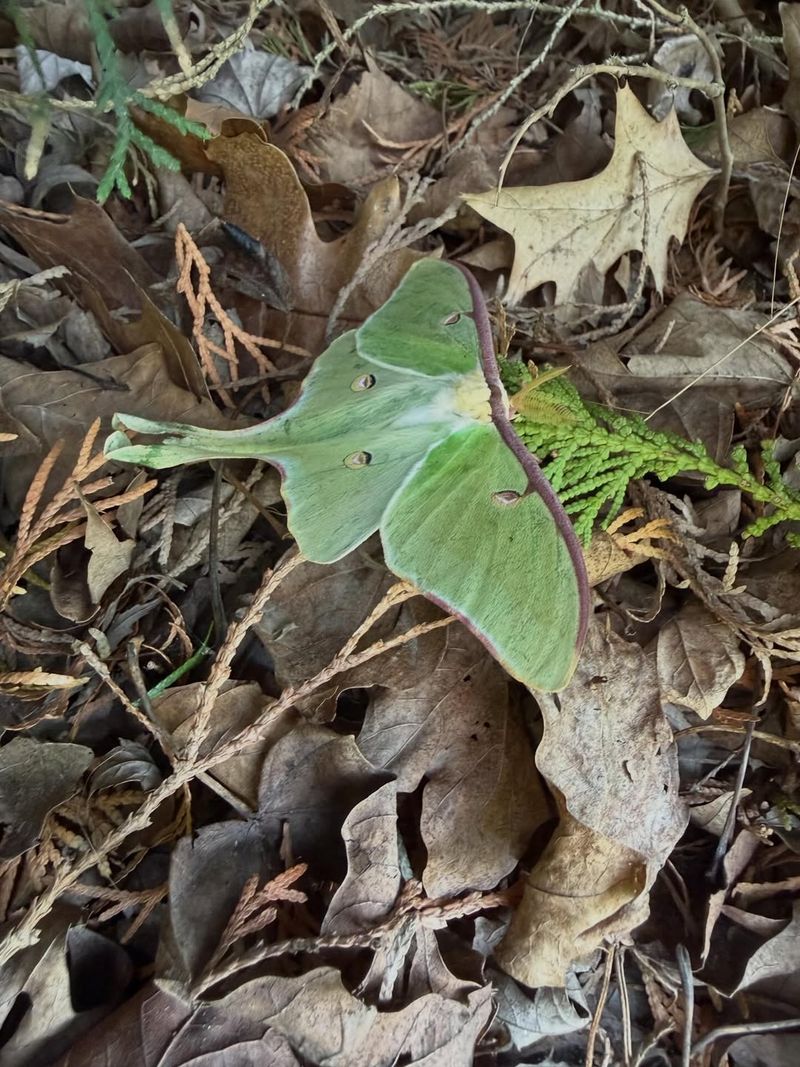
Giant silk moths, which include luna moths, are not built for chaos. They are large, slow-flying, and spend most of their adult lives resting rather than moving around constantly.
Yards that are mowed at night, sprayed frequently, or kept brightly lit can be harder for these moths to move through without interruption.
Low-disturbance areas tend to be more welcoming to nighttime wildlife in general. This does not mean a yard has to be completely wild or unmaintained.
It simply means that certain habits can make a difference for insects that need calmer conditions. These include avoiding pesticide sprays near wooded edges, skipping the late-night leaf blower, or leaving one corner a little less managed.
Luna moths are members of the family Saturniidae, a group known for producing some of the largest moths in North America. Because they do not feed as adults, they have a short window to find a mate and rest safely.
A yard that offers some undisturbed resting spots gives them a better chance of completing that process. Those spots might be on tree bark, a wooden fence, or a dense shrub.
Small changes in yard habits can add up over time.
6. Leaf Litter May Be Protecting Hidden Cocoon Sites
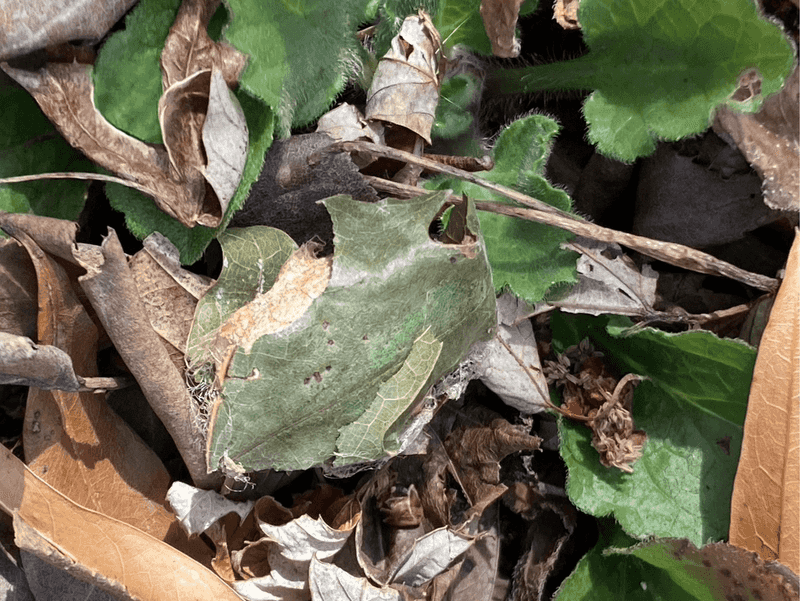
Fallen leaves get a bad reputation in tidy yards. Many homeowners rake and bag every leaf as soon as it hits the ground, which makes sense near walkways and driveways.
But in garden beds and along wooded edges, leaf litter plays a role that is easy to overlook.
Luna moths form their cocoons by wrapping themselves inside a leaf, which then falls to the ground with the rest of the autumn drop. The cocoon overwinters in the leaf litter, protected by the insulation and cover that the pile provides.
If every leaf is removed from every part of the yard, those cocoon sites disappear along with them.
Leaving some leaf litter in low-traffic Ohio garden beds, under trees, or along the back edge of the yard can help preserve sheltered spots for overwintering insects. This does not mean piling leaves against your home’s foundation or blocking drainage areas.
A light layer in a garden bed or a natural accumulation under a large tree is enough to make a difference. If you spotted a luna moth this season, there is a good chance a cocoon from last fall had something to do with it.
Protecting that layer going forward gives next year’s generation a better start.
7. Porch Lights Can Pull Luna Moths Off Course
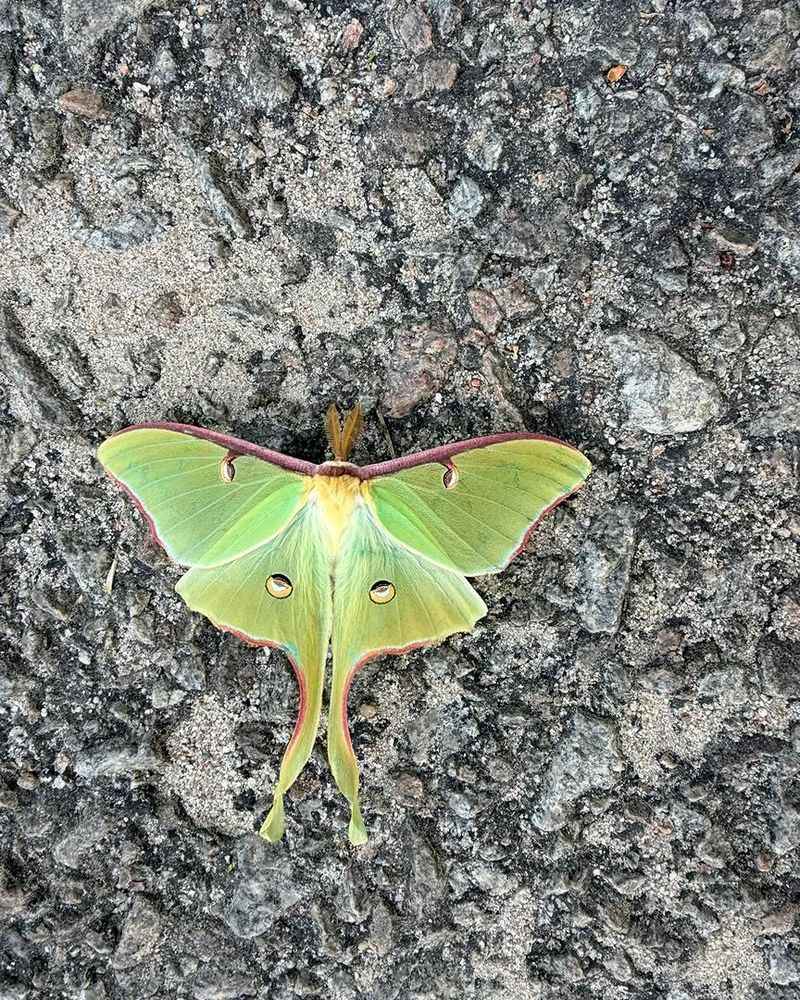
Outdoor lights feel like a basic part of home life, but for nocturnal insects, they can act like a trap. Moths are strongly attracted to artificial light sources, and luna moths are no exception.
A bright porch light left on all night can draw moths in from a surprising distance, pulling them away from the natural behaviors they would otherwise follow in the dark.
When a luna moth gets stuck circling a light, it burns energy it cannot replace. Remember, adult luna moths do not eat.
Every hour spent orbiting a porch light is an hour not spent finding a mate or resting safely. This can shorten an already brief adult life that lasts only about a week under normal conditions.
There are some simple ways to reduce the impact of outdoor lighting on local moths. Turning off porch lights when you do not need them is the easiest step.
Motion-activated lights are another option, since they only come on briefly rather than staying lit all night. Amber or warm-toned bulbs tend to attract fewer insects than bright white or blue-white lights.
Closing curtains to reduce indoor light spill can also help. None of these changes require a major overhaul.
Small shifts in how and when you use outdoor lighting can make your yard a calmer place for nighttime visitors.
8. One Moon Green Visitor Points To A Bigger Backyard Story
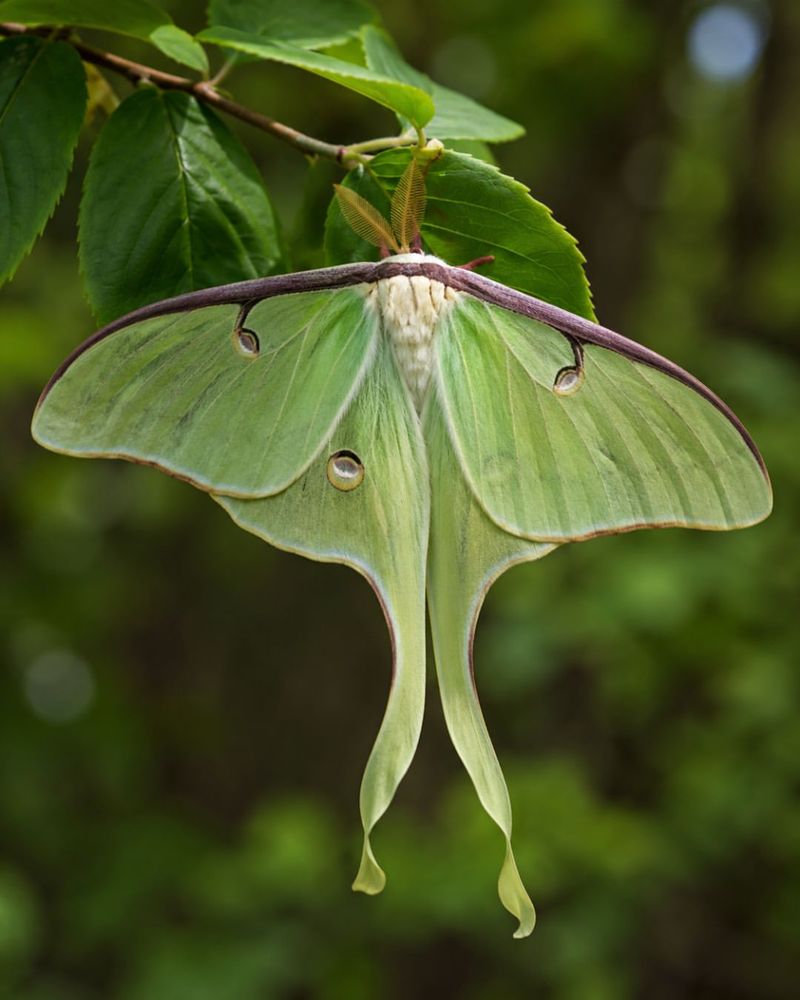
Spotting a luna moth once can feel like a one-time event. But that single sighting is really a small window into something much larger happening around your home.
Trees, darkness, leaf litter, and seasonal timing all come together to make a luna moth visit possible. None of those pieces work alone.
Luna moths go through a full life cycle that includes eggs, caterpillars, cocoons, and short-lived adults. Each stage depends on different conditions.
The caterpillar needs host tree leaves. The cocoon needs undisturbed ground cover.
The adult needs darkness and a calm place to rest. When a luna moth shows up in your yard, it means at least some of those conditions are present nearby, even if you cannot see all of them at once.
That is the bigger story behind a luna moth sighting. Your yard is part of a connected landscape that includes neighboring trees, shared night skies, and seasonal rhythms that play out year after year.
Paying attention to what that sighting might mean, and making even small choices to support the habitat around you, adds up over time.
Keeping some leaves, protecting older trees, and dialing back unnecessary lighting are all steps that ripple outward into the broader world just beyond your back door.