8 Signs Your Michigan Lilac Has Blight And What To Do Right Away
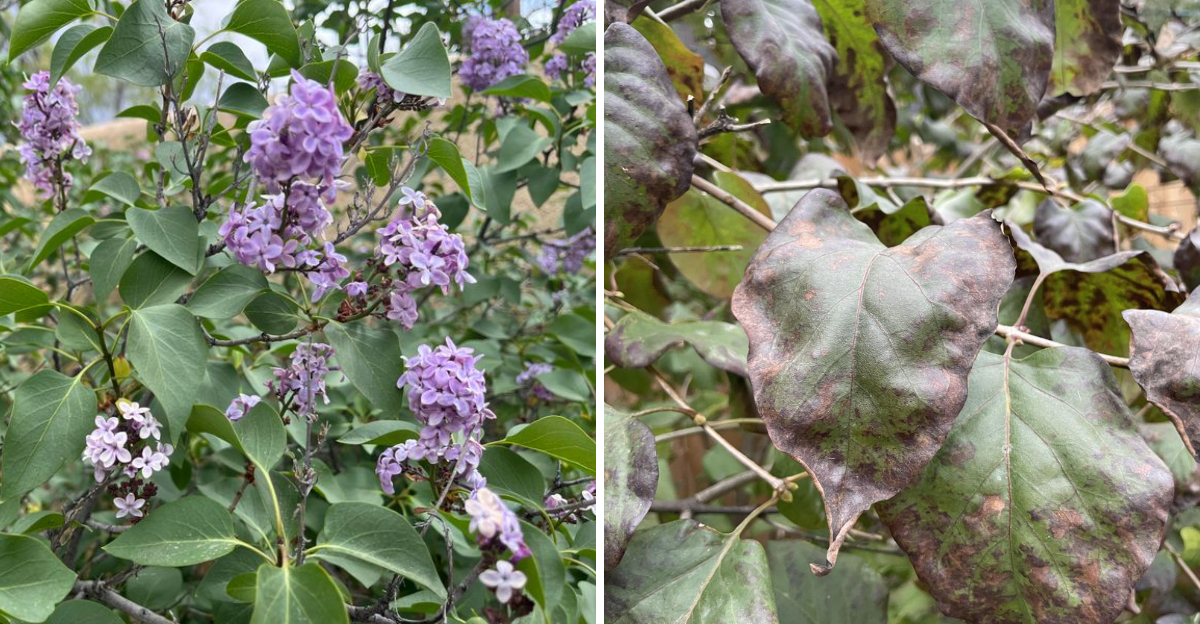
Michigan lilacs can look perfectly healthy one week. The next week, something is clearly wrong, and it is moving fast.
That is the part many gardeners are not prepared for. Bacterial blight does not announce itself slowly over months.
It shows up in cool, wet spring weather, moves through soft new tissue quickly, and can take a healthy-looking shrub from vibrant to visibly damaged in a matter of days.
Michigan spring weather is practically built for this problem. Cool temperatures, rain, and damp mornings create ideal conditions for Pseudomonas syringae, the bacteria responsible for lilac blight.
The shrubs that have been building toward bloom all winter become vulnerable right when they are working hardest.
The good news is that early action matters. A gardener who knows the signs and responds quickly can protect far more of the shrub than one who waits to see if things improve on their own.
Sharp eyes in April and May are worth more than any product on the garden center shelf. That is where the first blight clues start to matter.
1. Spot Water Soaked Leaf Marks
A cool Michigan morning, coffee in hand, and something looks slightly off about the lilac. The leaves appear wet in patches, but it has not rained in two days. That detail is worth stopping for.
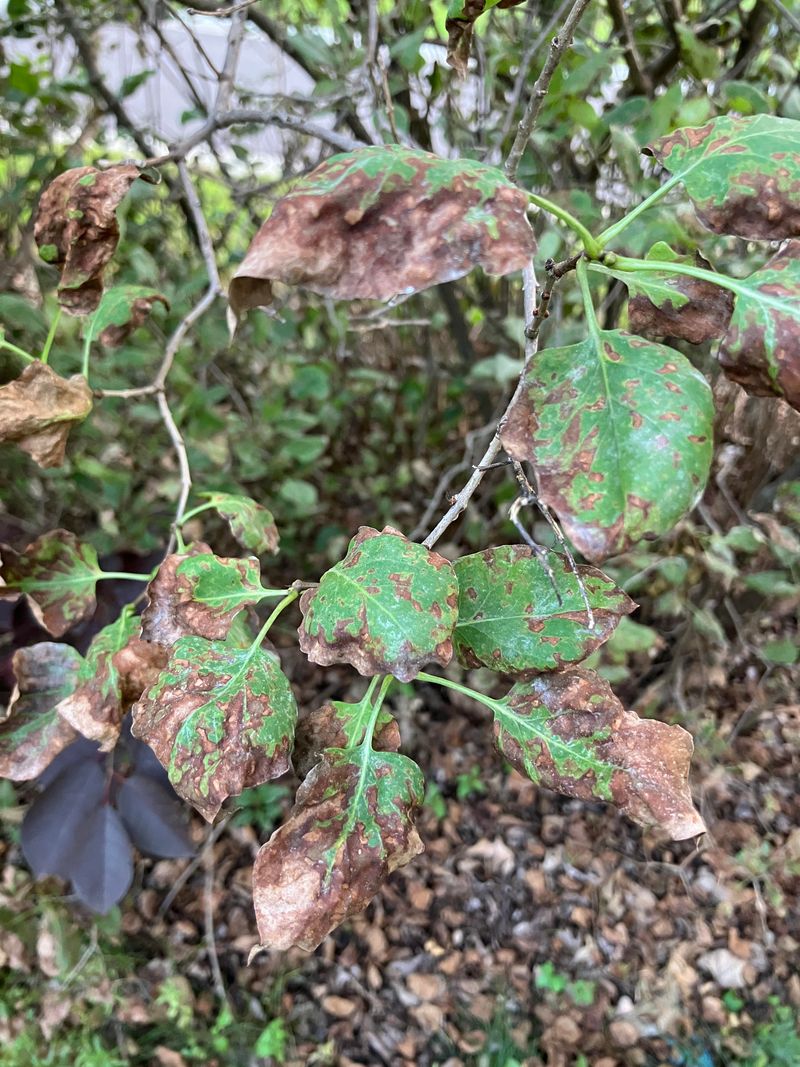
Water-soaked spots on lilac leaves are one of the first visible signals of bacterial blight caused by Pseudomonas syringae.
The spots appear small and irregular in shape, with a slightly greasy or darkened look that is easy to dismiss as routine moisture or minor leaf contact damage. They often show up near the leaf margins or along the veins first.
The conditions that allow these spots to appear and spread are entirely normal for Michigan in April and May.
Rain splash carries the bacteria from infected tissue to healthy leaves. Wind assists with the movement. Cool, damp mornings extend the window when bacteria remain active on leaf surfaces.
Checking the undersides of leaves matters as much as checking the tops. Early signs sometimes appear there first, where moisture lingers longer and direct observation is easier to skip during a quick walk-through.
When these spots appear, the most useful response is to note their location, estimate how many leaves are affected, and watch whether the coverage is expanding over the following days.
Early detection at this stage keeps the response manageable.
Blight that gets addressed when spots are still small and contained is considerably easier to manage than blight that has been progressing unnoticed for two weeks while the gardener assumed the spots were weather-related.
2. Watch Young Shoots Turn Black
New growth on a lilac in spring should look optimistic. Bright green shoots pushing out from branch tips are one of the better parts of the Michigan gardening season.
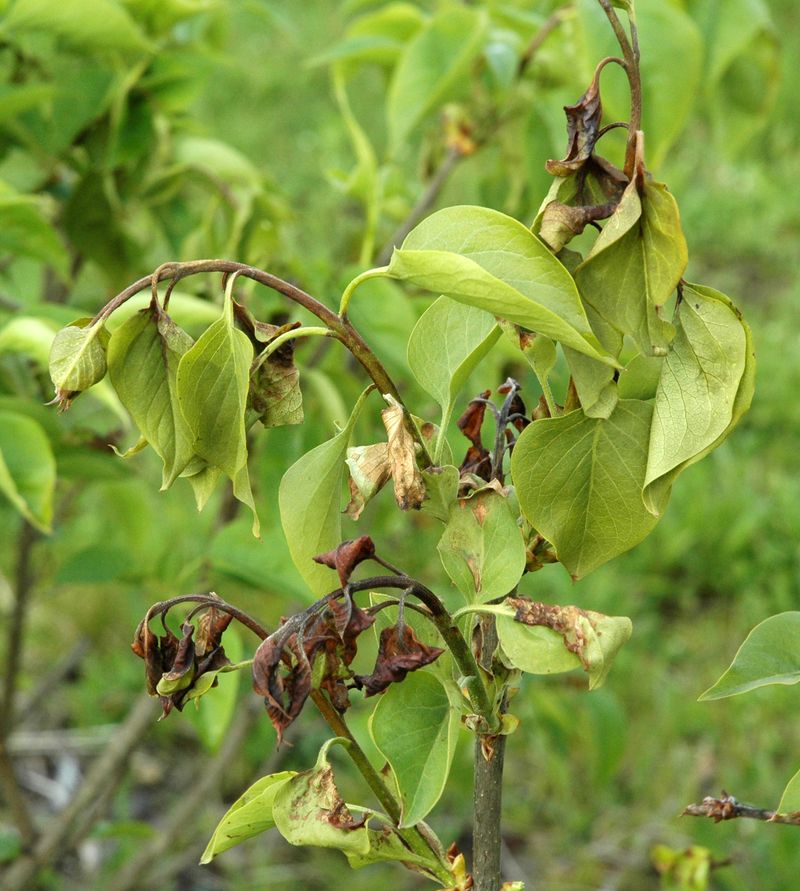
When those same shoots start turning black and bending downward within days of looking healthy, the situation has moved beyond early warning into active infection.
Blackened young shoots are one of the most recognizable symptoms of lilac blight, and the speed at which they appear after initial infection is what catches gardeners off guard.
Your Michigan Garden Changes Every Week. Your Plan Should Too.
Gardening in Michigan changes quickly throughout the season. Every Friday you’ll receive a simple weekly plan showing exactly what to plant, prune, fertilize, harvest, and protect so you never miss the right timing.
Soft, new tissue lacks the tougher cell walls of mature growth, which makes it significantly more accessible to Pseudomonas syringae during cool, wet spring conditions.
The blackening typically starts at the tip of the shoot and progresses downward.
A shoot that looked perfectly healthy on Monday morning can show visible darkening and wilting by Thursday with no intermediate warning visible to a gardener checking only once a week.
This progression is especially common in Michigan after cold, rainy spring spells followed by mild temperatures.
That exact weather pattern shows up reliably in April and May across the state, making the timing predictable even when the specific outbreak is not.
Checking branch tips every two to three days during spring rather than weekly gives the earliest possible view of this symptom at a stage when pruning still has a meaningful chance of containing the damage.
Catching blackened shoots before the infection moves further down the branch is the difference between removing one affected tip and losing a significant portion of the structure.
3. Notice Leaves That Look Scorched
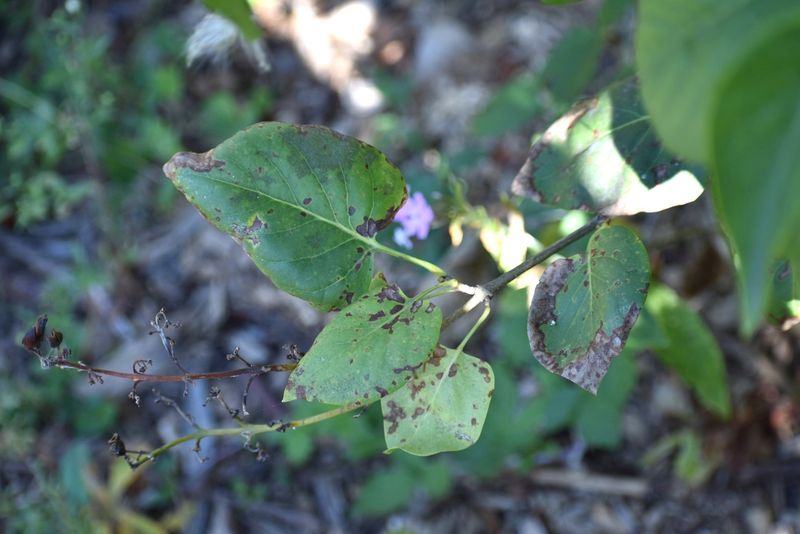
Lilac foliage that looks burned without any fire having touched it is a disorienting sight.
The resemblance to frost damage or heat stress is strong enough that many Michigan gardeners conclude the plant had a rough weather event and give it time to recover on its own.
That assumption costs weeks of response time while the bacteria continues to spread.
The scorched appearance develops as water-soaked spots dry out and turn brown. The tissue around the spots often yellows first, then shifts to a tan or brown color with irregular edges.
From a few feet away, the visual impression is convincingly similar to late frost damage, which is not an unusual occurrence in Michigan spring.
The distinction between frost damage and blight is visible in the pattern. Frost damage tends to affect the plant relatively evenly, hitting exposed tissue across the whole shrub in proportion to its exposure.
Blight damage appears in scattered, irregular patches, often concentrated on newer growth while nearby older foliage remains unaffected.
Looking at the stem directly below any scorched leaves provides additional diagnostic information.
Dark streaking in the stem tissue below the affected leaves points toward bacterial blight rather than weather damage. Frost-affected stems typically do not show that internal discoloration.
A Michigan gardener who knows this difference can make the correct call in under a minute instead of spending two weeks waiting for weather-related recovery that is never going to arrive.
The faster the correct diagnosis happens, the more of the shrub the pruning session can realistically protect.
4. Check For Blighted Flower Clusters
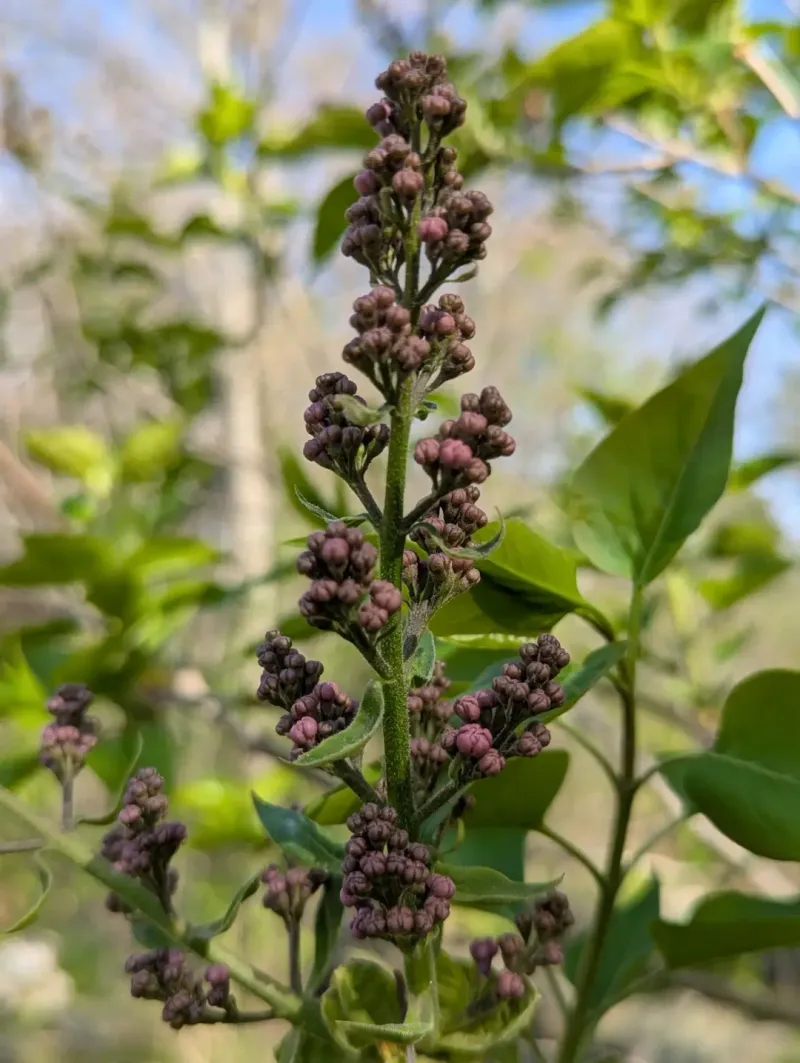
Lilac season in Michigan carries a specific kind of anticipation.
The blooms are the payoff for the whole year. Finding a cluster of brown, shriveled flowers where a full purple panicle was supposed to open is both a disappointment and a diagnostic signal worth acting on immediately.
Flower clusters called panicles are highly vulnerable to Pseudomonas syringae during cool, wet spring conditions.
The bacteria can infect blooms either just before they open or shortly after, and the result is clusters that turn brown and collapse before or during peak bloom.
The shriveled clusters typically remain attached to the plant, which makes them identifiable against the healthy blooms opening nearby.
The problem extends beyond appearance. Bacteria present in those blighted flower clusters remain active and continue spreading to healthy tissue through rain splash and insect activity during wet weather.
Leaving blighted clusters on the plant during the wet spring season provides ongoing transmission opportunities throughout the bloom period.
Healthy clusters in the same bloom cycle look vibrant while blighted ones appear collapsed and papery. The contrast is usually visible enough to identify from a short distance.
Discoloration sometimes starts at the base of the cluster and spreads outward, which can look like the bloom started normally and then stopped.
Identifying blighted flower clusters early in the bloom period gives the pruning effort a clear and specific target.
Removing them before they break down further reduces the bacterial load actively contributing to spread while protecting the healthy clusters that are still performing exactly as they should.
5. Prune During Dry Weather
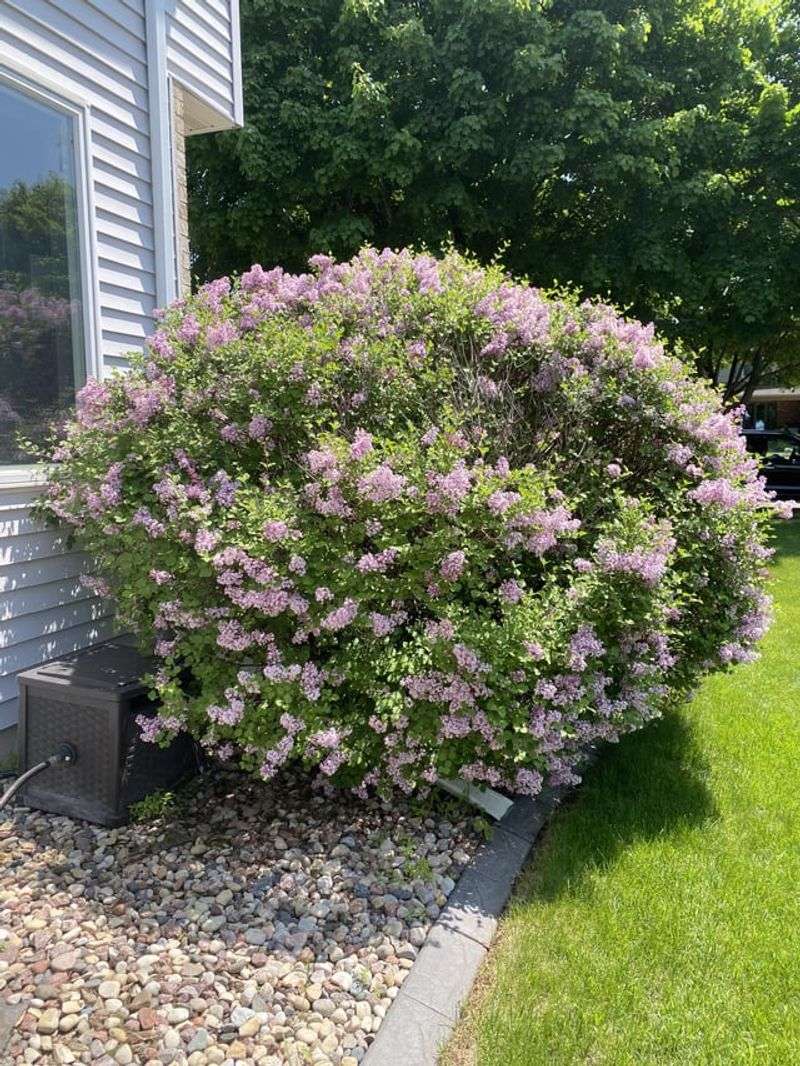
The impulse to address visible blight damage immediately is understandable. The affected branches look bad, the season is progressing, and waiting feels counterproductive.
But pruning blighted lilac tissue during wet conditions actively works against the goal of the pruning session itself.
Bacterial blight spreads through water. Rain, dew, and surface moisture on plant tissue carry Pseudomonas syringae from infected areas to healthy ones.
When cuts are made during wet conditions, fresh wounds open on the plant at the exact moment moisture is present to transport bacteria directly into those wounds.
The pruning session intended to remove infection creates new entry points while doing so.
Waiting for a stretch of dry, sunny weather before pruning gives fresh cuts time to begin the initial sealing process before moisture returns.
A two to three day dry window is a practical target.
Checking the weather forecast before scheduling the pruning session rather than going out whenever the affected branches become visually bothersome makes a measurable difference in how effective the pruning turns out to be.
Morning pruning during a dry stretch performs better than evening pruning because foliage dries out more completely through the day, reducing surface moisture at the time cuts are made.
Dry conditions also provide better visibility of exactly which tissue is affected.
Stems are cleaner, the boundaries between healthy and damaged tissue are easier to read, and the cuts themselves are more precise when the working environment is not competing with rain and damp foliage.
Patience before the pruning session is part of the pruning strategy.
6. Remove Affected Shoots Carefully
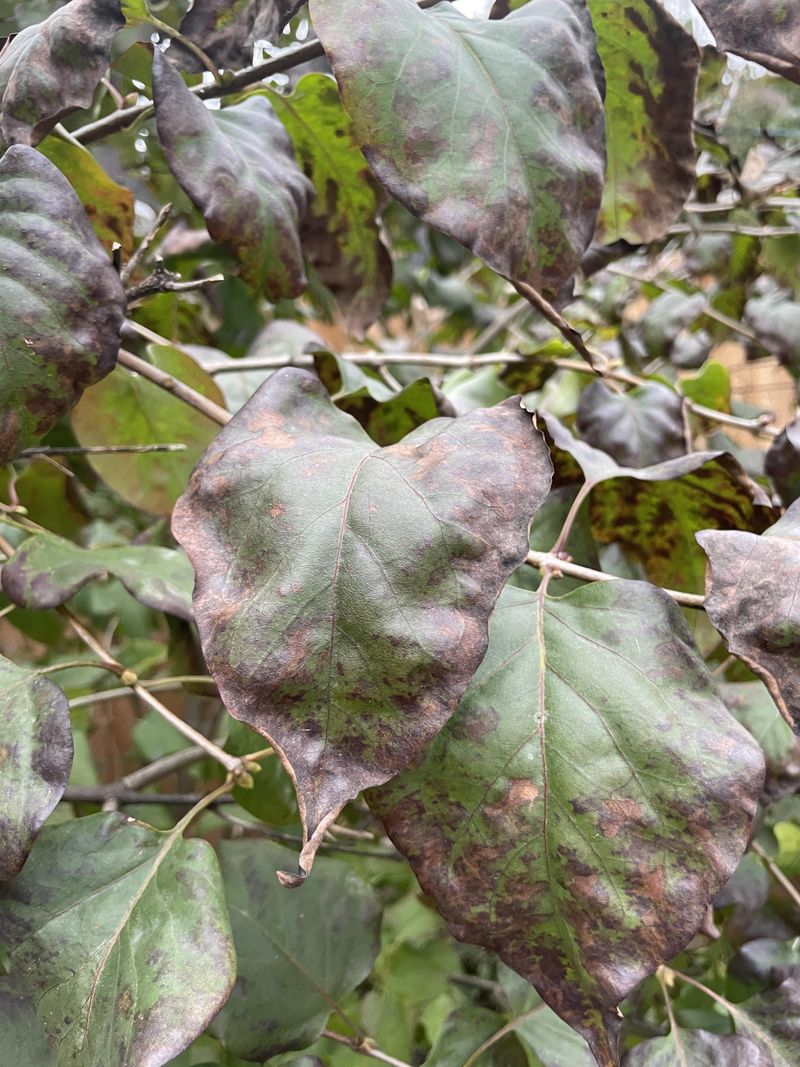
The instinct to cut right at the edge of visible blight damage feels efficient. The discolored tissue is removed, the healthy-looking wood stays, and the job appears complete.
The problem is that Pseudomonas syringae travels through plant tissue ahead of the visible symptoms it produces.
Cutting at the visible edge of damage frequently means leaving infected tissue behind in the branch.
That remaining bacteria continues progressing after the pruning session, and the same branch shows new symptoms within days, requiring another round of cuts.
Removing affected shoots at least six to eight inches below any visible discoloration significantly improves the chance of cutting into genuinely healthy tissue rather than tissue that looks healthy but is already compromised.
When cutting large or established branches, going further below the symptoms is a more conservative and more effective approach.
Angled cuts made just above a healthy bud or branch junction allow water to run off the cut surface rather than pooling, which reduces the moisture accumulation that could help bacteria enter the wound.
Clean, smooth cuts heal more efficiently than ragged ones and reduce the time the wound remains vulnerable.
All removed material should go directly into a bag or container as cuts are made rather than being dropped to the ground near the base of the shrub.
Bacteria in fallen plant material can survive at soil level and reinfect through rain splash during subsequent wet weather.
Blighted material belongs in the trash rather than the compost pile. Standard backyard composting does not reliably reach temperatures sufficient to eliminate Pseudomonas syringae.
7. Disinfect Tools Between Cuts
Every other step in managing lilac blight can be executed correctly and still fall short if the pruning tools are carrying bacteria from one cut to the next.
Blade surfaces transfer Pseudomonas syringae directly into fresh wounds on healthy wood, and a single infected branch can spread contamination throughout the whole shrub in one pruning session without this step.
A solution of one part household bleach to nine parts water is effective for tool disinfection between cuts.
Rubbing alcohol at seventy percent concentration is an equally effective alternative and is somewhat less corrosive on metal blades over extended use.
Keeping a small container of either solution nearby during the pruning session makes the step practical rather than disruptive.
Dipping or wiping the blades between every cut rather than between branches is the correct approach. Allowing the solution to contact the blade for at least thirty seconds before the next cut gives it adequate time to be effective.
The habit feels slow during the first pruning session. It becomes automatic by the second one, and the time added per session is genuinely minimal compared to the consequence of skipping it.
After the full pruning session, cleaning tools thoroughly and drying them completely before storage prevents rust damage from residual bleach or moisture.
A light oil application on the blades after drying extends tool life and maintains the sharp edges that produce clean cuts.
Sharp, clean tools protect the lilac twice. Once from disease transmission between cuts, and once by producing wounds that seal faster and leave less opportunity for subsequent infection.
8. Improve Airflow Around The Shrub
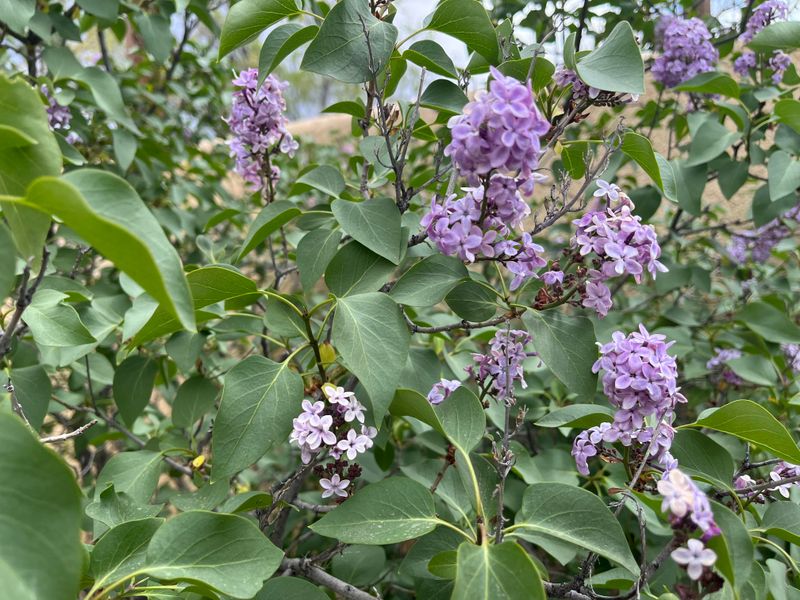
Remember, a lilac with dense, tangled interior growth holds moisture longer after rain and dew.
Leaves and stems in a crowded canopy dry slowly, and that extended surface moisture is exactly the environment Pseudomonas syringae requires to remain active and move between plant surfaces.
Improving airflow around and through the shrub is one of the most practical long-term investments in blight management, and it requires no product and no specialized knowledge.
The goal is reducing the duration of wet conditions on plant surfaces after each rain or dew event.
Removing crossing, rubbing, and inward-growing branches opens the canopy interior to light and air movement without dramatically changing the shape of the shrub.
Those specific branch types create congestion without contributing meaningfully to the overall structure.
Examining what grows nearby also matters. Overgrown neighboring shrubs, fences, or structures positioned close to the lilac restrict air movement from certain directions regardless of how well-pruned the lilac itself is.
Creating modest additional physical space around the shrub often improves drying conditions more than internal pruning alone.
Full sun placement reduces blight pressure significantly compared to shaded locations. Shaded spots warm up more slowly in spring and stay wet longer after rainfall, extending the window during which bacteria remain active on leaf surfaces.
A lilac that struggles with blight in a partly shaded location every year warrants consideration of whether thinning nearby trees to increase sun exposure would change the seasonal outcome.
Better airflow does not prevent blight. It changes the conditions enough that each infection has a harder time getting started and spreading before it is noticed.