Florida Native Vines That Support Other Backyard Birds Besides Painted Buntings
There is a version of a Florida yard that goes well beyond a feeder and a birdbath, and native vines are a big part of what makes that possible.
When the right vines are climbing fences, trellises, and arbors, plain vertical spaces become something genuinely useful for wildlife.
Nectar for hummingbirds, berries for songbirds, insects for the birds that prefer to hunt rather than visit a feeder, and dense cover that gives smaller birds a place to feel safe.
It is a lot of value packed into a relatively small footprint, which makes native vines one of the more underrated additions to a bird-friendly Florida landscape.
They do work best as part of a bigger habitat setup that includes shrubs, trees, grasses, and clean water, but as one piece of that picture, the contribution they make is hard to overstate.
1. Coral Honeysuckle Is A Bird Magnet
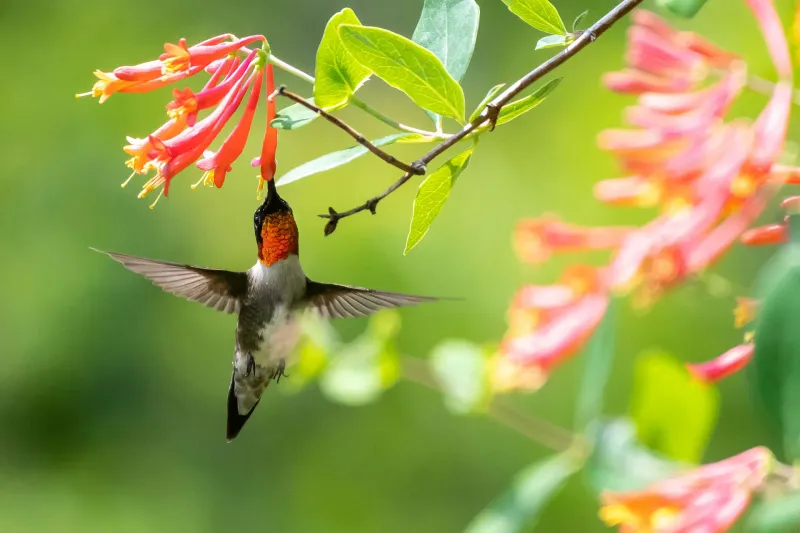
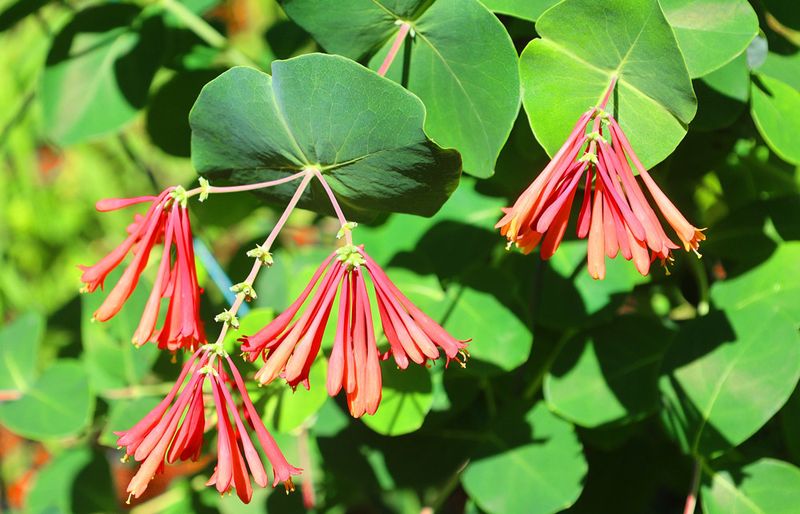
Watch a Florida fence line long enough in late winter or early spring, and you might spot a ruby-throated hummingbird hovering right at a cluster of slender red tubes. Those are coral honeysuckle flowers, and hummingbirds find them nearly impossible to ignore.
This Florida native vine produces tubular blooms in shades of coral red and orange that are shaped almost perfectly for a hummingbird’s bill, making it one of the most reliable hummingbird-attracting vines you can grow in a yard.
After the flowers fade, small red berries develop along the stems. Those berries can draw songbirds like American robins and hermit thrushes, especially during fall and winter months when other food sources thin out.
The foliage also provides some light cover for small birds moving along a fence or trellis.
Coral honeysuckle grows well on trellises, arbors, fences, and pergolas where its twining stems can be guided easily. It handles full sun to partial shade and tends to stay manageable compared to more aggressive vines.
Gardeners often find it works well near a patio or garden edge where hummingbird activity can be enjoyed up close.
It does not replace shrubs or trees in a layered habitat, but as a vertical element on a fence or support structure, coral honeysuckle earns its place in almost any bird-friendly Florida planting.
2. Maypop Turns A Fence Into Habitat
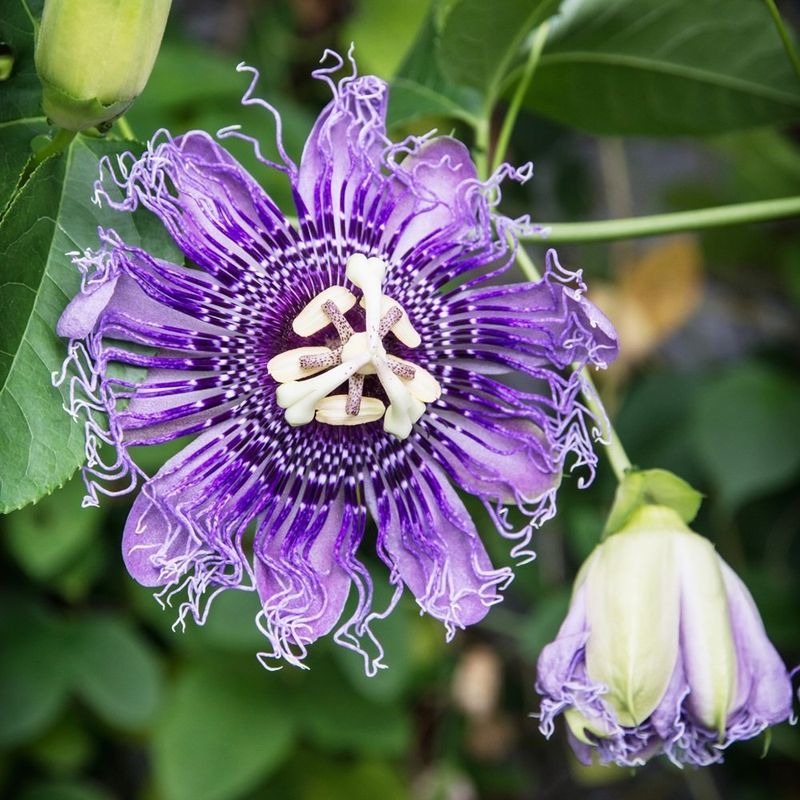
Few Florida native vines stop people in their tracks quite like maypop passionflower.
The blooms are almost otherworldly, with layered purple and white petals surrounding a dramatic fringe that makes the flower look like something from a tropical garden catalog.
Beyond its looks, maypop brings real value to a bird-friendly yard by offering multiple resources in one vigorous plant.
The dense, fast-growing foliage provides cover that small birds can use while moving through the yard or staying low during windy weather. Later in the season, the egg-shaped fruit ripens and can attract birds that forage along fence lines and garden edges.
Insects drawn to the flowers and foliage also add a protein-rich food layer that benefits insect-eating birds.
Maypop can spread enthusiastically through underground runners, so placing it where that habit can be managed makes a big difference.
Your Florida Garden Changes Every Week. Your Plan Should Too.
Gardening in Florida changes quickly throughout the season. Every Friday you’ll receive a simple weekly plan showing exactly what to plant, prune, fertilize, harvest, and protect so you never miss the right timing.
A fence line, a sturdy trellis, or a defined garden edge with regular attention keeps it useful without letting it crowd out other plants nearby.
In Florida’s warm climate, maypop may grow more vigorously than expected, especially after it gets established. Trimming it back occasionally helps keep the growth in bounds.
When managed well, it can transform a bare fence into a layered strip of habitat that supports butterflies, insects, and several backyard bird species across multiple seasons.
3. Muscadine Brings The Backyard Buffet
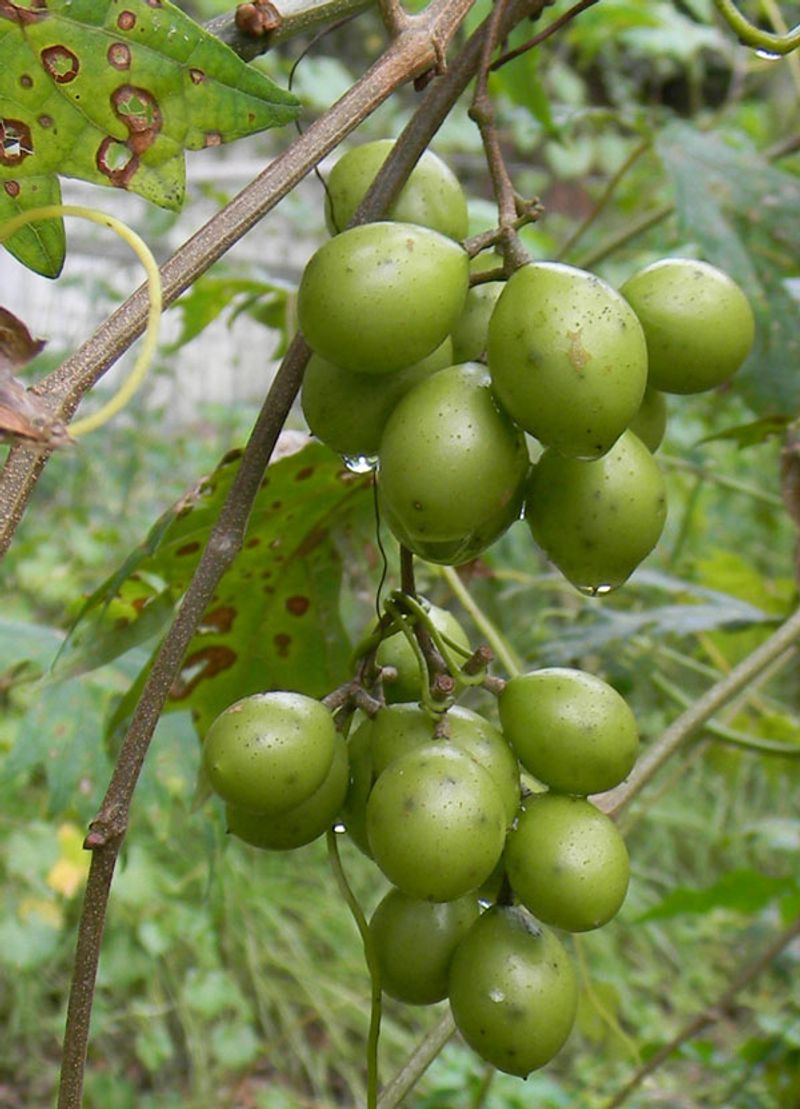
Cardinals, mockingbirds, and cedar waxwings have a hard time passing up ripe muscadine grapes.
Native to Florida and much of the southeastern United States, muscadine is one of those vines that can genuinely turn a backyard into a late-summer and fall destination for fruit-eating birds.
Robins, brown thrashers, and even the occasional gray catbird may show up when the clusters ripen along a well-placed arbor or fence row.
Muscadine is a vigorous grower that can reach impressive lengths when given the right conditions. That vigor is part of what makes it so productive, but it also means this vine needs sturdy support from the start.
A heavy-duty fence, a strong arbor, or a purpose-built grape trellis handles the weight and spread much better than a lightweight structure. Without solid support, the vine can become difficult to manage as it matures.
Regular pruning helps keep muscadine productive and prevents it from overtaking nearby plantings. In Florida’s warm and humid climate, it tends to grow quickly once established, so planning ahead for its eventual size avoids problems later.
Muscadine does not provide much nectar for hummingbirds, but its fruit, dense canopy, and insect activity make it a genuinely useful vine for a range of songbirds.
Pairing it with other native plants creates a more complete habitat rather than relying on the grape alone to attract birds.
4. Virginia Creeper Makes A Living Hideout
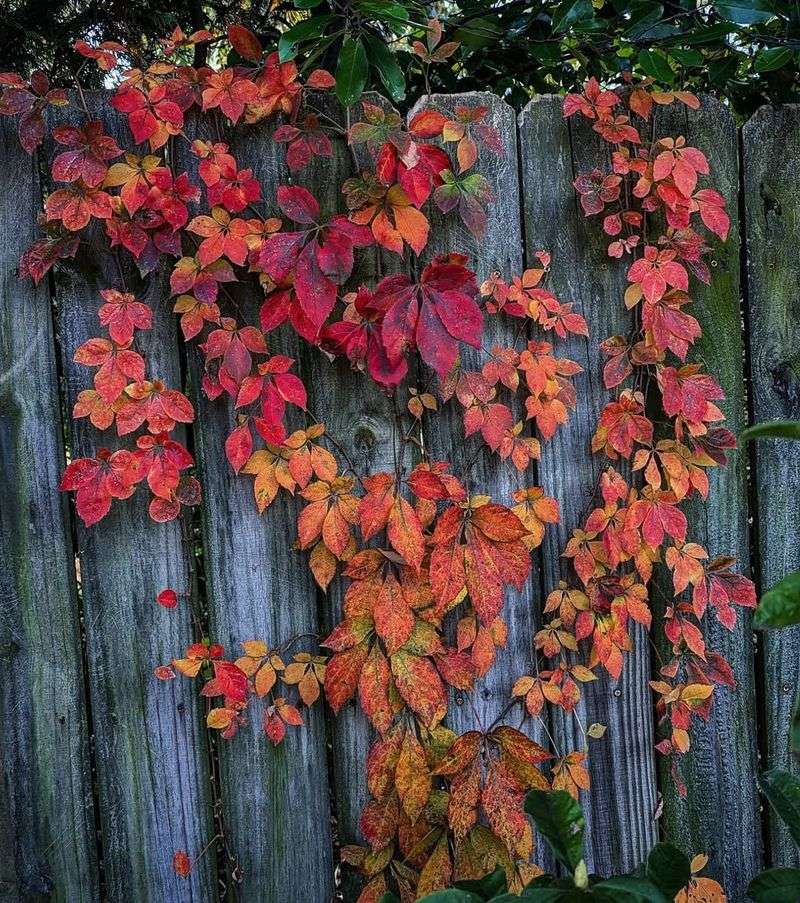
Dense, fast-spreading, and loaded with small dark berries in fall, Virginia creeper is the kind of vine that can quietly transform a bare fence into a wall of wildlife activity.
Native to Florida and much of eastern North America, this vine clings to surfaces with adhesive-tipped tendrils, allowing it to scale fences, walls, and sturdy structures without needing to be tied or trained.
The berries ripen in late summer through fall and are used by a variety of birds, including woodpeckers, flickers, bluebirds, and thrushes.
The dense foliage also provides shelter and cover, giving small birds a place to rest, hide from predators, or move through the yard without full exposure.
That layered cover value is something a lot of gardeners overlook when thinking about bird-friendly plantings.
Virginia creeper can spread widely and climb aggressively, so it works best in spots where there is room for it to move and a surface strong enough to hold it. A sturdy fence, a large trellis, or a garden edge near a natural area suits it well.
In a small or carefully manicured Florida yard, it may need more frequent attention to keep it from spreading into areas where it is not wanted.
Used thoughtfully, though, Virginia creeper adds genuine food, cover, and vertical habitat value that several backyard bird species in Florida can use across multiple seasons.
5. Crossvine Calls In Hummingbirds
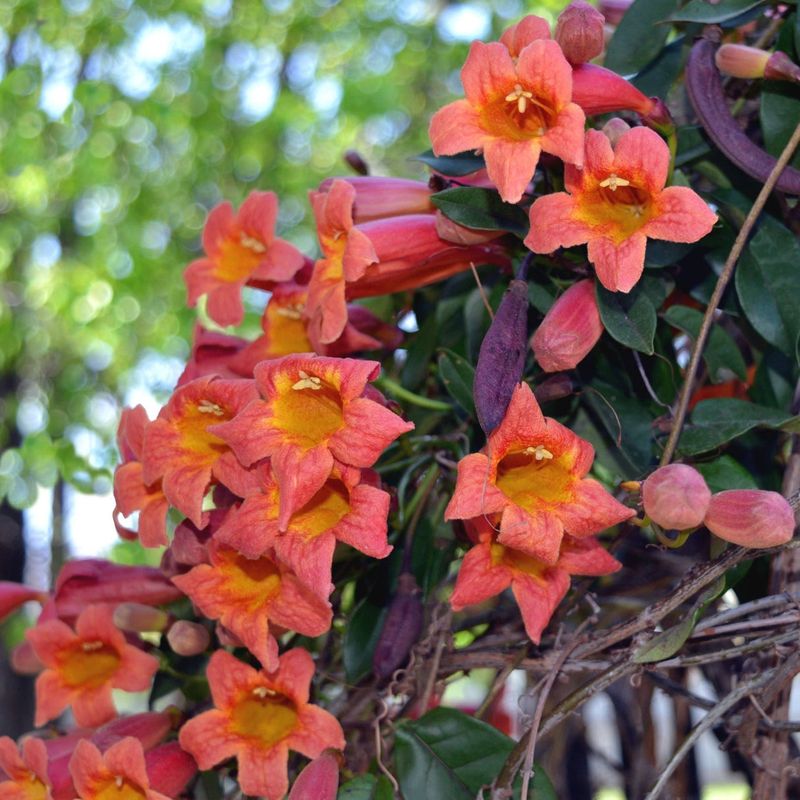
Early spring in a Florida yard can feel quiet before most flowers open, but crossvine has a way of breaking that silence early.
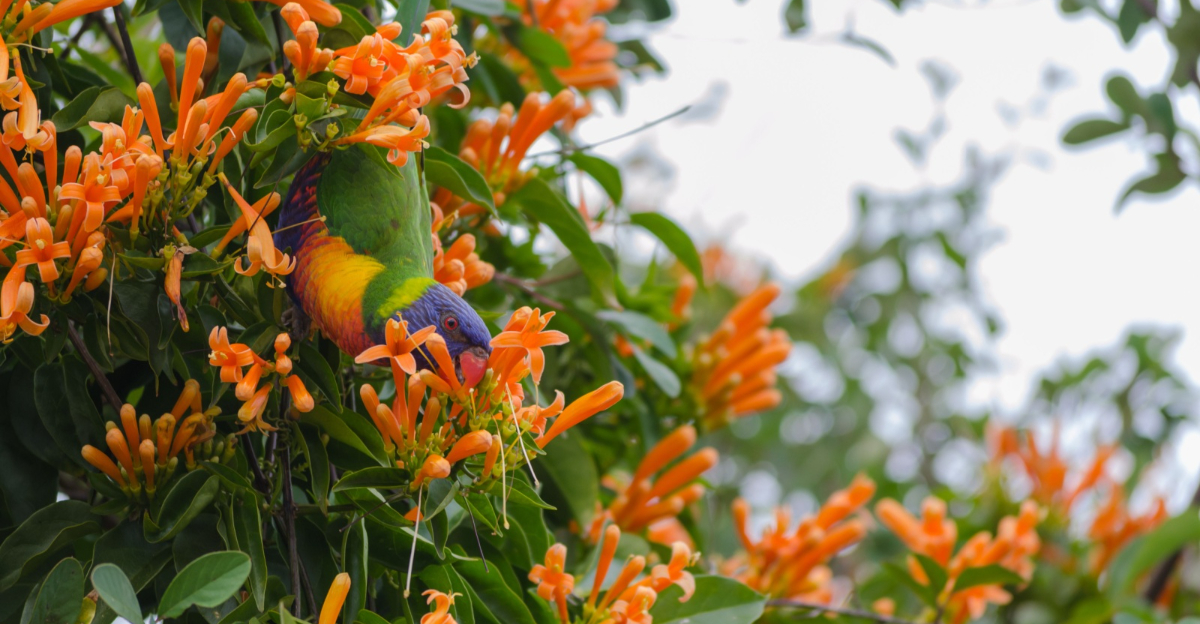
Its bold clusters of orange and yellow tubular flowers appear in late winter or early spring, often right when ruby-throated hummingbirds are beginning to move through Florida on their northward migration.
That timing makes crossvine a genuinely valuable nectar source during a period when few other plants are blooming.
Crossvine is a Florida native that climbs using adhesive-tipped tendrils, allowing it to cling to fences, walls, pergolas, and sturdy trellises with little extra help.
It tends to hold some of its leaves through winter in Florida, giving it a semi-evergreen quality that adds year-round structure to a vertical space.
The flowers attract hummingbirds reliably and may also draw butterflies and other pollinators during the bloom period.
Crossvine is not a significant fruit source for songbirds the way muscadine or Virginia creeper can be, so pairing it with other native plants helps fill that gap in a bird-friendly planting.
It grows vigorously once established and can reach considerable height and width, so placing it on a sturdy support with room to spread avoids problems down the line.
For gardeners who want to support hummingbirds with a native vine that also adds color to a fence or arbor in late winter, crossvine is a strong and well-suited choice.
6. Trumpet Creeper Adds A Nectar Show
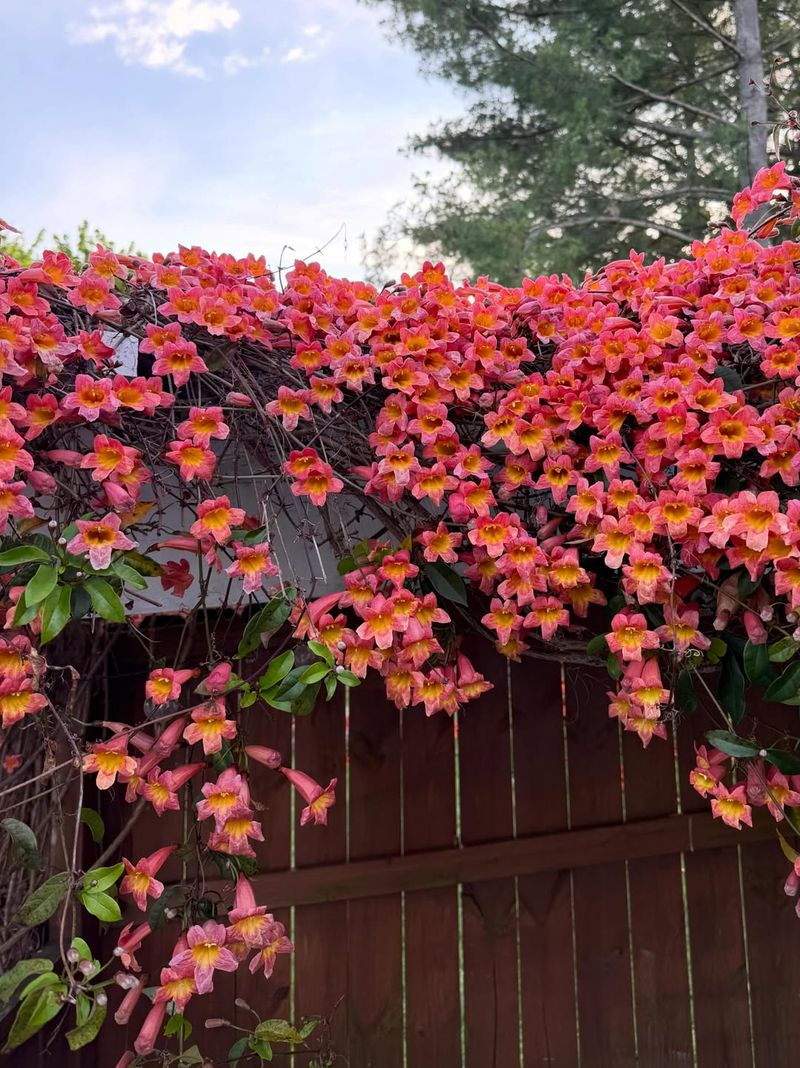
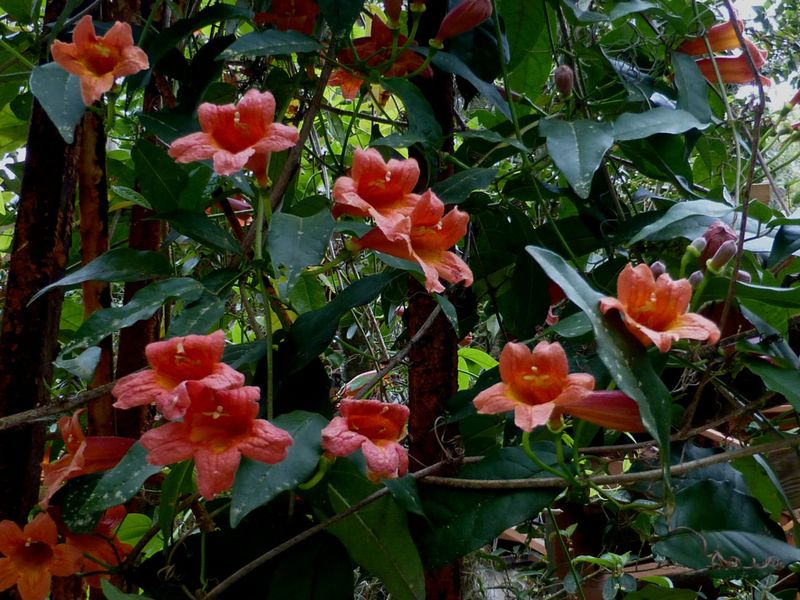
Bold, showy, and impossible to miss when it blooms, trumpet creeper produces some of the largest tubular flowers of any Florida native vine.
The bright orange-red clusters appear in summer and are well suited to hummingbirds, which visit the flowers for nectar during the warmest months of the year.
In Florida, where summers are long and hot, trumpet creeper keeps producing blooms over an extended season that gives hummingbirds a consistent nectar source.
Ruby-throated hummingbirds are the most frequent visitors, but orioles and other nectar-seeking birds may also investigate the flowers.
The dense foliage can offer some shelter along a fence or pergola, and the overall structure of the vine adds vertical mass to a garden edge or backyard border.
Trumpet creeper grows vigorously, and that is worth understanding before planting it. It can spread through underground runners and self-seed in some situations, so it belongs in a spot where there is genuine room for it to expand.
A heavy-duty fence, a large pergola, or a sturdy post structure handles it better than a lightweight trellis. In a small Florida yard with limited space, it may require consistent management to keep it from overwhelming nearby plantings.
When given the right setting and support, though, trumpet creeper delivers a summer nectar display that hummingbirds return to reliably, making it a memorable feature in a bird-friendly Florida landscape.
7. Layered Vines Make Better Bird Cover
A single vine on a fence can add color and a little wildlife value, but birds in Florida need more than one plant can offer on its own.
The yards that tend to attract the widest variety of bird species are the ones where vines are part of a bigger, layered picture that includes shrubs, trees, grasses, and low ground cover growing together in a way that mimics natural Florida habitat.
Birds need multiple things from a yard at different times of day and throughout the year. Nectar and fruit matter, but so do insects, shelter from predators, places to nest, safe pathways through the yard, and reliable access to clean water.
A vine climbing a fence provides vertical cover and possibly food, but a nearby native shrub can offer nesting spots, and a patch of native grasses can shelter ground-foraging birds like towhees and sparrows.
Reduced pesticide use matters too, because many backyard birds rely heavily on insects to feed their young, even if the adults eat mostly seeds or fruit.
When vines are planted alongside a thoughtful mix of other native plants, the whole yard becomes more useful to a broader range of birds.
Warblers, wrens, vireos, thrushes, and flycatchers may all move through a well-layered Florida yard at different seasons, using different parts of the habitat at different times. Vines are one useful layer, but they work best as part of that fuller picture.
8. Native Vines Need The Right Support
Planting a native vine without planning for how it will be supported is one of the most common mistakes Florida gardeners make when building a bird-friendly yard.
Different vines have different habits, and the support structure that works well for a lightweight twiner like coral honeysuckle may not hold up under the weight and vigor of muscadine or trumpet creeper.
Matching the vine to the right structure from the beginning saves a lot of effort later.
Twining vines like coral honeysuckle and maypop wrap their stems around a support and do well on trellises, fence rails, and wire structures.
Clinging vines like Virginia creeper and crossvine use adhesive tendrils to grip flat surfaces, so a fence board, a wall, or a rough-textured post suits them well.
Heavy fruiting vines like muscadine need a sturdy arbor or a purpose-built post-and-wire system that can carry real weight as the vine matures.
In Florida’s warm climate, native vines can grow faster than expected once they settle in, so choosing a support structure that is slightly larger than what seems necessary at planting time is usually a good approach.
Fences, arbors, pergolas, and strong posts all have a place in a bird-friendly Florida yard, depending on the vine and the space available.
Planning the support before planting, rather than after the vine is already growing, makes the whole process easier and keeps the vine manageable and useful for birds over the long term.