8 Easy Steps To Revive Heat-Damaged Bird Of Paradise Plants In Florida
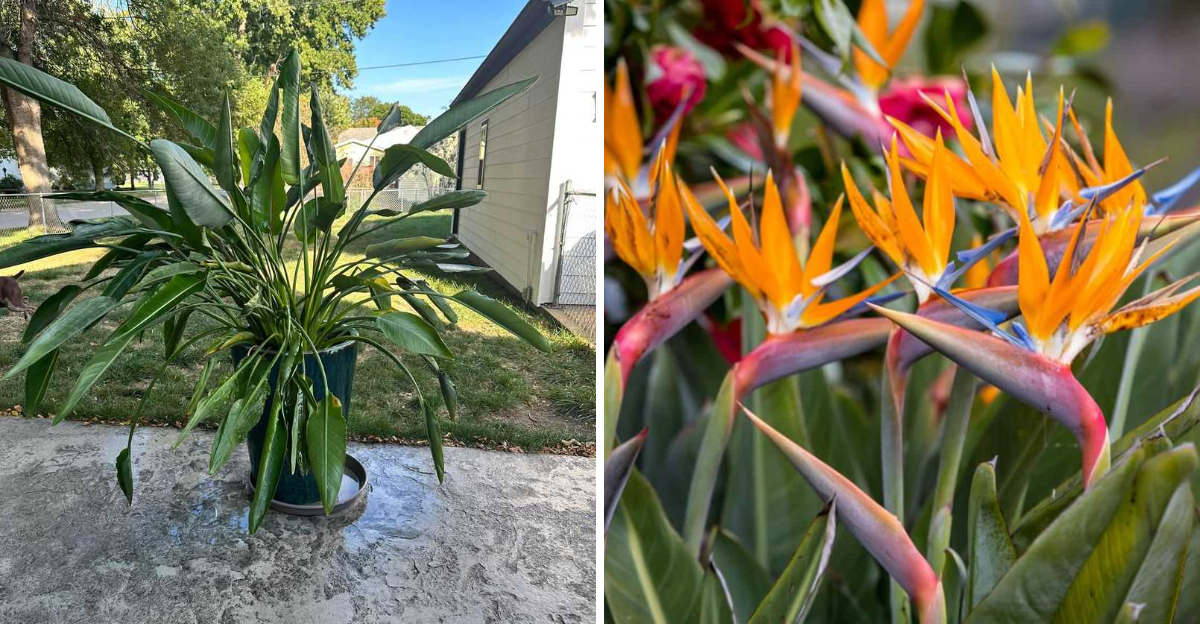
Bird of paradise plants look dramatic when they are thriving and equally dramatic when Florida summer heat has had its way with them. Scorched leaves, brown edges, a plant that was turning heads two months ago now looking like it needs serious help.
The good news is that bird of paradise is tougher than it looks in that moment. Florida heat damage on bird of paradise follows a predictable pattern, which means recovery follows one too.
This is not a plant that requires guesswork or expensive intervention. It requires the right steps in the right order, and a little patience while the plant does what it is actually capable of doing once the stress is addressed properly.
Most Florida gardeners either do too much or give up too soon. Eight straightforward steps land in the middle of those two extremes and give a heat-damaged bird of paradise a real path back.
1. Check Whether The Crown Still Looks Firm
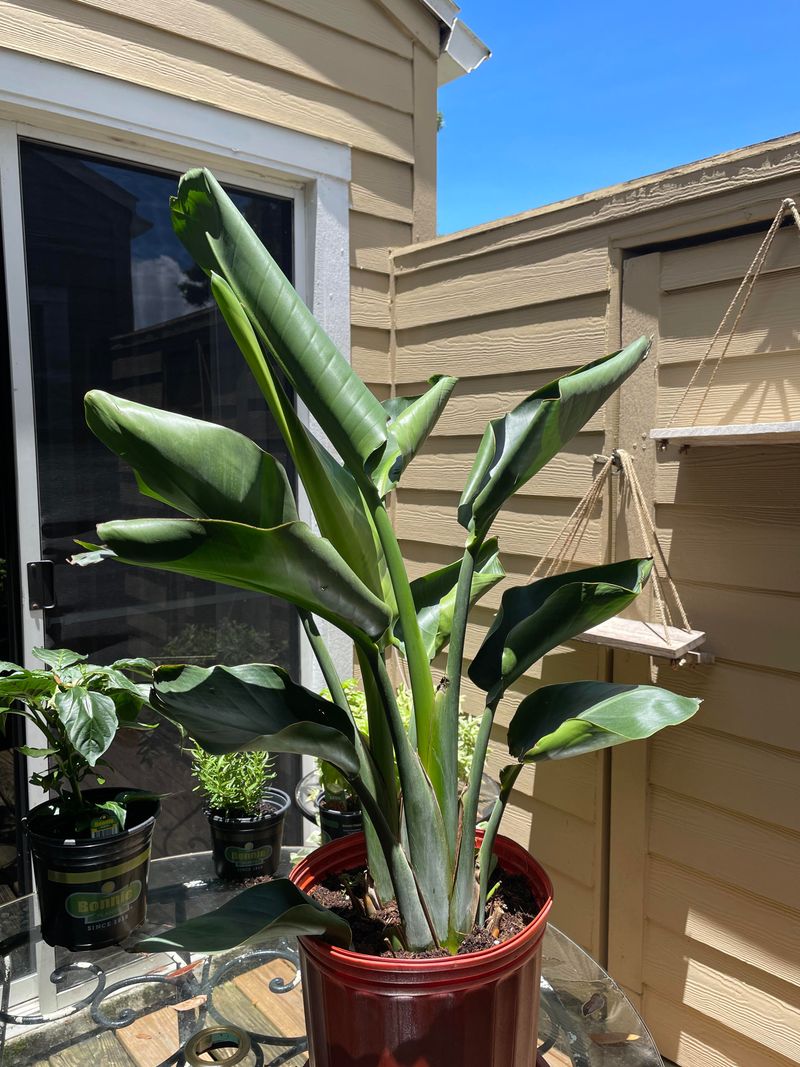
Before reaching for a watering can or pruning shears, kneel down and take a close look at the base of the plant. The crown is the central growing point where all the leaf stems emerge, and its condition tells you more than the leaves ever will.
Gently press the base of each stem near the soil line. A firm, slightly springy feel is a good sign.
Soft, mushy, or collapsing tissue is a warning.
Crispy brown leaves on their own do not mean the plant is beyond help. Leaves scorch in the heat, but the crown can still be alive and ready to push new growth.
Look for any emerging spear, a tightly rolled new leaf pushing up from the center. That is one of the clearest signs that recovery is possible.
Green tissue at the base of the stems, even under brown outer layers, also points toward a living plant.
A foul smell, dark slime, or a crown that collapses when pressed gently are more serious. Those signs suggest rot has set in, possibly from waterlogged soil combined with heat stress.
In those cases, recovery becomes much less likely. Be honest with yourself during this check.
Acting on accurate information early saves time and prevents you from nursing a plant that cannot recover.
2. Move Potted Plants Out Of Afternoon Blast
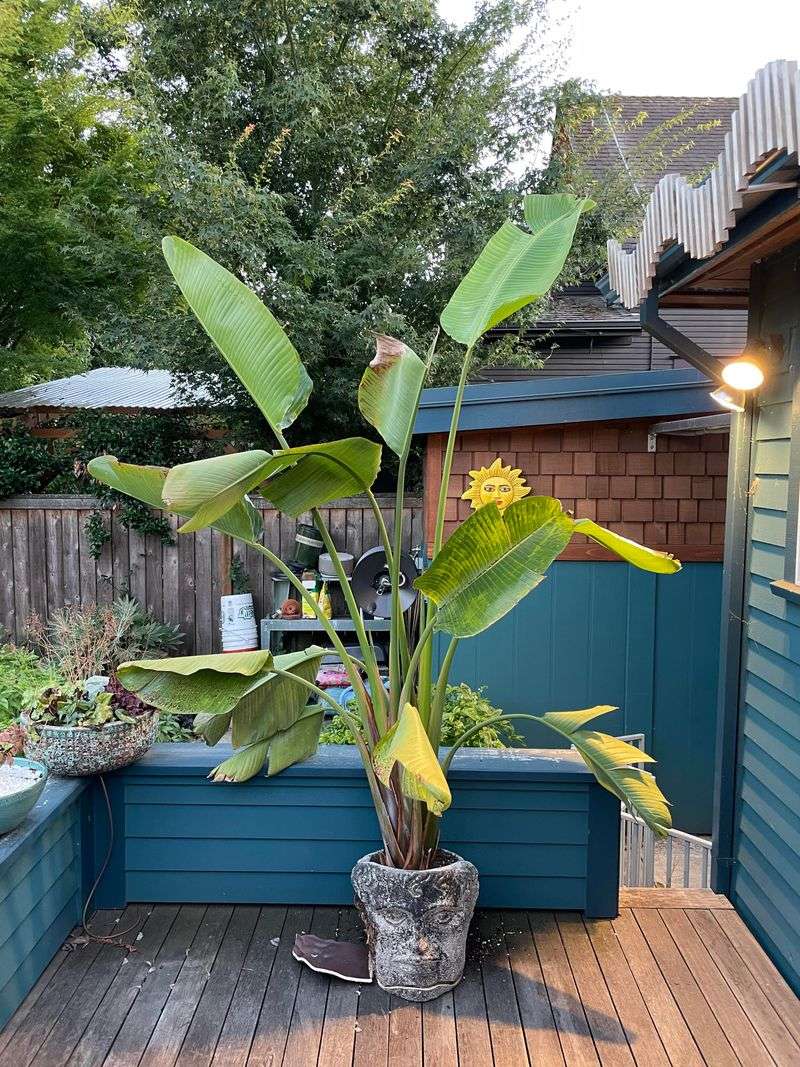
A scorched patio pot tells a story fast. Container-grown bird of paradise plants face heat stress that in-ground plantings rarely experience at the same intensity.
When a pot sits on a concrete pool deck, a west-facing balcony, or a sun-baked driveway, the root zone can heat up well beyond what the plant can tolerate. Dark-colored containers absorb even more heat, and small pots dry out faster than large ones.
Moving a stressed potted plant to a spot with bright indirect light and afternoon shade can reduce heat load quickly. Avoid moving it into deep shade, though.
Both Strelitzia reginae and Strelitzia nicolai need good light to recover and push new growth.
A covered patio with filtered light, a spot under a large tree canopy, or an east-facing area that gets morning sun without harsh afternoon exposure can all work well.
Your Florida Garden Changes Every Week. Your Plan Should Too.
Gardening in Florida changes quickly throughout the season. Every Friday you’ll receive a simple weekly plan showing exactly what to plant, prune, fertilize, harvest, and protect so you never miss the right timing.
If the plant was in full afternoon sun for weeks and the roots are stressed, do not immediately move it back into that same spot once it looks better. Reintroduce stronger sun gradually over a few weeks.
Reflected heat from walls, fences, and pavers can add surprising heat load, so pay attention to what surrounds the container, not just where the sun hits directly.
Matching the container size to the plant also helps prevent the root zone from overheating in future summers.
3. Water Deeply Without Leaving Roots Soggy
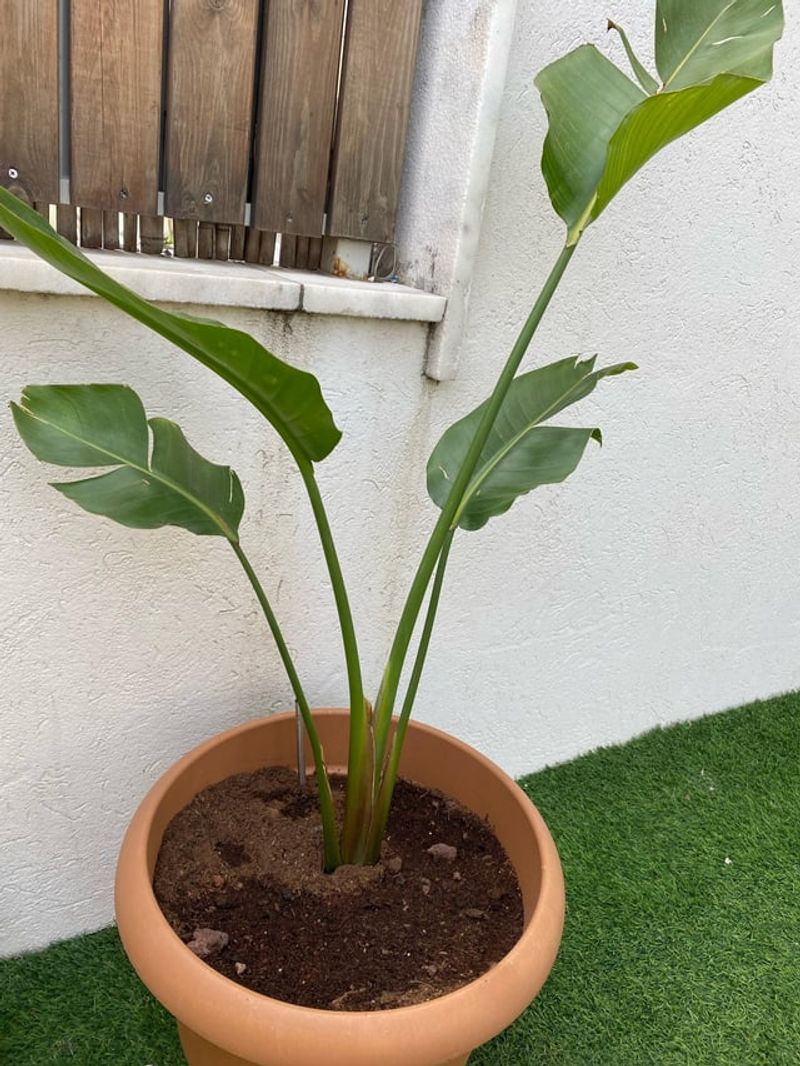
Root stress from dry soil and root stress from soggy soil can look almost identical above ground. Both cause wilting, yellowing, and leaf scorch.
After a heat wave, it is tempting to flood a stressed plant with water, but that can create a second problem on top of the first. Sandy soil common in this state drains fast, which helps, but container mixes can stay wet much longer than expected.
Water slowly and deeply when the top two inches of soil feel dry. Push a finger or a thin wooden dowel a few inches below the surface to check actual moisture before watering again.
If the soil still feels damp below the surface, wait. Empty any saucer under the pot within an hour of watering so roots are not sitting in standing water overnight.
Drainage holes must stay clear and functional.
Avoid rigid watering schedules during recovery. Our state’s rainy season can deliver heavy afternoon rain one day and dry heat the next, so the soil’s actual condition matters more than the calendar.
In-ground bird of paradise in sandy beds may need supplemental watering during dry stretches between rain events, especially if the root zone has been stressed.
Consistent, responsive watering, not overwatering, gives the root system the best chance to stabilize and support new leaf growth.
4. Mulch Around Outdoor Clumps To Cool Soil
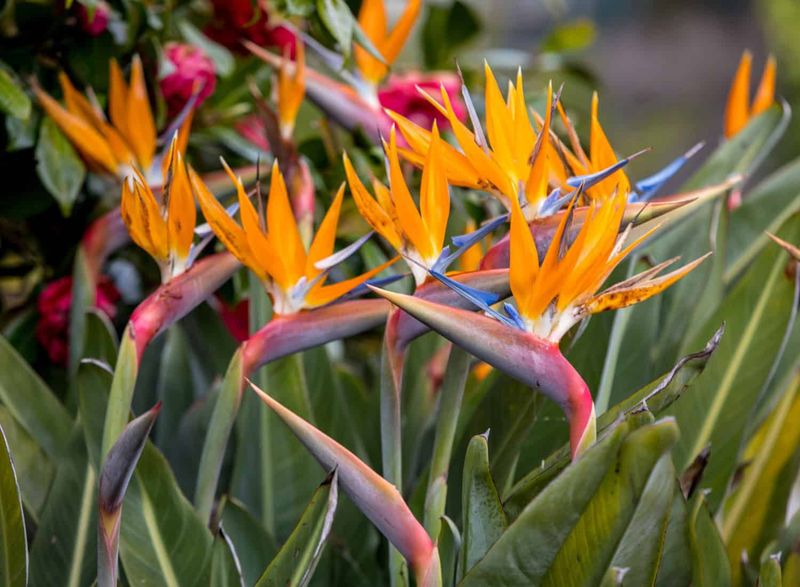
An outdoor clump of bird of paradise baking in a summer landscape bed can benefit a lot from one straightforward step: fresh mulch.
A two to three inch layer of organic mulch spread around the root zone helps moderate soil temperature and slow evaporation.
It also keeps roots from experiencing the same heat spikes that affect bare soil on a hot afternoon. UF/IFAS and Florida-Friendly Landscaping both recommend mulching as a standard practice for landscape plants in this state.
Keep the mulch a few inches away from the crown and the base of the stems. Piling mulch against the plant can trap moisture and heat against the tissue, which encourages rot rather than preventing it.
Use wood chips, pine bark, or similar organic mulch rather than synthetic materials or thick layers of grass clippings that mat down and restrict airflow.
Refresh thin or decomposed mulch that has broken down over the season. Old, compacted mulch loses its insulating value and can actually repel water rather than helping it soak in evenly.
Mulch is one part of a broader recovery plan, not a standalone solution. Scorched leaves will not turn green because of mulch alone.
What mulch does is improve root zone conditions so the plant has a better environment to work with while it recovers from the heat damage it already experienced.
5. Trim Crispy Leaves Without Stripping The Plant
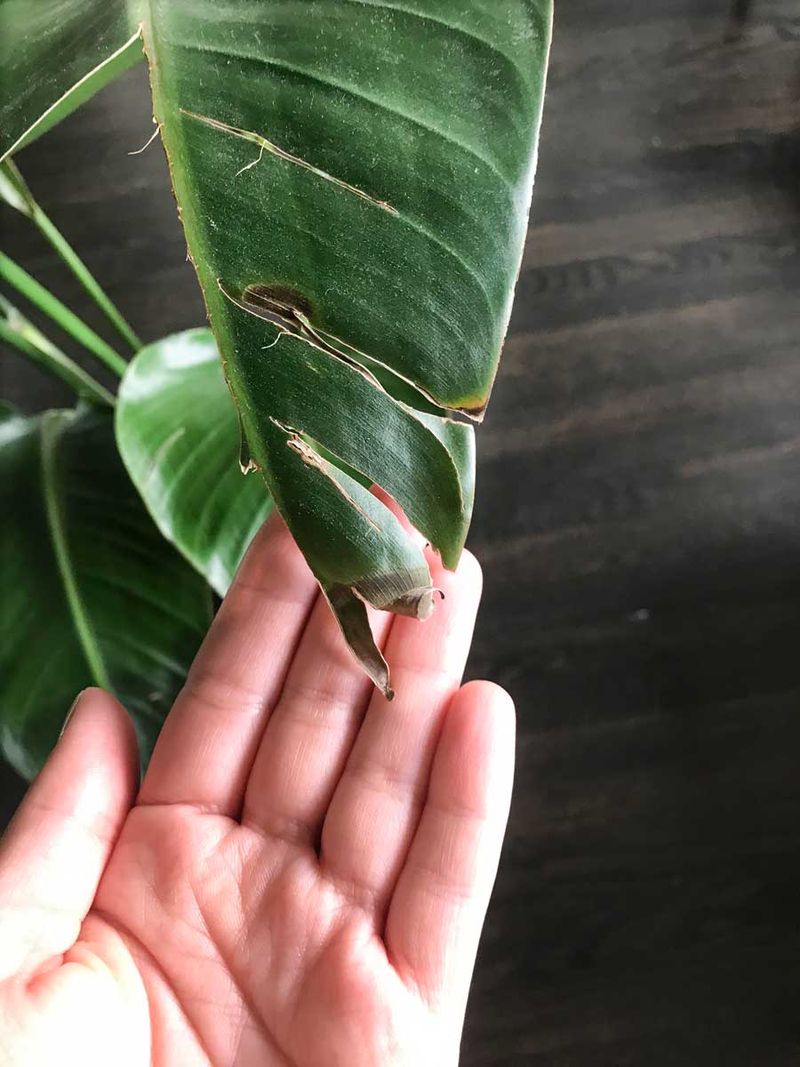
Reaching for pruning shears after seeing a scorched bird of paradise is a natural reaction. Cleaning up the damage makes the plant look better and removes tissue that no longer serves any purpose.
Fully brown, crispy, torn, or collapsed leaves can be removed by cutting close to the base of the stem without gouging into the crown. Use clean, sharp tools to avoid ragged cuts that are slower to seal.
Partly green leaves are worth keeping, even if the tips or edges are burned. Those leaves are still photosynthesizing and supporting the plant’s energy reserves during recovery.
Removing too much green tissue at once during peak heat can put additional stress on an already struggling plant. Strip only what is clearly beyond function, and leave everything that still shows living color.
Avoid cutting down to bare stems or exposing the crown suddenly to harsh direct sun. If the plant had dense foliage that was shading the crown and root zone, removing too much at once can create a sunburn problem on tissue that was previously protected.
Trimming improves airflow and appearance, but it does not replace correcting water stress, reducing heat load, or supporting root recovery. Think of it as a supporting step, not the main event.
Clean tools between plants to avoid spreading any potential pathogens from damaged tissue.
6. Pause Fertilizer Until New Growth Returns
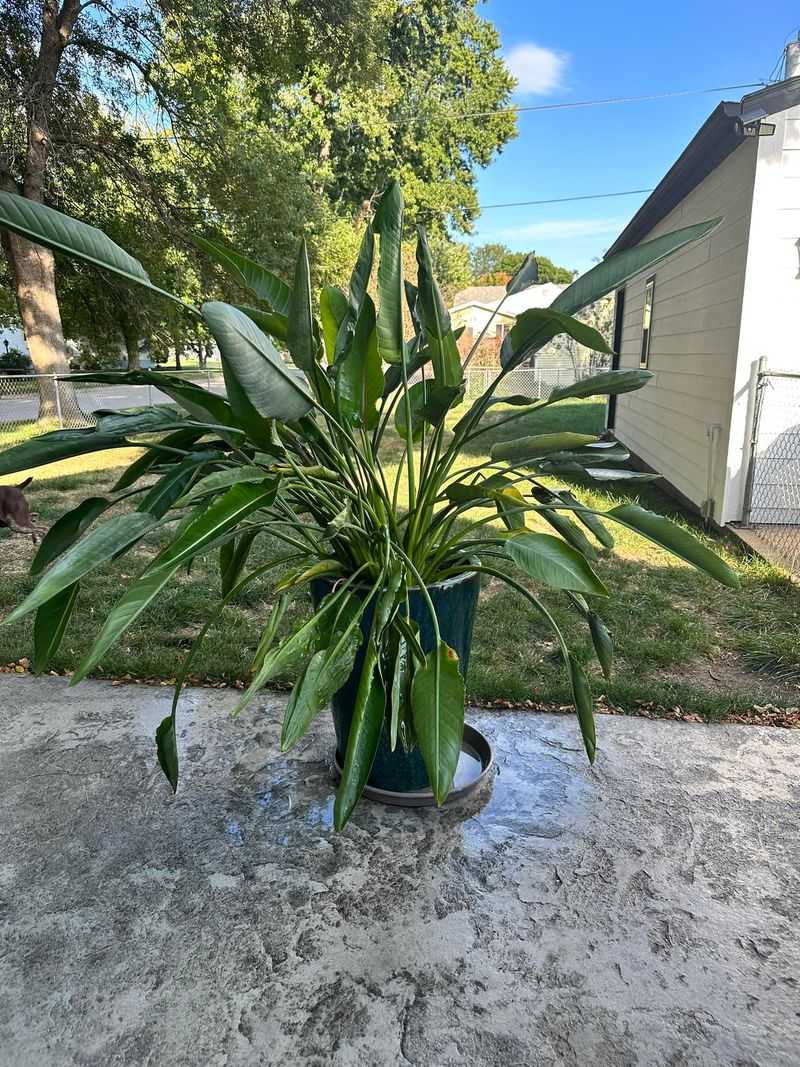
Grabbing a bag of fertilizer when a plant looks rough feels like the right move. Feeding a struggling plant seems logical, but for heat-damaged bird of paradise, it can backfire.
Stressed roots are not absorbing nutrients efficiently. Applying fertilizer to a plant with damaged or dry root tissue can increase salt concentration in the soil, which adds stress rather than relieving it.
Heavy fertilizer applications during heat stress can also push weak, soft new growth that is more vulnerable to further damage. Roots need to stabilize, drainage needs to be correct, and the crown needs to show signs of recovery before nutrients become useful.
Patience here is not passive. It is an active choice that protects the plant from a second round of stress.
Watch for a fresh spear emerging from the crown or new leaf bases pushing up from healthy tissue. That is the signal that the plant is stable enough to benefit from feeding.
When the time comes, UF/IFAS Extension recommends balanced, slow-release fertilizers for established landscape plants. Avoid high-nitrogen quick-release products that can surge growth too fast.
Follow label rates and apply to moist soil to reduce root irritation. Starting with a lighter application than the label maximum is a reasonable approach for a plant that is still in early recovery and has not yet returned to full health.
7. Watch For Pests Hiding In Stressed Foliage
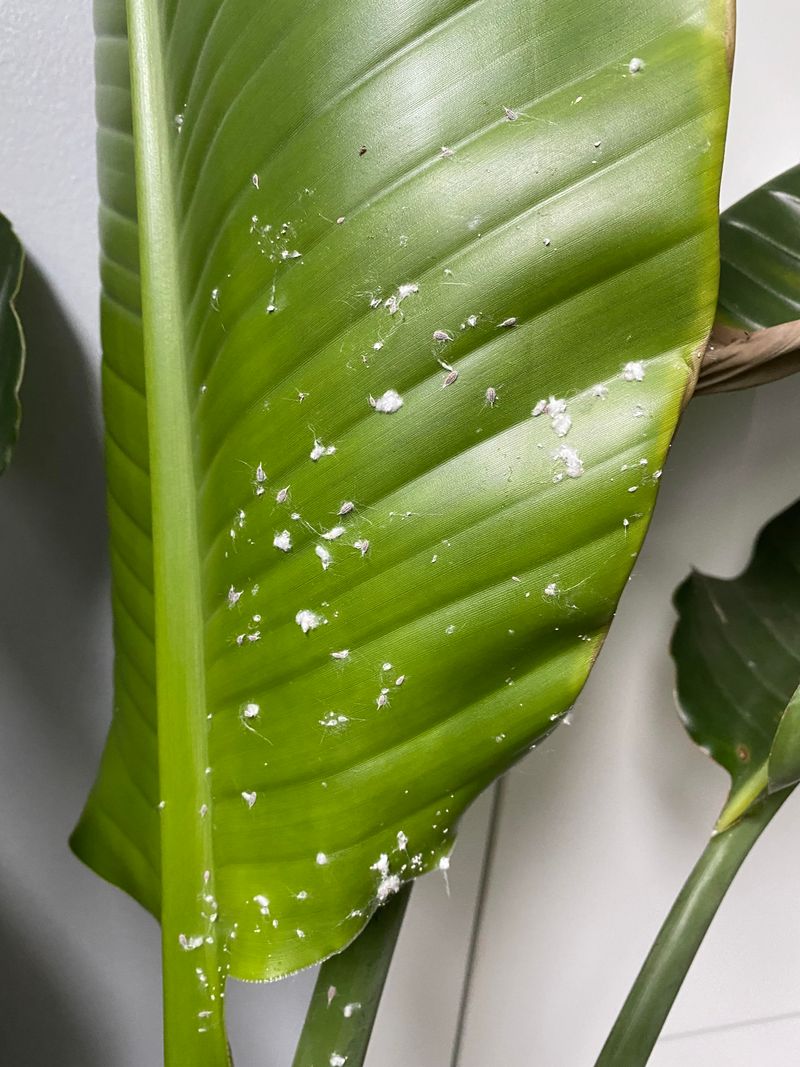
Stressed foliage is an open invitation for pests that might otherwise pass a healthy plant by. After heat damage, bird of paradise leaves can become easier targets for scale insects, mealybugs, and spider mites.
All of these have been documented on ornamental plants in this state. A plant already dealing with root stress and scorched leaves has fewer resources to resist pest pressure on top of everything else.
Check the undersides of leaves, the base of leaf stems, folded or curled leaf edges, and any spots where leaves overlap and create sheltered areas. Mealybugs look like small white cottony clusters.
Scale appears as flat or bumpy brown or tan spots that do not wipe off easily. Spider mites may leave fine webbing and a dusty, stippled look on leaf surfaces.
Sticky residue on leaves or on surfaces below the plant can also point to pest activity.
Reduce plant stress first, because a recovering plant handles pest pressure better than a severely stressed one. UF/IFAS Extension and Florida-Friendly Landscaping guidance recommends starting with the least disruptive approach.
Try removing pests manually or rinsing leaves with water before moving to approved horticultural oils or insecticidal soaps. Avoid harsh chemical treatments on already stressed tissue.
Follow label directions carefully and check Extension resources for pest-specific guidance rather than applying broad-spectrum products without a clear target.
8. Give Recovery Time Before Replacing The Plant
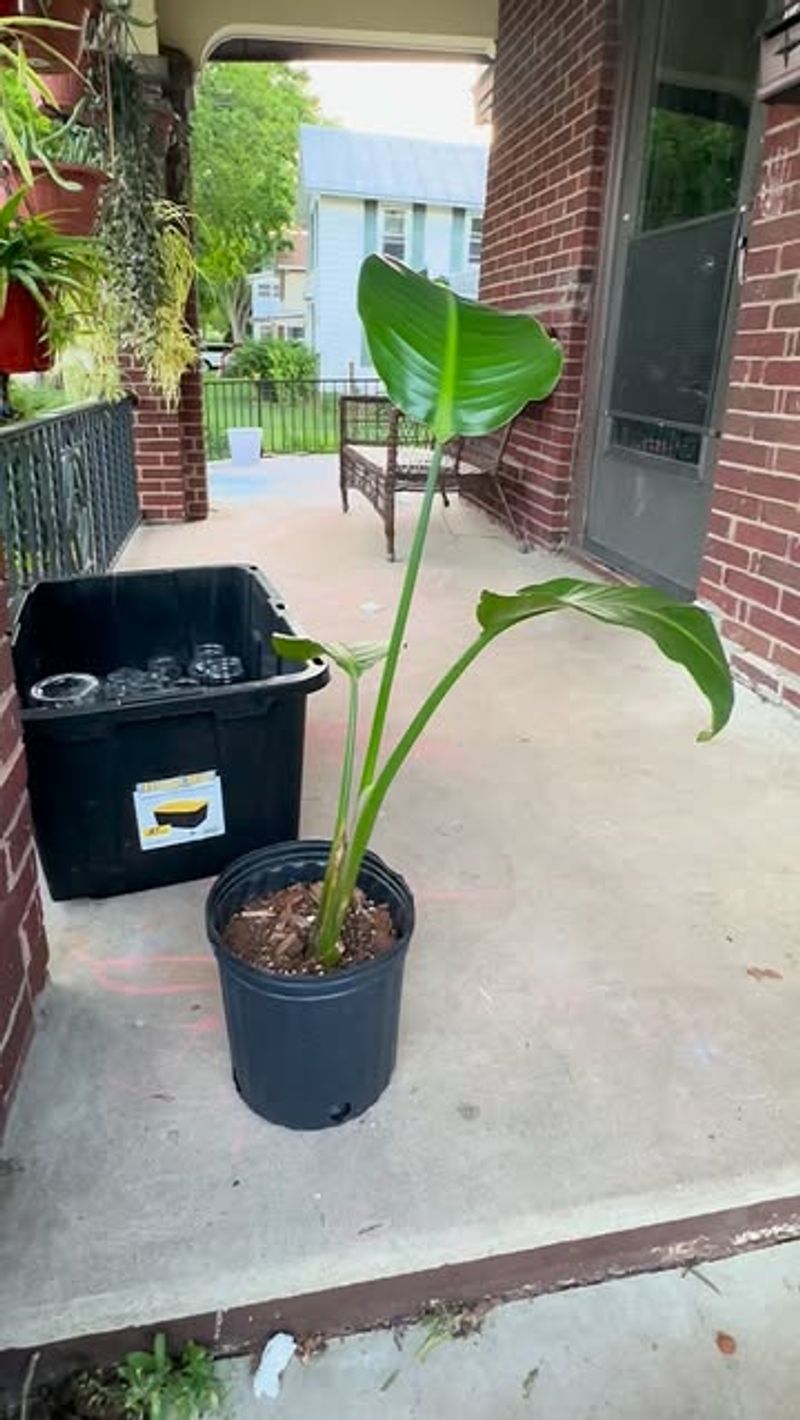
A new spear pushing up from the crown after weeks of scorched, tattered leaves is one of the most reassuring sights in a summer garden. It means the plant survived the stress and is ready to move forward.
But that moment rarely comes quickly. Bird of paradise plants can take several weeks, sometimes longer, to push clean new growth after serious heat damage, especially when older leaves were heavily scorched.
Keep care steady during this waiting period. Avoid moving the plant repeatedly, changing its watering routine abruptly, or adding products that were not part of the original recovery plan.
Each disruption asks the plant to adjust again when its energy is already focused on survival and regrowth. Monitor new leaves as they emerge.
Healthy new growth should be firm, upright, and a clean green color.
Replace the plant only if the crown stays soft, no new growth appears after an extended period, roots are completely failed, or rot has taken hold despite corrected care. Some plants do not recover, and that is a realistic outcome worth accepting.
Strelitzia nicolai, the white bird of paradise, can be a significant investment due to its size. Giving it adequate recovery time before replacing it makes practical sense.
Steady, calm care over time gives any surviving crown the best possible chance to rebuild and return to its tropical presence in the landscape.