Why Carpenter Bees Are Choosing Your Delaware Porch This Spring
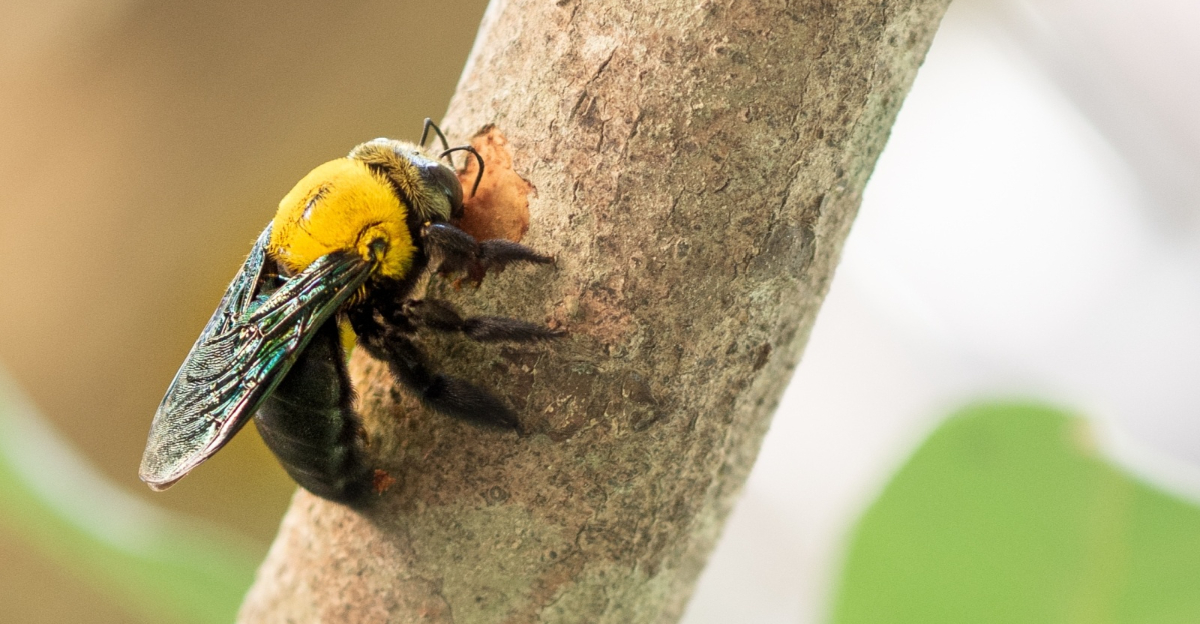
You step outside one morning and a bee the size of a grape hovers inches from your face. No warning.
Just a slow, deliberate pause at eye level, then gone into a perfect hole bored straight into your rafter. Carpenter bees have moved into your porch without permission.
They have been tunneling through Delaware wood since before you spotted the first hole. Why does this keep happening to your porch every single spring?
The answer sits in your lumber, your paint, and the old tunnels they carved out last season. Delaware homeowners repeat this cycle more than they realize, and spring only accelerates it.
Your porch is not just a porch to these bees. It is a sun-warmed, weathered, rent-free nursery waiting to be reused.
If you think they picked your place by accident, what you discover next will make you look at your own rafters very differently.
Spring Nesting Season Has Arrived
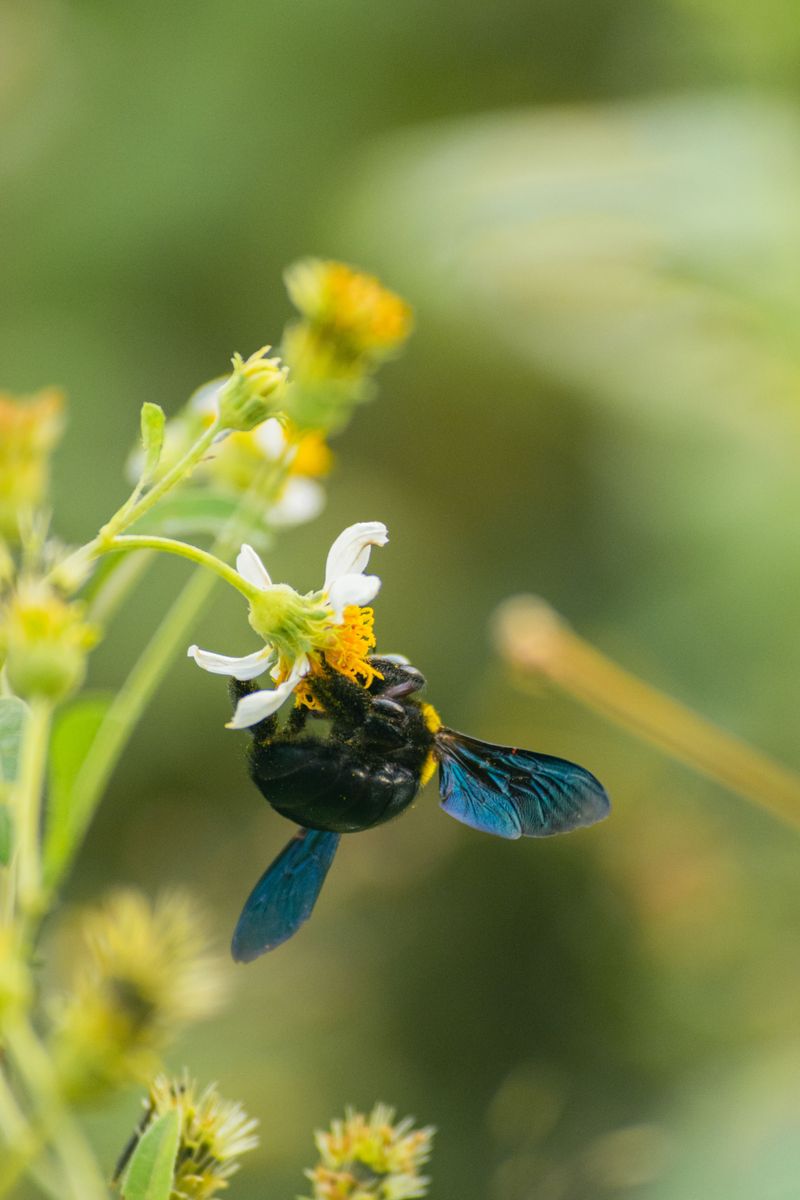
Warm air hits Delaware and carpenter bees wake up ready to work. For carpenter bees, rising spring temperatures act as a biological trigger that prompts them to emerge and begin nesting activity.
Carpenter bees spend winter tucked inside wood tunnels, staying dormant until temperatures consistently reach the low-to-mid 60s°F. Once that warmth arrives, they emerge with one mission: find a nesting site fast.
Your porch is often the first structure they encounter after leaving their winter hiding spots. It sits exposed to sunlight, it holds warmth, and it is built from exactly the kind of wood they seek.
Female carpenter bees are the ones doing the drilling. They chew through softwoods like pine, cedar, and redwood to create smooth, perfectly round entry holes about half an inch wide.
Males buzz loudly and hover aggressively near the porch, but they have no stinger. Their job is to guard the area while females do the actual construction work inside.
Spring nesting season in Delaware typically runs from April through June. During this window, activity is at its peak and new damage happens quickly.
Catching them early makes a real difference. A single female can excavate around an inch of tunnel per week once conditions are right.
Knowing that spring is their prime season helps you stay ahead of the problem. Watch for hovering bees and fresh sawdust on your porch floor as the first warning signs.
Your Unfinished Or Unpainted Wood Is An Open Invitation
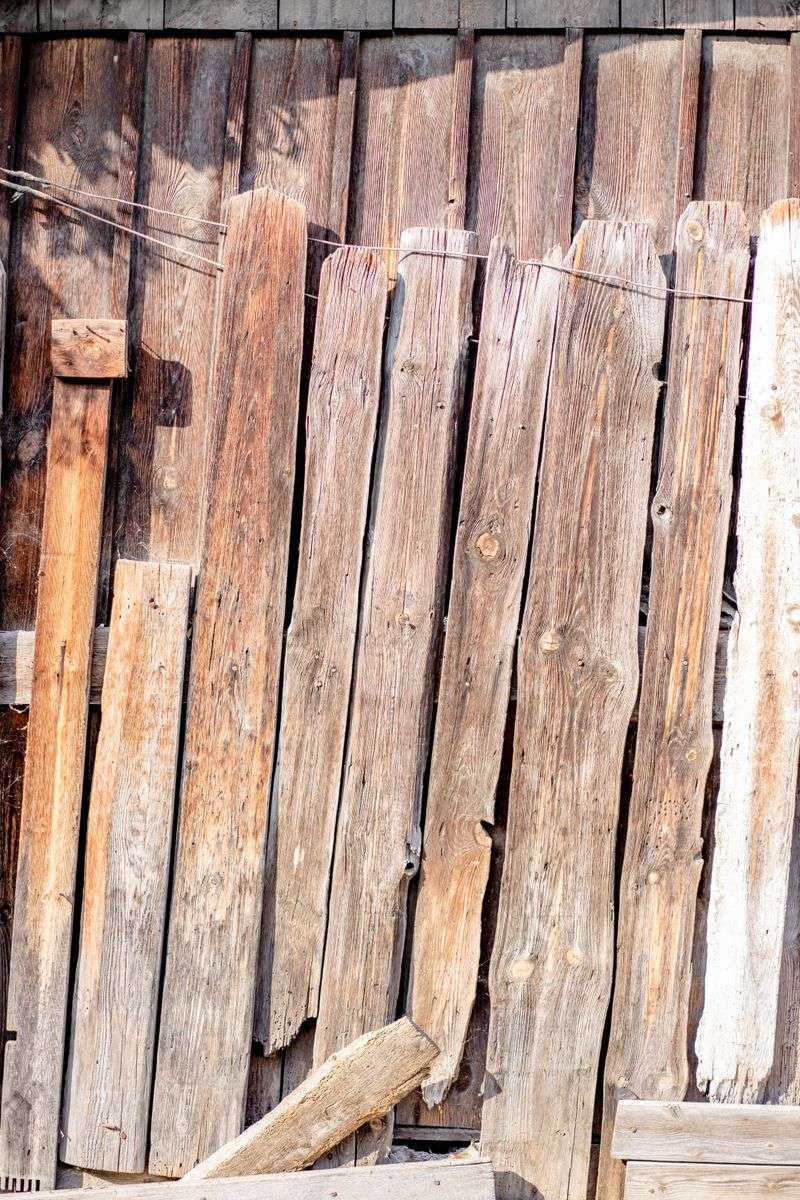
Bare wood is highly attractive to carpenter bees. If your porch has any unfinished, unpainted, or weathered lumber, they have already noticed.
Carpenter bees strongly prefer untreated wood because it is softer and easier to chew through. Paint, stain, and sealant create a barrier that discourages them from drilling.
Many Delaware porches have exposed areas under railings, on the ends of beams, or along the fascia boards. These spots often get skipped during painting projects.
Even a small patch of bare wood is enough to attract a nesting female. She does not need much space to start a tunnel that can eventually stretch six inches deep.
Your Delaware Garden Changes Every Week. Your Plan Should Too.
Gardening in Delaware changes quickly throughout the season. Every Friday you’ll receive a simple weekly plan showing exactly what to plant, prune, fertilize, harvest, and protect so you never miss the right timing.
Weathered wood is especially appealing because it has already softened from moisture and sun exposure. It requires less effort to bore through, making it the path of least resistance.
Hardwoods like oak or pressure-treated lumber are far less attractive to carpenter bees. Switching materials during a porch renovation can significantly cut down on bee activity.
A fresh coat of exterior paint or a quality wood stain applied regularly significantly reduces drilling activity. Pay particular attention to exposed board ends, where protection tends to wear first.
Cover every surface, including the undersides of boards where bees often start their tunnels. Think of painting your porch as pest prevention, not just aesthetics.
Sealing the wood removes one of the biggest reasons why carpenter bees are choosing your Delaware porch this spring.
They Likely Overwintered Right In Your Porch
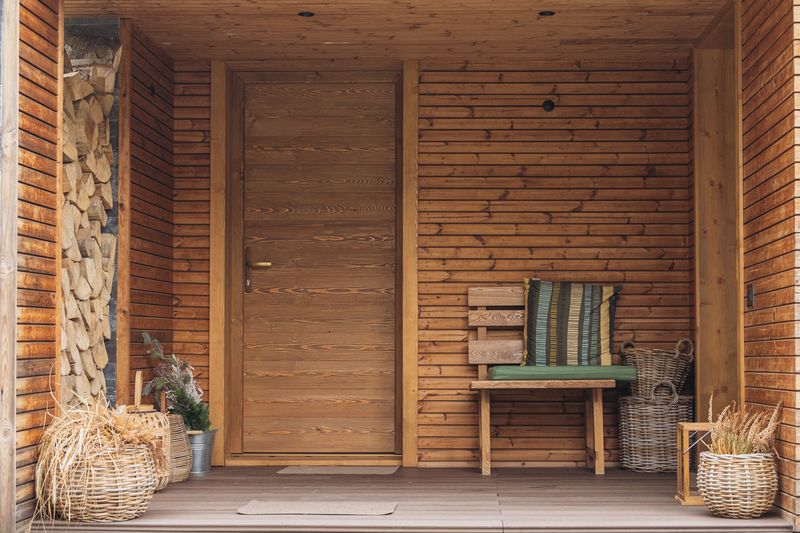
Here is something that might surprise you: those bees buzzing around your porch in April probably never left. They spent the entire winter hibernating inside the same wood they drilled last year.
Carpenter bees are not colony insects like honeybees. Each female creates her own tunnel, lays eggs inside, and seals them with pollen and nectar for the larvae to eat.
When fall arrives, the new generation of adult bees emerges, feeds on nectar, and then retreats back into the tunnels to wait out winter. Your porch beams essentially become a dormitory.
Delaware winters are cold enough to slow them down but rarely cold enough to wipe them out entirely. Mild winters actually increase survival rates and lead to bigger spring populations.
This overwintering habit is one reason carpenter bee problems tend to grow worse each year on neglected porches. The same location gets reused season after season.
You might notice small piles of yellowish sawdust on your porch floor in late winter. That is a sign that bees are beginning to stir and chew their way back to the surface.
Filling old holes in late fall, before bees return to overwinter, is one of the most effective strategies homeowners can use. Wood putty or cork works well for plugging entry points.
Knowing they wintered inside your structure changes the conversation completely. The activity did not arrive from somewhere else; it originated within the existing structure.
Old Tunnels Are Being Reused And Expanded
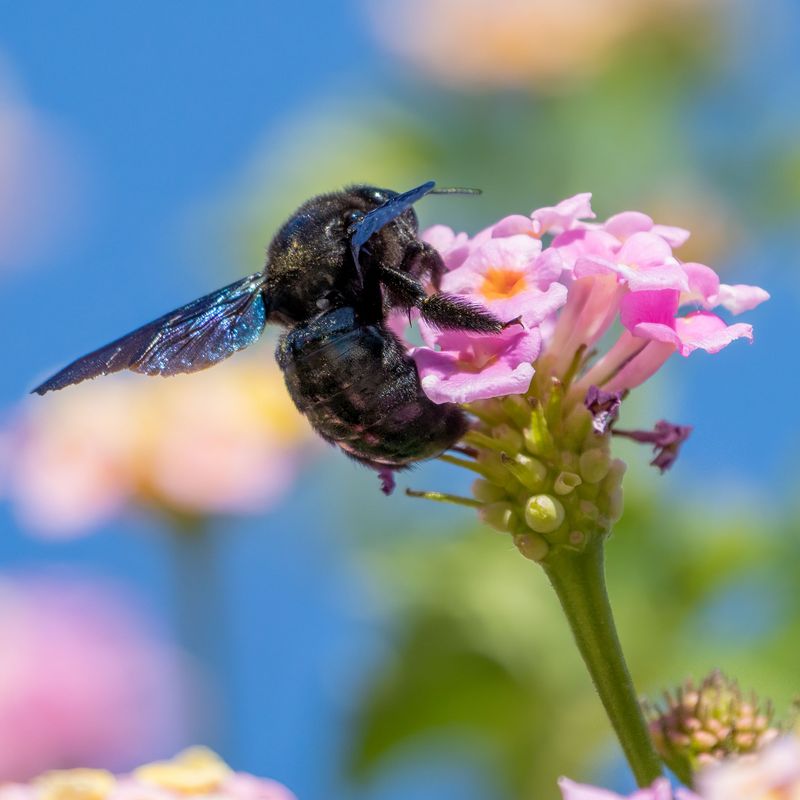
Carpenter bees are efficient creatures, and they never waste a good tunnel. Existing holes from previous seasons are prime real estate for new nesting activity.
A tunnel started two or three years ago might now stretch over a foot in length. Each new season, a bee extends the gallery a few more inches and adds fresh egg chambers.
Multiple bees often use the same entry hole while branching off in different directions inside the wood. What looks like one small hole on the surface can hide a complex network beneath it.
This reuse habit is what makes carpenter bee damage compound so quickly. A porch that had minor activity last spring can show significant structural wear by the following year.
Female bees are known to return to the same porch they emerged from. They choose familiar territory, and existing tunnels reduce the amount of work needed to set up a new nest.
Old tunnels also attract other insects. Carpenter bee galleries are frequently taken over by other wood-boring beetles and solitary wasps once the original occupants move on.
Inspecting your porch carefully each spring is a smart habit. Look for entry holes that appear freshly chewed, with bright yellow sawdust scattered directly below the opening.
Plugging old tunnels before spring arrives is only effective if done thoroughly. A shallow plug offers little resistance to a determined bee looking to reuse a familiar tunnel.
You’re Witnessing A Mating Ritual
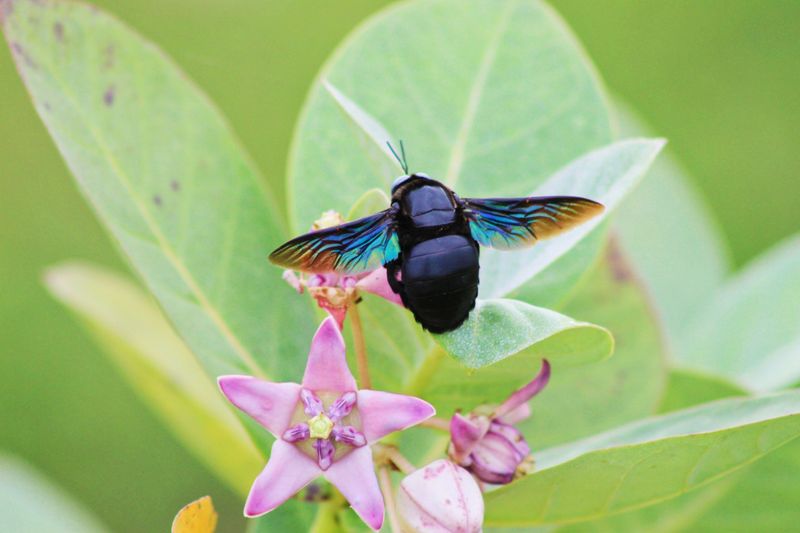
That dramatic aerial show happening right outside your front door is not an attack. Male carpenter bees are performing, and your porch is their stage.
Male bees claim a territory near a nesting site and hover aggressively to ward off rival males. They will dart toward anything that enters their zone, including unsuspecting homeowners.
Despite the intimidating behavior, male carpenter bees are completely harmless. They have no stinger, so all that buzzing and dive-bombing is purely for show.
Females, meanwhile, are focused and quiet. While males hover and posture, females are scouting wood surfaces, testing grain quality, and selecting the perfect drilling location.
Mating happens quickly once a female signals her acceptance. After that, the male’s role is largely over and the female gets to work constructing her nest tunnel.
The hovering behavior is most intense during the warmest part of the day, typically between 10 a.m. and 3 p.m. This is when male bees are most active and most visible.
Many homeowners mistake this activity for a dangerous swarm. Understanding that it is a mating display helps reduce panic and leads to smarter, calmer decision-making about next steps.
Watching the ritual also tells you something useful: wherever the males hover, females are nearby looking for wood to drill. That hovering zone is exactly where you should inspect for new holes.
Structural Damage Can Accumulate Over Time
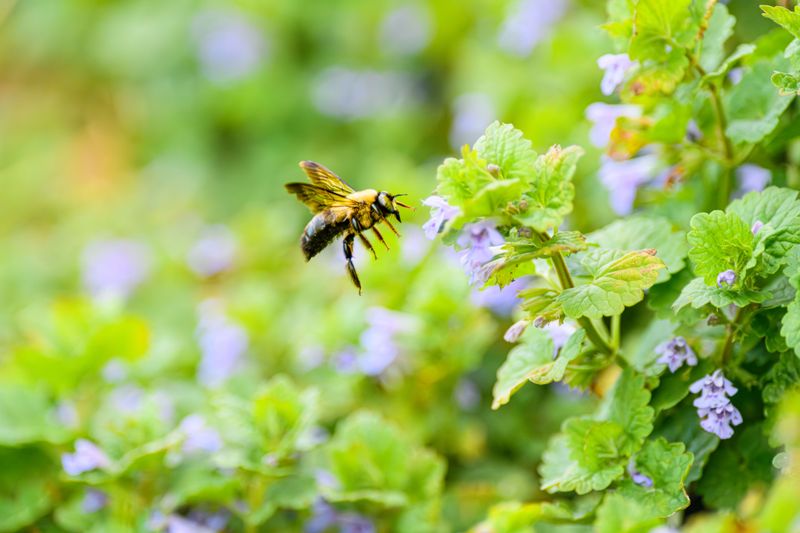
One round hole looks harmless enough, but the internal damage can be more extensive than it appears from the outside.
Carpenter bee tunnels follow the wood grain and can run six to ten inches deep in a single season. A beam with multiple tunnels loses structural integrity faster than most homeowners expect.
The damage is not always visible from the outside. Porches can look perfectly fine while the interior of key support beams is hollowed out in multiple directions.
Weight-bearing beams are especially vulnerable. If nesting activity concentrates in a support post or joist, the long-term consequences can include sagging, cracking, or eventual failure of that section.
Delaware’s humid summers make the problem worse. Moisture enters through the open holes and accelerates wood rot inside the tunnels, weakening the surrounding material even further.
Annual inspections by a licensed pest control professional help catch hidden damage early. Probing suspected beams with a screwdriver reveals soft spots that indicate internal decay.
Homeowners sometimes confuse carpenter bee damage with termite activity. The key difference is that carpenter bee tunnels are clean and smooth, while termite damage looks muddy and irregular.
Acting sooner protects your investment. Addressing minor damage early is generally more cost-effective than allowing it to compound over multiple seasons into a larger structural repair.
Mold And Staining Could Soon Follow
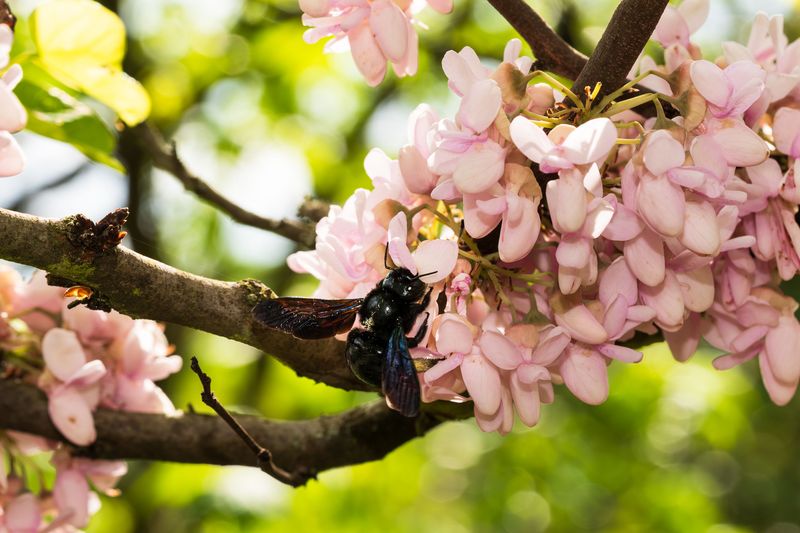
The holes themselves are just the beginning. What comes after the drilling can leave your porch looking neglected and feeling soft underfoot.
Carpenter bee entry holes are open to the elements. Rain, humidity, and morning dew all seep inside, creating a persistently damp environment inside the wood.
That moisture fuels fungal growth. Mold and mildew spread through the tunnels and eventually begin to stain the exterior surface of the beam or board around the entry hole.
You have probably seen it without knowing what caused it: a dark yellow or brownish streak running down from a small hole in the wood. That stain comes from a combination of bee waste and moisture-fed mold.
Beyond the visual mess, mold weakens the wood fibers surrounding the tunnel. A beam that once felt solid begins to feel spongy when pressed near the affected area.
Cleaning the stains with a diluted bleach solution and a stiff brush helps in the short term. But without sealing the hole, moisture will continue entering and the staining will return within weeks.
Exterior wood sealants applied after plugging the tunnels create a waterproof barrier that cuts off the moisture source. This step is often skipped, which is why staining keeps coming back each season.
Protecting your porch from carpenter bees means protecting it from moisture too. Addressing both issues together is the most reliable way to stop the cycle that starts every spring.