How To Keep Tomato Plants Productive Through Georgia’s Hottest Summer Weeks
Nothing is more disappointing than watching a tomato plant thrive in early summer, only to slow down once the hottest weather arrives.
The plants still look alive, the leaves may still be green, yet the steady flow of tomatoes suddenly seems to fade. Many gardeners start wondering if they did something wrong or if the season is already coming to an end.
Summer heat can change the way tomato plants grow and produce fruit. Even healthy plants may struggle when temperatures stay high day after day.
That often leaves gardeners feeling frustrated just when they were expecting their biggest harvests.
The good news is that a slowdown does not always mean the plants are finished producing. Many Georgia gardeners deal with this challenge every year.
A few simple adjustments can help plants handle stressful conditions and continue producing through some of the hottest weeks of summer. Small changes now can help keep the harvest going much longer.
1. Deep Watering Encourages Stronger Roots
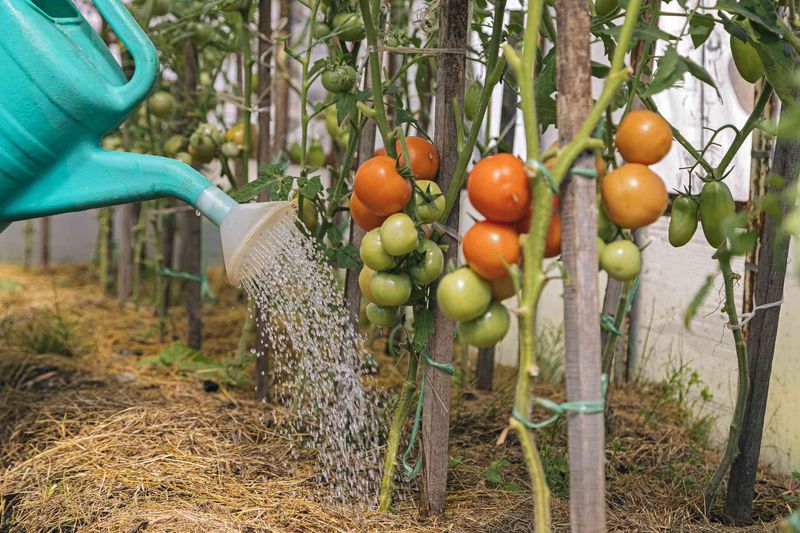
Shallow watering is one of the biggest mistakes gardeners make during a heat wave. When you water lightly, roots stay near the surface where the soil dries out fast.
Deep watering pushes moisture down into the soil where roots will follow.
Aim to water slowly and thoroughly at least two to three times per week during peak summer heat. Let water soak in rather than run off.
A slow trickle at the base of each plant for several minutes works better than a quick splash from above.
Roots that grow deep find cooler, more stable soil. Cooler soil means less stress on the plant overall.
Less stress means the plant keeps putting energy into producing fruit instead of just surviving.
Drip irrigation is worth considering if you have more than a few plants. It delivers water directly to the root zone without wetting the leaves.
Wet foliage in hot weather can invite fungal problems you do not want.
Check soil moisture before you water. Push a finger two inches into the soil near the base of the plant.
If it feels dry at that depth, it is time to water. If it still feels damp, wait another day and check again.
2. Mulch Slows Moisture Loss In Hot Weather
Bare soil in direct summer sun loses moisture shockingly fast. On a 95-degree day, uncovered garden soil can dry out within hours of watering.
A solid layer of mulch changes that equation completely.
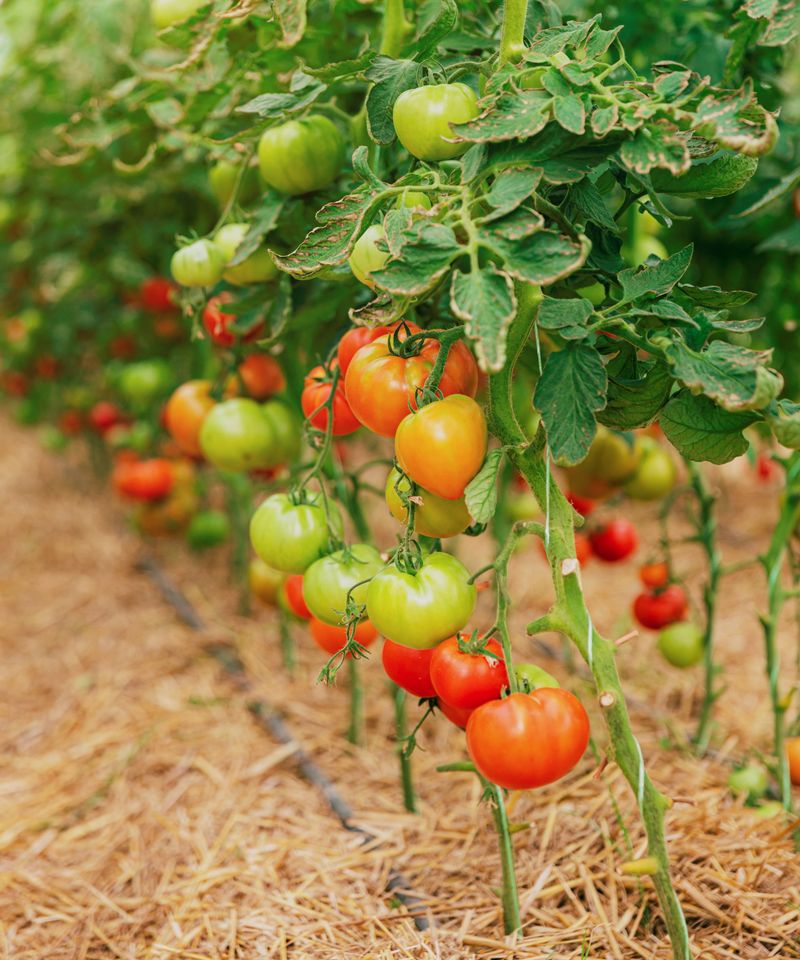
Straw, wood chips, and shredded leaves all work well around tomato plants. Spread mulch two to three inches thick around the base of each plant.
Keep it a few inches away from the stem to prevent rot at the soil line.
Mulch does more than hold moisture. It moderates soil temperature, which matters a lot during Georgia’s most brutal summer weeks.
Roots perform better when the soil stays cooler and more stable throughout the day.
Organic mulches break down slowly over the season. As they decompose, they add small amounts of organic matter back into the soil.
Your Georgia Garden Changes Every Week. Your Plan Should Too.
Gardening in Georgia changes quickly throughout the season. Every Friday you’ll receive a simple weekly plan showing exactly what to plant, prune, fertilize, harvest, and protect so you never miss the right timing.
That is a quiet bonus that improves soil structure over time.
Check your mulch layer every couple of weeks. It can compress and thin out after rain or heavy watering.
Top it off as needed to keep that protective barrier working at full strength.
Plastic mulch is another option some gardeners use. Black plastic warms soil early in the season but can overheat roots in midsummer.
Reflective silver plastic is a better summer choice because it deflects heat rather than absorbing it.
3. Afternoon Shade Reduces Heat Stress
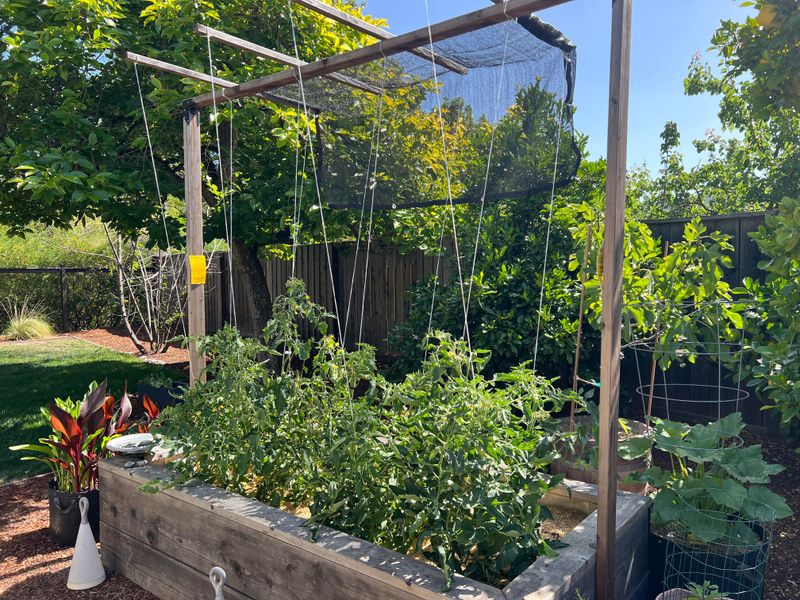
Tomatoes love sunlight, but afternoon heat above 95 degrees causes real problems. Blossoms drop when temperatures get too extreme.
Fruit set slows down or stops entirely during the hottest part of the day.
Shade cloth is one of the most practical tools available to summer gardeners. A 30 to 40 percent shade cloth blocks enough light to cool plants without cutting off the sunlight they need for photosynthesis.
It can drop leaf temperature by several degrees.
Set up shade cloth on the west side of your plants or directly overhead. West-facing afternoon sun is the most intense and the most damaging during peak summer heat.
Even partial shading from that direction makes a measurable difference.
Natural shade from nearby structures or taller plants can also help. A fence, a wall, or a row of taller crops can cast useful afternoon shadow.
Plan your garden layout with summer heat in mind if you are starting fresh next season.
Morning sun is still essential. Tomatoes need those early hours of full light to photosynthesize and build energy.
The goal is to protect plants from the harshest afternoon exposure, not to put them in full shade all day.
4. Regular Harvesting Encourages More Tomatoes
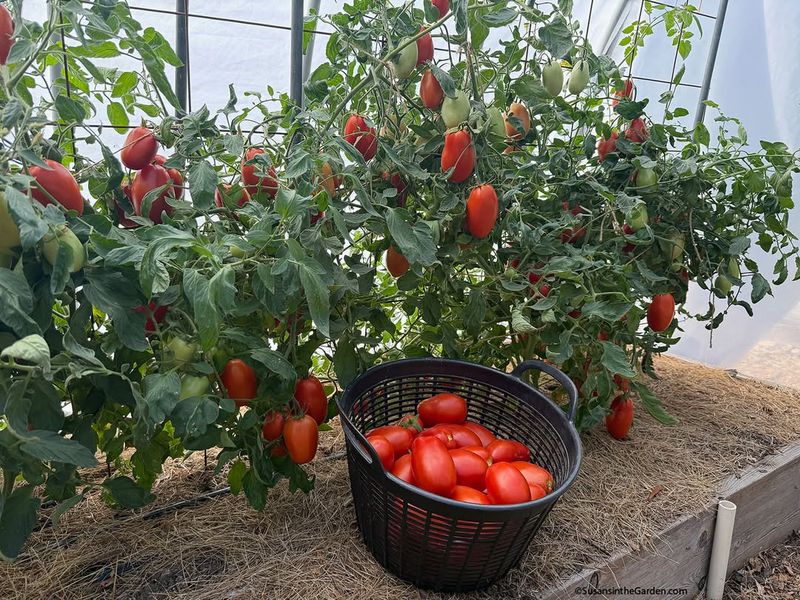
Leaving ripe tomatoes on the vine too long sends a signal to the plant that its job is done. Once a plant thinks it has produced enough seed, it slows down.
Picking fruit regularly keeps that signal from arriving too soon.
Check your plants every two to three days during peak season. Tomatoes can go from almost ripe to overripe quickly in summer heat.
Catching them at peak ripeness means better flavor and more production down the line.
You do not have to wait for tomatoes to turn fully red on the vine. Pick them when they show good color and feel slightly firm with a little give.
Let them finish ripening on a countertop out of direct sunlight.
Harvesting also reduces the physical load on the plant. Heavy fruit clusters weigh down branches and can cause breakage.
Picking regularly keeps the plant structurally sound and better able to support new growth.
Cracked or overripe fruit left on the plant attracts pests and can introduce disease. Removing damaged fruit quickly is just as important as picking healthy ones.
Keep an eye out for anything that looks soft, split, or discolored.
Indeterminate varieties keep producing all season as long as conditions allow. Consistent harvesting is one of the easiest ways to take advantage of that growth habit.
5. Balanced Feeding Supports Continued Production
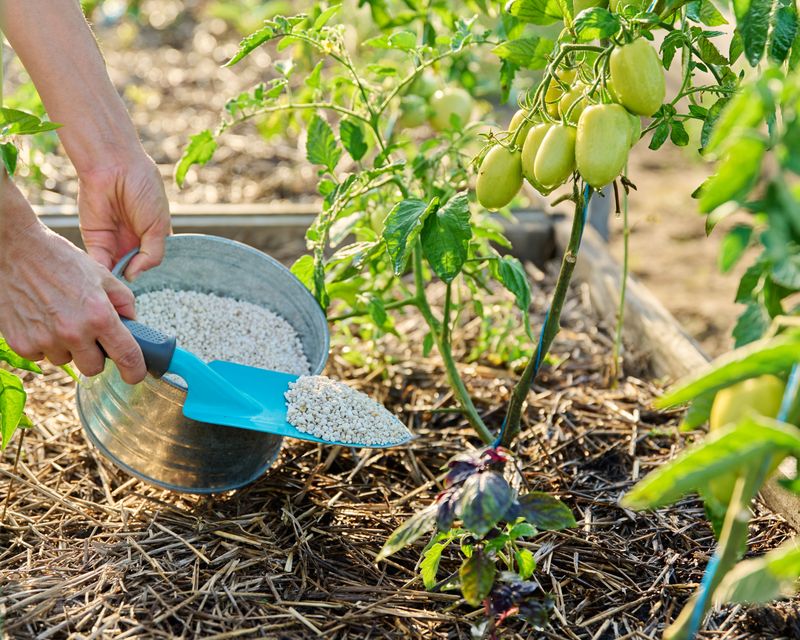
Heavy feeding during a heat wave can backfire fast. High-nitrogen fertilizers push leafy growth when the plant needs to focus on fruit.
Too much nitrogen in midsummer often means fewer tomatoes, not more.
Switch to a lower-nitrogen fertilizer once your plants are loaded with fruit. Look for a balanced formula or one higher in phosphorus and potassium.
Those nutrients support root health, fruit development, and overall plant strength.
Liquid fertilizers work quickly and are easy to apply during dry stretches. Diluted fish emulsion or a balanced liquid feed every two weeks keeps nutrients available without overwhelming the plant.
Always water the soil before applying liquid fertilizer to avoid root burn.
Granular slow-release fertilizers are another solid option. They break down gradually over several weeks and provide a steady nutrient supply.
Apply them according to package directions and water them in well after spreading.
Calcium is worth paying attention to in summer. Low calcium availability combined with inconsistent watering causes blossom end rot.
Foliar calcium sprays can help in the short term, but steady watering is the real fix.
Soil health matters as much as the fertilizer you add. Compost worked into the soil before planting improves nutrient retention and moisture holding capacity.
A well-prepared bed needs less supplemental feeding than poor or compacted soil.
6. Better Airflow Lowers Disease Pressure
Crowded plants trap heat and humidity right where diseases love to grow. Poor airflow is one of the most common reasons tomatoes struggle with fungal problems in hot, humid summers.
Pruning lower leaves off the ground is a simple fix. Remove any foliage below the first fruit cluster.
Leaves that touch the soil are the most likely to pick up soilborne pathogens and spread them upward.
Suckering indeterminate varieties helps too. Suckers are the shoots that grow between the main stem and a branch.
Left unchecked, they turn plants into dense thickets that barely let air move through.
Spacing matters at planting time, but you can still improve airflow in an established garden. Thin out overlapping branches where plants have grown into each other.
Open up the center of the plant so air can pass through freely.
Staking and caging keep plants upright and off the ground. A tomato flopped over on itself traps moisture and blocks airflow at the worst possible time.
Strong support structures are not optional in a productive summer garden.
Water at the base of the plant rather than overhead. Wet leaves in humid heat create perfect conditions for early blight and Septoria leaf spot.
Both are common in the Southeast and both spread faster when foliage stays wet.
7. Removing Damaged Foliage Supports Healthier Growth
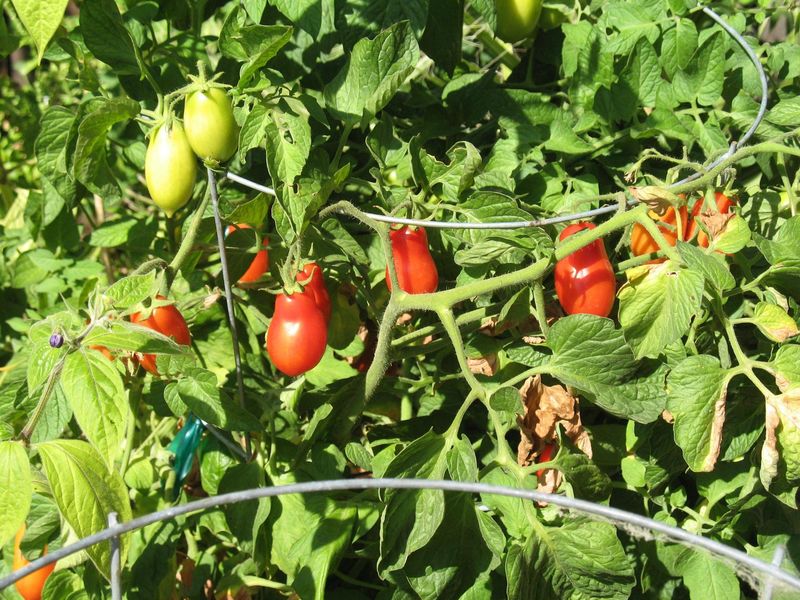
Spotted, yellowed, or wilted leaves are not just an eyesore. Damaged foliage pulls energy from the rest of the plant and can spread problems to healthy tissue if left in place.
Check plants top to bottom at least once a week. Look for leaves with yellow patches, brown edges, or dark spots.
Early blight shows up as brown rings on lower leaves. Septoria starts as small water-soaked spots that turn tan in the center.
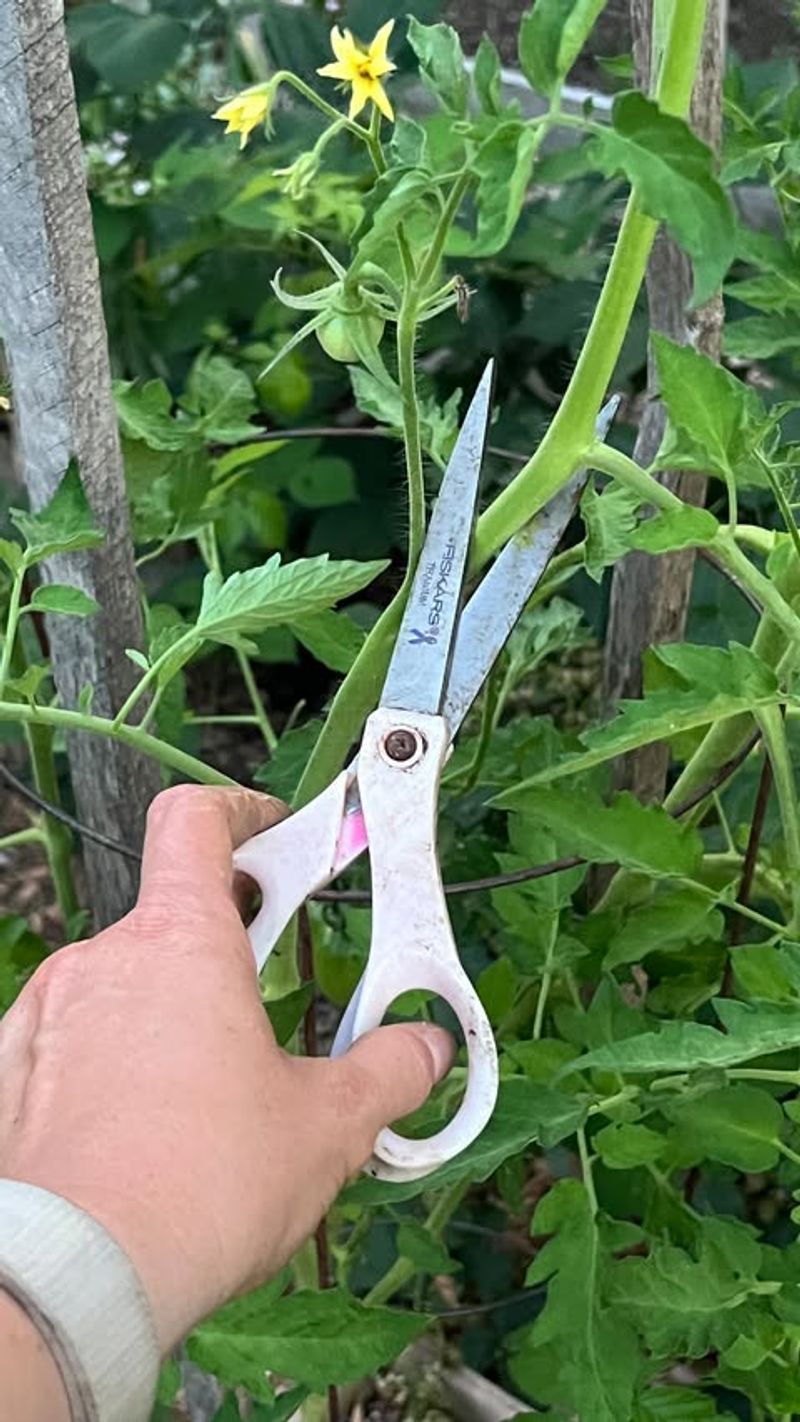
Remove affected leaves as soon as you spot them. Use clean scissors or pruners and cut the leaf cleanly at the stem.
Do not tear foliage off by hand because ragged wounds take longer to heal and invite more problems.
Dispose of removed foliage away from the garden. Do not compost diseased leaves because many pathogens survive the composting process.
Bag the material and put it in the trash to prevent reinfection.
Sunscald is another issue worth watching in summer. Fruit exposed to intense afternoon sun can develop pale, papery patches.
Keeping some foliage around developing fruit provides natural protection from the worst of the heat.
Removing damaged growth also improves light distribution inside the plant. Healthy upper leaves get better access to sunlight when damaged growth below is cleared away.