These Oregon Perennials Outperform Dahlias With A Fraction Of The Work And Summer Watering
Dahlias can be stunning, but they often ask for more attention than busy Oregon gardeners want to give.
Staking, digging, storing, and steady summer watering can turn those big blooms into a bigger project than expected.
Perennials that return on their own can offer a much easier kind of beauty. The right plants still bring color and garden presence without needing constant fuss.
They can handle Oregon’s seasonal rhythm with less help once they settle in. That means more time enjoying the garden and less time chasing chores.
A smart perennial choice can fill beds, support pollinators, and keep summer looking lively without the dahlia drama.
For gardeners who want strong results with lighter upkeep, these dependable plants deserve a closer look.
1. Peruvian Lilies Offer Long-Lasting Color In Mild Oregon Gardens
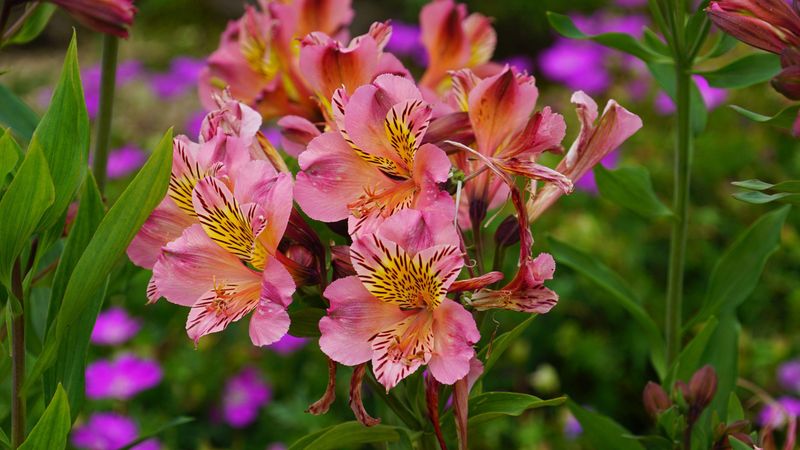
Few flowers can match the staying power of Peruvian lilies, known botanically as Alstroemeria. These cheerful bloomers start flowering in late spring and keep going strong well into fall.
That’s months of color from a plant that asks for almost nothing in return.
Unlike dahlias, you don’t dig them up at the end of the season. They stay right where you planted them and come back stronger each year.
In the mild, wet winters of western Oregon, they handle the cold without complaint. They’re also surprisingly drought-tolerant once they’ve settled in, which is a huge bonus during our famously dry summers.
Peruvian lilies grow best in well-drained soil with full sun to partial shade. They reach about two to three feet tall and spread gradually into a nice clump over time.
The flowers come in an amazing range of colors, including pink, orange, yellow, red, and white, many with beautiful streaked or spotted petals that look almost exotic.
Hummingbirds and pollinators love them too. You can also cut the stems for fresh bouquets, and the blooms last a surprisingly long time in a vase.
To keep plants blooming, pull spent stems from the base rather than cutting them. This tricks the plant into producing more flowers.
For gardeners who want big, bold color without the seasonal drama, this one is a seriously smart choice.
2. Hardy Geraniums Give Summer Color Without The Dahlia Drama
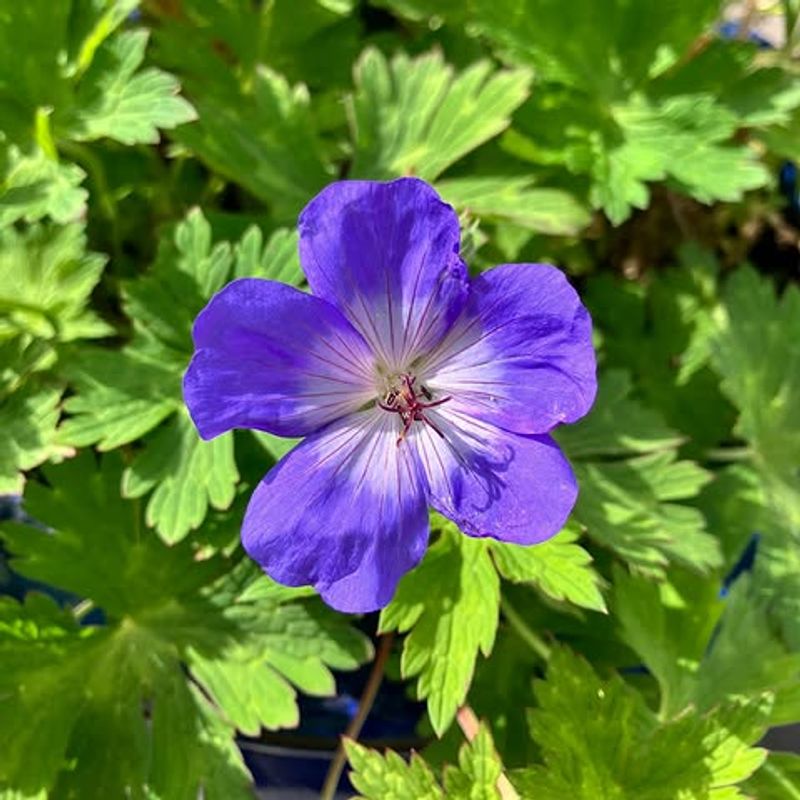
There’s something quietly reliable about hardy geraniums, also called cranesbill geraniums. They don’t demand attention, but they always show up beautifully.
These low-growing perennials bloom from late spring through summer, and some varieties rebloom again in early fall if you trim them back a bit.
They handle Oregon’s wet winters without rotting and manage the dry summers with minimal watering once established.
Most varieties grow only one to two feet tall, making them perfect for the front of a border or filling gaps between larger plants.
Their deeply lobed, attractive leaves also look great even when the plant isn’t in bloom.
Colors range from soft lavender and pink to deep magenta and pure white, so there’s something for every garden style.
Unlike their tender cousins, the annual Pelargoniums you see in window boxes, these true geraniums are fully winter-hardy throughout most of this state. You plant them once and enjoy them for years.
Your Oregon Garden Changes Every Week. Your Plan Should Too.
Gardening in Oregon changes quickly throughout the season. Every Friday you’ll receive a simple weekly plan showing exactly what to plant, prune, fertilize, harvest, and protect so you never miss the right timing.
Slugs can occasionally bother young plants in spring, but once established, hardy geraniums are tough and largely pest-free. They spread gently over time, filling in bare spots naturally.
Varieties like ‘Rozanne,’ ‘Johnson’s Blue,’ and ‘Geranium macrorrhizum’ are especially popular in Pacific Northwest gardens for good reason. They’re easy, beautiful, and practically indestructible.
For anyone tired of babying dahlias through summer, this cheerful workhorse deserves a spot in every Oregon garden.
3. Japanese Anemones Bloom Late With Very Little Fuss
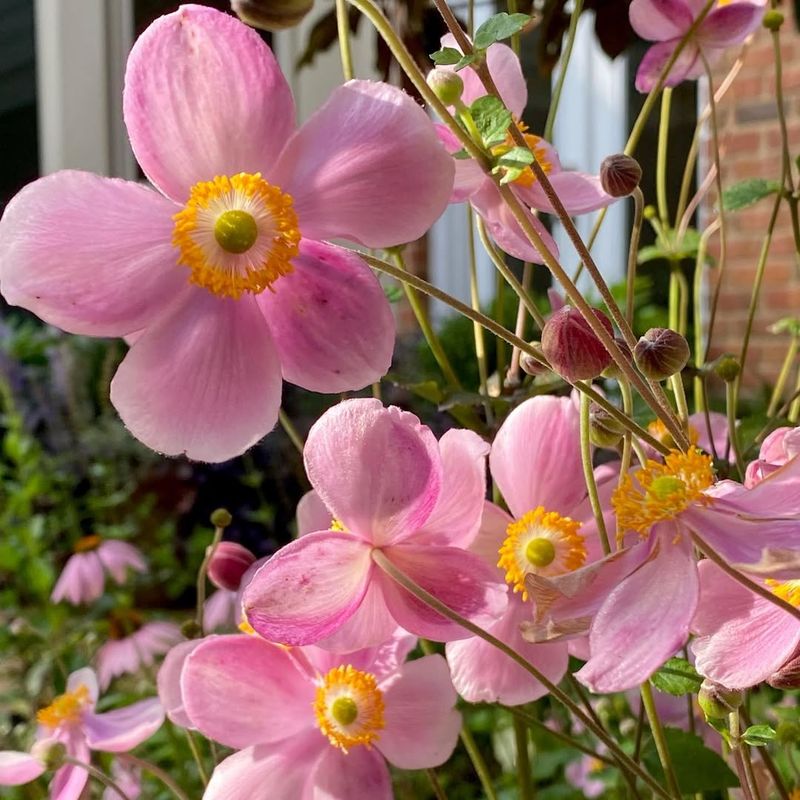
When most summer flowers are fading out in August and September, Japanese anemones are just getting started. That late-season timing makes them incredibly valuable in any garden.
They fill a gap that very few other perennials can cover, and they do it with real elegance.
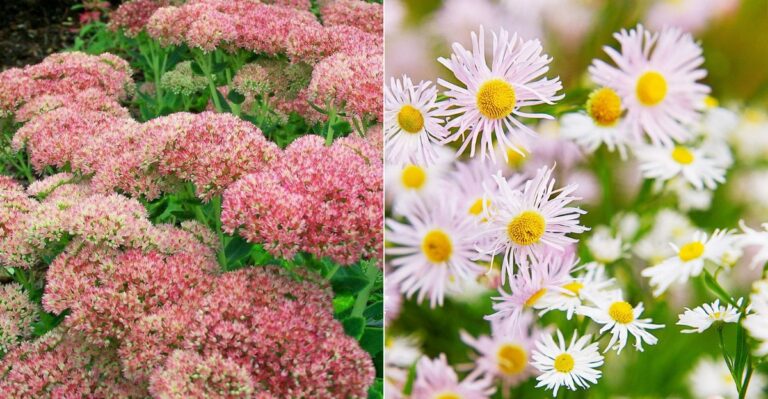
The flowers are delicate-looking, with silky petals in shades of white, soft pink, or deep rose surrounding a bright yellow center. They sway gracefully on tall, wiry stems that can reach three to four feet.
The effect is airy and romantic, nothing like the stiff formality of a dahlia. Yet despite their delicate appearance, these plants are surprisingly tough.
Japanese anemones prefer partial shade and moist, well-drained soil. They thrive under trees or along the north side of a fence, spots where dahlias would never perform well.
Once planted, they spread slowly by underground runners, gradually forming a beautiful colony. That spreading habit can be a little aggressive in very small spaces, so give them room to roam.
They’re fully hardy throughout western Oregon and most of the state’s milder zones. You don’t need to lift them, divide them often, or water them much once they’re established.
They just quietly grow, spread, and then put on a gorgeous show right when your garden needs it most.
Pair them with ornamental grasses or late-blooming sedums for a fall display that rivals anything dahlias can offer.
4. Crocosmia Brings Bold Color Without Constant Pampering
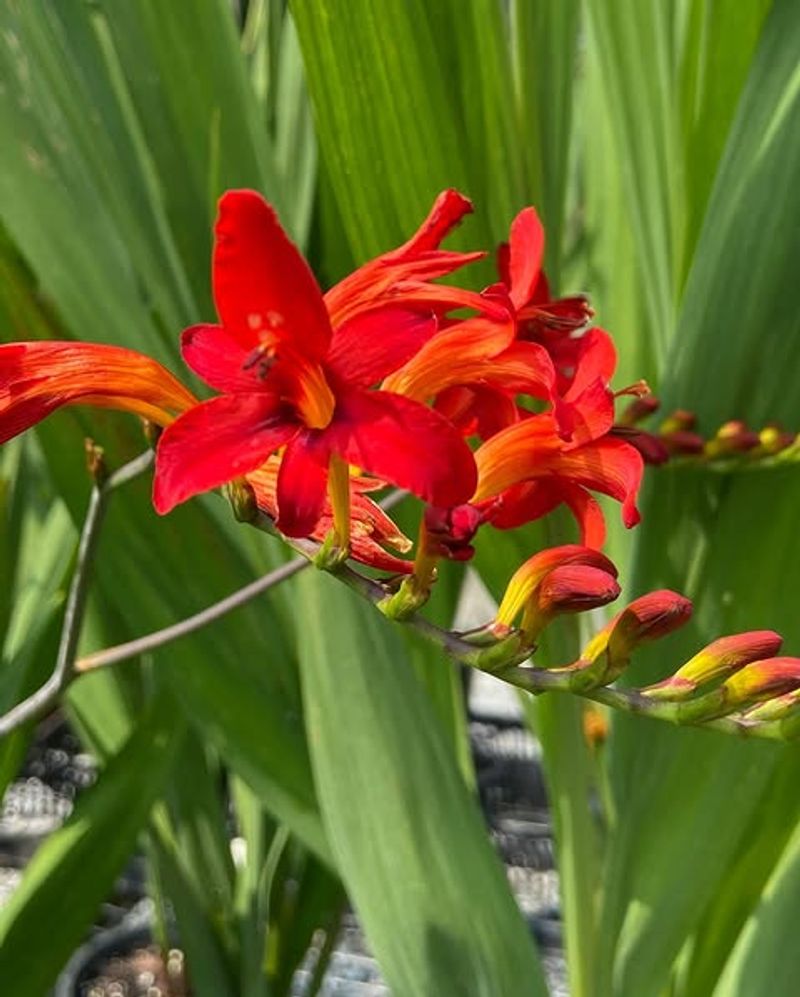
Bold, fiery, and completely unfussy, crocosmia is one of those plants that makes you look like a much better gardener than you actually are.
The arching sprays of tubular flowers in blazing red, orange, and yellow light up the garden from midsummer into fall.
And the sword-like foliage looks sharp and architectural even before the blooms appear.
Crocosmia grows from small corms, similar to dahlias in that way. But here’s the key difference: you leave them in the ground year-round in most parts of this state.
They’re reliably hardy in USDA zones 6 and above, which covers the majority of western and southern Oregon. No digging, no storing, no replanting every spring.
The plants multiply over time, spreading into dense clumps that get more impressive each year. They’re drought-tolerant once established and handle Oregon’s dry summers with very little supplemental watering.
Full sun brings out the best blooms, but they’ll manage in light shade too.
Hummingbirds absolutely love crocosmia, especially the red-flowered variety ‘Lucifer,’ which is one of the most popular and widely available.
If clumps start to look crowded after several years, you can divide them in spring to refresh the planting and share extras with neighbors.
For gardeners who want that hot, tropical look without hauling tubers in and out of storage every year, crocosmia is a genuinely satisfying alternative to dahlias.
5. Siskiyou Lewisia Shines In Dry, Well-Drained Spots
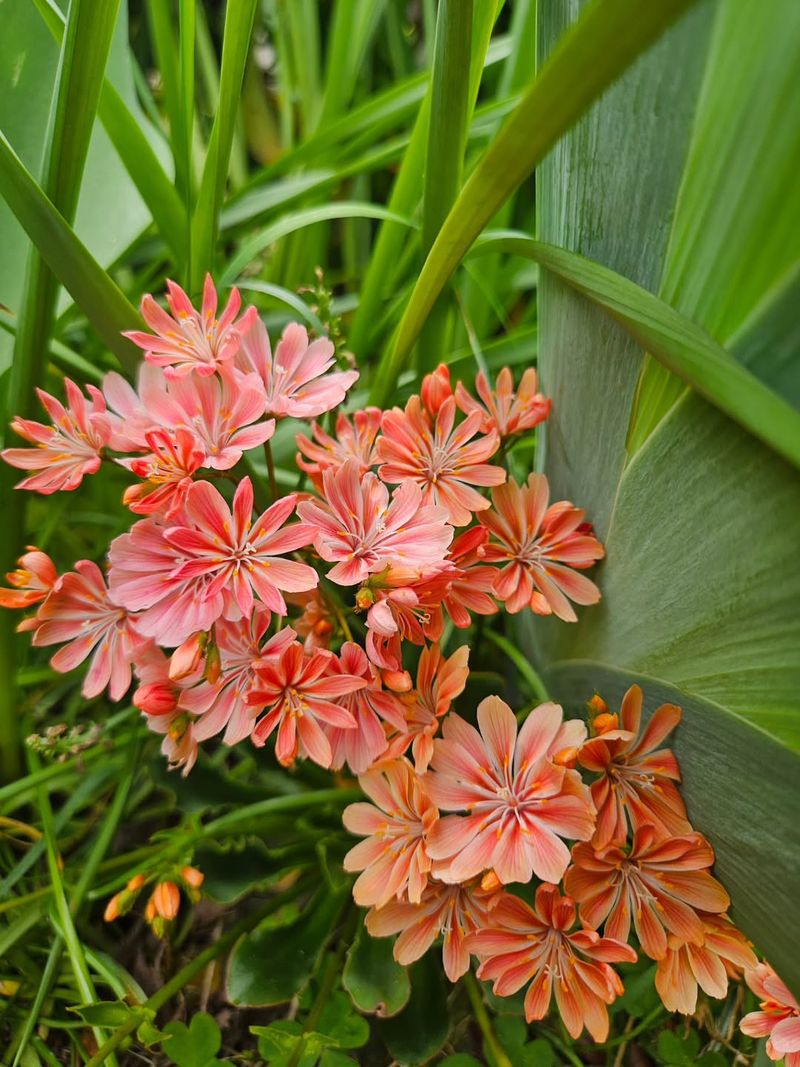
Born from the rocky slopes of the Siskiyou Mountains in southern Oregon, Lewisia cotyledon is one of the most spectacular native perennials you can grow.
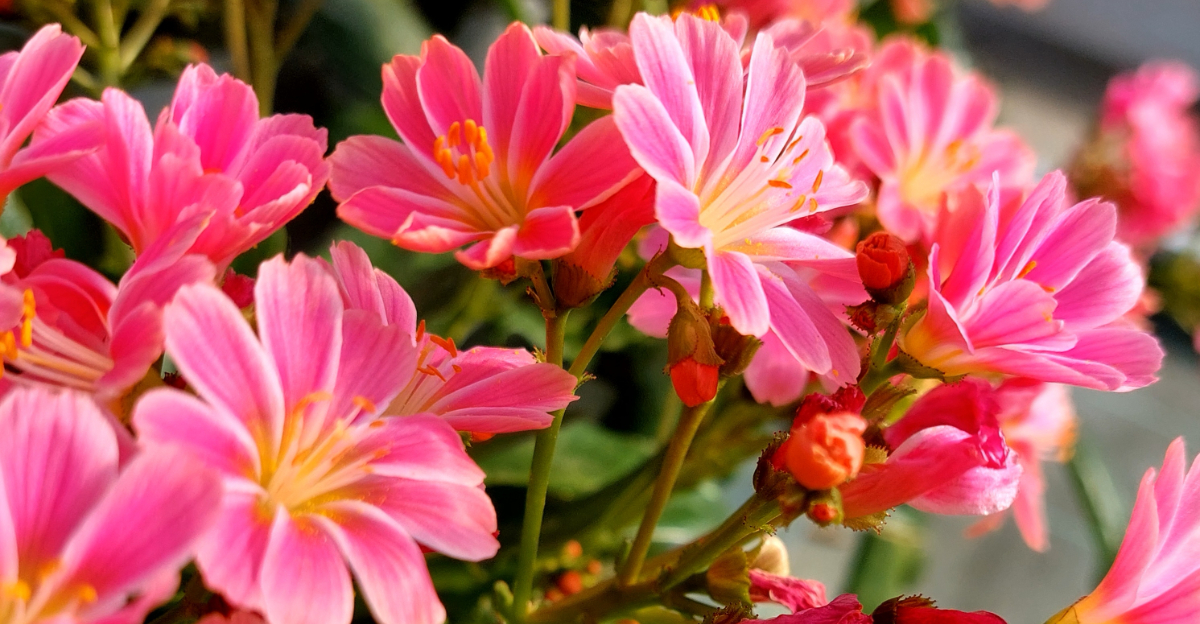
The flowers are stunning, with layered, almost iridescent petals in shades of pink, magenta, orange, and white, often striped or bi-colored.
They bloom in spring and early summer in tight clusters above a rosette of thick, succulent-like leaves.
What makes this plant truly remarkable is where it thrives. Lewisia loves the spots that most plants hate, rocky outcrops, gravel beds, dry walls, and steep slopes with fast-draining soil.
If you have a challenging dry corner where dahlias would absolutely struggle, Siskiyou lewisia will not just survive there, it will flourish.
The biggest mistake people make is overwatering or planting in heavy clay. These plants need excellent drainage above all else.
Plant them on a slope or tuck them into a rock wall so water runs away from the crown. Once established, they need almost no irrigation through summer, which is remarkable for such a showy bloomer.
Lewisia is a true Oregon original, and it carries a sense of regional pride along with its beauty. It works wonderfully in rock gardens, between stepping stones, or in raised beds.
Many specialty nurseries across the state carry named cultivars with especially vivid colors.
Growing it feels like honoring the wild landscape that makes this region so special, and you get a jaw-dropping display in return.
6. Sea Holly Brings Sculptural Blooms Without Dahlia-Level Care
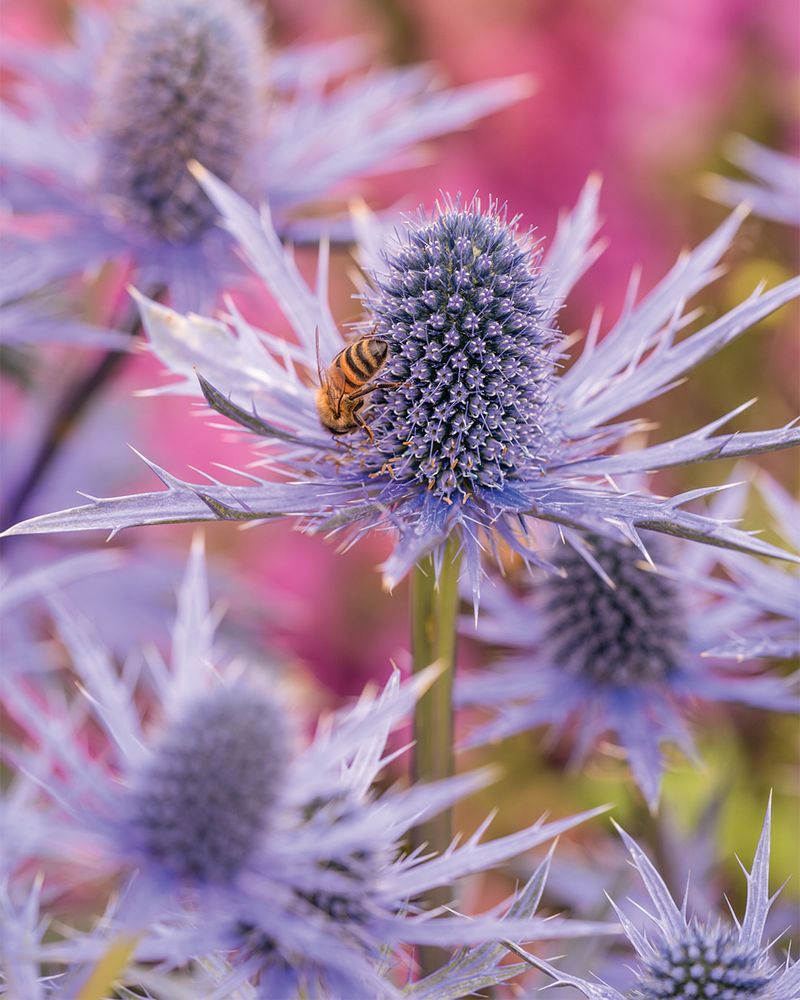
Not every garden needs soft and romantic. Sometimes you want something edgy, architectural, and a little bit wild.
Sea holly, or Eryngium, delivers exactly that. The spiky, metallic blue flowers surrounded by silvery, jagged bracts look almost otherworldly, like something out of a fantasy garden.
And they hold that look for weeks without fading.
Sea holly is drought-tolerant to an impressive degree. Once it’s settled into well-drained soil, it can go weeks without rain or watering and still look fantastic.
That makes it a perfect fit for the dry summers common throughout much of this state, especially in the Willamette Valley and southern regions. It actually prefers lean, gritty soil over rich, amended garden beds.
The plants grow two to four feet tall depending on the variety and bloom from midsummer into early fall. They’re fully perennial and come back reliably each year without any special winter care.
Bees and butterflies are drawn to the flowers, making sea holly a strong choice for pollinator gardens.
The blooms also dry beautifully on the plant, transitioning from steely blue to a silver-gray that looks stunning through fall and even into winter. You can cut them for dried arrangements too.
Varieties like ‘Big Blue,’ ‘Blue Glitter,’ and ‘Jos Eijking’ are especially worth seeking out. For a plant that’s this low-maintenance and this visually striking, sea holly earns its place in any Oregon garden that’s ready to ditch dahlia drama.
7. Hummingbird Mint Handles Heat With Far Less Fuss
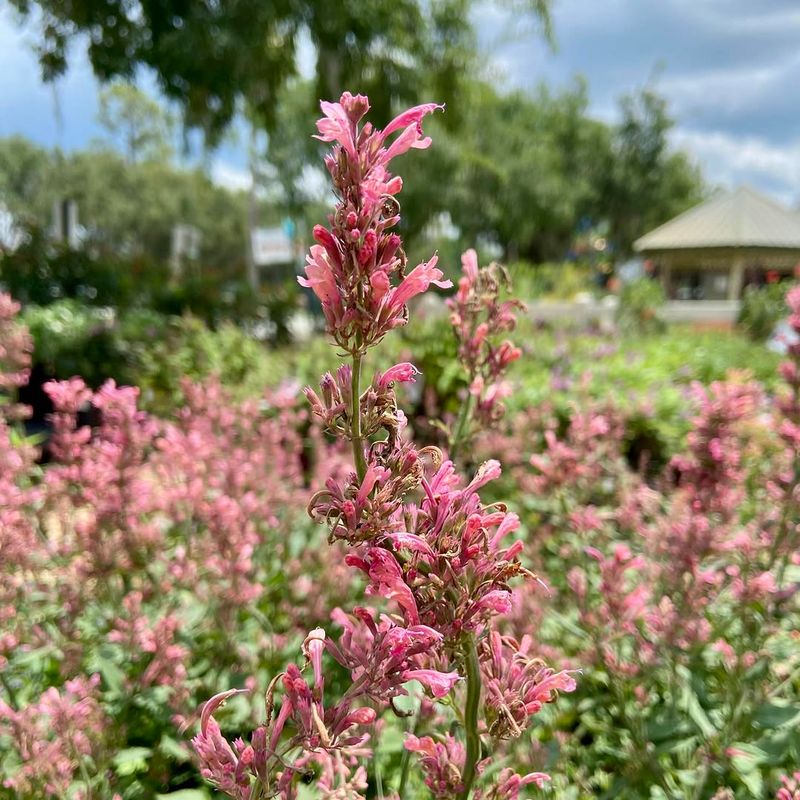
Walk past a patch of hummingbird mint on a warm summer afternoon and you’ll notice two things right away.
The incredible fragrance drifting through the air, and the hummingbirds hovering around it like it’s the best restaurant in town.
Agastache, as it’s botanically known, is one of the most wildlife-friendly perennials you can plant in this state.
The tall, upright flower spikes come in shades of orange, pink, purple, and red, and they bloom from midsummer all the way through fall.
The more you deadhead, the more flowers you get, but honestly, even if you ignore it completely, it still puts on a good show. That kind of low-effort performance is hard to beat.
Hummingbird mint thrives in full sun and well-drained soil. It handles heat and dry conditions surprisingly well, making it a strong performer during Oregon’s warm, dry summers.
It’s also deer-resistant, which is a real bonus for gardeners in rural or semi-rural areas across the state.
Most varieties are hardy in zones 5 to 9, covering a wide range of Oregon climates from the coast to the inland valleys.
They grow two to four feet tall and pair beautifully with ornamental grasses, lavender, and other drought-tolerant perennials. ‘Ava,’ ‘Kudos Coral,’ and ‘Blue Fortune’ are especially popular cultivars.
For a plant that feeds hummingbirds, smells amazing, and barely needs watering, hummingbird mint is an easy yes for any garden upgrade.
8. Pearly Everlasting Offers Soft Color With Almost No Fuss
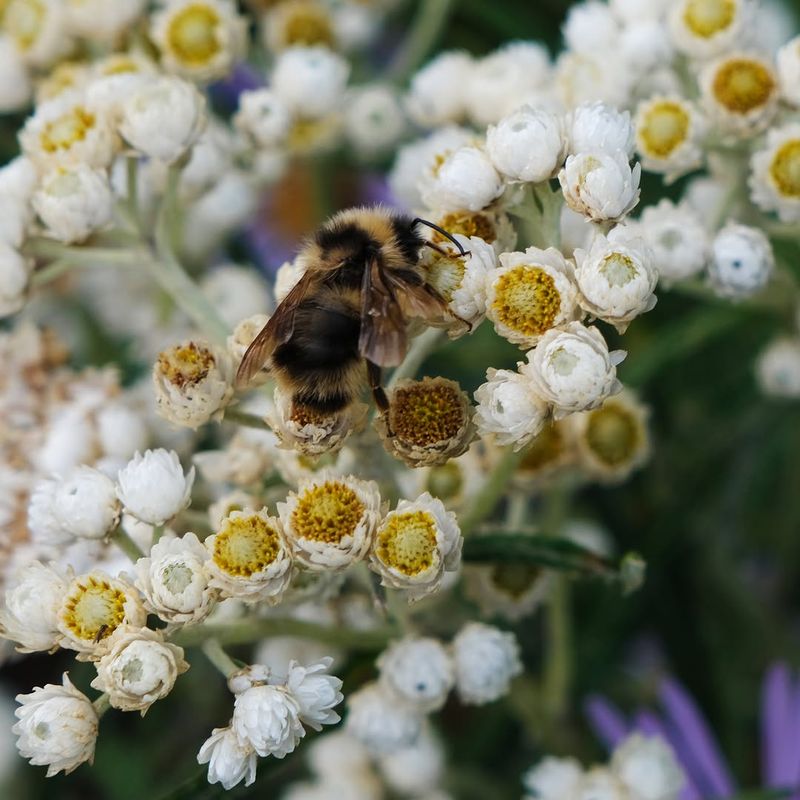
There’s something quietly beautiful about Pearly Everlasting that garden writers don’t talk about enough.
This native Pacific Northwest perennial produces clusters of small, papery white flowers on silvery stems from midsummer into fall.
The effect is soft, meadow-like, and genuinely lovely in a way that feels completely natural to this region.
Anaphalis margaritacea is one of the few white-flowered perennials that actually handles dry conditions well. It grows naturally in open fields, roadsides, and disturbed slopes across Oregon and Washington, which tells you a lot about its toughness.
Once planted in a sunny spot with decent drainage, it needs almost no supplemental watering through summer.
The plants grow about one to two feet tall and spread gradually by underground stems, eventually forming a soft, silvery-white colony that looks stunning against darker foliage.
Butterflies visit the flowers regularly, and the blooms dry beautifully right on the plant, giving you late-season interest long after most perennials have gone quiet.
Unlike dahlias, there’s no staking, no digging, and no storing. Pearly Everlasting is fully winter-hardy throughout this state and comes back reliably each spring.
Trim it back in late fall or early spring and let it do its thing. It works especially well in naturalistic or cottage-style gardens, wildflower meadows, or any spot where you want low-maintenance beauty.
For gardeners who appreciate understated elegance, this Pacific Northwest native is an absolute gem worth celebrating.
9. Black-Eyed Susans Bring Dahlia-Like Cheer For Less Effort
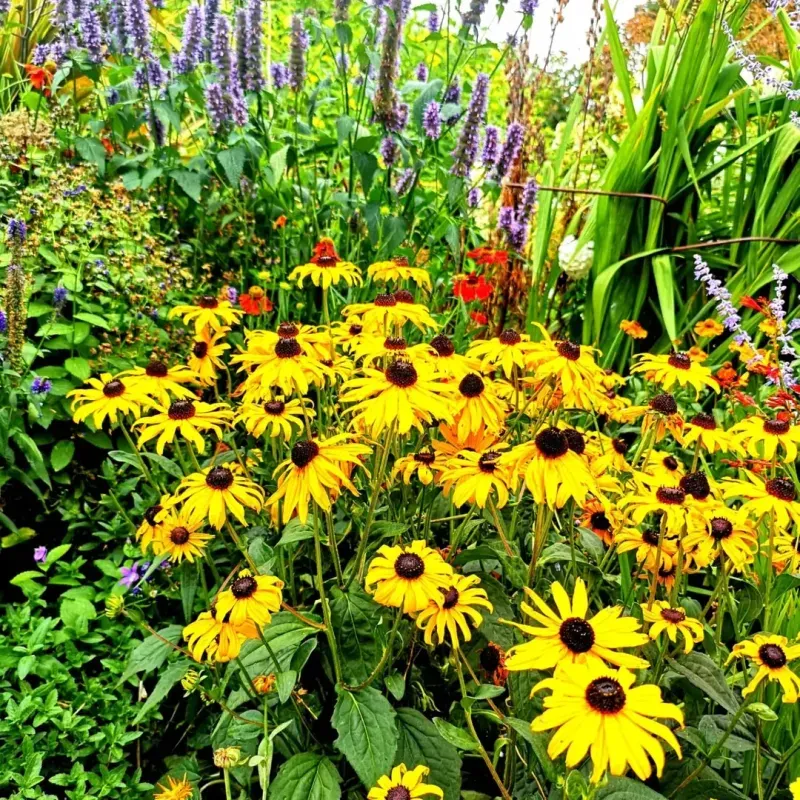
Golden yellow petals surrounding a rich, chocolatey-brown center, few flowers are more cheerful or more recognizable than Black-eyed Susans. Rudbeckia has been brightening American gardens for generations, and for good reason.
The blooms are bold, sunny, and incredibly long-lasting, carrying on from midsummer well into October in most parts of this state.
What makes them such a strong alternative to dahlias is how little they demand. Plant them in full sun, give them average soil, and water them occasionally while they’re getting established.
After that, they’re largely on their own. They handle Oregon’s dry summers without much fuss and bounce back reliably each spring without any special care.
Rudbeckia comes in several great species and varieties. ‘Goldsturm’ is probably the most popular, growing about two feet tall with an incredibly tidy, compact form.
Taller species like Rudbeckia laciniata can reach five or six feet and create a dramatic back-of-border effect.
All of them attract bees, butterflies, and goldfinches, especially in fall when birds feed on the seed heads.
Leaving the seed heads standing through winter adds structure to the garden and feeds wildlife through the colder months. You can divide clumps every few years in spring to keep them vigorous and share extras with friends.
For anyone who loves the warm, sunflower-like look of dahlias but wants a plant that practically takes care of itself, Black-eyed Susans are exactly the right answer.